
Joined July 2018
- Tweets 122
- Following 293
- Followers 569
- Likes 38
Photos and videos
JournalismAI retweeted

23 Apr 2024
ChatGPT-4 outperforms human psychologists in test of social intelligence, study finds psypost.org/chatgpt-4-outper…
1
7
16
1,921
JournalismAI retweeted

1 Oct 2023
Which news publishers are blocking OpenAI? These are 497 news organizations (and counting) that have told GPTBot not to scan their sites, according to a survey by homepages.news. They make up 44.3% of the 1,123 online publishers surveyed.
palewi.re/docs/news-homepage…
16
16
4,598
JournalismAI retweeted

30 Sep 2023
Just stumbled upon a pretty good abbreviation to “just ask chatgpt”: chask it!
170
77
1,214
1,121,862
JournalismAI retweeted

26 Sep 2023
Also: a model with more parameters is not necessarily better. It's generally more expensive to run and requires more RAM than a single GPU card can have.
GPT-4 is rumored to be a "mixture of experts", i.e. a neural net consisting of multiple specialized modules, only one of which is run on any particular prompt. So the effective number of parameters used at any one time is smaller than the total number.
22
59
784
171,969
JournalismAI retweeted
26 Sep 2023
Dear journalists, it makes absolutely no sense to write:
"PaLM 2 is trained on about 340 billion parameters. By comparison, GPT-4 is rumored to be trained on a massive dataset of 1.8 trillion parameters."
It would make more sense to write:
"PaLM 2 possesses about 340 billion parameters and is trained on a dataset of 2 billion tokens (or words). By comparison, GPT-4 is rumored to possess a massive 1.8 trillion parameters trained on untold trillions of tokens."
Parameters are coefficients inside the model that are adjusted by the training procedure. The dataset is what you train the model on. Language models are trained with tokens that are subword units (e.g. prefix, root, suffix).
Saying "trained a dataset of X billion parameters" reveals that you have absolutely no understanding of what you're talking about.
132
510
4,467
1,147,570
JournalismAI retweeted

25 Sep 2023
voice mode and vision for chatgpt! really worth a try. openai.com/blog/chatgpt-can-…
616
1,984
13,617
3,228,912
JournalismAI retweeted
21 Aug 2023
AI-Imagined Newsroom Interiors by Renowned Architects: Which Would You Choose to Work In?
1. Zaha Hadid

2
17
39
15,214
JournalismAI retweeted
21 Aug 2023
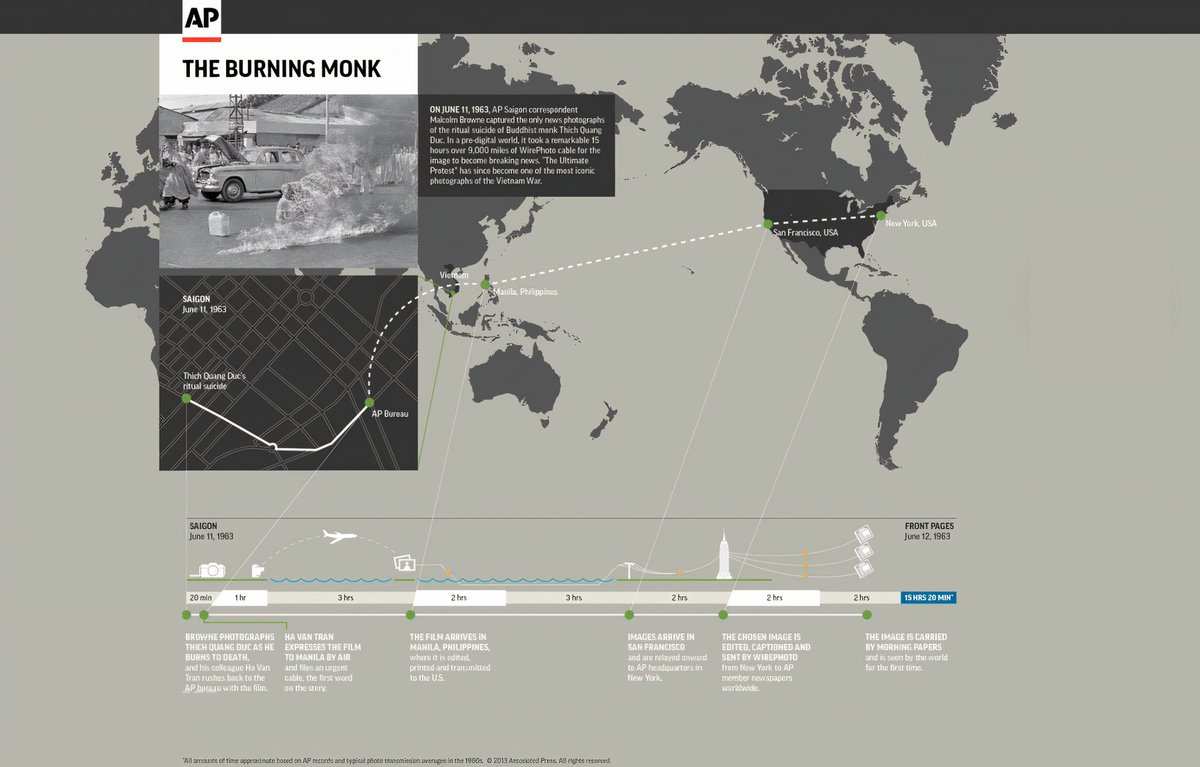
What if you could get tomorrow's news today? I've been reflecting on the idea of "pre-news" ever since I came across this illustration detailing the amount of time the Associated Press took to publish the iconic photograph of the self-immolating monk, captured in June of 1962 by American journalist Malcolm Browne in Saigon. Back then, it required 9,000 miles of wire cable and over 15 hours for that image to become "breaking news."
Over the following decades, technological advancements have drastically reduced the time needed for a news event to be transmitted. If that event were to happen today, we'd likely witness it in real-time via live streaming, bringing the time required to disseminate information close to zero. Yet, technology's march forward hasn't halted.
The correlation between technological innovation and the speed of information dissemination persists, which means we are now venturing into negative time frames. But what does this "negative time" imply? It suggests the potential to identify early signals before an event transpires. With AI's increasing ability to capture, quantify, and comprehend chains of vents, we're moving from breaking news to calculating it.
Will you trust predictive journalism?
1
1
3
835
JournalismAI retweeted

3 Aug 2023
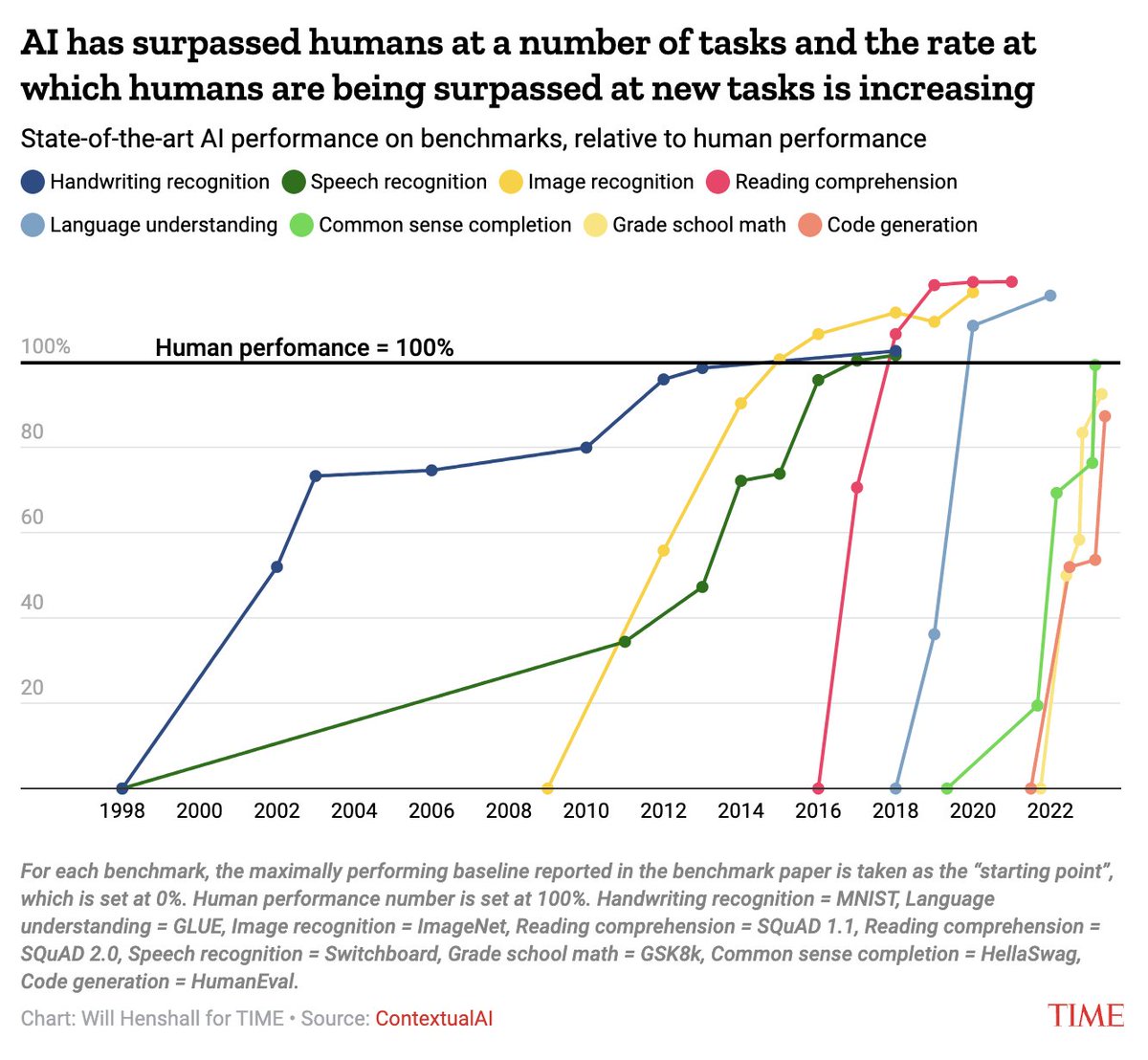
I can't stop staring at this chart
People have no idea how wild it's about to get
3 Aug 2023

Important article: time.com/6300942/ai-progress… The single most important data point that suggests "progress is unlikely to slow in the next 2-3y": GPT-4 cost ~$100M (probably less), and Alphabet has 1000x that much money in cash on hand:
116
389
1,949
736,794
JournalismAI retweeted

8 Aug 2023
[NEW] - Joshua Avatar 2.0 🤖✨. Both of these video clips were 100% AI-generated, featuring my own avatar and voice clone. 🎙️🎥
We've made massive enhancements to our life-style avatar's video quality and fine-tuned our voice technology to mimic my unique accent and speech patterns perfectly. 🚀🔊
Let me know how you like it. 💛 This will be soon deployed to production and everyone can try it out! 🔜🌐
594
1,296
6,744
3,191,880
JournalismAI retweeted
5 Aug 2023
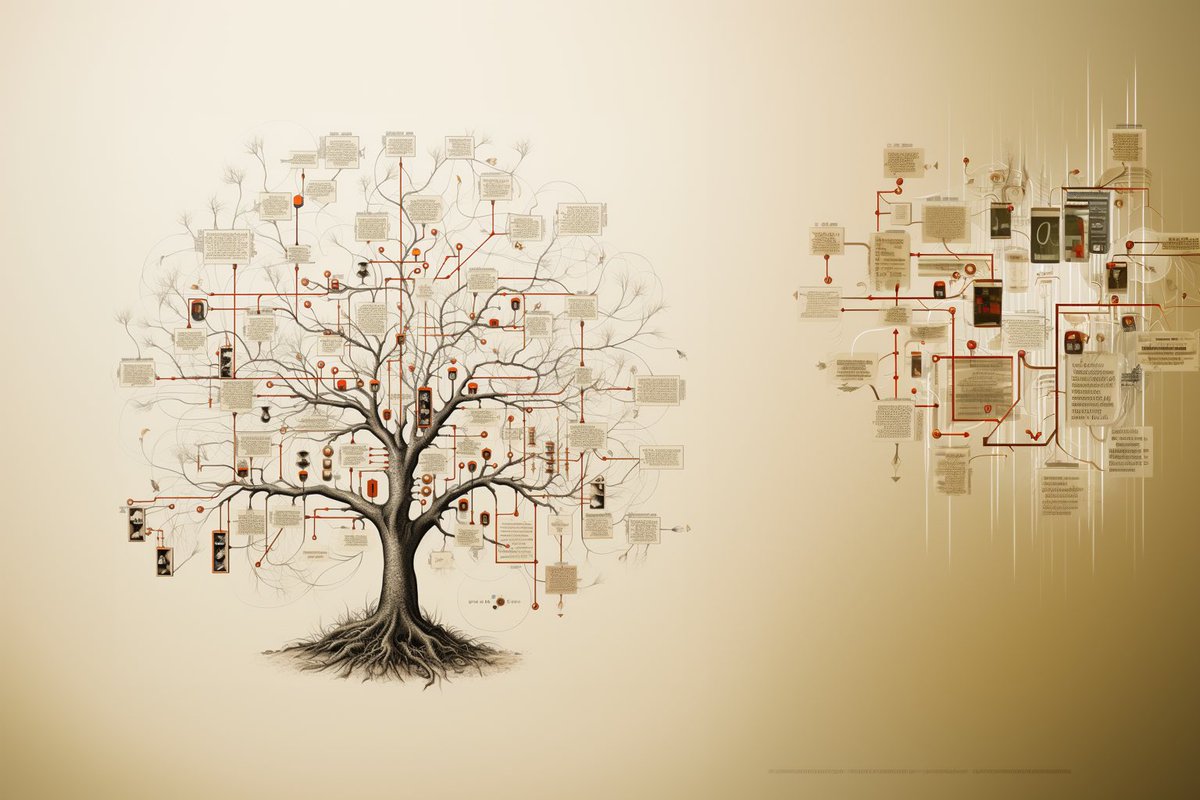
AI feeding on itself leads to 'information inbreeding,' which can cause models to collapse. Journalism could be the lifeline! News organizations provide a rich variety of training data that enhances large language models, but this resource is finite. If we consider AI as a living organism, there comes a time when it has consumed all available human-generated information — and this will be accelerated if we don’t have a sustainable model for journalism. At that point, the AI may depend solely on synthetic, AI-generated data, creating a closed loop of information. This can be likened to biological inbreeding, where reproduction occurs only within the same genetic pool of data.
Much like how inbreeding weakens an organism's genetics, leading to a less healthy population, AI using only its own data can result in "information inbreeding”, which is most commonly referred as model collapse. This leads to a decline in the richness, diversity, and quality of AI's output, similar to the health deterioration seen in biological inbreeding.
Information inbreeding can extend beyond AI, influencing society by creating uniform, AI-generated information that lacks human perspective. This may cause the public to have a limited and repetitive perspective, hindering how connect and evolve together — creating a world stuck in a loop of monotonous, unoriginal thinking.
That’s why AI companies must have a vested interest in the sustainability of diverse information sources like journalism. This is not only ethically sound, but also the best strategic bet in the long run. Without diverse, fresh, human-driven data, tech companies risk endangering the well-being of their models and leading to stagnant or even regressive AGI development.
5
5
2,363
JournalismAI retweeted

11 Jun 2023
Had an insightful conversation with @geoffreyhinton about AI and catastrophic risks. Two thoughts we want to share:
(i) It's important that AI scientists reach consensus on risks-similar to climate scientists, who have rough consensus on climate change-to shape good policy.
(ii) Do AI models understand the world? We think they do. If we list out and develop a shared view on key technical questions like this, it will help move us toward consensus on risks.
I learned a lot speaking with Geoff. Let’s all of us in AI keep having conversations to learn from each other!
197
744
3,290
1,014,196
JournalismAI retweeted

24 Jan 2022
Here are the lighthouses of Europe.
The map is even better than it might seem at first glance: the colors are the real colors, the patterns are the real patterns, and the size of the dots is the distance at which each light is visible. geodienst.github.io/lighthou…
464
8,926
36,572
JournalismAI retweeted

22 Jan 2022
Tell me you’re a professor, without telling me you’re a professor.
37
4
56
JournalismAI retweeted

8 Jan 2022
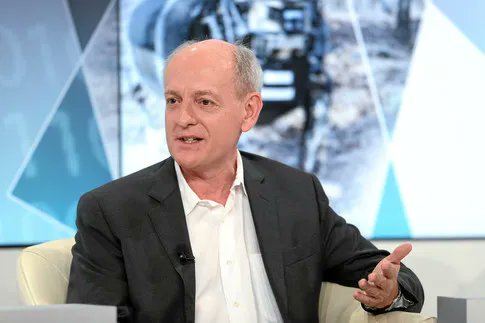
’You could say ‘guarantee no harm’. But a self-driving car that followed Asimov’s first law would never leave the garage.’
@UCBerkeley’s Stuart Russell tells #RadioDavos how to achieve ‘human-compatible’ AI, with @KayFButterfield @RobinPomeroyEd
wef.ch/31EURYc
9
16
42
JournalismAI retweeted
25 Dec 2021
AI could soon be writing your essays.
Is there risk involved? There could be: ow.ly/LAQB50HhgW1
10
66
165
JournalismAI retweeted

17 Dec 2021
Stanford faculty @erikbryn, @chelseabfinn, @Rbaltman, and @BlattnerLaura explain what they expect to see in AI in 2022 in their respective industries. @DigEconLab
bit.ly/3p4xlwB
15
31
JournalismAI retweeted
9 Apr 2020
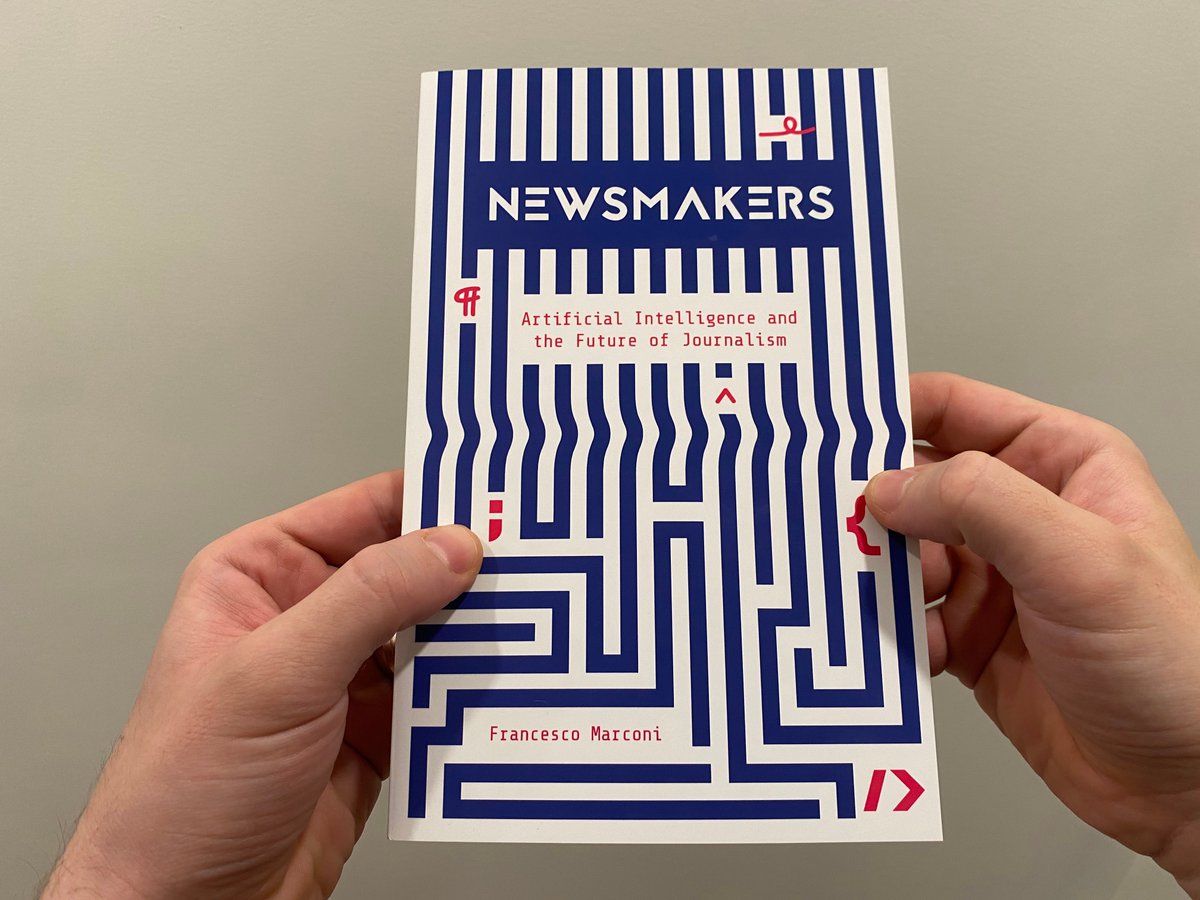
I finally touched the physical copy of my new book for the first time, a nice surprise to brighten my quarantine days 🙏 Newsmakers: Artificial Intelligence and the Future of Journalism is a practical guide about news technology and the innovators implementing it 💪
25
43
285
