
Joined August 2020
- Tweets 32
- Following 268
- Followers 69
- Likes 94
4 Photos and videos
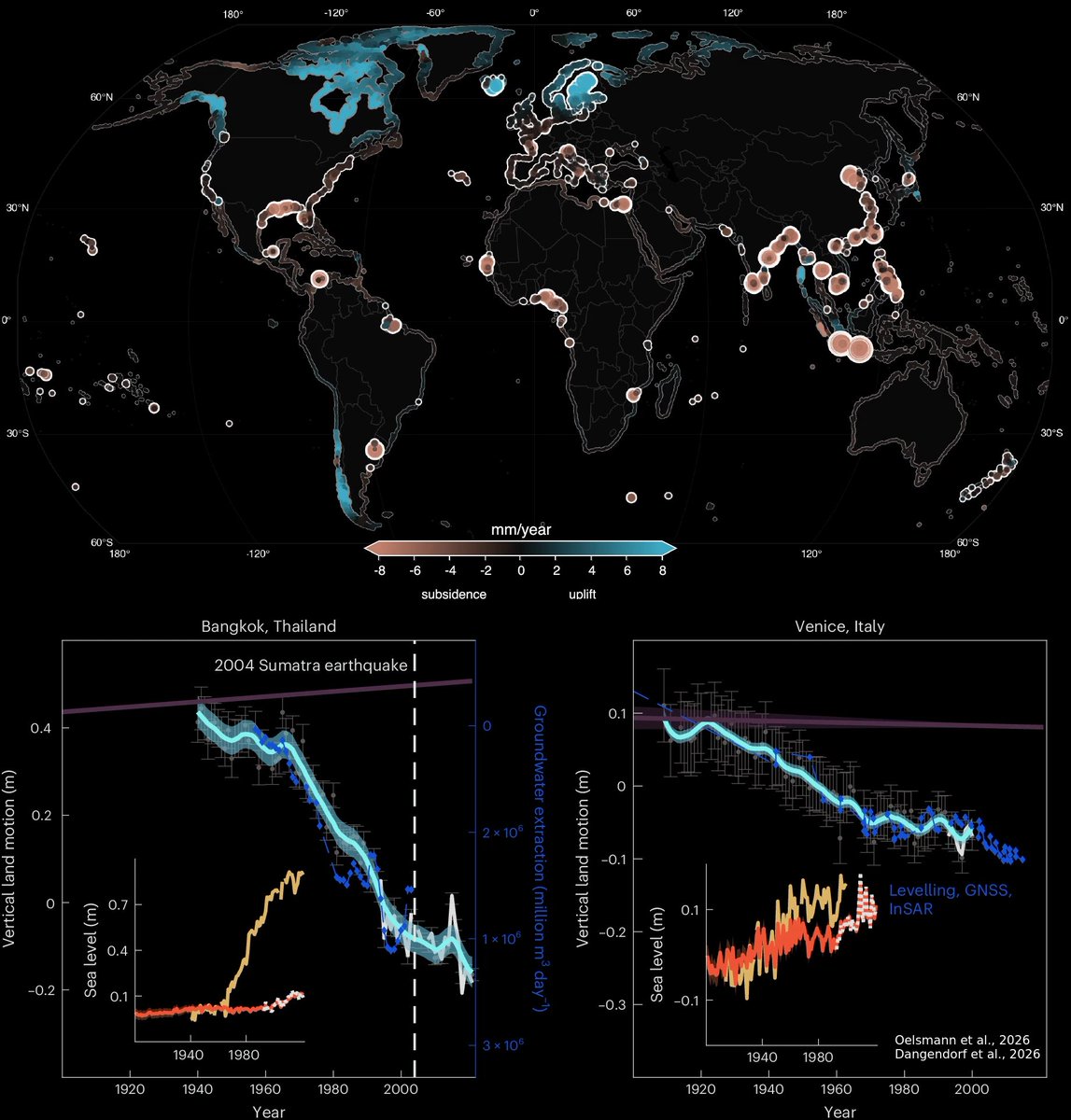
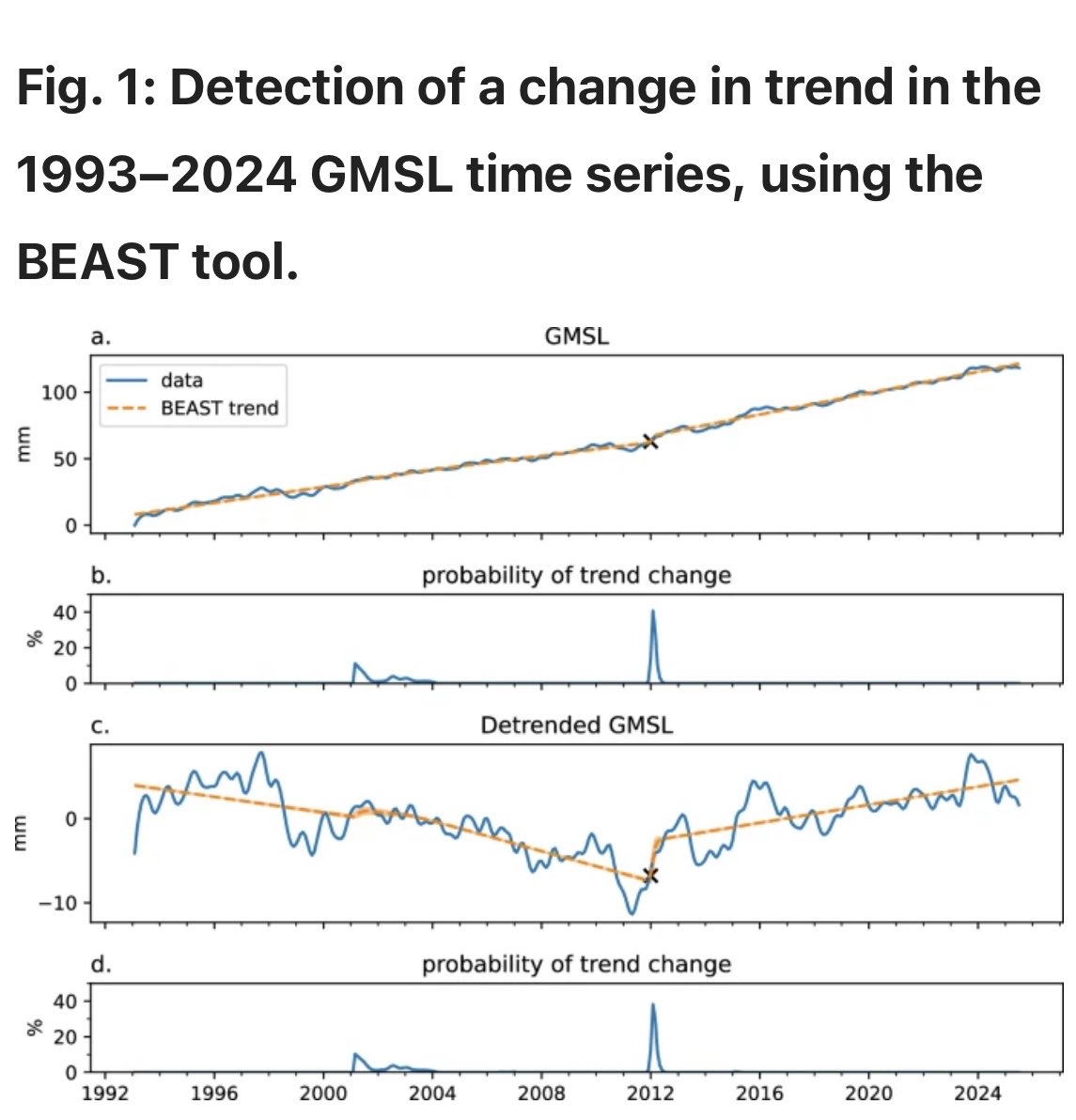
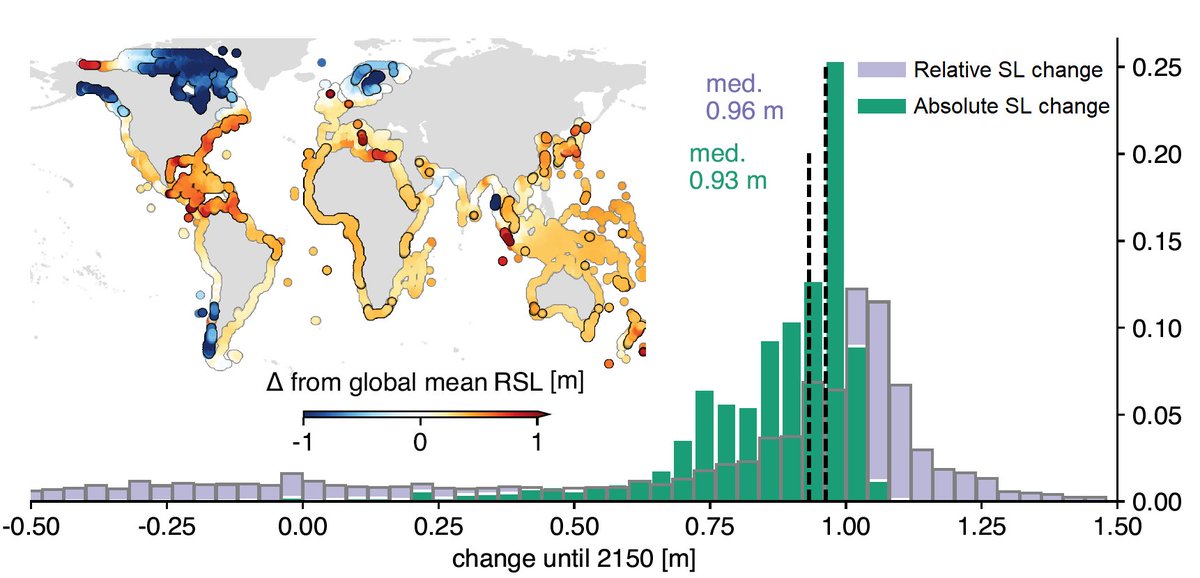
#Subsidence doubles climate-driven sea-level changes along densely populated coasts — and these changes can be highly non-linear in time.
nature.com/articles/s41467-0…
nature.com/articles/s41561-0…
@Tulane @TU_Muenchen @DgfiTum @virginia_tech @UNUINWEH @vtgeosciences @VT_Science @shirzaei
1
1
4
59
Many thanks to my co-authors and colleagues at @virginia_tech and across the wider international sea-level and geodesy community for their contributions and discussions, as well as @EU_Commission, @HorizonEU
1
21
This work is supported by the European Union’s Horizon Europe research and innovation programme under the Marie Skłodowska-Curie grant agreement No. 101210999. @HorizonEU @EU_Commission
15
Julius Oelsmann retweeted

May 4
New Nature Sustainability paper led by Tulane's Tor Törnqvist says Louisiana needs to start planning now for a multi-generational move of coastal communities. New Orleans, they argue, will eventually be "physically impossible" to defend with levees.
nola.com/news/environment/ne…
1
6
7
755
Julius Oelsmann retweeted

Mar 19
Scientists created the first #globalatlas showing how tides affect #coastalrivers. These regions are especially prone to flooding, which is increasing with #climatechange. The free world map presents the impacts at a glance: go.tum.de/851202
📷T. Pavelsky
4
7
649
Julius Oelsmann retweeted

Feb 5
*** New Publication Alert ***
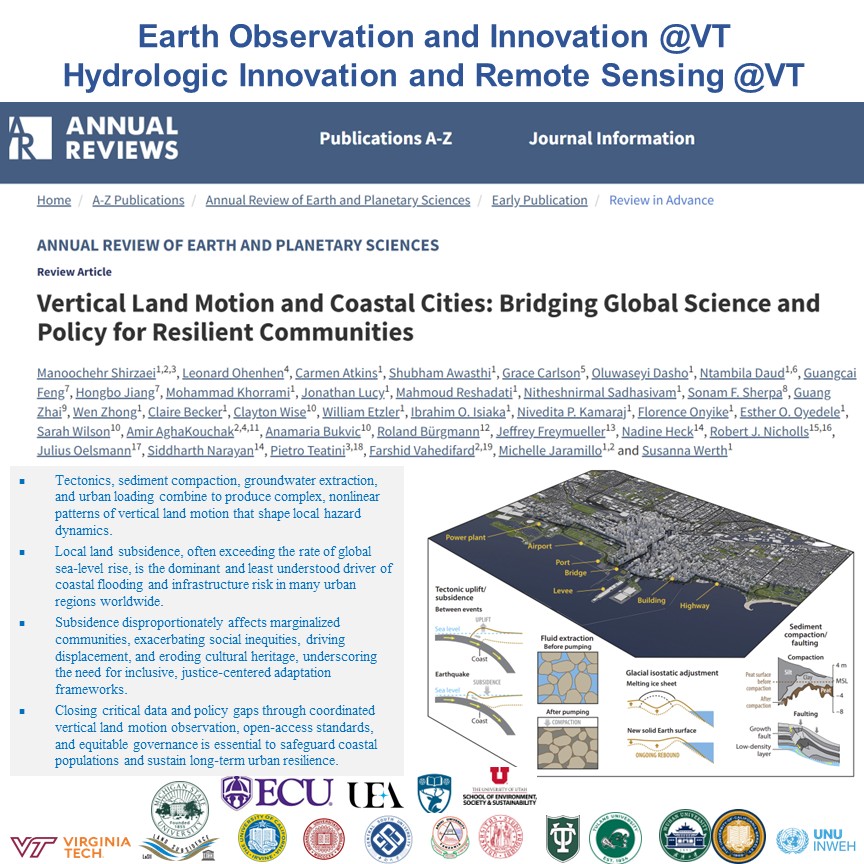
🌍 Coastal cities aren’t just facing sea-level rise — many are sinking.
Our new global, interdisciplinary review brings together #EarthScience, #engineering, #social science, and #policy to show how vertical land motion is silently amplifying #flood risk, #infrastructure failure, and #inequality worldwide.
This is a call to rethink coastal resilience — with data, justice, and decision-ready science at the core.
📖 Annual Review of Earth & Planetary Sciences
annualreviews.org/content/jo…
#SinkingCities #ClimateRisk #CoastalResilience #InSAR #SeaLevelRise #Infrastructure #EnvironmentalJustice
@VT_Science @UNUINWEH
Why this work matters 👇
• Human-driven subsidence often exceeds climate-driven sea-level rise — in some cities by an order of magnitude
• Groundwater extraction, urban loading, and resource use are major — and actionable — drivers
• Flood risk, infrastructure damage, and displacement are being systematically underestimated
What’s new and different
• Global synthesis of 204 coastal cities using satellite geodesy (InSAR GNSS)
• Connects physics → infrastructure → people → policy in one framework
• Moves beyond maps to decision-ready intelligence for planners and governments
Equity & justice lens
• Subsidence disproportionately impacts low-income and marginalized communities
• Creates spatial and intergenerational injustice — from housing loss to cultural heritage erosion
• Current adaptation plans often miss these hidden vulnerabilities
Where we need to go next
• Integrate VLM into flood models, zoning, insurance, and infrastructure design
• Expand open, global monitoring, especially in the Global South
• Deploy digital twins & decision theaters to test adaptation pathways before failure happens
2
6
19
356
Julius Oelsmann retweeted
Jan 14
*** NEW PAPER ALERT ***
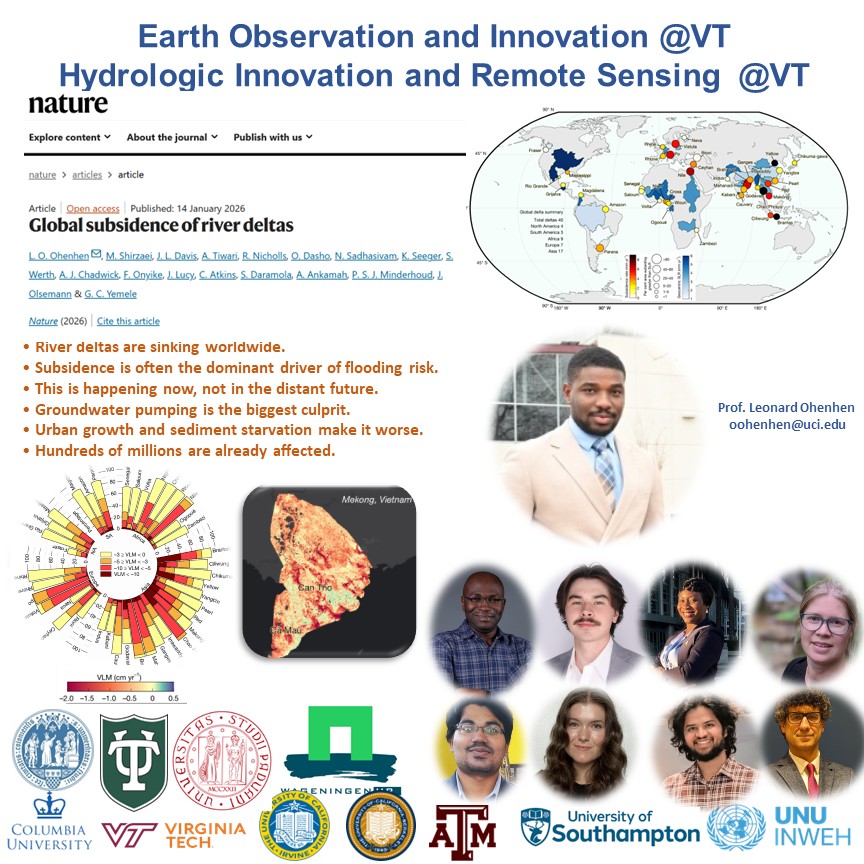
Led by our rockstar, Leonard (Assistant Prof. @UCIrvine), in collaboration with an international team, just published in @Nature. The first #global assessment of #Land Subsidence in #Deltas, #drivers, and #socioeconomic impacts. Congratulations to Leonard and team for this groundbreaking work!
@vtgeosciences @UNUINWEH @EOI_lab @HIRSlab
Pub Link: nature.com/articles/s41586-0…
🌍 Major Takeaways: Global Subsidence of River Deltas
• River deltas are sinking worldwide.
Over half of global delta land areais already subsiding—many at rates faster than sea-level rise.
• Subsidence is often the dominant driver of flooding risk.
In 18 of 40 major deltas, land is sinking faster than oceans are rising.
• This is happening now—not in the distant future.
Some deltas are sinking 2–10× faster than projected climate-driven sea-level rise this century.
• Groundwater pumping is the biggest culprit.
Among all human activities, groundwater extraction is the strongest driverof delta subsidence globally.
• Urban growth and sediment starvation make it worse.
Dams, levees, and rapid urbanization reduce sediment supply and increase land loading—accelerating sinking.
• Hundreds of millions are already affected.
About 236 million peoplelive in deltas where subsidence outpaces sea-level rise.
• The most vulnerable people live the lowest.
Of the 76 million people living below 1 m elevation, 84% are in rapidly sinking areas.
• Subsidence is highly uneven—even within the same delta.
Cities and infrastructure can sink much faster than surrounding rural areas, creating localized disaster hotspots.
• Climate adaptation plans are missing a key variable.
Most global risk assessments focus on sea-level rise—but ignore vertical land motion, underestimating real risk.
• The good news: subsidence is actionable.
Unlike sea-level rise, human-driven subsidence can be slowedthrough groundwater regulation, managed aquifer recharge, and sediment management.
• Failing to act now locks in irreversible risk.
Ignoring subsidence undermines flood defenses, adaptation investments, and long-term delta habitability.
5
11
449
Julius Oelsmann retweeted
8 Jun 2025
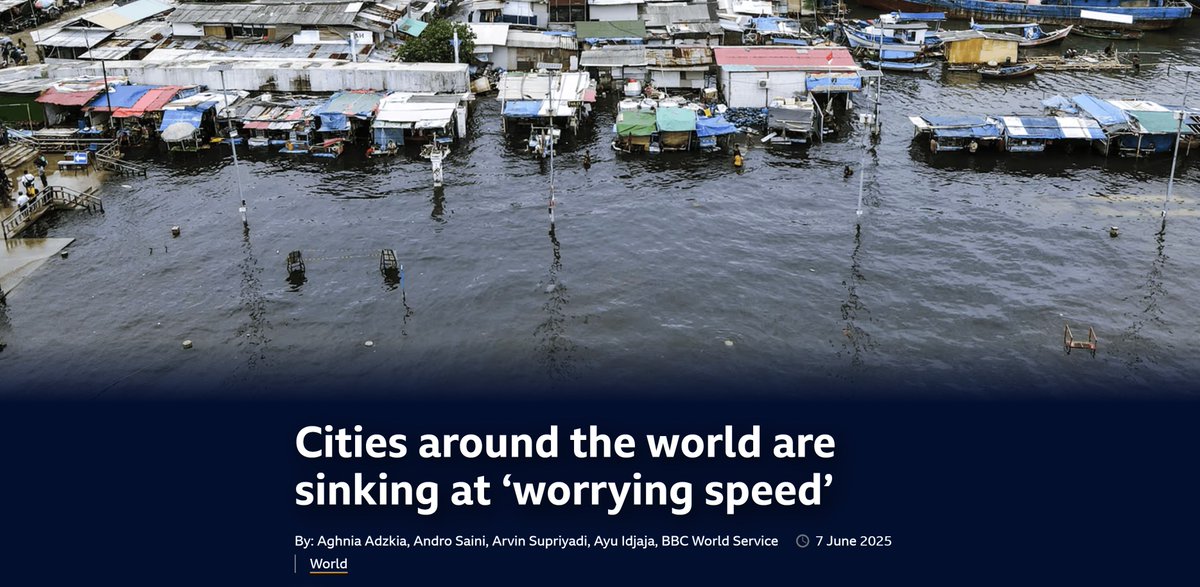
*** Media Coverage ***
I have the opportunity to contribute to this @BBCWorld article on #coastal #sinking cities, along with several other experts. Very informative with eye-opening illustrations!
@EOI_lab @HIRSlab @VT_Science @UNUINWEH
link: bbc.com/news/resources/idt-1…
3
20
519
Julius Oelsmann retweeted

21 Dec 2024
In Savannah, Georgia, small businesses and city streets are washed in floods even on bright, sunny days. That’s because sea levels in the U.S. South have risen twice as fast as the global average over the last 14 years. wapo.st/402rxGd
17
12
26
42,065

12 Feb 2024
We use a Bayesian principal component analysis to estimate linear trends, common modes of variability and station-dependent noise, based on data from 11,000 GNSS stations, tide gauges and satellite altimetry.
1
258
12 Feb 2024
These results are based on the assumption that the present-day variability is representative for future changes. However, our results reinforce that it is not clear that VLM will continue to be linear and that the observed variability is a robust predictor of future behaviour.
1
187
12 Feb 2024
Therefore, future community-based approaches are needed to improve the observational database, to enhance process understanding, and to facilitate robust projections of relative sea-level change at regional to local scales (e.g., @IPLSubsidence).
155