
Vänsterhen och högermän, för evigt skall de träta. Med all sin makt, de slå vakt, något felaktigt sagt, de aldrig skola förgäta.
Joined December 2011
- Tweets 113,987
- Following 1,122
- Followers 2,057
- Likes 49,490
3,045 Photos and videos






Viktoriöst Kokett retweeted

Jun 11
Released defenders of Mariupol report on torture and deaths of Ukrainian POWs at detention facility in Russia’s Kamyshin
During interrogations, POWs were beaten and tortured with electric shocks to extort confessions that they had murdered civilians.
theins.press/en/news/293638
76
99
2,822

Jun 7
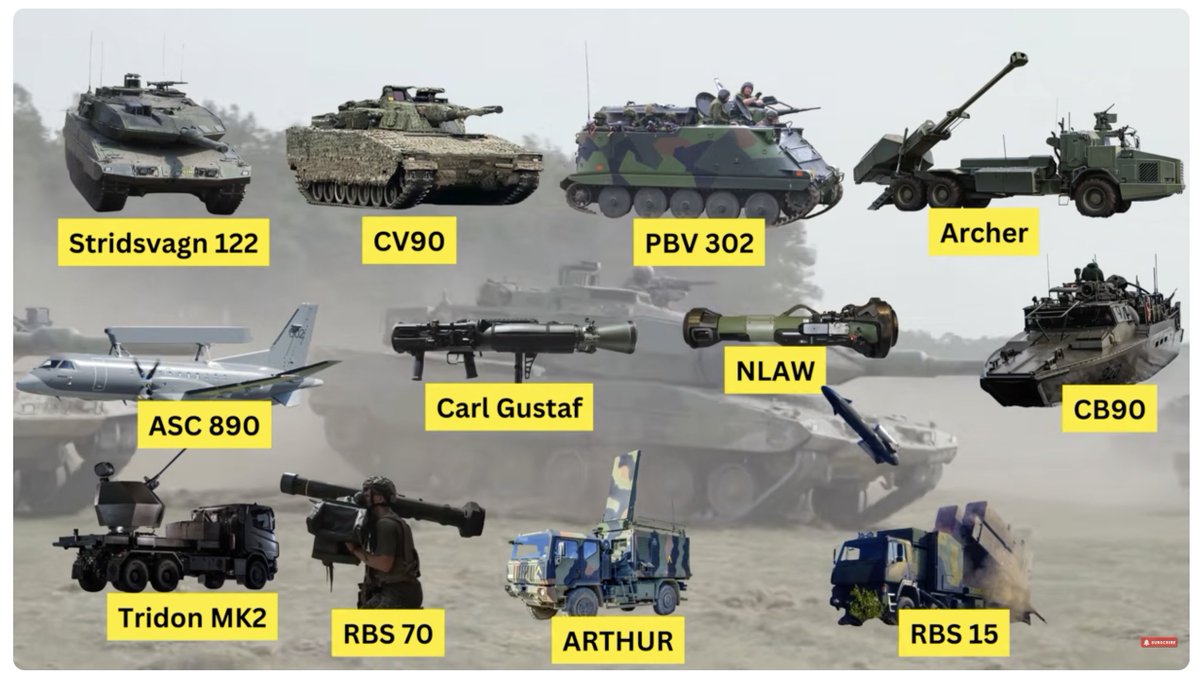
Sverige är ett fantastiskt land.

Vapen som vi i Sverige förser Ukraina med. Betänk att vi bara är 11 miljoner Svenskar. Ett ganska litet land. Ändå klarar vi av att på egen hand producera många olika typer av vapen. Bra är de också. Sverige är humlan som inte borde kunna flyga när det gäller vapenproduktion.
9
453
Jun 4
Viktig och korrekt analys över vad en europeisk förhandlingsdelegation ka. Och inte kan göra.
Lägg till att Ryssland inte ser eu som
En stormakt för vi saknar förutsättningar att projicera makt utanför vårt eget område.
Därför behöver eu inse att
Man ÄR
En geopolitisk spelare
Jun 4

Another negotiation wave is unfolding. This time, the UK, France and Germany, the E3, are looking for a formula to design talks.
There is no need to overstate Putin’s interest in negotiations. Today, he appears to be looking for a way to change the dynamics of the war, not a way out of it. But let us assume for a moment that Moscow is genuinely interested in exploring a pause.
In a potential Ukraine–E3–Russia format, there are three problems that need to be addressed before taking the plunge.
1. E3 has agency in Ukraine’s eyes. It does not have agency in Russia’s.
Moscow no longer sees Europe as an independent center of power. It despises Europe only slightly less than it despises Ukraine. For the Kremlin, Europe is not a negotiating party but a space of influence.
2. E3 has decisive leverage over Ukraine. It does not have decisive leverage over Russia.
Through bilateral and EU mechanisms, Europe can influence Kyiv through financial and military support, and the prospect of EU membership.
But Europe’s main instrument vis-à-vis Moscow, sanctions, suffers from a credibility gap. The Kremlin no longer believes they would be genuinely lifted even if an agreement were reached.
The same applies to the idea, floated by some, that Europe should resume purchases of Russian gas in order to regain leverage. In Moscow, this would be read not as Europe gaining leverage, but as Europe looking for an off-ramp back to business as usual.
A lever the other side does not believe in ceases to be a lever.
3. The format itself creates the wrong incentives.
Moscow would inevitably seek to turn E3 into a channel for Russian proposals, encouraging Europeans to persuade Kyiv to accept arrangements it would otherwise reject. This would create friction between Ukraine and its European partners precisely where unity matters most.
And when talks once again reach the question of territory, E3 will not be able to side with Russia without undermining its own principles. The process would likely run into the same wall.
The key to a breakthrough lies elsewhere: in Moscow abandoning its claims to the rest of Donbas and in Kyiv refraining from expanding its military gains in the air and on the ground. The obstacle is not the format. It is the substance.
A Ukraine–E3–Russia format may be useful if it helps clarify and expand support for Ukraine and test Moscow’s room for compromise.
As a pathway to a political settlement, however, it is difficult to see how it produces a fundamentally different outcome.
The juice may not be worth the squeeze.
Then again, diplomacy sometimes consists precisely of trying to squeeze juice from fruit that is clearly not yet ripe.
140
Jun 3
Man får mental dissonans när man hör hur kompetent Rubio är till skillnad fr nästan exakt alla andra i administrationen.
Jun 3

Marco Rubio hyllar Sverige på nytt:
USA:s utrikesminister Rubio hyllade Sverige för vårt ansvarstagande, vår självförsörjning och vår starka industri, i gårdagens hearing i senaten.
Sveriges högteknologiska kunnande och ”do it yourself”-anda gör landet till en attraktiv partner, enligt Rubio.
3
259
Jun 3
Hade missat det här, stort och viktigt.
Jun 3
The Hill: ”Sweden is now America’s most valuable tech ally. Most Americans haven’t noticed.”
In March, Sweden became the first European Union member state to sign the Pax Silica Declaration, Washington’s flagship initiative to secure global AI and semiconductor supply chains.
And now, the first European nation to sign the Technology Prosperity Deal on quantum technology, biomedicine, space, defense innovation and energy
thehill.com/opinion/technolo…
211
Viktoriöst Kokett retweeted

"The Rheinmetall Skynex and Skyranger, descendants of the Gepard, fire 35 mm programmable ammunition that detonates ahead of the target, creating a cloud of tungsten sub-projectiles. Cost per engagement is approximately 4,000 euros — three orders of magnitude below a Patriot intercept. The Gepard’s Ukrainian record is the single strongest empirical data point in the counter-drone literature. The constraint is industrial rather than conceptual: the global Gepard inventory has been effectively exhausted by transfers to Ukraine, the Skynex successor is barely in production, and the bespoke ammunition supply chain is narrow. These systems are the correct solution for the highest-value defended sites — LNG trains, desalination complexes, remaining early-warning radars — but cannot, at present production rates, cover the full breadth of Gulf critical infrastructure."
2
8
190
7,766
Jun 3
Man lyssnar alltid lite extra på en man som kan sin räls och sina tåg.

KAMYSHIN: There are two nations on the continent who know how to produce 10 million drones a year.
One of them wants not to integrate into Europe, but to invade. Russians have always been very vocal about their targets.
When we check tanks we captured from Russia in our tank repair factories, because we grab them, repair them, and try to send them back to Russia to fight against Russia, so when we check those tanks, they never write to Kyiv.
They always write to Berlin, NATO, Prague, whatever. They can't admit to themselves that they fight Ukraine only.
They believe they fight with NATO. They've always been very vocal about their targets. They want to invade Europe, period.
There's another nation which is also capable of producing whatever is needed in big war, and we are asking to get us integrated into Europe.
So, you have to choose whether you want to have Ukraine integrated into European defense industry and European Union, rather than Russia invading.
Because I've never thought that Ukraine would be integrated into European Union via security and defense road. And it looks like we will be there.
1
150
May 29
Oerhört bra gräv om förväpnad desinformation:
May 29

Here is the full version of our latest three-part investigative series, published in collaboration with @AbhishekSay, @EmilyFishbein11, and @AltNews.
altnews.in/narrative-warfare…
103
May 29
Intressant, men Kuleba är ofta det.
May 28
News of the Gripen deal for Ukraine is another major achievement by Zelenskyy in strengthening the country’s defense. And another step in deepening Ukraine’s special relationship with Sweden.
But the bigger question is this: is Ukraine becoming a Nordic country?
Not geographically. Strategically.
For decades, Ukrainians thought of their place in Europe through the lens of Central and Eastern Europe. Some dreamed of an arc from the Baltic to the Black Sea.
After 2022, reality began to change doctrine. A renaissance in Ukraine’s relations with Northern Europe began.
It was driven by three forces: the North’s leadership in supporting Ukraine, backed by resources; frictions with partners in Central Europe; and Ukraine’s search for more strategic anchors in Europe.
For Ukrainians, this movement makes sense. More than a thousand years ago, the Varangians were an important part of the rise of Rus. In the early 18th century, Sweden was already an ally of Ukraine’s attempt to break free from Moscow’s rule.
But this is not only about history.
Ukrainians are drawn to the Nordic world, where strength does not contradict democracy, defense does not contradict prosperity, technology reinforces resilience, and cool-headedness serves freedom and dignity.
Kyiv will not change its geography. But its center of gravity is changing.
The Vikings are returning to Ukraine. And Ukrainians are charting their country’s path to the North.
It is still unclear where this will lead. But it is already a fascinating turn of history.
167
Viktoriöst Kokett retweeted

Respectfully, I think we’ve seen that sanctions do not prevent Russia from carrying these types of actions
May 29

Russia’s war of aggression has crossed yet another line.
A Russian drone incursion struck a densely populated area in Romania, injuring civilians.
On EU territory.
We stand in full solidarity with Romania and its people.
As we continue strengthening our security and deterrence, especially on our Eastern border, we will keep increasing the pressure on Russia.
We are preparing a 21st package of sanctions.
1
3
379
May 29
Om man lyckas bygga kommersiella microreaktorer inom en relativt kort tidshorisont så vore det fantastiskt.
May 28

Article link:
axios.com/local/denver/2026/…
2
131
May 28
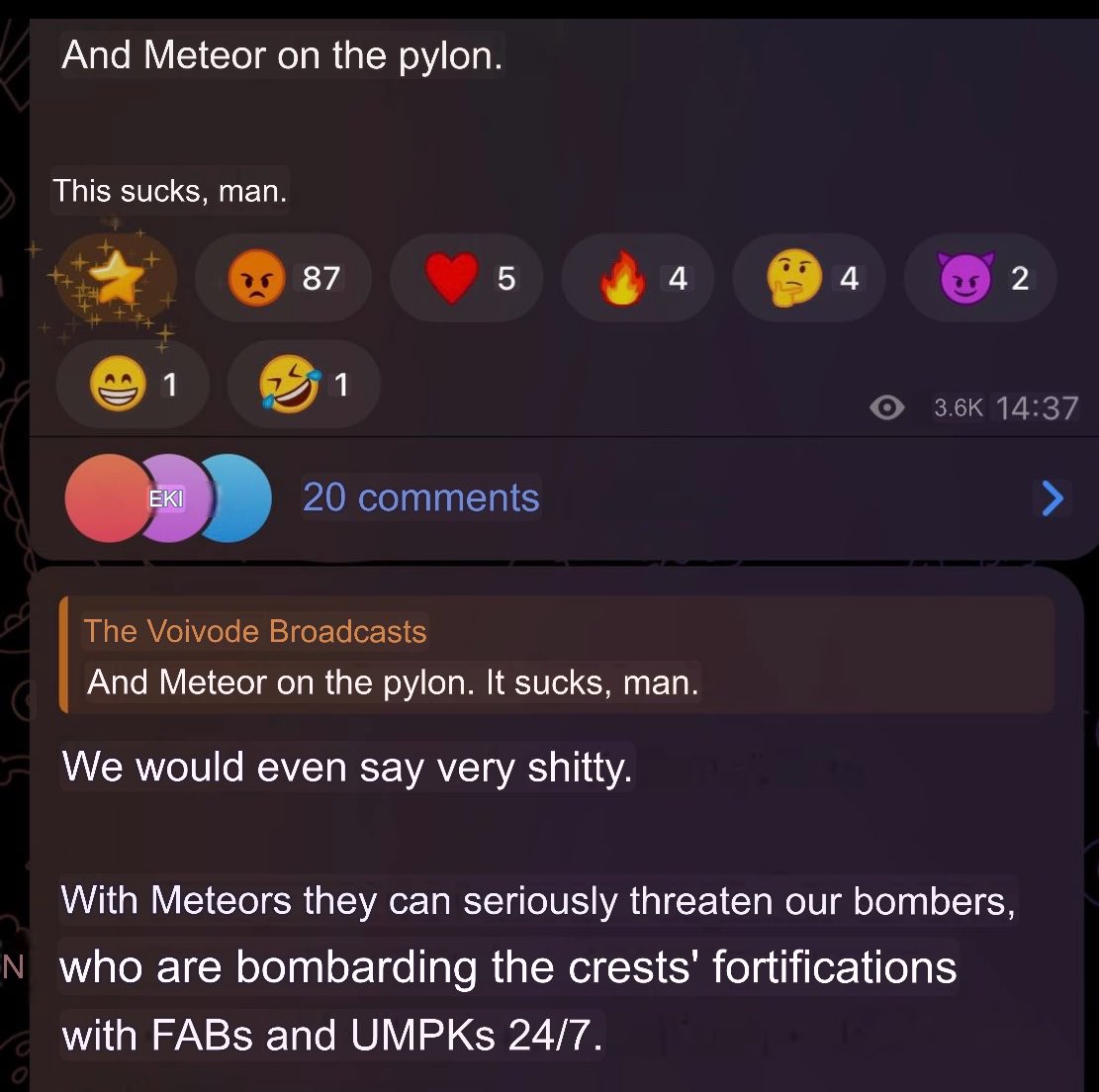
När ryska krigsbloggare surar så vet man att Sveriges stöd är bra på riktigt.

121
Viktoriöst Kokett retweeted

May 28
You can do a lot with Gripen fighter jets.
But they’re built for one thing.
Good luck, Ukraine.
918
2,727
20,938
956,196
May 28
När man råkar plocka med sig en halv miljard från jobbet för framtida ospecificerade utgifter.
169
May 27
Varför den försvarsindustriella basen växer långsammare än den borde trots stor efterfrågan:

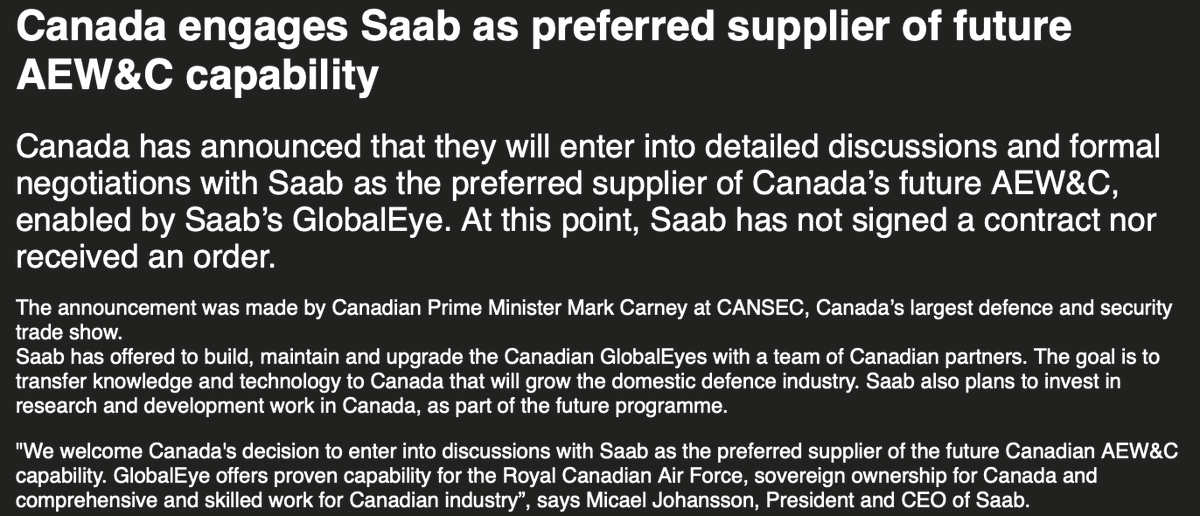
Let's go #Canada and a GlobalEye purchase!! But also if you ever want to read the most Canadian-like, confusing release:
-we want it formally
-are negotiating and announcing it
-but god forbid we commit to an order or an actual procurement.
1
147
Viktoriöst Kokett retweeted

May 27
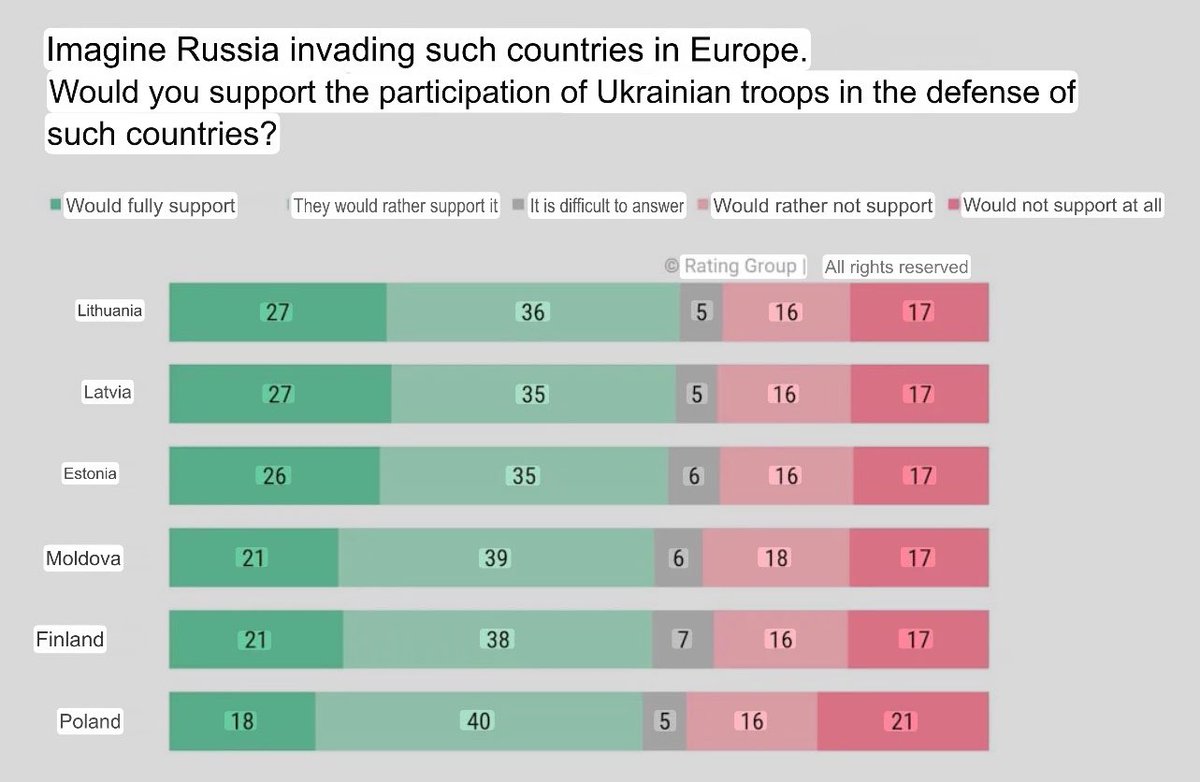
🇺🇦 More than half of Ukrainians would support the participation of the Armed Forces of Ukraine in the defense of all allied countries on the list if they were attacked by Russia, - Rating Group
9
68
495
16,418
Viktoriöst Kokett retweeted

May 27
Quite surreal...

WATCH: Footage has been released for the first time showing Iranian air defenses shoot down an American fighter jet on the 20th day of the war, captured during a wedding.
This is likely the F-15 that Iran shot down.
4
16
191
20,725
Viktoriöst Kokett retweeted

May 25
The reason that status anxiety/loss of identity from AI doesn't bother me at all is that I've been clinically depressed. I long ago stopped caring about my social status or my value as a producer. I just want to hug my sweet little fluffy rabbit.

10
2
100
20,668
Viktoriöst Kokett retweeted

May 25
Are you ready for the bunny assassins?
51
72
1,020
78,531