mechanical engineering PhD student @OhioState in the NeuroMuscular Biomechanics Lab • @RoseHulman alumna • new to #AcademicTwitter
Joined January 2022
- Tweets 18
- Following 133
- Followers 62
- Likes 153
3 Photos and videos
Katie Blessinger retweeted

16 Oct 2025
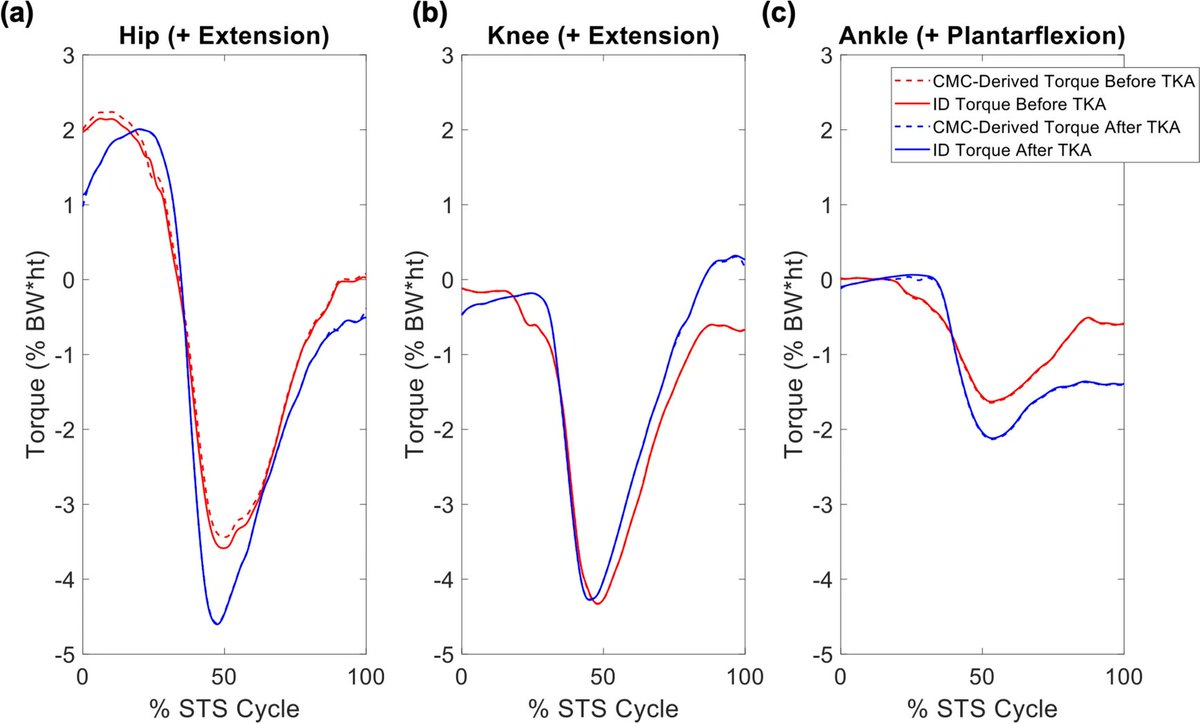
Standing up from a chair is something most people take for granted, but for many who undergo total knee arthroplasty (TKA), that simple action can remain frustratingly difficult.
Researchers analyzed movement and muscle function in patients before and six months after surgery using dynamic musculoskeletal simulations. They examined how joint motion, muscle forces, and knee extension strength contributed to the sit-to-stand movement, finding:
🔹 Quadriceps weakness persisted after surgery, with no significant changes in muscle forces or contributions to acceleration.
🔹 Despite surgical intervention, overall movement patterns and joint mechanics remained largely unchanged during the sit-to-stand motion.
🔹 Patients relied on compensatory muscle strategies before and after surgery, limiting improvements in functional performance.
Even after TKA, the consistent movement patterns observed in this study signal opportunities to refine rehabilitation by focusing on muscle strength and control to improve real-world mobility.
𝗥𝗲𝗮𝗱 𝗺𝗼𝗿𝗲: link.springer.com/article/10…
𝗦𝘁𝘂𝗱𝘆: Do Kinematics or Muscle Function During Sit-to-Stand Change Following a Primary Total Knee Arthroplasty?
𝗔𝘂𝘁𝗵𝗼𝗿𝘀: @K_Blessinger, @SarahRoelker, Reese A. Lloyd, Laura C. Schmitt, @BiomechAjit, and @ProfSiston
@OhioState
@OSUengineering
@OhioStateMAE
@OhioStateBME
@OhioStateMed
@osuhrs
@OSUWexMed
@UMassAmherst
@UMassSPHHS
@UmassKin
𝗦𝘂𝗯𝗺𝗶𝘁 𝘆𝗼𝘂𝗿 𝗺𝗮𝗻𝘂𝘀𝗰𝗿𝗶𝗽𝘁: link.springer.com/journal/10…
1
4
160
Katie Blessinger retweeted

9 Oct 2024
A great convo with OSU MAE Grad Students & 2 other great @OhioStateMAE alumni about post-PhD career paths. There are certainly differences between academia/industry/national labs, but I think you'll hear more commonalities than differences!
youtu.be/pmz5xHrn1vc?si=FAZS…
1
6
282
Katie Blessinger retweeted
5 Mar 2024
I had the pleasure of being interviewed by Nehal Jajal & @K_Blessinger for the @OhioStateMAE MEGA Alumni Podcast. Thanks for the great conversation & opportunity to discuss mental health, motherhood, & my experiences in academia. #AcademicTwitter
youtube.com/watch?v=QfjuEgcL…
4
11
1,004
Katie Blessinger retweeted

20 Oct 2023
Given that I work in a field that values the health benefits of physical activity, it's ironic how much time I spend at a computer simulating human movement. #biomechanics
4
5
98
5,087
Katie Blessinger retweeted

7 Feb 2023
For the record, brave people who make hard decisions to focus on their mental health are not “quitters”. Do better @nbc4i. We are very proud of @h_miller76 at @OhioStateMAE
7 Feb 2023

An Ohio State football player who quit the team to address his mental health will be a special guest at tonight’s State of the Union address.
nbc4i.co/3liDpSw
6
18
1,999
Katie Blessinger retweeted

2 Feb 2023
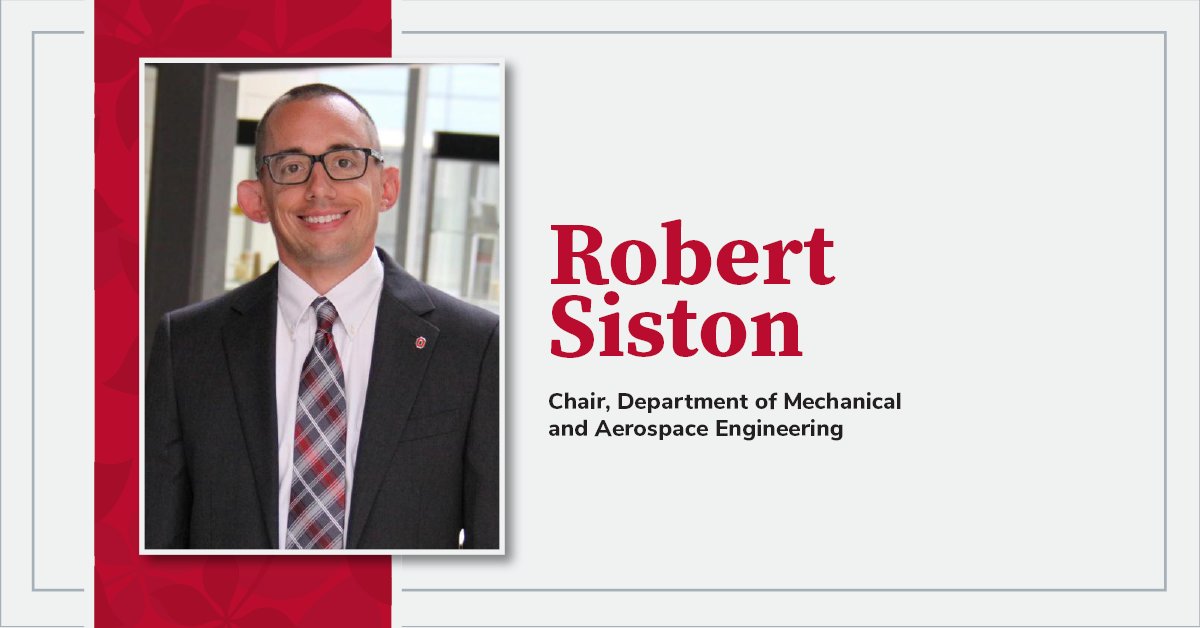
Prof. Rob Siston has been named chair of the Department of Mechanical and Aerospace Engineering, effective February 1. An @OhioState alum, he's taught at Ohio State since 2006 & holds appointments in @OhioStateMAE, @OhioStateBME, @osuhrs & Orthopaedics.
engineering.osu.edu/news/202…
1
4
17
2,659

3 Nov 2022
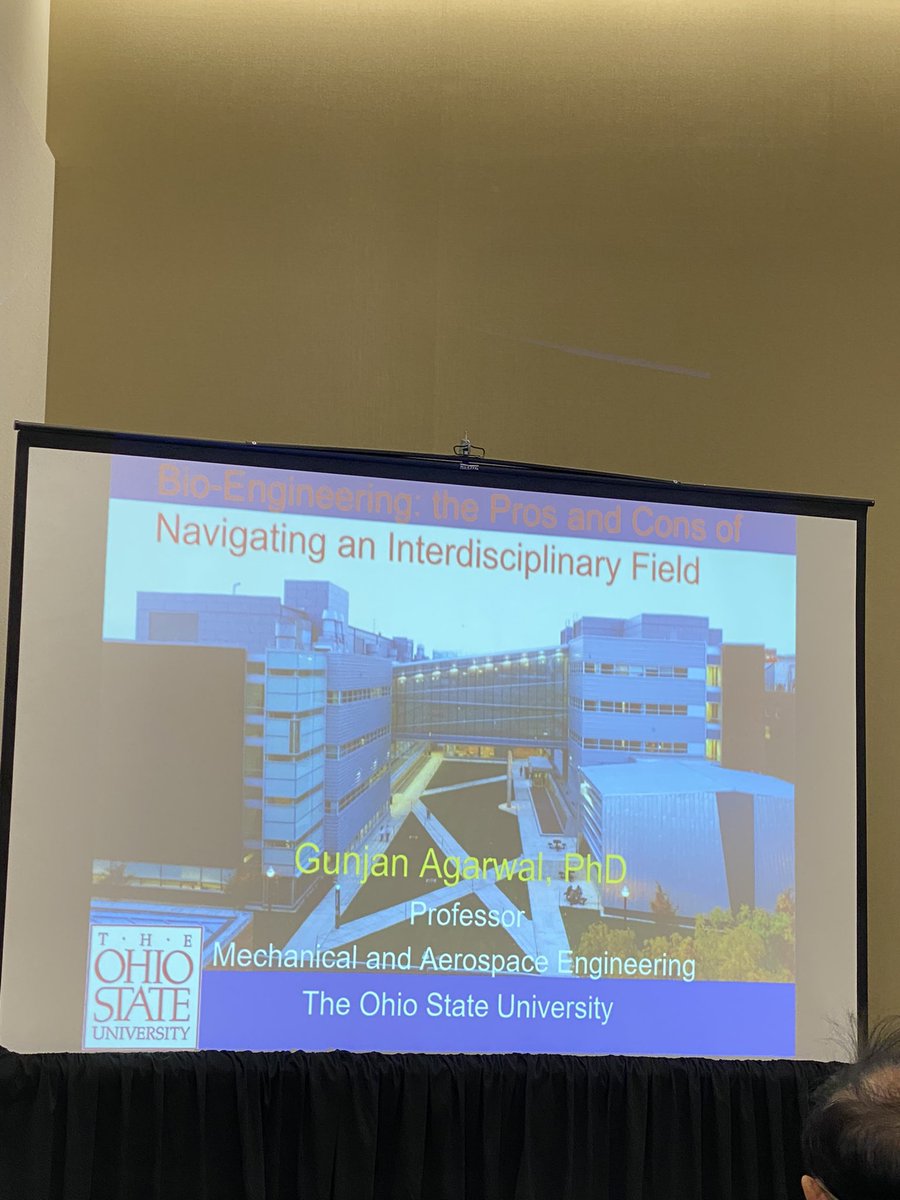
Fantastic presentation this morning by fellow buckeye Prof. Agarwal (@OhioStateMAE @OhioStateBME) on the interdisciplinary nature of bioengineering! #imece2022 @ASMEdotorg #GoBucks
2
5
Katie Blessinger retweeted

31 Oct 2022
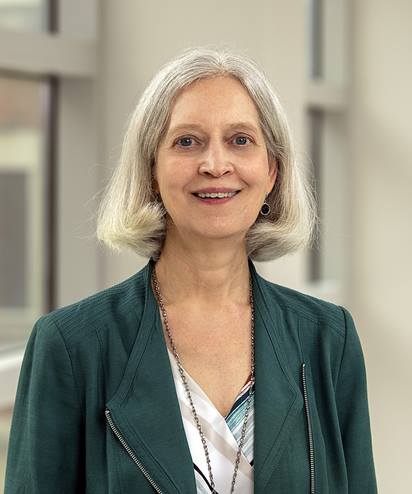
Kudos to Anne Kloos, PT, PhD, clinical professor & board-certified clinical specialist in neurologic physical therapy at @osuhrs, who recently received the American Physical Therapy Association’s Humanitarian Award. 👏👏👏
6
24
1 Nov 2022
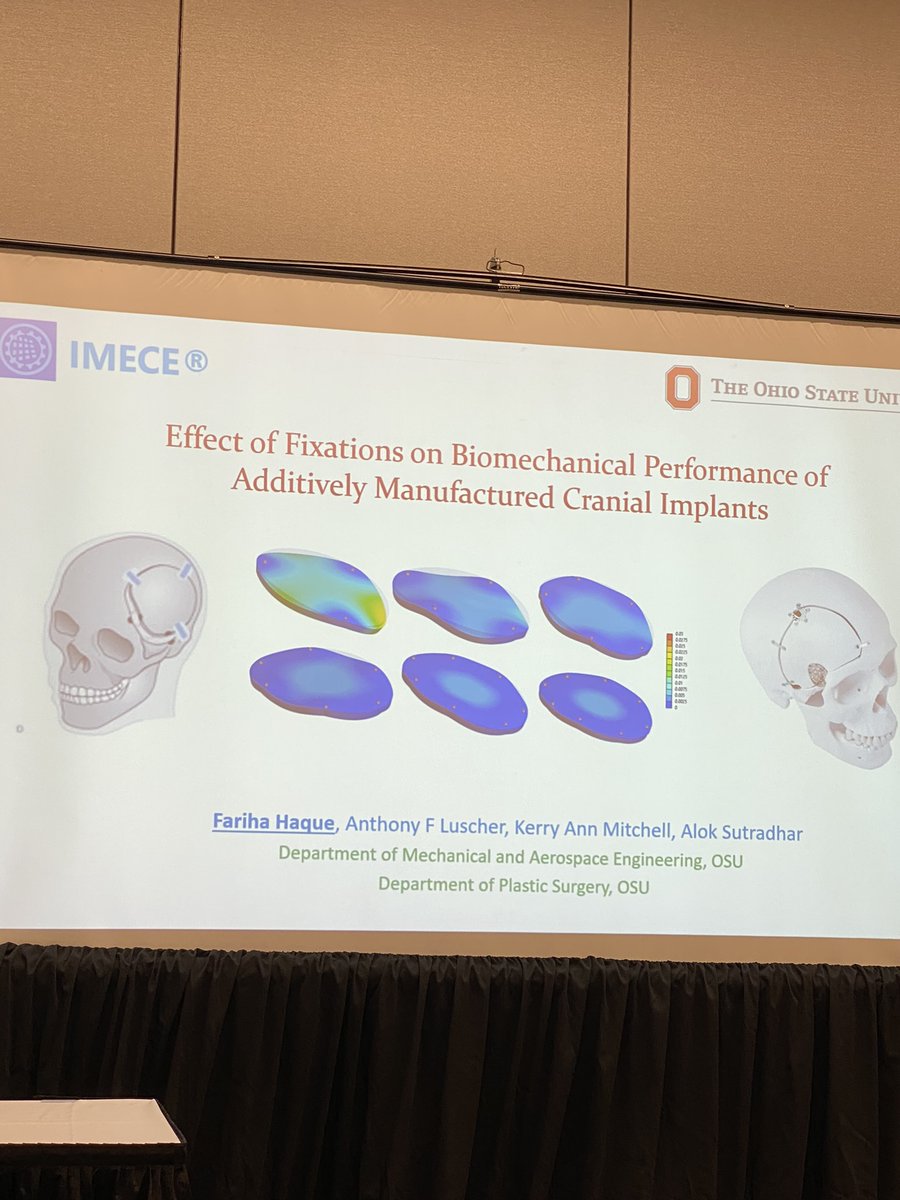
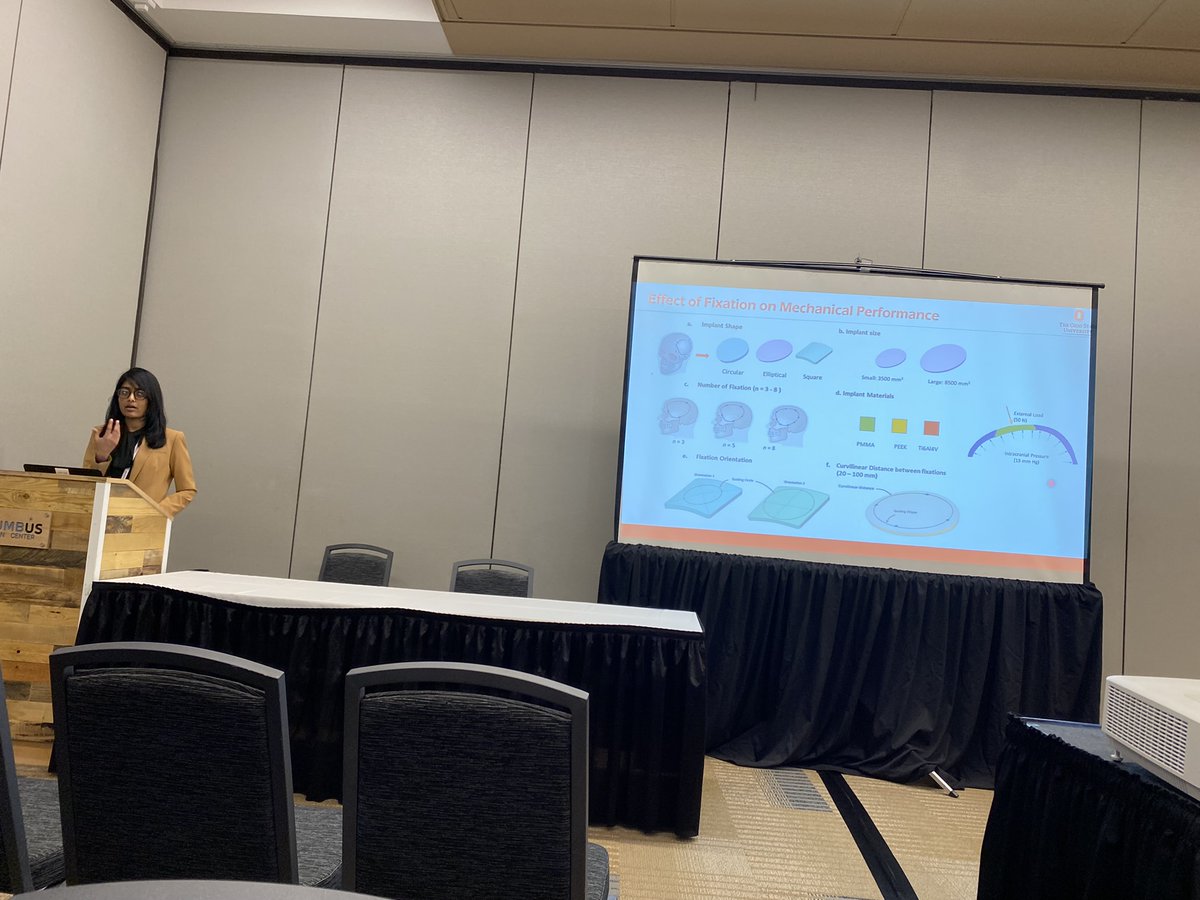
Great talk yesterday by Fariha Haque (@OhioStateMAE) on additively manufactured cranial implants at #IMECE2022! @ASMEdotorg @AlokSutrad
#GoBucks
1
4
Katie Blessinger retweeted

31 Oct 2022
Come visit the Ohio State MAE booth (Booth 402) at the @ASMEdotorg IMECE Conference from 12-5 p.m. to learn about our research, graduate programs and more.
1
1
2
Katie Blessinger retweeted

19 Oct 2022
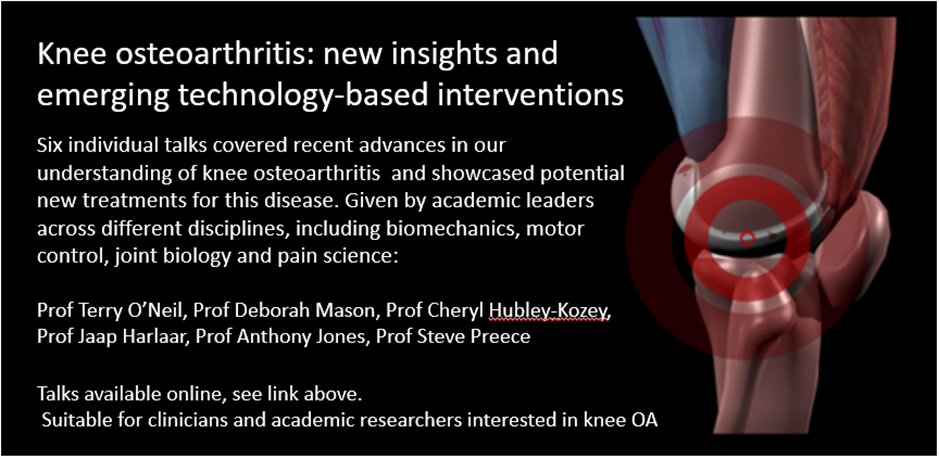
Are you a #clinician #researcher in interested in #KneeOA #osteoarthrits? Our recent #webinar on new insights and emerging technology-based is now online. Six great talks from leading academics. Click here to watch the talks: oatechnetwork.org/events/web…
9
19
Katie Blessinger retweeted
16 May 2022
Ayonga Hereid, Asst. Prof. in @OhioStateMAE, has earned a $600K Faculty Early Career Development (CAREER) award from @NSF for his work on humanoid robots and lower-limb exoskeletons. #BuckeyeEngineering #Robotics
engineering.osu.edu/news/202…
3
15
Katie Blessinger retweeted

22 Apr 2022
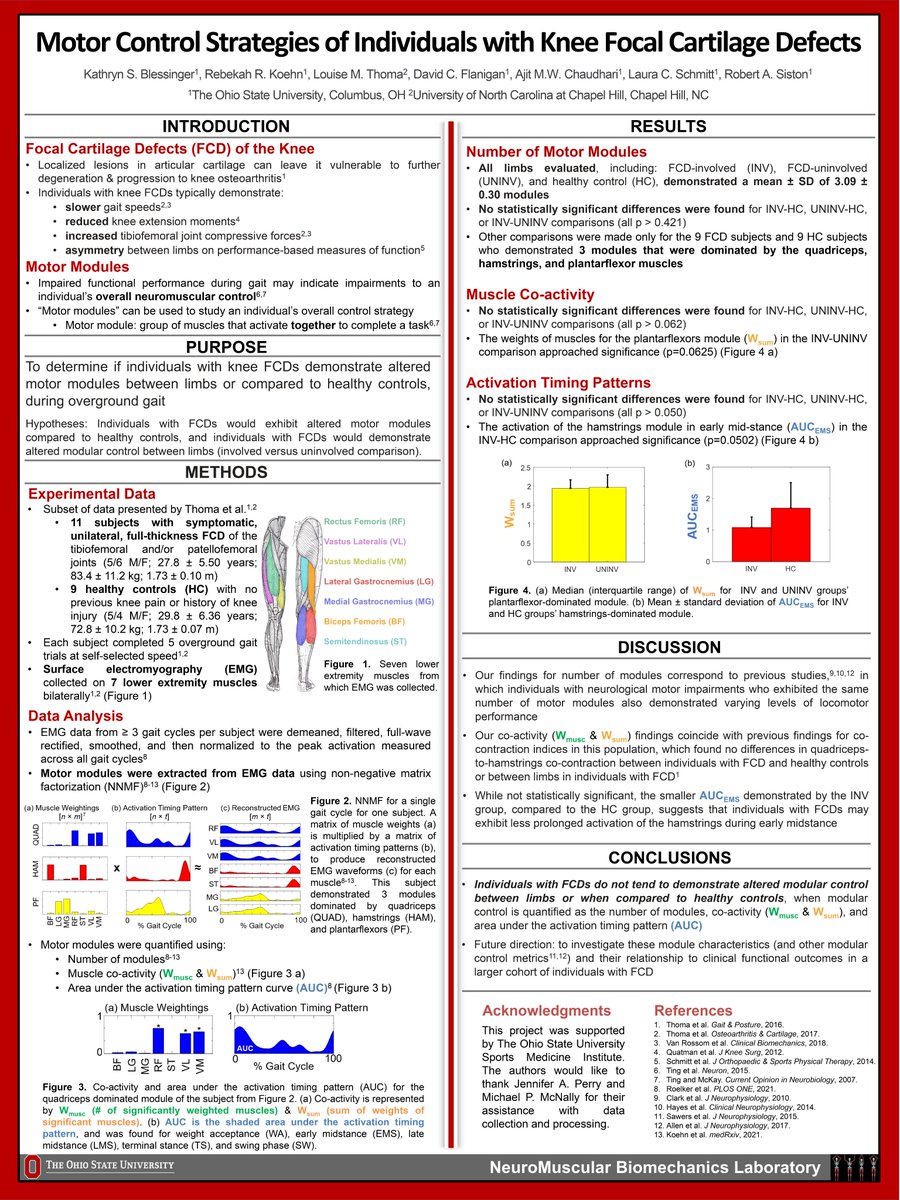
I'm excited to share the first study from my PhD work. Motor modules are malleable after TKA. Thanks to @SarahRoelker, Jeff Pan, Laura Schmitt, @BiomechAjit, and @ProfSiston for their hard work and support! #PLOSONE: dx.plos.org/10.1371/journal.…
5
26
Katie Blessinger retweeted
8 Feb 2022
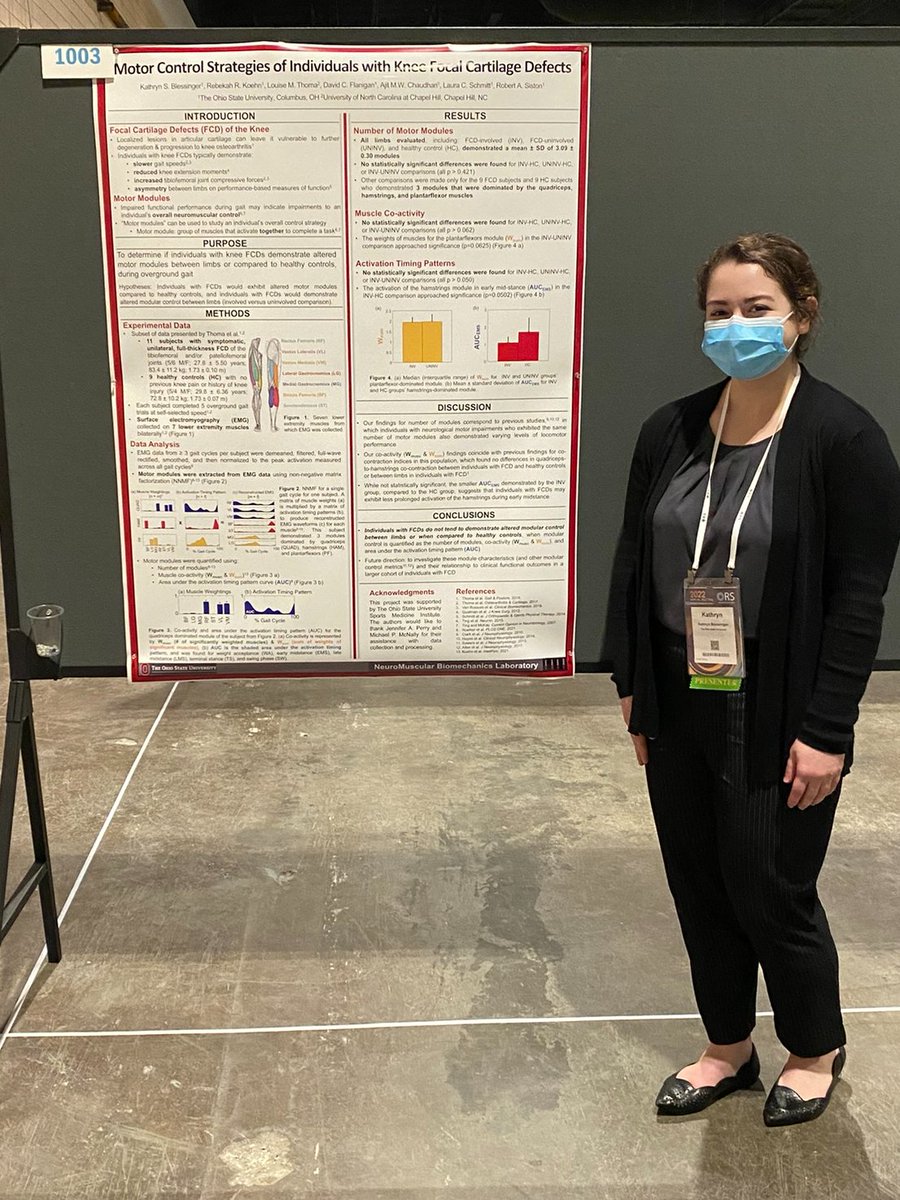
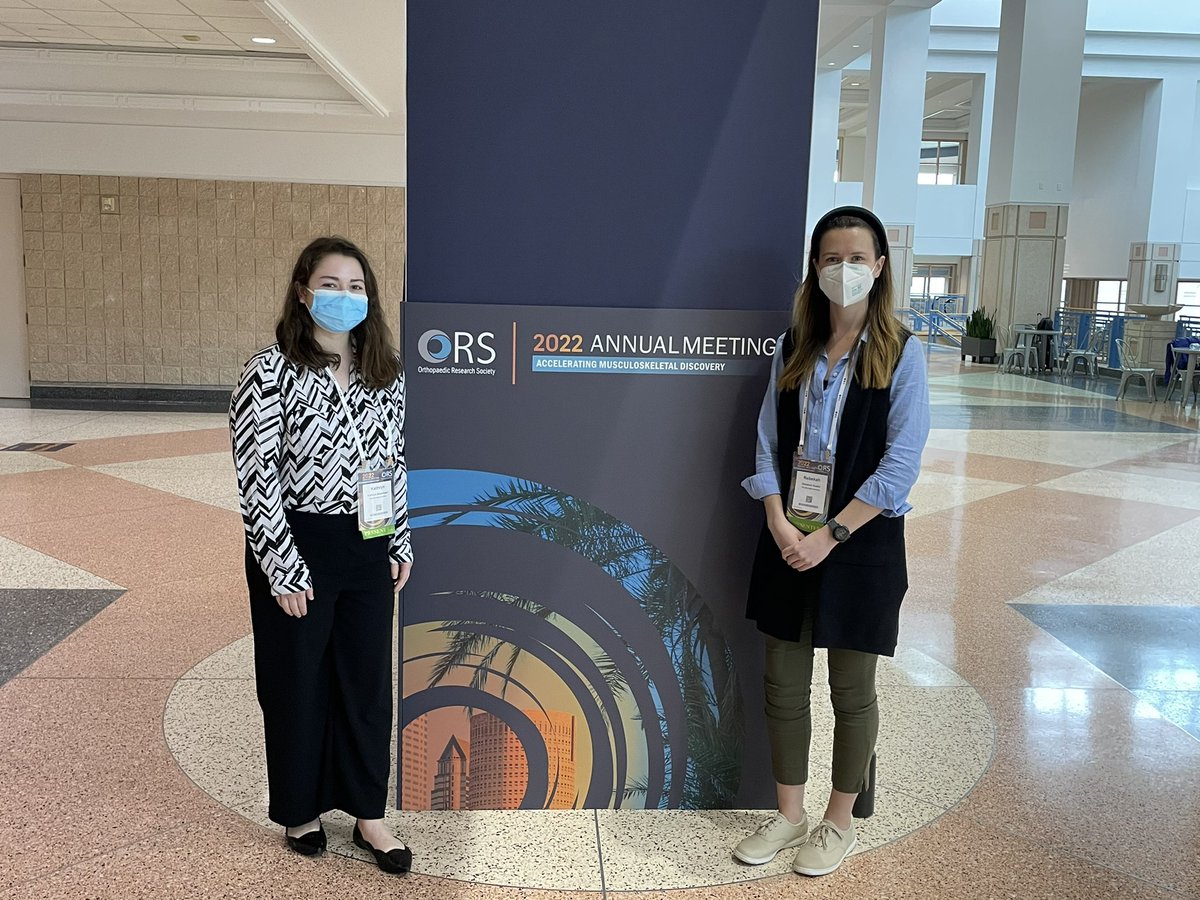
We were a small group this year for #ORS2022 but promise to drag @ProfSiston out for the next one! It was great to connect with some colleagues and to have met many more! Always great science at the @ORSsociety.
1
9