149 Photos and videos
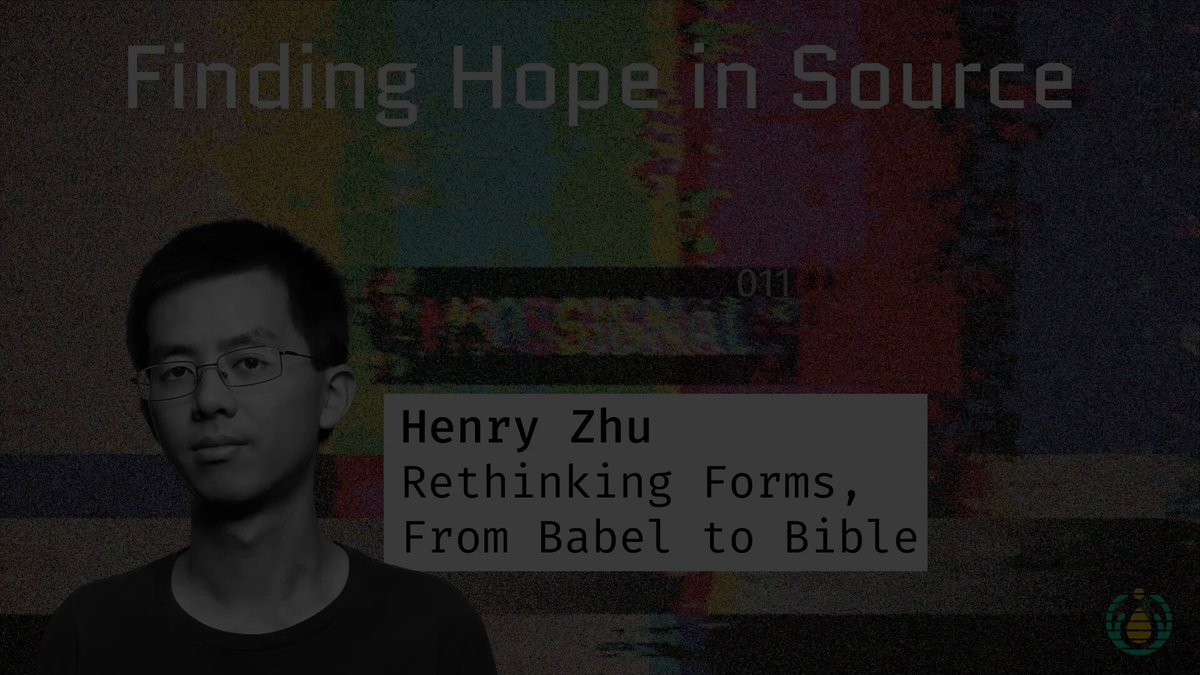
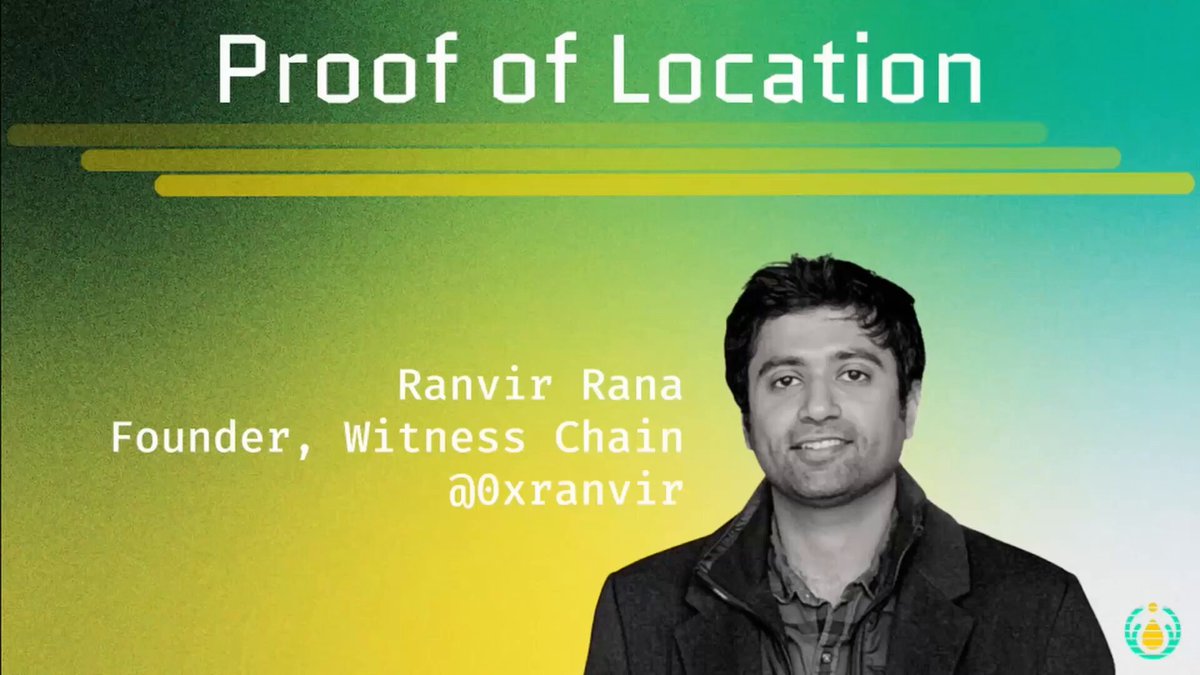


In 1993, Wired launched with Marshall McLuhan on their masthead. Silicon Valley loved “the medium is the message.”
McLuhan was famously faith-driven, a converted Catholic. He (alongside Ivan Illich) have served inspiration for @left_pad.
Best known as a steward of the pivotal open-source JavaScript compiler Babel, Henry (KB4) has spent much of his life creating open source tools – a social annotation layer for the web, a receipt printer, a faith-inflected OSS podcast. Throughout, he remains keenly aware of the effects of his “electric engineering.”
“Electric information environments being utterly ethereal fosters the illusion of the world as spiritual substance,” McLuhan wrote. “It is now a reasonable facsimile of the mystical body, a blatant manifestation of the Anti-Christ. After all, the Prince of this World is a very great electric engineer.”
Those searing words anchor @left_pad’s (KB4) nascent Bible App.
“When God creates everything, he says that he creates humans in his image,” Henry told Kernel. “What that means is that we are meant to create.”
His feed-based Bible App is a new message in a familiar medium. It’s a tool built to subvert TikTok “brain rot,” and to create precedent for technology that provides more signal and less noise.
Cursory McCluhan readers may be surprised that he had more to say on his most known quote. "In Jesus Christ, there is no distance or separation between the medium and the message,” he wrote in the 1974 essay, Liturgy and the Microphone. “It is the one case where we can say that the medium and the message are fully one and the same."
Henry tells his story of where the medium & message intertwine, and along the way, encourages each of us to create our own.
5
9
30
3,575
Kernel retweeted

Jan 26
🫡 Honcho 3.0.0 is here.
Continual learning for stateful agents.
Give your agent the 10K tokens that matter, not the 100K that don't. Give it memory that reasons.
⚡ SOTA & pareto dominant
⚡ 5x cost reduction
⚡ Per-token pricing
⚡ Unlimited retrieval
⚡ 60-90% less tokens
⚡ Granular reasoning control
Better context. Fewer tokens. Any stack. Any scale.
Much more 👇
2
8
29
7,221
Kernel retweeted

Jan 27
this is a really big release for us 🚀
we've productionized the version of honcho that defined dominates the pareto frontier in agent memory
biggest things to note:
--docs overhaul. if you've felt confused by honcho in the past, pls give it another shot. if it's still confusing, lmk
--we've been saying memory is reasoning, so now it's priced like a reasoning model. $2/m input tokens
--variable output pricing. reasoning efforts now available
--our landing page got a massive revamp that explains all of this too??!!
check out honcho [dot] dev
Jan 26

🫡 Honcho 3.0.0 is here.
Continual learning for stateful agents.
Give your agent the 10K tokens that matter, not the 100K that don't. Give it memory that reasons.
⚡ SOTA & pareto dominant
⚡ 5x cost reduction
⚡ Per-token pricing
⚡ Unlimited retrieval
⚡ 60-90% less tokens
⚡ Granular reasoning control
Better context. Fewer tokens. Any stack. Any scale.
Much more 👇
2
4
23
1,792
In 1993, Wired launched with Marshall McLuhan on their masthead. Silicon Valley loved “the medium is the message.”
McLuhan was famously faith-driven, a converted Catholic. He (alongside Ivan Illich) have served inspiration for @left_pad.
Best known as a steward of the pivotal open-source JavaScript compiler Babel, Henry (KB4) has spent much of his life creating open source tools – a social annotation layer for the web, a receipt printer, a faith-inflected OSS podcast. Throughout, he remains keenly aware of the effects of his “electric engineering.”
“Electric information environments being utterly ethereal fosters the illusion of the world as spiritual substance,” McLuhan wrote. “It is now a reasonable facsimile of the mystical body, a blatant manifestation of the Anti-Christ. After all, the Prince of this World is a very great electric engineer.”
Those searing words anchor @left_pad’s (KB4) nascent Bible App.
“When God creates everything, he says that he creates humans in his image,” Henry told Kernel. “What that means is that we are meant to create.”
His feed-based Bible App is a new message in a familiar medium. It’s a tool built to subvert TikTok “brain rot,” and to create precedent for technology that provides more signal and less noise.
Cursory McCluhan readers may be surprised that he had more to say on his most known quote. "In Jesus Christ, there is no distance or separation between the medium and the message,” he wrote in the 1974 essay, Liturgy and the Microphone. “It is the one case where we can say that the medium and the message are fully one and the same."
Henry tells his story of where the medium & message intertwine, and along the way, encourages each of us to create our own.
5
9
30
3,575
In 1993, Wired launched with Marshall McLuhan on their masthead. Silicon Valley loved “the medium is the message.”
McLuhan was famously faith-driven, a converted Catholic. He (alongside Ivan Illich) have served inspiration for @left_pad.
Best known as a steward of the pivotal open-source JavaScript compiler Babel, Henry (KB4) has spent much of his life creating open source tools – a social annotation layer for the web, a receipt printer, a faith-inflected OSS podcast. Throughout, he remains keenly aware of the effects of his “electric engineering.”
“Electric information environments being utterly ethereal fosters the illusion of the world as spiritual substance,” McLuhan wrote. “It is now a reasonable facsimile of the mystical body, a blatant manifestation of the Anti-Christ. After all, the Prince of this World is a very great electric engineer.”
Those searing words anchor @left_pad’s (KB4) nascent Bible App.
“When God creates everything, he says that he creates humans in his image,” Henry told Kernel. “What that means is that we are meant to create.”
His feed-based Bible App is a new message in a familiar medium. It’s a tool built to subvert TikTok “brain rot,” and to create precedent for technology that provides more signal and less noise.
Cursory McCluhan readers may be surprised that he had more to say on his most known quote. "In Jesus Christ, there is no distance or separation between the medium and the message,” he wrote in the 1974 essay, Liturgy and the Microphone. “It is the one case where we can say that the medium and the message are fully one and the same."
Henry tells his story of where the medium & message intertwine, and along the way, encourages each of us to create our own.
5
9
30
3,575
This is our 11th and final (for now 😉) edition of No Signal.
Just before clock strikes twelve, we find solace in knowing that there is still (and always) time for a signal to be found if you are looking in the right places.
Here are a few words from our inimitable publisher, @maceagon, who shepherded us so well through these eleven stories of Kernel Fellows.
1
1
4
366
Kernel retweeted

Jan 12
Introducing "Fast-fourier Transform (FTT), Number-theoretic Transform (NTT) and Lattice-based Cryptography", a two-part series exploring FFT, NTT and how NTT is used in lattice-based algorithms like ML-KEM and ML-DSA.
godspowereze.com/posts/fast-…
I'm happy to share the part one of this focused on FFT and NTT.
With over 7500 words and rich diagrams, it takes you on a journey from Polynomial Multiplication, Complex Numbers and Roots of Unity to FFT and NTT.
It makes no assumption about your knowledge. Rather, it gives you everything you need to follow through. All you need is the willingness to learn.
I put in so much love and care into making this valuable to you and I hope you get value out of it. Do check it out and let me know.
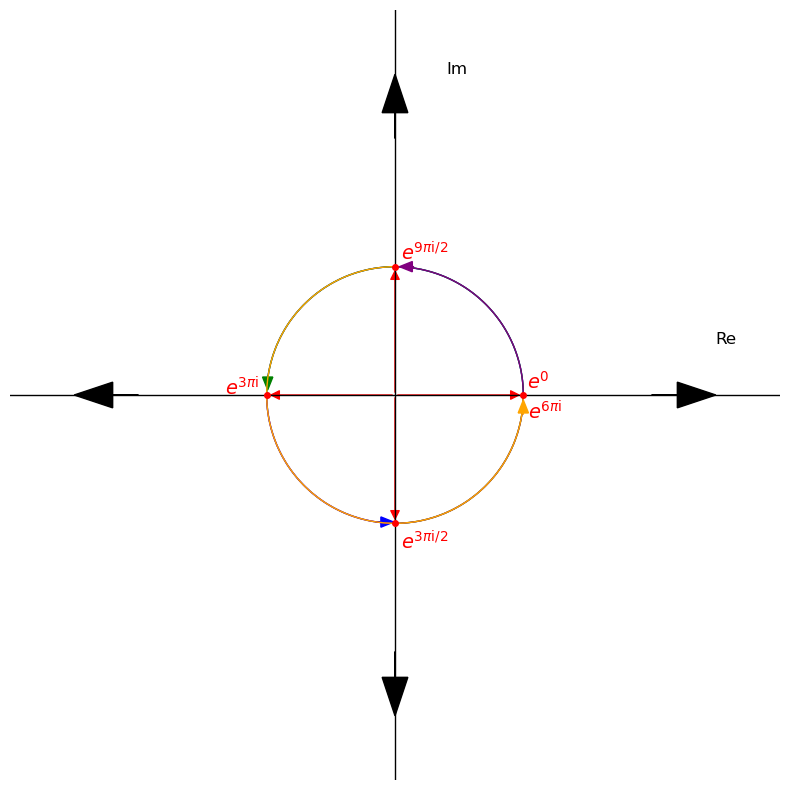
ALT Diagram of the unit circle with the 4th roots of unity labelled on it
2
7
31
1,020
Kernel retweeted

Jan 8
@Kernel0x is one the most important communities on the web3
there I find a lot of people open to teach, share knowledges and build
The round is open and I highly recommend to apply

Kernel is a residency for technologists pursuing high-quality work – from research to production – in crypto & beyond.
We offer:
▷ A technical & philosophical culture
▷ Accountability, refinement, & distribution
▷ A network of unusually talented peers
KB12 apps are open. Apply early by 12/31.
apply.kernel.community/
1
4
362
we began Kernel nearly 6 years ago.
while Kernel's shape may transfigure,
the values at our roots do not.
happy 2026 🤓
Jan 5

I've been thinking a lot about @Kernel0x's education philosophy, and the call to "deschool society".
It's slowly taking root ...
johnx.co/notes/no-summit
1
9
525

Kernel retweeted

12 Dec 2025
Thrilled to share that I've joined the @ethereumfndn as its in-house defi specialist.
I’ll be working to deepen the Foundation’s connection to defi and strengthen Ethereum as the global financial settlement layer.
Onward 🫡
61
25
326
45,384
Kernel retweeted

22 Dec 2025
The leader in Agent Memory.
Top scores on 3 leading benchmarks the most token efficient memory on the market.
Always ahead of the curve.
gg @plasticlabs crew.
19 Dec 2025
Honcho has fully determined the Pareto Frontier in Agent Memory.
It’s state-of-the-art on LoCoMo, LongMem, and BEAM.
Honcho is also the fastest, cheapest and most token efficient memory solution.
10
9
32
2,349
Kernel retweeted
19 Dec 2025
Honcho has fully determined the Pareto Frontier in Agent Memory.
It’s state-of-the-art on LoCoMo, LongMem, and BEAM.
Honcho is also the fastest, cheapest and most token efficient memory solution.
29
48
246
64,005
Kernel retweeted

19 Dec 2025
Kernel is a great program and community. Applications are open for their next batch!!
Kernel is a residency for technologists pursuing high-quality work – from research to production – in crypto & beyond.
We offer:
▷ A technical & philosophical culture
▷ Accountability, refinement, & distribution
▷ A network of unusually talented peers
KB12 apps are open. Apply early by 12/31.
apply.kernel.community/
2
1
5
1,474
Kernel retweeted

19 Dec 2025
Kernel is an incredible place to build — if anyone has questions or wants an intro, please let me know 💖
Kernel is a residency for technologists pursuing high-quality work – from research to production – in crypto & beyond.
We offer:
▷ A technical & philosophical culture
▷ Accountability, refinement, & distribution
▷ A network of unusually talented peers
KB12 apps are open. Apply early by 12/31.
apply.kernel.community/
1
3
260
Kernel retweeted

19 Dec 2025
the 12th time is the charm
looking forward to working closer than ever with the participants in @Kernel0x
the energy shift from fellowship to residency is palpable
if you're considering 'what is next?' or building something new, we'd love to chat
x.com/Kernel0x/status/200205…
Kernel is a residency for technologists pursuing high-quality work – from research to production – in crypto & beyond.
We offer:
▷ A technical & philosophical culture
▷ Accountability, refinement, & distribution
▷ A network of unusually talented peers
KB12 apps are open. Apply early by 12/31.
apply.kernel.community/
2
6
370
Kernel retweeted

19 Dec 2025
@Kernel0x's back in 2026 for a new -- yet familiar -- residency program
as per usual, it's grounded in craft, quality, and a sense of a more intentional, collective future
Kernel is a residency for technologists pursuing high-quality work – from research to production – in crypto & beyond.
We offer:
▷ A technical & philosophical culture
▷ Accountability, refinement, & distribution
▷ A network of unusually talented peers
KB12 apps are open. Apply early by 12/31.
apply.kernel.community/
1
3
253
Kernel retweeted

19 Dec 2025
As a #KB5 fellow, strongly recommend Kernel to any tech builder curious about web3/crypto & beyond! It'll expand your thinking, spark new ideas, and connect you with an incredible community of like-minded folks in profound ways.
Kernel is a residency for technologists pursuing high-quality work – from research to production – in crypto & beyond.
We offer:
▷ A technical & philosophical culture
▷ Accountability, refinement, & distribution
▷ A network of unusually talented peers
KB12 apps are open. Apply early by 12/31.
apply.kernel.community/
1
2
290
Kernel is a residency for technologists pursuing high-quality work – from research to production – in crypto & beyond.
We offer:
▷ A technical & philosophical culture
▷ Accountability, refinement, & distribution
▷ A network of unusually talented peers
KB12 apps are open. Apply early by 12/31.
apply.kernel.community/
5
11
44
7,249
Application is quick, easy, and you'll hear back in two weeks.
apply.kernel.community/
1
2
266
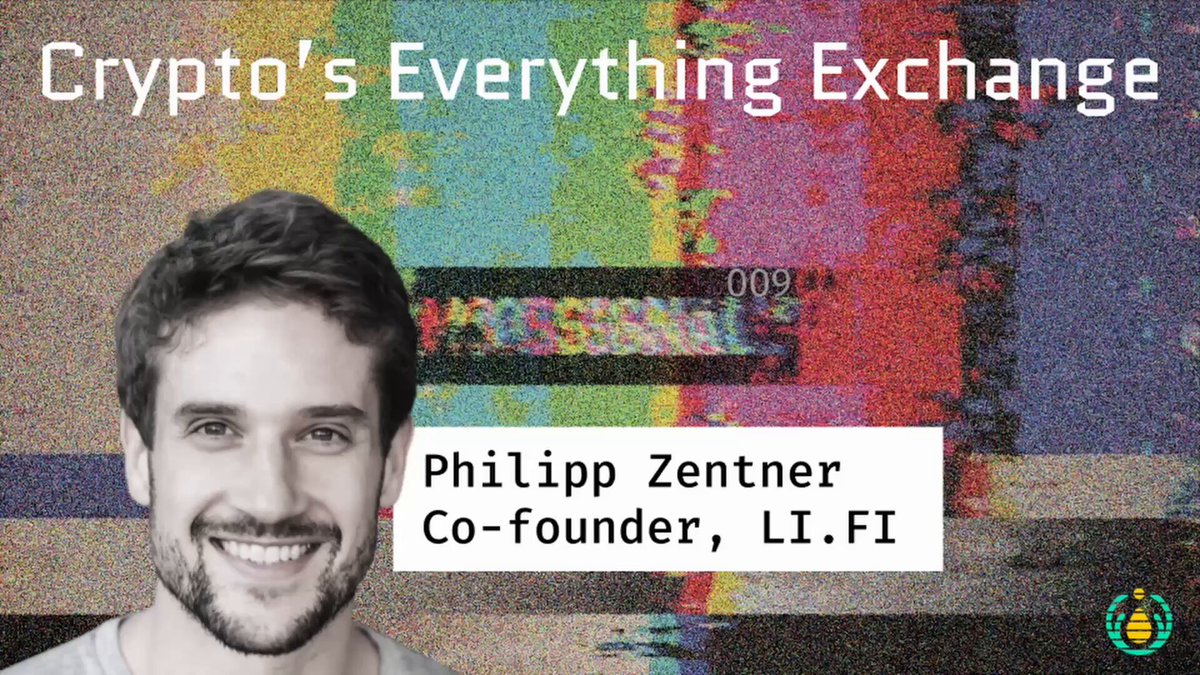
Congrats to @PhilippZentner and the entire @lifiprotocol team on their recent Series A. We're grateful to have had Philipp in KB3.
He recently walked us through LiFi’s core thesis.
• Unified access to every major liquidity venue, aggregating bridges, DEXs, and settlement layers into the most optimal routes.
• A flexible API and an infrastructure stack, from aggregation to auctions to observability, monitoring, and policy engines.
• A network already trusted by 600 clients, including major wallets like Phantom, Binance, MetaMask, Robinhood, Ledger, and Gnosis Safe.
His words captured the moment: "It's the (age of the) token economy. The question is who is going to build the biggest gateway. This is what we have been building since day one. There is no other company in this space as well positioned as us to address this problem."
7
656