
CEO at Farm Direction, Author of The Van Trump Report, Founder of @FarmconConf, Angel Investor, Trader, Board Member, and host on the "Highly Volatile" Podcast
Joined March 2011
- Tweets 13,104
- Following 625
- Followers 28,776
- Likes 2,589
8,591 Photos and videos


Jun 15
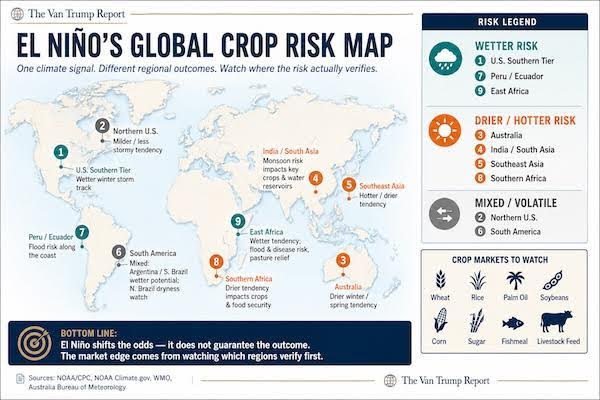
Dancing to the actual music, not the headline noise... The media is flooded with warnings of a "Super El Niño," with models placing a 63% probability on a historically strong event by winter. But in commodity risk management, trading the headline label rather than verified data is a quick way to lose capital.
History shows us that even strong El Niño events behave differently, and they don't automatically guarantee a poor U.S. corn or soybean crop. In fact, summer row crops often benefit from reduced heat stress during these cycles.
The true risk profile of this climate pattern is actually lagged. The physical tightness and balance-sheet constraints often don't manifest until the following year's harvests—hitting Australian wheat, Indian monsoons, and South American logistics in 2027.
As a producer, I used the recent market rallies to lock in pricing and reduce multi-year risk for the 2027 crop. As a speculator, I'm starting to build an incredibly small, long position in corn where bears are overdoing the downside, while entirely avoiding soybeans due to heavy global supply.
The professional move right now isn't to panic or get aggressively bullish based on climate hype. Build a framework that separates probability from confirmation, and verify the weather week by week, region by region.
2
15
47
5,947
Jun 11
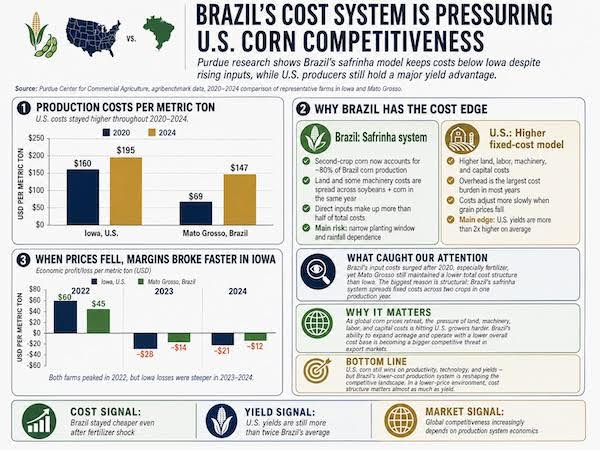
Brazil’s #corn advantage isn’t just weather or acres.
It’s structure!
Their safrinha system lets producers pull a second crop off the same land base and spread fixed costs across more bushels.
That’s hard for U.S. farmers to compete with when land, machinery, labor, and interest costs keep rising.
The low-cost producer always gets a vote!
3
21
96
5,973
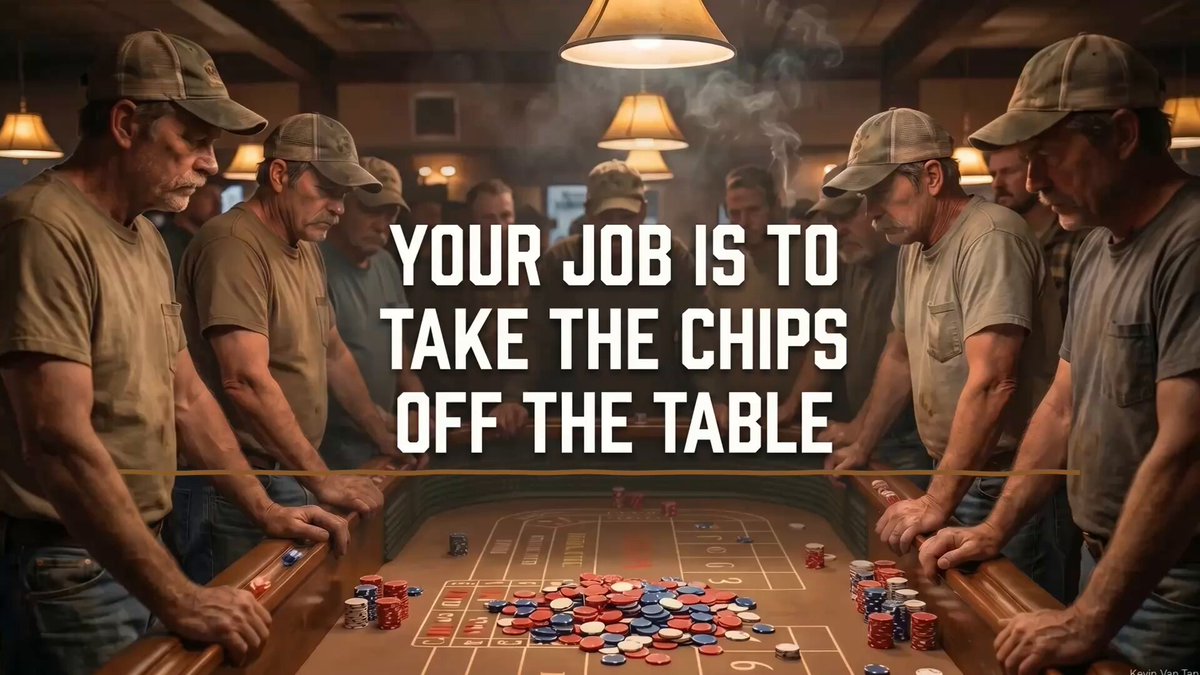
Traders add risk!
Producers, however, START with all their risk on the table.
That changes everything about how you should think about marketing your crop.
I break down the "craps table" mindset that's helped me better understand taking risks off the table and not increasing my overall risk exposure.
Stay ahead of the trends and the followers with a complimentary month of The Van Trump Report -> vantrumpreport.com/free-tria…
FarmtownConversations #CropMarketing #Farming #GrainTrading #Mindset
1
1
8
2,757
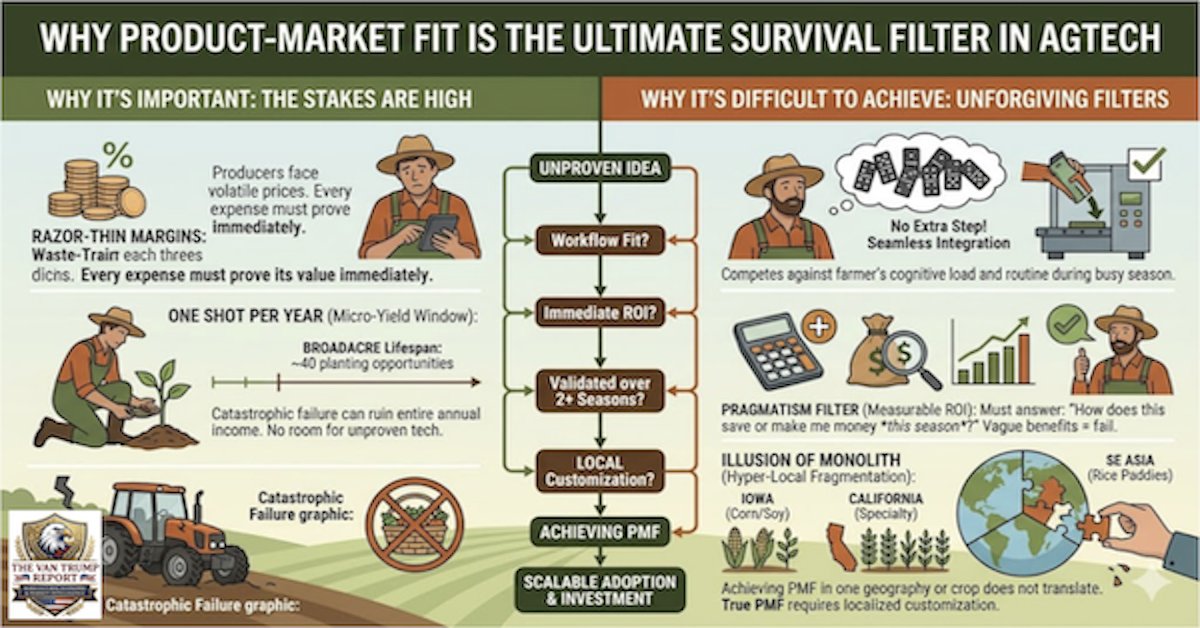
Early in my career, I got swept up in the romance of massive TAMs and revolutionary tech. I paid for those mistakes with real capital.
The #AgTech graveyard is full of brilliant founders who underestimated adoption friction and respected coding more than they respected biology.
If you're allocating capital or building in this space, read this before you write the next check:
vantrumpreport.com/2026/06/0…
1
2
10
1,980
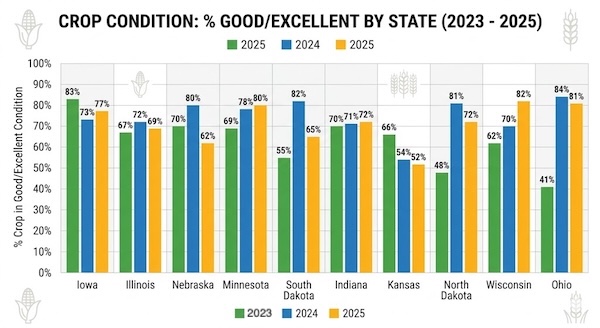
For some reference on this afternoon's crop progress and conditions data... #corn #croprogreess
1
8
2,133
May 28
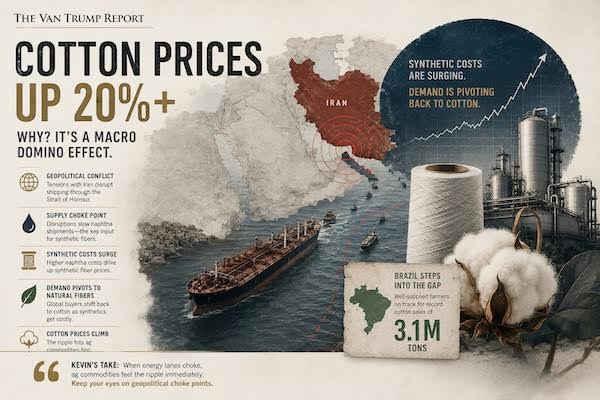
Everyone is watching cotton’s 20% rally, but the real story is a geopolitical supply-chain pivot unfolding in real time:
🛢️ Iran tensions choke shipping through the Strait of Hormuz.
🧪 Naphtha shortages trigger massive inflation for synthetic fibers.
🌱🌱 Global textile demand pivots aggressively back to natural fibers.
🇧🇷 Brazil steps in with record cotton sales pacing near 3.1M tons.
This is the kind of macro domino effect commodity markets constantly price before the broader economy fully understands what’s happening: Energy disruption ➔ petrochemical tightening ➔ synthetic inflation ➔ agricultural demand shift.
The biggest moves in ag always begin far outside the farm gate.
#Cotton #CommodityMarkets #Agribusiness
1
12
40
8,392
May 27
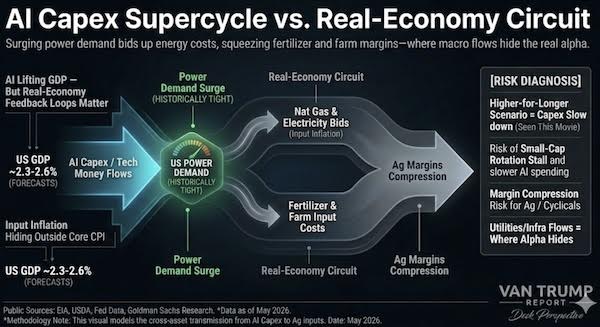
One of the biggest things I’m trying to communicate with this graphic is that the AI boom may ultimately become just as much an energy and infrastructure story as it is a technology story.
Right now, the market is heavily focused on the obvious first-order winners:
* semis
* hyperscalers
* compute
* software
* productivity
But I think the more interesting macro question is:
What happens underneath all of that?
AI infrastructure requires enormous amounts of electricity. And in the U.S., a huge portion of that power still runs through natural gas.
That means AI capex doesn’t just affect tech.
It pulls on:
* power markets
* utilities
* natural gas
* transmission infrastructure
* fertilizer economics
* industrial input costs
* real-world operating margins
That’s the part of the cycle I believe is still being understated.
Most investors still mentally separate “digital growth” from “physical economy consequences.”
But increasingly, they’re becoming the same system.
The market prices the dream first.
The real economy absorbs the costs later.
That’s why I think watching capital flows into:
* utilities
* infrastructure
* power generation
* real assets
may become just as important as watching pure AI narratives themselves.
#AI #Macro #Energy
7
1,119
May 27
Each year, I see producers watching the market carefully, trying to forecast the highest price in order to sell their bushels, and then panic-selling when they get a bit too greedy, and prices collapse, and they miss their shot. I've been there myself many times and have made those same mistakes.
What I'm about to share in this four-minute audio clip is a conversation with Todd Loechler, where I talk about the simple system I use to make sure that never happens. I call it my "bullets strategy" — and it completely changed how I think about marketing. I hope it helps provide some thoughts on how you can use "time" to better design a less emotional roller-coaster marketing strategy. This approach allows for spreading risk over a period of approximately two to two and a half years. This strategy is not designed to capture the exact high of the market, but rather to help me systematically better manage risk.
For the rest of the story, listen to the full Farmcon Podcast #GrainMarketing #FarmCon #AgBusiness
1
13
4,369
May 26
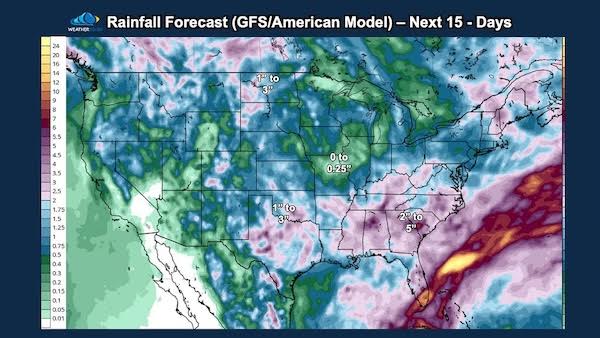
Everyone is talking about short-term model noise, but look at the macro trends. Our partners over at Weather 20/20 (@glezak) have been shouting about this late-May cycle for months, and it’s hitting right on schedule.
We’re finally seeing the structural shifts needed to bring meaningful moisture into some of the drought-stricken zones of the Plains. In a weather-sensitive bull market, these shifting rainfall zones dictate grain margins. Stop chasing 6-hour model runs and watch the larger cycling pattern. Technology has finally advanced enough to provide more serious, longer-term forecasts.
Don't get caught on the wrong side of this weather cycle. Track the next 15-day moisture trends before the market prices it in. 🌦️📉 #AgTrading #AgWeb #Weather2020
👇👇Access the exclusive Weather 20/20 forecasting Dashboard. The Van Trump Report x Weather 20/20
2
3
21
10,141
May 26
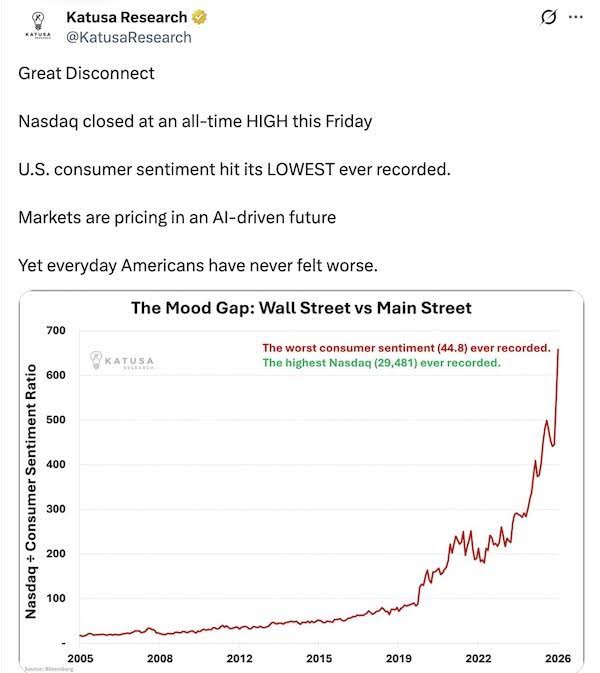
Nasdaq is hitting all-time highs on massive AI promises, but 99% of CEOs are planning short-term layoffs while only 32% say their teams are actually optimized for it. AI needs cheap energy and cheap money to scale, and right now, we have neither. I’m using these rallies to trim a bit of isk and build cash. 📈📈📈📈📈
Read my full daily commentary and macro outlook here:vantrumpreport.com/free-tria…
#Stocks #Macro
2
1,554
Kevin Van Trump retweeted

May 25
At 100 years old, WWII veteran Bernie Smoot still drives his convertible Ford Mustang to play golf five days a week, shoots in the low 80s and shares wisdom from 74 years in the game: “You live to play golf. But to reach my age, you play golf to live.”
To celebrate Bernie — who landed at Omaha Beach just months after graduating high school — his PGA Coach and friend Jeff Maynor organized a tournament in his honor at the University of Maryland Golf Course, where Bernie plays five days a week.
Maynor, the course’s PGA Director of Golf, has run a @PGAHOPE program there for Veterans since 2019, which Bernie loves to support. The tournament for Bernie was a chance for those Veterans to thank him and celebrate his love for the game.
142
759
7,050
532,903
May 25
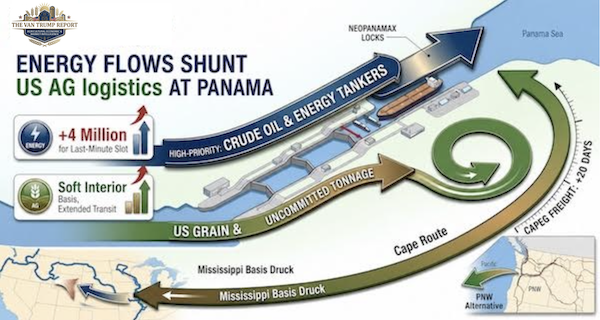
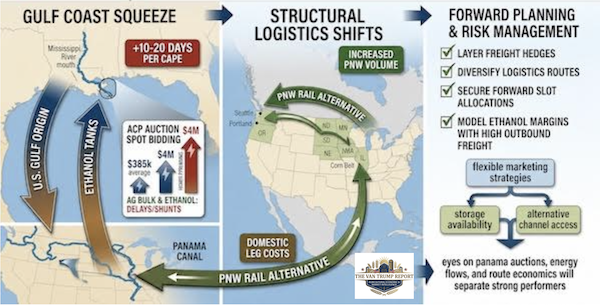
The Panama Canal is quietly eating your Gulf basis, and the culprit isn’t a drought—it’s the Middle East.
While headlines fixate on the Strait of Hormuz, a massive structural shift is hammering U.S. ag logistics.
A breakdown for elite operators and traders: 📷 (1/4)👇
3
7
36
9,415
May 25
Zero water/drought issues exist at the Canal right now. Yet last-minute spot auction slots skyrocketed from a $135k average to $385k—with energy tankers bidding up to $4M for urgent transits. Result: Grain is forced onto the Cape Route, adding 10-20 days. (3/4)
1
1
6
2,177
May 25
If you run your operation like a business, waiting for basis to heal is a losing bet. Evaluate PNW rail alternatives now. Layer freight hedges immediately. Expect soft interior values; capitalize on on-farm storage. Eyes on Panama auctions, not just the weather. Protect your chips and run your farm like the global enterprise it is... (4/4)
Start your free trial today: vantrumpreport.com/free-tria…
#AgCommodities #MacroFinance #Logistics
1
1
11
1,311
Teaching the grandson the right way to grab a quick drink of water. #ProudGrandPa
2
16
3,884
Kevin Van Trump retweeted

Mar 24
NEW: Kentucky family rejects $26 million offer to convert part of their farm into a data center despite the offer being about 10 times the going rate for farmland in the area.
"If it's my way, I'll stay and hold and feed a nation. 26 million doesn't mean anything."
"As long as I'm on this land, as long as it's feeding me, as long as it's taking care of me, there's nothing that can destroy me if I've got this land."
Video: Local 12 WKRC
5,117
24,778
159,024
8,373,497
Mar 12
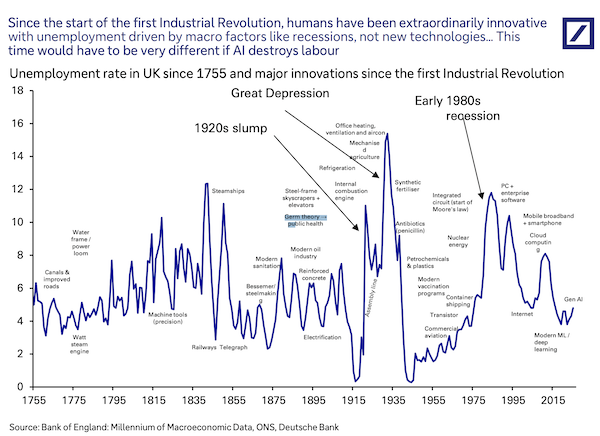
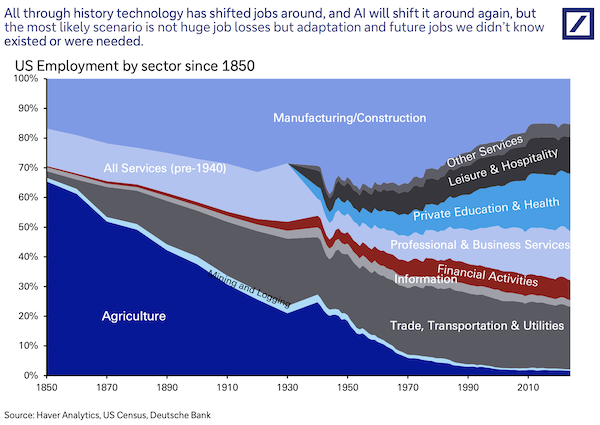
This provides a bit more detail regarding past technological advancements and how they impacted employment... #AI
1
10
1,604
Kevin Van Trump retweeted

Mar 1
BREAKING: AI can now analyze stocks like Wall Street analysts (for free).
Here are 10 insane Claude prompts that replace $2,000/month Bloomberg terminals (Save for later)

235
1,611
10,383
1,830,943