
Persistent pain physio- helping phenomenological aggregates - aka people. NHS supporting, author of one unpublicated book #YellowBrickRoad
Joined March 2020
- Tweets 13,183
- Following 879
- Followers 321
- Likes 7,597
788 Photos and videos









Pinned Tweet

7 May 2024
1
1
7
849
Kfizz retweeted

This aptly describes the world we are currently living in--
"Part of the problem is the left hemisphere's reluctance to confess when it is nonplussed. Its self-belief is a problem: it believes its own propaganda." ~Iain McGilchrist, The Matter With Things
2
15
56
1,444
Kfizz retweeted
If you evade suffering you also evade the chance of joy. Pleasure you may get, or pleasures, but you will not be fulfilled. You will not know what it is to come home.~Ursula K. Le Guin, The Dispossessed: An Ambiguous Utopia.
2
21
128
2,780
Kfizz retweeted
Why are we seeing so much public, collective anger right now? Often, it's a cover for collective grief. Dr. Sumit Anand joins me to trace the thread between ancient myth, bread riots, and modern cultural rage. Link to the episode below.
2
4
28
1,483
May 29
or you could loosen your collar?
May 28

Why does Sting look like the head of a planetary council in a science fiction film

20
Kfizz retweeted
Emptiness is a great feminine secret. It is something absolutely alien to man; the chasm, the unplumbed depths, the yin. ~CG Jung, CW 9i
4
56
291
6,560
Kfizz retweeted

Many people feel the standard 0–10 pain scale misses important parts of the chronic pain experience. Patients and clinicians alike: what methods, descriptors, comparisons, or tracking tools have actually helped make pain easier to communicate or understand?
3
1
10
545
May 13
It's time we 'absorbed' this message
May 12

your
medicine
clean water
refrigeration
internet infrastructure
transportation
food system
smartphone
hospital
life
all depend on chemistry.
8
May 13
the nerve of the guy😱
#DarkMatter
May 13

Physicist Michio Kaku suggests dark matter isn’t matter at all. It is gravity leaking from a parallel dimension.


32
Kfizz retweeted
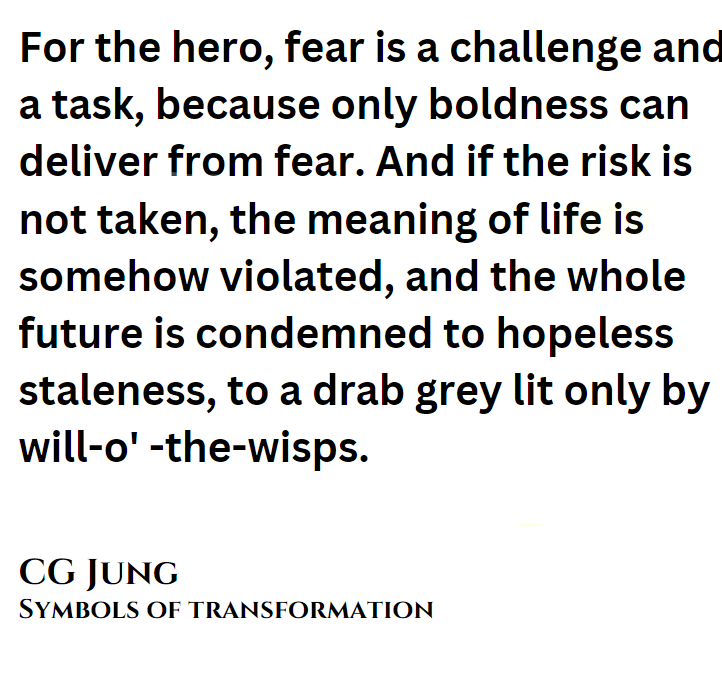
Without a direct line to the archetypal level, people sooner or later become depressed. Life becomes two-dimensional, a daily round of treadmill existence. Creativity dries up because daily communication with the creative matrix is gone. Ideas are no longer exciting.~M Woodman
20
123
2,474
Kfizz retweeted
You're trained as doctor & healer & yet I can't remember talking about the soul in medical school or residency. There's always going to be a need to address things of meaning. Patients don't come w/ a bunch of symptoms, they come in with their stories.~Sumit Anand [link below]
3
13
65
2,470


Kfizz retweeted
Gods suppressed become devils, and often it is these devils whom we first encounter when we turn inward.~Joseph Campbell, 𝘛𝘩𝘰𝘶 𝘈𝘳𝘵 𝘛𝘩𝘢𝘵
24
152
2,746
Kfizz retweeted
Jung realized that when Westerners try to dissolve their personal ego before they have resolved shadow issues, shadow issues grow to godlike proportions. ~Robin Robertson, Jungian Archetypes
11
57
569
29,734

Kfizz retweeted

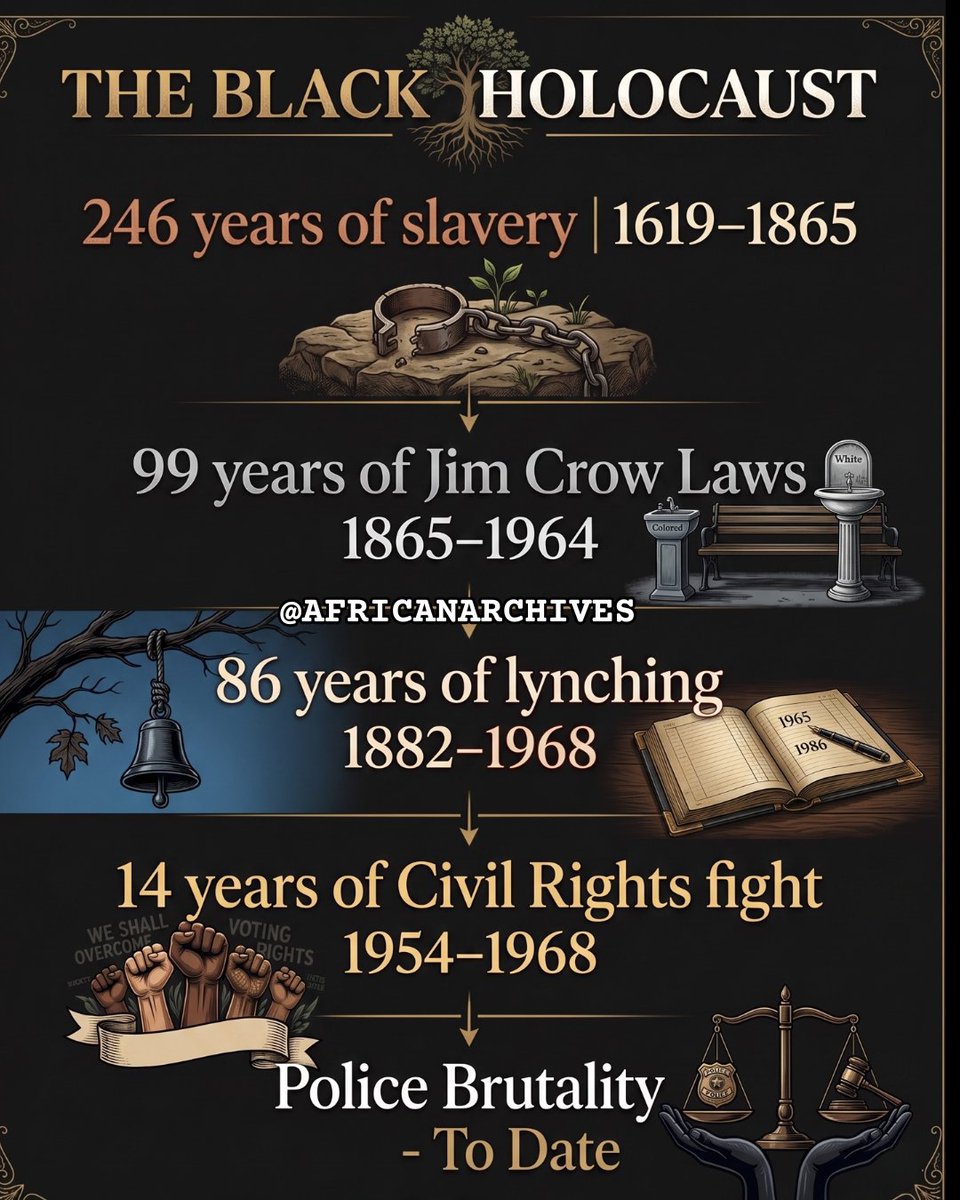
This timeline brings attention to a long and difficult history, but it is important to understand it with context and accuracy. The experience of Black Americans cannot be reduced to a few numbers or dates, even though those numbers help show how long certain systems lasted.
Slavery in what became the United States developed over the 17th century and was legally entrenched for generations, ending in 1865 after the Civil War. That period shaped the country’s economy and social structure in lasting ways. After slavery ended, systems of control did not disappear. Instead, they evolved into laws and practices that enforced segregation and limited rights, often referred to as Jim Crow. These laws varied by state and existed mainly from the late 19th century into the mid 20th century.
Lynching, which is highlighted in the image, was a form of racial terror used to enforce that system. It was not limited to a fixed set of years and occurred most heavily between the late 1800s and early 1900s, though incidents continued beyond that period. It played a major role in maintaining fear and control in many communities.
The Civil Rights Movement, often associated with the years between 1954 and 1968, was not a short struggle but part of a much longer fight for equality that began long before and continues today. Those years represent some of the most visible legal victories, including the end of segregation laws and the protection of voting rights.
The final point about police brutality reflects an ongoing conversation. It is connected to broader discussions about law enforcement, justice, and equality that continue in modern society. Like the rest of this history, it is complex and shaped by many factors over time.
43
727
1,401
27,569
Kfizz retweeted

Fantastic work - more evidence in the relationship between the self and the immune system - idea defended here 👇🏼
frontiersin.org/journals/int…
29 Apr 2025

#Psychosis of autoimmune origin? What are the features? Is there a therapeutic response to immunotherapy?
Welcome to our new paper!
🧠💭🧵
1/We studied the psychopathological patterns & outcomes following immunotherapy in 164 cases of autoimmune psychosis
sciencedirect.com/science/ar…

10
44
3,156