Life sciences, structural biology, ribosome
Joined August 2020
- Tweets 332
- Following 189
- Followers 802
- Likes 457
28 Photos and videos
Pinned Tweet

27 Aug 2020
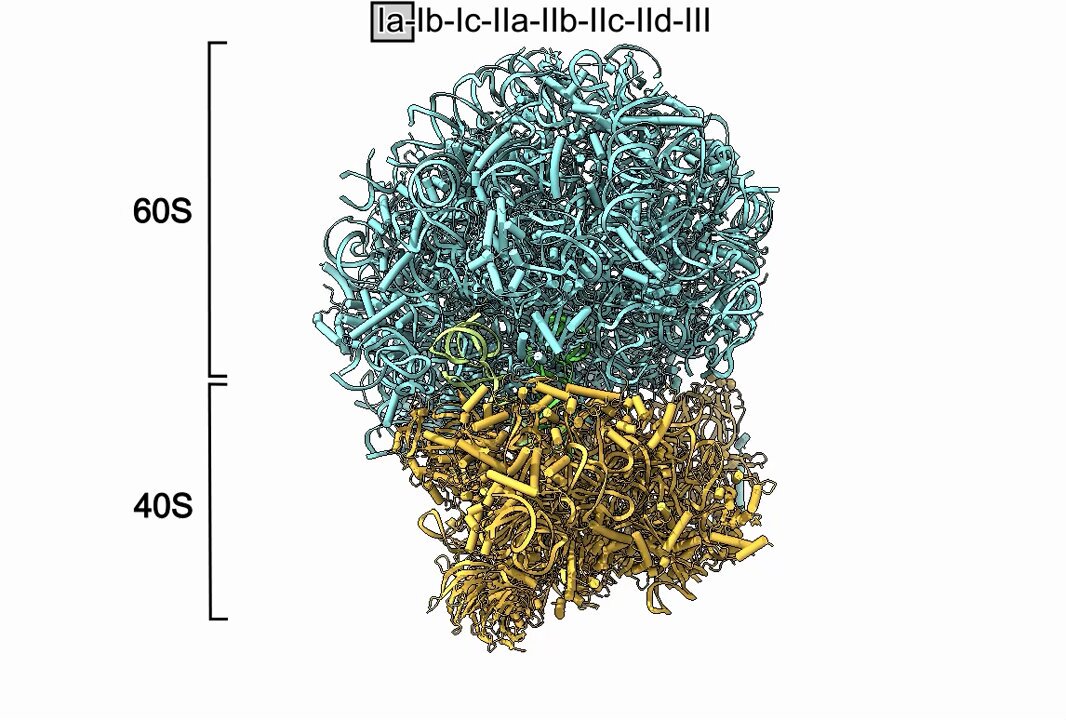
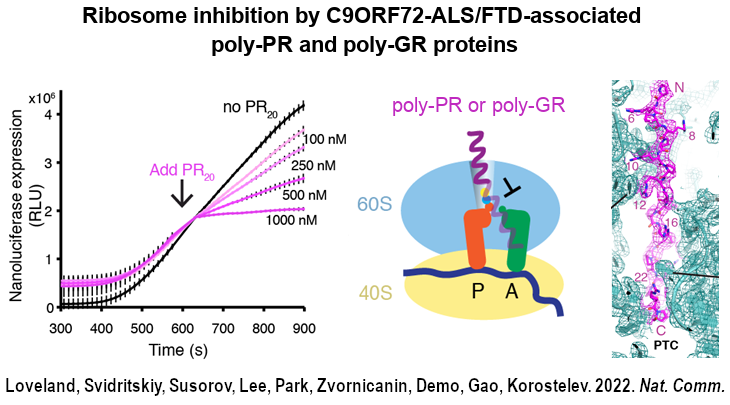
All life depends on accurate translation (both intracellular & international). Using time-resolved cryo-EM, we watched ribosomes decode mRNA, aided by EF-Tu and GTP. See our animations & article (nature.com/articles/s41586-0…) on how ribosomes proofread tRNAs to make correct proteins:
3
26
109
Korostelev Lab retweeted

10 Dec 2025
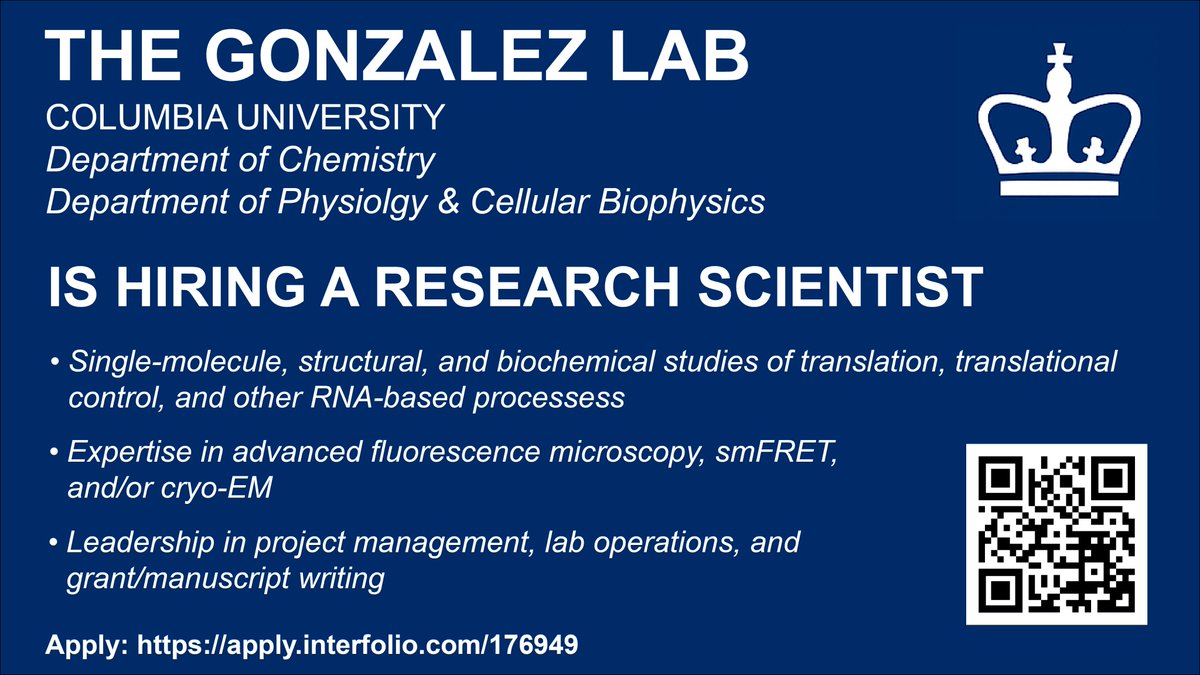
The Gonzalez Lab at Columbia University is seeking a scientific leader!
Join us in a Research Scientist position, driving single-molecule, structural, and biochemical studies of translation, translational control, and other RNA-based processes.
Apply: apply.interfolio.com/176949
1
11
24
3,048
7 Dec 2025
GTPBP1 is a GTPase implicated in neurodevelopment. Our cryo-EM maps show GTPBP1 delivering tRNA to ribosome. GTPBP1 promotes more stringent mRNA decoding than the bona fide delivery factor eEF1A.
Congrats to Denis Susorov and collab with Pestova lab! tinyurl.com/3smdvt3v
1
5
22
2,561
30 Nov 2025
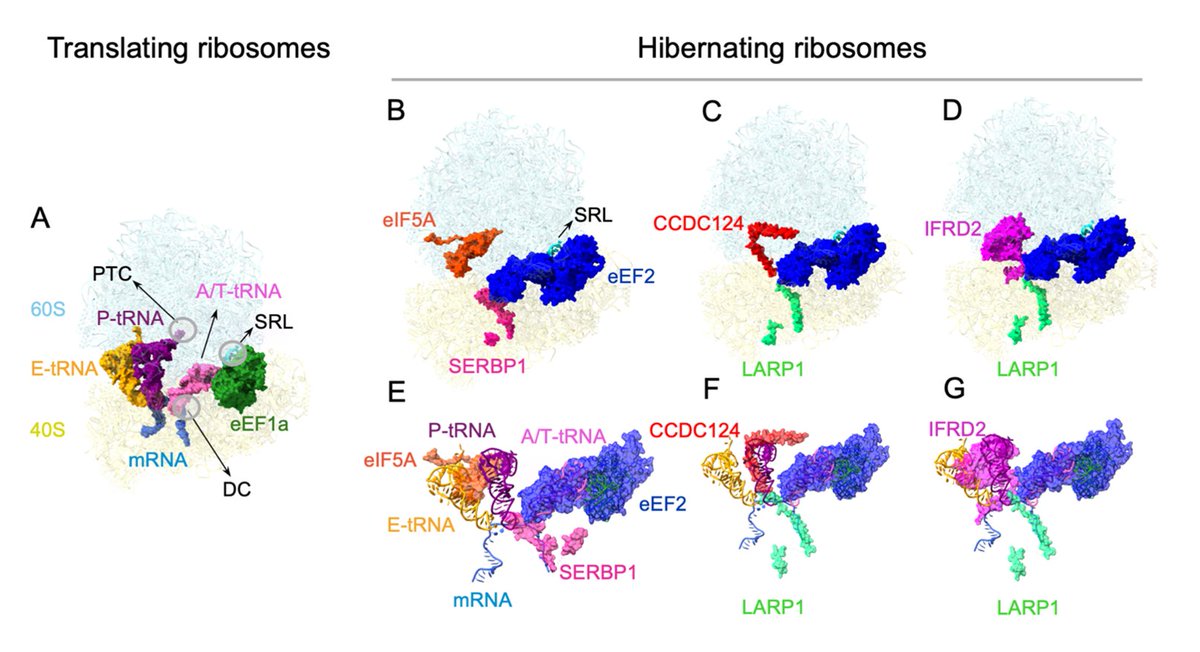
Using "in extracto cryo-EM", we visualize ribosomes in mammalian lysates, including RRL. "Hibernating" ribosomes carry proteins that protect functional centers. These include elongation factor eEF2, LARP1 implicated in mTOR signaling, eIF5A etc. biorxiv.org/content/10.1101/…
3
11
391
Korostelev Lab retweeted

14 Jul 2025
Preprint from our collaboration with the labs of Gerry Wright and Shura Mankin @shuramankin identifying the first translation inhibitor binding to the E-site of the bacterial ribosome… researchsquare.com/article/r…
1
16
43
2,767
16 Jun 2025
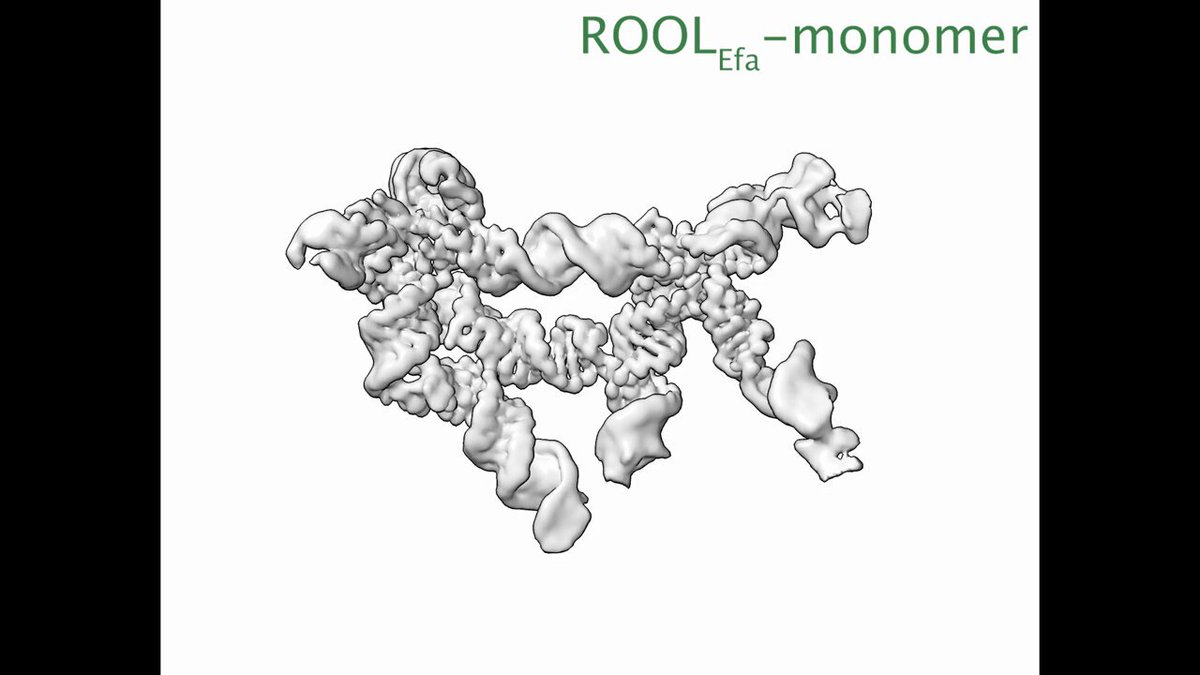
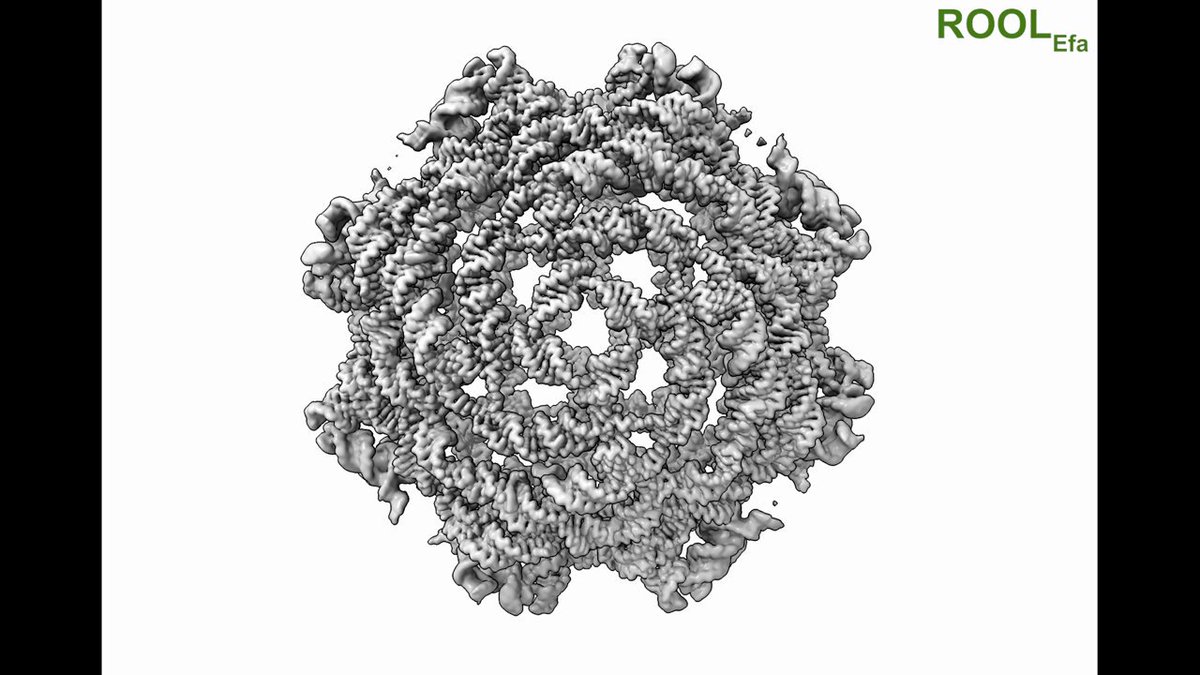
ROOL monomers entangle with other monomers via strand swapping to form octameric nanocages.
nature.com/articles/s41586-0…
2
2
19
913
16 Jun 2025
With our RTI colleagues Xiaobin Ling and @WenwenFang2, we report cryo-EM structures of enigmatic bacterial RNA nanocages made of long-noncoding ROOL RNAs. Octamers are held by "A-minor staples" and other interactions. Congrats Xiaobin, Dima et al!
nature.com/articles/s41586-0…
33
115
13,204
16 Jun 2025
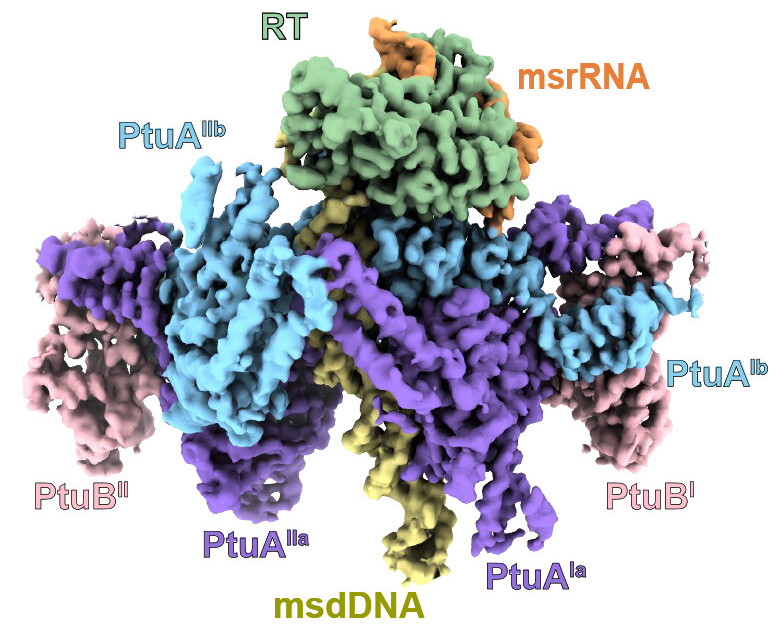
Activation of Retron-Septu for antiphage defense. Congrats @futianmin and all co-authors!
science.org/doi/full/10.1126…
1
4
25
2,038
Korostelev Lab retweeted
7 May 2025
“Undermining the future of American science is not a path to accountability — it’s a path to decline.”
In a powerful new piece, my colleague Daphna Shohamy explains how canceled grants are driving young scientists out of science—and out of the country.
🔗 statnews.com/2025/05/07/us-s…
5
21
1,231
Korostelev Lab retweeted
7 May 2025
In our newly published study we show that the proline-rich antimicrobial peptide (PrAMP) Bac5 has a distinct mode of interaction with the ribosome compared to other PrAMPs…academic.oup.com/nar/article…
1
20
52
3,523
Korostelev Lab retweeted

15 Apr 2025
We developed a new siRNA drug candidate for prion disease, a @broadinstitute / @RTI_UMassChan collaboration. We now have an open IND meaning FDA has given us permission to start first-in-human trials. Work remains before trials can launch. The full update: cureffi.org/2025/04/14/open-…
6
26
149
14,133
Korostelev Lab retweeted

15 Apr 2025
I’m happy to share our recent manuscript in which we are structurally and biochemically investigating 3'-5' tRNA splicing ligases, including a #cryoEM structure of the five-subunit D. rerio tRNA ligase complex.
jbc.org/article/S0021-9258(2…
3
15
89
6,841
Korostelev Lab retweeted
8 Apr 2025
Fresh off the press…our latest study on the Structure of a Gcn2 dimer in complex with the large 60S ribosomal subunit | great collaboration with @inada_lab and Zaher lab. Data collected at @DCI_EM.
PNAS pnas.org/doi/10.1073/pnas.24…
4
16
52
4,389
Korostelev Lab retweeted

7 Apr 2025
Anastasia Khvorova, PhD, named 2025 Else Kröner Fresenius Prize for Medical Research awardee for her pioneering work in the field of RNA-based therapies: direc.to/nacN
#EKFprize25 #EKFS #ElseKrönerFreseniusStiftung #RNA #RNAtherapies @EKFStiftung @RTI_UMassChan
6
18
1,135
Korostelev Lab retweeted

27 Feb 2025
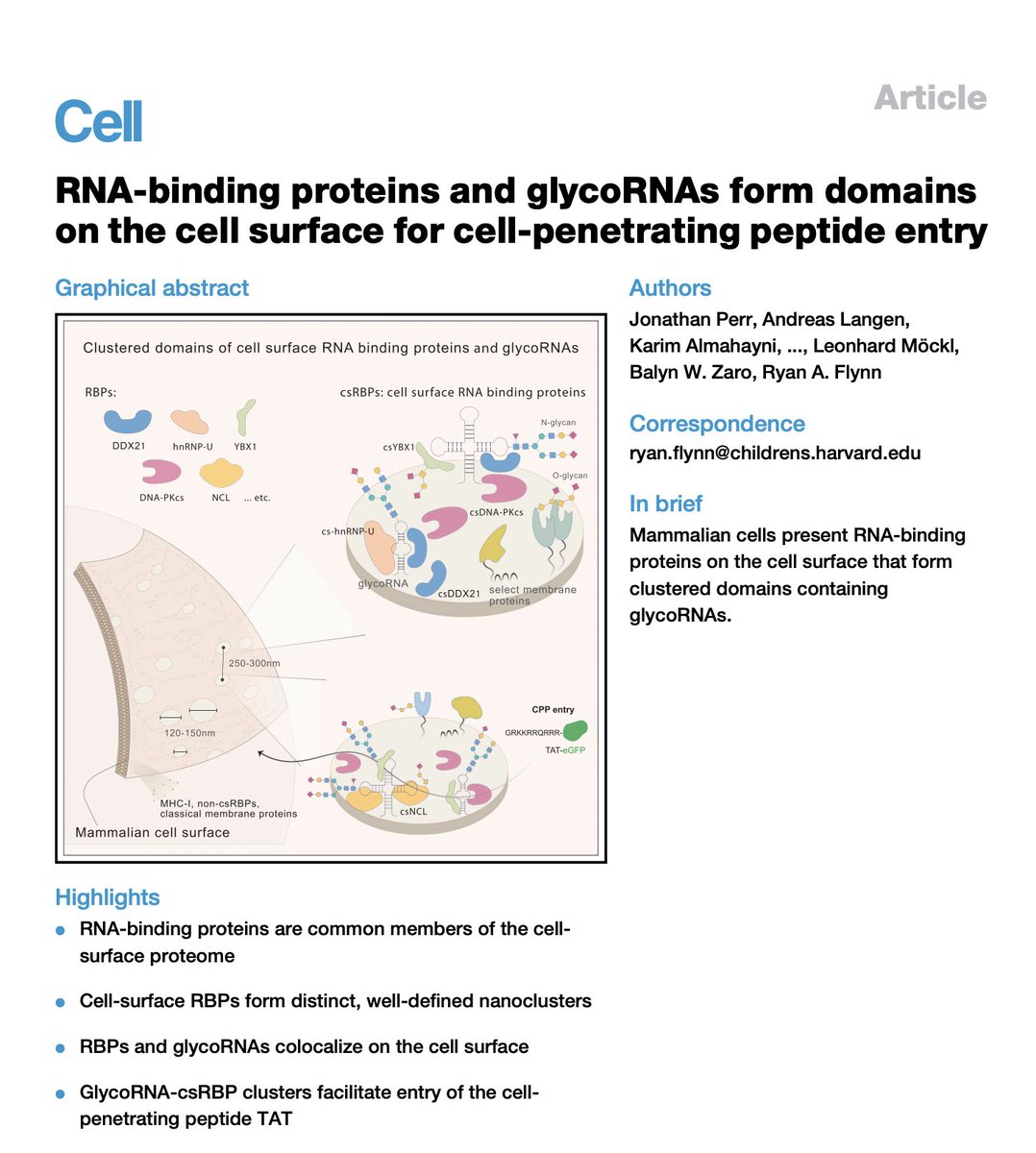
Biological systems find ingenuous solutions. Almost anything that can happen, happens.
Still, I would not have guessed a role of RNA-binding proteins on the cell surface.
The Flynn lab are boldly investigating glycoRNAs and following their leads.
3
98
516
32,645
Korostelev Lab retweeted

3 Feb 2025
Our paper on Stopless-ORF Circular RNAs (socRNAs) is now out in Cell. By high-res tracking and comparing translation by either single or multiple ribosomes, we find that ribosomes cooperate to overcome pausing to ensure fast and efficient translation
cell.com/cell/fulltext/S0092…
3
36
151
13,706
Korostelev Lab retweeted

24 Jan 2025
Our review on small endogenous RNAs in animals is online. We thank @MartinjSimard, @SvobodaLab and the third, anonymous, reviewer for helping us improve our manuscript. bit.ly/3Ebk931
3
17
65
4,830
13 Jan 2025
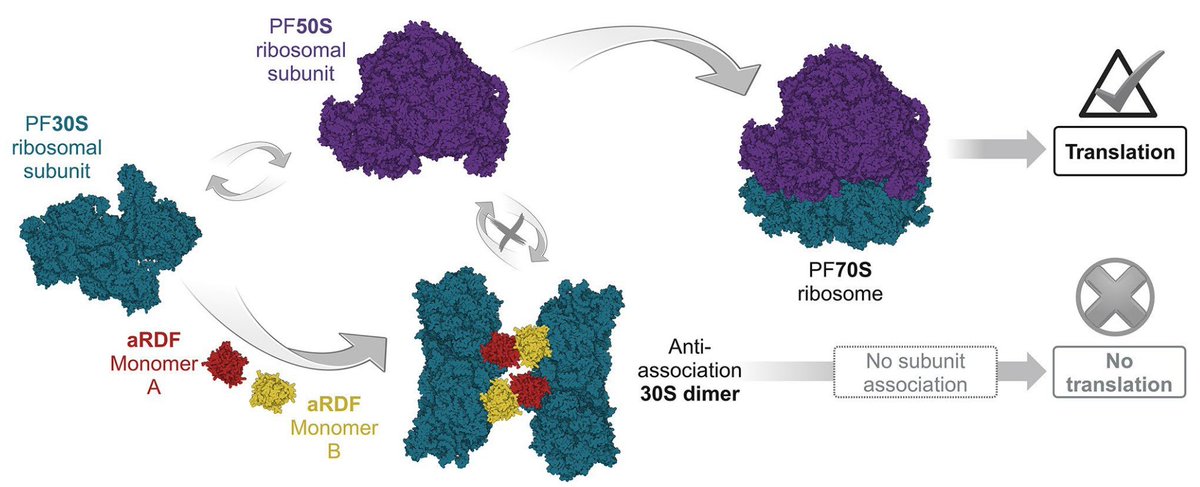
Gabriel Demo and colleagues report how a small archaeal protein (aRDF) dimerizes 30S subunits to prevent ribosome formation:
academic.oup.com/nar/article…
7
45
2,068
Korostelev Lab retweeted

7 Jan 2025
Using reporters with long unstructured 5’ UTRs, we examined which initiation factors are limiting for 40S scanning. Our results&literature led us to the model that 40S scans 5’ UTRs by one-dimensional diffusion rather than helicase-driven translocation. biorxiv.org/content/10.1101/…
3
6
32
2,209
Korostelev Lab retweeted

17 Dec 2024
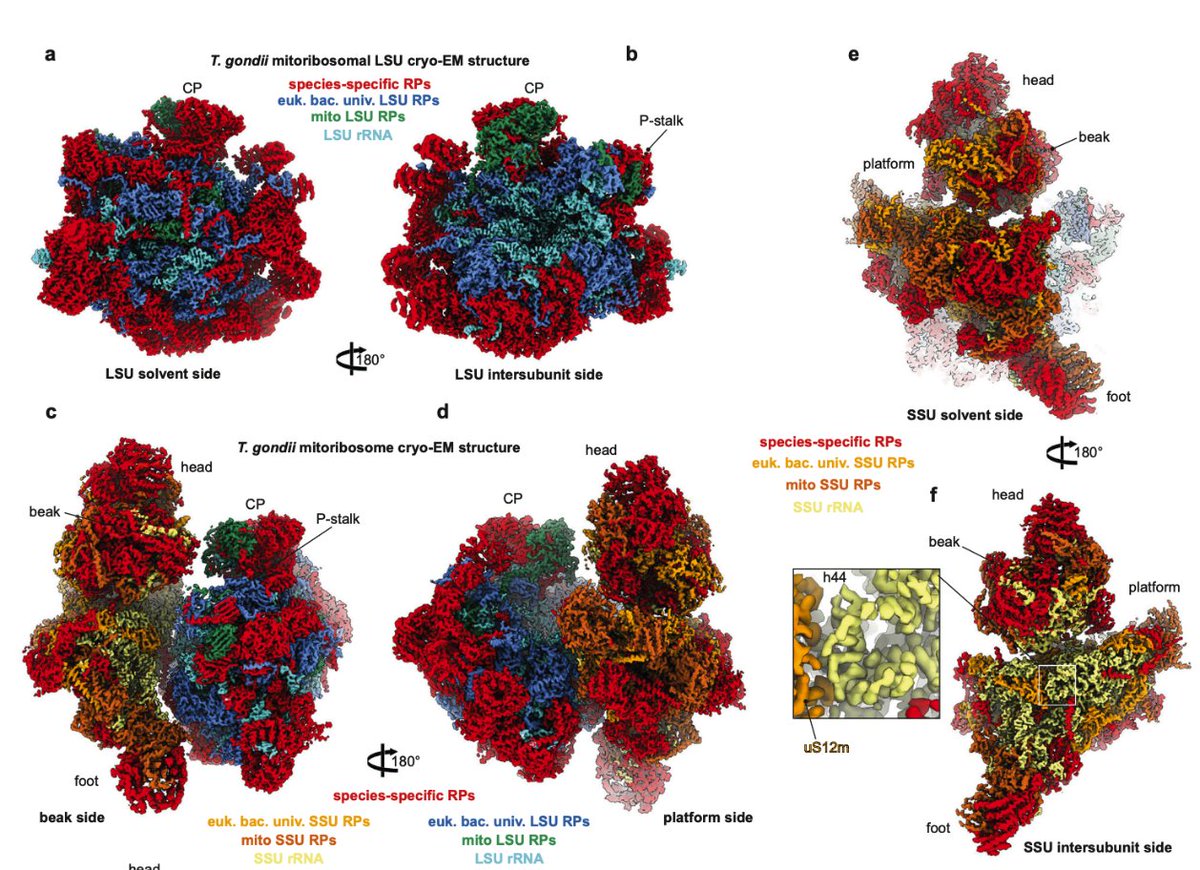
It's a great pleasure to share our latest collaborative work detailing the composition and structure of the highly rRNA-fragmented mitoribosome from Apicomplexa, such as Plasmodium falciparum and Toxoplasma gondii, now out in @NatureComms
rdcu.be/d3R8C
11
29
122
8,475
Korostelev Lab retweeted
11 Dec 2024
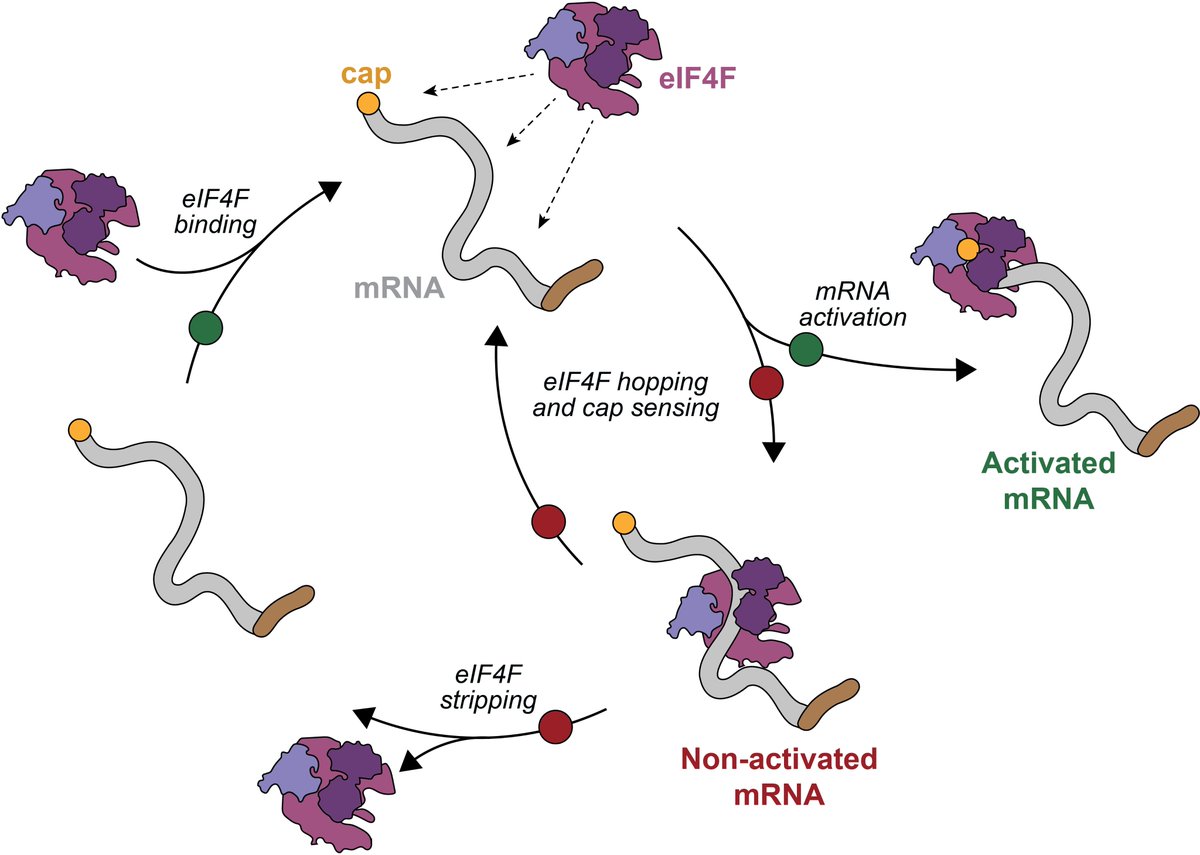
Our latest work is out in @Nature today! Using smFRET, we directly visualized recruitment of the eIF4F complex to the 5' cap of eukaryotic mRNAs and formation of an activated mRNA. Our findings reveal new and surprising roles for each eIF4F component. 1/3 nature.com/articles/s41586-0…
18
93
332
27,502