
越努力,越幸运!
Joined August 2020
- Tweets 13,177
- Following 3,678
- Followers 52,014
- Likes 46,621
3,123 Photos and videos









Pi~花语π retweeted

Pass the Clarity Act Now! 🚀
NO TIME FOR DELAY ANYMORE.
114
101
1,474
107,112

44m
美国🇺🇸的清晰法案主要条款与规定:
【1】明确资产分类与监管分工。
【2】稳定币收益规则。
【3】行业合规要求。
【4】创新保护机制。
【5】风险与非法活动防控。
清晰法案主要是针对加密行业而来。
要争取加密之都称号,须引领全球数字科技创新金融发展,与世界达成共识,合作共赢。遵守以上规则!
1
86
PiNetwork系统升级是有各方面的需求。测试是怕半路夭折,或容易出现bug,就像你买衣服也要先试试,要找对自己的码号。
黄金是实物,从山上挖出来奇丑无比,要变成金条和漂亮的首饰之前也要经过加工,打磨。
其实美元和黄金,比特币都不合规,你们自己去悟!加密数字的世界来了,需要真正的完成合规化
3
53
890
14h
没注意到PiNetwork的人,或者是看不懂,看不起Pi的人,都和它无缘。因为命里有它的人,都会一如既往的坚持,放弃很轻松,回头很艰难!
是什么样的信仰,能够磨练出这么一批伟大又自豪的人?
Jun 12

If Pi Network pulls this off
$PI could become one of the biggest comeback stories in crypto history
Most people won’t pay attention until it’s too late
2
3
41
867
Pi~花语π retweeted

Jun 11
JUST IN: 🇯🇵 Japan advances bill to reclassify cryptocurrencies as financial products and cut taxes from 55% to 20%.
536
1,911
15,729
738,100
Jun 10
香港Banxa为法币兑换服务平台是真的。希望大家不传谣,不信摇,不要夸大其词,添油加醋的胡乱吹。
更不要利用这次机会,在Pi先锋们身上雪上加霜的做一些违法行骗行为!
Banxa暂时还没对中国大陆开放这项业务!大陆身份证也暂时不能去香港办理!
我相信在不久的将来,有肥沃土地,不怕没农夫!耐心等
12
16
218
5,802
Jun 9
怕,就输一辈子。
熬,就赢到底!
别认怂,等到黎明云开雾散。全世界都会为我们的坚持让路!
Pi先锋们,死扛到亮牌,我们都是王者!
15
18
258
2,176
Jun 9
要看到价值,价格要高,才会引起每个国家的重视。生态开放。用交易所的价格来面对世人,一个炒币价格,鬼才重视你!
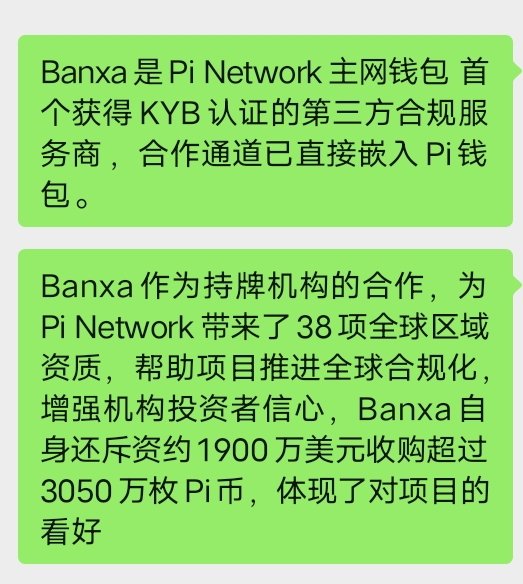
GCV势在必得!香港出金台Banxa官宣与PiNetwork建立合作关系,社区更应该放心下来,一同共识GCV,从不可能到可能。
不试试怎么知道?
5
18
166
3,569
Jun 9
我是一名PiNetwork的先锋,来推特已经6年了,每天做着一件事,就是宣传PiNetwork。而许多圈外人无视Pi的存在,他们每天不是宣传这种币,就是那种币,好像自己很会炒币一样。他们不是猜城市就是谈论国家大事。就是不过来正眼看一眼。这六年多少人错过了这次机会!
当你发现PiNetwork有多伟大,已经晚了
12
15
149
2,036
Jun 9
清晰法案可以代表美国,它也可以引领世界。
但加密之都的美国,只能代表全球。因为加密货币,不属于美国一家独有。这一次,你做不了老大。

Stand With Crypto and over 200 organizations sent a simple message to Senate leadership: it's time for the Clarity Act.
The community is unified — large companies, startups, associations, and grassroots groups across the country are counting on their lawmakers to deliver rules of the road for crypto in America.
The Clarity Act passed the Senate Banking Committee with bipartisan support.
Now it needs to cross the finish line. Tell your Senators you want Clarity 👇
6
3
31
1,039
Pi~花语π retweeted

WHAT CLARITY ACT IS ALL ABOUT
The CLARITY Act is a major U.S. crypto regulation bill currently moving through Congress in 2026, aiming to establish a clear legal framework for digital assets. It classifies cryptocurrencies into three categories—commodities, securities, and stablecoins—while resolving jurisdictional disputes between the SEC (Securities and Exchange Commission) and CFTC (Commodity Futures Trading Commission). However, its passage faces tight deadlines before the midterm elections, and there’s uncertainty about whether it will become law this year.
WHY CLARITY ACT?
Long running turf war between the SEC (Securities and Exchange Commission) and the CFTC (Commodity Futures Trading Commission) over who gets to regulate crypto.
Here’s the background:
SEC’s stance: Many crypto tokens are “investment contracts,” so they should be treated as securities. That means strict disclosure rules, registration, and investor protections.
CFTC’s stance: Assets like Bitcoin and Ethereum behave more like commodities, so they fall under its jurisdiction. The CFTC tends to be lighter touch compared to the SEC.
The clash: For years, both agencies have brought lawsuits against crypto firms, sometimes over the same assets. This has created confusion, legal uncertainty, and slowed innovation.
The CLARITY Act is designed to end this fight by drawing clear lines.
SEC regulates investment contract assets (tokens tied to central teams or profit expectations).
CFTC regulates digital commodities (like Bitcoin, Ethereum, or tokenized gold).
Banking regulators oversee payment stablecoins.
So, the enforcement battles, I meant the overlapping lawsuits, contradictory rulings, and regulatory uncertainty caused by the SEC and CFTC both trying to claim authority. The Act’s whole point is to stop that tug of war.
How messy the SEC vs. CFTC enforcement battles have been in Crypto:
Ripple (XRP) Case
SEC’s position: In 2020, the SEC sued Ripple Labs, claiming XRP was an unregistered security because buyers expected profits from Ripple’s efforts.
Ripple’s defense: XRP functions more like a commodity or currency, not a stock.
Outcome so far: Courts have issued mixed rulings — some say XRP sales to institutions were securities, but sales on exchanges were not. This split shows the lack of clarity.
CFTC’s role: The CFTC has hinted that XRP could be treated as a commodity, but without clear law, it hasn’t taken the lead.
Ethereum Dispute
CFTC’s stance: Ethereum is a commodity, so it falls under their jurisdiction.
SEC’s stance: Some officials have suggested Ethereum’s ICO made it a security, and newer versions (like staking rewards) could still be securities.
Result: Confusion for exchanges, funds, and developers — they don’t know which rules apply.
Enforcement Overlap
Both agencies have filed cases against crypto firms like Coinbase, Binance, and Kraken.
Sometimes they accuse the same company of violating different rules for the same tokens.
This overlapping enforcement creates uncertainty, legal costs, and slows down adoption.
The CLARITY Act is meant to stop this tug of war by drawing bright lines:
SEC = securities (investment contract assets).
CFTC = commodities (like Bitcoin, Ethereum, tokenized gold).
Banking regulators = stablecoins.
That way, firms won’t face double lawsuits for the same product.
How the SEC–CFTC turf war has hit crypto exchanges like Coinbase and Binance:
Coinbase
SEC lawsuits: The SEC sued Coinbase in 2023, claiming it listed unregistered securities (tokens like Solana, Cardano, etc.).
Coinbase’s defense: It argued those tokens are commodities, not securities, and that the SEC is overreaching.
CFTC’s role: The CFTC has generally treated major tokens (like Bitcoin and Ethereum) as commodities, creating a direct conflict with the SEC’s stance.
Impact: Coinbase faces uncertainty about which tokens it can legally list, and investors face risk of sudden delistings.
Binance
2
4
41
3,060
Jun 9
【清晰法案】可能改变世界,引领世界!拿好你手中的Pi,不要被人收割。一切听从国内货币监管政策制度。
世界正在上演PiCoin变成像黄金,美元一样的货币,在全球流通。
加密数字货币的趋势来了!
11
15
201
3,119
Jun 9
很多人有个误区,总认为交易所是个生态,它就是个锤子的生态。每个项目,尤其是区块链,有没有其它生态,这个交易所都会出现,就因为有开源代码。只要一开源,交易所拿到代码,就能把代币弄上K线。
所以有没有生态,交易所都会出现,项目方是控制不了的,所以搞了个KYB控制炒币。生态在这里,伙计们👇
5
17
202
3,568
Jun 6
哪一种货币背后的实力最强大?
哪一种货币是做慈善公益的?
哪一种货币营销最好?
哪一种货币愿景是加密货币?
哪一种货币社区流量大?
答:FLOKI
4
9
773
Pi~花语π retweeted

Jun 5
Help bring more AI-created apps to the Pi ecosystem and enter a raffle to win Pi Network merch!
Pioneers are invited to introduce Pi App Studio to vibe coders and AI-builder communities around the world.
Why?
Because as AI makes building apps easier, competition for human attention and user acquisition becomes more intense.
Pi App Studio helps creators connect AI-built apps to:
60M engaged Pioneers
Built-in payments
Identity infrastructure
Pi Ad Network
And more!
Find a relevant builder community, share how Pi can help creators reach real users, then submit your post through the Pi App to enter the raffle.
By helping more creators discover Pi, Pioneers can help expand the range of apps, tools, and services available in the Pi ecosystem. A stronger app ecosystem gives Pioneers more ways to use Pi, support useful products, and participate in real utility.
Go to the Pi mining app to learn more.

1,011
1,922
6,639
183,708
Pi~花语π retweeted

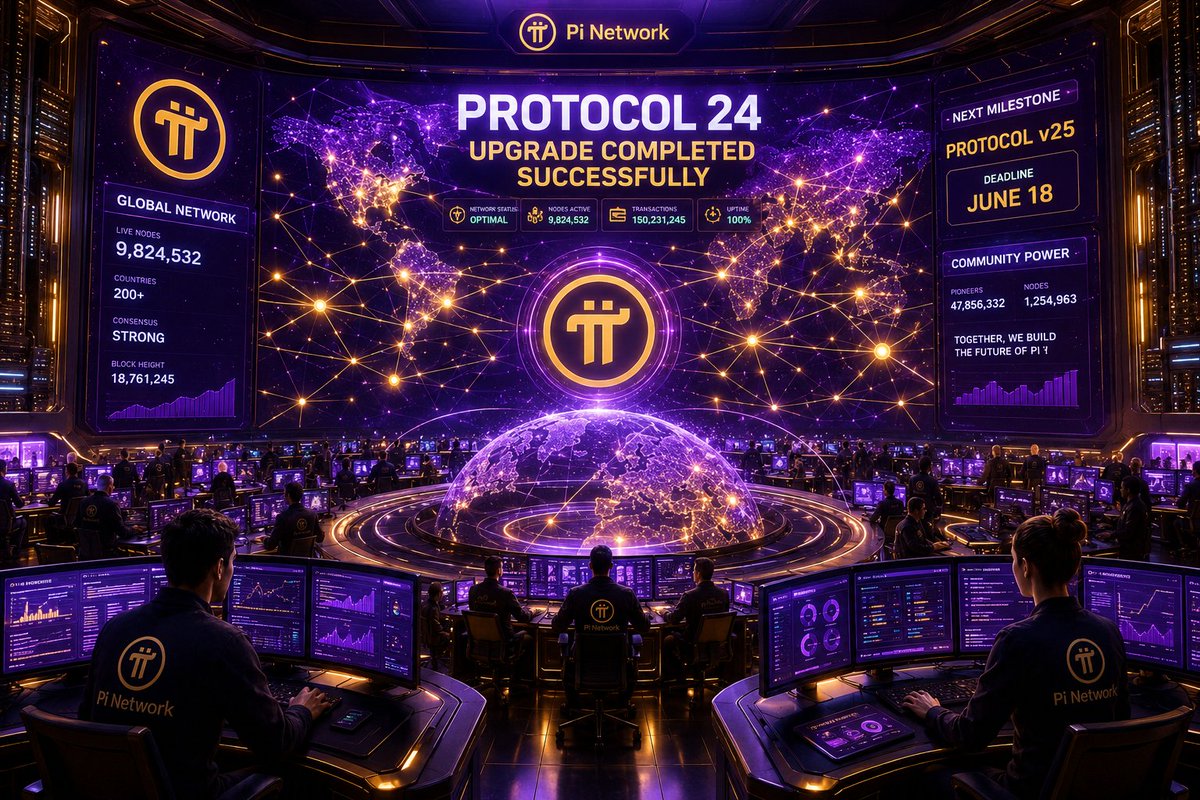
🌐 Protocol 24 is successfully behind us, proving once again the power of a dedicated global community. 💜
Now the countdown begins for Protocol v25. Upgrade before June 18 and help keep the network running smoothly as we prepare for the next phase of growth. 🚀⚡
#PiNetwork
15
99
644
10,920
Pi~花语π retweeted

Edukasi GCV itu penting
Hari ini,kita sudah melihat makin banyak pedagang dan komunitas di berbagai negara mendukung GCV dan menerima aktivitas ekonomi berbasis Pi.Ini tanda bahwa gerakan ini terus tumbuh secara global,biarkan GCV mekar di seluruh🌍
Wanita elang 🦅Nonny Padja

33
79
205
2,001
Pi~花语π retweeted

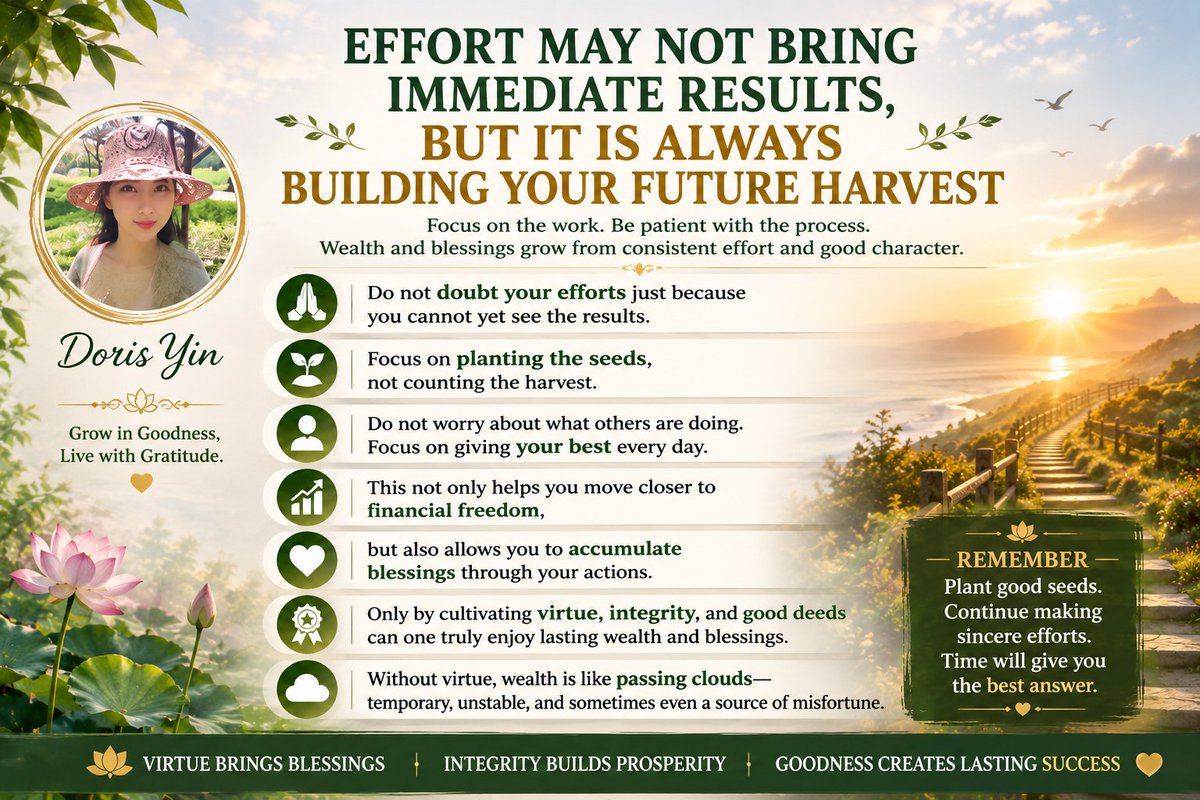
EFFORT MAY NOT BRING IMMEDIATE RESULTS,
BUT IT IS ALWAYS BUILDING YOUR FUTURE HARVEST
Focus on the work. Be patient with the process.
Wealth and blessings grow from consistent effort and good character.
🙏 Do not doubt your efforts just because you cannot yet see the results.
🌱 Focus on planting the seeds, not counting the harvest.
💪 Do not worry about what others are doing. Focus on yourself don't make mistakes.
📈 This not only helps you move closer to financial freedom,
❤️ but also allows you to accumulate blessings through your actions.
🏆 Only by cultivating virtue, integrity, and good deeds can one truly enjoy lasting wealth and blessings.
☁️ Without virtue, wealth is like passing clouds—temporary, unstable, and sometimes even a source of misfortune.
Remember
Plant good seeds.
Continue making sincere efforts.
Time will give you the best answer.
Virtue Brings Blessings • Integrity Builds Prosperity • Goodness Creates Lasting Success 🌿✨🙏
Doris Yin 🪷🪷🪷

53
95
214
3,003
Pi~花语π retweeted

🔥 THE BEST IS YET TO COME 🔥
Stay patient when others doubt.
Stay focused when others hesitate.
Stay committed when others quit.
Great journeys reward those who keep moving forward.
💜 Believe.
🚀 Build.
🌍 Achieve.
#PICOIN #GCV314159 #PiNetwork
@LikeFollowBro #FutureOfCrypto
2
28
210
1,995