Steroids
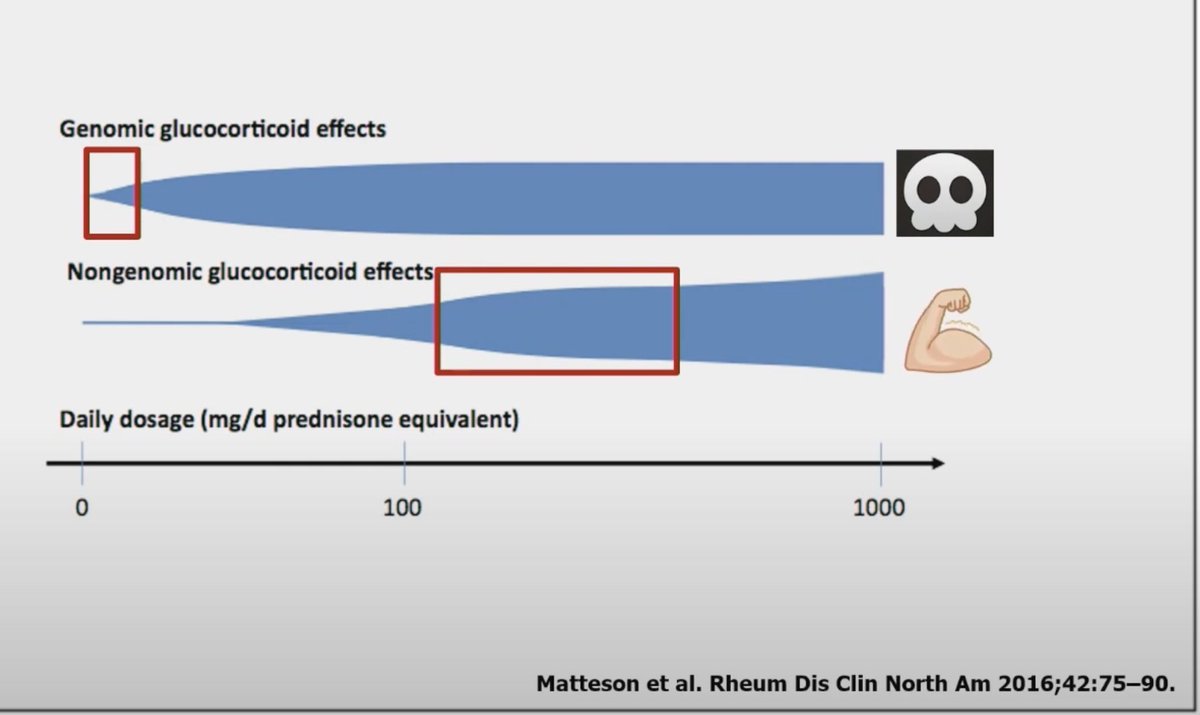
2 mechanisms of action
1/ Genomic (activates @ 7.5mg-30mg Pred/day). Ceiling of saturation > 50mg. Limited additional anti-Inflammatory benefit beyond & ⬆️ Adverse
2/ NonGenomic. Act @ 100mg, Max sat 250-500mg & Less S/E as Shorter ⌛️
Less Is More! Great Slide 👇
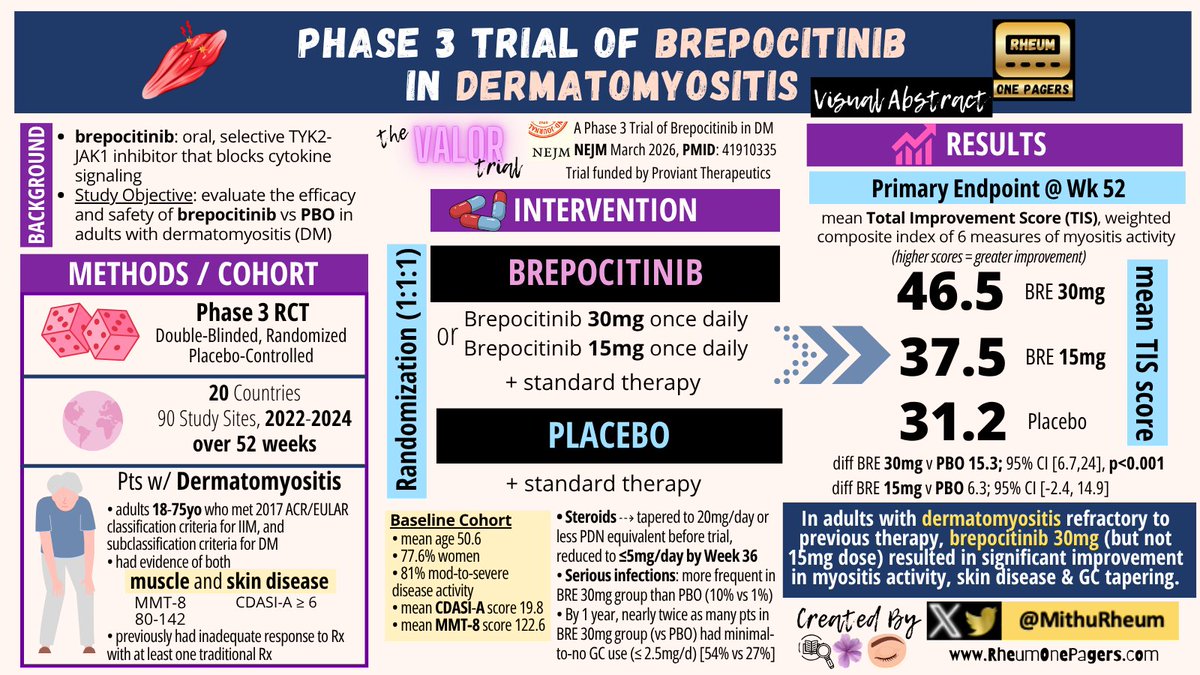
🆕 Phase 3 RCT of #Brepocitinib (TYK2-JAK1 inhibitor) vs PBO in #Dermatomyositis (The VALOR Trial) 🔥
⌛ Rapid onset: improvements as early as wk 4
💪 All pts had both active muscle skin disease
📈 Improvement in myositis activity, GC tapering
#Myositis#Rheumatology#DermX
Why do some dreams have such a profound vivid emotional effect on you for weeks akin to reality? Its truly mind-boggling! any sleep study experts out there? 🛌 🧠..
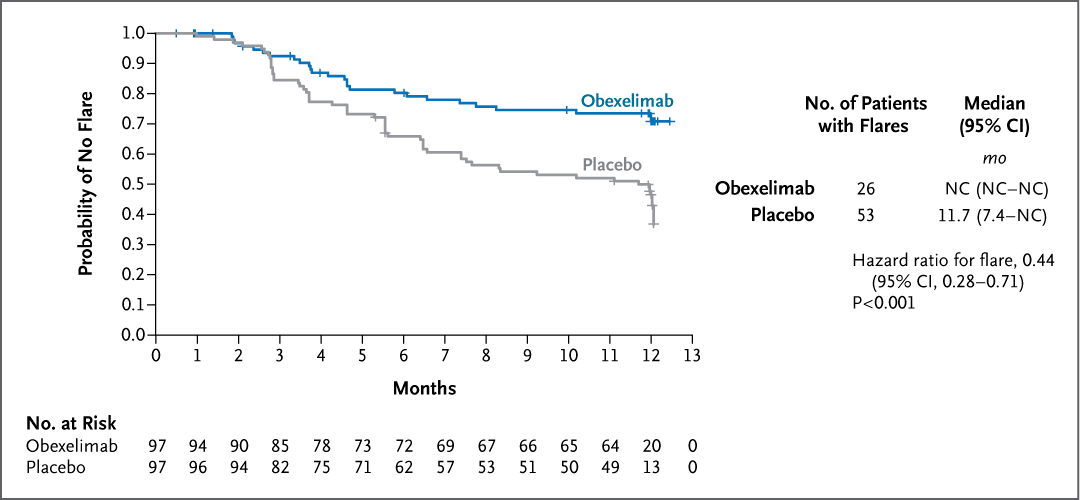
Phase 3 INDIGO trial- IgG4 & Obexelimab - CD19 inhibits B cell function [rather than deplete] with more preservation of immune function. A significant 55% reduction in flares at 52W vs PBO, no major safety signals. Looking good…
Original Article: Obexelimab for the Treatment of IgG4-Related Disease (phase 3 INDIGO trial results) nej.md/4fKYQG4
Editorial: Obexelimab and the Promise of Nondepleting B-Cell Therapy in IgG4-Related Disease nej.md/4fLybcd#EULAR2026 | @eular_org
ALT Graph showing estimates over time of the probability of a first flare of IgG4-related disease for which rescue therapy was required. The y-axis represents the probability of no flare, ranging from 0 to 1, and the x-axis shows time in months. The blue line indicates obexelimab while gray line indicates placebo. Notable statistics detail patients at risk, number of patients with flares, and median times. The hazard ratio is 0.44 with a p-value of <0.001.
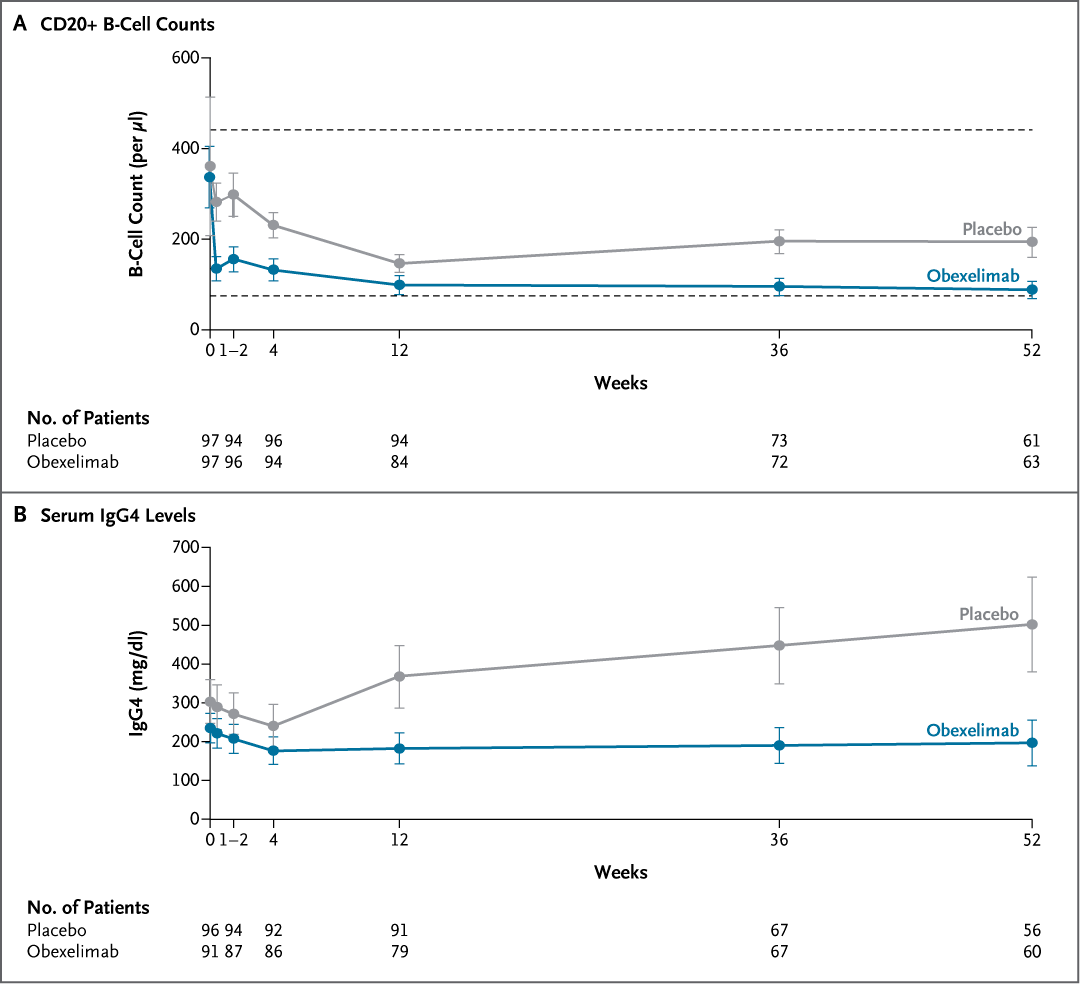
ALT The image displays two line graphs. The top graph shows CD20 B-cell counts over time in weeks, comparing placebo and obexelimab treatments. The bottom graph presents serum IgG4 levels. Both graphs include patient numbers at different stages.
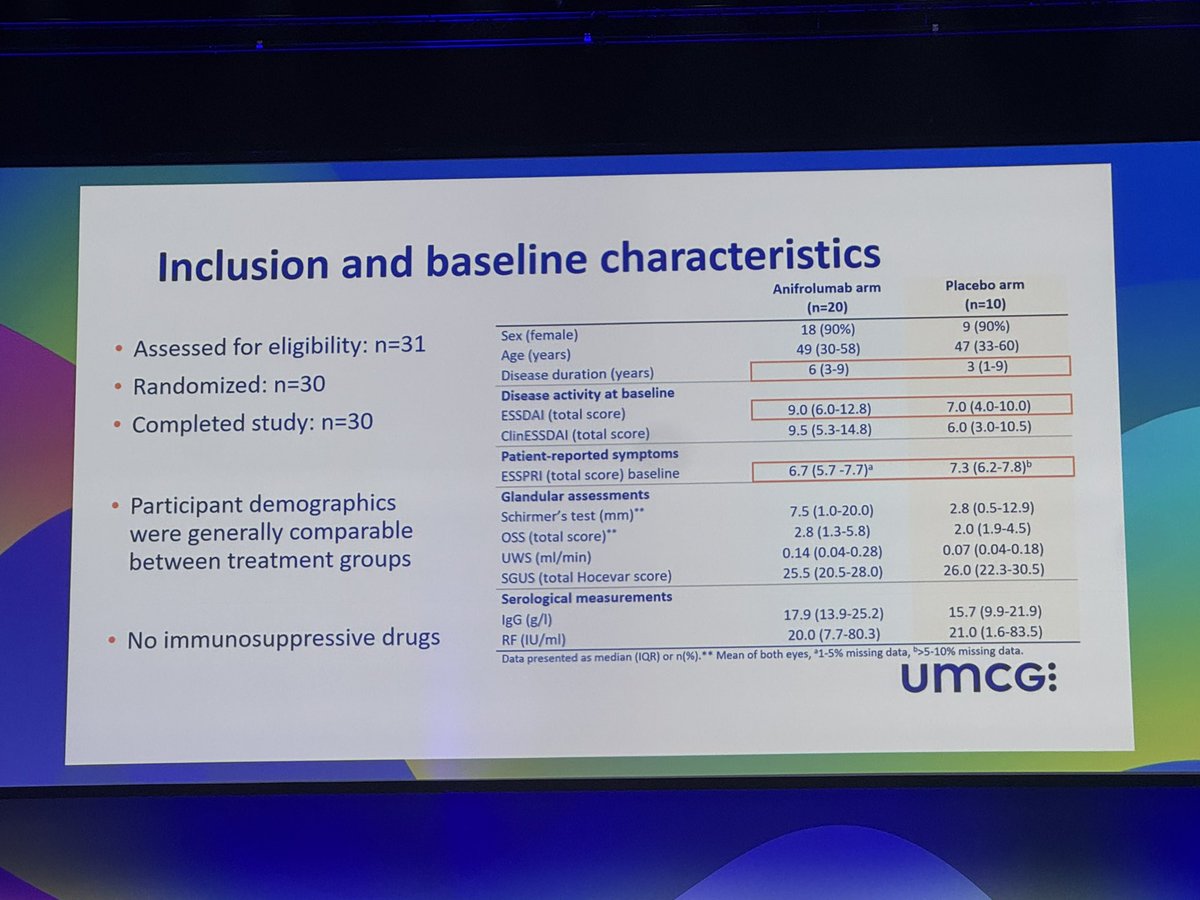
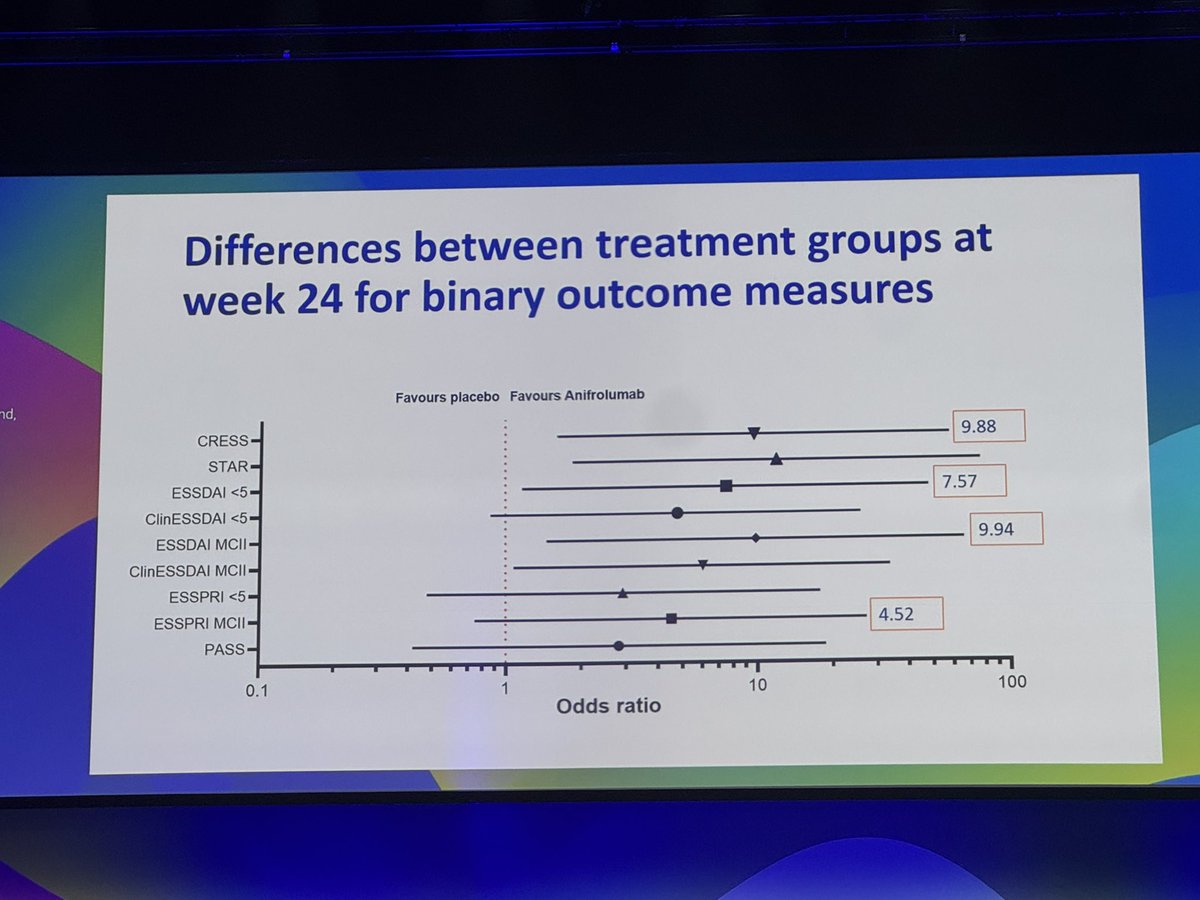
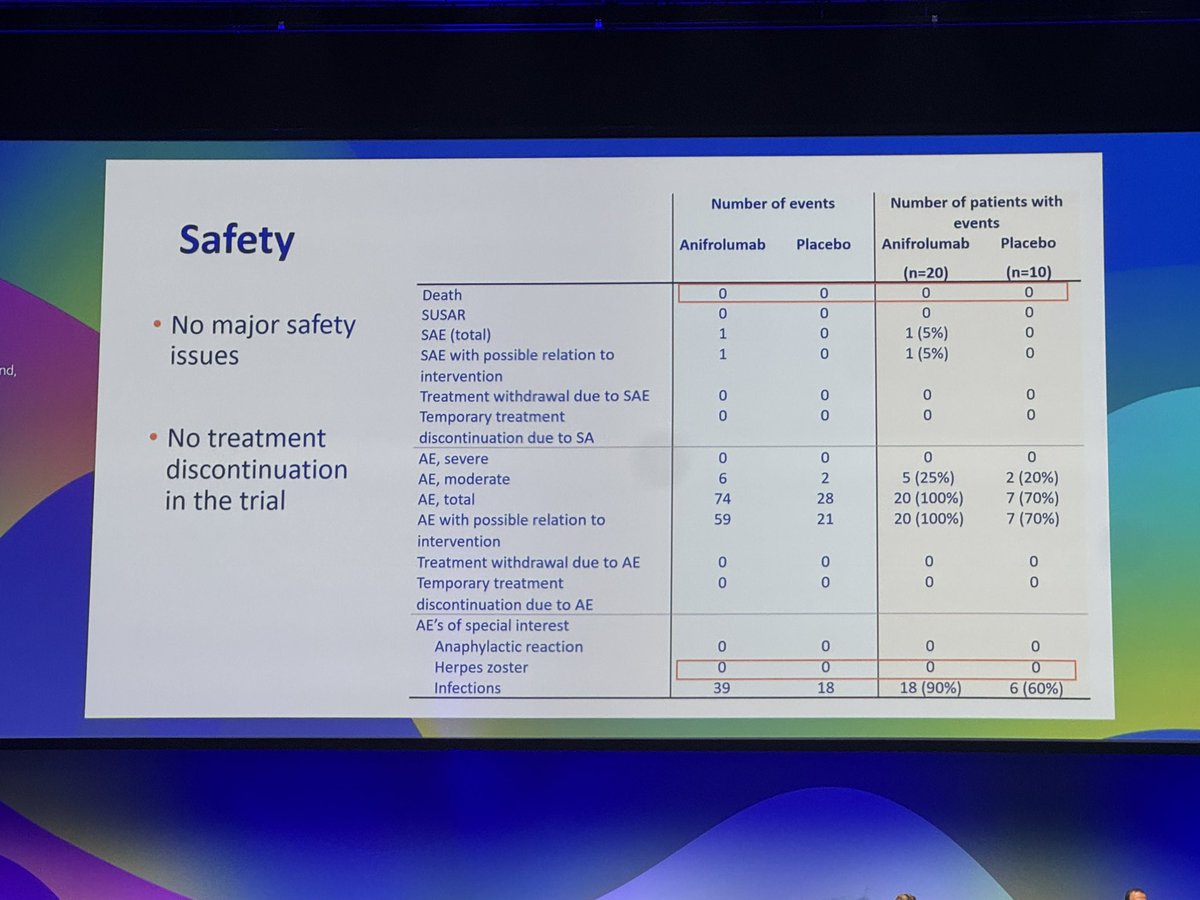
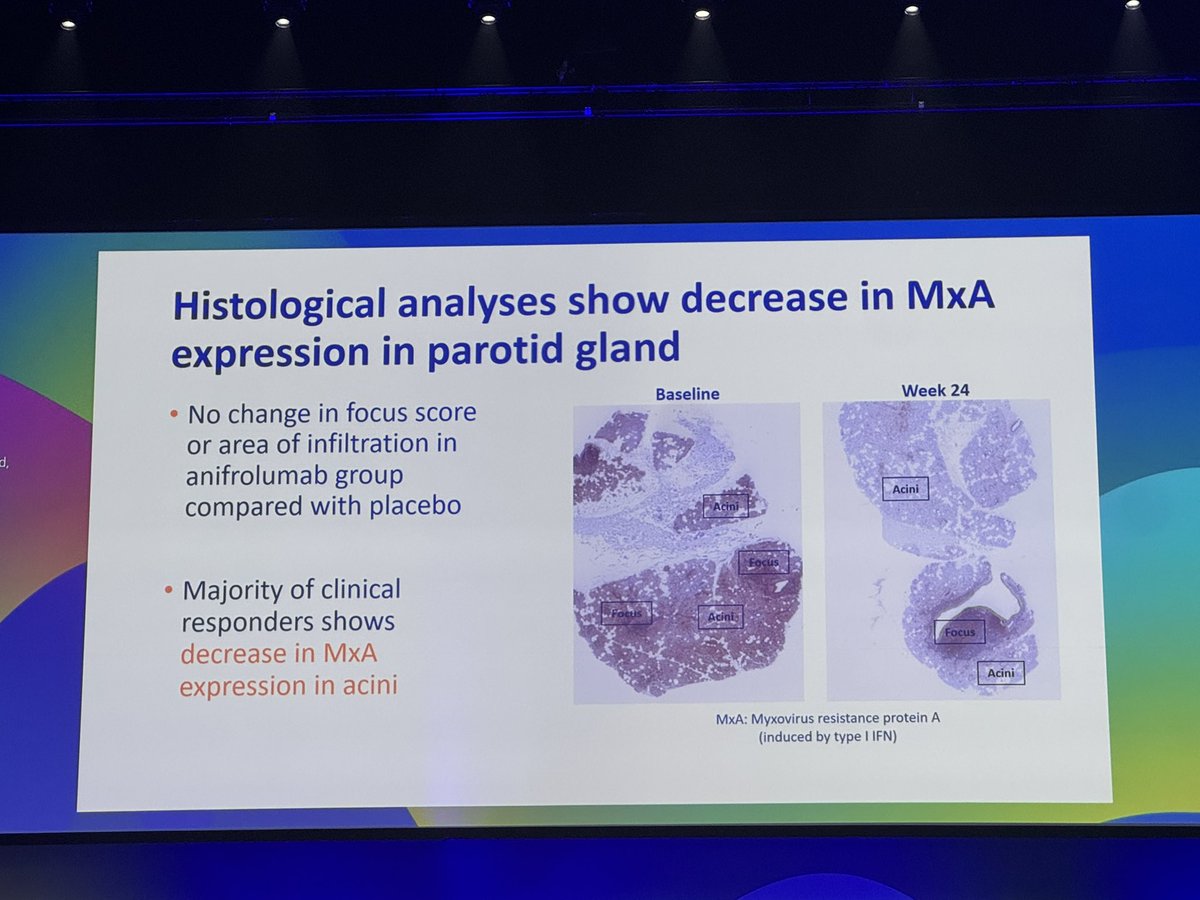
#Anifrolumab for #Sjogren. Small RCT study noted improved CRESS, cSTAR, ESSPRI, ESSDAI. No issues with safety, no change in histology score, but MxA expression reduced in ANI group #EULAR26#Plenary@RheumNow
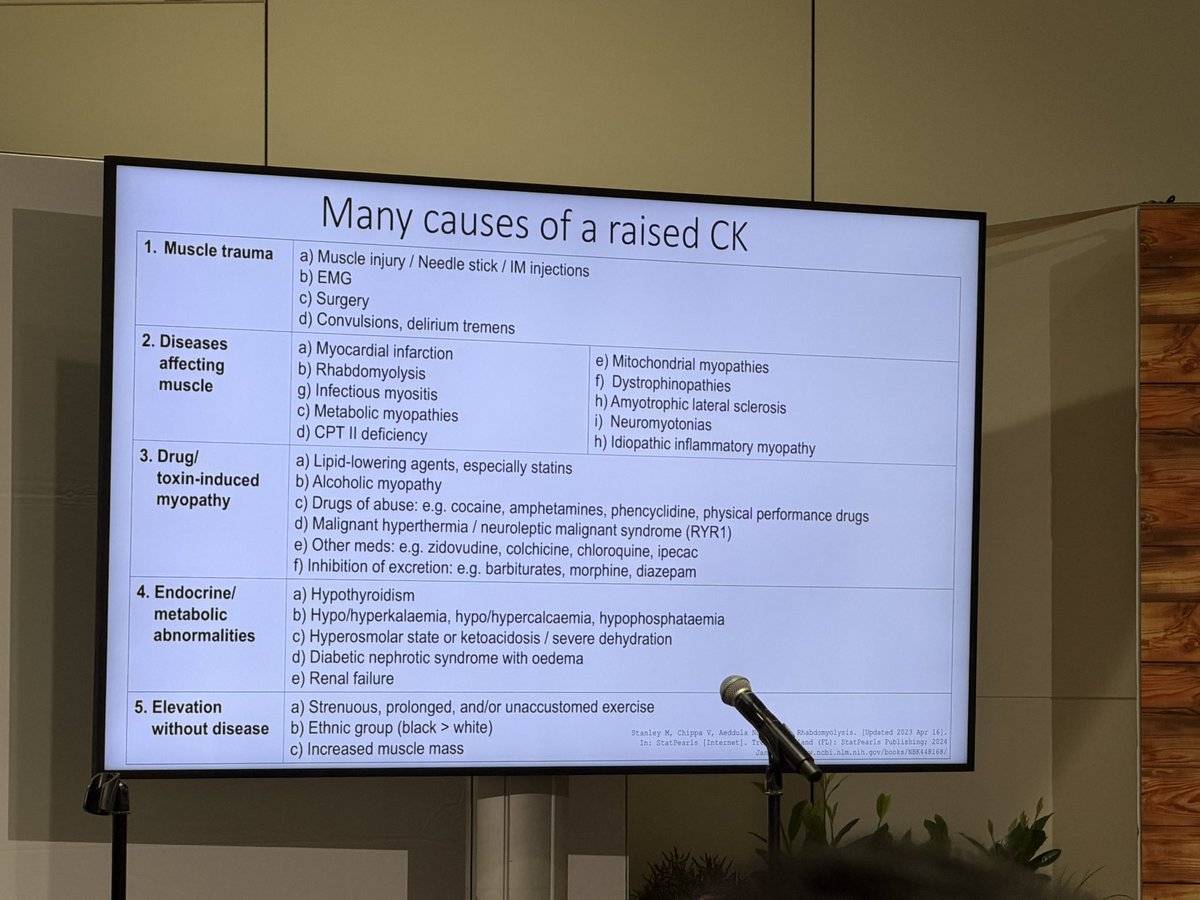
Considering non-myopathic causes of elevated CK before initiating an extensive neuromuscular workup is essential for diagnostic efficiency, patient safety. Up to 1.3% of the general population exhibits asymptomatic or oligosymptomatic hyperCKemia, #eular2026#london#autoimmune
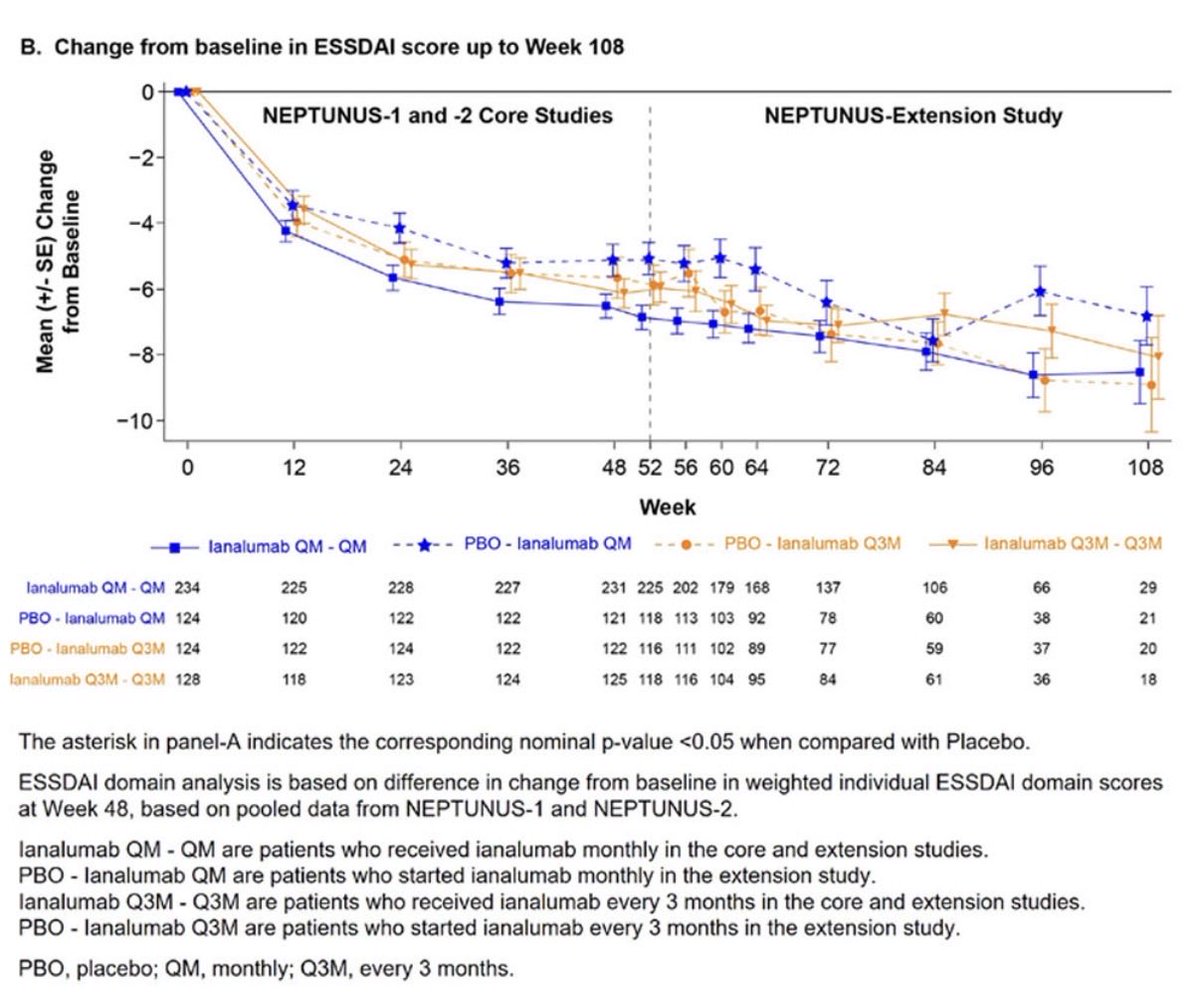
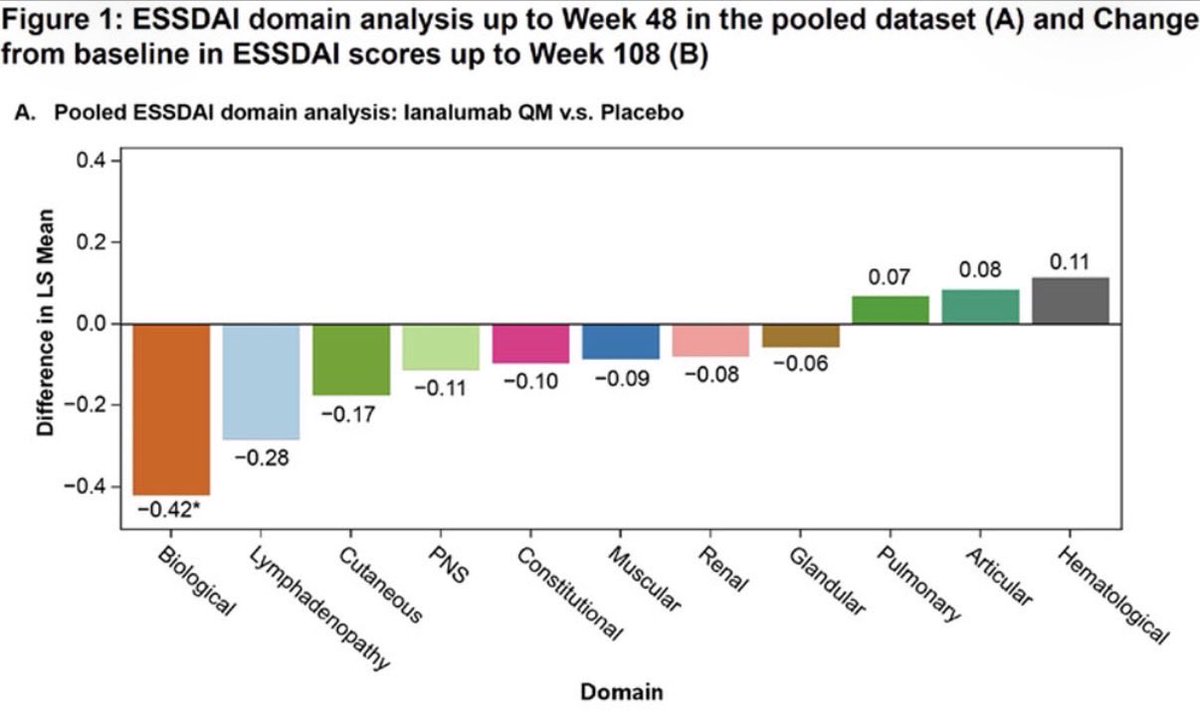
#EULAR2026 OP0126 Long-term extension study up to 108 weeks: Ianalumab demonstrated sustained efficacy (change in ESSDAI) including those who switched from PBO to IAN in #Sjogren. IAN improved most domains apart from lungs, MSK & Haem - important to note @RheumNow#EULARBest
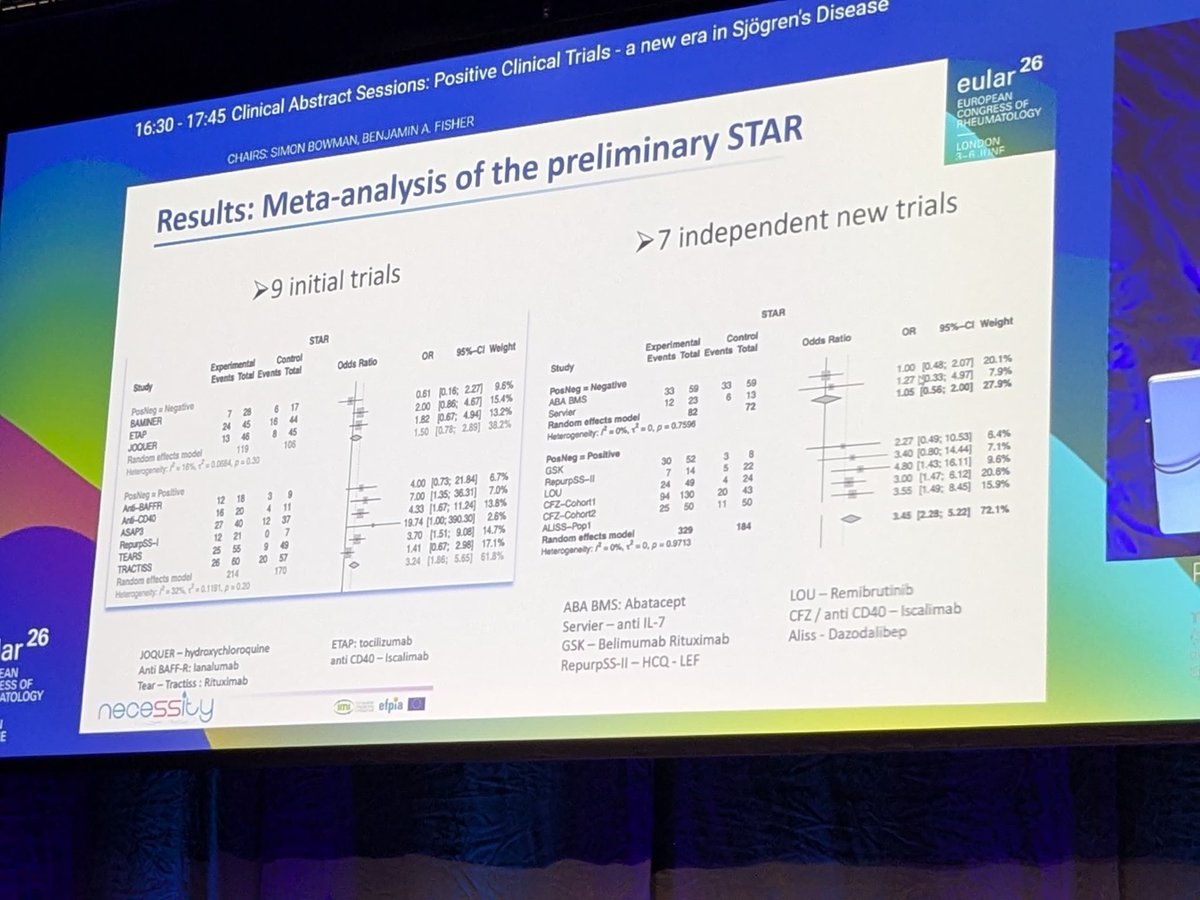
#EULAR2026 OP0125 It’s a case of “teamwork makes the dream work!” Instead of an index to capture heterogeneity in #Sjogren activity, the NECESSITY validated using data from 16 RCTs that a new composite tool, STAR has high sensitivity & specificity. Vital for use in RCTs @RheumNow
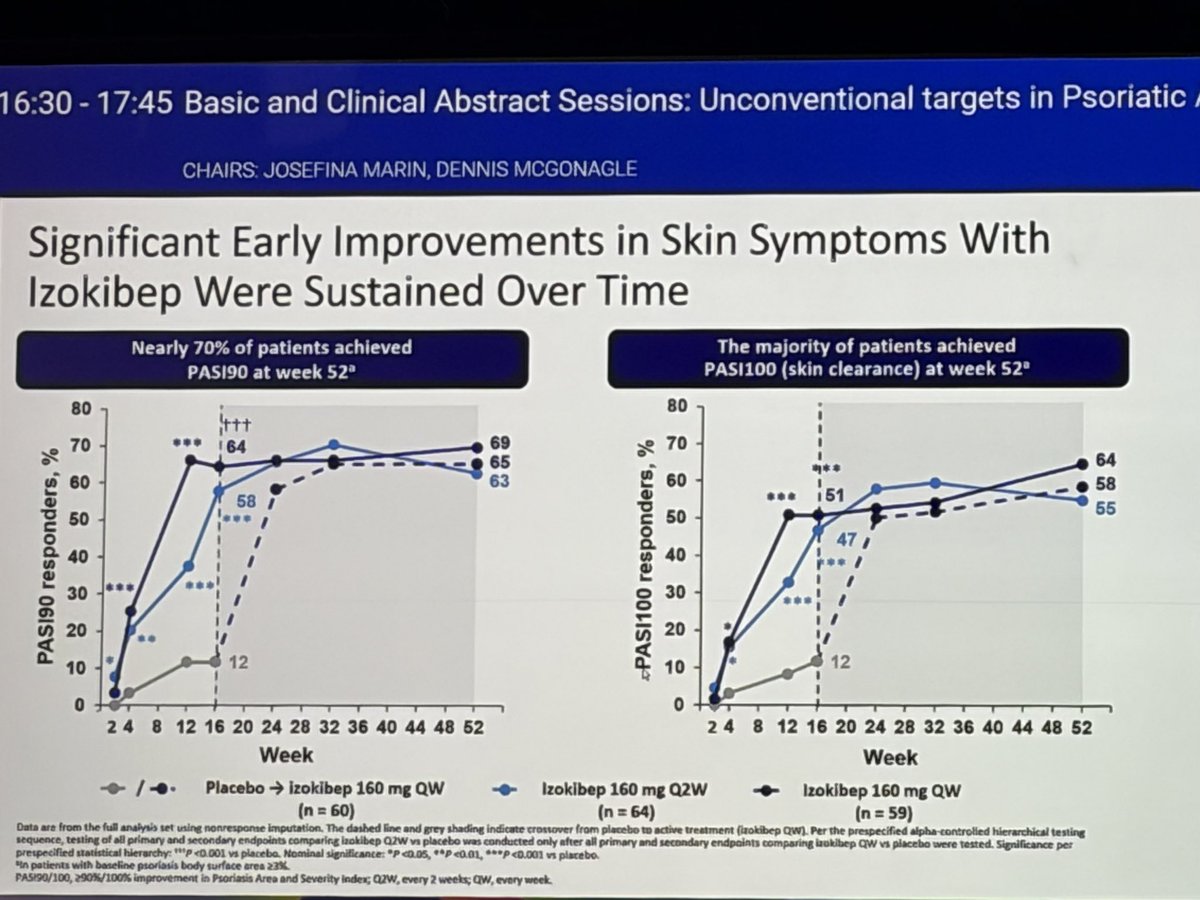
At Week 52 with izokibep in #PsA PASI90: 63–69%; PASI100: 55–64%; MDA: 47–52%. The small-molecule format may enable deeper tissue penetration. Novel anti-IL-17 approach. Abstr#073 @RheumNow#EULAR2026#Biologics
Presented at #EULAR2026:
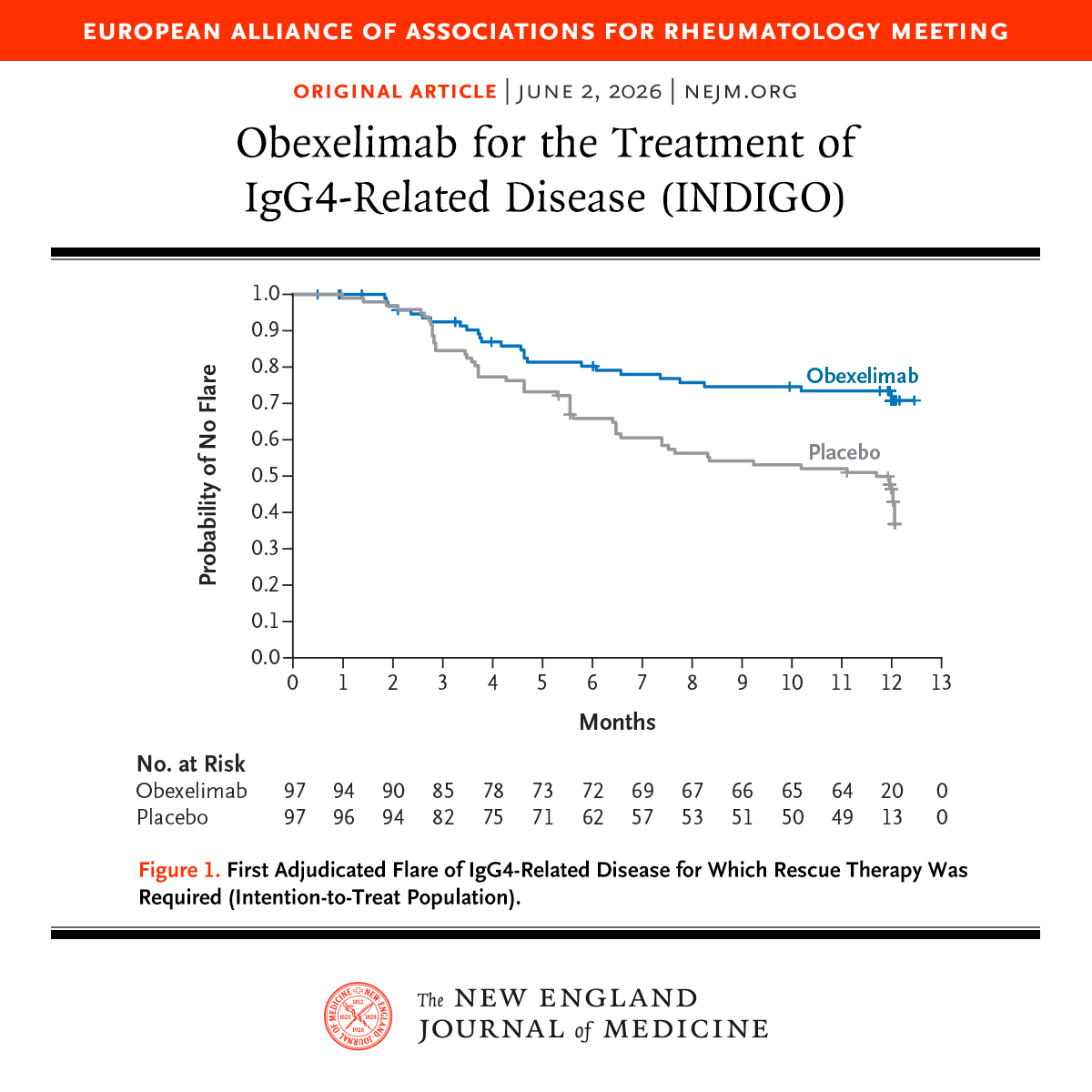
In a phase 3 trial, obexelimab led to a lower risk of disease flares than placebo among patients with IgG4-related disease. Glucocorticoid use was lower and the incidence of remission was higher with obexelimab than with placebo. Full INDIGO trial results: nej.md/4fKYQG4
Editorial: Obexelimab and the Promise of Nondepleting B-Cell Therapy in IgG4-Related Disease nej.md/4fLybcd@eular_org
ALT A line graph from an article titled "Obexelimab for the Treatment of IgG4-Related Disease," which shows estimates over time of the probability of a first flare of IgG4-related disease for which rescue therapy was required. Below the graph is a footnote detail and the logo for the New England Journal of Medicine.