Wide-eyed idealist. Vice President of Public Affairs at Alliance Defending Freedom and ADF Action. Opinions are my own.
Joined March 2015
- Tweets 875
- Following 637
- Followers 551
- Likes 805
33 Photos and videos


Lathan Watts retweeted

WATCH: "The SPLC is little more than a highly profitable scam."
ADF's @ryanlbangert delivers his opening statement to @JudiciaryGOP on @splcenter
6
67
216
18,434

Jun 9
No one in this country needs the government’s permission to host a prayer group in their home.

If you’re a mayor, and you find yourself telling townspeople to report their neighbors for praying, it’s probably time to stop and ask: “Am I the bad guy?”
But (as this video shows) the mayor of University Heights, OH, showed no signs of self-doubt when he did just that in 2021.
His target was Daniel Grand, an Orthodox Jewish resident who had invited friends to a Sabbath prayer meeting in his home. Daniel hoped to start a weekly prayer meeting for around a dozen men: a small prayer group known as a minyan.
Because Orthodox Jews don’t drive on the Sabbath, the only men attending would be those near enough to come on foot. Traffic or parking in the neighborhood would be a non-issue.
Most of us would find it absurd to suggest that hosting a weekly prayer group would turn one’s home into a “house of assembly”—or require a zoning permit. Hosting dinner parties doesn’t turn your home into a restaurant. A poker night doesn’t turn your home into a casino. And University Heights didn’t target secular gatherings like these.
But as soon as the mayor learned of Daniel’s prayer invitation, he sent a “cease and desist” letter, telling Daniel he was forbidden to host prayer meetings without obtaining a special-use zoning permit.
Daniel initially tried to comply with the city’s demand. He applied for the permit and pleaded his case at a contentious, three-hour public meeting. But later, he realized that the zoning framework in question was not designed for a private residence at all. In fact, the law makes it clear that if he were granted special use as a “house of assembly,” he and his family would no longer be permitted to live in their home.
Daniel withdrew his application. But town officials continued to harass him, threatening him with criminal prosecution if he hosted prayer meetings. Neighbors were instructed to watch Daniel’s property for signs of religious activity. Police patrols began driving by his home.
None of this is remotely acceptable under the First Amendment. Government officials cannot use zoning laws as a guise to target religious activity or chill religious worship. Daniel rightly filed a federal lawsuit.
In court, the city argued that Daniel’s case should be dismissed because he had withdrawn his zoning permit application. He may only sue after his application is fully processed and denied, they said. The Sixth Circuit agreed.
But here’s the truth: the city violated the Constitution much earlier. The moment they sent a “cease and desist” letter forcing Daniel to seek a permit to pray in his own home, they ran afoul of the First Amendment—and may be held accountable in court.
If the Sixth Circuit’s ruling stands, local governments will be empowered to chill religious exercise—and discriminate against any disfavored viewpoint—simply by slow-walking their own zoning processes. That’s unacceptable.
@ADFLegal, alongside our co-counsel, @Orrick Herrington & Sutcliffe LLP, is honored to be representing Daniel Grand in his appeal to the U.S. Supreme Court. The case—Grand v. University Heights—is scheduled for conference this Thursday. Every American who cares about religious liberty and government accountability should be watching this case.
And if you’re inclined, please say a prayer. No permit required.
3
2
141
Jun 6
youtube.com/watch?v=eEIqdcHb…
Few dates can match the significance of June 6, 1944. No one can match Reagan’s commemoration speech. I miss the Gipper.
18
May 24
Often-Overlooked Theology of Declaration of Independence | National Review nationalreview.com/2026/05/t…
1
29
May 15
Might’ve found my spirit animal
May 14

These two giant turtles have been fighting each other for more than 120 years.
According to the zoo, one turtle stole the other’s food 120 years ago, and since that day they became enemies.
There hasn’t been a single day where they don’t fight for 2–3 minutes😂
Community note
Taipei Zoo identified these as Sulcata tortoises fighting over territory due to seasonal changes — not a 120-year food grudge. Sulcata tortoises live ~54–75 years in captivity, making a 120-year feud between the same two individuals impossible. taipeitimes.com/News/taiwan/ar… en.wikipedia.org/wiki/African_s…
2
79
Lathan Watts retweeted

May 12
Their 11-year-old daughter went on a class trip—only to discover that her hotel roommate (and expected bedmate) was a boy.
Today we’re representing them & other CO parents at the 10th Circuit. Kids deserve privacy on overnight trips. Parents deserve the chance to protect them.

467
3,142
18,369
3,789,433
Lathan Watts retweeted

All the important policy discussions about securing America's future are happening at #FreeCon!
Hear why @ADFLegal's @LathanWatts is looking forward to attending and grab your tickets ➡️ freecon.org/
1
1
65
Lathan Watts retweeted
READ: "I know I am not alone in facing unjust persecution under ‘hate speech’ laws that make sharing Christian beliefs a criminal offense. I make my appeal in the hope that the European Court of Human Rights will recognise that peacefully expressing one's beliefs is never a crime, and ensure that this basic freedom is protected for all."
@PaiviRasanen, our client at @ADFIntl, appeals her recent "hate speech" conviction in Finland.
foxnews.com/media/finnish-la…
3
25
59
1,761
Lathan Watts retweeted

May 7
1/2 @FreeConTalk signatory @LathanWatts is a columnist for @townhallcom and vice president of public affairs for @ADFLegal and its sister organization ADF Action. He is also a speaker at #FreeCon 2026, to be held May 20 in Washington.
In a recent @dcexaminer piece, Watts praised the U.S. Supreme Court for unanimously affirming the constitutional rights of faith-based nonprofits.
“From Washington state to Vermont, California to New York,” he wrote, state officials have targeted pro-life organizations. “Whether they’re going after confidential donor data or attempting to punish centers for sharing possibly life-saving information about abortion pill reversal, their message is clear — if you provide free, compassionate care and information to women and families, you could be subjected to harassment by your state government.”
Now, thanks to “a clear conclusion from the highest court in the land,” such harassers are on notice that they may be “held accountable in federal court for violating constitutional rights.”
1
1
2
165
Lathan Watts retweeted
The Supreme Court's action today is NOT a reversal of Friday's victory for women and their children. It's the typical procedural pause - the Justices now have seven days to consider the emergency application.
The Biden FDA acted recklessly and unlawfully, and I look forward to holding it and the dangerous drug manufacturers accountable alongside our client Rosalie and @AGLizMurrill as our case moves forward.

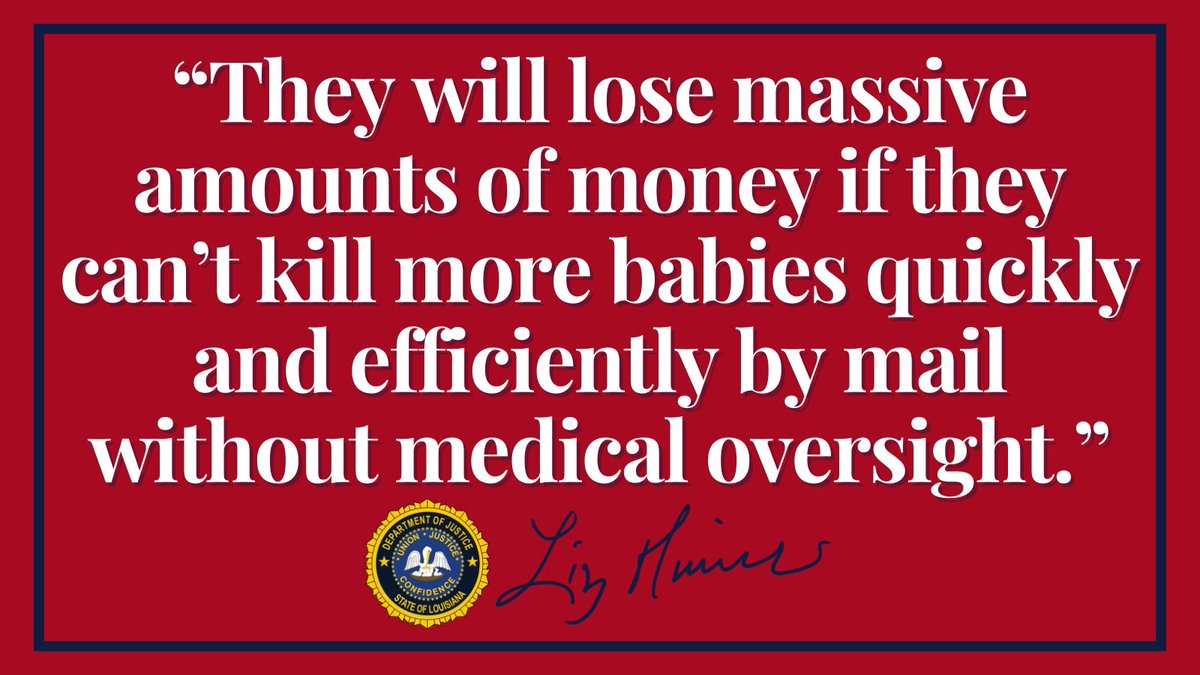
Big abortion pharma claims they need an emergency stay because they will lose massive amounts of money if they can’t kill more babies quickly and efficiently by mail without medical oversight. The administrative stay is temporary, and I am confident life and the law will win in the end. #lalege #SCOTUS
11
24
101
6,533
Apr 30
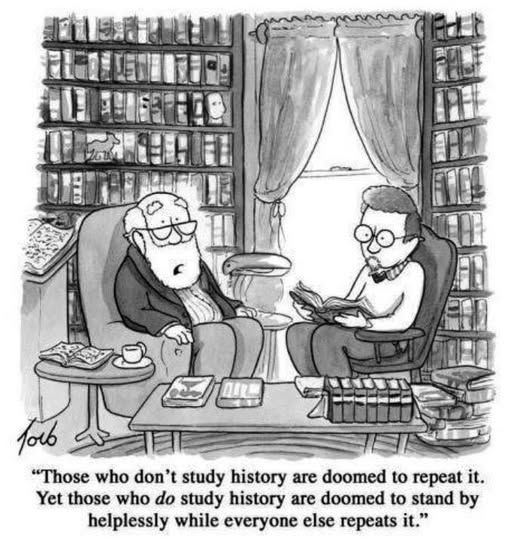
To paraphrase Patrick Henry, “I regret that I have only one like to give…”

1
47
Apr 30
Supreme Court gets it right: Harassed pregnancy center deserves day in court washingtonexaminer.com/resto…
20
Lathan Watts retweeted
WIN for free speech and pro-life pregnancy centers at SCOTUS! 🏛️
11
59
239
13,463
Lathan Watts retweeted
BREAKING: 9-0 victory in First Choice v. Platkin!
4
18
156
6,992
Apr 28
Busy season of work and family kept me out of the loop for a bit. Apparently I missed NINE World Wars.
3
40
Apr 24
Kansas Legislature Shows Rest of Nation How to Get Good Things Done townhall.com/columnists/lath…
2
4
540
Lathan Watts retweeted

Apr 22
Yesterday’s federal grand jury indictment of the SPLC is big news: Prosecutors allege the organization misled donors while funneling millions of dollars to informants tied to groups like the Ku Klux Klan and other extremist actors, including an individual connected to the deadly 2017 “Unite the Right” rally in Charlottesville. The indictment includes 11 counts, including wire fraud and false statements to federally insured banks.
This strikes a serious blow to the censorship industrial complex in the United States, as the SPLC has long been a central player in that ecosystem. But the fight is far from over.
The SPLC has exported its model overseas in recent years. Long-time SPLC “Hate Map” chief Heidi Beirich co-founded the @globalextremism project in 2020. That organization is part of a growing network of NGOs shaping how governments—particularly in Europe—approach the regulation of “extremism” and “hate” online.
Exporting this model doesn’t solve the problem—it spreads it.
1
10
27
2,404
Lathan Watts retweeted

Apr 21
BREAKING NEWS: The IA Legislature passed SF2231, protecting 1st Amendment rights of students, in public K-12 schools (SPEAKS Act), and prohibiting religious discrimination within government programs...Thank you Senate President Amy Sinclair, Senator Salmon, and Representative @samantha_fett for sponsoring this important legislation!
@ADFLegal @ADF_Action
2
7
15
1,088
Apr 17
God bless and keep Justice Thomas on the Court for as long as possible.
Apr 16

🔥NEW: Clarence Thomas — full remarks on progressivism, its foundations, history, and impact from his appearance at University of Texas at Austin:
“Stalin, Hitler, Mussolini, and Mao were all intertwined with the rise of progressivism, and all were opposed to the natural rights on which our Declaration is based.”
"Many progressives expressed admiration for each of them shortly before their governments killed tens of millions of people."
"It comes as no surprise that the progressives embraced eugenics... It was only a small step for Wilson to resegregate the federal workforce."
"It was only another step for the government to launch sterilization programs on those deemed by the experts of the day to be unfit to reproduce."
“European thinkers have long criticized America for remaining trapped in a Lockean world, with its weakened, decentralized government and strong individual rights. They say our 18th-century Declaration has prevented us from progressing to higher forms of government."
"But we were fortunate not to trade our Lockean bonds for the supposedly enlightened world of Hegel, Marx, and their followers. Fascism, which after all was national socialism, triggered wars in Europe and Asia that killed tens of millions."
"The socialism of the Soviet Union and the People’s Republic of China proceeded to kill tens of millions more of their own people. This is what happens when natural rights give way to higher-good notions of history or progress, or, as Thomas Sowell has written, the visions of the anointed."
"None of this, of course, was an improvement on the principles of the Declaration. Tocqueville's Democracy in America is largely about how America owed its superiority over Europe to its conscious decision to reject central planning and administrative rule, root and branch."
"Progressivism, in other words, is retrogressive.”
1
61
Apr 16
Some states never learn. Thanks to American Thinker for publishing my latest column. americanthinker.com/blog/202…
1
5
246