Public Member Interagency Autism Coordinating Committee, Senior policy advisor relating to autism and immunodeficiencies. Autism Innovation Coalition member.
Joined October 2011
- Tweets 1,404
- Following 928
- Followers 534
- Likes 3,579
33 Photos and videos



Pinned Tweet

Jan 7
The recently formed Autism Innovation Coalition (AIC) is a science-driven initiative integrating genetics, immune dysregulation, mitochondrial metabolism, neurodevelopment, and environmental triggers into a systems-biology framework for autism with co-occurring medical conditions (ACMC) for both clinical and policy relevance. Check out our new website: autisminnovationcoalition.co…
3
4
9
527
Laura Cellini retweeted

Jun 3
It has now been more than a month since the April 28 meeting. During that time, I am aware of at least three deaths involving autistic individuals who wandered or eloped from caregivers. The IACC adopted these recommendations by a significant majority because the risks are real, ongoing, and often fatal. Every delay represents a missed opportunity to improve prevention, education, and emergency response. It is time for action. @NationalAutism
2
9
17
249
Laura Cellini retweeted
Jun 3
On April 28, the IACC adopted a comprehensive package of recommendations to address the serious public safety risks associated with wandering and elopement in autism. These recommendations included:
1. Use of the Missing and Endangered Persons (MEP) alert category within the Integrated Public Alert and Warning System (IPAWS) for autism-related wandering and elopement incidents.
2. Updating CDC Wandering and Elopement Webpage
3. Re-evaluating and Expanding ICD-10-CM Coding for Wandering to Capture Clinically Assessed Prospective Risk
4. Updating Early and Periodic Screening, Diagnostic, and Treatment (EPSDT) and Bright Futures Guidance
5. Encouraging Consistent Coverage of Safety Supports under Home and Community-Based Services (HCBS) Waivers
6. Promoting Clinical Adoption of Wandering and Elopement Risk Guidance.
These recommendations can be found here. iacc.hhs.gov/meetings/iacc-m…
2
6
9
206
Laura Cellini retweeted
Jun 3
This tragic case of a 15-year-old boy with autism who died by drowning after eloping from his caregivers underscores the critical importance of specialized training and response protocols for law enforcement.
The child was initially classified as a "runaway juvenile" rather than being recognized as a missing autistic child at heightened risk of injury or death, prompting neither the immediate activation of local alert systems nor targeted searches of nearby bodies of water and traffic corridors.
This heartbreaking loss illustrates why the IACC's recommendations on wandering prevention and response should be implemented without delay. @SecKennedy @HHSGov
🧵
10news.com/news/we-follow-th…
4
12
29
918
May 18
My heart breaks for this family. This is the 3rd wandering/drowning autism related death that I am aware of that has occurred since the @IACC_Autism passed a recommendation to @SecKennedy to utilize the existing MEP system with specific criteria for autism related elopement. May God bless and comfort these families. wdrb.com/news/4-year-old-wit…
3
15
25
913
Laura Cellini retweeted
May 9
I agree that autism is often innate and strongly heritable. But high heritability does not mean immutability, nor does it exclude environmental modulation, particularly when environmental factors may be widespread, shared, or interacting with biology in consistent ways.
I also agree with much of what you are arguing regarding the potential importance of germline and developmental programming effects.
But could you agree that even with a pre-existing heritable vulnerability, that environmental, metabolic, immune, or toxicant-related exposures could still influence developmental trajectory, severity, regression, or co-occurring medical burden in at least some individuals?
There is substantial evidence that core cellular processes — including mitochondrial function, redox balance, immune signaling, oxidative stress pathways, and metabolic signaling — directly influence neurodevelopment, including synaptic development, neuronal connectivity, pruning, plasticity, network regulation, and broader cytoarchitecture of the developing brain. These are not peripheral issues; they are fundamental developmental mechanisms.
One of the central questions in autism science is how extremely diverse risk factors — hundreds of genes, de novo mutations, maternal immune activation, prematurity, valproate exposure, mitochondrial dysfunction, inflammatory pathways, and other metabolic or environmental factors — converge onto overlapping developmental phenotypes.
Clinical experience with many autism families has also reinforced my interest in neurodevelopmental regression and developmental trajectory. Regression does not establish causation. But I do not think it is scientifically appropriate to simply assume that biological events temporally associated with major developmental changes are necessarily irrelevant or that the same outcome would have occurred regardless.
To me, this is about understanding how genetic vulnerability, developmental biology, metabolism, immune signaling, and environmental factors interact across development.
And on a final note, I do not appreciate the suggestion that my views ignore the last 20 years of autism research or that I am uninterested in scientific input from others. Quite the opposite — I actively seek out perspectives from researchers, clinicians, advocates, and families with a wide range of viewpoints and expertise.
I am also proud of the work accomplished at the first IACC meeting. The Committee advanced thoughtful, evidence-informed, common-sense recommendations focused on issues like safety, medical care, and support for those with profound autism — recommendations that passed with strong public and federal support.
That is part of why the intensity of the public attacks and coordinated efforts to discredit the new IACC have been disappointing and, frankly, make genuine collaboration more challenging. I still hope we can find ways to engage respectfully and constructively around both the science and the needs of individuals and families.
5
6
27
391
May 5
Last week the IACC voted to recommend the util of a review of systems approach for HRSA and EPSDT to ensure adequate monitoring for co-occurring medical conditions in autism. Biology over ideology reflects a science based approach.

"ARI's Founder, Dr. Bernard Rimland… challenged assumptions deeply embedded in the field. That remains necessary." arrionline.org/editorial-fol…
1
1
8
352
Laura Cellini retweeted
May 2
Dear Ms. Singer,
Your April 28 press release identifies several areas of agreement with the proposals adopted by the IACC on April 28 — among them, the urgency of wandering and elopement, inadequate medical care attributable to diagnostic overshadowing, and the persistent under-representation of individuals with profound autism in both research and federal policy. That common ground is real and valued and it is precisely because we share these priorities that the significant inaccuracies in your statement warrant a careful and direct response, in the interest of an accurate public record and the integrity of the work before us.
On wandering and elopement specifically — associated with at least 7–8 preventable deaths per month, estimated from media reports in the absence of active surveillance — the April 28 proposals built directly on years of prior IACC presentations and public comment. Families and advocates have raised this issue before the Committee repeatedly, and for years the urgency of those voices was not translated into concrete action. The April 28 proposals represent exactly that translation — finally moving from acknowledgment to recommendation. That progress deserves to be recognized for what it is.
Because we share common ground on these issues, I want to address several significant inaccuracies in your statement, in the interest of ensuring that the public record is accurate and that our shared goals are not undermined by mischaracterization.
The Statutory Authority of the IACC
Your statement asserts that the IACC's proper role is solely to "develop a strategic plan for the conduct of and support for autism research," and that the April 28 proposals fell outside that mandate. This is incorrect. I understand that this view may reflect the operational practice of the Committee during prior service periods, in which the strategic plan functioned as the primary — and at times, effectively the sole — vehicle for Committee output. That history is acknowledged. It does not, however, define the statute.
The Autism CARES Act, reauthorized in 2024 (Pub. L. 118-267), establishes a broad, lifespan mandate for the IACC that extends well beyond the strategic plan requirement. While the Committee is required to develop and update a strategic plan for autism research, that requirement exists alongside, not instead of, the Committee's authority to advise the Secretary of HHS directly, coordinate federal autism activities, and make recommendations addressing prevention, identification, intervention, treatment, services, supports, and real-world outcomes across the lifespan. These are co-equal statutory functions, not subordinate ones. Contrary to the assertion in your statement, translating lived experience and urgent community needs into actionable policy recommendations is therefore not outside the Committee's role — it is central to it.
The authority to make direct recommendations to the Secretary — outside of and in addition to the strategic plan — has existed since the Committee's authorizing legislation was first enacted. Whether that authority was exercised in prior cycles is a matter of historical record that this Committee does not presume to characterize on behalf of those who served before us. What is clear is that a thorough reading of the statute informed the April 28 recommendations from their inception. The Committee acted within its authority because it understood its authority.
The families who have waited years — in some cases, decades — for action on these issues did not require the Committee to discover new powers. They required the Committee to exercise the powers it has always possessed. April 28 was that exercise.
Profound Autism Designation and the Hughes et al. Study
With regard to your critique of the Committee's recommended criteria for the "profound autism" designation, we agree that continuous (24/7) support is the central defining criterion — emphasized by both the Lancet Commission (Lord et al.) and the INSAR Delphi process (Siegel et al.) in which you participated. It is therefore particularly notable that Hughes et al. — a study on which you are an author — did not operationalize this criterion at all. I want to address both that methodological problem and your claim that excluding IQ would eliminate nearly half the profound autism population.
Your press release states that 42.7% of individuals in Hughes et al. qualified for profound autism solely on the basis of IQ. What that figure does not reflect is that the study's alternative criterion — being "nonverbal or minimally verbal" — was defined so narrowly as to exclude many individuals who would be considered minimally verbal in standard clinical practice.* In other words, the 42.7% figure is an artifact of an unusually restrictive speech threshold, not evidence that IQ is the only reliable way to capture this population. Had the study used a clinically representative definition of minimally verbal, the proportion qualifying on speech criteria alone would have been substantially higher — and the case for IQ as an indispensable criterion correspondingly weaker.
There is a further methodological problem with Hughes et al. that bears directly on this debate: the study did not operationalize the requirement for continuous, 24/7 support — which is widely understood to be the defining feature of profound autism. IQ appears to have served as a substitute for that criterion, not because it is the conceptually correct measure, but because continuous support needs were not assessed. Where a study does not measure what matters most, the proxies it uses in its place should not be held as the standard.
Additionally, approximately 20% of participants in Hughes et al. had no IQ data available. In those cases, IQ was imputed using functional and behavioral measures — including the Vineland and the presence or absence of self-injury and aggression. This is precisely the kind of functional proxy the IACC's criteria are designed to use directly. It is difficult to argue that IQ is essential when the study itself relied on functional measures to estimate it for one in five participants.
This is not unique to Hughes et al. The 2018 CDC ADDM surveillance report (Maenner et al.) — one of the most comprehensive autism datasets available, covering over 5,000 eight-year-olds across 11 states — found that nearly 40% of children with ASD had no cognitive ability data at all. If IQ is unavailable for four in ten children in a rigorously conducted federal surveillance study, it cannot reasonably serve as a required criterion for identifying profound autism in research or policy contexts.
While the INSAR Delphi process included support from approximately two-thirds of participants for incorporating IQ, a substantial minority of qualified experts did not consider it necessary. IQ testing is resource-intensive, variably available, and may not be feasible or reliable for individuals with significant communication and motor challenges. In more than two decades of clinical experience, I have not encountered a single individual with a measured IQ below 50 who did not require continuous or near-continuous supervision for safety. That relationship exists — but it exists because low IQ tracks with high support needs, not because IQ is the construct we actually care about. The IACC's criteria are designed to measure that construct directly.
I recognize there may be genuine disagreement here among qualified researchers and clinicians. What I hope we can agree on is the underlying purpose: ensuring that individuals with the highest support needs are no longer excluded from research and policy. A definition grounded in functional support needs — directly measured rather than proxied — is more likely to achieve that goal, not less.
FACA Compliance
Your allegation that the Committee did not operate within Federal Advisory Committee Act (FACA) requirements is serious, and it is inaccurate. I would ask that you review these claims with counsel experienced in FACA before making such assertions in a public press release. I address each claim in turn.
Your assertion that materials were "marked final" is factually incorrect as framed. Materials carried "final" in their working file names solely to distinguish them from earlier drafts and to ensure the correct version was transmitted to ONAC on April 20. The decision by ONAC staff to post documents to the public website using the original working file names — without relabeling them appropriately, as would be standard practice — was entirely ONAC's, not the Committee's. This was not a trivial oversight; it created a misleading public record for which the Committee bears no responsibility.
Moreover, the claim that documents were treated as final and not subject to amendment is directly contradicted by the record. Committee member Elizabeth Bonker added language to Attachment C on profound autism during the meeting itself — precisely the kind of deliberative amendment that characterizes an open, functioning advisory committee. Members were specifically instructed to read each attachment and offer their views. That is not the behavior of a committee rubber-stamping pre-determined outcomes. It is the behavior of a committee doing its job.
The procedural record is equally clear. The meeting agenda was developed in collaboration with the Designated Federal Officer (DFO). The Office of National Autism Coordination (ONAC) received proposals for full Committee deliberation on the evening of Monday, April 20. IACC members received the agenda and proposals on Thursday, April 23—five days in advance of the meeting, which is typical for a FACA committee. The agenda and proposals were made publicly available on the IACC website as part of standard transparency practices. As is customary, the distribution and posting of materials were handled by ONAC, not Committee members, and ONAC had intended for materials to be distributed on Thursday, April 23.
The proposals then underwent more than two hours of open Committee deliberation, including the amendment of one proposal, before being adopted by a clear majority that included many federal members. This is precisely how a deliberative body is supposed to function. Families and advocates had brought the issue of wandering and elopement before the IACC for years, and for years it was heard and not acted upon. This meeting acted.
Given your extensive twelve-year experience with the IACC, I am sure you are aware that FACA requires transparency and public access to advisory committee materials but does not establish a minimum advance distribution period. There is no specified number of days by which materials must be provided prior to a meeting. Likewise, FACA requires that advisory committee meetings be open to the public, ensuring that proposals are discussed in a transparent forum, but it does not prescribe any minimum duration for deliberation. It does not require that votes be deferred to subsequent meetings. These are the actual requirements of the statute. The April 28 meeting met all of them.
I encourage you to issue corrections on both points — the "marked final" assertion and the allegation that FACA requirements were not followed. More importantly, the urgent real-world needs of the autism community — and the thoughtful, evidence-based recommendations that emerged from the April 28 IACC meeting — deserve to be celebrated and built upon. The individuals and families we both care about are best served when we direct our energy there, rather than toward assertions that do not withstand scrutiny.
Looking Forward
We are aligned on the issues that matter most — wandering and elopement, diagnostic overshadowing, and ensuring that individuals with the highest support needs are seen and served by research and policy. I hope we can build on that common ground. The families who have waited years — decades — for action on these issues deserve nothing less than our full collaboration and our most rigorous work. There is far more that unites us than divides us, and I remain committed to keeping the focus where it belongs: on the individuals and families who are counting on us to get this right.
Regards,
Sylvia Fogel M.D.
Chair, Interagency Autism Coordinating Committee
These statements are made in my personal capacity and do not necessarily reflect the views of the IACC or any federal government entity.
*Footnote — Technical Note on the Hughes et al. "Minimally Verbal" Criterion
The criteria used to define "minimally verbal" in Hughes et al. were considerably more conservative than the way the term is typically used in clinical practice. In the study, children were categorized as "nonverbal" if they had no words or word approximations — that criterion is straightforward. "Minimally verbal" was defined very narrowly: either speech consisting primarily of echolalia or jargon, or a history of administration of ADOS Module 1, which is specifically designed for individuals who do not consistently use phrase speech. The ADOS defines phrase speech as flexible, non-echoed three-word utterances that include a verb.
In practice, an individual who uses a limited number of simple phrases — such as "wanna go potty" or "wanna go out" — may be administered Module 2, yet still lack the generative, flexible language expected even in early childhood. In clinical settings, such individuals would commonly still be considered minimally verbal. Importantly, the study did not use Module 2 administration as the threshold — it used Module 1 — reflecting a particularly narrow definition that does not fully align with how the term is used in clinical practice.
The real-world significance of this distinction is considerable. An individual may have some simple, context-specific speech and still lack the functional communication needed for safety — for example, the ability to call 911 and effectively seek help in an emergency. The IACC's broader definition of minimally verbal is designed to capture this population accurately, rather than exclude them on the basis of a speech threshold that does not reflect functional communicative ability in the ways that matter most for research and policy.
15
32
90
3,404
Laura Cellini retweeted
Apr 18
Autism is a whole body disorder. We must unequivocally mitigate diagnostic overshadowing so that people with autism get the medical care they require.

Mortality in Autism: A Longitudinal Register-Based Study link.springer.com/article/10… "9.7% of the ASD group and 2.7% of the comparison group had died" (20-year period). But risk is not uniform "Significantly more individuals with severe ID had died compared to the rest of the cohort"
2
16
72
2,806
Mar 19
Interview: Sylvia Fogel on Rethinking Autism Research undark.org/2026/03/19/interv… via @undarkmag
1
10
22
2,538
Laura Cellini retweeted

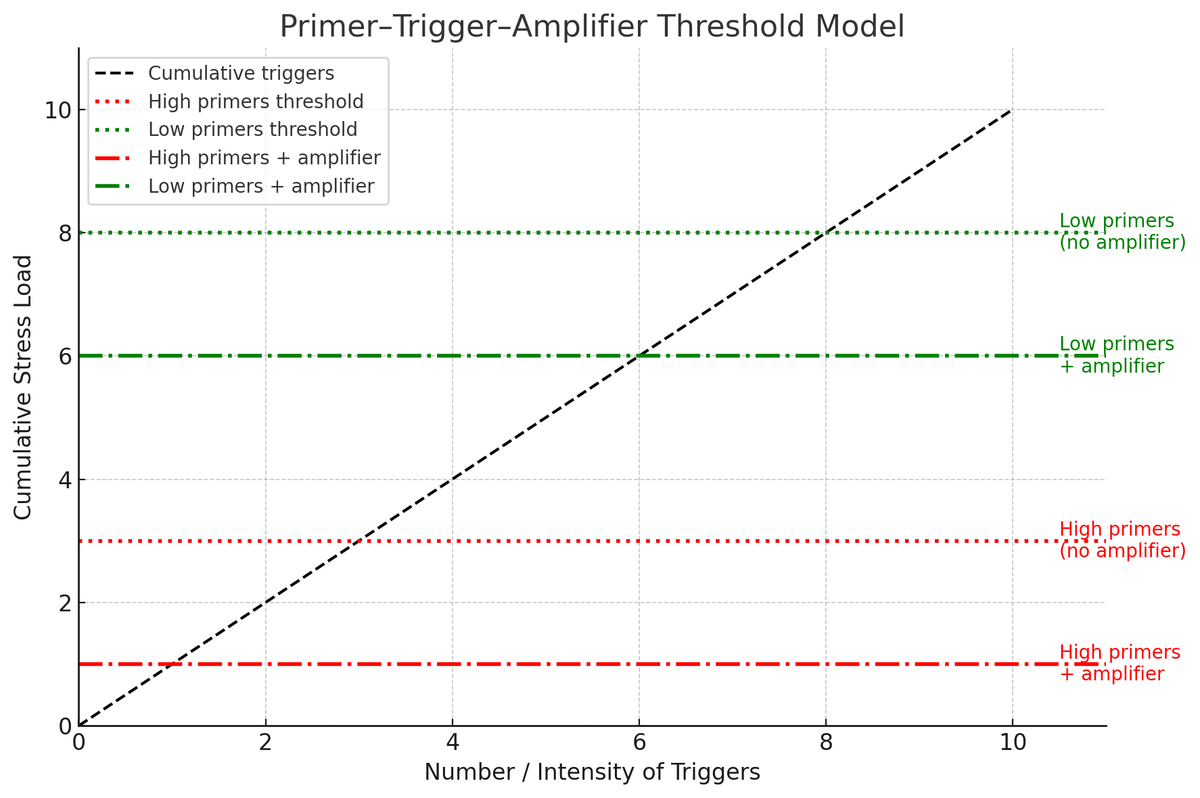
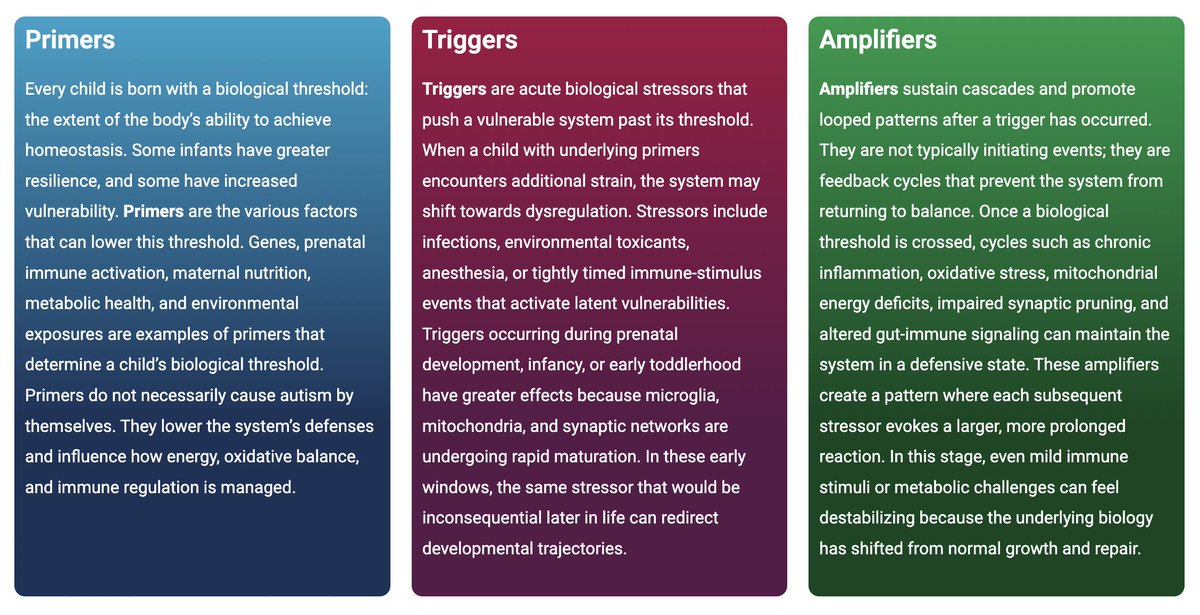
The PTA Model reveals autism as a complex process shaped by interactions across multiple biological systems, with outcomes that depend on timing, context, and contributors that confer exceptional vulnerability.
autisminnovationcoalition.co…
8
11
390
Laura Cellini retweeted

"Naviaux and his team argue for a reframing of how #autism is thought of: instead of almost fixed genetic condition they suggest it may be better understood as a metabolic and inflammatory syndrome shaped by both biology and environment."
washingtonpost.com/health/20…
3
8
20
695
Laura Cellini retweeted
Feb 5
Grateful to @harvardcrimeson for their thoughtful coverage of my appointment as IACC Chair. This moment is about refocusing federal autism policy on unmet needs, scientific rigor, and real-world outcomes for autistic people and their families. thecrimson.com/article/2026/…
3
3
17
523
Laura Cellini retweeted
Feb 5
A 2019 review from researchers at UC Davis MIND suggests what many parents suspect--that neurodevelopmental regression is under-recognized. pubmed.ncbi.nlm.nih.gov/3088…
4
11
147
Laura Cellini retweeted

Jan 31
Key elements of this story are missing:
1⃣ The IACC has held new member orientation meetings in the past, which is nothing unusual, and are held to get new members acclimated to policies and procedures.
2⃣ These are typically closed meetings that are not required to be announced publicly under the Federal Advisory Committee Act regulations.
3⃣ At those meetings, only administrative information is shared to help committee members prepare for their future work on the committee. No substantive matters are discussed.
4⃣ The first public meeting of the new IACC will be announced in the Federal Register and on the IACC website in advance to enable public access and participation.
It is disappointing that STAT continues with their false narratives.

HHS appointed 21 new members to a federal committee that advises health secretary RFK Jr. on autism. trib.al/hFUew3b
3
14
119
8,469
Laura Cellini retweeted
Jan 30
I am honored to serve as the new Chair of the Interagency Autism Coordinating Committee.
Our members bring extraordinary experience and leadership—founding advocacy organizations, advancing legislation, championing inclusion, fighting for special education access, providing medical care, and training the next generation of autism providers. This term also marks a milestone: for the first time since the IACC’s creation in 2000, the committee includes two non-speaking adults with autism who type to communicate.
Because so many of our members have deep lived experience with autism, we bring both passion and urgency to the work ahead—focused on improving prevention, care, and outcomes while maintaining public trust and scientific integrity.
As Chair, I am committed to active outreach and broad public input through open meetings, listening sessions, and stakeholder engagement—including from those who have leveled early, callous criticisms that diminish the enormous achievements of our members. Our affected children and adults deserve apolitical, cooperative engagement to advance progress.
hhs.gov/press-room/hhs-kenne…
17
13
45
1,553
Jan 18
More than Two Decades of Evidence. No Medical Standard of Care.
For more than twenty years, research has documented that autism is not a brain-isolated condition nor caused solely by genes.
1
3
117
Jan 18
Studies published in leading medical journals have identified immune activation and neuroinflammation, gastrointestinal pathology, mitochondrial dysfunction, maternal autoantibodies affecting fetal brain development, cerebellar abnormalities, neuronal signaling imbalances, abnormal cytokine profiles, folate blocking autoantibodies, and fever-responsive symptom changes in biologically defined subsets of individuals with autism.
2
1
3
169
Jan 19
@katiewr31413491 did you see our new website? autisminnovationcoalition.co… It’s pretty stacked!
1
2
95