Unlocking potential through advocacy, research & education.
Joined June 2009
- Tweets 9,481
- Following 369
- Followers 1,262
- Likes 6,715
2,235 Photos and videos

Pinned Tweet

22 Feb 2023
You know what is a human right?
Communication
10
9
106
23,853
MAKE A STAND 4 AUTISM retweeted

Jun 10
Sheryl. Your article exemplifies the biased reporting we have come to expect from you and @nytimes. It was unfair, inimical, and inaccurate. All one needs to refute your argument is to glance at my publicly available calendar and to review my unprecedented list of accomplishments on a wide range of issues, all of which I drove. You evidently never undertook these foundational due diligences. Why let facts obscure a good story?
You fault me for missing a couple of monthly counselor meetings. However, I meet one-on-one with my counselors every day to decide policy and strategy. We schedule the monthly meetings to give the divisions a chance to keep each other informed about HHS-wide policies with which I’m already intimately familiar. Had you read my calendar, you would have seen that I have back-to-back meetings all day, every day, with both career and political staff, with my counselors and with outside stakeholders, interspersed with press conferences and other policy announcements.
I am knowledgeable and active on every issue in every division of my department, and I always make the final decisions. I meet with the principals at FDA, NIH, CDC, and my senior counselor every morning, something, I’m told, is unprecedented in HHS history. I try to get out of the office between 4:30 and 6:00 PM, so that I can spend three hours, in quiet, responding to emails. I normally work until 11 PM every night, mostly on phone calls to staff.
In order to prove your preconceived case for my disengagement, you quote anonymous employees, some of whom I fired or who quit to avoid being fired. You also deceptively quote HHS employees without identifying whether they were among those I fired, thereby depriving your readers of the opportunity to make an independent judgment about their credibility.
I came into this job to change the culture of a broken agency that has presided over the worst decline in public health in American history. Of course I fired people—lots of them! It's an easy task for even the laziest journalist, to comb that flotsam and jetsam for malevolence toward the Trump administration. And of course, this species of journalist will always be able to find disgruntled individuals among the 70,000 employees of the Department from whom to cherry pick "facts" to flesh out a preordained hit piece. All that is required for this brand of journalism is the ethical elasticity that you seem to have in spades. You had a preconceived thesis, and you set out to prove it. This is a widely accepted technique in journalism today, but I grew up in an era when it would not have been tolerated by the New York Times.
Ultimately, God puts us all on this earth to search for existential truths. I've tried to instill this mission at HHS by implementing gold standard research to end the regime of politicized science that COVID exposed to the American public. There was a time that journalists were proud to be the fearless and uncompromising champions of truth. Standards have devolved, and journalism is dead. The Times now employs propagandists. Your capitulation to partisanship further compounds your journalistic challenges; since we all are aware of your predictable bias, we at HHS are unwilling to talk to you about the topics that are important. The fact that you have minimal access to decision makers leaves you covering trivia and relying on your own capacity for invention.
Btw. When I took this job, the building was empty. About 90% of the employees were not coming to work. I changed that, but your newspaper never covers my reforms. Nor did you cover the fact that my predecessor almost never showed up for work here during his four years in office. When we came in, there were still artifacts from the first Trump administration in many of our office drawers because no one showed up for work during the Biden years. Just as Rochelle Walensky spent her entire term as CDC Director in Cambridge, Xavier Becerra reportedly spent most of his term as HHS Secretary in California. (I live in California, but I’ve only been there once in fifteen months).
His only notable accomplishments here were losing 300,000 children, referred to HHS for custody and care, to human traffickers and drug runners, encouraging transgender surgeries, and disabling the entire program-integrity apparatus, allowing hundreds of billions of dollars of theft from my agency. I have set out to find the children Becerra lost. He is now the front-runner for the governor of California. These are not invented stories; they are genuine scandals that the Times will never cover, presumably, because the malefactors are Democrats.
Finally, you criticize me for spending time with the Indian tribes in Alaska. I consider that part of my job. I run the Indian Health Services, and I’ve had unprecedented success in transforming IHS from a backwater to a top priority for this department. I’ve made more trips to Indian country and to Indian health clinics and hospitals than any HHS secretary in history, and I’ve brought Indians into high positions on the sixth floor for the first time in agency history. This is another success story that the Times will never cover.

NEW: Major posts are vacant. Waves of scientists are gone. Ebola looms. How RFK Jr. manages HHS:
“If the C.E.O. lacked deep expertise in the company’s business and the leaders of its most important divisions were missing, investors would revolt."
nytimes.com/2026/06/07/us/po…
2,893
9,335
37,951
1,310,502
MAKE A STAND 4 AUTISM retweeted

Jun 3
It has now been more than a month since the April 28 meeting. During that time, I am aware of at least three deaths involving autistic individuals who wandered or eloped from caregivers. The IACC adopted these recommendations by a significant majority because the risks are real, ongoing, and often fatal. Every delay represents a missed opportunity to improve prevention, education, and emergency response. It is time for action. @NationalAutism
2
9
17
249
MAKE A STAND 4 AUTISM retweeted
Jun 3
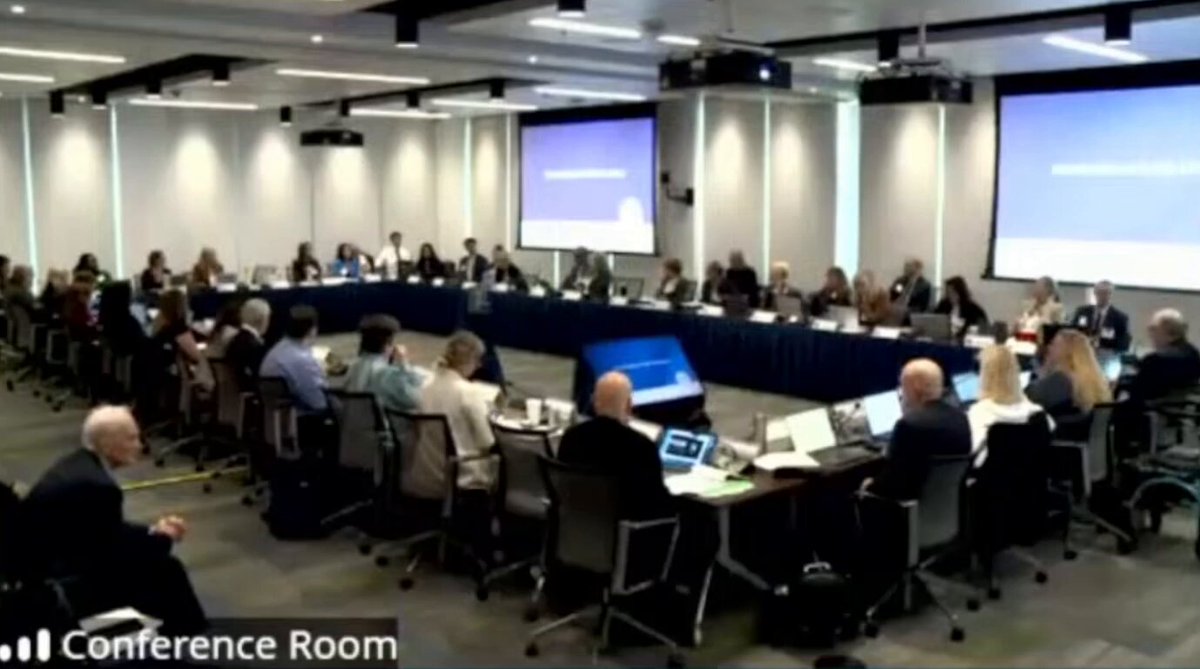
On April 28, the IACC adopted a comprehensive package of recommendations to address the serious public safety risks associated with wandering and elopement in autism. These recommendations included:
1. Use of the Missing and Endangered Persons (MEP) alert category within the Integrated Public Alert and Warning System (IPAWS) for autism-related wandering and elopement incidents.
2. Updating CDC Wandering and Elopement Webpage
3. Re-evaluating and Expanding ICD-10-CM Coding for Wandering to Capture Clinically Assessed Prospective Risk
4. Updating Early and Periodic Screening, Diagnostic, and Treatment (EPSDT) and Bright Futures Guidance
5. Encouraging Consistent Coverage of Safety Supports under Home and Community-Based Services (HCBS) Waivers
6. Promoting Clinical Adoption of Wandering and Elopement Risk Guidance.
These recommendations can be found here. iacc.hhs.gov/meetings/iacc-m…
2
6
9
206
MAKE A STAND 4 AUTISM retweeted

May 27
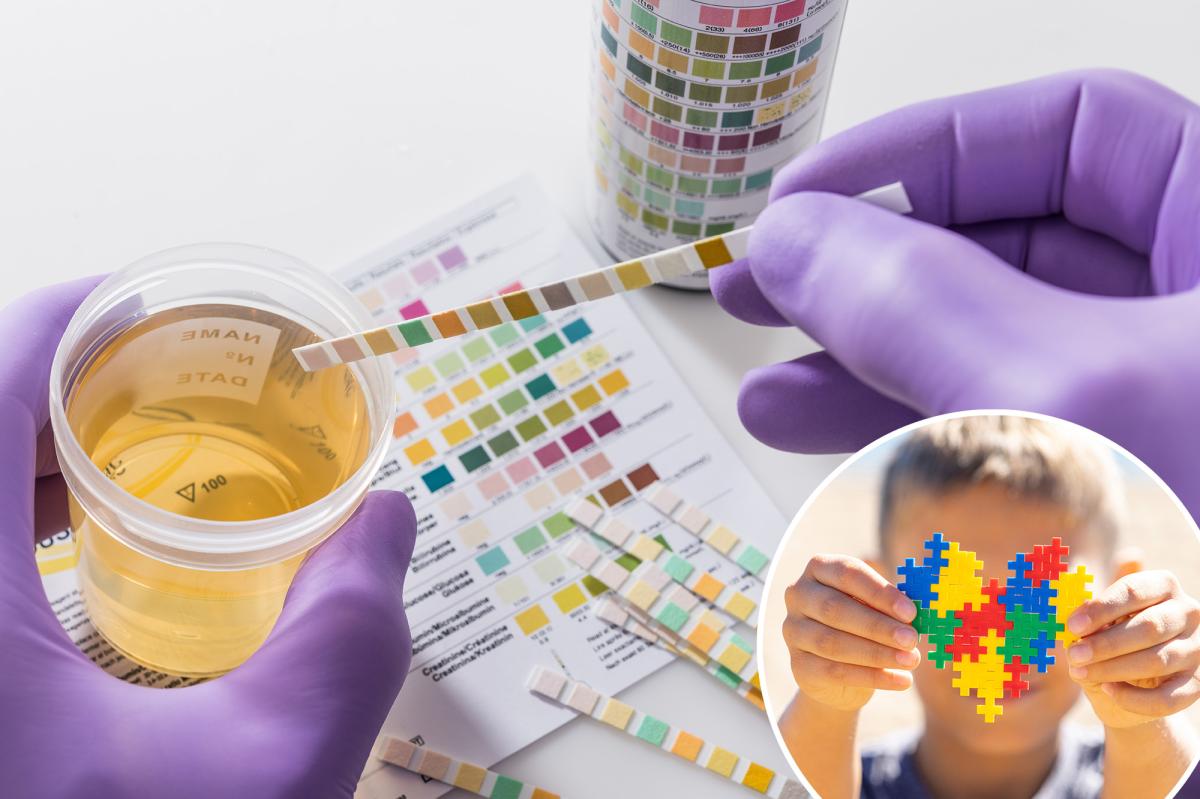
New urine test could diagnose autism in children: study trib.al/FEvC7Nm
15
13
33
8,433
“We hope there is a reduction in stigma and shame associated with the condition,” said Flynn, who herself is a parent of a child with autism. “Sometimes diagnostic hesitancy happens because parents feel like they're not good enough parents and they're being judged. But that's not the case because if we can detect it in urine, it's a biology-based condition. Hopefully that will prevent any hesitancy on parents' parts to seek treatment and seek it as early as possible.”

New urine test provides simple way to screen for autism in children news.asu.edu/20260526-health…
1
4
332
“The major finding of this study is that approximately 8–9 out of 10 young children with ASD in this cohort had high concentrations of one or more microbially-related metabolites. These results are consistent with over 40 studies that have measured concentrations of individual MDMs in ASD vs TD cohorts.”
Brilliant work, @PaulWhiteleyPhD and team!
Love the recommended subtype name. The 4 new dx for kids in the study also caught my attention. You all just made a huge impact for those kids and their families by identifying their conditions! Excellent! If you found 4/50, imagine the impact of a better worldwide standard of care and appropriate screening!
Great work! 🌟
Elevated microbially-derived metabolites in autism: a possible diagnostic screening test for a distinct ASD phenotype nature.com/articles/s41380-0… Some fantastic work by some fantastic researchers. Years in the making.
1
2
10
620
MAKE A STAND 4 AUTISM retweeted

May 18
My heart breaks for this family. This is the 3rd wandering/drowning autism related death that I am aware of that has occurred since the @IACC_Autism passed a recommendation to @SecKennedy to utilize the existing MEP system with specific criteria for autism related elopement. May God bless and comfort these families. wdrb.com/news/4-year-old-wit…
3
15
25
913
Use of the word "social" can be such a disservice to those with autism - especially profound autism.
It immediately implies someone is resistant to, or incapable of, adhering to arbitrary social frameworks. The reality of what we see in profound autism runs so much deeper. We are talking about a near complete inability to CONNECT with the world around you.
CONNECTION is a vital component of life - even of survival.
SOCIABILITY is HOW we connect.
Social functioning in autism: a systematic review and meta-analysis nature.com/articles/s41562-0… Just in case anyone doubts that autism is at heart a (pervasive) social communication disorder (also accompanied by a substantial dose of enhanced vulnerability). Not the 'TikTok autism'..
1
4
336
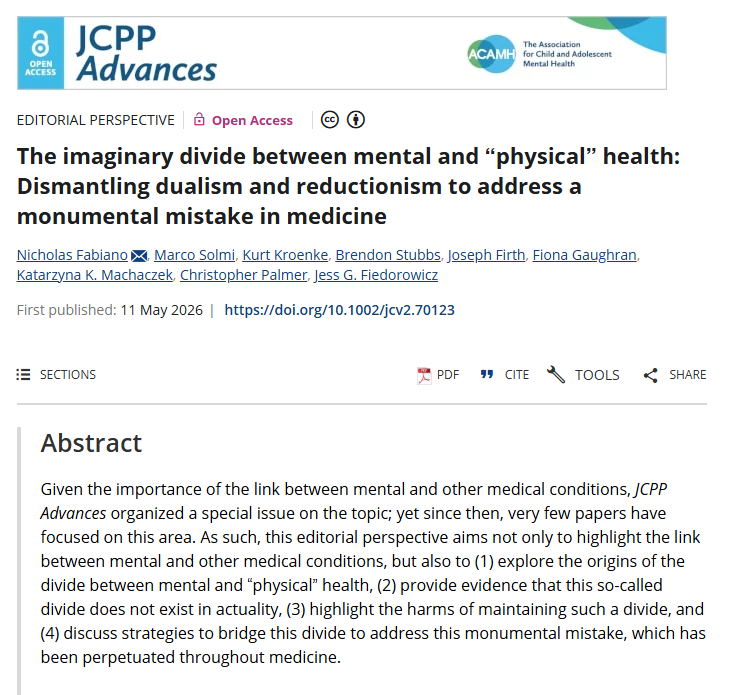
"For medicine to progress, we must expunge ourselves of dualist language and frameworks, broaden our approach, and redesign our systems of care."
May 12

The artificial divide we have drawn between mental and physical health is the largest mistake in medicine.
Maintaining this divide creates stigma and worse care for all.
1
2
8
502
Source: acamh.onlinelibrary.wiley.co…
38
MAKE A STAND 4 AUTISM retweeted
May 12
The tragedy and trauma of self-injury in autism are a daily reality for many individuals and families. We need to do a better job identifying and treating contributing medical conditions and pain, while ensuring individuals have access to a range of appropriate treatments and supports. My heart aches for individuals and families living this reality.
Giant chronic subgaleal hematoma secondary to repetitive self-injurious head-banging in severe autism: A case report pmc.ncbi.nlm.nih.gov/article… The images included in this paper are not for the faint-hearted but they reiterate the very real damage that self-injury can cause.
3
12
28
927
MAKE A STAND 4 AUTISM retweeted
May 12
@SecKennedy @HHSResponse 2 weeks ago, the IACC voted on a recommendation regarding cases like this one of wandering and elopement. We proposed utilizing the existing Missing and Endangered Persons Alert System to have specific search criteria when the individual has autism. Searching nearby bodies of water is paramount. We view this as an urgent safety measure and hope it is enacted. Prayers for this little guy’s family.
people.com/boy-with-autism-5…
1
5
6
103
We are all equally accountable for our actions and our claims.
We are okay with that - even grateful for that.
Are you? @_TheTransmitter @DaisyYuhas
May 12

Still have not heard back regarding my request to @_TheTransmitter to validate their reported attempt to reach me for comment about @DaisyYuhas’s story. I’ve now sent two emails without response.
I appreciate the corrections and additions made to the article, but given the seriousness of some of the initial assertions and implications, I believe follow-up and clarification are only fair.
5
171
Hundreds of thousands sacrificed on the altar of Pharma. Business as usual.
May 11
This 2019 congressional report about the opiod crisis and Purdue Pharma is a masterful analysis of the pharmaceutical industry playbook used to promote products and shape medical narratives.
Purdue followed a familiar strategy: enlist respected physicians, medical societies, academic experts, and public health authorities (including the WHO) to reassure clinicians and the public, minimize perceived harms, and promote widespread use—often on the basis of weak, selective, or incomplete evidence.
This was not simply a story about one company. It exposed structural incentives and influence mechanisms that extend far beyond opioids.
The uncomfortable reality is this was not an aberration. It reflects the ongoing degradation of large parts of medicine and public health under the influence of industry, financial incentives, institutional capture, and manufactured consensus.
Hundreds of thousands sacrificed on the alter of Pharma. Business as usual.
katherineclark.house.gov/_ca…
8
288
💗
May 10

MAHA Moms are the beating heart of this movement. You take responsibility for your children’s health and make the choices that shape their future. You show what it means to put family first—and to Make Children Healthy Again. Your actions don’t stop at home—they’re shaping policy and driving better health across America.
Happy Mother’s Day.
68
Whatever this is…CURE THIS!
GIVE ME BACK MY DAUGHTER!
We are not playing games or semantics or virtue signaling or scientific elitism ANYMORE.
Make this right.

“I do not think it is scientifically appropriate to simply assume that biological events temporally associated with major developmental changes are necessarily irrelevant or that the same outcome would have occurred regardless.”
When THIS is the before and after of post-infectious regression…it matters much more.
4
1
11
408
MAKE A STAND 4 AUTISM retweeted
“I do not think it is scientifically appropriate to simply assume that biological events temporally associated with major developmental changes are necessarily irrelevant or that the same outcome would have occurred regardless.”
When THIS is the before and after of post-infectious regression…it matters much more.
1
3
11
891
MAKE A STAND 4 AUTISM retweeted
May 9
I agree that autism is often innate and strongly heritable. But high heritability does not mean immutability, nor does it exclude environmental modulation, particularly when environmental factors may be widespread, shared, or interacting with biology in consistent ways.
I also agree with much of what you are arguing regarding the potential importance of germline and developmental programming effects.
But could you agree that even with a pre-existing heritable vulnerability, that environmental, metabolic, immune, or toxicant-related exposures could still influence developmental trajectory, severity, regression, or co-occurring medical burden in at least some individuals?
There is substantial evidence that core cellular processes — including mitochondrial function, redox balance, immune signaling, oxidative stress pathways, and metabolic signaling — directly influence neurodevelopment, including synaptic development, neuronal connectivity, pruning, plasticity, network regulation, and broader cytoarchitecture of the developing brain. These are not peripheral issues; they are fundamental developmental mechanisms.
One of the central questions in autism science is how extremely diverse risk factors — hundreds of genes, de novo mutations, maternal immune activation, prematurity, valproate exposure, mitochondrial dysfunction, inflammatory pathways, and other metabolic or environmental factors — converge onto overlapping developmental phenotypes.
Clinical experience with many autism families has also reinforced my interest in neurodevelopmental regression and developmental trajectory. Regression does not establish causation. But I do not think it is scientifically appropriate to simply assume that biological events temporally associated with major developmental changes are necessarily irrelevant or that the same outcome would have occurred regardless.
To me, this is about understanding how genetic vulnerability, developmental biology, metabolism, immune signaling, and environmental factors interact across development.
And on a final note, I do not appreciate the suggestion that my views ignore the last 20 years of autism research or that I am uninterested in scientific input from others. Quite the opposite — I actively seek out perspectives from researchers, clinicians, advocates, and families with a wide range of viewpoints and expertise.
I am also proud of the work accomplished at the first IACC meeting. The Committee advanced thoughtful, evidence-informed, common-sense recommendations focused on issues like safety, medical care, and support for those with profound autism — recommendations that passed with strong public and federal support.
That is part of why the intensity of the public attacks and coordinated efforts to discredit the new IACC have been disappointing and, frankly, make genuine collaboration more challenging. I still hope we can find ways to engage respectfully and constructively around both the science and the needs of individuals and families.
5
6
27
391
MAKE A STAND 4 AUTISM retweeted
May 8
To the Editors of the Transmitter:
I appreciate and thank you for making updates to your story to reflect my comments and the corrections I provided in an email to editors@thetransmitter.org on May 7, 2026, at 7:37 AM ET (which I also subsequently posted on X).
However, I take issue with The Transmitter’s continued assertion that someone attempted to contact me for comment by email on May 5 at 9:10 AM CT. I have no record of such an email in my inbox. I would appreciate a copy of that email so I can confirm whether it was sent to the correct address. I acknowledge there is a small possibility that I may have accidentally deleted such an email, although that would be unusual for me.
If the email address used was incorrect, or if no email can be located, I would request that the story be updated to remove the assertion that I was contacted for comment.
Additionally, the story states that the updates were made in response to comments I posted on X, without mentioning that I also contacted the editors directly at the email address above. While this is a relatively minor point, the omission has the effect of suggesting that I did not make a good-faith effort to engage directly with editorial staff.
You have my email address, and I look forward to continued productive dialogue to resolve the remaining issues and to a copy of your email attempt to reach me for comment.
This post is a modified version of an email sent to The Transmitter Editors at 2:57pm ET on 5/8/26.
7
17
1,174