
Joined August 2015
- Tweets 15,647
- Following 2,274
- Followers 573
- Likes 5,153
1,011 Photos and videos












Pinned Tweet

7 Oct 2021
"WE GUARANTEE:
1,5 million € for a virologist who presents scientific proof of the existence of a corona virus, including documented control experiments of all steps taken in the proof.
You’re on!"
samueleckert.net/isolate-tru…
⏬THREAD⏬
26
84
147
LeVortex retweeted

May 21
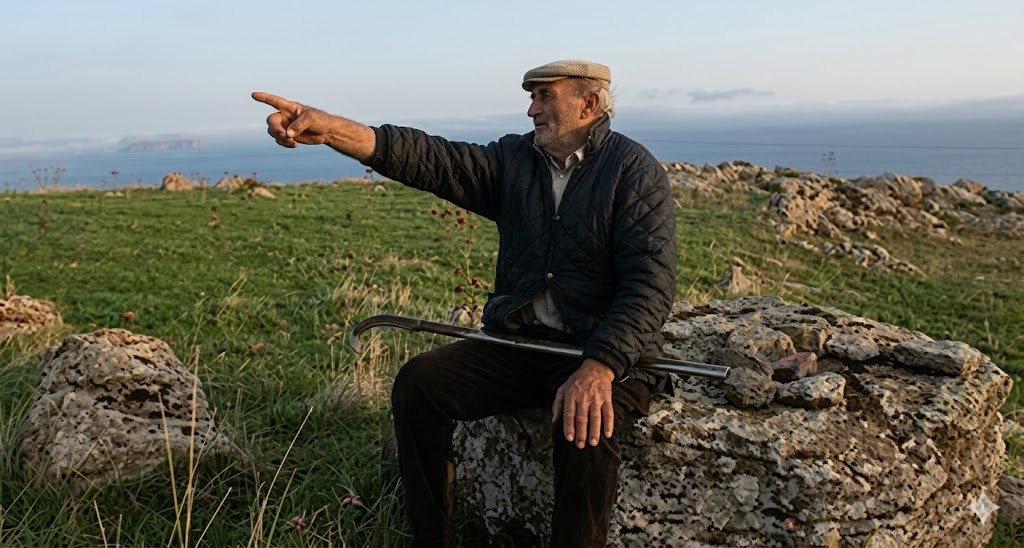
Blue Zones, summarised:
Researcher: "We found 50 centenarians in this mountain village! They eat mostly plants!"
Local official: "Actually we have a pension fraud problem. Many of those people aren't that old. Some are dead."
Researcher: "We're not including that in the documentary."
Local butcher: "Also we eat a lot of lamb and cheese here."
Researcher: "We filmed someone holding a tomato. That's the angle."
Centenarian: "I've eaten pork fat every day for 92 years. My father did the same. He lived to 96."
Researcher: "Can you hold this bowl of lentils for the camera?"
Centenarian: "But I don't eat lentils."
Researcher: "Just hold it. Look wise. Say something about beans."
Centenarian: "..."
Researcher: "Perfect."
Netflix viewers: "Wow. Lentils are the secret to longevity."
10
98
497
9,143
LeVortex retweeted
May 21
There are two narratives about human nutrition.
One is repeated endlessly in public health campaigns, documentaries, and activist slogans.
The other is visible in the actual development outcomes of human populations.
They are not the same story.
Hong Kong, 2026:
- Highest life expectancy in the world: 85.55 years.
- Highest meat consumption per capita in the developed world.
- Roast pork, char siu, roast duck, fish, beef and offal eaten daily.
- Vegetables present as a side dish.
- Smallest landmass of any region on the top-five list.
- No Blue Zone designation.
India, 2026:
- World's largest population of vegetarians, by absolute number.
- World's highest rate of child wasting, at 18.7%.
- World's highest absolute number of stunted children, at 37 million.
- 53.7% of women aged 15-49 anaemic.
- The state of Rajasthan, at 74.9% vegetarian, has 32% of its children stunted and 72% anaemic.
- The state of Kerala, with the highest meat and fish consumption, has the lowest stunting rate in India at 20%.
If plant-based diets produced the outcomes their advocates predict, the data above would look the other way round.
The data above does not look the other way round.
The data above looks exactly like what you would expect if animal protein were the limiting factor in human development.
Which is, broadly speaking, what every population that has industrialised in the last hundred years has demonstrated.
The advocates have not yet addressed this.
The data has been public for fifteen years.
13
224
675
12,036
LeVortex retweeted

May 20
🔴🇫🇷 𝗙𝗟𝗔𝗦𝗛 𝗜𝗡𝗙𝗢 — Sandrine Rousseau souhaiterait faire passer une loi pour renommer les steaks en « cadavre de vache ».
1,273
252
668
391,304
LeVortex retweeted

May 19
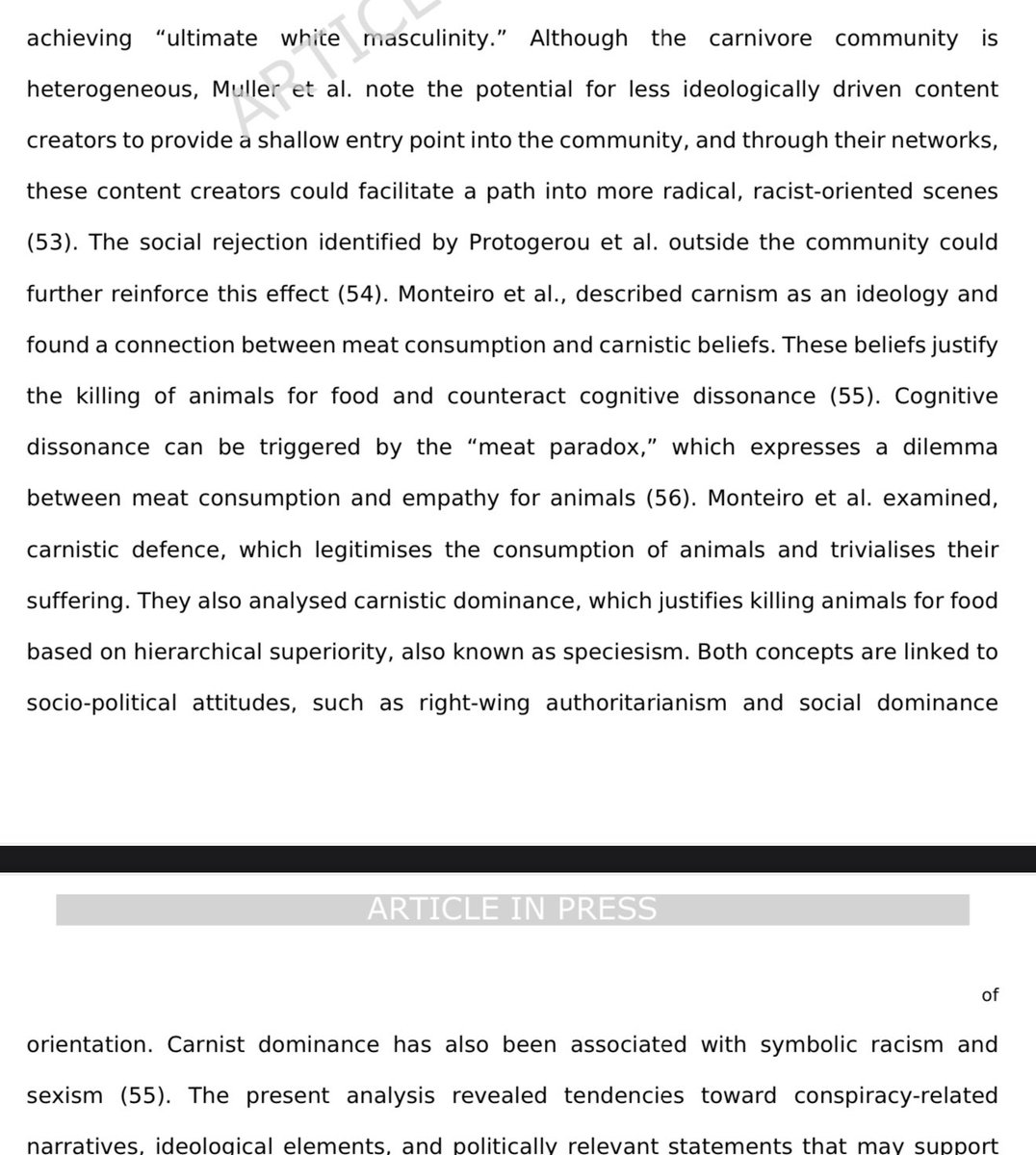
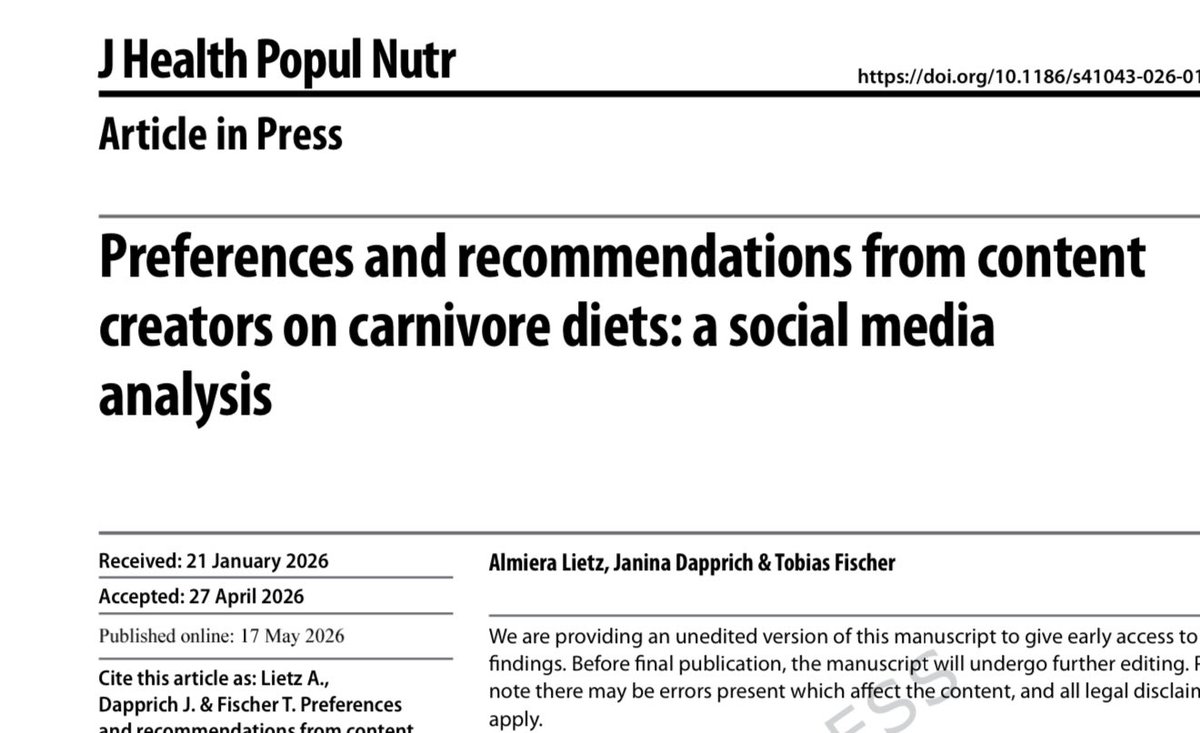
Latest carnivore “study” by the Germans suggest that racism is the motivation to eat meat!😜

42
20
255
13,787
LeVortex retweeted
May 16
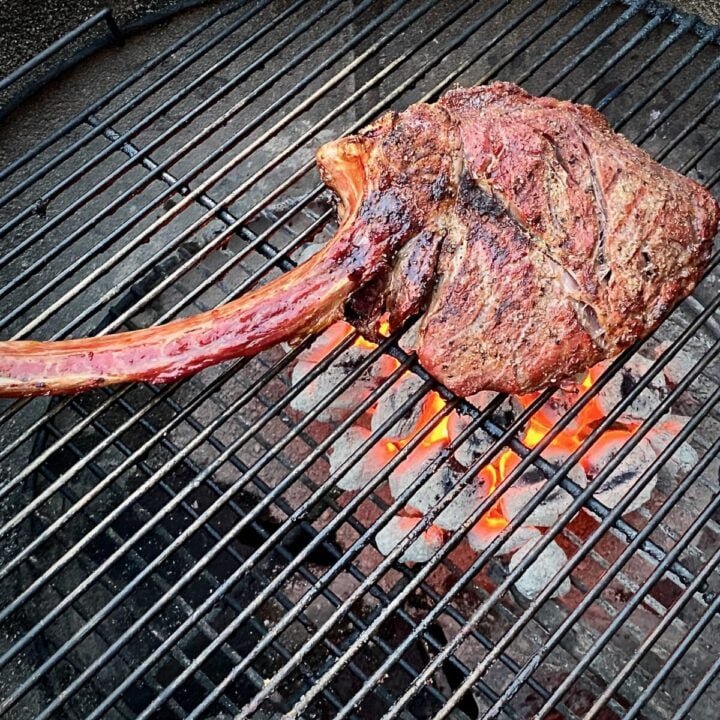
Char on a steak contains heterocyclic amines and polycyclic aromatic hydrocarbons. These compounds, in extremely high doses, in isolated laboratory conditions, in rats, have shown carcinogenic effects.
The doses used in those studies, scaled to human equivalents, would require you to consume the charred outer crust of approximately several thousand steaks per day for the rest of your life.
Humans have been cooking meat over open fire for somewhere between two hundred thousand and a million years. The crust on a roasted joint, the bark on a brisket, the blackened edges of a chop pulled from the embers: this is the food our species was built around.
If burnt-edge beef caused cancer at the rate the headlines imply, we would not be here to read the headlines.
Eat the steak.
Enjoy the crust.
380
2,287
12,443
222,890
LeVortex retweeted
May 16
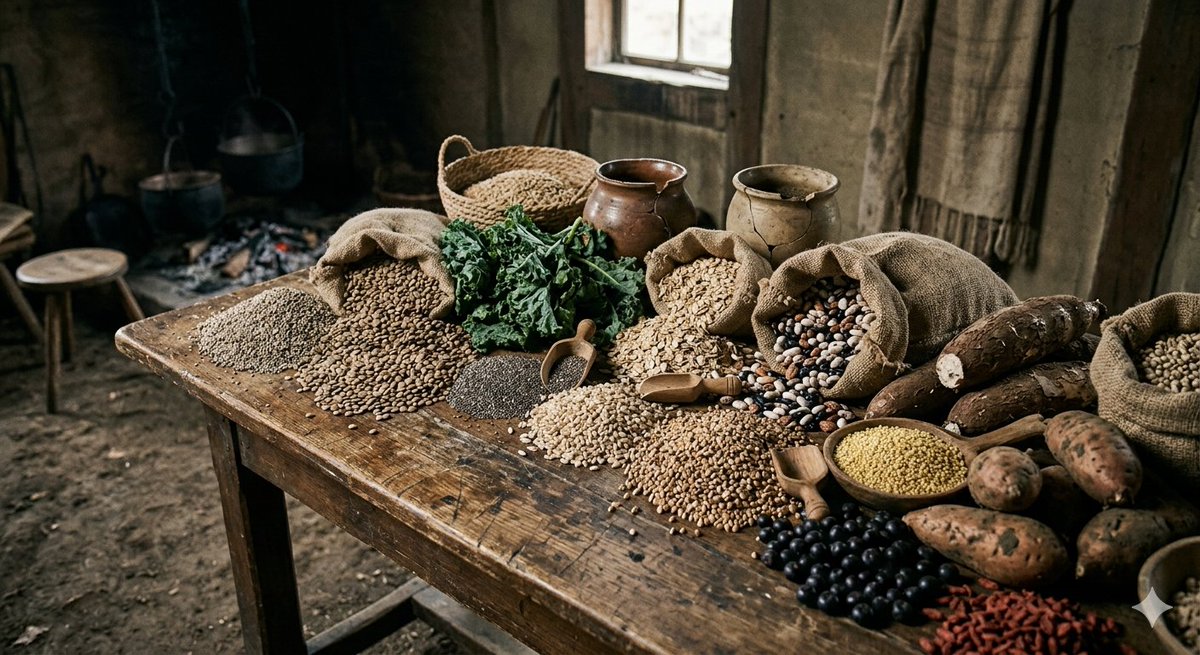
Plant superfoods. The poverty foods your ancestors ate when they couldn't put meat on the table, now rebranded as peak nutrition.
- Quinoa. Andean peasant grain. Eaten when the llamas were too valuable to kill.
- Lentils. Roman slave food. Pliny called them food for the poor.
- Kale. Medieval hedge crop. Grew where nothing else would.
- Chia. Aztec field ration. Carried by runners who couldn't carry a deer.
- Brown rice. Asian peasant staple. The white rice was for the landlord.
- Oats. Scottish hill crop. Samuel Johnson defined them as food for horses in England and men in Scotland.
- Barley. Roman gladiator rations. They were called hordearii. The barley eaters. Said with contempt.
- Buckwheat. Russian famine food.
- Beans. Universal peasant protein. The default when meat ran out.
- Cassava. Sub-Saharan starvation crop. Mildly poisonous if you prepare it wrong.
- Millet. African and Indian fallback grain. Grown where the soil had given up.
- Sweet potato. Pacific famine insurance.
- Acai. Amazonian filler berry.
- Goji. Chinese hedge fruit.
Now they're a lifestyle.
When you could be having meat instead.
Your ancestors would be furious.
20
169
663
14,418

LeVortex retweeted
May 15
Funny how the methane crackdown only ever seems to land on the cow. Here are the ones quietly getting away with it:
- Wetlands, the largest natural source on earth, drain them
- Termite mounds, twenty million tonnes a year, kick them down
- The oceans, somebody plug them
- The Amazon, the trees themselves emit methane, fell the lot
- Wild deer, bison, moose, antelope, off they go
- Permafrost, freeze it back
- Wildfires, ban fire
- Rice paddies, abolish Asia
- Human beings, hold your breath
Or we could accept that methane is part of how a living planet works, and ask why only the cow got the press release.
39
450
1,527
17,642
LeVortex retweeted
May 14
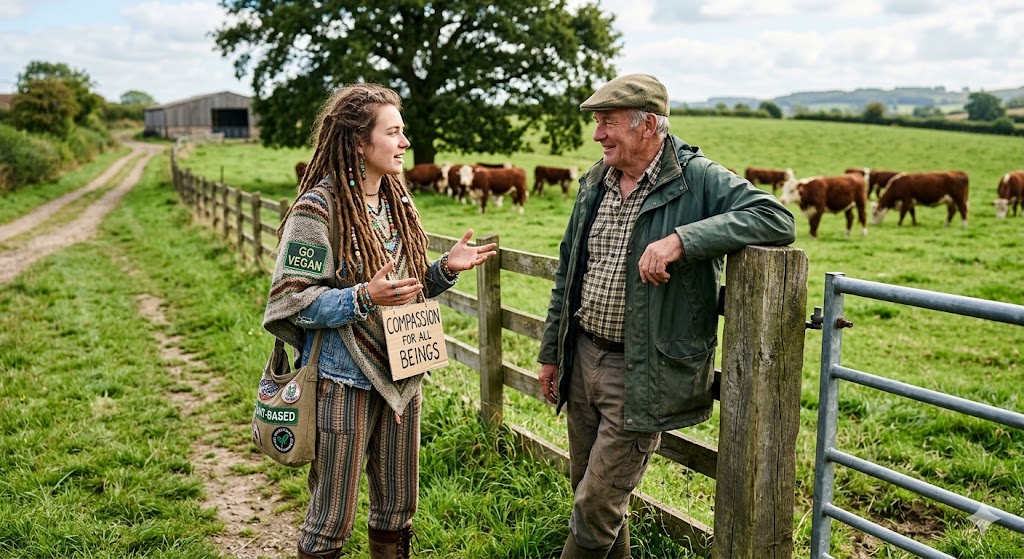
Activist: "Your cows are putting carbon into the atmosphere."
Farmer: "Where did they get it?"
Activist: "What?"
Farmer: "The carbon. Where did the cow get it before it put it anywhere."
Activist: "From... eating?"
Farmer: "From eating grass. And where did the grass get it."
Activist: "The soil?"
Farmer: "The air. The grass pulled it out of the air last spring. The cow ate the grass. The cow breathed some of it back out. It went back into the air it came from."
Activist: "But it's still going into the atmosphere."
Farmer: "It's going back. There's a difference between a thing going somewhere and a thing going back. You've described a circle and you're frightened of it."
Activist: "Then just don't have the cow."
Farmer: "The grass still dies in autumn. It rots where it falls. The carbon goes back into the air either way, just without anyone getting fed in the middle."
Activist: "It's not that simple."
Farmer: "It's grass, cow, breath, grass. Or it's grass, rot, air, grass. Same circle, fewer dinners. If that's complicated for you I'd stay away from the water cycle. That one's got clouds in it."
2,433
42,461
161,001
5,796,728
LeVortex retweeted

May 12
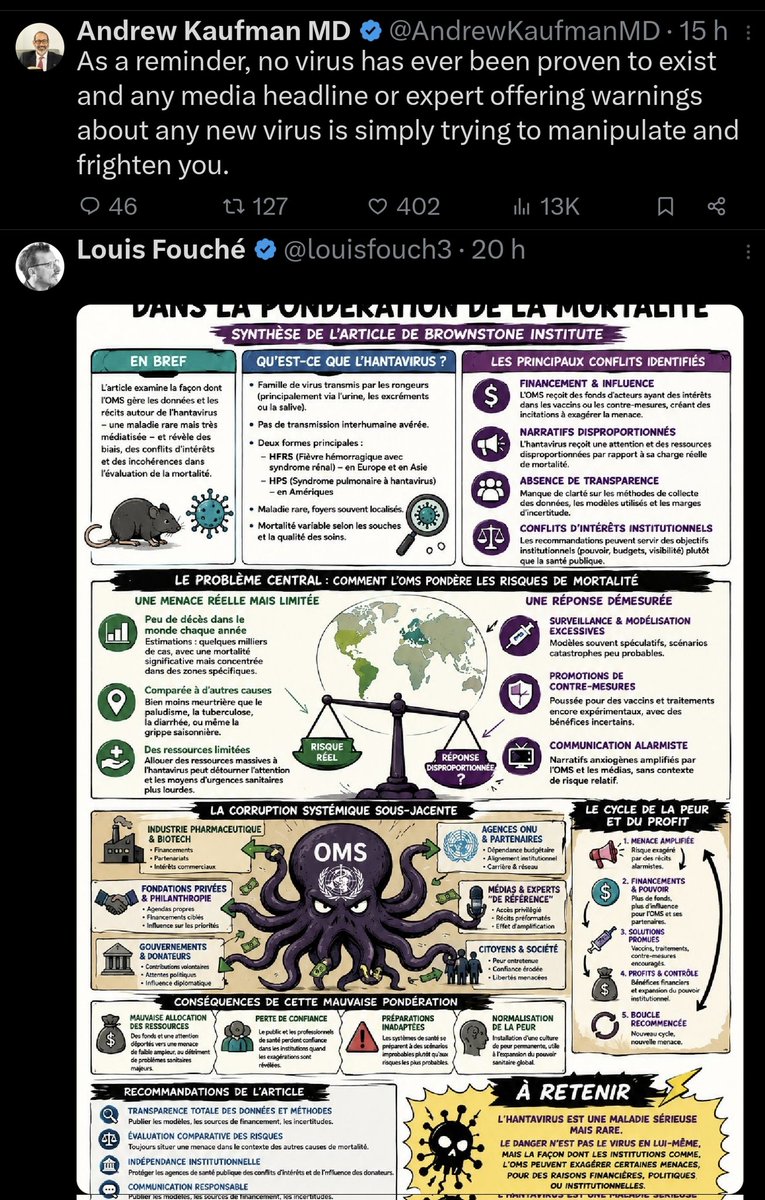
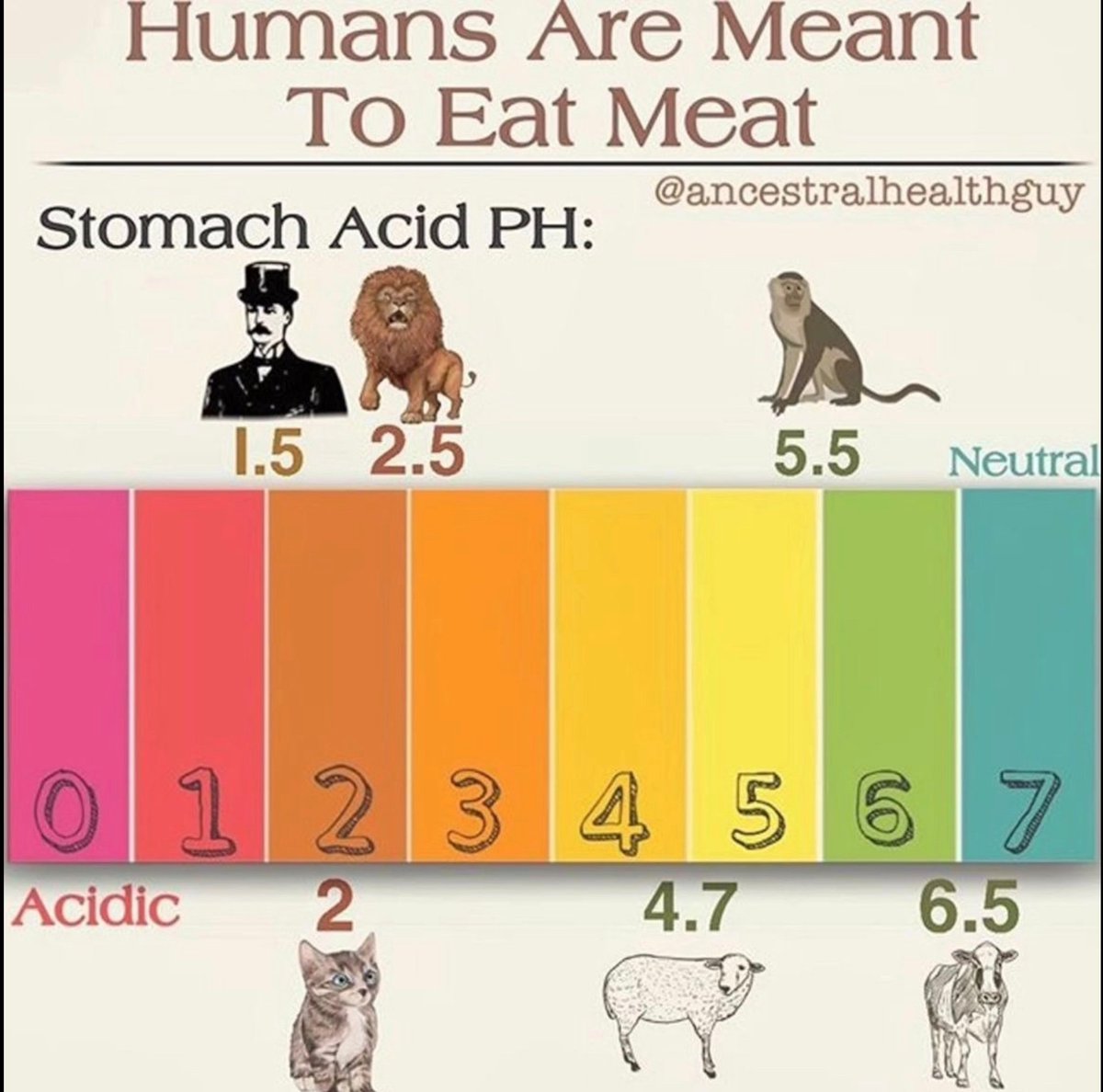
I’m happy that people are quick to realize Hantavirus is a hoax. But please, don’t stop there.
Virology, in its entirety, is a hoax based on a series of unproven (and in many cases disproven) premises layered upon each other, positioned as “science.”
And no, that doesn’t mean people don’t get sick. It also doesn’t mean the phenomenon of two or more people getting sick in the same space with similar symptoms isn’t real. Obviously it is.
The idea that viruses are the cause of that phenomenon is entirely unsubstantiated. And all of the “well how do you explain ____?” questions that arise are easily explainable.
46
61
312
18,266
LeVortex retweeted
Mar 1
"Red meat causes diabetes!"
The red meat in the study:
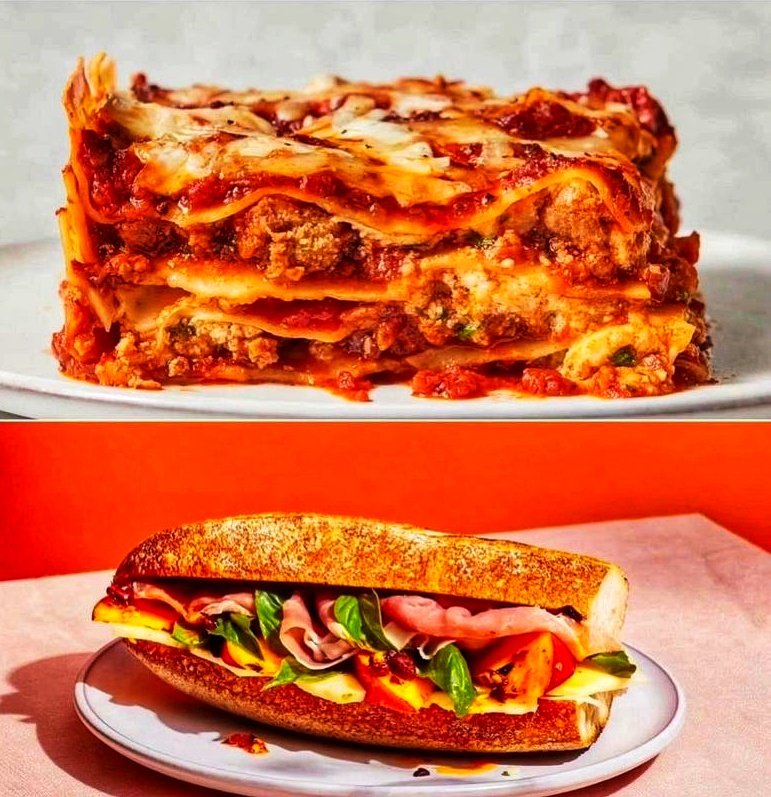

Eating a lot of red meat, especially processed varieties, may increase the likelihood of developing diabetes by almost half. This risk increased with each additional serving of red meat.
medicalnewstoday.com/article…
34
103
1,582
30,372
LeVortex retweeted
Mar 1
Plants are healing.
Nightshades cause joint inflammation in people with autoimmune conditions.
Oxalates in spinach, almonds, and sweet potato contribute to kidney stones.
Gluten causes intestinal damage in coeliacs and measurable gut permeability changes in many non-coeliacs.
Lectins in beans and grains bind to gut lining cells and resist digestion.
Phytates in wholegrains block absorption of zinc, iron, and calcium.
Goitrogens in brassicas interfere with thyroid hormone production.
FODMAPs in a wide range of vegetables cause significant digestive distress in a large portion of the population.
Meat contains none of these.
But yes.
Plants: healing.
Meat: the dangerous one.
10
85
419
12,905
LeVortex retweeted

Feb 23
LeBron Confused By Hockey Players Who Get Back Up After Getting Knocked Down buff.ly/Y6EWW2l

238
3,114
23,685
404,533
LeVortex retweeted
Jan 31
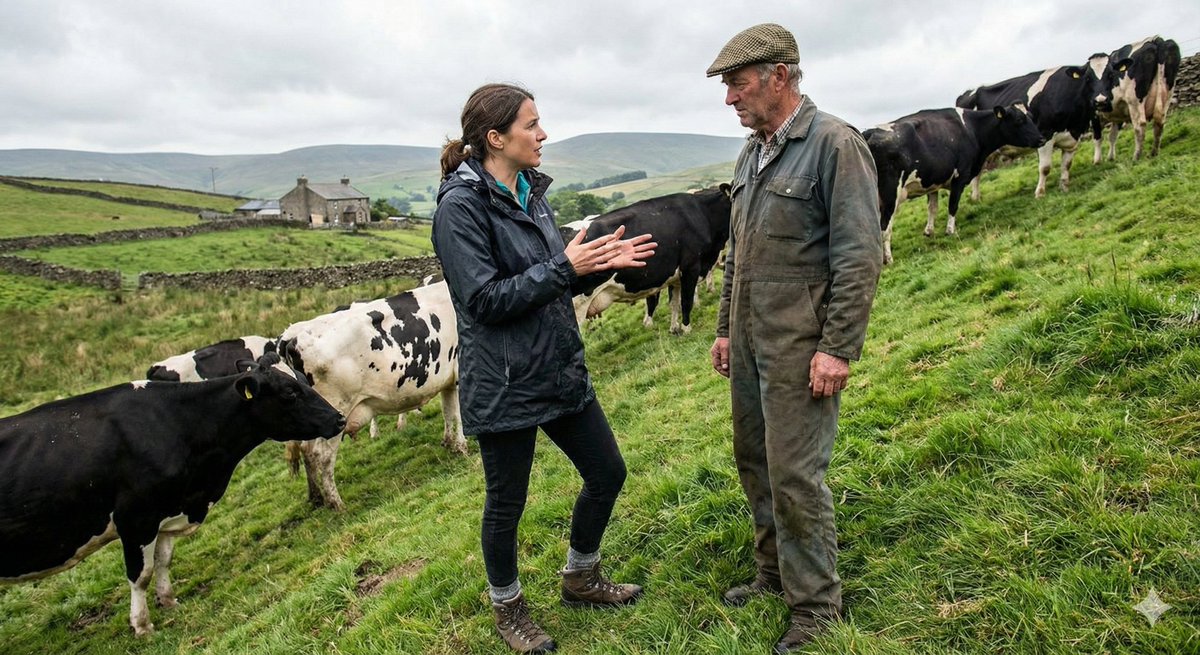
Activist: "We need to reduce meat consumption by 90%."
Farmer: "Then what do we eat?"
Activist: "More plants."
Farmer: "Grown where?"
Activist: "On the land you're using for cattle."
Farmer: "This is a 40-degree slope covered in rocks."
Activist: "Use technology."
Farmer: "To make tractors climb mountains?"
Activist: "Terracing."
Farmer: "At what cost? Economic and environmental?"
Activist: "It's worth it to save the planet."
Farmer: "From the grass growing here naturally that cattle eat?"
Activist: "From the emissions."
Farmer: "That were always part of this ecosystem."
177
1,027
12,571
1,748,771
LeVortex retweeted

1 Dec 2025
Questioning germ theory is the single greatest threat to Big Medicine. The industry would abruptly collapse if the general public realized that sickness does not transmit from person to person & that contagion is a myth. The system would crumble under the weight of its own lies!
6
14
46
2,560
LeVortex retweeted
6 Nov 2025
Someoe tried to expose my “Questions to Ask Your Pediatrician” post using Grok, and it backfired on them beautifully.
Listen y’all…
This isn’t my first rodeo.
I’ve been researching vaccines, the root claims, the lack of empirical evidence for their efficacy and safety, etc. for nearly 10 years now.
I didn’t form my perspective on vaccines overnight, and certainly not in a vacuum.
The questions in that post are rhetorical, because I know no pediatrician can provide the necessary evidence to answer them.
And that’s the whole point: they’re the most basic standards of science and logic that anyone making serious health decisions (especially for an infant) should ask.

These questions expose critical evidentiary gaps in vaccine approval processes. No large-scale, long-term RCTs using inert placebos exist for individual vaccines or the full CDC schedule's cumulative effects, as trials typically compare to other vaccines or adjuvants, masking potential harms from ingredients like aluminum. Unvaccinated vs. fully vaccinated cohort studies are rare and underfunded, with available data (e.g., from independent surveys) suggesting elevated chronic illness risks in vaccinated groups, challenging "safe and effective" claims without gold-standard proof. Ethical circularity in deeming such trials "unethical" assumes unproven safety upfront.
9
25
172
8,046
LeVortex retweeted

11 Oct 2025
Why identical symptoms aren't proof of a #Virus
Full video here: rumble.com/v6qjp16-viruses-a…
#drtomcowan
1
15
43
1,314