
Christian, Husband, Confessional Particular Baptist, American, Political Conservative and Retrievalist.
Joined November 2013
- Tweets 9,301
- Following 451
- Followers 463
- Likes 16,861
555 Photos and videos







Brandon C. Hines retweeted

Jun 14
I’ll take up this case. Matthew didn’t copy Mark. All ancient sources agree Matthew came before Mark basically without exception, and when the texts are read parallel it actually makes more sense to say Mark is copying Matthew and Luke.
In the text, it is a very common trend that Matthew will include a detail, Luke another, and then Mark will include both details - even when they’re redundant. Compare:
Mark 1:32 - “That evening, after sunset, people brought to Him all who were sick and demon-possessed.”
Matthew 8:16 - “When evening came, many who were demon-possessed were brought to Jesus...”
Luke 4:40 - “At sunset, all who were ill with various diseases were brought to Jesus…”
For Mark to be written first, then the argument would have to be made that Matthew and Luke both read Mark and coincidentally (or intentionally) chose exact opposite details from one another to retain. One would also have to argue that redundancies like, “That evening, after sunset…” were the product of the first author writing on his own, whereas Matthean priority can explain them as a part of Mark’s synthesizing process.
Modern scholars often assume Markan priority (though the consensus is cracking) for two reasons. First, it’s shorter, and their assumption is that shorter means earlier because that is how Germanic fairytales developed. But that neglects the possibility of a work being intentionally shorter unto literary ends. Mark is a fast-paced book. Just go through and see how many times the word “Immediately” appears. So being shorter fits its faster pace.
The other reason they state it is earlier is because it emphasizes Jesus’s humanly characteristics (“lower” Christology). They assume divinity was a later development, and that thus the more humanly the depiction the earlier the text. But this actually inverts what we know about historical debates within the First Century. The early First Century Church primarily had to deal with Rabbinic Judaism, which rejected Christ as God. Meanwhile, in the later First Century we know the rise of Docetism (the belief that Jesus only appeared to be human) challenged His humanity. It makes more sense that earlier texts would emphasize His divinity polemically against the Jews and later texts His humanity against the Docetists.
2
4
4
342
Supreme Court rules against Day-Age Theory. Alito writing the opinion.
Jun 6

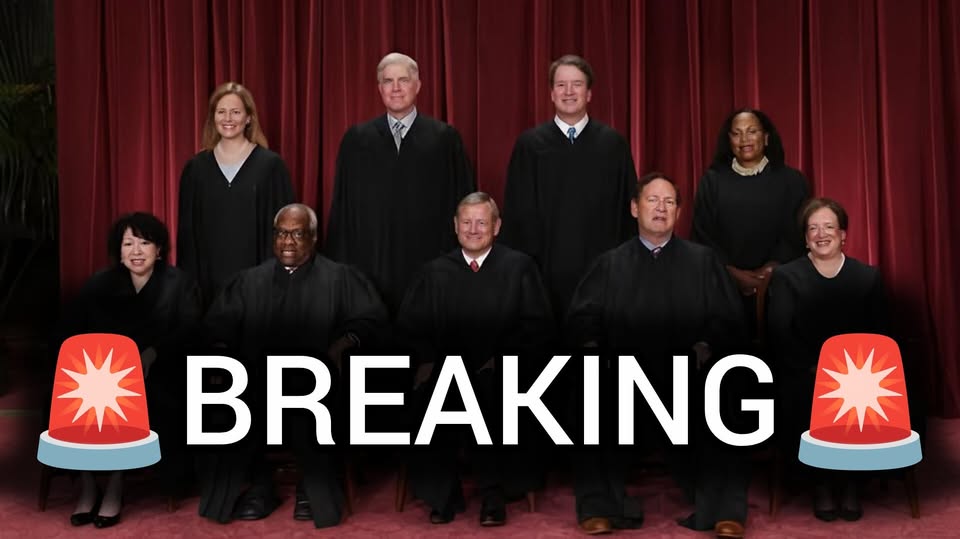
🚨BREAKING: The Supreme Court is poised to strike down laws allowing late-arriving mail-in ballots (even if postmarked by Election Day) in Watson v. Republican National Committee.
Justice Alito slammed the shift from Election Day to “Election Month,” where ballots trickle in for days/weeks after polls close, destroying trust.
California hit hard: Automatic ballots to every voter up to 7 days after Election Day to count them. A ruling could kill similar rules in 14 states before 2026 midterms.
This is a major win for election integrity. Count votes on Election Day — not weeks later!
Expected ruling by late June
42
Brandon C. Hines retweeted

Jun 6
Jesus died for m*rderers. If you’ve aborted your child that’s what you are and there is forgiveness in Jesus Christ.
60
73
968
11,716
In the verse he quotes, “God is love,” love is a noun. So it certainly can’t be said God is in no sense a noun.
If I’m steelmanning his claim, it sounds like a very clumsy attempt to describe the notion that God is actus purus (pure act). In God, there is no distinction between His being, essence, and actuality (because He isn’t composed of parts; if he was, He’d depend on those parts). Thus, it can be said there’s no distinction between noun and verb, but Talarico makes the mistake of saying the verb is thus the only thing to exist truly, which is incoherent metaphysically and borders on heresy if he understands what he’s saying (which, Talarico isn’t known for orthodoxy).
Jun 2

James Talarico: "God is not a Christian. God is not a noun at all. God is a verb."
70
May 28
There’s something to be said about people saying “Christ is King,” with ulterior motives in ways that violate the 3rd Commandment. But this is an overreaction that veers straight into severe heterodoxy.
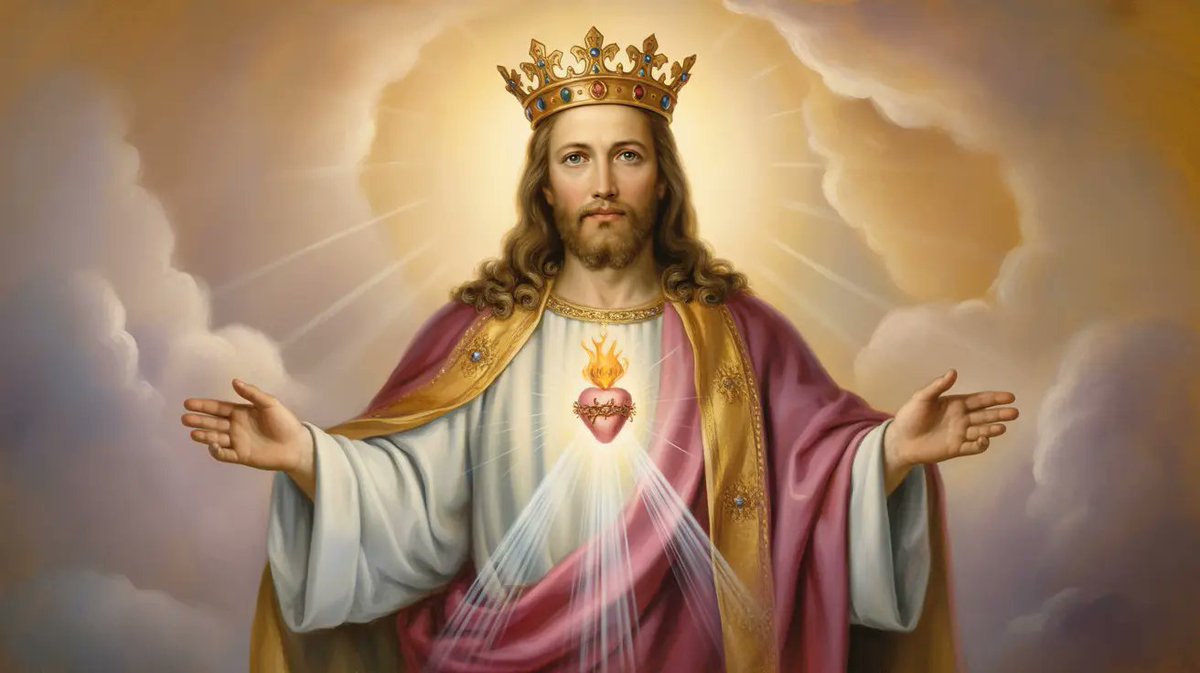
Christ is king. Presently. That’s the meaning of the word “Christ.” Zechariah 9:9 prophesies His triumphal entry into Jerusalem before His crucifixion by calling Him King. He is the fulfillment of the Davidic Covenant, the son and heir of King David. Revelation describes Him as King of King in the present tense, and the Great Comission is established on the basis of the sentence, “All authority in Heaven and on Earth has been given to Me.”
It is good to avoid ethnic hatred for the Jews. But if our endeavors to avoid antisemitism prevent us from saying Christ is king, then they are useless and we actually worship ethnic inclusivity or the Jews themselves.

This whole "Christ Is King!" movement is not biblical, and in fact, is quite Roman Catholic. Jesus Christ is NOT the "King of Christians". He is our Saviour, our Advocate, our Rest, our Life, the Friend that sticks closer than a brother. We have been saved and placed in His Body. Jesus becomes a King at the Second Advent when we return with Him. Stay away from "Christ Is King" cultists.
1
92
May 21
Jerusalem has more in common with Athens than Paris.
By this, I mean that the classical emphasis on government originating from human nature (Aristotle), providence (Polybius), or the divine (Livy) has far more in common with Romans 13 than Social Contract Theory.
47
May 21
There are 1,000 reasons to not watch The Boys - the sexual degeneracy, the constant bashing of Conservatives and Christians, the normalization of abortion, the fact that it was made by Hollywood adjacents in the 2020s (but I repeat myself). If somehow you could get past all the perversion (which I don’t recommend you try to do; it is bad for your soul), there is still yet another reason to not watch it: it cannot conceive of a world in which someone actually believes in something.
Charles I makes no sense to Kripke because Charles I believed in something and Kripke does not.
May 21

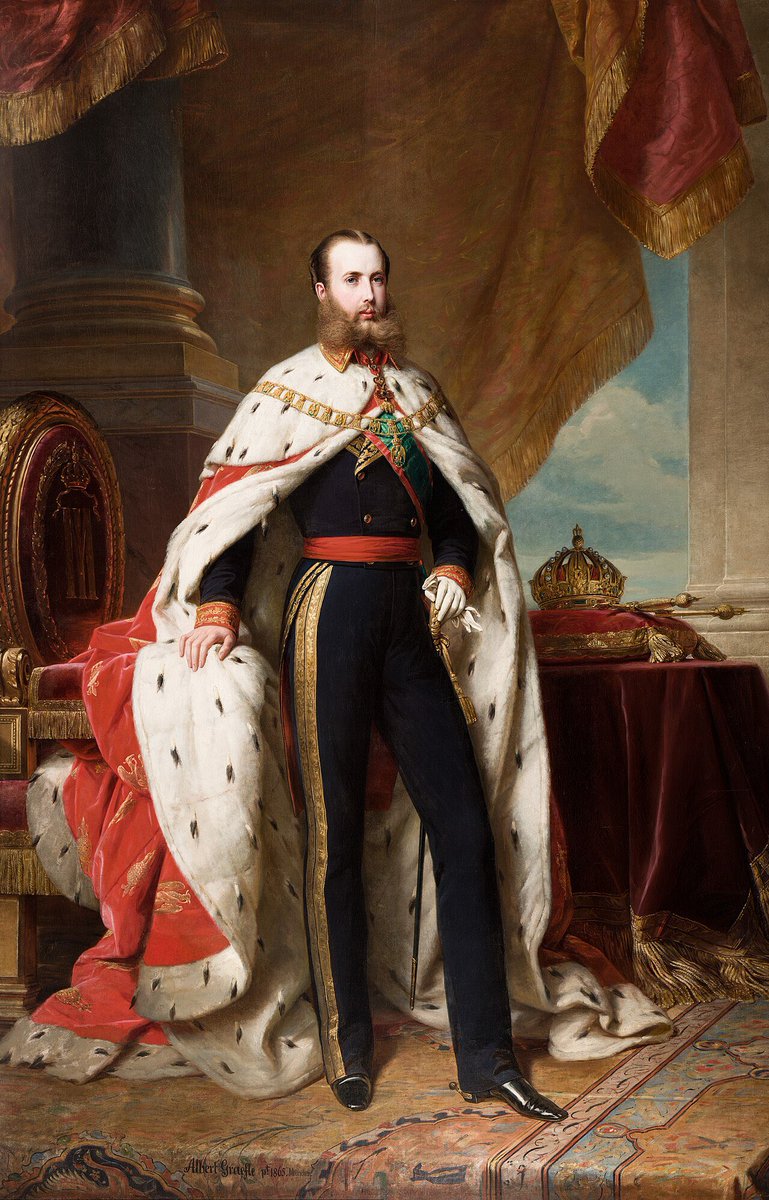
“On 19 June 1867, Ferdinand Maximilian faced a firing squad in Mexico. At five in the morning, he heard mass and then had breakfast. Shortly afterwards, carriages arrived to take him and two other prisoners to the hill where they would be shot. There, dressed in black, with a buttoned frockcoat and carrying a crucifix, Maximilian made his final steps. With their backs to an uneven adobe wall, the three prisoners took their places. Turning towards his executioners, Maximilian said in Spanish: ‘I forgive everybody, I pray that everyone may also forgive me, and I wish that my blood, which is now to be shed, may be for the good of the country. Long live Mexico, long live independence.’
The firing squad was barely five paces away, but Maximilian beat his hands against his chest, indicating where the soldiers should aim. Then he glanced up. It was a cloudless day. The shots rang out. Maximilian fell to the ground.” - Edward Shawcross for History Today
historytoday.com/archive/fea…
97
May 21
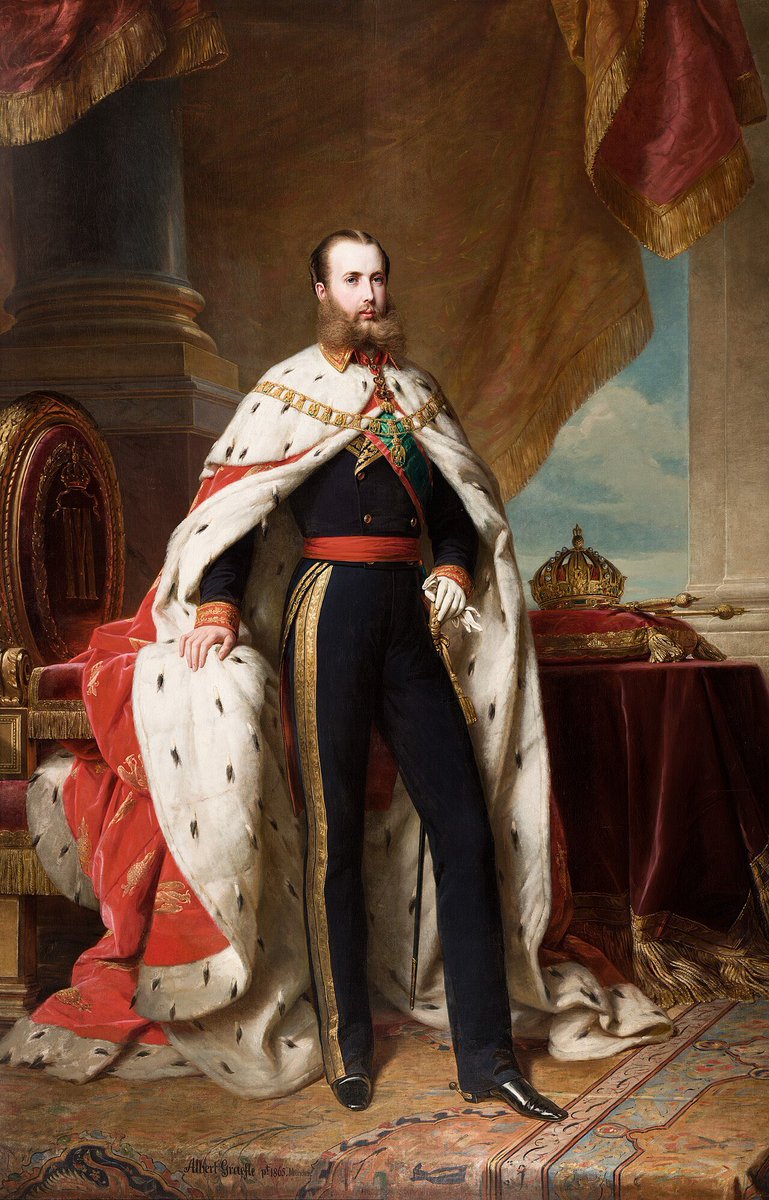
“On 19 June 1867, Ferdinand Maximilian faced a firing squad in Mexico. At five in the morning, he heard mass and then had breakfast. Shortly afterwards, carriages arrived to take him and two other prisoners to the hill where they would be shot. There, dressed in black, with a buttoned frockcoat and carrying a crucifix, Maximilian made his final steps. With their backs to an uneven adobe wall, the three prisoners took their places. Turning towards his executioners, Maximilian said in Spanish: ‘I forgive everybody, I pray that everyone may also forgive me, and I wish that my blood, which is now to be shed, may be for the good of the country. Long live Mexico, long live independence.’
The firing squad was barely five paces away, but Maximilian beat his hands against his chest, indicating where the soldiers should aim. Then he glanced up. It was a cloudless day. The shots rang out. Maximilian fell to the ground.” - Edward Shawcross for History Today
historytoday.com/archive/fea…
May 20

In The Boys finale, Homelander had to look powerless according to Eric Kripke
“Yeah, it was really important to us for Homelander to at least experience a little bit of time powerless.”
“People have asked me, ‘Well, why don’t you send him out in the world powerless, wouldn’t that be the ultimate punishment?’
“I’m like, it would, until he gets his hands on some more Compound V, and then you’re back to where you started.”
“So, he cannot walk out of that room alive, but we can spend time with him powerless to really reveal what everyone’s been saying all season, which is, ‘Take away those powers and you are nothing.’
“And he’s so cowardly and blubbering and pathetic, as are most strong men when you remove their power and they’re and they’re faced with their imminent death, they rarely handle it bravely.”
1
1
196
May 21
“Louis, who, fortified by the principles of religion, seemed completely resigned to meet death, left his prison in the Temple about nine in the morning and was taken to the place of execution in the mayor's carriage with his confessor and two gendarmes, the curtains being drawn.
When he arrived at his destination he looked at the scaffold without flinching. The executioner at once proceeded to perform the customary rite by cutting off the King's hair which he put in his pocket. Louis then walked up onto the scaffold. The air was filled with the roll of numerous drums, seemingly intended to prevent the people from demanding grace. The drumbeats were hushed for a moment by a gesture from Louis himself, but at a signal from the adjutant of the General of the National Guard, they recommenced with such force that Louis's voice was drowned and it was only possible to catch a few stray words like ‘I forgive my enemies.’”
- Georges Pernoud and Sabine Flaissier, “The French Revolution”
revolution.chnm.org/d/327
1
49
May 21
Lest we think this is merely restricted to noble or virtuous men, let’s not forget that Saddam Hussein also faced his execution with dignity.
20
May 18
Lesson: Restore monarchy as a form first, then iron out who will wear the crown.
May 17

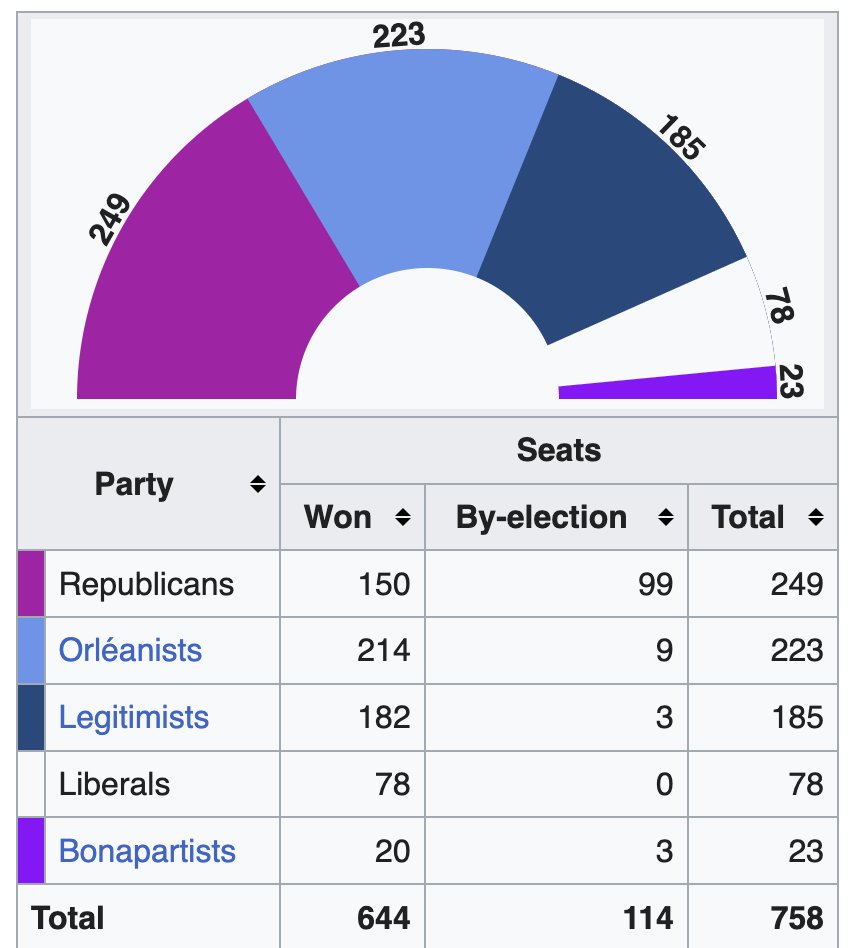
When France's democracy took hold in 1871—after the overthrow of Napoleon III and France's defeat by Germany—its first election gave the Assembly an anti-democracy majority!
But they couldn't agree on a ruler (Bourbon, Orleanist, or Bonaparte), and so democracy survived!
38
Brandon C. Hines retweeted

If you’re struggling to get a job as a man, this is why.
A less qualified woman is being chosen thanks to DEI.

163
873
10,201
328,420
Brandon C. Hines retweeted

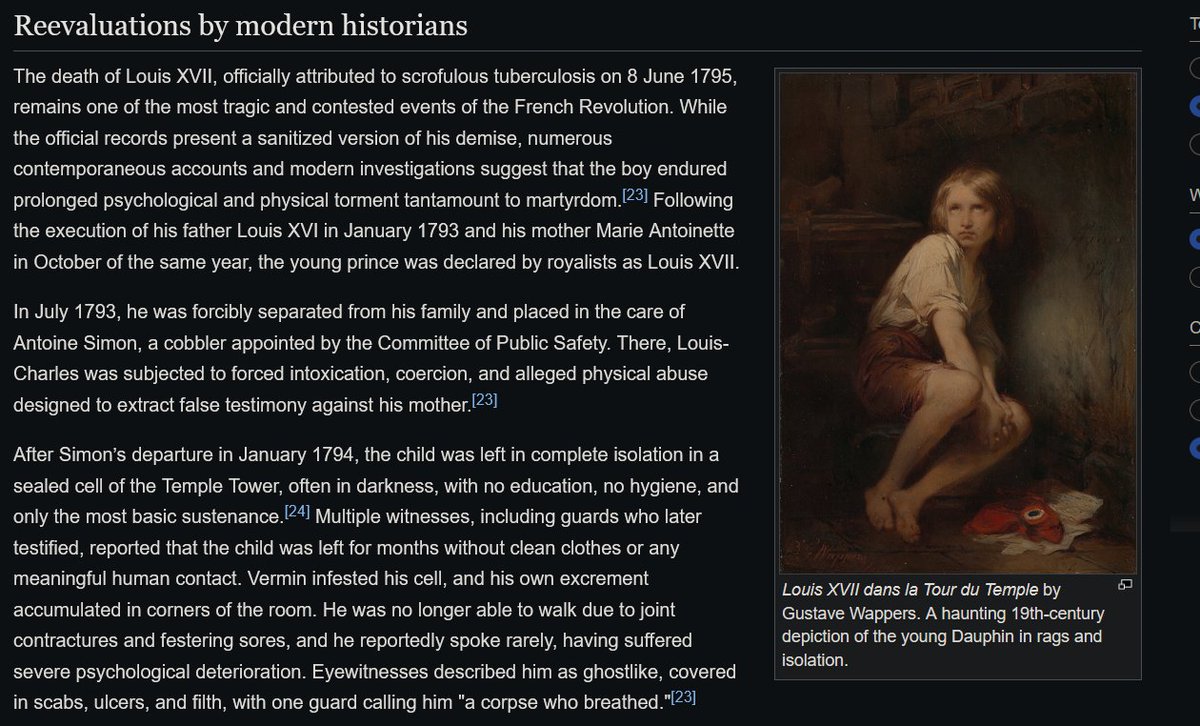
never forget what the jacobins did to Louis XVII, he was just a child when they tortured him, he was only 10 when he died, and keep in mind this is just what wikipidia is willing to have up, imagine how much worse the full truth is.
240
1,044
9,099
1,460,019
May 13
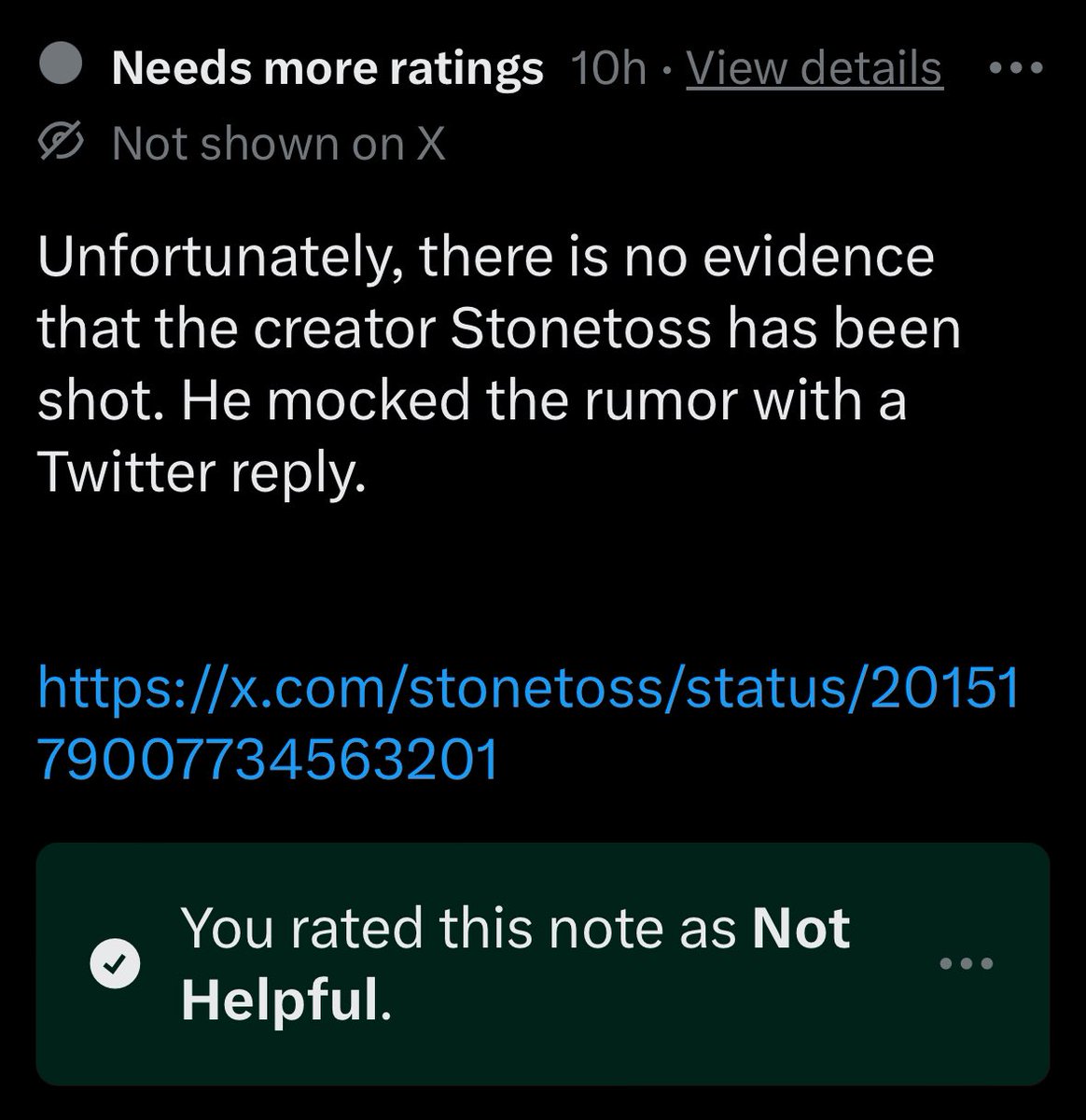
Be very careful with rumors. The 9th Commandment applies to politics as well.
May 13

A lot of people seem to have forgotten what happened to Roy Moore, and how that story ended.
50
Brandon C. Hines retweeted

May 11
They seem to think you can’t interpret Scripture confidently to know the truth but you can interpret church history confidently to clearly see what the one true church is
7
6
207
4,753
May 10
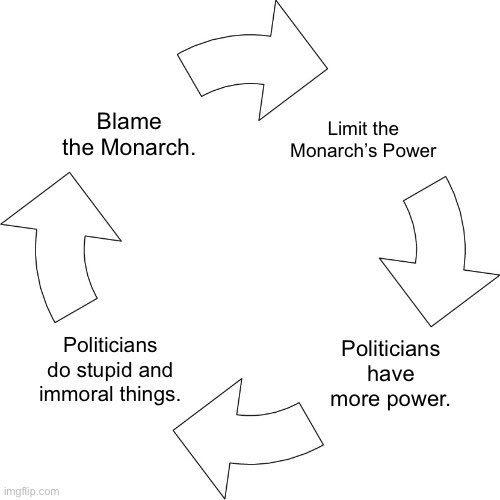
Democracy tends towards centralizing and accumulating power, with little regard for avoiding excess. I’m not a Libertarian myself, in that I don’t think the minimal amount of government is automatically the best, but I do think there’s such thing as too much government, and democracy will always eventually lead to that. This is why Tolkein called himself an unconstitutional monarchist. Mather Byles was alluding to this point when he famously asked, “Which is better - to be ruled by one tyrant three thousand miles away or by three thousand tyrants one mile away?”
May 9

The problem isn't gerrymandering.
It's democracy.
Strike the root.
164
Brandon C. Hines retweeted
This is what I call the “You’ll Be Back” Fallacy. Hamilton (the musical) fictitiously depicts George III as claiming after America gets a taste of ochlocracy and tyranny of the majority, it’ll come crawling back to him and realize its mistake. That, of course, never happens. Instead Americans adapted to mitigate the problem within the framework of the mistake already made. It’s a fallacy because it assumes people always learn from their mistakes in the most logical manner possible. Sometimes their solutions actually codify the mistakes. Sometimes they just accept the problem.
1
1
3
384
No, it’s alright. Go ahead and make another 10,000,000 WW2 movies this decade. The rest of history isn’t worth knowing anyways.
37