
A research centre anticipating & responding to the changing needs of families, livelihoods & living environments through research, teaching, & knowledge sharing
- Tweets 2,270
- Following 956
- Followers 451
- Likes 1,048

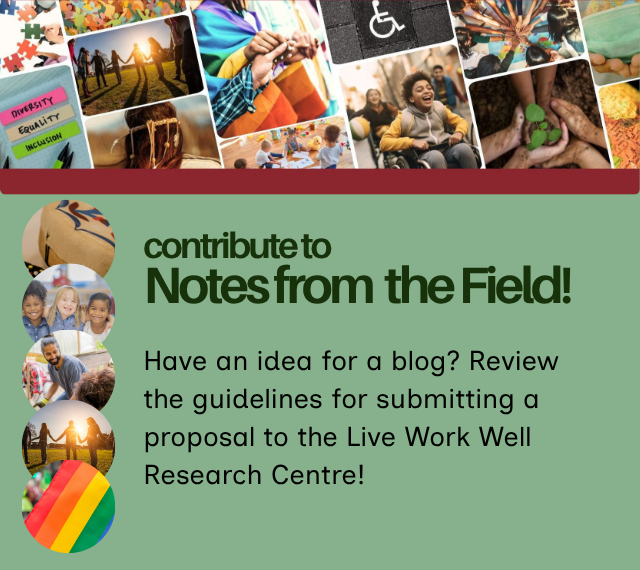

ALT Graphic inviting people to contribute to “Notes from the Field.” The top features a collage of photos related to community, inclusion, accessibility, and collaboration. Below, on a green background, bold text reads “contribute to Notes from the Field!” Smaller text says, “Have an idea for a blog? Review the guidelines for submitting a proposal to the Live Work Well Research Centre!” Circular photos appear along the left side of the text representing the Centre's five research clusters.
ALT Graphic with a photo collage across the top and a green background below. Text reads, “1. what is Notes from the Field?” followed by a paragraph explaining that Notes from the Field is the Live Work Well Research Centre’s blog, inviting organizations and individuals whose work and values align with the Centre to share reflections on their work and topics important to them.
ALT Graphic with a photo collage at the top and a green background below. Text reads, “2. what content is the LWWRC looking for?” The body text explains that blog posts are typically 500 to 900 words, focus on topics aligned with the Centre’s work, vision, and values, and that submissions are approved by the Director and edited as needed.
ALT Graphic with a photo collage across the top and a green background below. Text reads, “3. what does publication look like?” The paragraph explains that approved blog posts are published on Notes from the Field, shared on social media, may include relevant photos, and that contributors may be eligible for a $100 honorarium.
ALT Promotional graphic with a light beige textured background and playful abstract shapes in pink, orange, green, and blue around the edges. Centered near the top in bold dark text is the headline: “New Article:”. The article title appears in large pink text: “Practicing feminist approaches to social media research.” Near the bottom center is an illustration of a social media reaction bar with icons including a thumbs-up, heart, angry, sad, surprised, and laughing face, with a cursor pointing at the thumbs-up icon. At the very bottom, inside a rounded rectangle, smaller text reads: “linked in our bio!” next to a hyperlink icon.
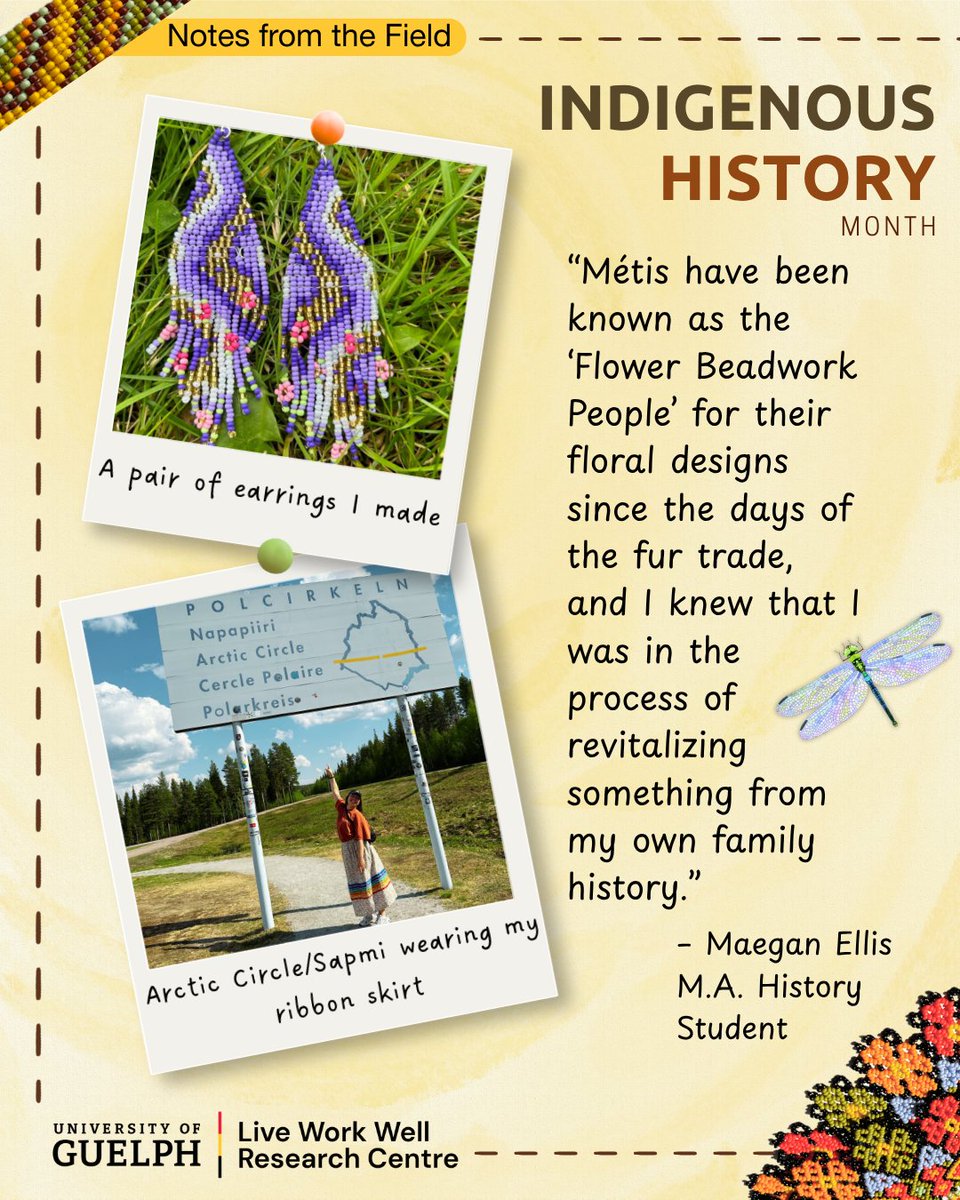
ALT A poster titled “Indigenous History Month” with a soft beige and yellow background and decorative elements such as dotted borders and the Live Work Well dragonfly. At the top left, a label reads “Notes from the Field.” Two pinned, Polaroid-style photographs appear on the left side. The top photo shows a pair of purple beaded earrings with floral patterns laid on green grass. A caption beneath the photo reads, “A pair of earrings I made.” The lower photo shows a person standing outdoors under a sign reading “POLCIRKELEN / Napapiiri / Arctic Circle,” with trees and sky in the background. The caption reads, “Arctic Circle / Sámi wearing my ribbon skirt.” On the right side, a quotation reads: “Métis have been known as the ‘Flower Beadwork People’ for their floral designs since the days of the fur trade, and I knew that I was in the process of revitalizing something from my own family history.” The quote is attributed to “Maegan Ellis, M.A. History Student.”
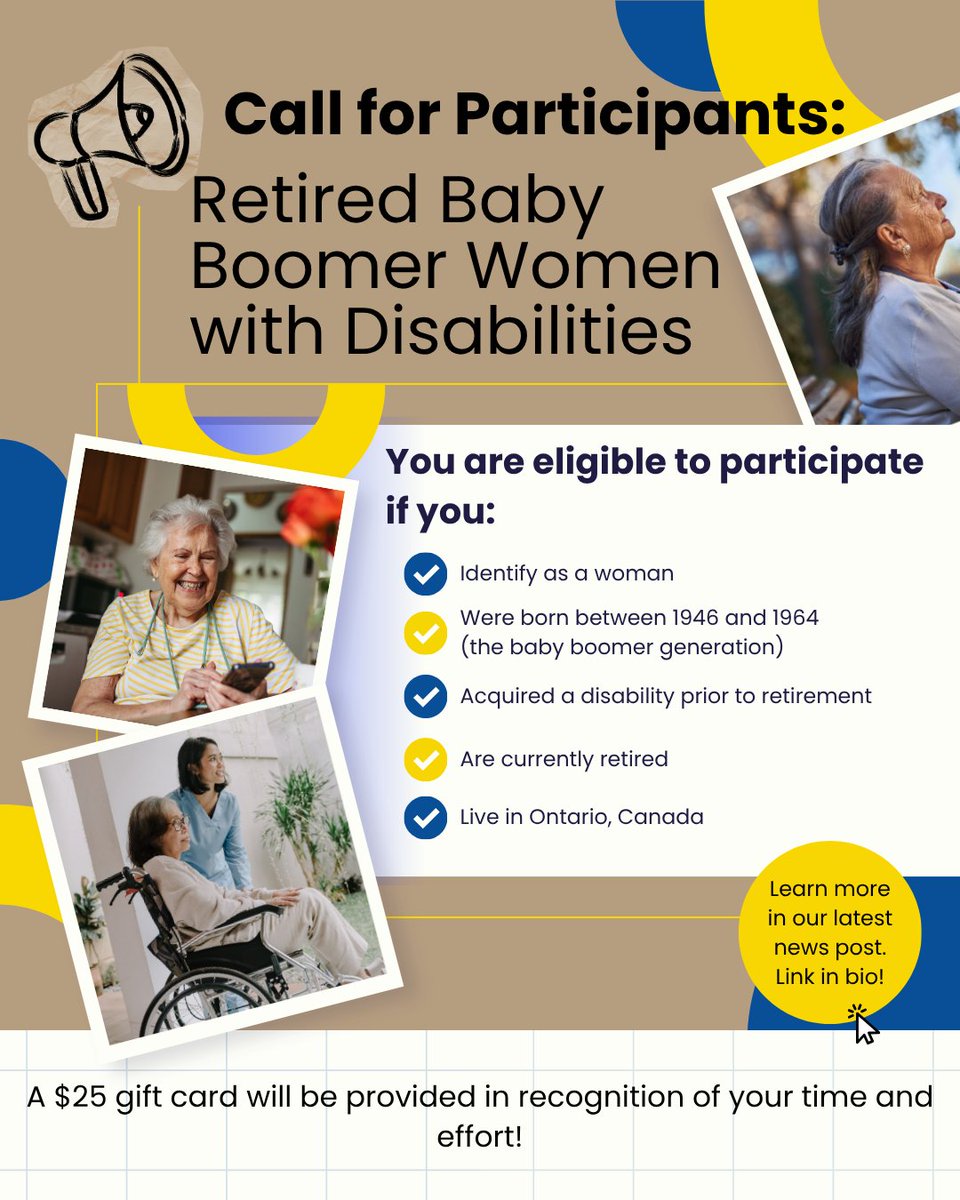
ALT A promotional poster with a beige background and blue and yellow circular accents titled, “Call for Participants: Retired Baby Boomer Women with Disabilities.” The layout includes three photo cutouts: one shows an older adult sitting at a table holding a phone, another shows an older adult seated in a wheelchair with another adult standing nearby, and a third shows an older adult outdoors. A central text box includes a heading and bullet point list, reading reads: “You are eligible to participate if you: identify as a woman; were born between 1946 and 1964 (the baby boomer generation); acquired a disability prior to retirement; are currently retired; and live in Ontario, Canada.” A yellow circular callout on the right says, “Learn more in our latest news post. Link in bio!” At the bottom, a line of text reads: “A $25 gift card will be provided in recognition of your time and effort!”
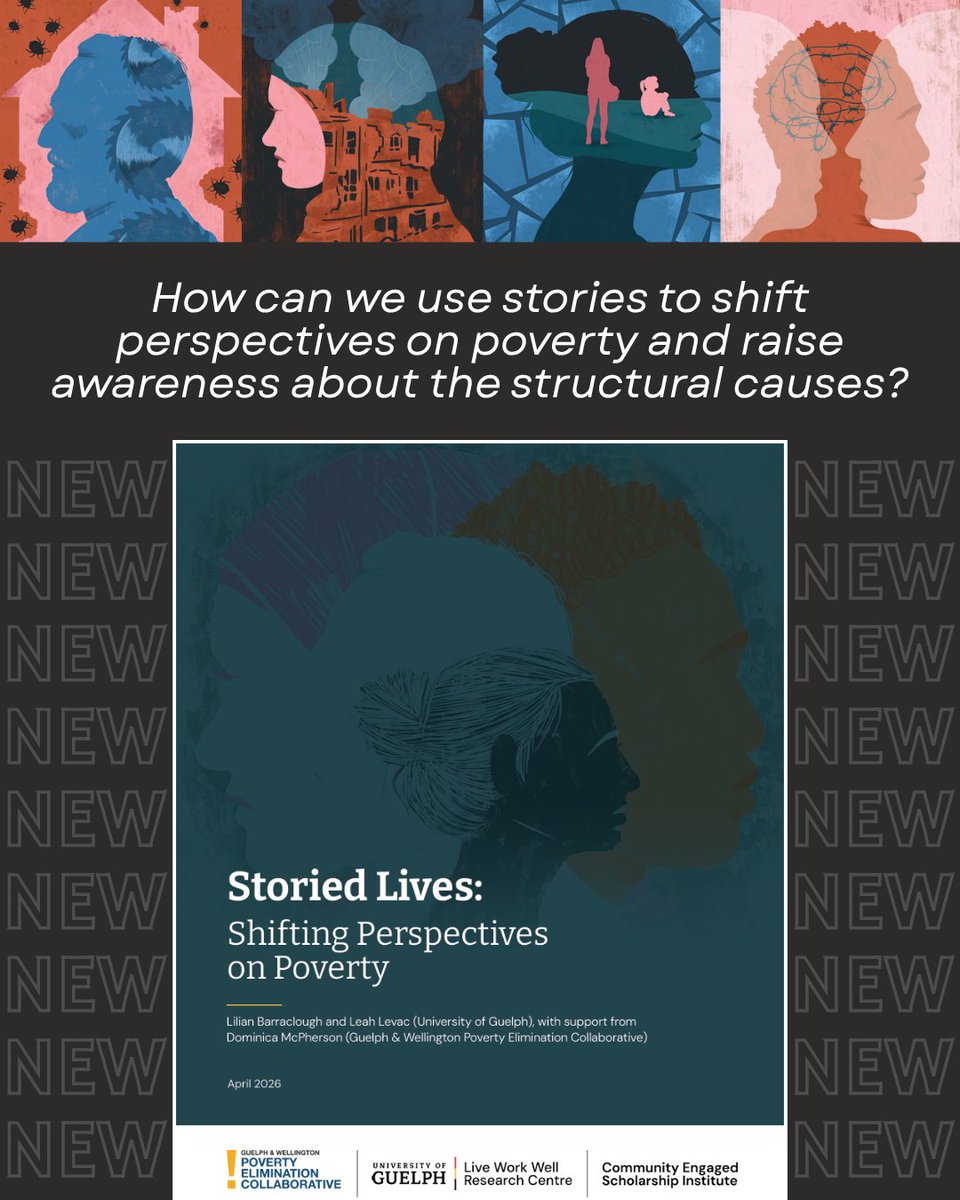
ALT Promotional graphic for a publication titled “Storied Lives: Shifting Perspectives on Poverty,” a collaboration between the Live Work Well Research Centre, Community Engaged Scholarship Institute, and the Guelph & Wellington Poverty Elimination Collaborative. Across the top are four illustrated side‑profile silhouettes of people, each filled with symbolic imagery such as buildings, a cityscape, a caregiver and child figure, and abstract patterns, using muted blues, reds, and earth tones. These illustrations represent the different characters and stories in this project. Centered text reads, “How can we use stories to shift perspectives on poverty and raise awareness about the structural causes?”
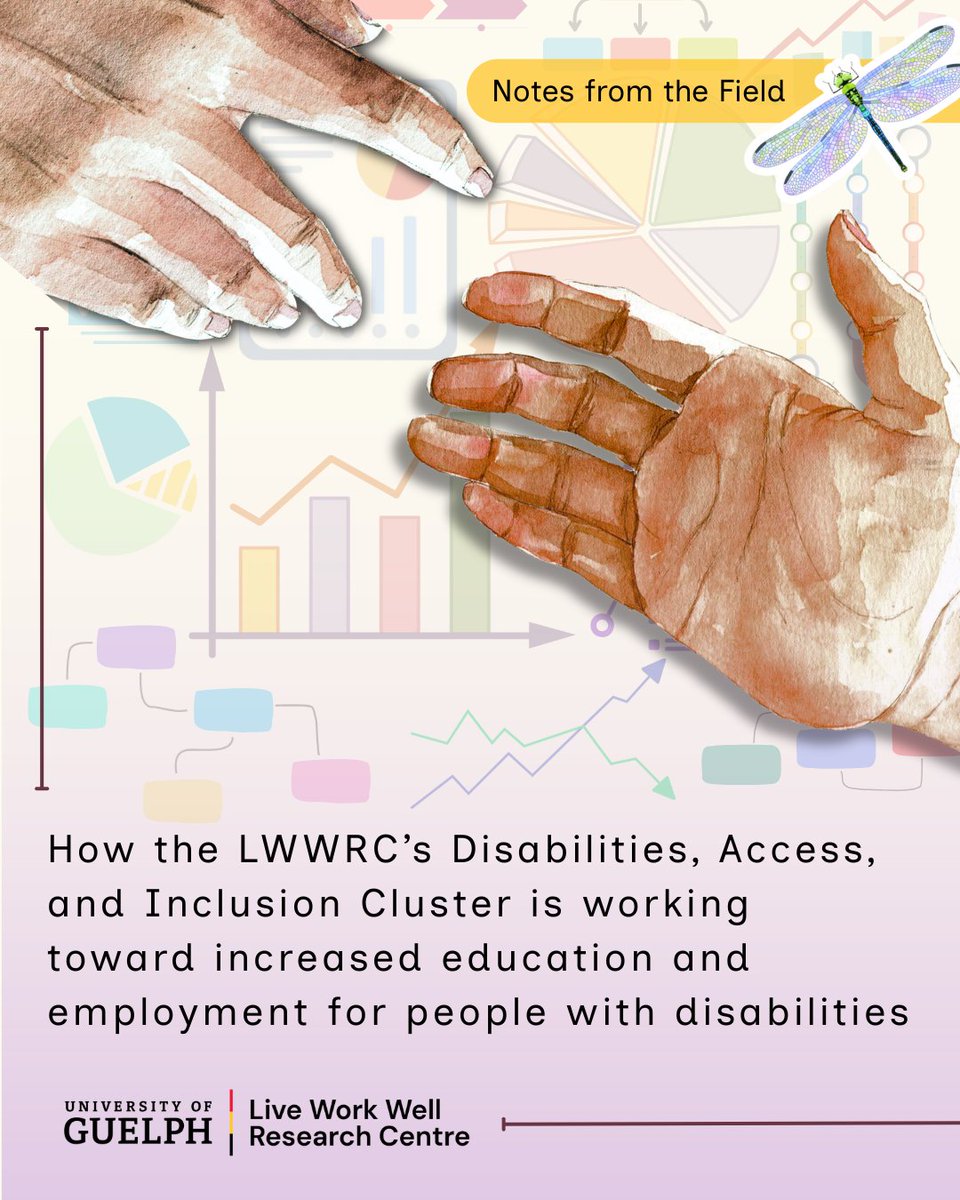
ALT Illustrated graphic with two watercolor-style hands reaching toward each other across the center of the image. The background shows faint charts, graphs, arrows, and flow diagrams in soft pastel colors, suggesting research, data, and systems. A yellow label near the top reads “Notes from the Field,” with a small illustrated dragonfly beside it. Large text across the lower half reads, “How the LWWRC’s Disabilities, Access, and Inclusion Cluster is working toward increased education and employment for people with disabilities.” At the bottom left is the Live Work Well Research Centre logo.


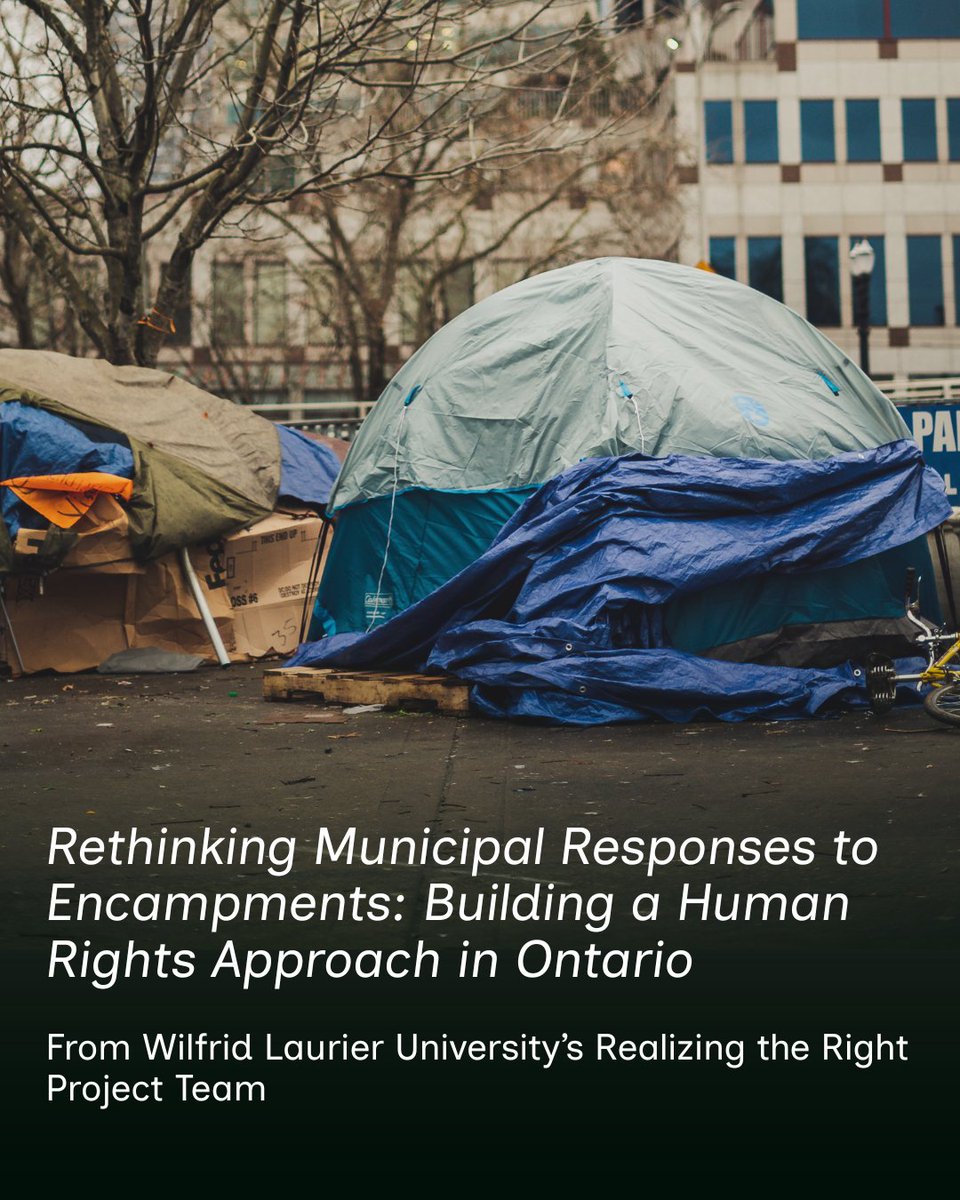
ALT A street‑level urban scene showing encampments made from camping tents, blue and grey tarps, cardboard, and wooden pallets arranged along a sidewalk. White text over the lower portion of the image reads: “Rethinking Municipal Responses to Encampments: Building a Human Rights Approach in Ontario.” Smaller text beneath reads: “From Wilfrid Laurier University’s Realizing the Right Project Team.
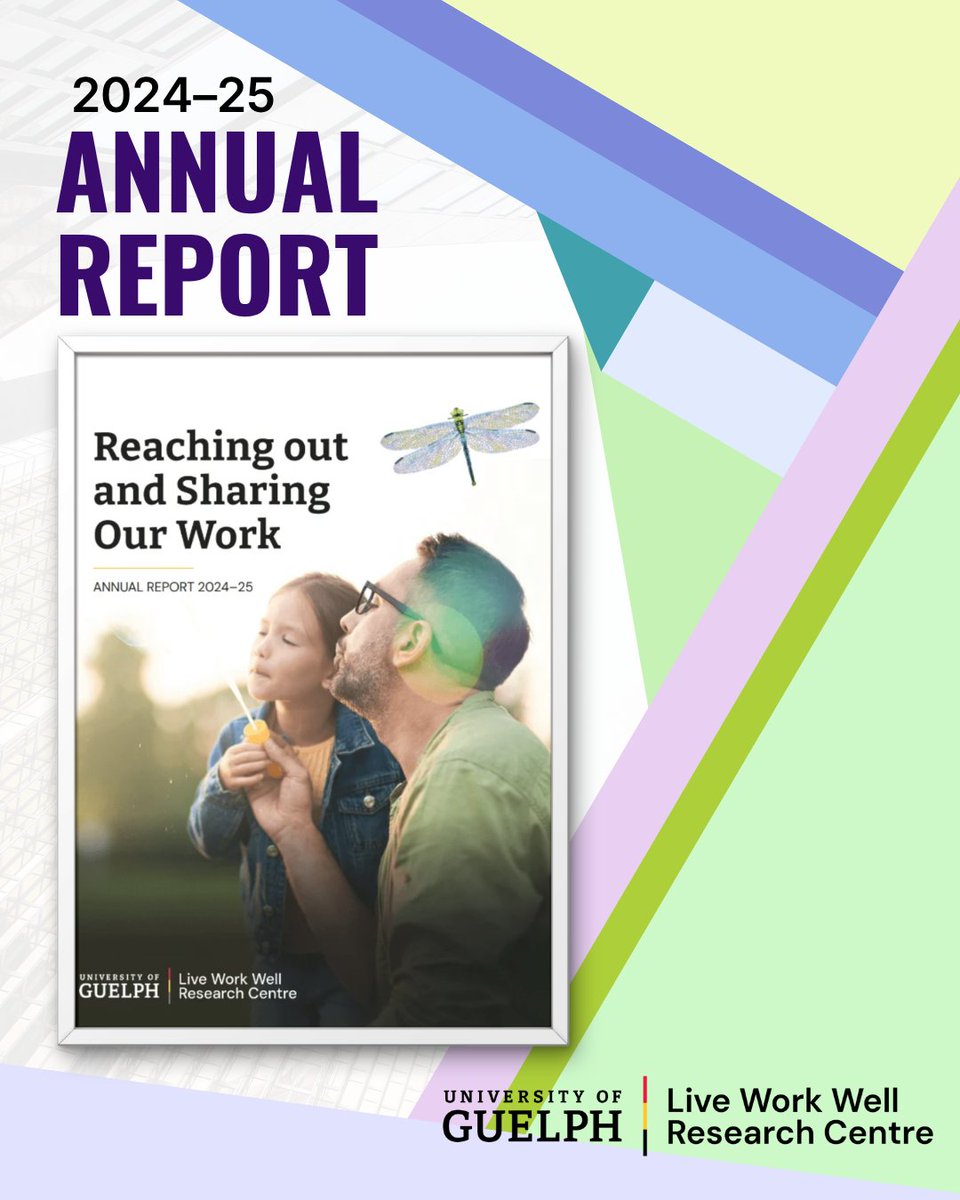
ALT A promotional graphic for the 2024–25 Annual Report from the University of Guelph’s Live Work Well Research Centre. The design features a framed cover of the report, which includes two people outdoors, a young girl and a man, with the child holding a small yellow tube of bubbles. A dragonfly illustration appears near the title, which reads ‘Reaching out and Sharing Our Work.’ The background of the graphic includes overlapping diagonal shapes in pastel green, blue, purple, and yellow. The University of Guelph and Live Work Well Research Centre logos appear at the bottom.
ALT Promotional graphic celebrating the 50th anniversary of CCRW. At the top center is a gold circular medal on a pedestal with the text “50 YEARS,” surrounded by small star accents. Below, large text reads: “Celebrating 50 Years of CCRW — Promoting and Supporting Meaningful and Equitable Employment for People with Disabilities.” The background fades from light pink at the top to deep purple at the bottom. Near the bottom are two circular logos: the CCRW logo on the left and the University of Guelph Live Work Well Research Centre logo on the right. The words “Partner Spotlight” appear beneath the logos.
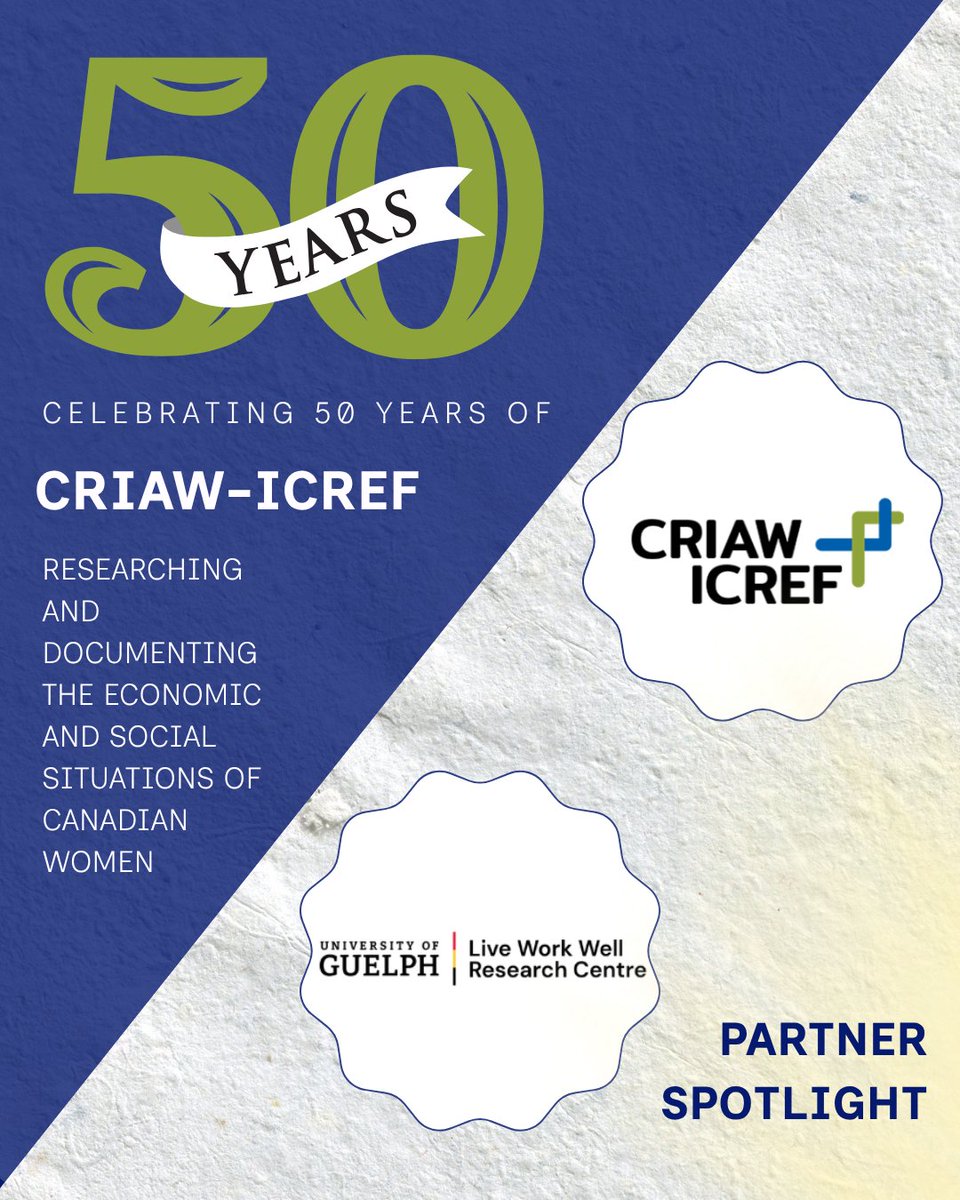
ALT Graphic celebrating 50 years of CRIAW‑ICREF, featuring a large ‘50 Years’ banner and text that describes the organization’s research and documentation of the economic and social situations of Canadian women. The CRIAW‑ICREF logo appears alongside a University of Guelph Live Work Well Research Centre logo and the words ‘Partner Spotlight.’
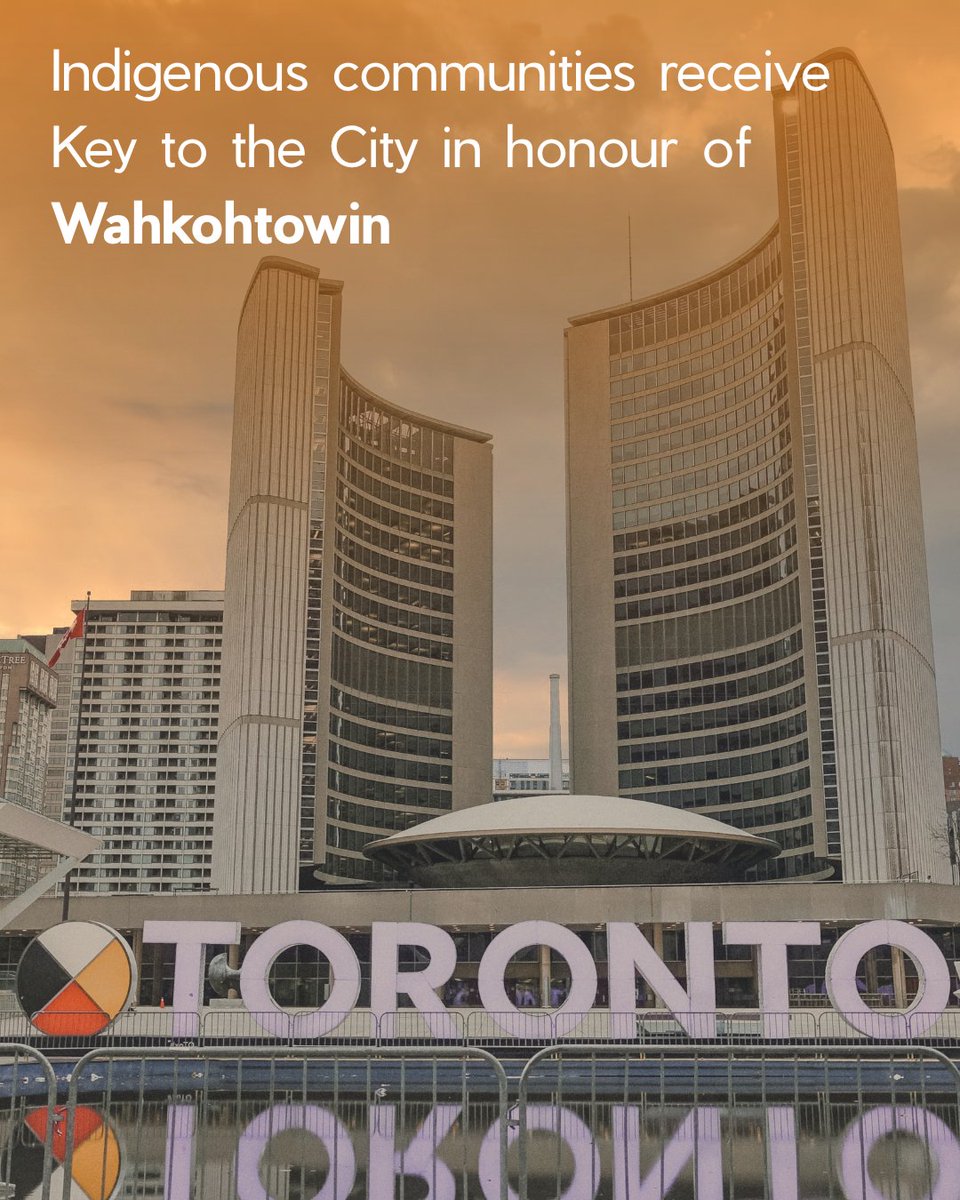
ALT A wide view of Toronto City Hall showing the two curved concrete towers rising behind the circular council chamber. In the foreground, large letters form the “TORONTO” sign in Nathan Phillips Square. A warm orange filter covers the photo. Overlaid text at the top of the image reads: “Indigenous communities receive Key to the City in honour of Wahkohtowin.”