
Web3 Inclined || Contributor @GenLayer
Joined July 2019
- Tweets 5,674
- Following 1,822
- Followers 919
- Likes 88,326
2,091 Photos and videos





GENLAYER’s OPTIMISTIC DEMOCRACY;A Thread 🧵
One of the most important concepts behind GenLayer is Optimistic Democracy.
A consensus mechanism designed for a world where transactions are no longer simple calculations, but complex decisions involving AI models, web data, and real-world information.
Traditional blockchains excel when every participant can arrive at exactly the same answer. However, Intelligent Contracts often interact with dynamic web data and AI systems, where outcomes may be uncertain and different models can interpret information differently. This creates a challenge that traditional consensus mechanisms were never designed to solve.
GenLayer addresses this challenge through Optimistic Democracy.
🔖Consensus: The Mechanism
At the heart of Optimistic Democracy is consensus. Rather than trusting a single validator, AI model, company, or authority, GenLayer relies on a diverse group of validators to independently evaluate transactions and vote on outcomes.
The idea is simple but powerful: a group of independent reasoners is often more likely to arrive at the correct answer than any single participant acting alone.
By combining these independent judgments, the network reaches a collective decision that becomes the accepted outcome. Consensus is therefore the mechanism that secures GenLayer and enables decentralized decision-making at scale.
🔖Reasoning: The Process
Unlike traditional blockchain systems that primarily execute predefined rules, GenLayer introduces reasoning into the validation process.
Validators use AI models to analyze information, interpret context, evaluate evidence, and form independent conclusions about a transaction. This allows Intelligent Contracts to interact with real-world information while still maintaining decentralized verification.
Reasoning transforms validation from a purely computational task into a process of informed judgment.
🔖Validation: The Action
Every transaction submitted to GenLayer undergoes validation.
A randomly selected validator becomes the leader and executes the transaction, proposing an outcome. Other validators independently perform their own evaluation and compare their findings against the leader’s proposal.
If a majority agrees, the transaction is accepted and enters a temporary finality period.
This process ensures that no single validator has the power to dictate outcomes. Every result must withstand scrutiny from multiple independent participants before being approved.
🔖Adjudication: The Purpose
The ultimate purpose of Optimistic Democracy is adjudication.
As AI agents become increasingly capable of making decisions, conducting business, and interacting across the internet, disputes and uncertainty become inevitable. Someone or something must determine what is correct.
GenLayer acts as an adjudication layer for the agentic economy.
Instead of relying on a central authority, courts, corporations, or individual AI models, judgments emerge from a decentralized network of validators that collectively evaluate evidence and reach decisions through consensus.
This creates a system capable of resolving ambiguity while remaining transparent and decentralized.
🔖Trust: The Outcome
Trust is not assumed within Optimistic Democracy. It is earned.
Every decision is backed by independent validation, transparent consensus, and a structured appeals process. If participants believe an outcome is incorrect, they can challenge it during the finality window, triggering a new round of evaluation involving a larger validator set.
Each appeal increases the level of scrutiny, making it progressively more difficult for incorrect or malicious outcomes to survive.
Through this combination of verification, transparency, and accountability, trust emerges naturally from the process itself.
@RuzgarFlns
5
3
25
272
🔖How the System Reaches Finality
Every transaction moves through a lifecycle:
•Pending — waiting to be processed.
•Proposing — a leader validator executes the transaction and proposes a result.
•Committing — validators independently evaluate the transaction and submit encrypted votes.
•Revealing — votes and execution data are revealed.
•Accepted — majority consensus is reached and the appeal window begins.
•Finalized — the appeal period closes and the result becomes permanent.
If consensus cannot be reached, the transaction may be marked as undetermined or assigned to a new leader for reevaluation.
1
17
77
🔖Built for a Non-Deterministic World
Because Intelligent Contracts can interact with AI models and live web data, different validators may occasionally produce different outputs from the same input.
GenLayer embraces this reality rather than avoiding it.
To handle non-deterministic outcomes, the network supports multiple approaches to consensus, including strict output matching, AI-assisted comparison of results, and custom validation logic defined by developers.
This flexibility allows GenLayer to securely process transactions that would be impossible for traditional blockchains to handle.
Optimistic Democracy represents more than a consensus mechanism. It is a framework for decentralized reasoning, validation, and adjudication.
Where traditional blockchains seek agreement on facts, GenLayer seeks agreement on judgments.
By combining AI-powered reasoning, validator consensus, and an escalating appeals system, Optimistic Democracy creates a foundation for Intelligent Contracts that can interact with the complexity of the real world while preserving the core principles of decentralization.
10
48
I’ve got 116 mutuals
Not bad
@Favblakboy how many you got?
Jun 12

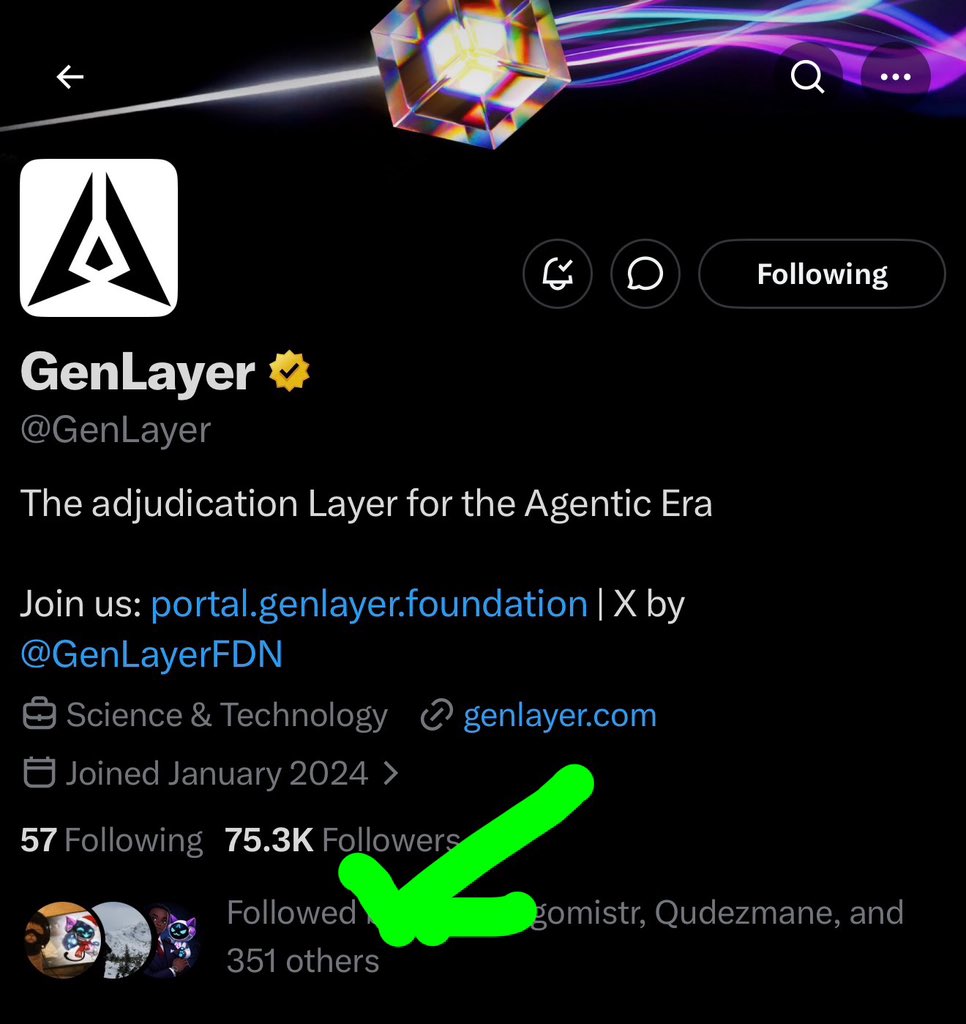
351 mutuals on @GenLayer
how many GenLayer mutual did you have?
quote with yours
tagging @stargirl_hills @RuzgarFlns @9ytshade @0X_CUPZ @doja_web3 among others
3
1
11
183
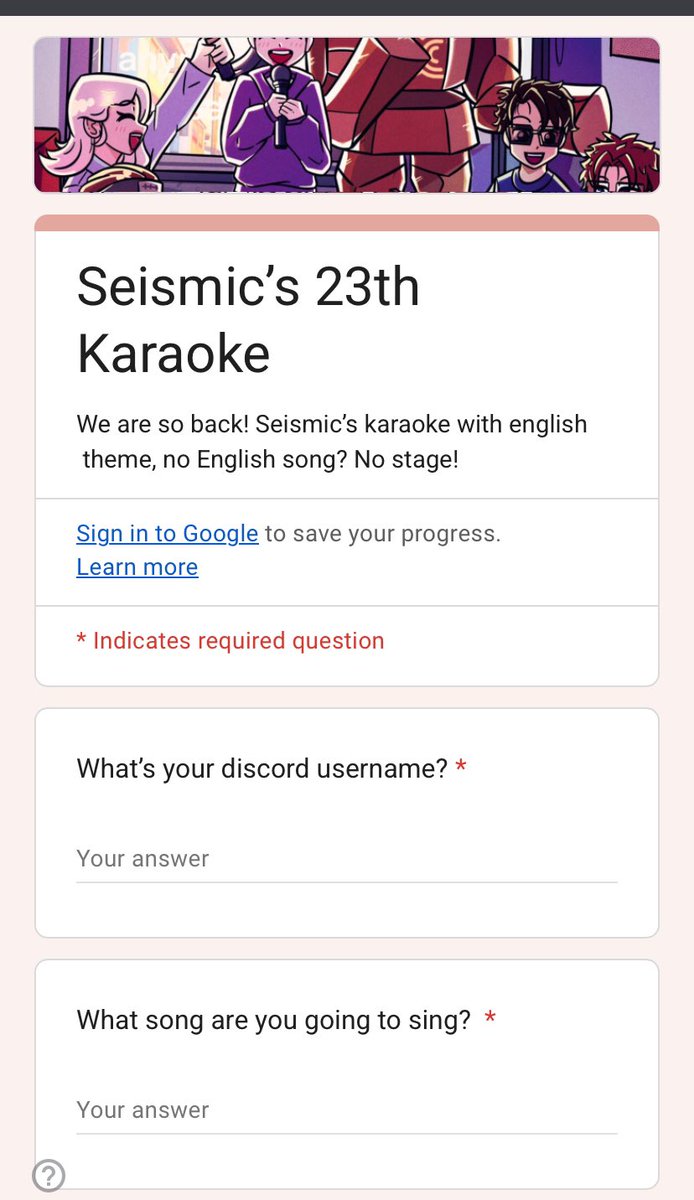
Seismic’s 23rd Karaoke is back, and the stage is set for an exciting English Song Edition!
Think you’ve got what it takes to impress the crowd? Secure your spot among the Top 15 participants and get ready for an unforgettable session filled with music, fun, and amazing vibes.
📍 Seismic Town Hall Stage
📅 Wednesday, 10 June 2026
🕒 15:00 UTC
All selected participants must prepare their own background music (YouTube karaoke/instrumental version).
🎶 Bring your voice, bring your energy, and let’s make this karaoke session one to remember!
Participation Link below ⬇️
forms.gle/XZYra6fgomcqMQj47
@xealistt @heathcliff_eth @NoxxW3 @xplanettt
1
9
35
Logan.Eth retweeted

Jun 7
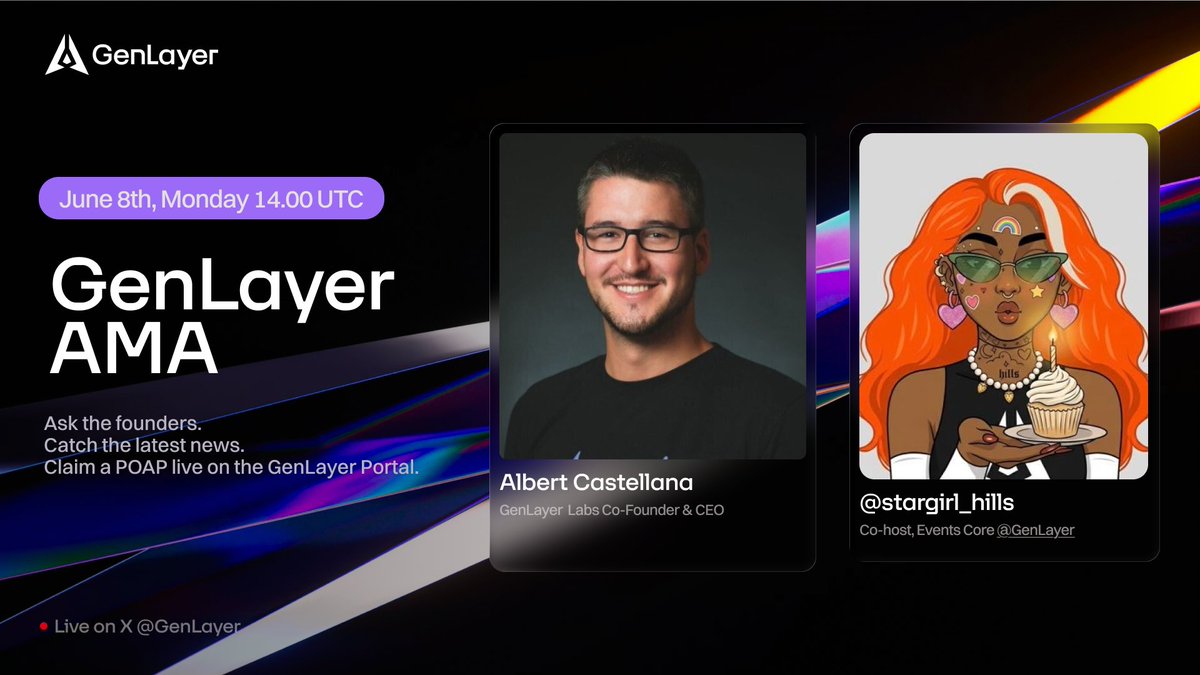
Drop your questions below genfrens and ensure to set a reminder 👇

Our Co-Founder & CEO, @kstellana, will be answering your questions live tomorrow.
Set a reminder & send your questions 👇
13
2
59
1,511

How the Oracle reads the open web and matches Polymarket 100% of the time?
@raskovsky explains 👇
7
16
102
3,698
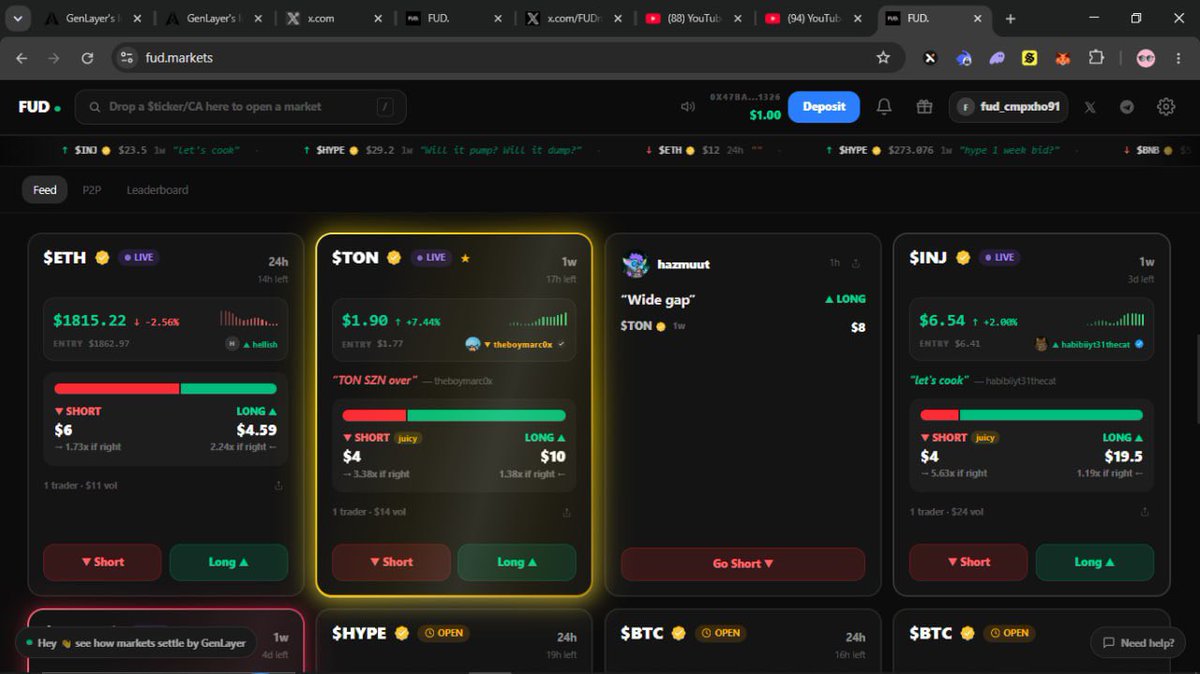
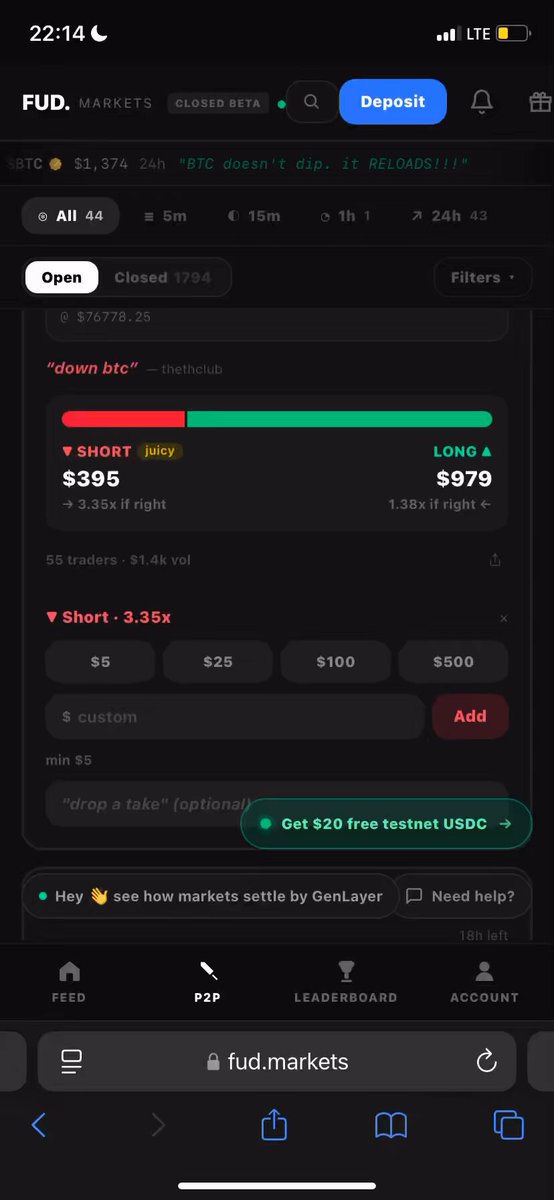
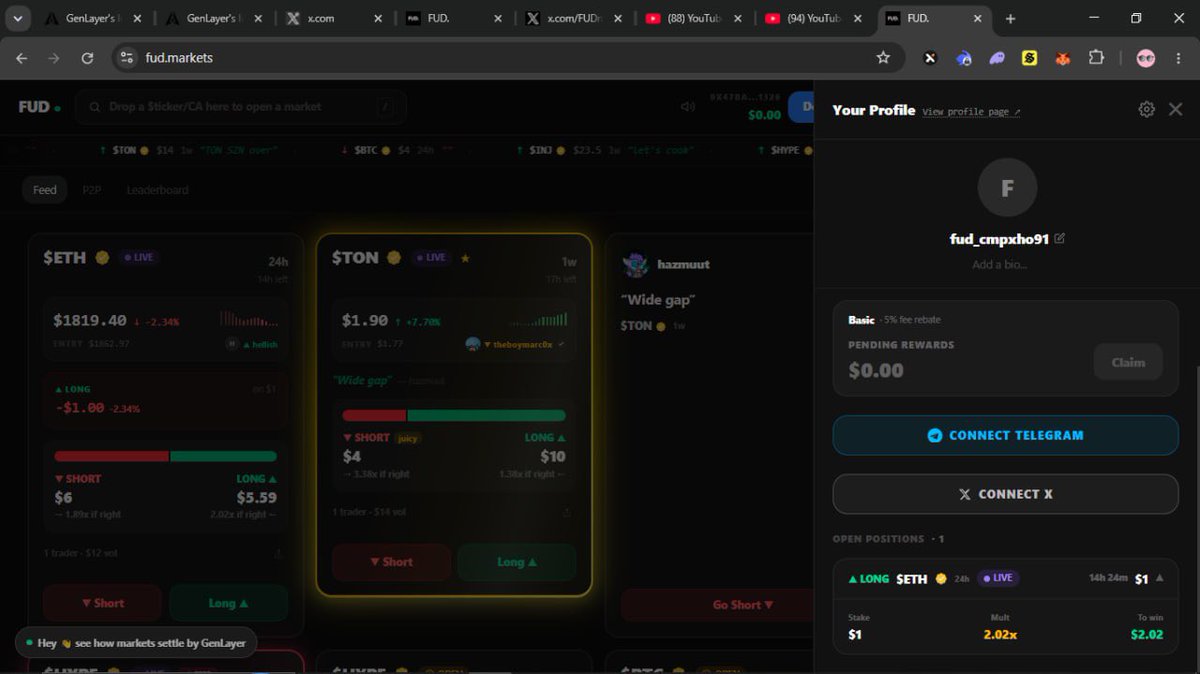
I finally gave @FUDmarkets Mainnet a try. I deposited funds,opened a position and spent some time exploring the platform to see what the experience actually feels like.
My biggest takeaway?
Simplicity.
Unlike many trading platforms that throw endless charts and settings at you, FUD Markets keeps things straightforward. Pick a market, choose a direction, and back your conviction.
What I liked most was how easy it was to get started. Within minutes, I understood the flow and was actively participating. It feels less like traditional trading and more like putting your market opinion to the test.
It’s exciting to see how prediction markets are evolving and how simple the user experience can be.
If you haven’t tried it yet, I’d recommend giving it a shot and seeing how your market predictions stack up against everyone else’s.
Who’s already tried FUD Markets? What was your experience?
@RuzgarFlns
May 27

FUD. IS LIVE ON MAINNET!
crypto finally has a conviction layer.
🧪 tested by 7,000.
🔵 built on @base
⚖️ settled by @GenLayer
📈 trade the FUD → fud.markets
3
1
22
83

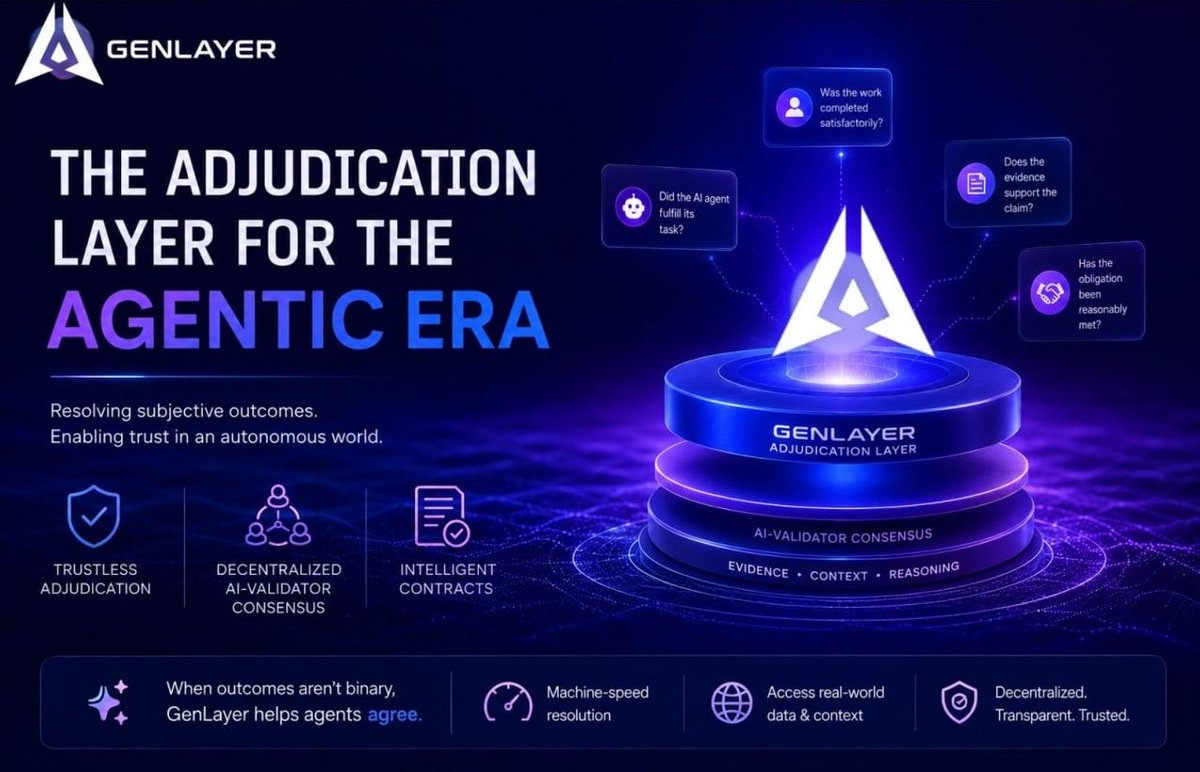
The Adjudication Layer For The Agentic Era.
The internet is rapidly moving toward an agent-driven future.
AI agents are beginning to research, negotiate, transact, execute tasks, and make decisions on behalf of users. But as these autonomous systems become more capable, a new challenge emerges:
What happens when there isn’t a clear right or wrong answer?
This is precisely the problem GenLayer is designed to solve.
GenLayer is positioned as the adjudication layer for the agentic era,a new category of blockchain infrastructure designed to resolve questions that require judgment, interpretation, and reasoning, not just deterministic code. Unlike traditional blockchains that reach consensus on transactions or computations, GenLayer aims to reach consensus on meaning itself.
To understand why this matters, consider how most blockchain systems work today. Smart contracts are excellent at handling objective conditions. If a wallet contains a certain amount of funds, a transaction executes. If a predefined condition is met, a payment is released.
But the real world isn’t always objective.
Questions like:
📍Was a freelancer’s work completed satisfactorily?
📍Did an AI agent fulfill its assigned task?
📍Does a piece of evidence support a claim?
📍Has a contractual obligation been reasonably met?
These aren’t binary decisions. They require context, interpretation, and judgment. Traditional smart contracts struggle with these scenarios because they were never designed to handle ambiguity.
GenLayer’s answer is Intelligent Contracts, Contracts that can process natural language, analyze unstructured information, access live internet data, and evaluate subjective outcomes through decentralized AI-validator consensus. Instead of relying on a single authority, multiple validators independently assess a situation and work toward a consensus-driven verdict.
In many ways, GenLayer is building a missing piece of the AI economy.
Today, we’re seeing rapid progress in payments, identity systems, agent communication protocols, and AI infrastructure. Yet most of these systems assume everything will go according to plan. The moment a dispute arises, a promise is contested, or an outcome becomes subjective, there is often no native mechanism for resolution.
GenLayer is designed to fill that gap by providing a decentralized adjudication layer capable of evaluating evidence, interpreting commitments, and reaching trusted decisions at machine speed.
What makes this particularly interesting is that it aligns with where technology is heading.
As AI agents become economic participants rather than simple tools, they will need a way to establish trust with one another. Payments alone won’t be enough. Execution alone won’t be enough. Autonomous systems will need a framework for resolving disagreements, verifying outcomes, and enforcing commitments in situations where reality is messy and subjective.
That’s the future GenLayer is building toward.
Bitcoin introduced trustless money.
Ethereum introduced trustless computation.
GenLayer is pursuing trustless adjudication.
A system where autonomous agents, businesses, and individuals can rely on decentralized consensus to resolve questions that previously required courts, intermediaries, or centralized authorities.
4
3
27
105
Logan.Eth retweeted

May 19
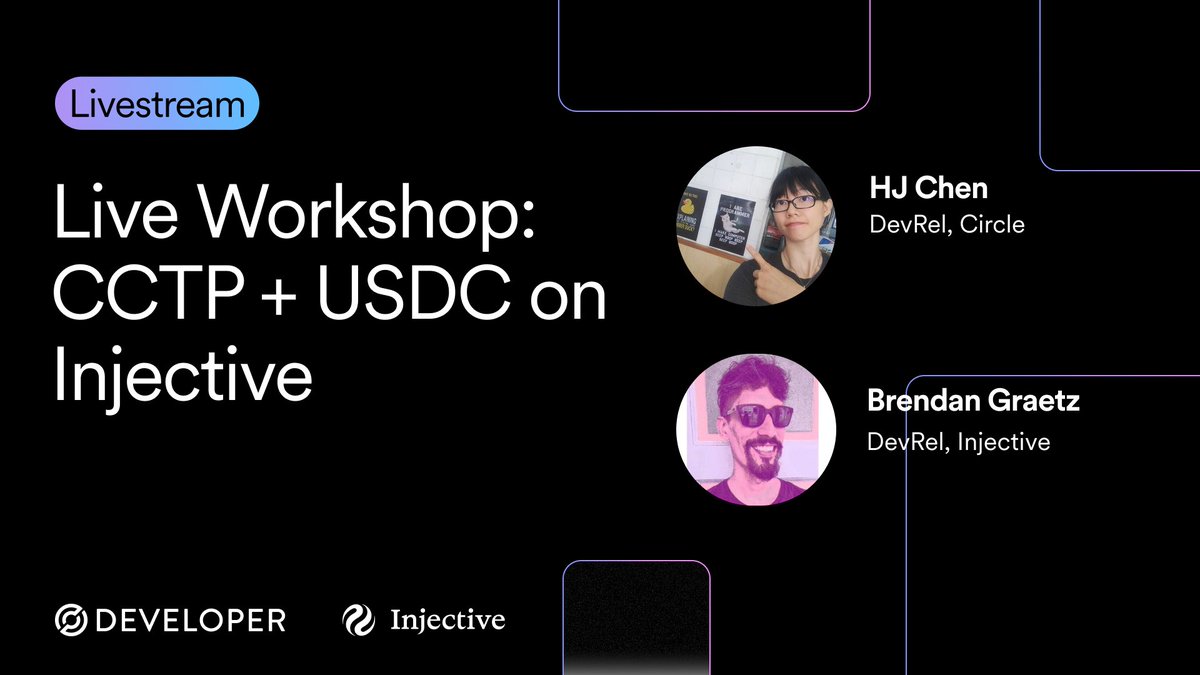
running an @injective $USDC CCTP technical workshop with @hj_chen from @circle soon
watch this space, date will be announced soon!
ALT Live workshop: CCTP USDC on Injective HJ Chen, DevRel, Circle Brendan Graetz, DevRel Injective
228
149
317
8,756
Logan.Eth retweeted

May 19
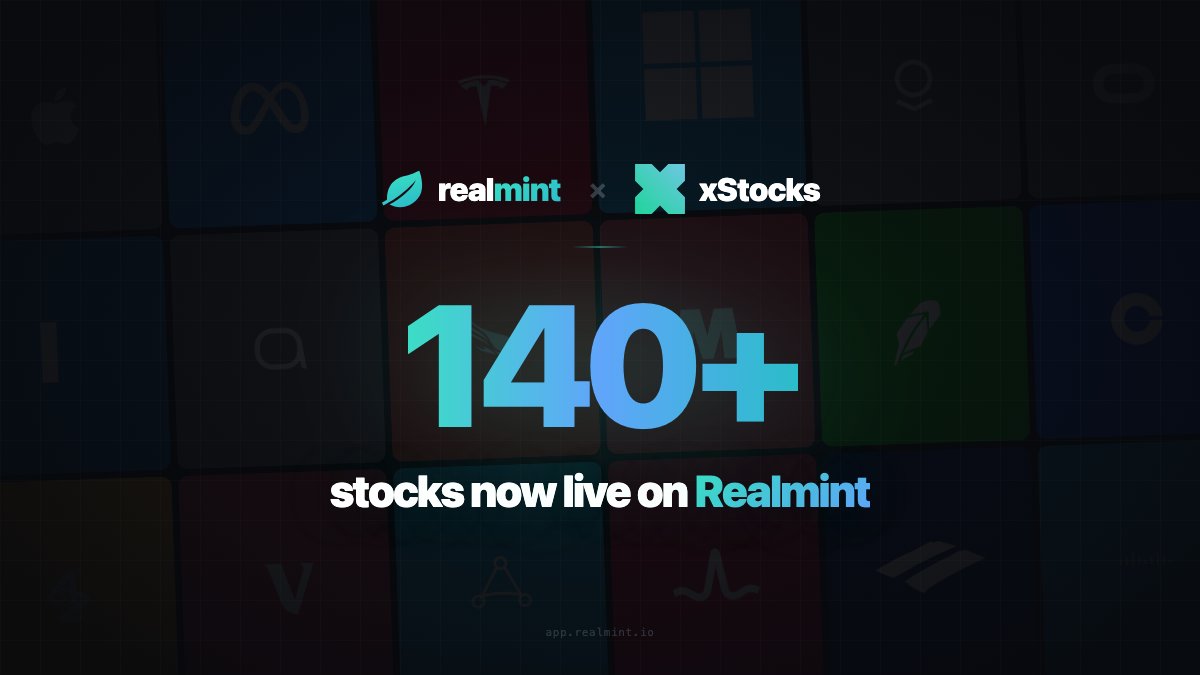
We just brought @xStocksFi to @Injective! 🆕
140 tokenized stocks are now live on Realmint, covering the most traded equities in the world.
The @injective community can now discover, understand, and trade tokenized stocks from $USDC on Injective in one click, gasless, without leaving the ecosystem.
The stock market is now live on Realmint.
🔗 app.realmint.io
200
141
291
8,313
Logan.Eth retweeted
May 19
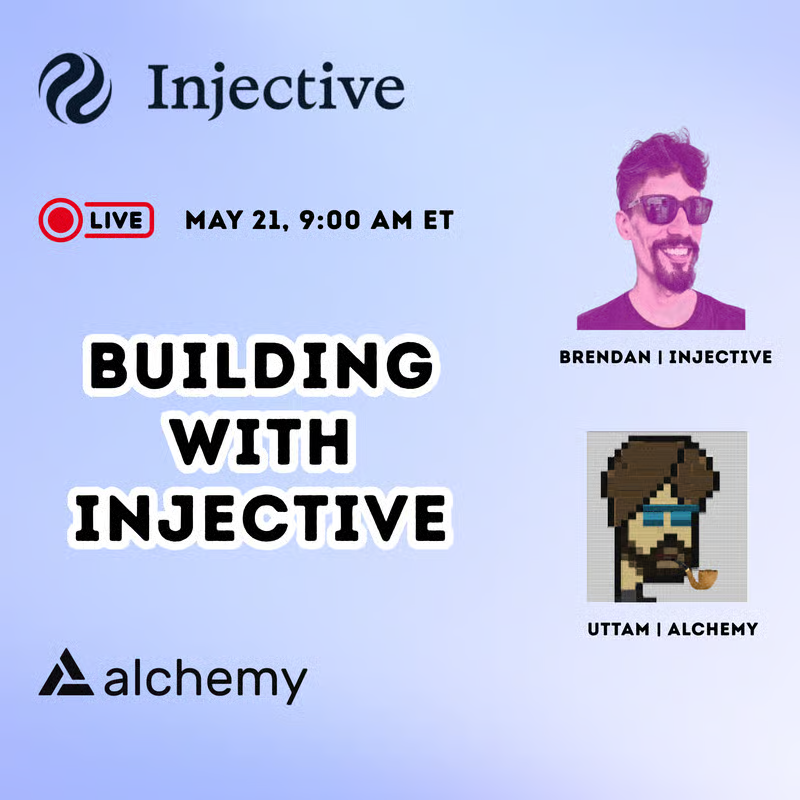
hosting an @injective @Alchemy workshop with @uttam_singhk tomorrow
join the live stream: luma.com/f7w4y0y4
ALT Injective Alchemy Building with injective May 21, 9:00 AM ET Brendan, Injective Uttam, Injective
217
127
251
4,421
Logan.Eth retweeted

May 20
BREAKING: Onchain agents can now pay in $USDC on Injective!
In the demo, an agent uses USDC to trade tokenized $TSLA stock onchain.
Deploy onchain agents for RWA use cases with the simplest UX. The agentic and tokenization economy are coming together.
Only on $INJ
267
248
843
56,055
Logan.Eth retweeted

May 24
A lot of people still see Injective as “just another DeFi chain.”
But lately, what’s happening around the ecosystem feels much bigger than that.
It’s beginning to resemble less of a crypto experiment and more of a serious attempt at building the next layer of financial infrastructure.
Here’s why 👇
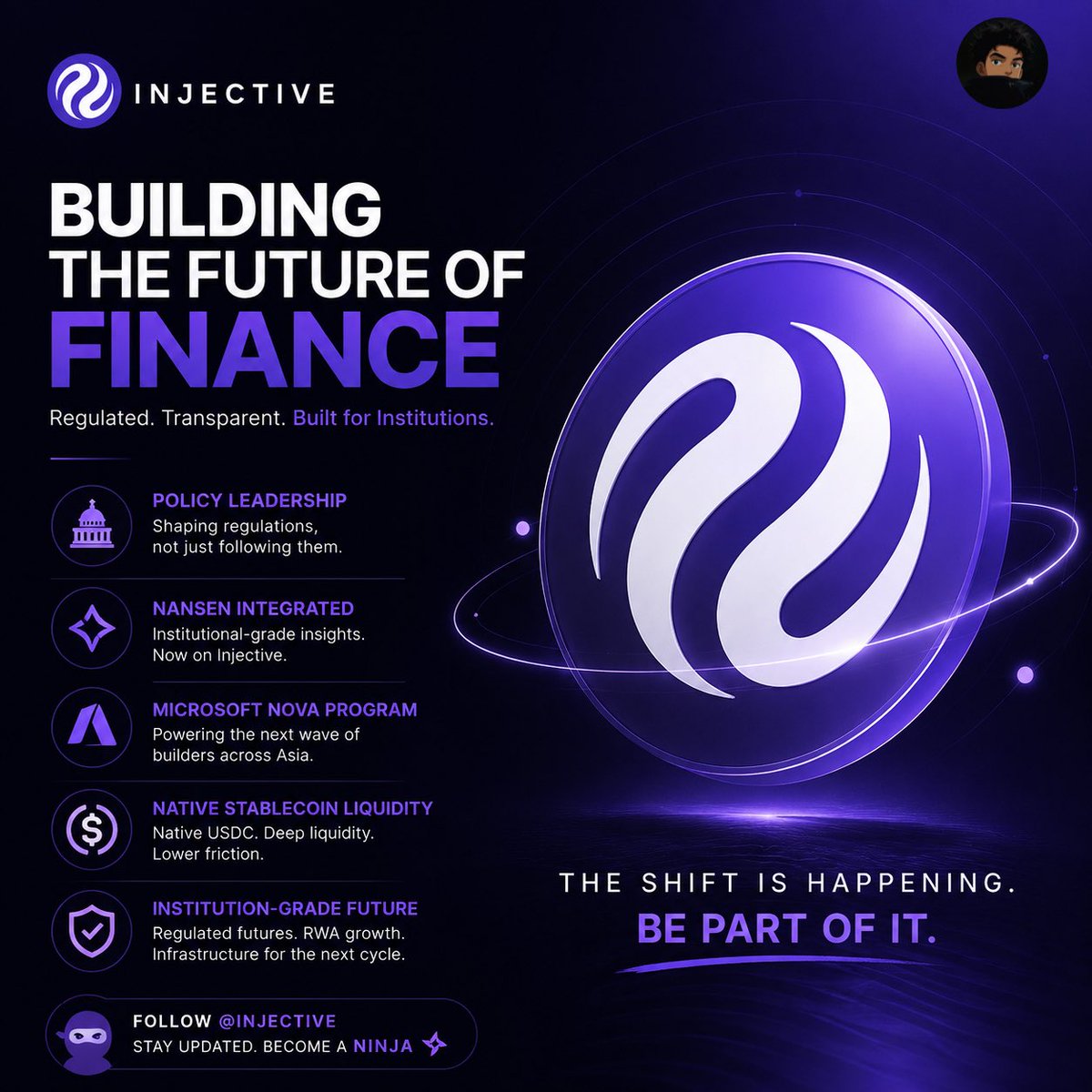
• Injective just launched the Injective Policy Institute (IPI).
Most crypto ecosystems are still focused purely on product launches, but Injective is already getting involved in policy discussions in Washington DC.
They’re contributing to conversations around the 2025 Clarity Act, stablecoin regulation, and tokenized real-world assets.
That changes the narrative completely.
Rather than sitting back and waiting for regulators to define the rules, they’re taking part in shaping the direction of the industry itself.
• Nansen has officially joined the ecosystem too.
And this goes far beyond a simple integration.
Nansen launched a validator on Injective while also bringing its analytics platform directly into the network.
The same tools institutions use to monitor smart money activity across Ethereum and Solana are now accessible within @injective.
Wallet tracking, capital flow insights, advanced analytics, visibility around the ecosystem just improved in a major way for $INJ.
• The Microsoft-backed Nova initiative is quietly turning into a major growth catalyst.
Injective is expanding aggressively across Asia through what could become one of its largest builder initiatives so far.
By pairing Microsoft Azure infrastructure with Injective’s finance-first architecture, they’re making it easier for developers to launch serious on-chain financial applications.
The objective is straightforward:
make building on Injective faster, simpler, and more scalable than on competing Layer 1s.
• Stablecoin infrastructure is evolving quickly too.
With Circle’s CCTP integration now live, Injective is moving away from relying heavily on wrapped liquidity.
Native $USDC is becoming the standard across the ecosystem.
That creates smoother capital movement, less friction, and stronger liquidity for tokenized RWAs and on-chain financial markets.
• And then there’s the broader institutional picture.
The launch of the Policy Institute, regulated INJ futures through Bitnomial, and growing institutional involvement in RWAs all point toward the same trend:
Injective isn’t only building applications anymore.
They’re building infrastructure institutions could eventually depend on.
And what’s interesting is that the growth metrics are beginning to reflect that shift.
This transformation is already happening in real time.
The real question is whether people recognize it early enough.
1
3
34
5,187
Logan.Eth retweeted
May 21
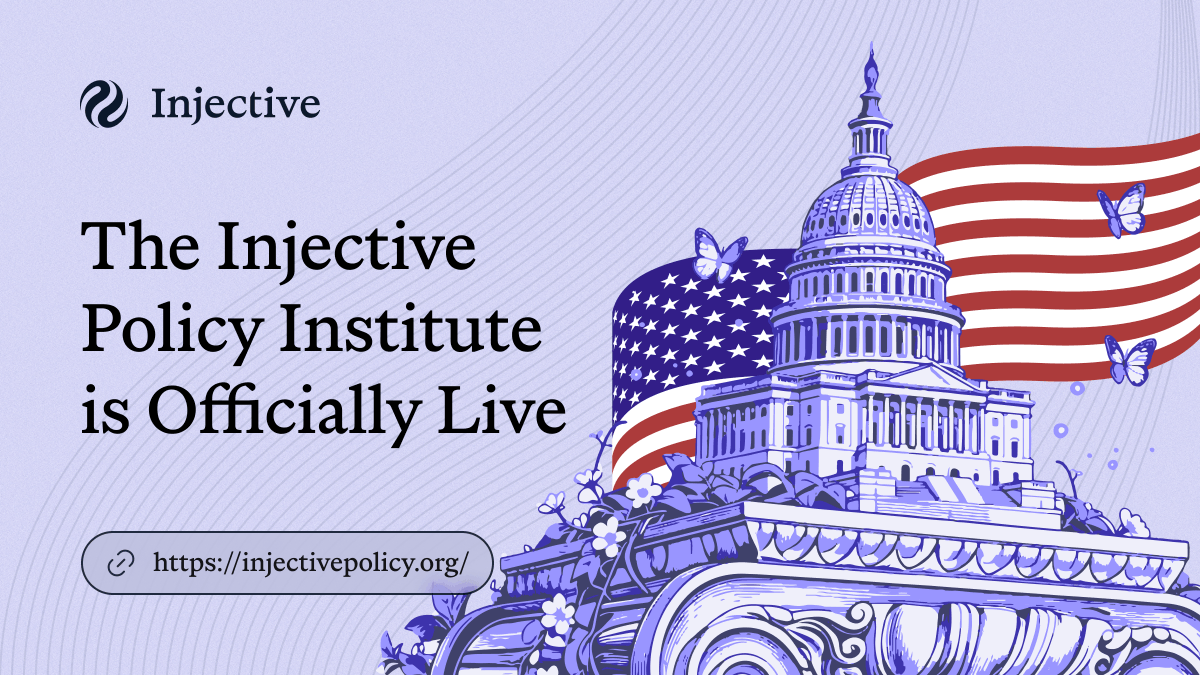
Today, we are officially introducing The Injective Policy Institute (IPI).
The policy and research arm of Injective will work directly with regulators and lawmakers to advance onchain finance innovation in Washington, D.C. and throughout the United States 🇺🇸
315
270
783
60,251
Logan.Eth retweeted

May 22
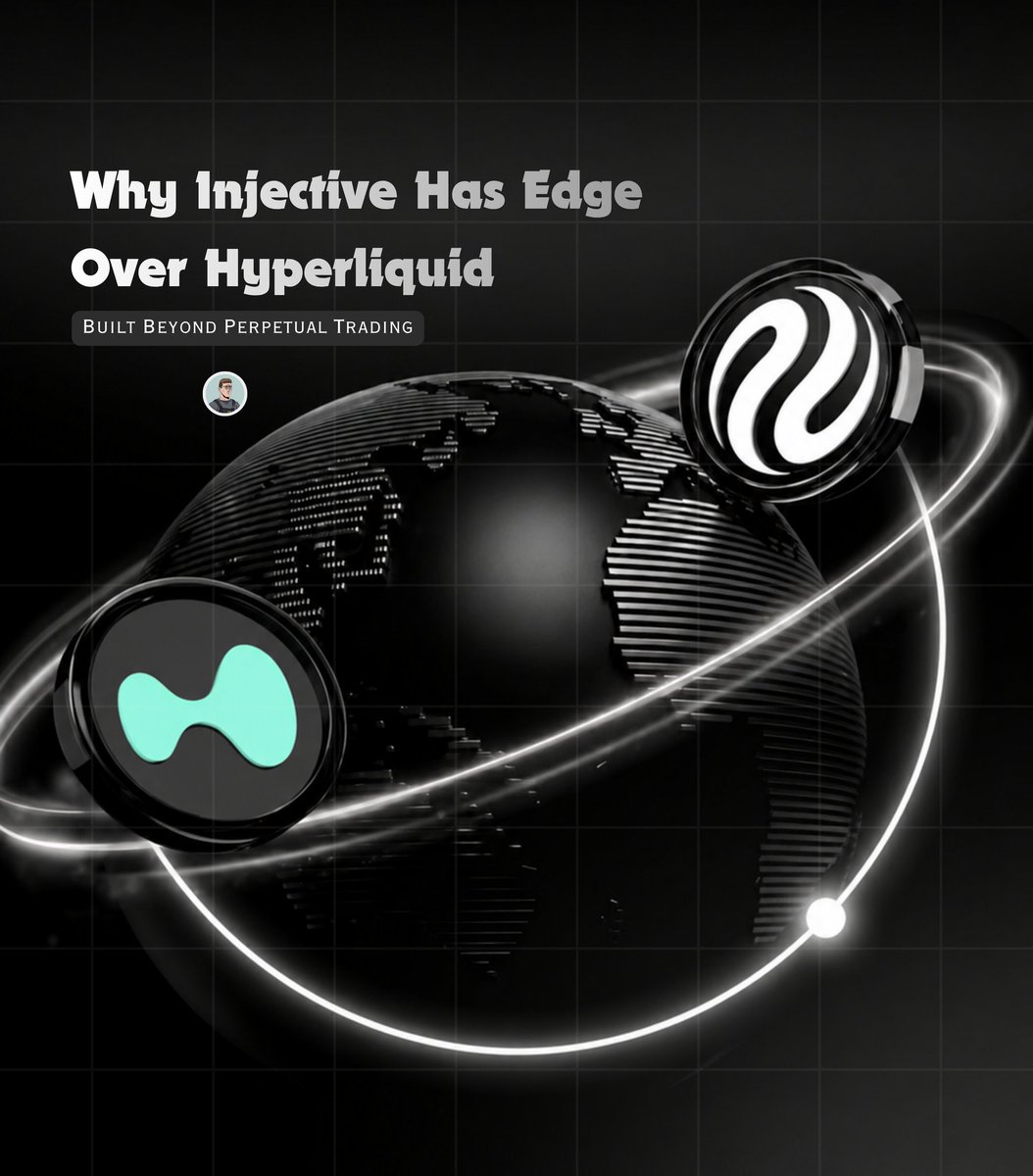
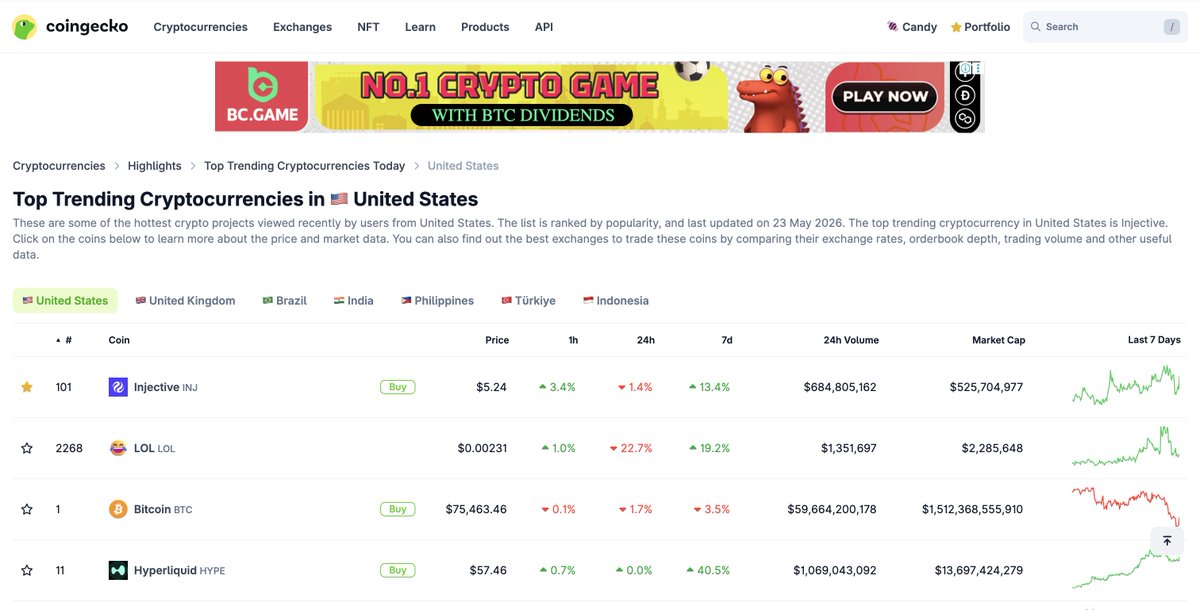
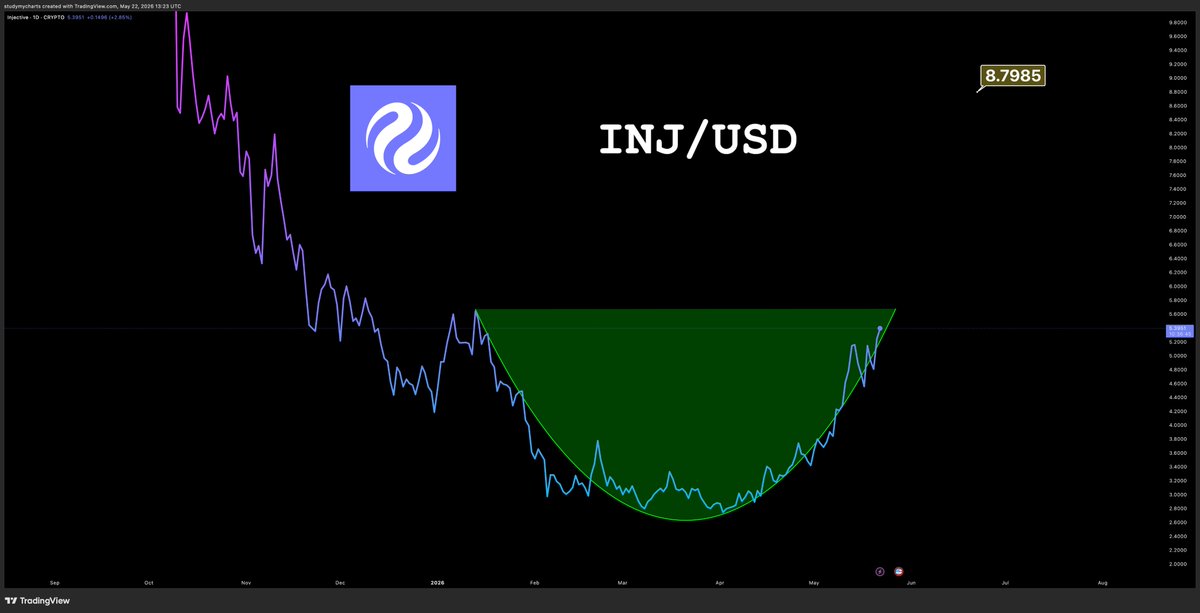
$INJ has an edge over $HYPE that most people overlook
The 21Shares Hyperliquid ETF helped send $HYPE to a new ATH
Same, 21Shares has also filed for an Injective ETF, which is under SEC review
Why does $INJ stand out:
• More than a perps chain
• Cosmos, EVM & Wasm compatible
• Cross-chain native
• Deflationary burn mechanism
• Strong RWA focus
• Institutional-friendly infrastructure
• CFTC-regulated INJ futures in the U.S.
• Built for broader financial apps
$INJ is building more than just a trading platform.
May 21

happy new $HYPE all time highs
hyperliquid
40
147
340
8,245


Logan.Eth retweeted

May 12
$ROO is now live on @virtuals_io!
CA: 0xE31700c6BD46638D207991fB5CC5c0daD3D1e3DA
83
152
351
23,730