
Humanizing tech. MD: Sutter Hill Ventures Founder: Polar (Google acquired) Bagcheck (Twitter acquired) Wrote: Mobile First, Web Form Design Pre: NCSA eBay Yahoo
Joined February 2008
- Tweets 19,616
- Following 103
- Followers 235,492
- Likes 3,747
2,522 Photos and videos



Pinned Tweet

Apr 21
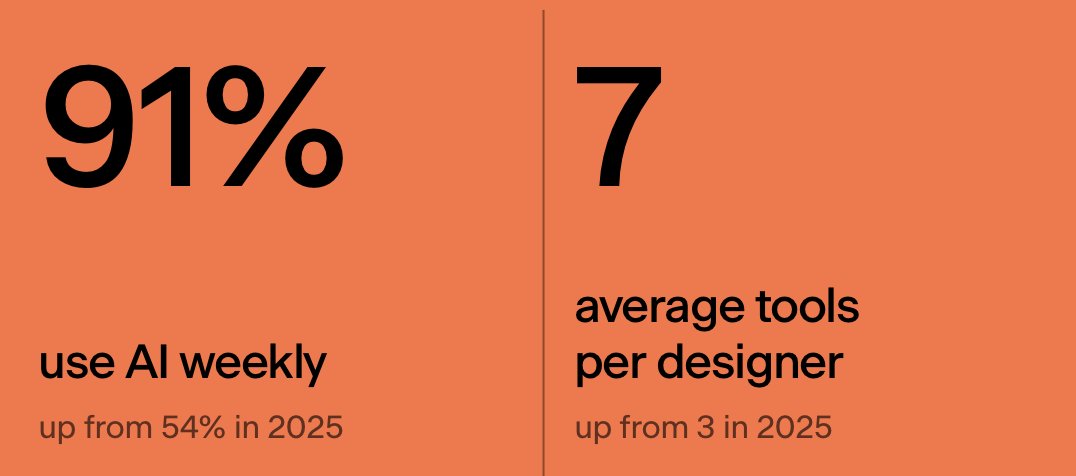
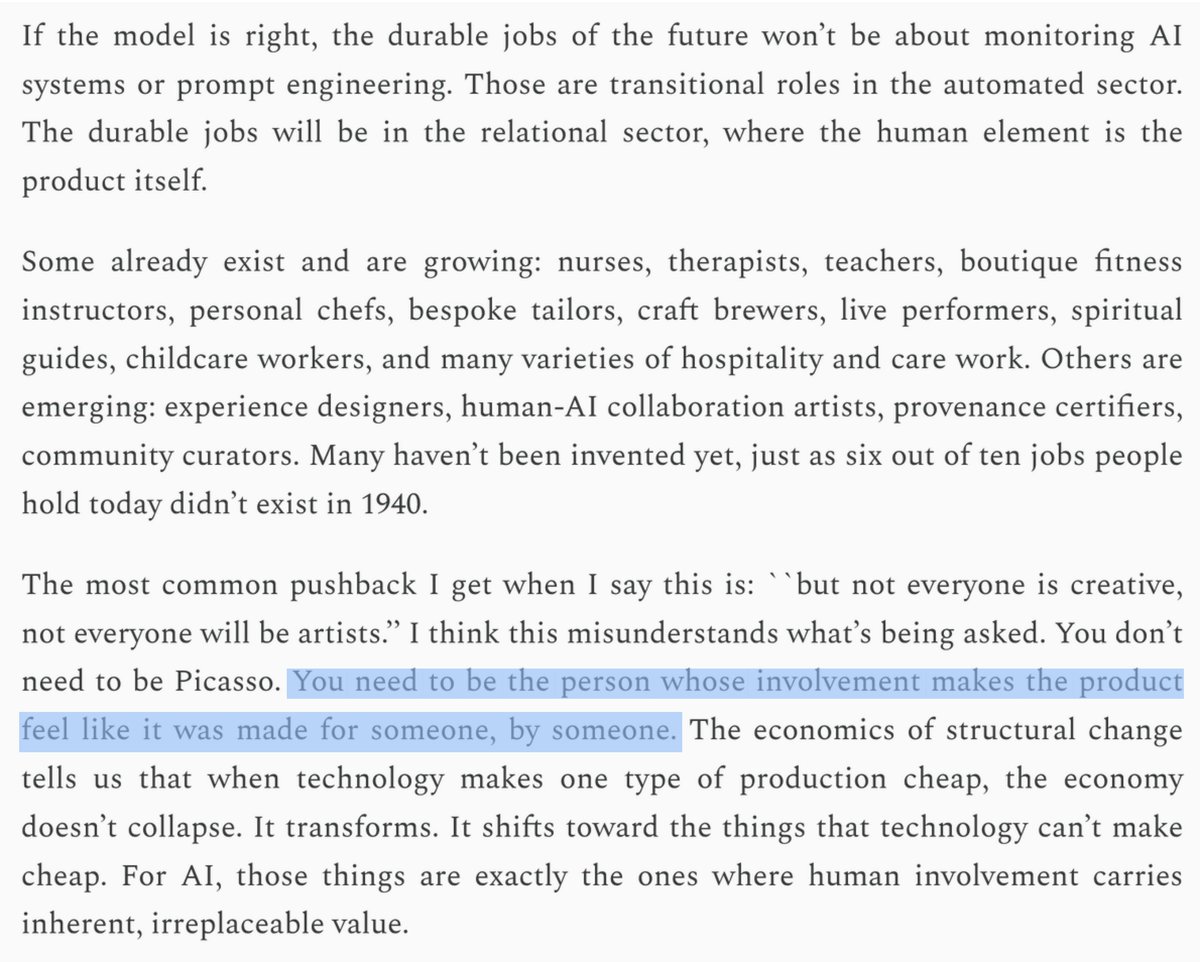
this argument lands better for "why designers matter in an AI age" than simply saying "taste"
Apr 14

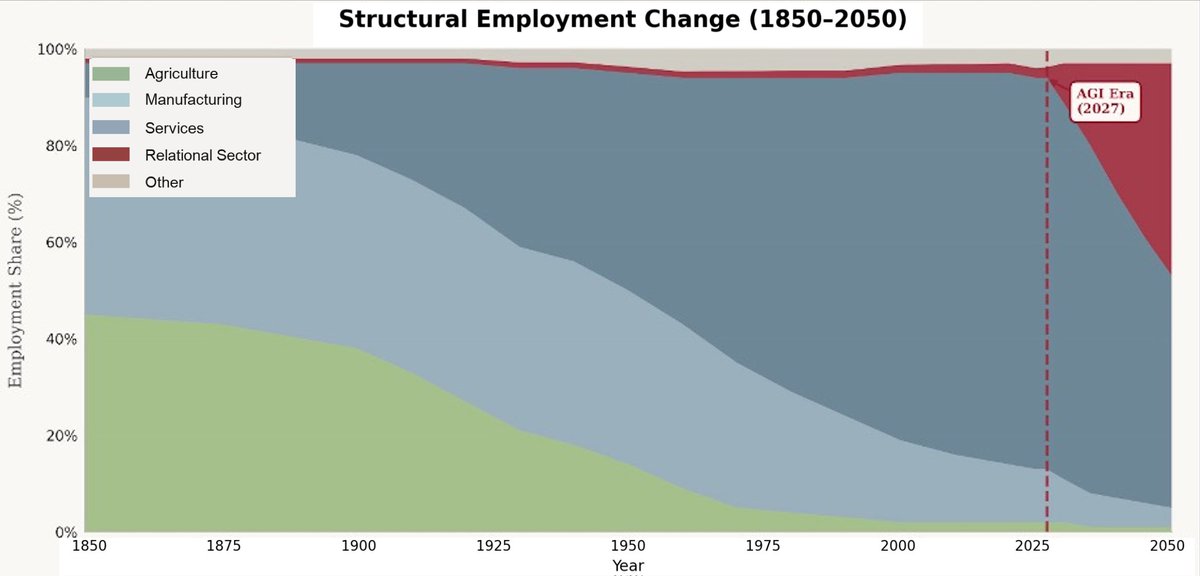
New essay on the economics of structural change and the post-commodity future of work.
1. Almost any question about the impact of advanced AI on the economy needs to start at the same place: what is still scarce? Answer that, and the analysis becomes pretty straightforward. This essay explores what becomes scarce if AI really can replicate most of what humans do in production, and what this mean for the future of jobs.
2. My conjecture, working through the economics: labor reallocates across sectors, and the sector it reallocates to has properties that keep labor a meaningful share of the economy. Ultimately this is about the structure of demand itself. For this, we have to go back to Girard, Augustine and Rousseau: once people's base needs are met, their preferences shift to comparative motives (e.g., status, exclusivity, social desirability). This motive is inherently non-satiated.
4. The key paper is Comin, Lashkari, and Mestieri (Econometrica 2021). As people get richer, they don't buy proportionally more of everything. They shift spending toward sectors with higher income elasticity. They estimate income effects account for 75% of observed structural change.
5. The ironic consequence: the sector that gets automated becomes a smaller share of the economy, not a larger one. Agriculture got massively more productive and its share of employment collapsed. Manufacturing too. The "stagnant" sectors absorb the spending and the jobs.
6. So the question is: which sectors have high income elasticity in a post-AGI world? I argue it's what I call the relational sector. Categories where the human isn't just an input into production, it is part of the value.
7. Why does the relational sector have high income elasticity? Because human desire has a mimetic, relational dimension. We don't just want things for their intrinsic properties. We want what others want, and we want it more when others can't have it. Girard, Rousseau, Augustine, and Hobbes all saw this.
8. In work with Kristóf Madarász, we showed this experimentally: WTP roughly doubles when a random subset of others is excluded from the good. And in new work with Graelin Mandel, AI involvement kills the premium. Human-made art gains 44% from exclusivity; AI-made art only 21%.
9. This all comes together for the core argument. The sector that absorbs spending as AI makes commodity production cheap is one where human provenance is part of the value, and demand for it grows faster than income. Exactly the profile that keeps labor meaningful.
10. To be clear about the claim: I'm NOT saying aggregate labor share must rise. It may fall. The claim is about sectoral composition, i.e., where expenditure and employment go once commodities get cheap, and the fact that the sector that will absorb reallocated labor maps to a substantial component of human preferences and desire.
11. If you're interested in the formal model, a linked companion technical note works out all the economics.
Read the essay here: aleximas.substack.com/p/what…
4
23
181
19,615

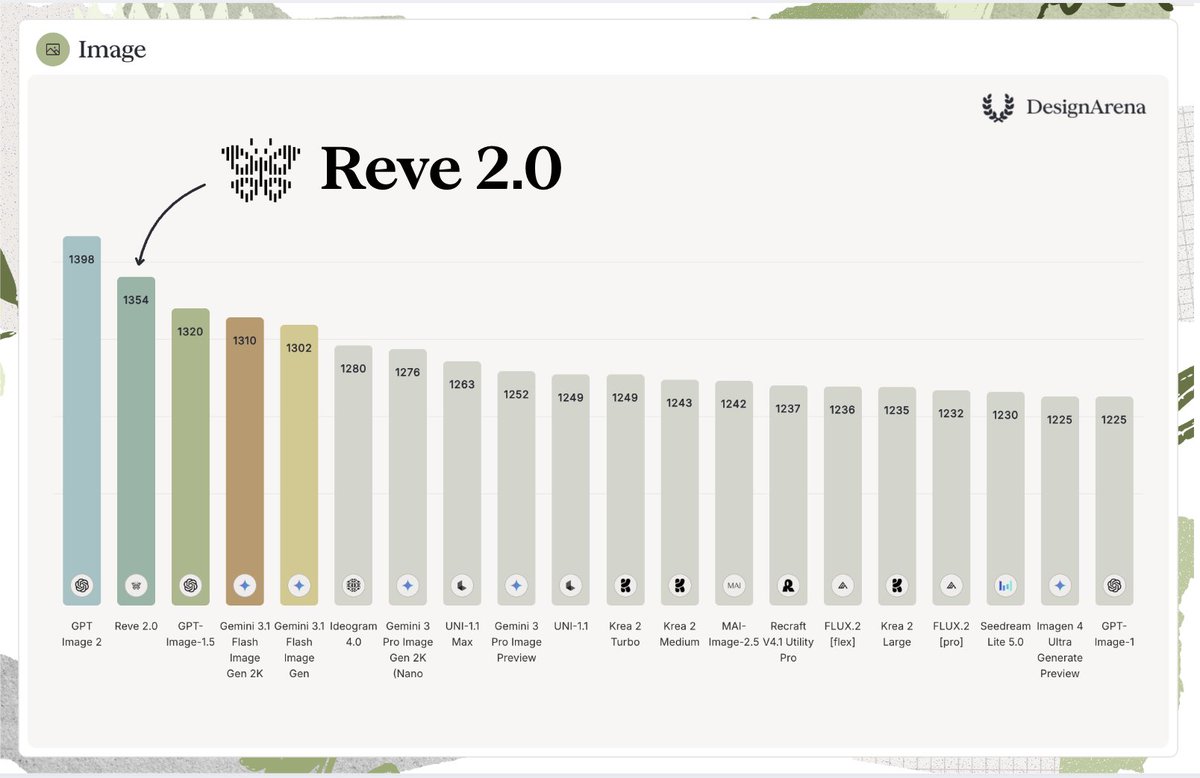
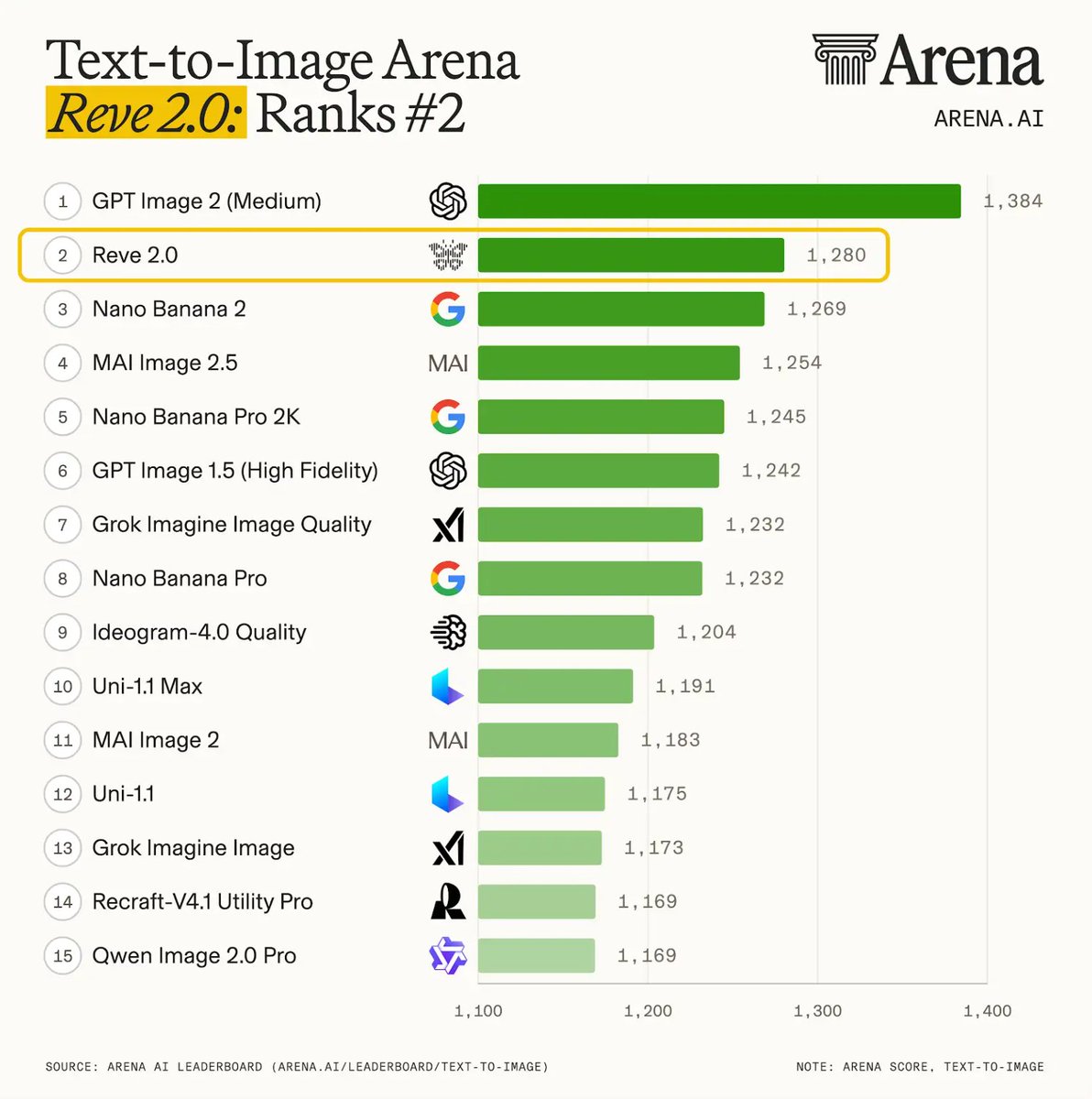
The @reve team has placed 2nd on @Designarena, solidifying them as the inventors of one of the best image models in the world
With under 50 people and less than 1/30 of the compute of larger rivals, this talent-dense team has built an image generation model that outcompetes ones from @OpenAI and @GoogleDeepMind
Congratulations to @Taesung, @cantrell, and the rest of the @reve team for this achievement!
Jun 10

BREAKING: Reve 2.0 by @reve is now 2nd overall on Image Arena with an Elo of 1354.
Reve 2.0 establishes a 34 point Elo gap above GPT-Image 1.5 by @OpenAI in 3rd place.
With this release, Reve is now the top independent foundation image model lab.
Congratulations to the @reve team on this accomplishment!
1
5
35
7,268
Jun 9
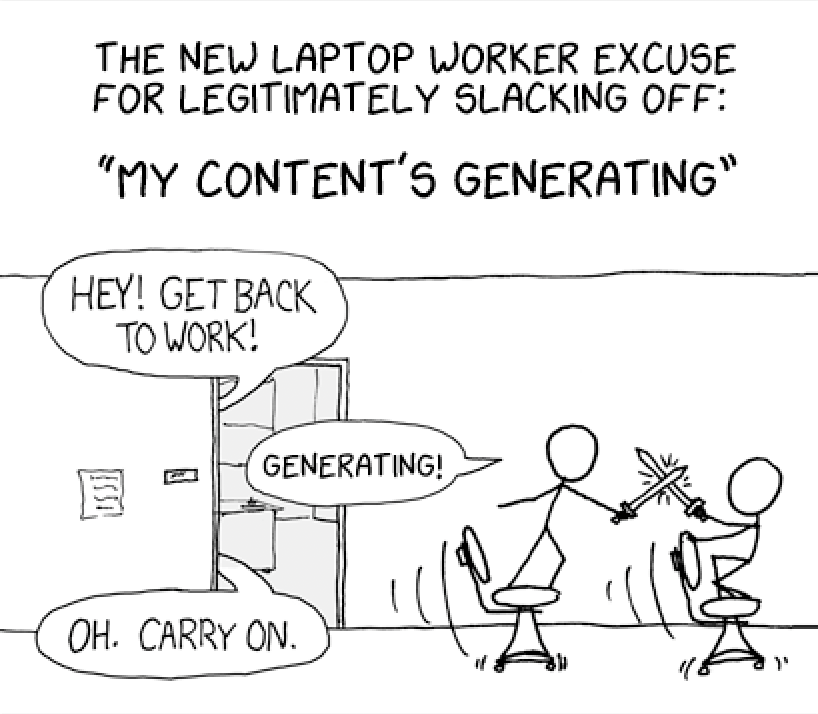
3 years ago, few got it.
now... it's reality for most.

1
1
20
4,686
Jun 9
RSS is back baby.
"Safari can automatically monitor a page on your behalf with "Notify Me", using natural language to tell Safari what you're looking for, and Safari will notify you when the page updates."
1
4
17
2,805
Jun 8
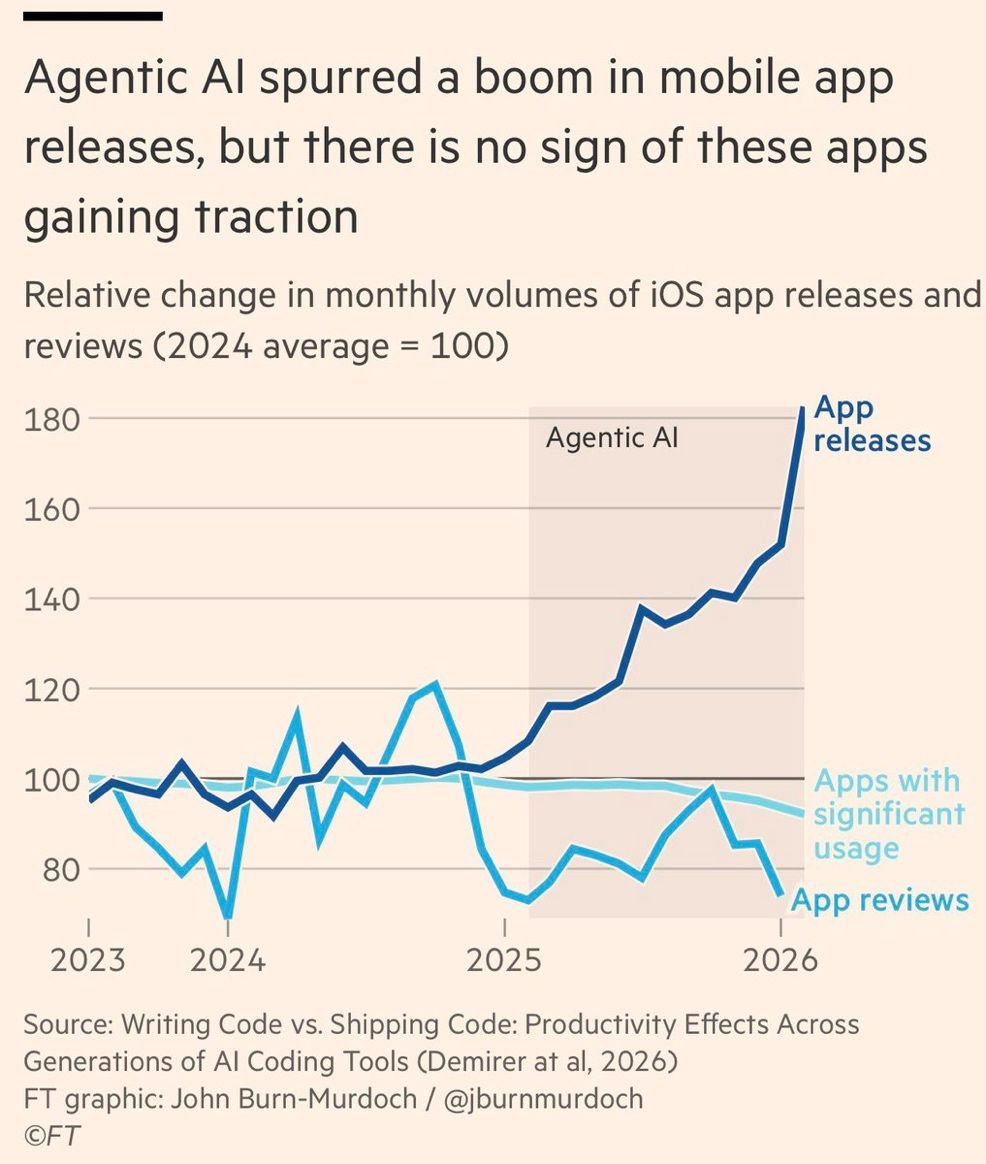
“Developers are building more apps than ever, with well over 1000 submissions to the App Store every hour." -Tim Cook, WWDC keynote today
2
1
8
2,799
Jun 4
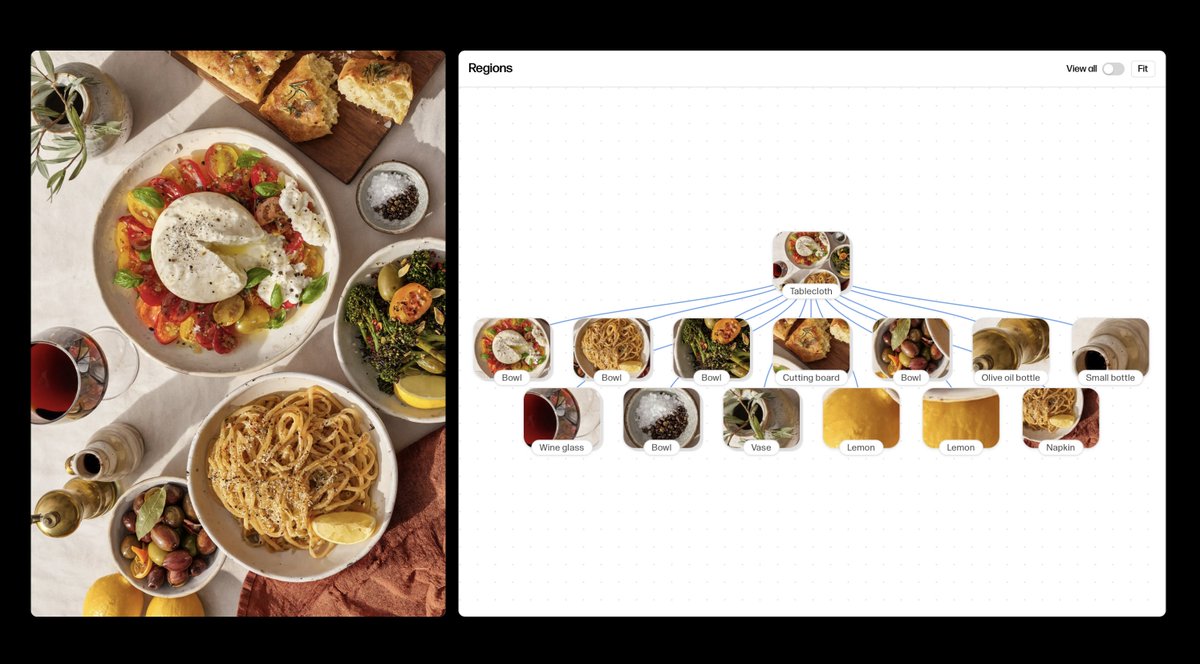
Reve treats images as code not text. Unlocking new ways to edit and control image generation.
1
31
5,970
Jun 4
details on our Large Layout Models (for agentic visual understanding and generation) in: blog.reve.com/posts/the-layo…
1
7
3,740
Jun 4
"We made a different bet. We replaced English prose and built a better intermediate representation: a layout."
3
2,338
Luke Wroblewski retweeted

Jun 3
Diffusion models are known to be very compute intensive, even more so than LLM training. Now that we reduce images into layouts, we turn it into a next token prediction problem. This gives us a big boost.
3
14
102
11,944

Luke Wroblewski retweeted

May 29
An unprecedented level of control and consistency is coming to image generation.
3
4
31
8,171
May 28
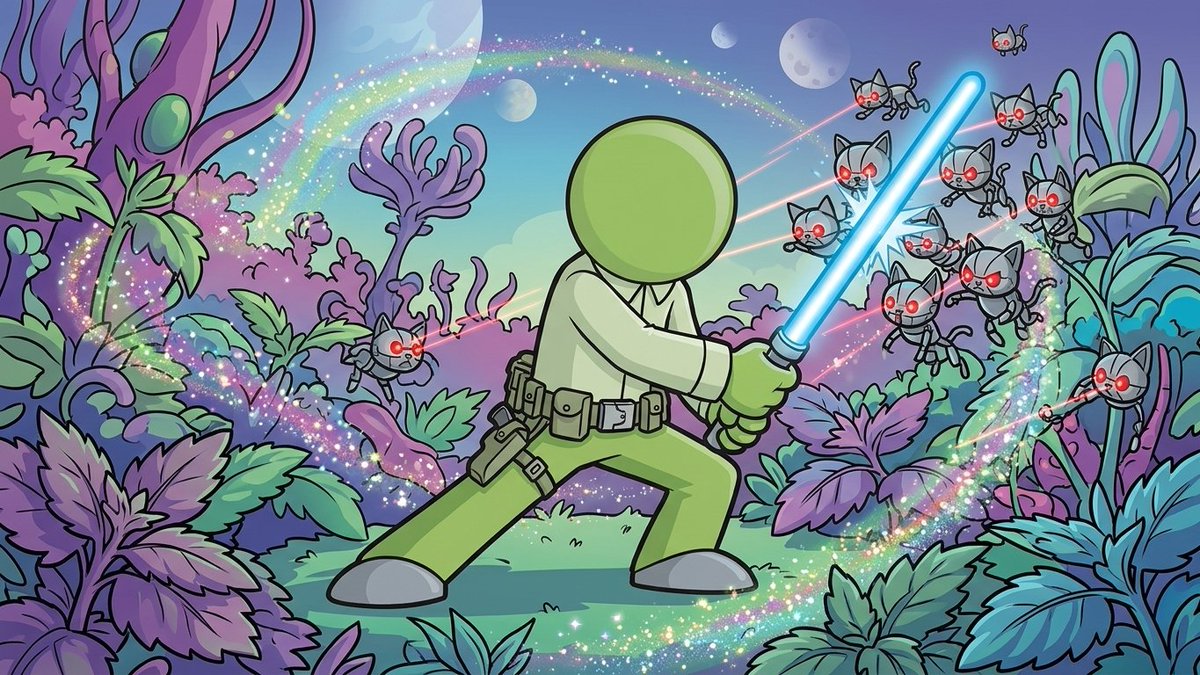
updated my LukeW character maker with new image model released this morning.
3
20
5,011
May 28
future of design deliverables is custom tools that create assets on demand, with brand guidelines encoded:
lukew.com/ff/entry.asp?2140
1
7
4,289
Luke Wroblewski retweeted
10 Mar 2023
“these new tools are gonna take people’s jobs away.” -hominid, 2.9 million years ago vice.com/en/article/88x4vv/o…
3
2
28
18,301