
Husband | Dad | Educator @GraftonHISchool | OC/QB Coach @GraftonBHFB | @WarhawkFootball Alum | LEAD by SERVING
Joined October 2011
- Tweets 11,272
- Following 913
- Followers 881
- Likes 29,557
267 Photos and videos





Luke Menzel retweeted

"We have seen problems during some of these games with the wireless headsets." — National TV Announcers.
That's why Coach Chad Fox chose The Headset App for Wahoo High School's biggest game of the year. It’s easy to set up, supports your entire staff, and delivers crystal-clear audio even in massive stadiums.
Don't let tech failures cost you the game. Switch to the reliable, modern solution.
👉 Get started via the link in our bio!
#HighSchoolSports #FootballLife #SidelineComm #CoachLife #TechInnovation #TheHeadsetApp
1
3
210
People. Relationships. Impact.
Jun 13

🎥 Top Coaching Clip of the Week
💭 In this interview, Los Angeles Rams Offensive Coordinator Nathan Scheelhaase shares two beliefs that have helped shape his coaching career:
🤝 You have to know people to lead people.
🔥 Keep your nose down and go to work.
Great coaching has always been about relationships. Before you can influence people, challenge people, or develop people, you have to invest in them. Leadership begins with connection.
At the same time, relationships alone aren't enough. The coaches who continue to grow in this profession are the ones who consistently show up, do the work, improve their craft, and stay focused on getting better every day.
💡 That raises an important question: What is your calling card?
The strongest careers are often built around a few defining traits that people consistently see and experience.
🚀 At Coach Portal, we believe in both of Coach Scheelhaase's principles. We're here to help coaches build meaningful relationships, expand their networks, develop professionally, and cultivate the mindset required to continue advancing in this profession.
📈 Relationships create opportunities. Work ethic turns those opportunities into results.
🔗 Join the network: coach-portal.com
#CoachPortal #TopCoachingClip
1
75
Luke Menzel retweeted

You may never see the harvest.
Plant the seed anyway.
Mark Tighe on living out your faith as a coach.
- Be authentic in what you believe
- Invest in people where God has placed you
- Trust that small conversations matter
Not every impact is immediate.
Sometimes your role is simply to plant a seed and trust God with the growth.
1
1
15
3,038
Luke Menzel retweeted

Jun 9
One of the worst traditions in sports:
“Freshmen pick up the pads.”
Why?
Leadership isn’t about avoiding work because you’ve been around longer.
The best leaders I’ve seen:
• Pick up trash
• Carry equipment
• Put things away
• Serve teammates
• Stay late
If you’re the quarterback, carry the ball bag. If you’re a captain, grab the tackling dummies.
If you’re a senior, be the last one to leave.
Leadership isn’t eating first.
It’s eating last.
9
35
115
15,015
Luke Menzel retweeted

Jun 9
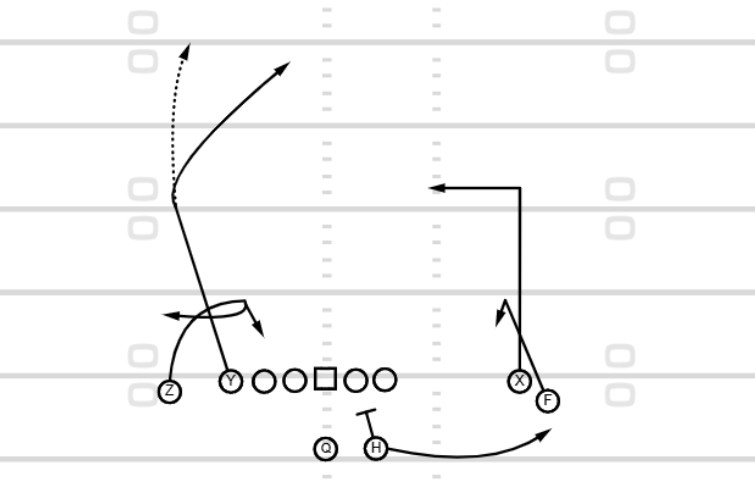
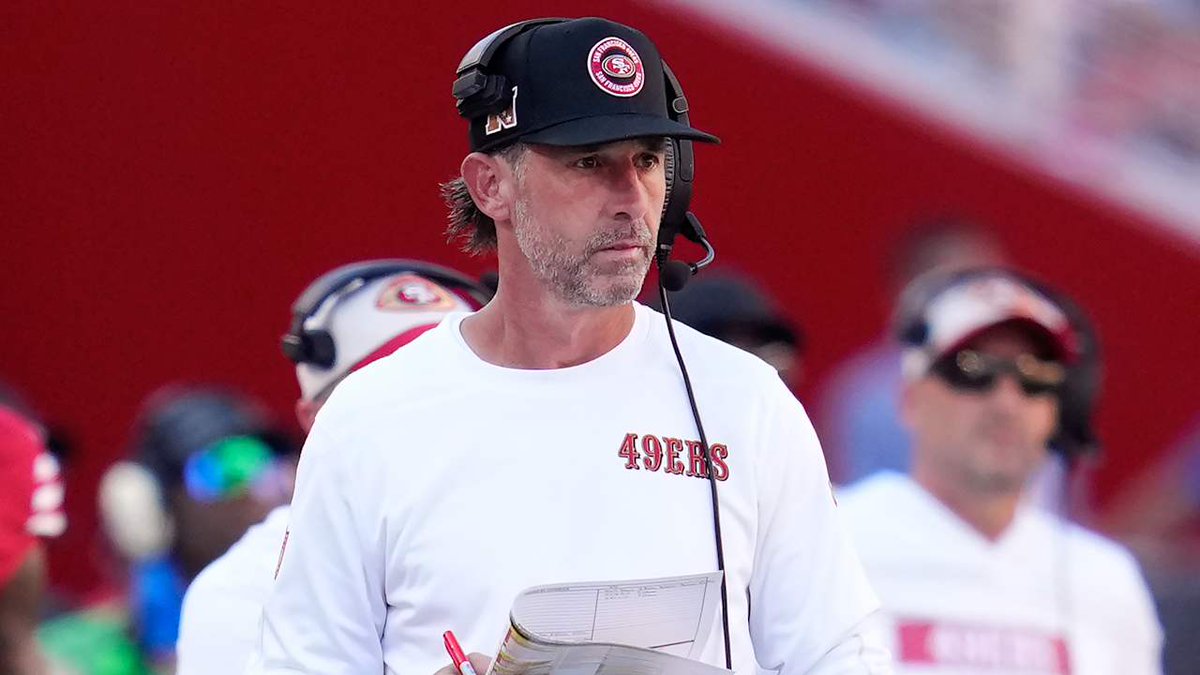
When Kyle Shanahan goes all-in on a concept, we get extreme creativity each week with new variations

4
27
4,405
Luke Menzel retweeted

Jun 7
Interesting conversation. I would have liked to hear all the competing opinions about this topic. My 2 cents. both arguments have merit.
My experience may be unique to most. My formula for success has been rather simple:
Find the 1 THING to prioritize above all others. The 1 thing to go all in on and NEVER sacrifice.
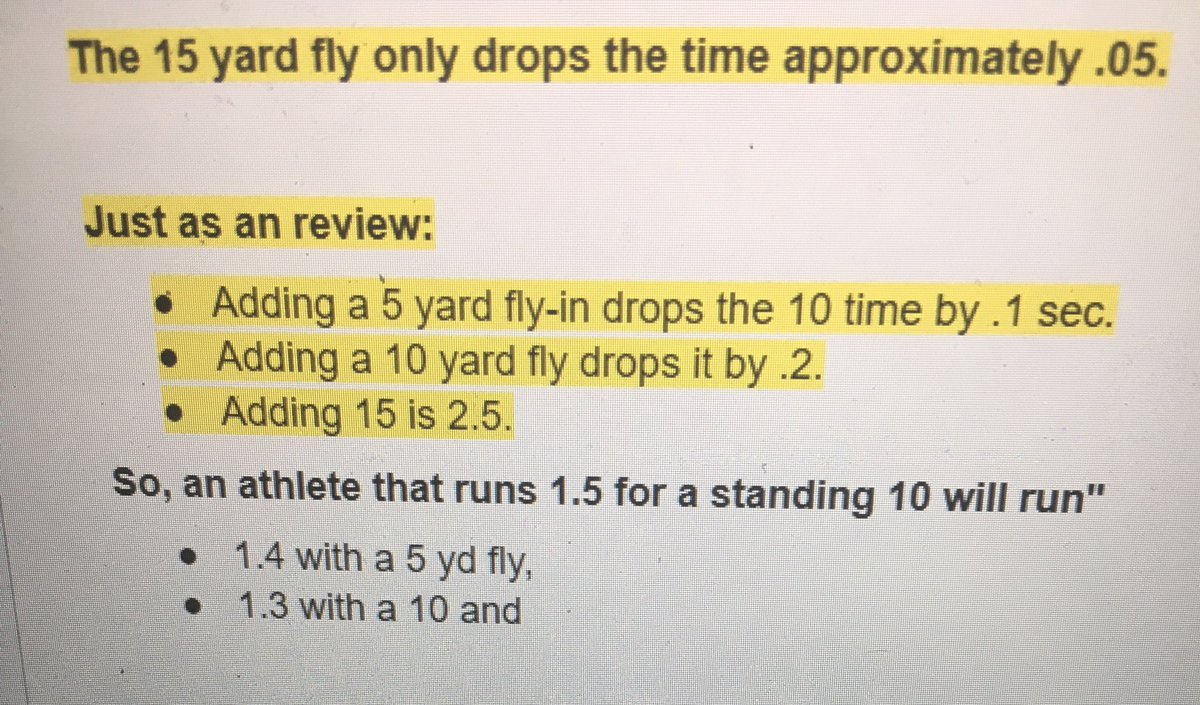
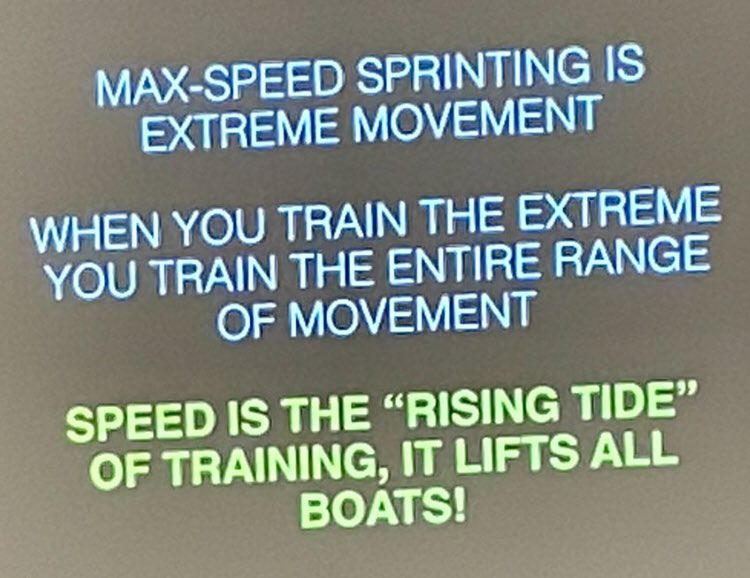
For me that was SPEED. In my relentless pursuit and obsession with running fast, EVERYTHING got better as a byproduct. For me it was the “tide that lifted all boats” (and did so very well)
I spent very little time working drills and spent 85% of my time learning this in the weight room - yet (my film proves) I became an elite mover on the field in all areas.. We prioritized training the Central Nervous System AND Force Absorption and Position above all.
Speed, whether physical or processing, is the great separator in all sports. ALL governed by the central nervous system… The goal of training should be to strengthen the SIGNAL between the brain/muscles to be more powerful and efficient.
However, it can also be true, that the best rarely operate at max speed in a game, but their efficiency of movement, body control and Instinct/IQ allow them to play the game faster than everyone else - Also a byproduct of a highly tuned CNS.
Most weight programs I see do not
understand how to do this and are just a collection of exercises.
For anyone other than professionals who have the time and resources, especially young athletes, there simply isn’t enough time to master it all.
So going all in on SPEED wins.
Jun 7

Let me sum up the “debate” I had at the “Sport Movement Skill Conference”.
The attack:
1. Straight line speed has no direct correlation to any sport other than track.
2. Speed is NOT “the tide that lifts all boats”.
3. The fastest guys from the NFL Combine are not good players. Jerry Rice was slow (4.71).
4. It’s dumb to work on “just” speed.
Their beliefs:
1. Movement skills must be developed “in context”.
2. Drawing heavily from “ecological dynamics and skill-acquisition theory”, athletes should learn to solve movement problems under changing conditions. Rather than chasing one “perfect” sprint model, athletes should be capable of producing effective movement solutions in many environments.
3. Athletes need variability (“noise”) in training because sport is unpredictable. Athletes become faster and more resilient when exposed to changing constraints and decision-making demands.
My response:
1. Speed is the tide that lifts all boats.
2. The 3 requirements to play in the NFL at all positions: size, speed, skills. There are minimum requirements for size and speed. Size can’t be coached. Speed can be.
3. Faster teams are healthier teams. Athletes who get faster are more resilient. Sprint-based football teams are almost bulletproof.
4. In a Feed the Cats program, we don’t “just train speed”. We spend less than 30 seconds a week at max velocity (most important 30 seconds of our week). ⚡️
5. “80% of NCAA 🏈 players never reach their genetic ceiling of speed.” ~Boo Schexnayder (Too much emphasis on weight room, conditioning, and sport-specific movement… in the absence of consistently training max velocity in low doses.)
5. Let the sport train the sport. Away from the sport, improve KPIs. Don’t “just” reverse-engineer the sport.
6. The debate is silly. Athletes need to PRIORITIZE speed. Prioritize does not mean “at the exclusion of everything else”. Speed is the priority, not the majority. NO ONE SAYS SPEED IS ALL YOU NEED TO PLAY IN THE NFL.
Every NFL player who gets SLOWER seems older and is getting closer to the end of their career.
Every NFL player who gets FASTER seems younger and is extending his career. 💰
Mic drop ⤵️
Athletes need to sprint, lift, jump, bounce, and throw.
Athletes ALSO need to be taught sport-specific movements and skills.
It’s not one or the other.
6
30
148
72,602

Jun 4
Sounds familiar.
Jun 4

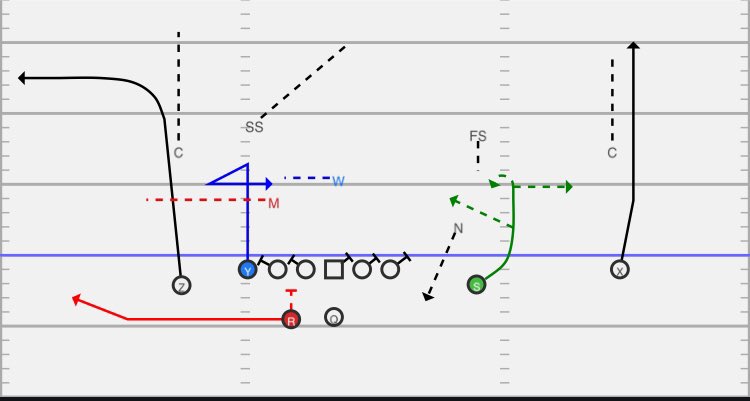
Core runs do not stay efficient by accident.
If you want to live in outside zone, split zone, or any foundational run concept, the defense is eventually going to overplay the action. That is where compliments matter. Nakeds, boots, keepers, and movement throws punish defenders for chasing the run.
But the next layer is the counter punch to the compliment.
When the defense starts reacting to the naked, the quarterback cannot just run into the edge player or throw the obvious flat concept. He has to pull up while selling naked, let the run action pull down the boundary defenders, let the field defenders chase the tendencies, and replace the void with the deep cross.
The boundary No. 1 keeping his route skinny as he occupies the corner in the deep third. That spacing creates the window for the deep cross runner working back across the field.
That is offensive structure.
Core run Compliment Counter punch = Efficiency.
The best offenses do not just call plays. They build answers in sequence.
1
161
Luke Menzel retweeted

Jun 4
Core runs do not stay efficient by accident.
If you want to live in outside zone, split zone, or any foundational run concept, the defense is eventually going to overplay the action. That is where compliments matter. Nakeds, boots, keepers, and movement throws punish defenders for chasing the run.
But the next layer is the counter punch to the compliment.
When the defense starts reacting to the naked, the quarterback cannot just run into the edge player or throw the obvious flat concept. He has to pull up while selling naked, let the run action pull down the boundary defenders, let the field defenders chase the tendencies, and replace the void with the deep cross.
The boundary No. 1 keeping his route skinny as he occupies the corner in the deep third. That spacing creates the window for the deep cross runner working back across the field.
That is offensive structure.
Core run Compliment Counter punch = Efficiency.
The best offenses do not just call plays. They build answers in sequence.
1
7
95
10,332
Luke Menzel retweeted
Jun 1
Running 110’s are hard no doubt. “Just surviving” is a great way to put it. But do we want to just survive? Or do we want to PERFORM?
Being HARD isn’t a standard. Anybody can get tired during exercise - the question is.. CAN YOU PERFORM when you need to.
90% of “conditioning” can be done in the gym.
There’s a different way.
Jun 1

Adam I can tell you the way you would prescribe conditioning and we stole from you…Our kids would trade back to the 110’s if they could 😂
Kids are just surviving 110’s. Bad movement skills, heavy feet etc. performance out the door. Yes “hard” but lots of stuff is hard.
The things you are prescribing? That’s hard. The old school “we have to be tough so we run 110’s” mentality clearly have no idea about what we call “Archuletas”that I got from you a few months ago. 😎😂🤷♂️
5
6
48
12,906
Luke Menzel retweeted
May 30
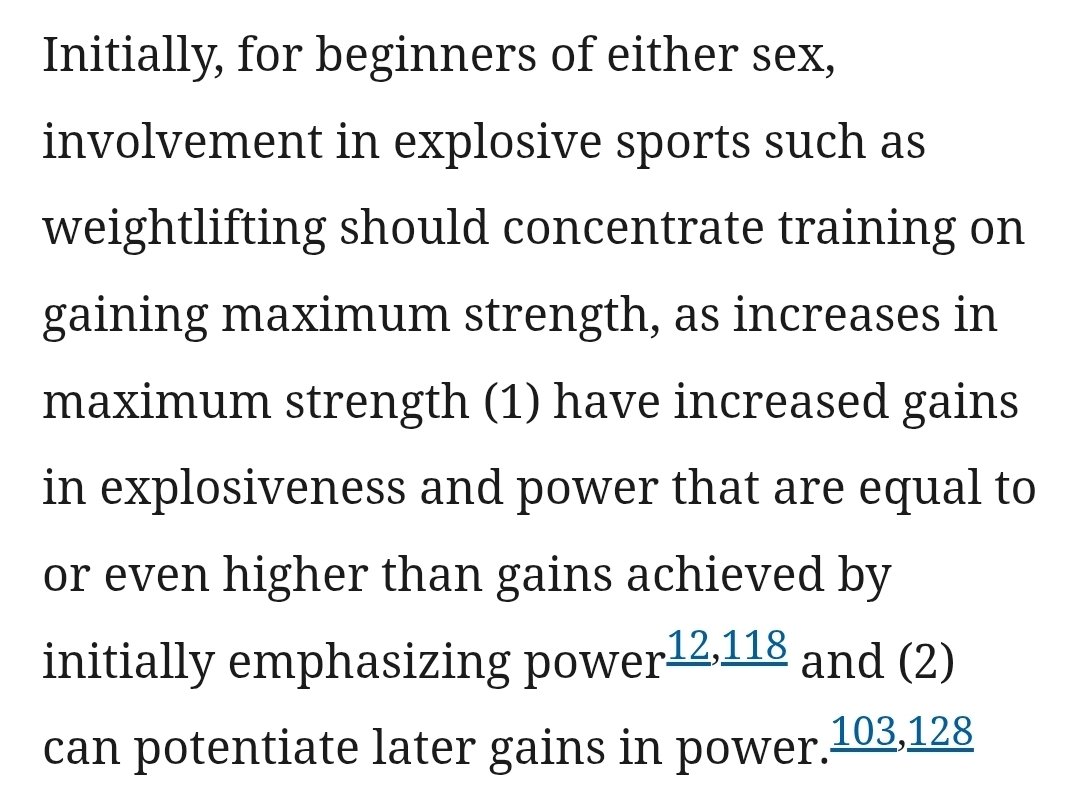
Kids need to be taught how to HOLD POSITION, MOVE properly and ABSORB force. Lifting weights with sole intent of "getting stronger" without training the proper movement patterns, holding position and force absorption is a big reason why we fail to transfer work in the gym to the field and why we see so many young athletes battling chronic injury.
Train to become an ELITE MOVER!!

4
11
111
13,586
Luke Menzel retweeted
May 31
It's my hope to one day convince coaches and athletes that they DO NOT need to condition like this. Over the last 30 years, despite being open minded, I remain convinced more than ever that this is detrimental to elite performance and causes much more harm than any alleged benefit.
THERE IS a better way.

Every high school football team in America will soon begin their summer workouts.
I’m here to discourage as many coaches as I can from having their players run 20 110s as I possibly can.
Player health > “We’ve always done this”
18
40
195
99,274
Luke Menzel retweeted

May 25
Everyone wants to call offensive plays but not everyone knows that it’s the most critiqued & loneliest coaching position in sports. Definitely one of the most exciting positions you can have when things are going well but also one of the most stressful when things aren’t.
5
35
191
13,087
Luke Menzel retweeted

May 24
Sean McVay on the danger of letting ego distort your leadership.
“When I’ve been at my worst, the sh*t’s been a lot more about me than I realize.”
The chase for winning, validation, or relevance can slowly pull you away from the leader you originally wanted to become.
Love this reflection question that Sean offers here: Who are you becoming as a result of what you’re chasing?
📹: Bussin' with the Boys
1
32
332
58,902
Luke Menzel retweeted

May 23
The more and more I study how defenses are defending certain formations & formational adjustments, the more I agree with this.
If you use a bunch of formations, you have to adequately practice all the variable defensive alignments to allow your players confidence in what they are seeing.
I think this is especially true with formations which can muddy up the box. If the box keeps changing, the OL gets less consistent looks.
May 23

A common phrase is formations are cheap, plays are expensive.
I think formations can cloudy up plays. The more formations you use for the same play, the more defenses your players have to figure out.
By limiting the formations for a play you clear up the pictures on that play
4
4
55
33,238
Luke Menzel retweeted

May 21
Interesting: #Titans HC Robert Saleh said one of the first moves the team made in its nutrition overhaul was removing all seed oils from the building.
He says players have appreciated it.
May 21

#Titans HC Robert Saleh was asked about opening the season against his former #Jets team:
“I’m appreciative of the Jets and everything I had there. ... It’s to be expected with the NFL, but I didn’t think anything of it.”
502
559
14,760
7,127,501
Luke Menzel retweeted

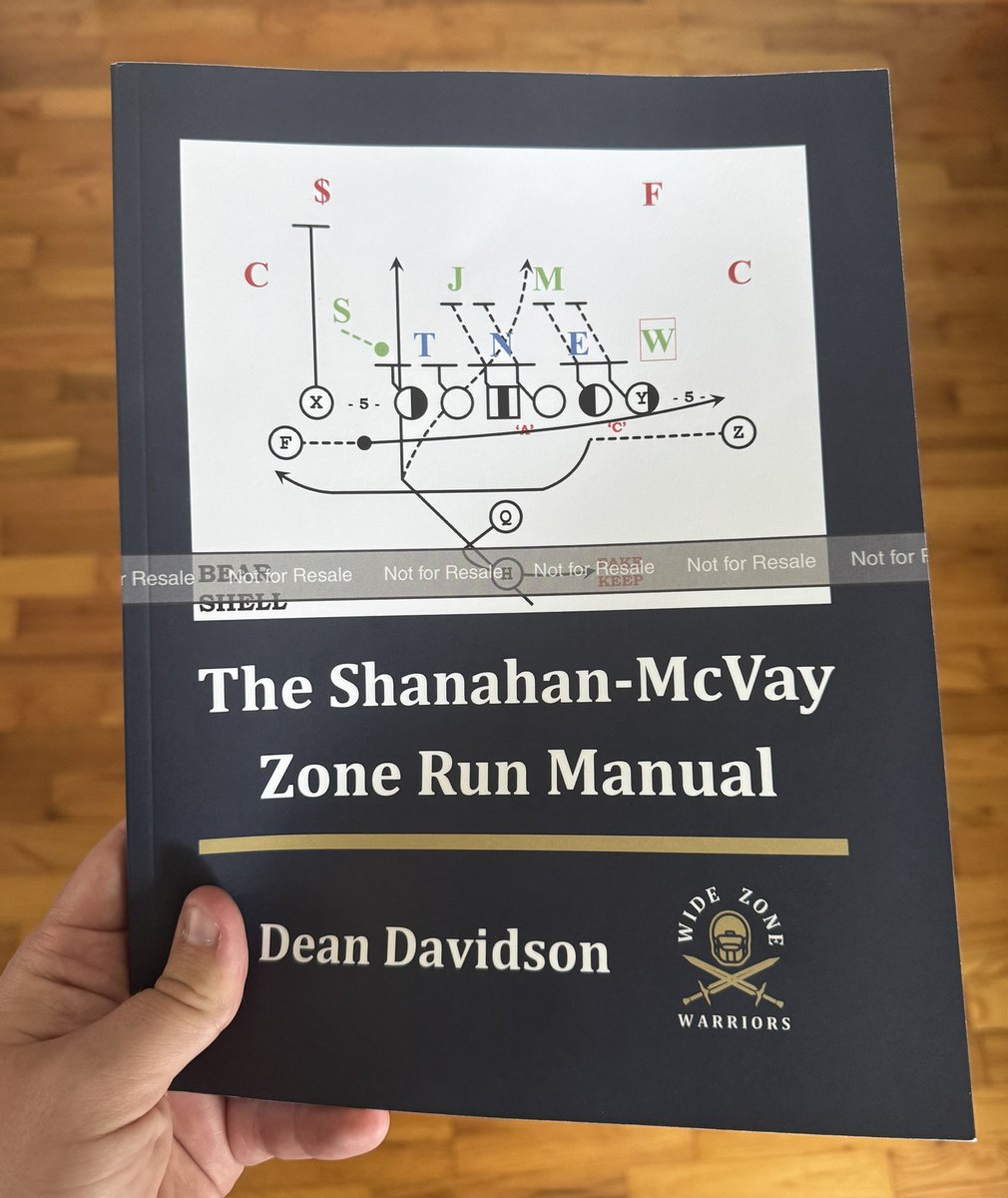
I started studying this offense nearly 10 years ago. Nobody online was discussing the 2-3 leaked playbooks, so I had to teach myself.
This book is what I wish I had back then!
🏈37 concepts, clearly broken down
🏈Over 200 diagrams
Available this Friday!
#WideZoneWarriors
3
6
138
10,978
Luke Menzel retweeted

May 18
Double Sliders on the Backside of Wide Zone
5
72
9,939
Luke Menzel retweeted

May 14
This moved me!
Fear is often mistaken for danger.
But sometimes fear is simply a signal that the opportunity is large enough to change your life.
When Coach P. J. Fleck (@Coach_Fleck) was deciding whether to leave comfort for a bigger challenge, his wife asked one question:
“Does it scare you?”
“Hell yeah.”
Her response:
“We’re going.” 🦫
Coach Fleck says there is a difference between making a living and building a life.
A living is what you earn. 💵
A life is what you create. 🏡
The decisions that scare you most often ask you to trade short-term comfort for long-term meaning.
If it scares you, it means it matters.
Growth rarely feels comfortable.
Fear is not always a warning.
Sometimes it is an invitation to build a life bigger than the one you’ve settled for.
@GopherFootball has a great one. ⬇️
7
64
597
152,647

Hard days reveal what easy days hide.
Nobody's attitude gets tested on a good day.
Nobody's faith gets proven when everything is working. Nobody's character shows up when the meeting goes well and the boss is happy and the project lands perfectly.
That's just a good day.
The hard day is where everything real lives.
How you treat people when you're tired.
How you respond when you're wronged.
How you show up when showing up costs you something.
That's the version of you that matters.
98
730
3,732
97,912
Luke Menzel retweeted

May 13
“The difference between a life that sounds like music and a life that sounds like noise is whether you stop and listen.
Whether you're honest enough to listen for which string has drifted out of tune. And humble enough to make the adjustment. Instead of just turning up the volume and hoping nobody notices.
Because you will notice. The part of you that knows what the chords should sound like will always notice.”
May 12

Eric Church delivered one heck of a commencement speech before closing it out with Carolina… #EricChurch #UNC #countrymusic
4
57
471
79,475