The mission to explore Mars' climate history through its upper atmosphere. Orbiting the red planet since Sept. 21, 2014. Account managed & verified by @LASPatCU
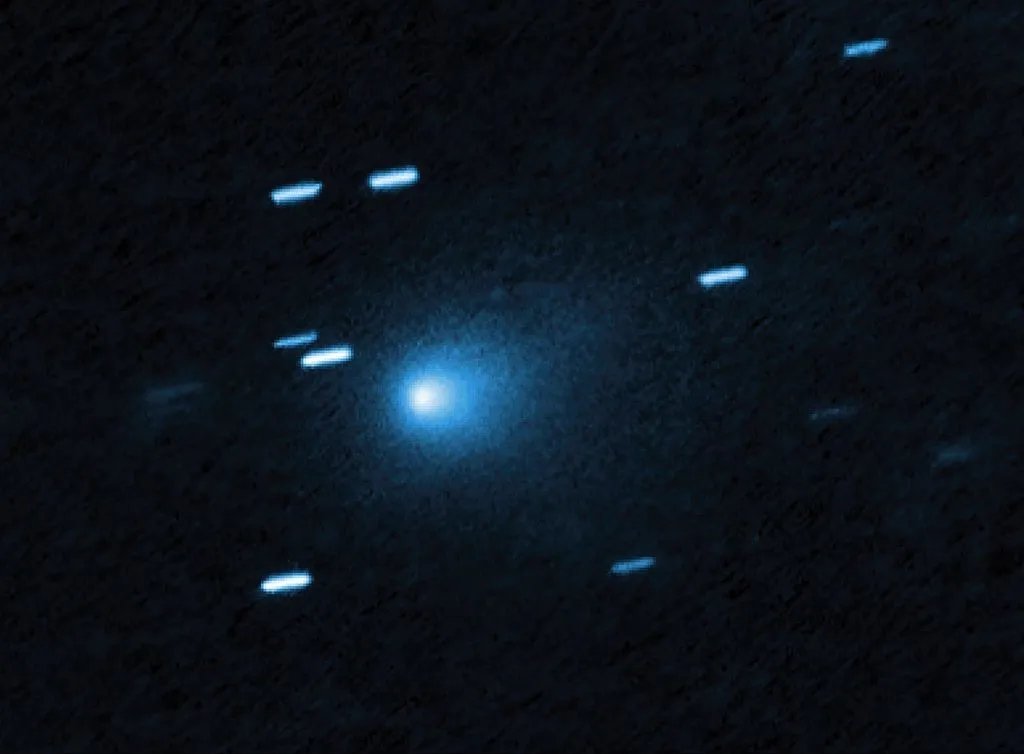
We're hosting a live event on Wednesday, Nov. 19 to share the latest images of the interstellar comet 3I/ATLAS, collected by several NASA missions.
Tune in for the details—and send in your questions for the livestream with #AskNASA: go.nasa.gov/44fnibY
ALT An image of the interstellar comet 3I/ATLAS, as captured by NASA's Hubble Space Telescope on July 21, 2025. The bluish-white comet shines bright among a handful of bluish streaks. Credit: NASA, ESA, David Jewitt (UCLA); Image Processing: Joseph DePasquale (STScI)
Do you remember the 21st night of September? MAVEN sure does!
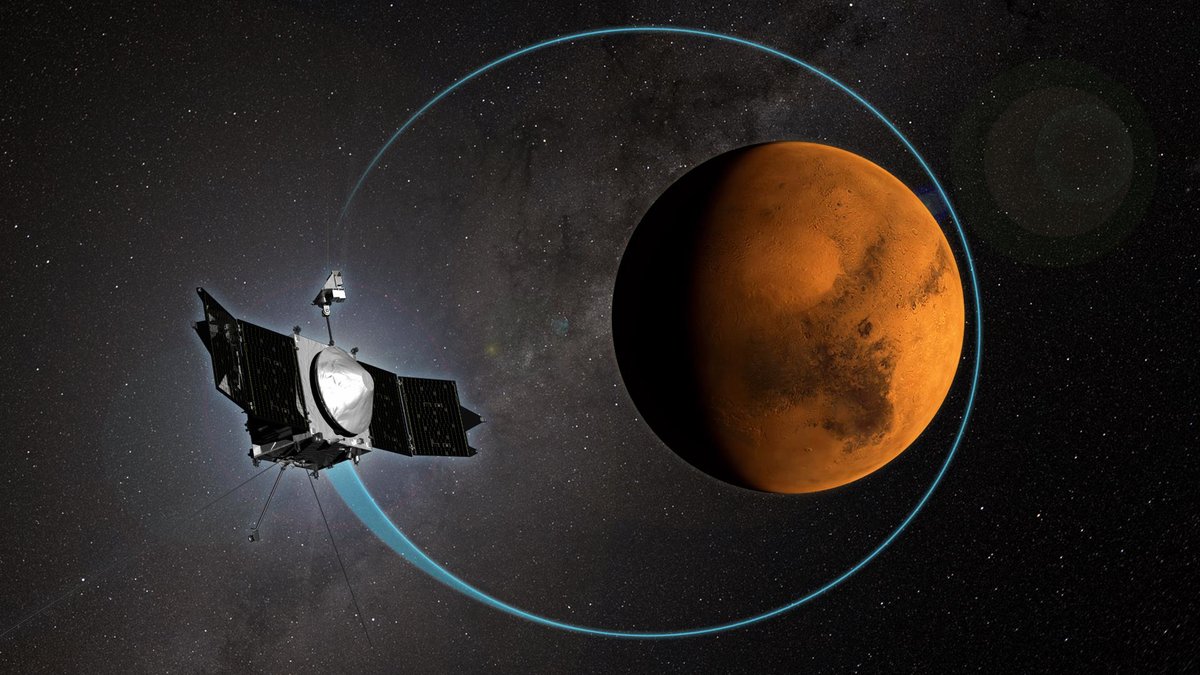
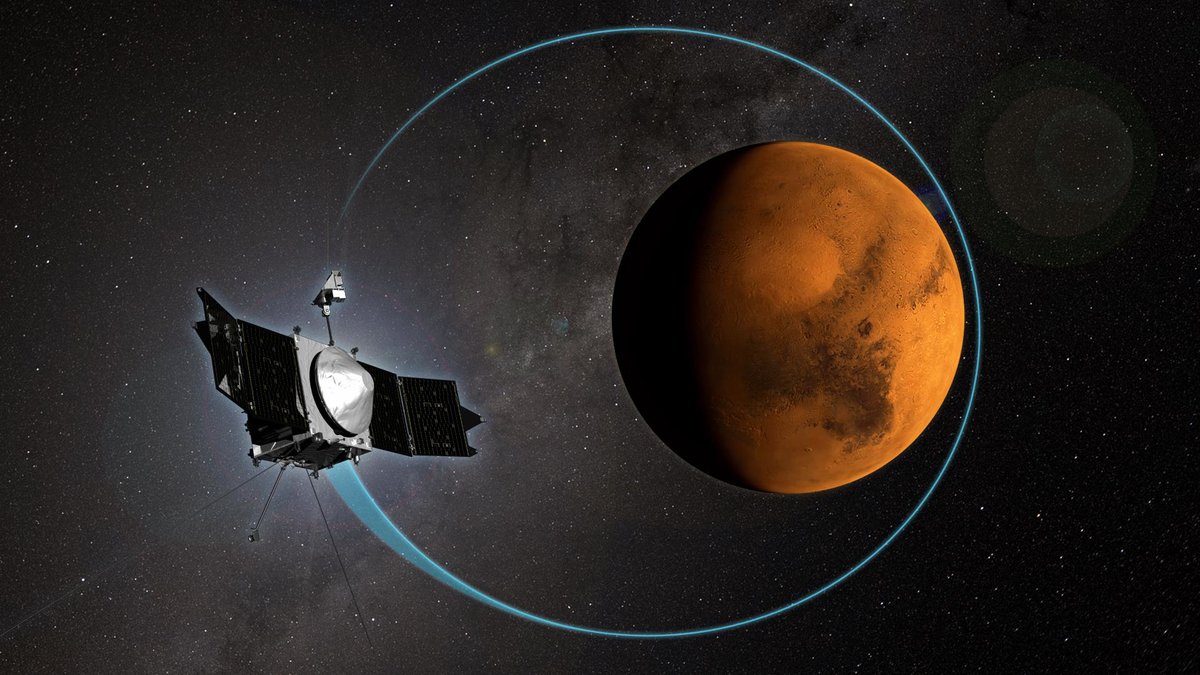
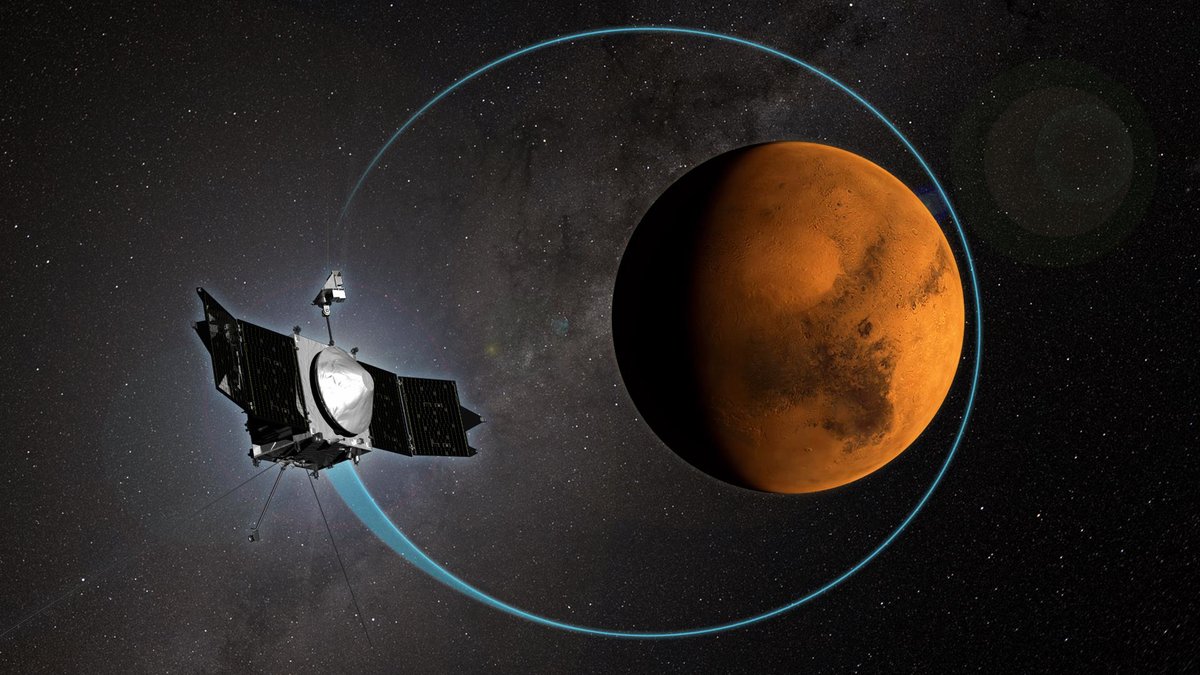
11 years ago, the MAVEN spacecraft successfully entered Mars' orbit and began its journey of understanding the evolution of the Red Planet.
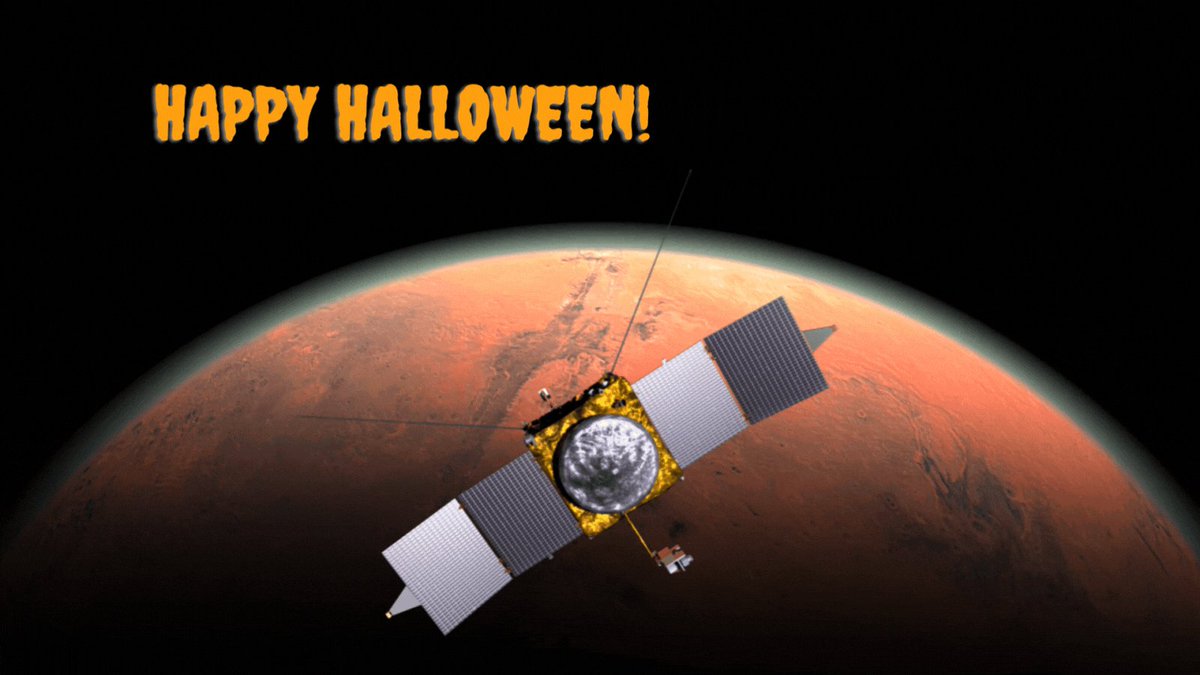
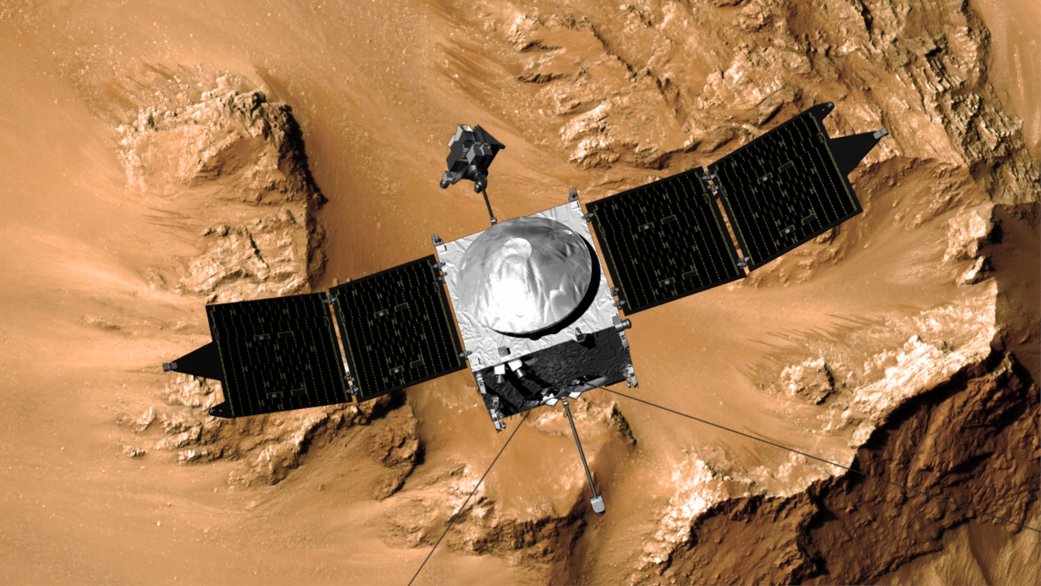
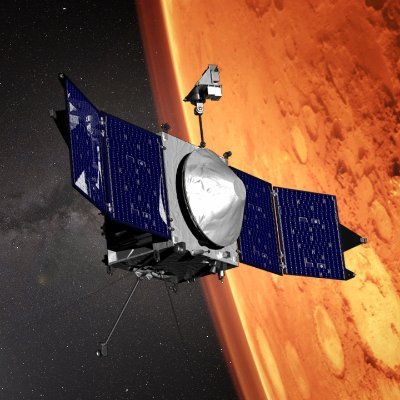
ALT An artist's rendition of the MAVEN spacecraft orbiting the planet Mars. A blue line is streaming from the spacecraft and circles around the planet, representing its orbit.
“Our goal was to inspire these kids to be future Martian scientists and to talk with their parents on why science is important."
Earlier this summer, members of the MAVEN team spent time talking with the public about the mission.
Learn more: lasp.colorado.edu/maven/2025…
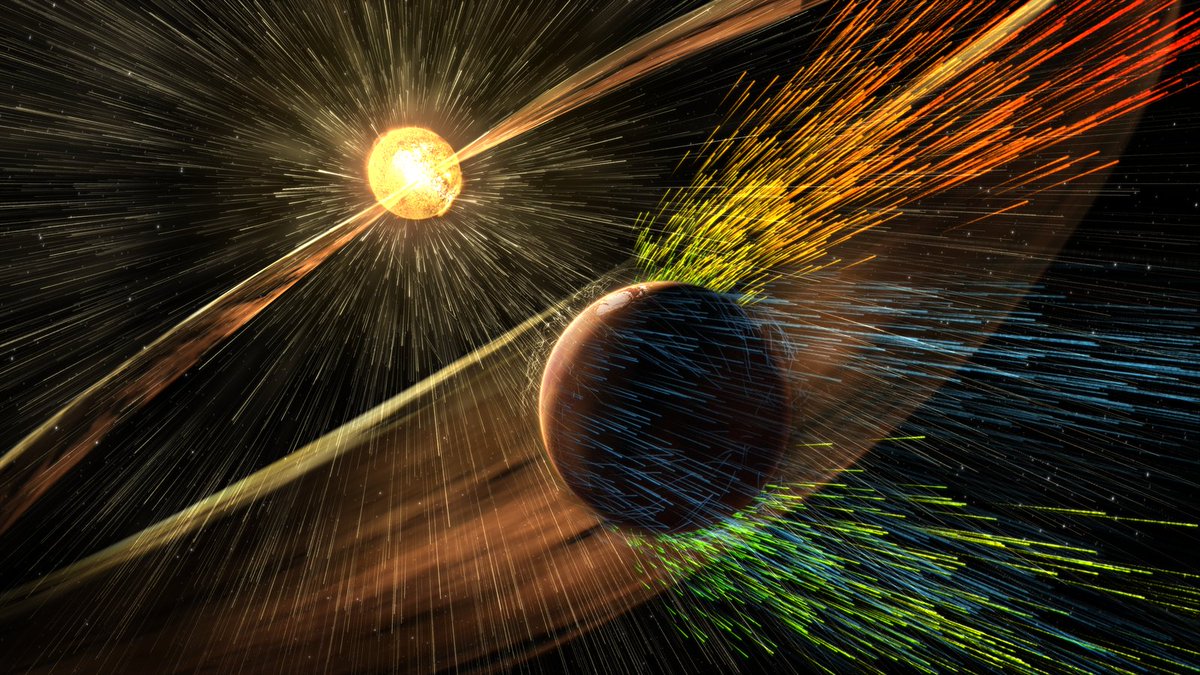
Where did all the water on Mars go? For the first time, NASA's MAVEN orbiter has directly observed a process called atmospheric sputtering, which could be described as “doing a cannonball in a pool.” MAVEN's lead scientist explains: go.nasa.gov/4mInt7y
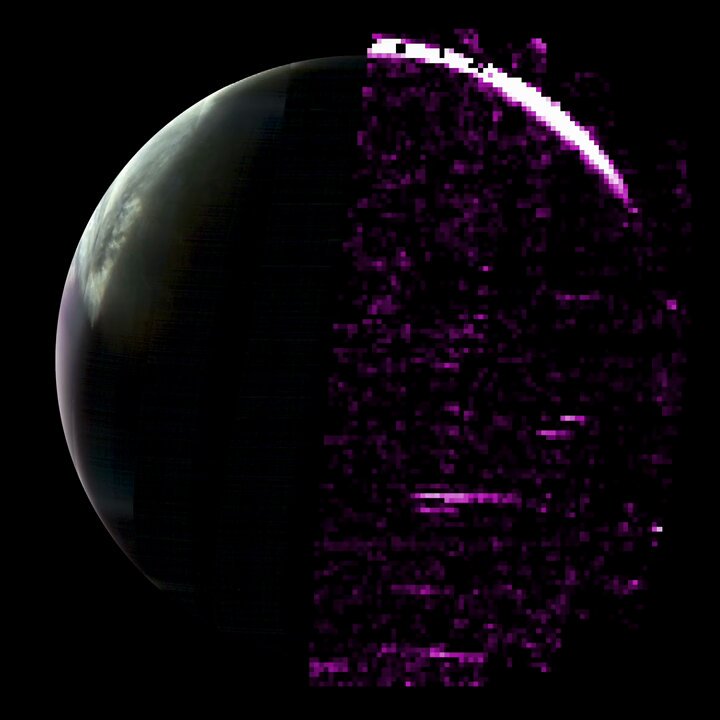
In March 2024, solar storms led to stunning auroras across the solar system, including at Mars, where the @NASAPersevere rover made history by detecting them for the first time from the surface of another planet. go.nasa.gov/3GSfXq4
ALT Illustration of charged particles blasting from the Sun and striking the planet Mars, with some of the particles impacting the planet and others passing by in shower of colorful streaks like sparks.
Talk about a picture-perfect moment! 📸
@NASAPersevere has captured the first visible-light aurora from the surface of Mars! Coordinating with MAVEN, the science team was able to observe green aurora caused by a solar storm in March 2024.
Learn more: science.nasa.gov/solar-syste…
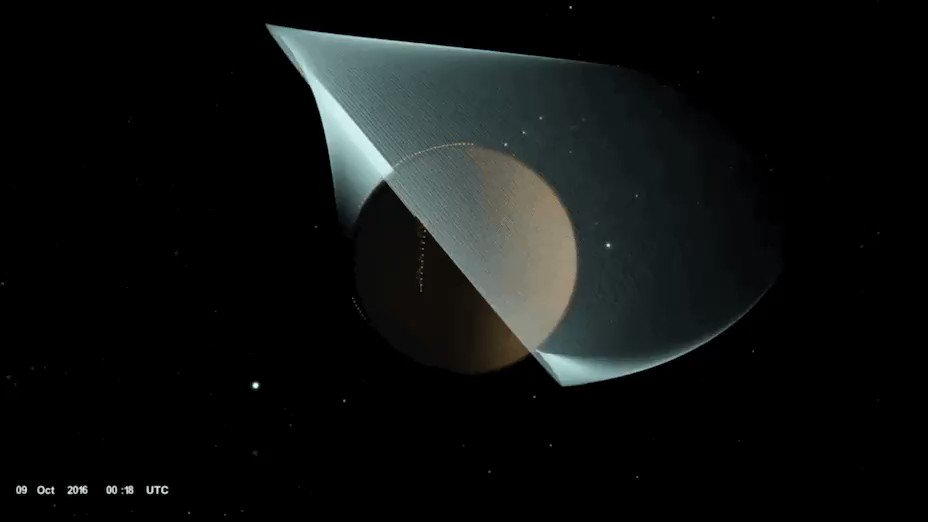
We are no longer the only MAVEN in space! Asteroid 1997 CO23 = 2003 FX119 has been designated "MAVEN" in recognition for the mission's incredible observations of Siding Spring Comet's close encounter with Mars in 2014.
Learn more about the MAVEN asteroid: minorplanetcenter.net/db_sea…
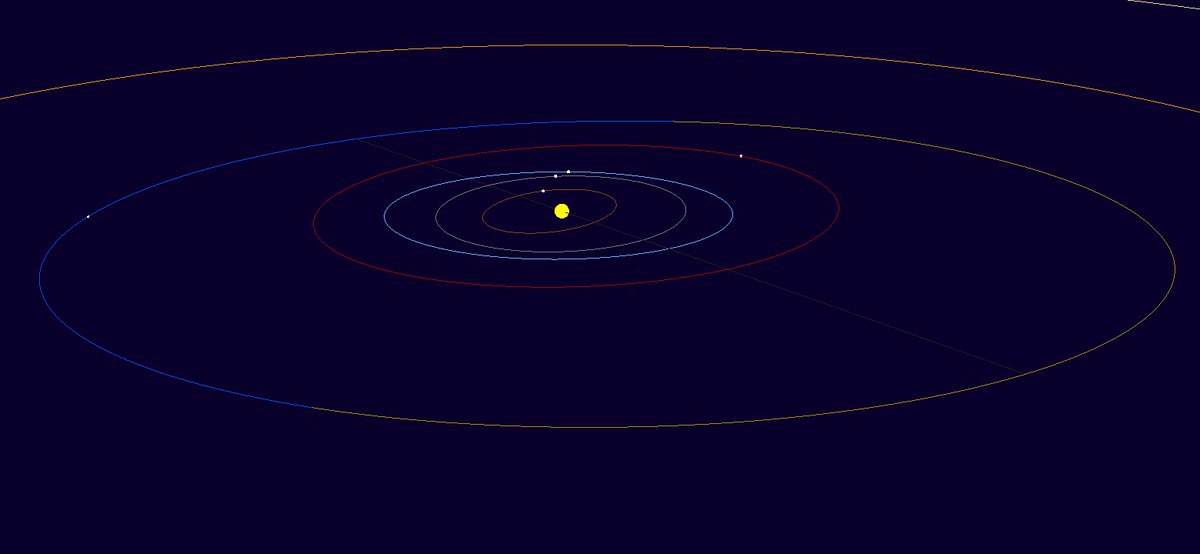
ALT An orbit sketch of asteroid MAVEN. The sketch illustrates the object’s approximate orbit in the main asteroid belt between Mars and Jupiter.
The approximate location of the asteroid can be seen in this image, represented by the blue and gold orbit line. It is a part of the main asteroid belt, located outside of Mars' orbit (represented by the red orbit line).
This weekend the @EuropaClipper mission performed a successful gravity assist at Mars! The MAVEN team wishes the best of travels as Europa Clipper continues it’s journey!
Learn more about Clipper’s voyage ⬇️
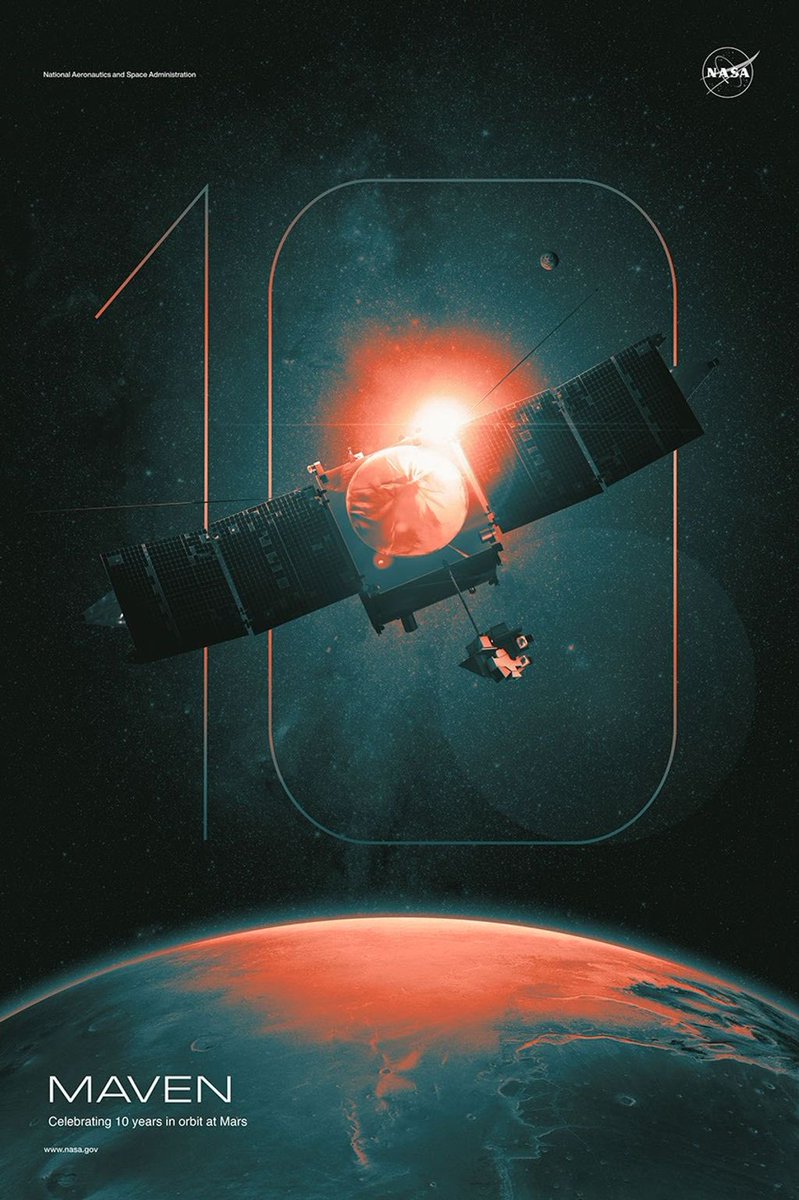
In honor of MAVEN’s 10 years at Mars, NASA has released a special anniversary poster celebrating the amazing accomplishments of the mission and its journey to study Mars’ upper atmosphere.
➡️Find it here: science.nasa.gov/resource/ma…
Happy New Year... on Mars! 🎉
Because the Red Planet takes longer to orbit the Sun than Earth, its year is longer. 687 days, in fact. The last one was celebrated on Dec. 26, 2022.
Confused? Don't be. This "Mars in a Minute" video has the answers.
Go @EuropaClipper! Congratulations on the successful launch, and MAVEN team can’t wait to cheer you on when you pass by Mars on your journey to Europa!
It's not a straight shot to Jupiter – we'll be taking a looping path through the solar system, passing by Mars and Earth in order pick up speed boosts on our way to the outer solar system. europa.nasa.gov/mission/time…
ALT animated orbit diagram showing the spacecraft's path through the solar system
Congrats, MAVEN, on a whole decade of exploring!
For the last 10 years, @NASAMars' MAVEN spacecraft has orbited the Red Planet, gathering data about its upper atmosphere. Here are the top 10 findings: go.nasa.gov/3XtVxbu
In celebration of @NASAMars MAVEN’s decade at Mars, we recap some of the most significant scientific results of this unique and long-lasting mission and its ongoing exploration of the Red Planet’s upper atmosphere.
science.nasa.gov/missions/ma…