USAF KC-10 (Retired ‘24) Lt Col Instructor/Evaluator & Airline 737 Captain. Views my own; think critically, verify sources & keep your seatbelt fastened. No DMs
Joined April 2015
- Tweets 59,683
- Following 6,344
- Followers 46,913
- Likes 1,281,133
6,582 Photos and videos










Pinned Tweet

22 Aug 2023
Got a kid interested in aviation? Not sure how to help foster it?
In the US, the Experimental Aviation Association (EAA) will give kids from 8-17 their first flight in a small plane!
I’ve flown a few; a great opportunity for kids & pilots, too!
eaa.org/eaa/youth/free-ye-fl…

157
318
1,450
531,327
The Euro Nato Joint Jet Pilot Training (ENJJPT) program is based at Sheppard AFB in Wichita Falls, TX.
It trains pilots from NATO countries from zero hours up until assignment to a fighter. I was lucky to be an instructor in the T-6.
It’s full of various European students, Instructors & Commanders. While a Euro can’t be the Wing Commander, every leadership position below that is open to them. Ops Group Commanders were German & Italian while I was there, with Flight Commanders from all the countries. It was a lot of fun; each country put on a party for their national holiday.
Anyway, the Euros LOVED to buy big trucks & go out to these kind of places. The instructors rented big houses & would road trip anytime they got the chance. As part of their curriculum, the students did a field trip to D.C., but they’d venture as far as they could go on the weekends, too.
I recall an Italian Instructor telling me how amazed he was with a garbage disposal in the sink. When he went home, he took one with him & installed it himself…he thought he might be the only one in Italy with one.
Getting an ENJJPT assignment was a big deal, and something they all competed for. Nights in Dallas, or a road trip to New Orleans was a huge deal. Cross Country training weekends meant expanding their horizons & seeing the whole country.
They do love it here. I loved to see it, just as I’m excited to take my kids to Europe.

19
42
638
36,520
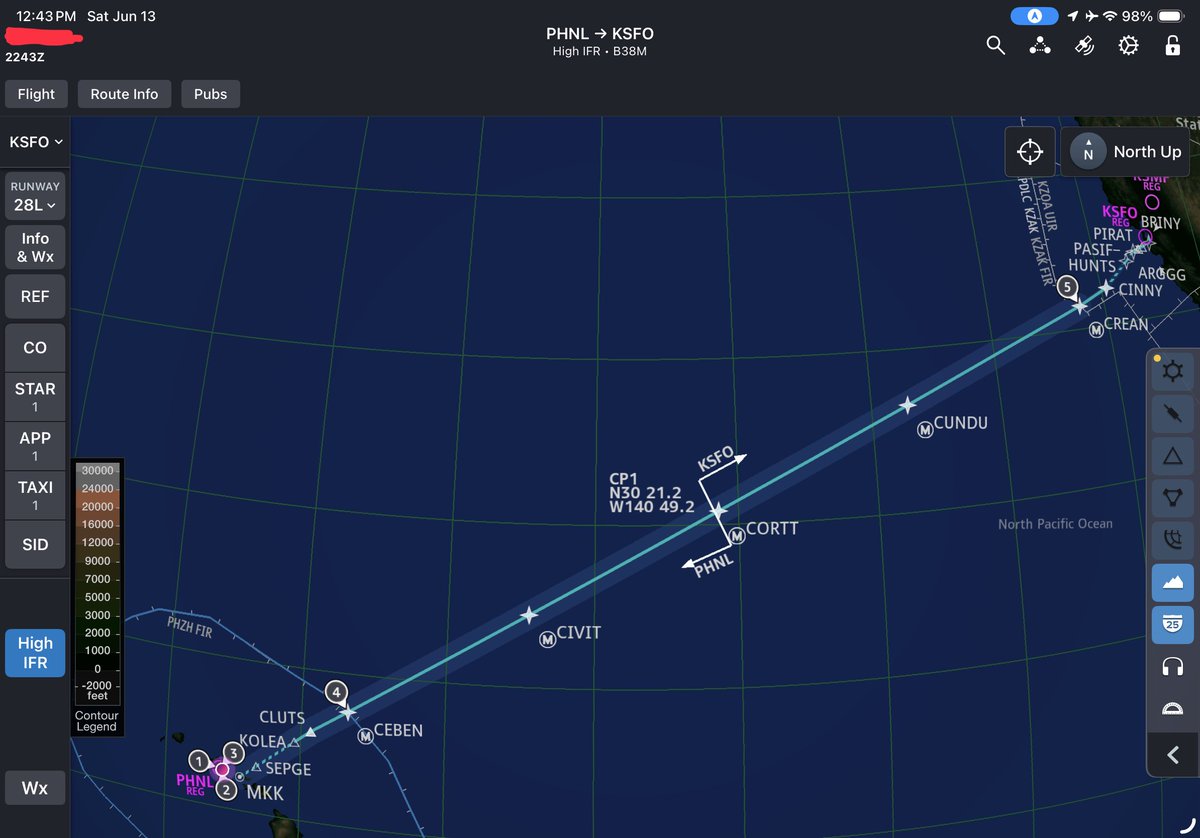
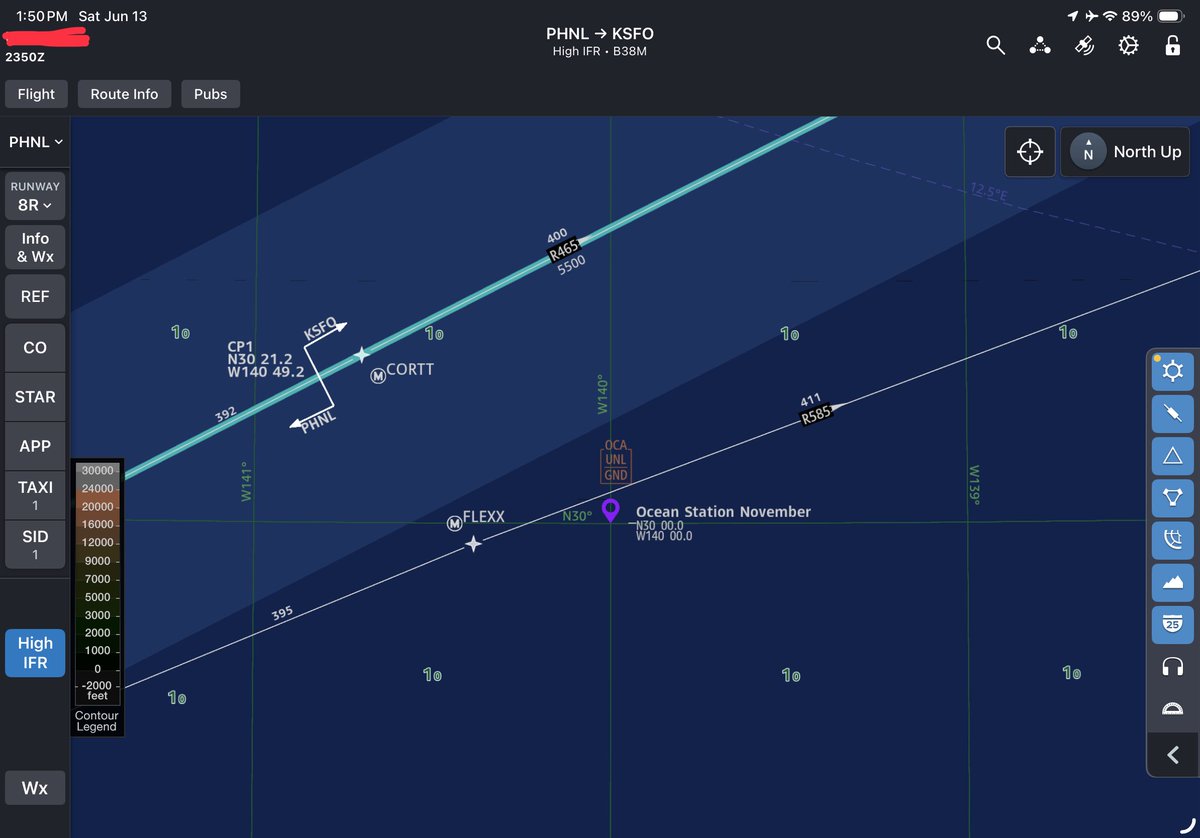
It’s 2,136 nautical miles from PHNL to KSFO, almost all of it over water.
What happens if we have an emergency?
The simple answer is that we’ll either turn back to HNL or continue to SFO, whichever is closest. To decide, we take into account the winds, assuming we have to descend to 10,000’ & drop a point where it’s an equal amount of time to either. If past the point, continue to SFO. Otherwise, turn around.
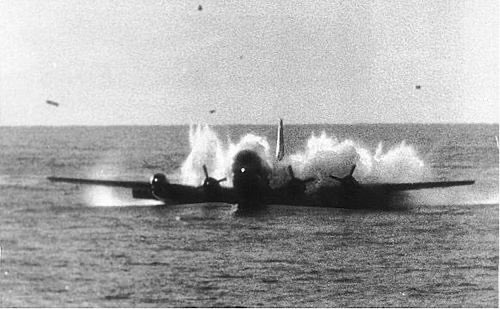
This is called our “CP” or “Critical Point”. It’s also sometimes called an “Equal Time Point”. It shifts from day to day, based on the winds, but out of the islands it’s usually at around 140° West. That’s about halfway in terms of mileage; the Coast Guard used to put a ship there in the early days, known as “Ocean Station November”. It served as a weather ship, had a beacon for navigation & was on standby for rescues at 30° North, 140° West.
(PanAm 6 did ditch near the Cutter once in 1956, with all aboard surviving)
Today, the Cutter is no longer there. Also, our CP is a little West of the mid point in terms of miles, because the winds are a light tailwind. If the winds were stronger, it would be even further West, because turning around means we have to battle a headwind now, slowing us down.
LAX is actually further from HNL at 2,217 nm, where SFO is 2,081 nm because it’s further West than LAX, so SFO is our best bet.
Hope that helps!
59
28
728
37,182
Looks like more golf in Maui for July.
It’s good to be senior!
33
4
386
8,835
Each takeoff is different. The weight is different, the winds, temperature, pressure, terrain ahead, etc..
We have to calculate the thrust & speeds needed to get off the ground before we run out of runway, and do so in a fashion that will allow us to clear terrain…assuming we lose an engine.
So, we plug the details into our computer. It sends that off to another computer at the airline, which does the calculations & sends back a solution.
This solution tells us how much thrust we need from the engines, flap settings, trim setting for the elevator & at what speeds we will perform certain actions. These speeds are referred to as “V speeds”, for “Velocity”.
V1 is arguably the most important. As part of the computers solution, it is using the “balanced field” concept. There is no need to use maximum thrust on a 12,000’ runway…you can take it easy on the engines, reducing wear & tear. On the other hand, a 6,000’ runway is going to require a lot of flaps & maybe maximum thrust. Depends on the weight, temperature, etc.
So the computer does this work, with the goal of creating a situation where at some point in the takeoff, the distance required to safely continue the takeoff is equal to the distance required to reject the takeoff & stop. There is a point along the runway where these two are equal.
That point isn’t going to be clearly marked on the runway. As I said, the numbers change for every takeoff depending on the conditions. So instead of looking for a distance, we use a speed.
You can think of this as V1. I’m simplifying here, but I think that will help you better understand.
At V1, we have hit the balanced field point. We now have enough runway in front of us to either safely continue the takeoff (even if an engine fails) or safely stop in the runway remaining.
Hopefully by now you can see what is happening after V1…you can safely continue the takeoff, but you have passed the point where you can safely attempt to stop. If you attempt to stop, you are going off the end of the runway & into the dirt at an unknown speed. It’s going to be a bad day.
Procedurally, 5 knots before reaching V1, the pilot not flying calls out “V1”. This triggers the pilot flying to take their hand off the thrust levers (throttles) & put it on the yoke (or wherever, just get it off the thrust levers. Keep in mind procedures vary slightly between airlines).
It’s a commitment that almost no matter what happens now, we are going flying. We will not attempt to stop for almost anything.
(you might attempt to stop for some extreme event, like a wing falls off or something, but emergencies like engine fires, failures, hydraulics…even a fire in the cabin will not stop us from taking off past V1. It’s safer to get in the air & work the problem)
So, V1 is a decision point. You don’t actually do anything to the airplane, you just change your mindset.
Now, our calculations & procedures are all based on losing an engine at precisely V1 speed or after, where you can no longer stop. Don’t worry, we’ve done the math. The airplane will fly & it will clear the terrain, though it’s going to be very busy for the pilots for a while.
Hope that helps. As usual, I’m simplifying some for a general audience & there is more to it, but hopefully you now have an understanding of the term V1.
Jun 13

Another ill-fated take-off over V1 (in this case, V2!)
June 13 1996: Garuda Indonesia Flight 865, a DC-10, crashes in Fukuoka (Japan) 3 of 275 aboard die. On take-off, the jet had just left the ground when one of the engines failed. Crew opted to reject the maneuver; the aircraft was unable to stop safely and left the runway: landing gear collapsed, and the airplane caught fire.
Inquiry noted pilot actions by aborting takeoff above V1, where SOP dictated pilots should have continued takeoff and deal with the engine later. More info below from Aviation Safety Network – Aftermath video is from Aircrashdaily (go give them a follow on YouTube)
“The DC-10 accelerated for takeoff. The nose was raised, and at a speed of 158 kts, the first officer called "Rotate". It was 12:07:40. Three seconds later, at a radio altitude of 9 feet, a fan blade of the 1st stage HP turbine from the no. 3 engine separated. The N1 dropped to 23,7% within a few seconds. At 12:07:45, the flight engineer called "Engine failure number one." Takeoff was aborted at about the V2 speed, and the airplane contacted the runway one second later at a vertical acceleration force of 2.1 Gs.
The thrust reversers were deployed and ground spoilers were extended. The DC-10 skidded off the runway through a ditch, fence and a road, before coming to a halt 620 m past the runway threshold.
Investigation revealed that the turbine blade that failed, had operated for 30913 hours and 6182 cycles. General Electric had advised customers to discard blades after about 6000 cycles.
Accident cause
Although the Aircraft was well in excess of V1 and the aircraft had already lifted off from the runway, the takeoff was aborted. Consequently, the aircraft departed the end of the runway, came to rest and caught fire. It is estimated that contributing to the rejection of the takeoff under this circumstance was the fact that the CAP's judgement in the event of the engine failure was inadequate."
39
29
395
29,383
Continuing on my earlier notice of many Europeans in airports & hotels, I just drank a lot of beers & Mai Tais w/ “Toland” from Ireland (my ancestral homeland) in Honolulu.
I’m kinda drunk now, but damn I’m happy to see them here. Welcome, friends!
15
3
316
5,744
Anecdotal, but I’m seeing a lot of international visitors in the airports & layover hotels. There’s a whole group of Irish fans in the Honolulu hotel, guess they are making it a trip across the country.
18
4
293
11,179
Didn’t get a free weekend, but things could be worse. Mahalo & happy Friday!
17
8
352
5,981
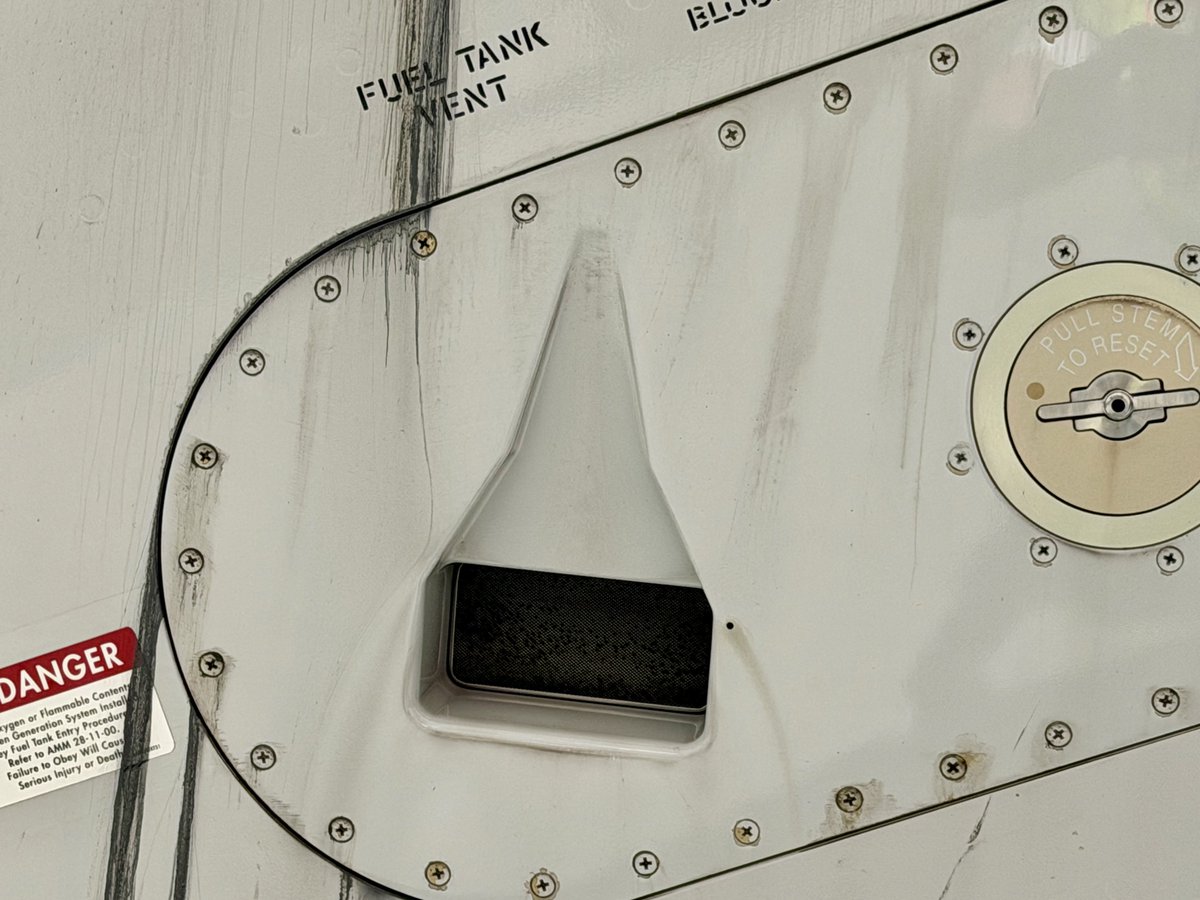
I’d think the issue here would be a concern the bees could get into the fuel system via a vent on the underside, but I don’t know.
Dead bees in the fuel tank would be a contaminant that could clog the fuel filter.
Jun 11

My plane is delayed because "there are pretty much a bunch of bees on the wing" I'm crying bro lmao 😭
55
17
378
37,322
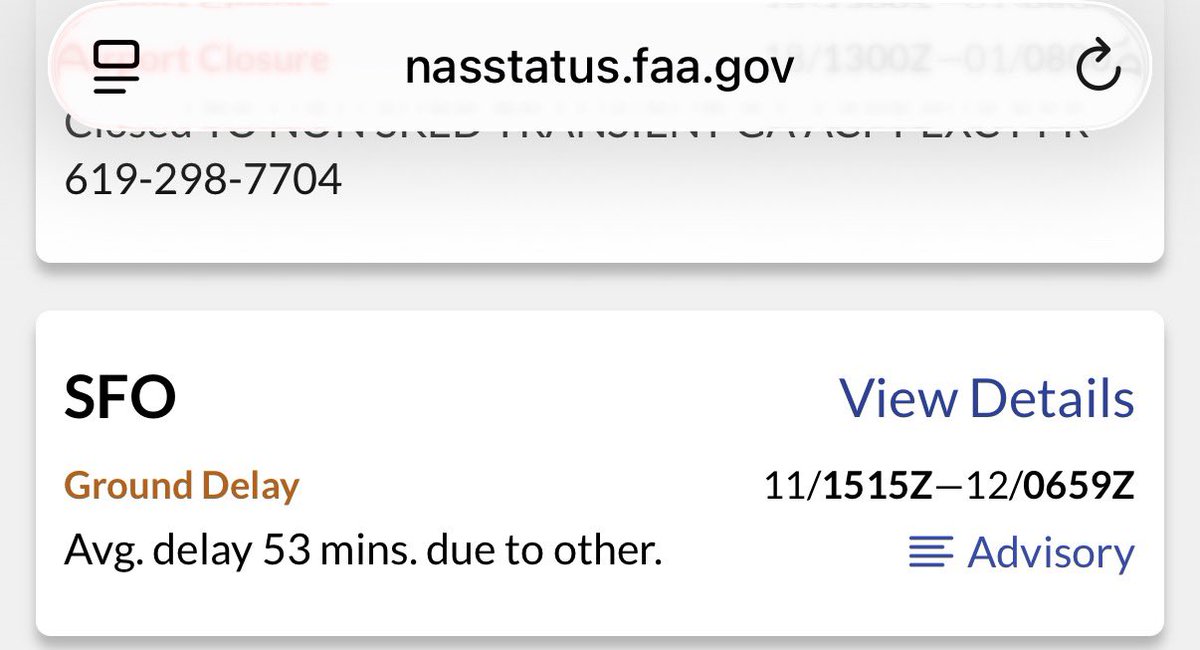
Y’all are watching the World Cup. I’ve got 10 minutes to spare on the back of this trip before I’m not legal for tomorrow’s trip & I get a free weekend at home. I’m refreshing the SFO Ground Delay Program (GDP) every half hour as we approach report time.
Way more exciting!
45
8
441
23,642
Update: somehow we were 15 minutes early. Of course we were. The only time it could benefit me, SFO manages to pull its act together.
No free weekends….
5
3
66
2,383
Happy to be of service!
You know how if someone reclines it’s kind of in your lap & knees? What if we abort takeoff because of a fire & now the seat is in your lap & knees? Think it might slow down your emergency evacuation?
Same reason we don’t want power cords plugged in.
Jun 11

Genuinely would love for someone in the airline industry to explain the impact of having a reclined seat for takeoff
34
40
739
38,591
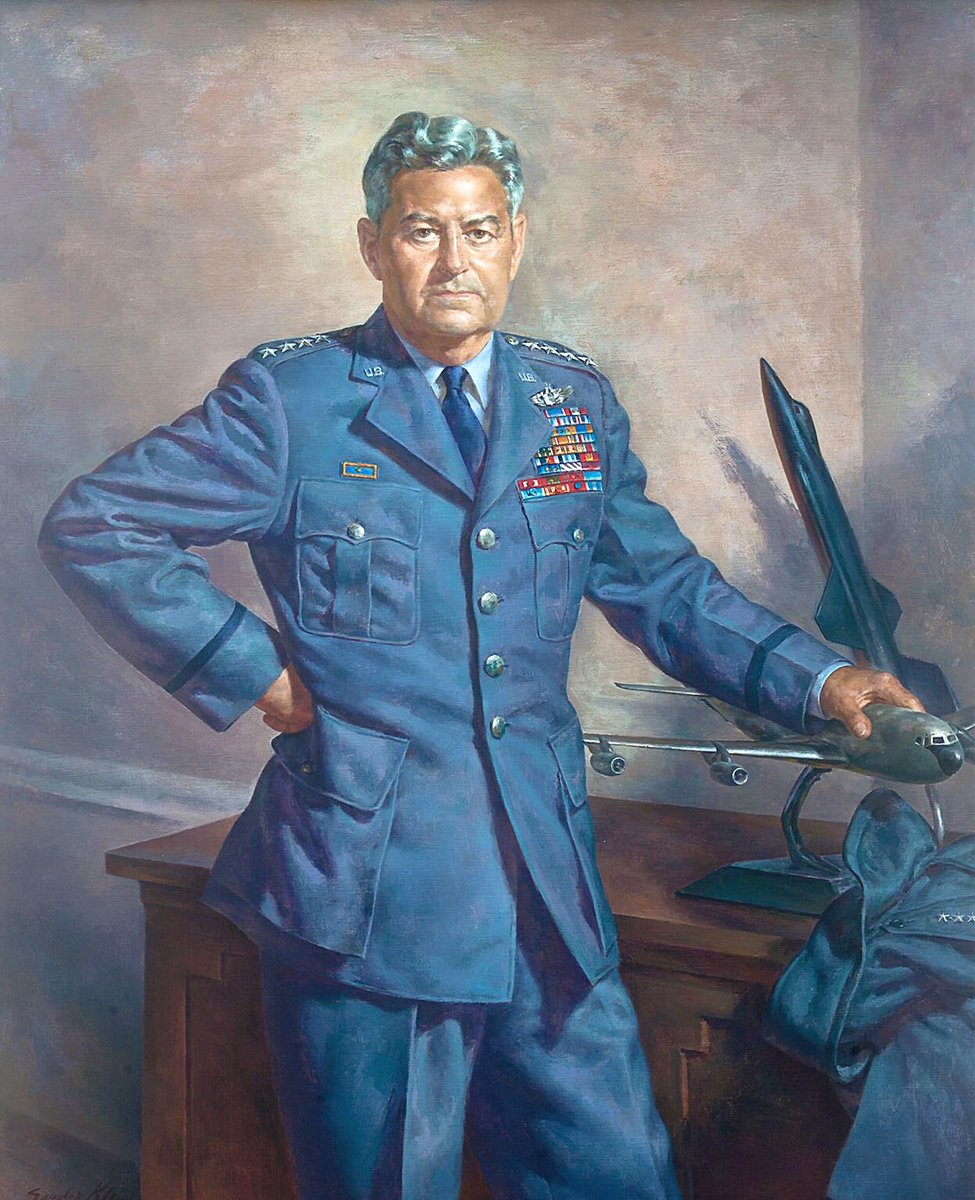
People know nuclear bombs ended WWII, but they don’t know about LeMay.
Hiroshima killed 80,000 . Nagasaki killed another 80,000.
LeMay ordered 334 B-29s to fire-bomb the wood & paper city of Tokyo in one night during “Operation Meetinghouse” & killed 100,000, before nukes were ready. Deadliest bombing raid in history; not even the nukes surpassed it. Tokyo’s industrial output was cut in half overnight.
Very controversial figure, but interesting and you can’t understand the history of Air Power without understanding LeMay, or the way he was made. A hard man who rose to the top of the Air Force & the “Bomber Mafia”.
Jun 10

“If you are going to use military force, then you should use overwhelming military force. You should use too much and deliberately so; you'll save lives, not only your own, but the enemy's too.”
- General Curtis LeMay
U.S. Air Force.
191
188
2,354
231,540
Terrible advice for young pilots. Or really anyone.
Do not do this. Follow the magenta line, or you will have a bad time.
58
12
379
12,240
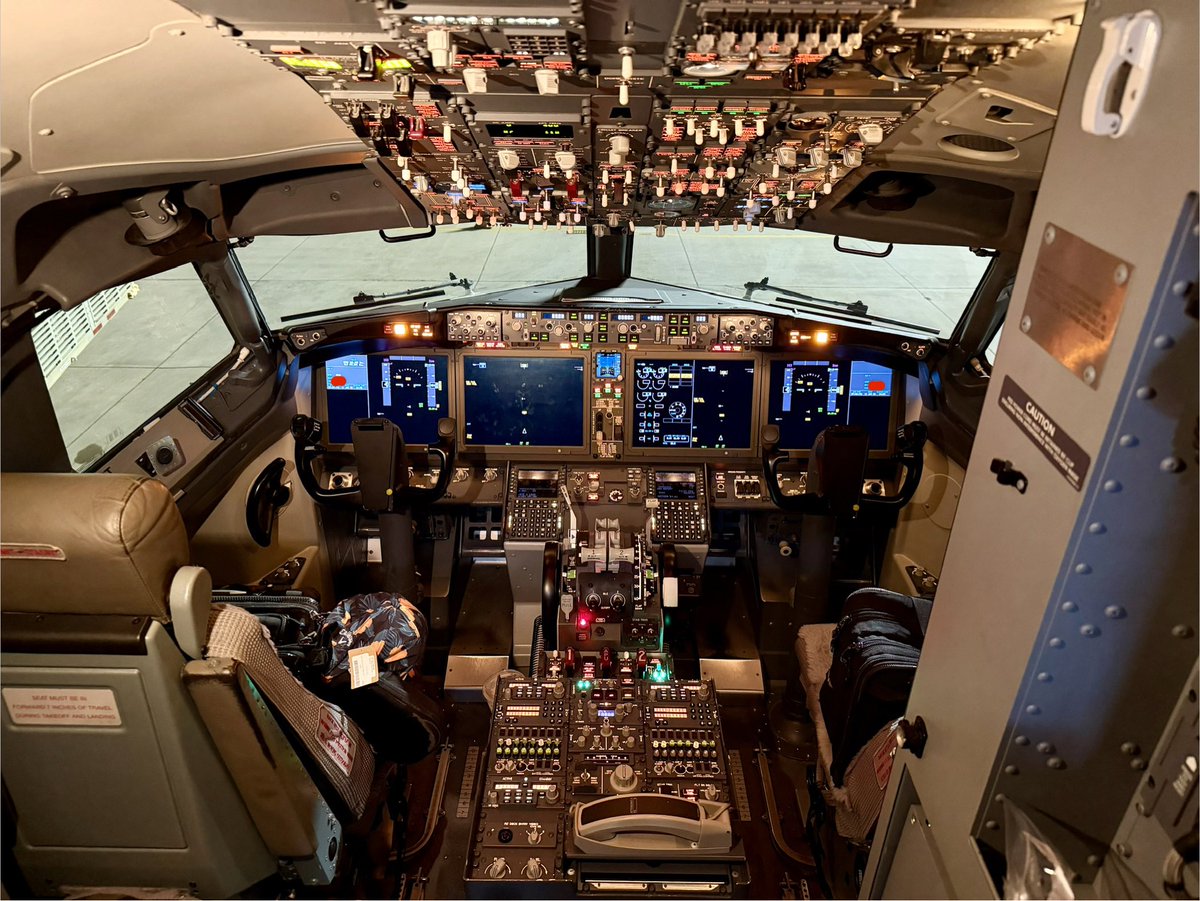
The lights are lighting & the noises are noising. Preflight checklist complete.
47
13
684
10,808
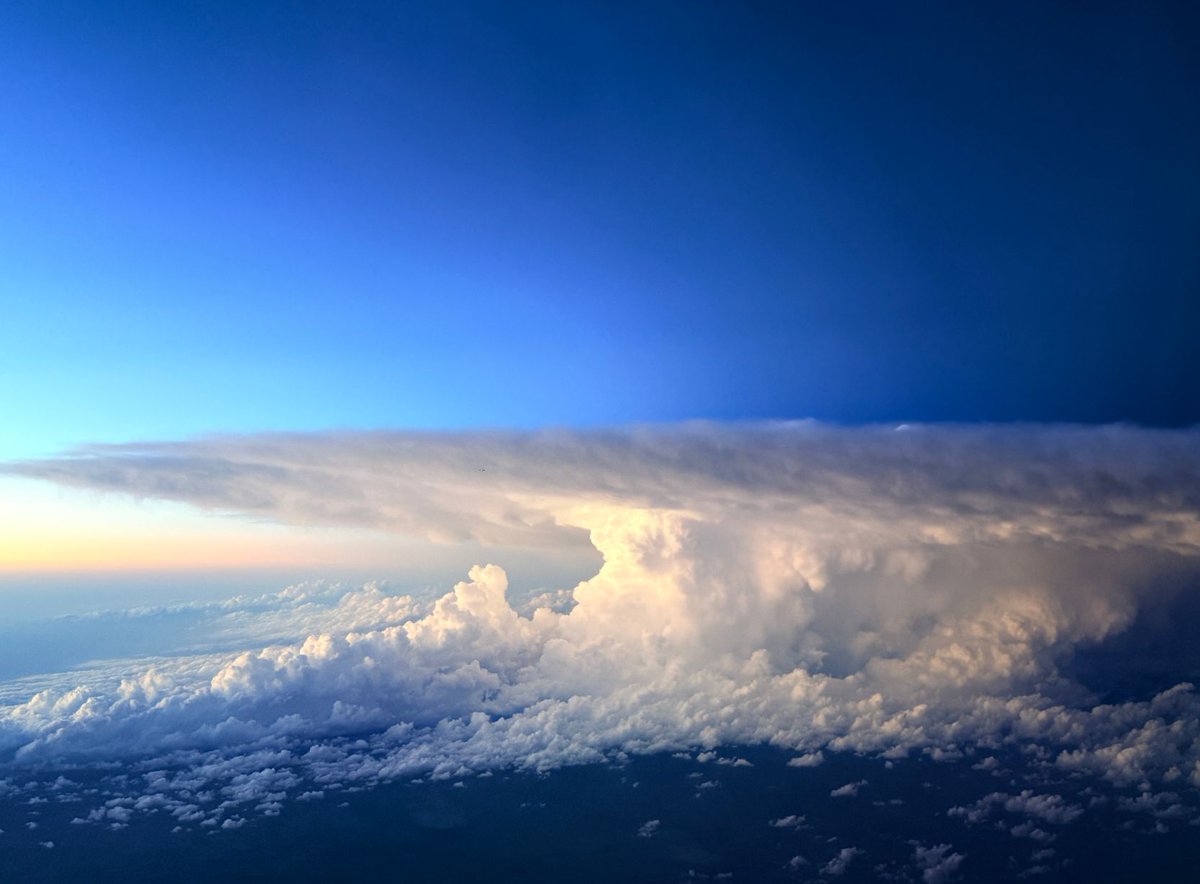
The flat top of these storms is called an “Anvil”. It occurs where the warm, rising air cools & reaches an altitude where the surrounding air is the same temperature or even warmer, so it rises no further.
(Unless it breaks through, which it sometimes can do)
An anvil means the storm is in its “mature stage” & is putting out rain, lightning, hail, etc.. Stay away!
The little outreach of the anvil is commonly referred to as a “shelf” & indicates the downwind side of the storm. We don’t want to fly under that if we can avoid it, due to turbulence.
When flying near thunderstorms, we give it a wide berth & try to fly upwind of it. A mature storm can blow hail several thousand feet out of the top, which then gets carried downwind. Hail isn’t easy to spot on radar because it’s dry & is hard to see, which can give you the impression you’ve avoided the storm, only to fly through a curtain of hail in clear air.
Which is bad.
A good rule of thumb is avoid the downwind side of a thunderstorm by 1 nautical mile for every knot of wind at your altitude.
We can sometimes fly above the storm, but that’s not always possible. Strong storms, particularly in the Spring & Summer, can top out at 60,000’ or more, exceeding an airliners maximum altitude by a lot. When flying above, we try to be a minimum of 5,000’ above the tops.
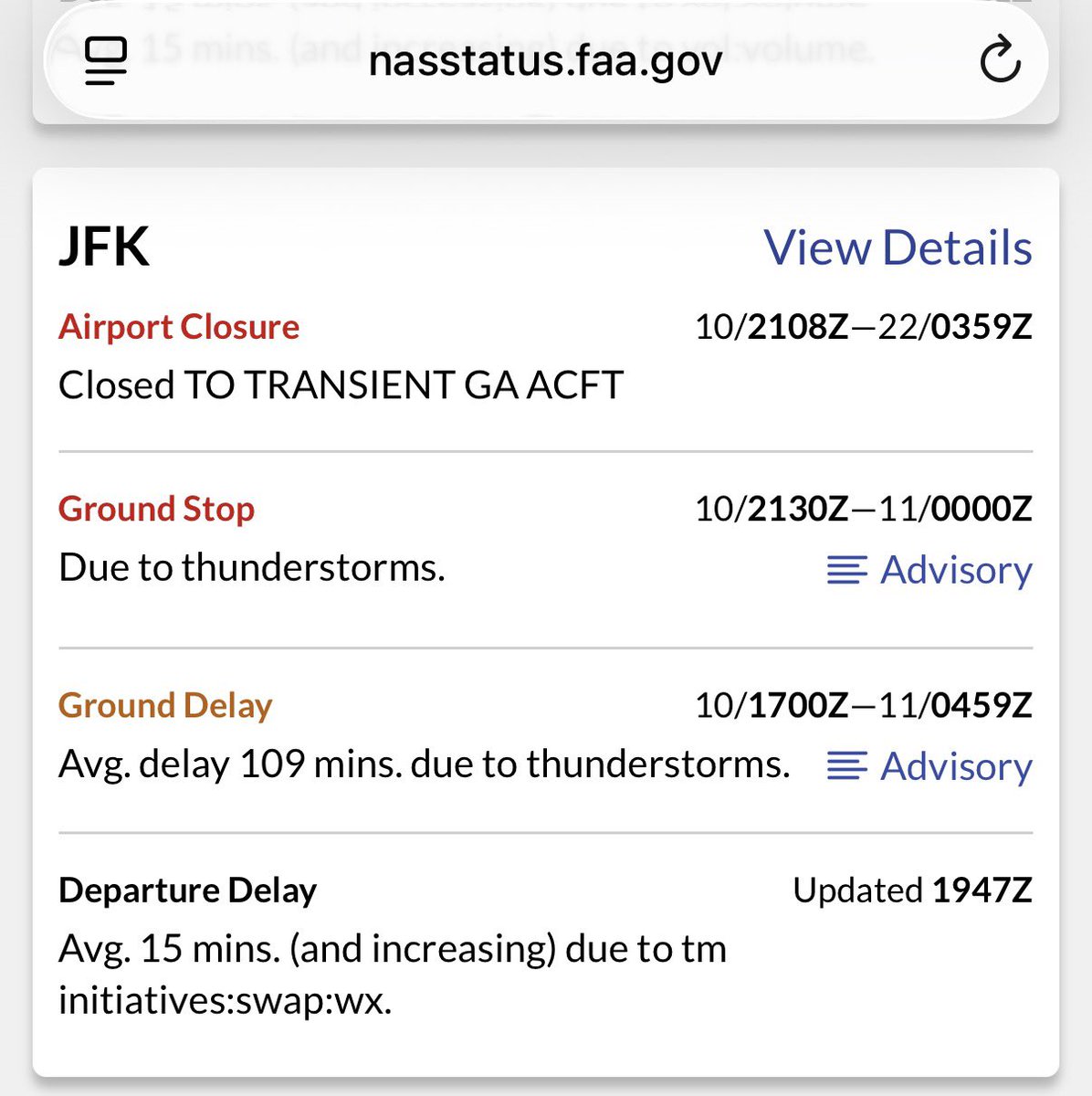
This is the season that storms roll through & shut down airports, creating a mess. Unfortunately, it just is what it is, and there is no good alternative to just waiting it out.
Jun 11

WOW! INCREDIBLE view of supercell thunderstorms near Wichita, Kansas from an airplane a short time ago!
Thank you Meranda for sending this in!
39
59
765
32,951
I have to side with most of the other GWOT vets I’ve seen…I’m not a fan of this design.
Jun 10

An early look at the @GWOTMF memorial planned for Washington, D.C, released today.
It's planned on what are now athletic fields at the corner of Henry Bacon Drive and Constitution Avenue, near the Lincoln Memorial and Vietnam Veterans Memorial.


66
16
379
20,318
Let myself get lazy on layovers. Cocktails & food, sleep a lot.
Making some fun changes. I hit well today, grabbed some swag for my son & had a nice lunch.
Time for a nap, then the redeye to the mainland. Mahalo to the nice folks at @WaileaGolf!



40
6
531
16,426
Me thinking about that last landing.

In a Japanese zoo, famous male gorilla Kiyomasa was filmed sinking into deep thought after a quarrel with his partner.
52
21
619
28,338
I got a lot of questions about flying a “Cost Index” (CI) on an airliner.
Can’t blame you…I’d never heard of it until I got to the airlines. An explainer:
Airlines are concerned w/ keeping costs down. The margins in the industry are very low, so minimizing cost means you can keep ticket prices lower & stay competitive.
There are many costs to account for, but CI only relates to the airplane in flight. In this regard, the competing cost factors are fuel & time (time is cost of the crew…it actually includes other factors, but that’s too much info). You can save time by flying faster, but that burns fuel. You can save fuel by flying slower, but that burns time.
(That gets complicated…you can burn vastly more fuel by flying really slow, but that’s a lesson in aerodynamics & more than we need here. Just keep in mind we’re talking about trying to save a couple hundred pounds of fuel, which isn’t a lot on one flight, but if you’re airline does a few thousand flights a day, that’s a lot of money!)
So, the Cost Index is an attempt to balance the two competing costs to produce the most efficient result.
There is a formula involved, but I don’t know it & you won’t care, so we’ll skip that (but you can google it). Anyway, the Dispatcher (who builds the flight plan & checks the weather, etc.) selects a CI based on conditions. I imagine it’s probably automated, but I don’t actually know.
If the winds are favorable & you’ll be early, you’ll get a low CI. Usually a CI of 10. No need to burn extra fuel to get there even earlier…you’ll probably just end up waiting for a gate, anyway.
If you are late, you’ll get a high CI…like maybe CI 120. It’s basically “Go fast”.
The CI references can be different for different model jets. On the 737, the highest is usually 120…but other jets may be able to do CI 200 or more. The airlines may also regulate how high the CI can be set…at mine, on the 737 the highest CI is 80. It used to be 120, but they analyzed the data & backed it down. This is because anything over CI 80 produces speeds over .80 Mach (the 80 & .80 are not related!), and the maximum is .82 Mach. In the 737, if you hit a decent bump at .80 Mach, there is a good chance you will suddenly exceed .82 Mach & now it’s an overspeed, which requires an inspection (but almost never does damage unless it’s an egregious overspeed).
Anyway, you plug the CI into the computer. It runs the formula & decides the speed to fly, based on fuel burn. Now, the thing to know is that CI is *not* a speed. It produces a speed, but it’s based on the weight of the jet & efficiency. If you change the weight of the jet, you’ll get a different speed. Guess what happens as we fly? Yep, we burn fuel & our weight changes. So, the computer is re-running this formula & coming up with new speeds. You can start out flying at .76 Mach, but as you go along it will speed up to .78 Mach (or whatever).
The pilot can change the CI anytime they want. They can also just “hard code” a speed for the jet to fly. When crossing the ocean, I usually hard code the speed, rather than letting the jet modulate. This is because I have to meet certain times at each waypoint & don’t want the jet to change our speed (it wouldn’t be that dramatic to throw us off more than 2 minutes usually, but I don’t want it). When over land and in radar coverage, I let the CI run the show when it comes to speed.
CI is usually only a factor in cruise, but it does change how fast the jet will fly in climb or descent. A high CI can command a speed I don’t like in these phases of flight…like I won’t let the 737 climb at a speed faster than 325 knots, for the same overspeed reason described earlier. I go in & change the speed, which overrides the CI.
Ok, I’m about out of space. Hope that helps! As always, I’m simplifying things to try & give the layperson an understanding. Just remember that the CI produces a speed, but that’s not what it is. It’s fuel burn.

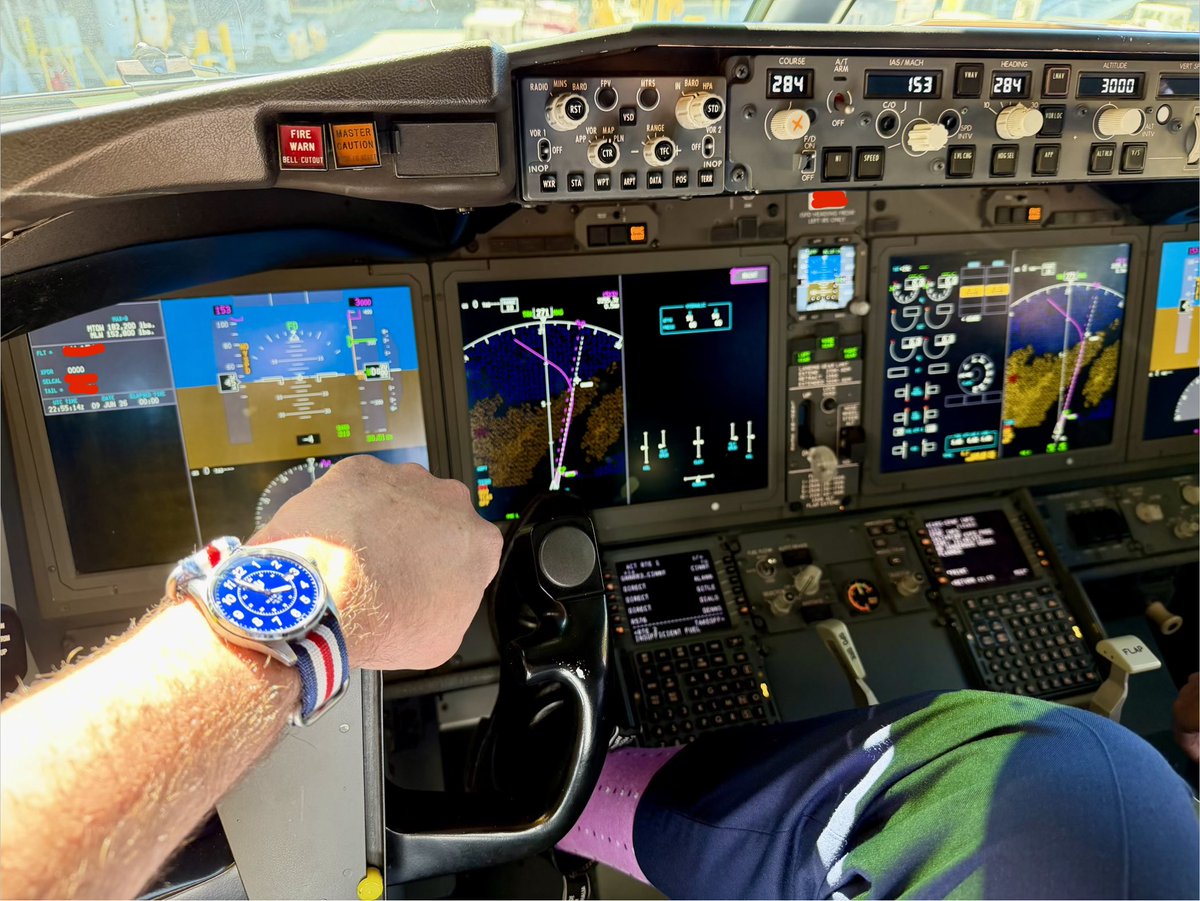
Had a nice break, but back to the salt mines.
Covering 2,086 nm to PHOG at Flight Level (FL) 340 (34,000’) with a Cost Index (CI) of 10. Average speed in cruise about 435 knots, or 500 mph, putting us around Mach .78.
Hope to get in about 10 minutes early.
97
50
1,065
84,213