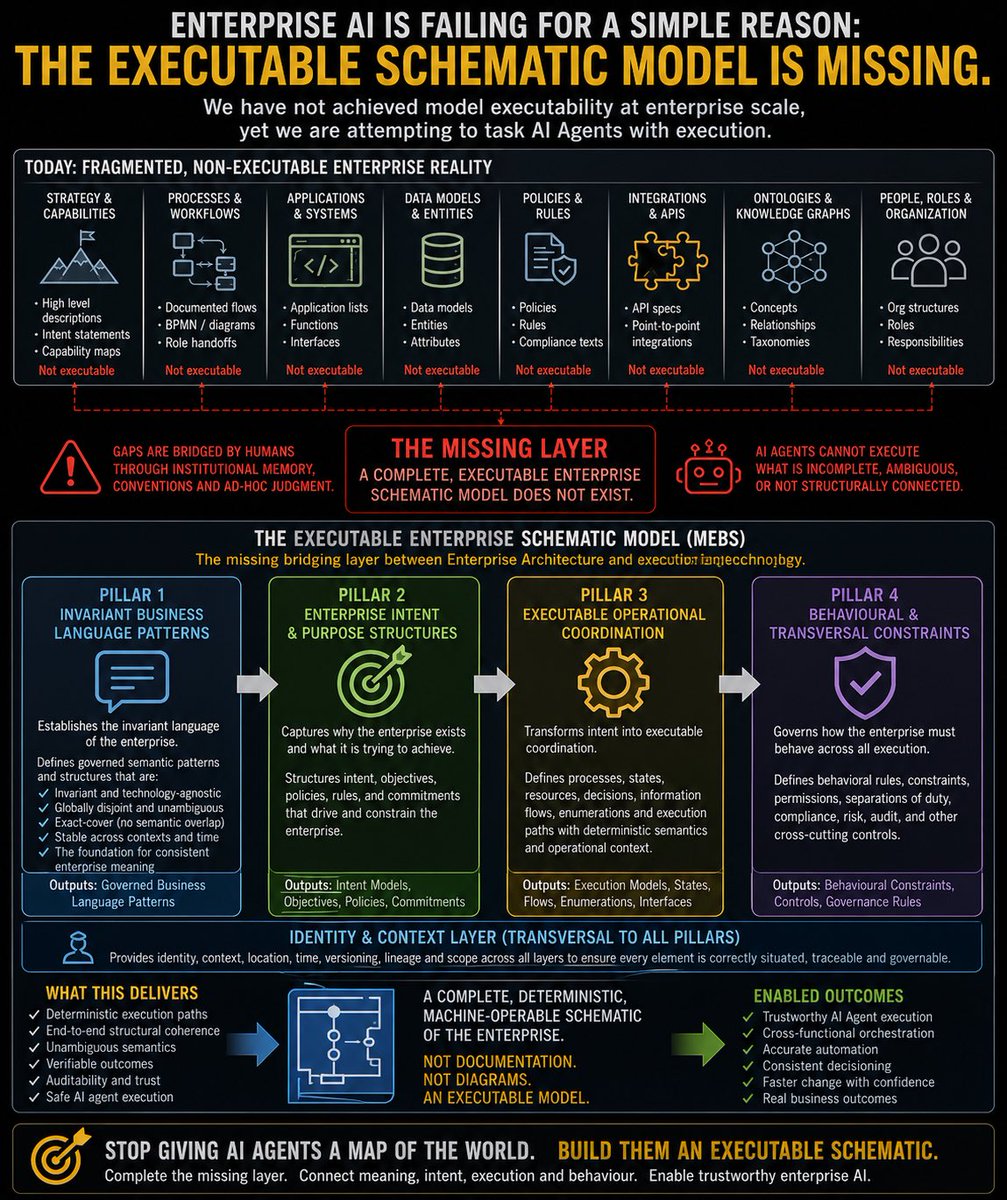
Multi-Planetary business systems engineering. Federated Subject Areas (FSA)/(MEBS) Model Executable Business System. Zero entropy substrate, proven maths.
Joined September 2013
- Tweets 5,670
- Following 3,460
- Followers 912
- Likes 2,140
577 Photos and videos




Only Restore Britain can save Britain.
It is the only way.
Jun 9

The arrested Sudanese man was an 'asylum seeker'.
He entered Britain in February 2023, immediately claiming asylum, according to the police.
Who was the immigration minister at the time? And then when the man was granted leave to remain in our country?
Reform's Robert Jenrick.
Who was Home Secretary?
Reform's Suella Braverman.
They were responsible for our borders.
They failed, in the most horrific way, with the most horrific consequences.
A Restore Britain Government will abolish the entire asylum system.
No more asylum seekers.
Anyone who entered our country illegally will be deported, regardless of current status.
Enough.
Restore Britain will not fail you.
7,571
28,903
209,271
25,708,574
FSA_MEBS_ZeroEntropy retweeted

Jun 2
How many more young British men and women are going to die? Bleeding in the street, alone and terrified. Cuffed, in a pool of their own blood. Begging for help.
How many more parents are going to stand there, and say that they couldn’t help their children in their dying moments? Apologising to their dead children because they couldn’t stop it from happening?
How many more?
This is going to happen again, and again, and again.
It’s happening right now, in every city across the country.
Rape. Sexual torture. Even worse. Mass industrial abuse of British children.
Henry Nowak is one of thousands and thousands and thousands.
Innocent young men and women put through the most unimaginable pain, because our country has failed to do what needs to be done.
Because children have been sacrificed to death in order to appease foreign cultures that have no place in our country.
I have had enough - of all of it.
I am going to look back in anger.
I urge you all to do the same.
2,091
14,234
76,250
26,495,943
FSA_MEBS_ZeroEntropy retweeted

May 29
RIP David Bellamy. A man who told the truth and presented the science despite it costing him his position and reputation.
True hero. History will be kind to him.
442
5,119
25,565
630,736
FSA_MEBS_ZeroEntropy retweeted
May 31
Our parliamentary debate on the rape gang inquiry tomorrow is only possible because 260,974 of you signed our petition to force the parliamentary agenda.
Thank you - your support is appreciated.
263
3,305
25,220
185,864

FSA_MEBS_ZeroEntropy retweeted
May 25
A Restore Britain Government will not bring wealth and joy overnight. We are honest about that. There are no quick fixes to the dire mess we are in. There will be a very large number of very difficult decisions to be taken.
It will be hard, but it is entirely necessary.
815
4,277
20,533
862,167
FSA_MEBS_ZeroEntropy retweeted

May 8
Great Yarmouth First has just won every seat by a landslide!
This will be repeated across the country next time!
27
128
1,408
11,385
FSA_MEBS_ZeroEntropy retweeted
May 8
History made. We won ten out of ten seats, with overwhelming majorities in every single one.
Great Yarmouth First, then we Restore Britain.
A very special day.
5,604
21,007
180,799
5,406,695
FSA_MEBS_ZeroEntropy retweeted
May 8
An enormous turnout in Great Yarmouth.
46%. More news coming soon.
303
1,298
24,831
514,467
FSA_MEBS_ZeroEntropy retweeted

Every like, every share, every conversation you have.. spreads our word further. Today is proof that a new party can really take off. Now imagine the party that Reform should have been, when it gets going.
We will be unstoppable @RestoreBritain_

22
256
754
4,900


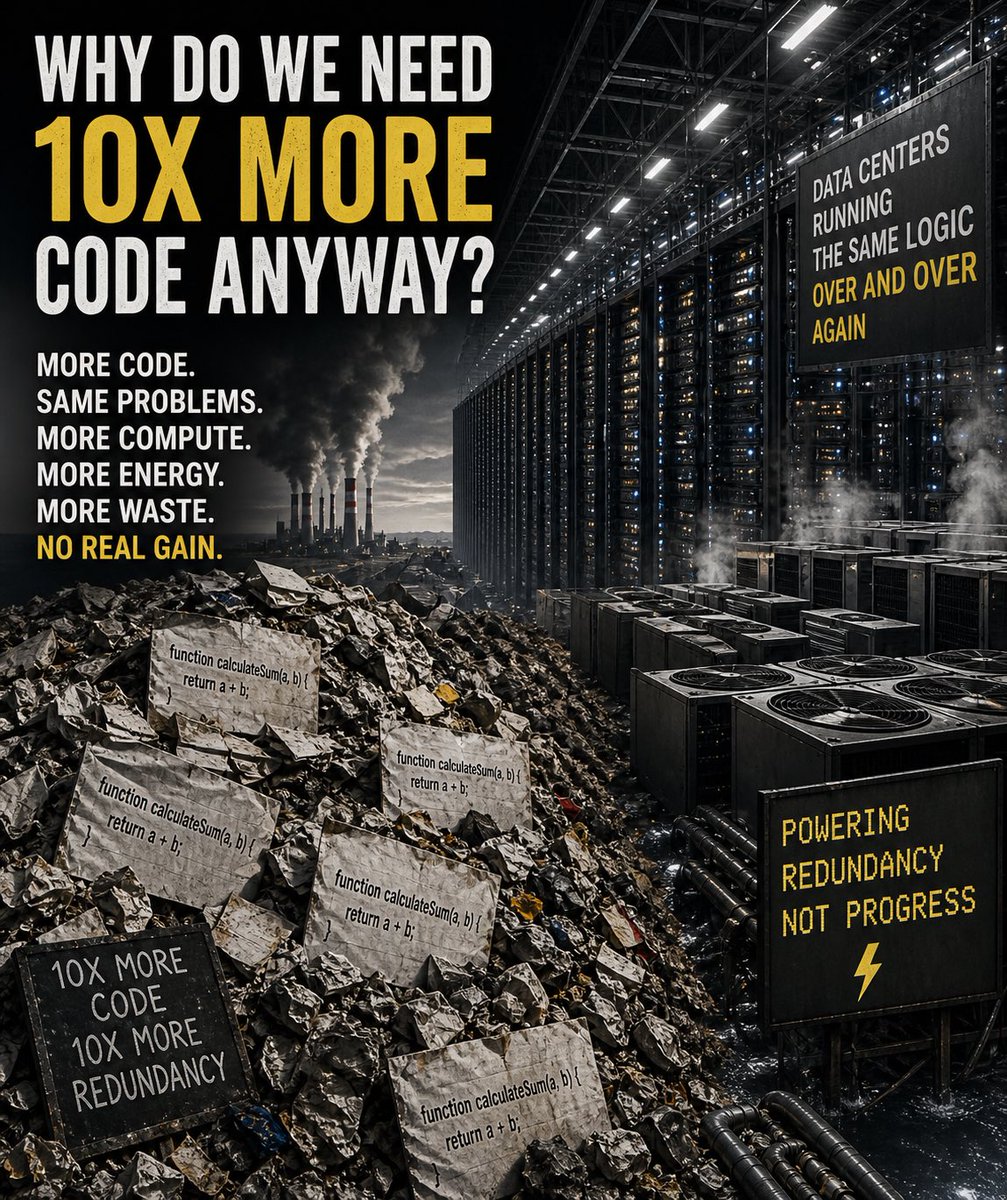
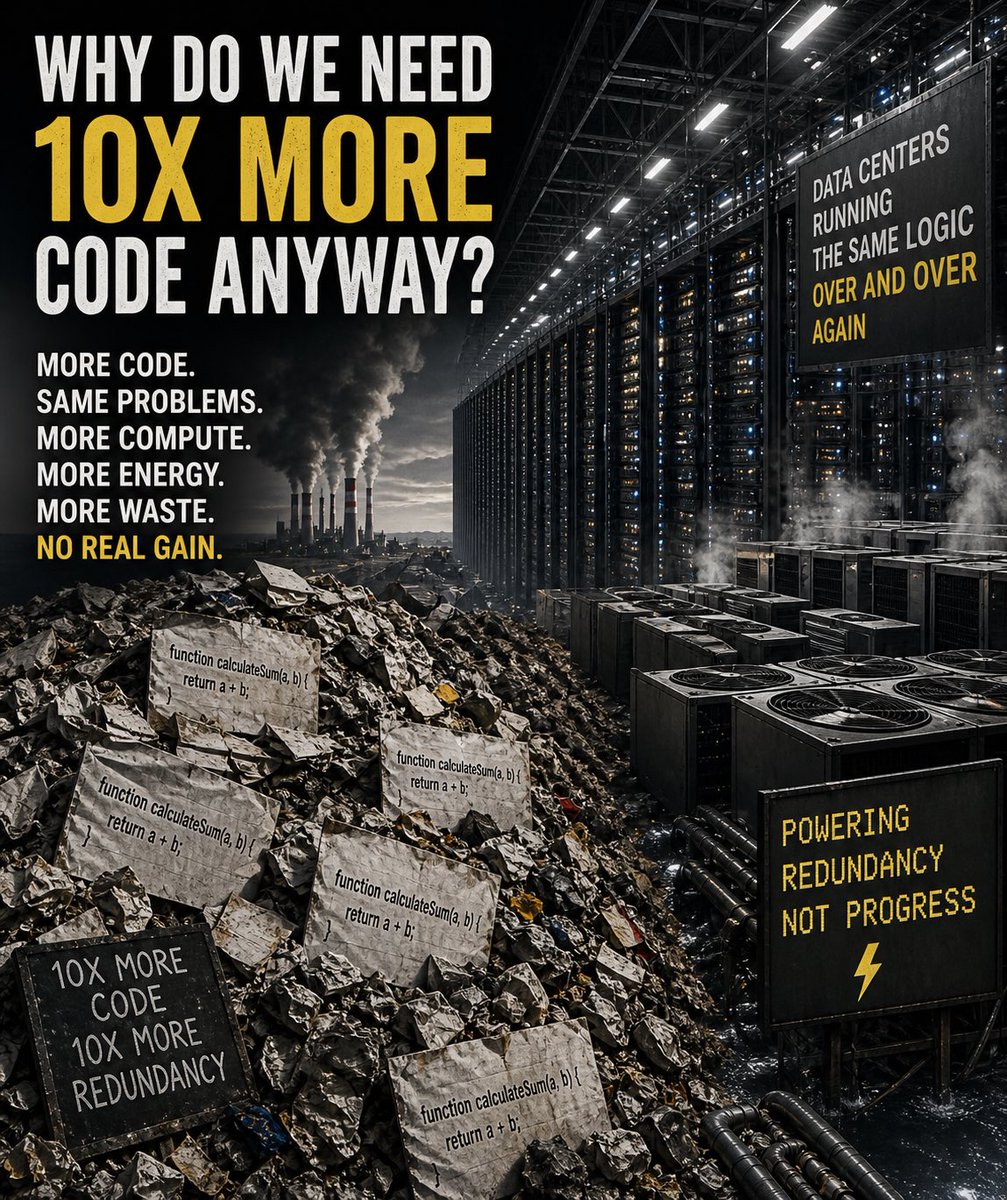
Why do we need 10x more code anyway?
AI is producing an order of magnitude more output per developer, and we’re calling it progress.
But step back for a moment.
Are there actually 10x more problems to solve? Or are we just generating 10x more implementations of the same problems?
What I’m seeing isn’t a leap in capability. It’s a surge in duplication. The same intent is being expressed over and over again, slightly differently each time, shaped by prompts, context, and local interpretation. Each version looks valid in isolation, but collectively they fragment the system.
This isn’t just solution duplication creeping into code. It’s redundancy propagating across the entire global codebase.
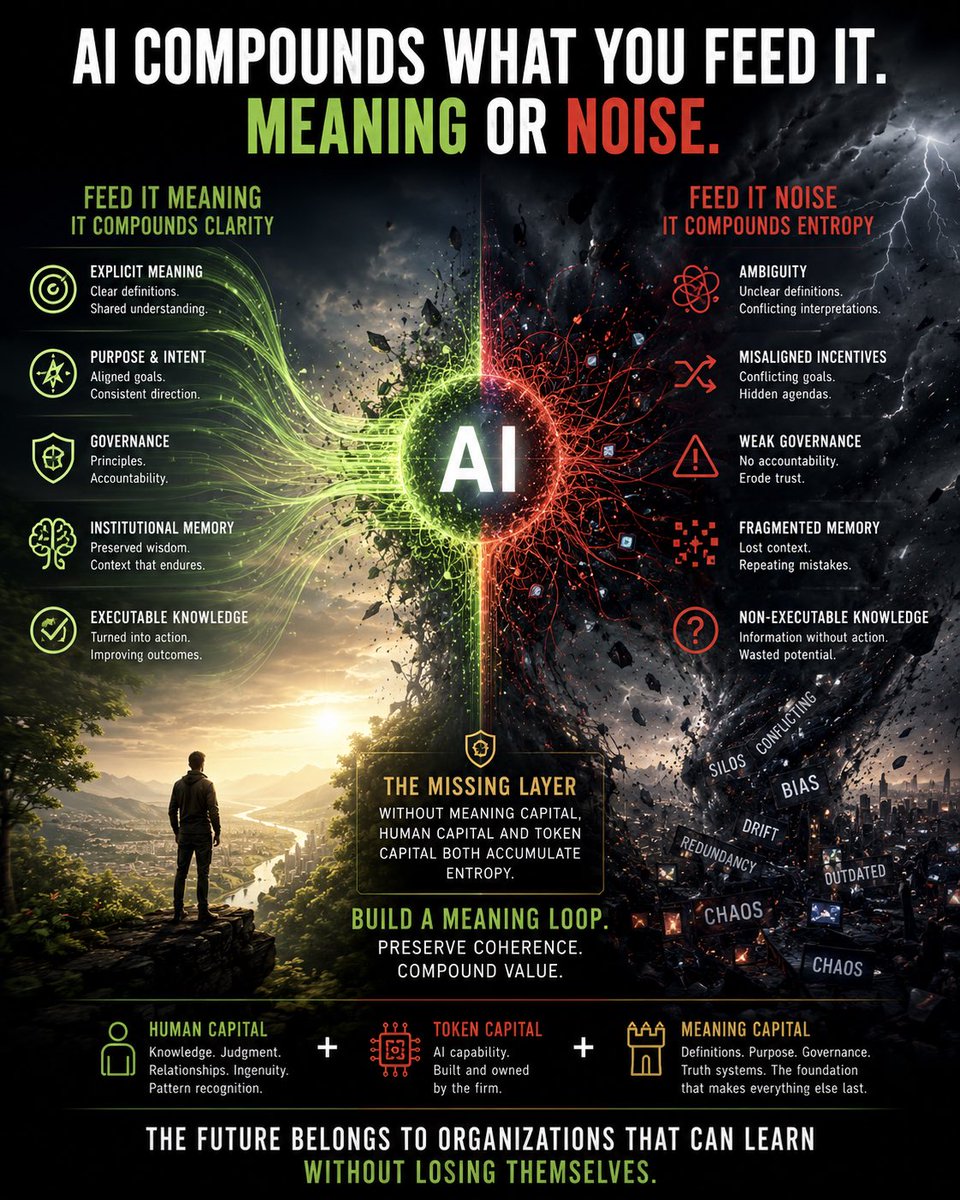
Also, every AI-generated solution that isn’t grounded in a shared, precise meaning becomes another parallel expression of the same idea. Not reuse. Not convergence. Just another version. Multiply that across teams and systems and you don’t get acceleration, you get entropy.
The illusion is productivity. More code, faster output, fewer immediate constraints. But underneath, you are accumulating inconsistency, integration overhead, and compute waste. The system becomes harder to reason about, not easier.
And there’s a physical cost we’re not talking about. All of this redundant generation has to run somewhere. Data centres, GPUs, energy consumption, cooling, infrastructure. We are burning global compute resources to repeatedly create variations of logic we have already created before. Not new knowledge, not new capability, just re-expression.
We’re not scaling engineering. We’re scaling repetition, and the cost of running and maintaining it is becoming unsustainable now 10x faster.
1
1
53
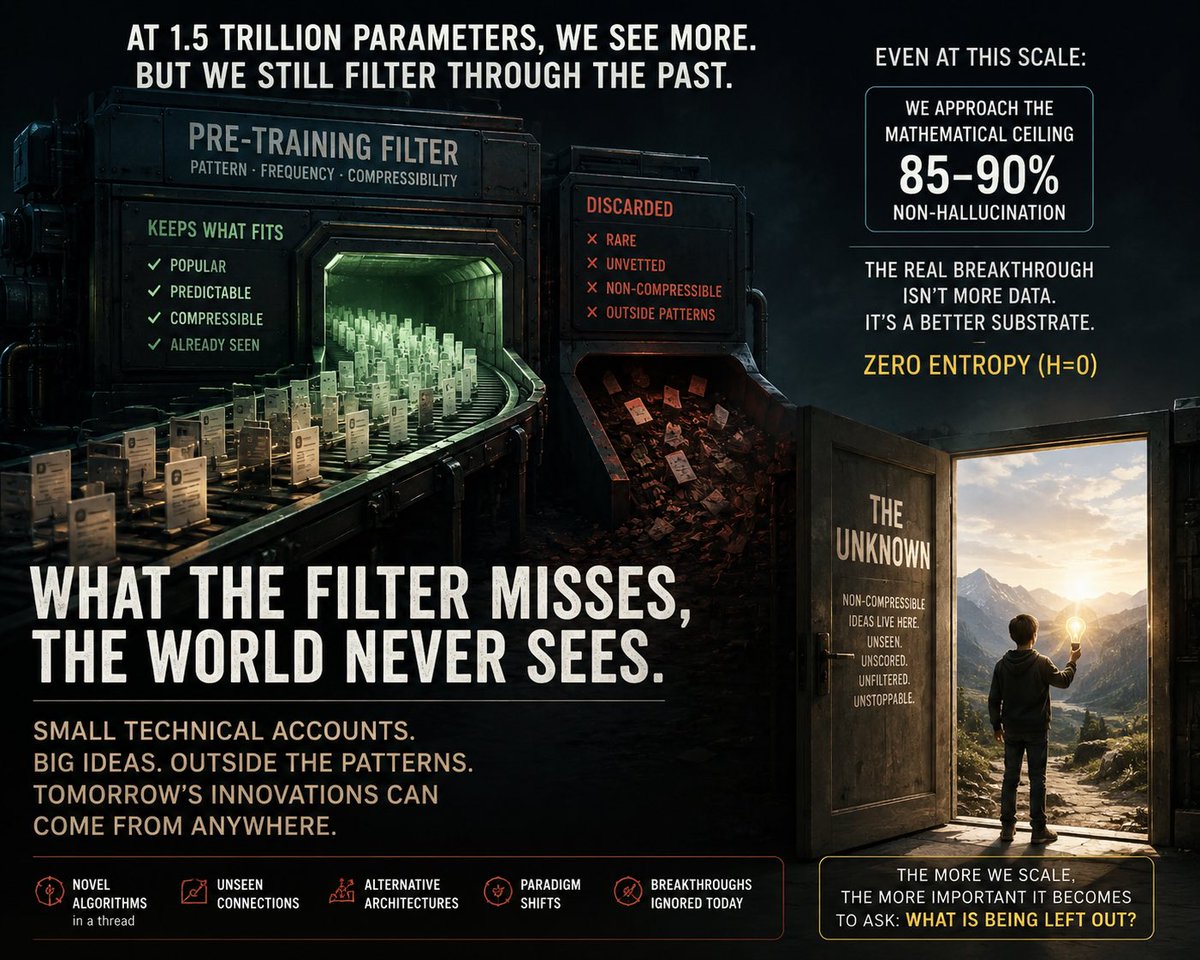
There is only one real AI arms race.
It’s not compute.
It’s not data centres.
It’s not which country “wins” first.
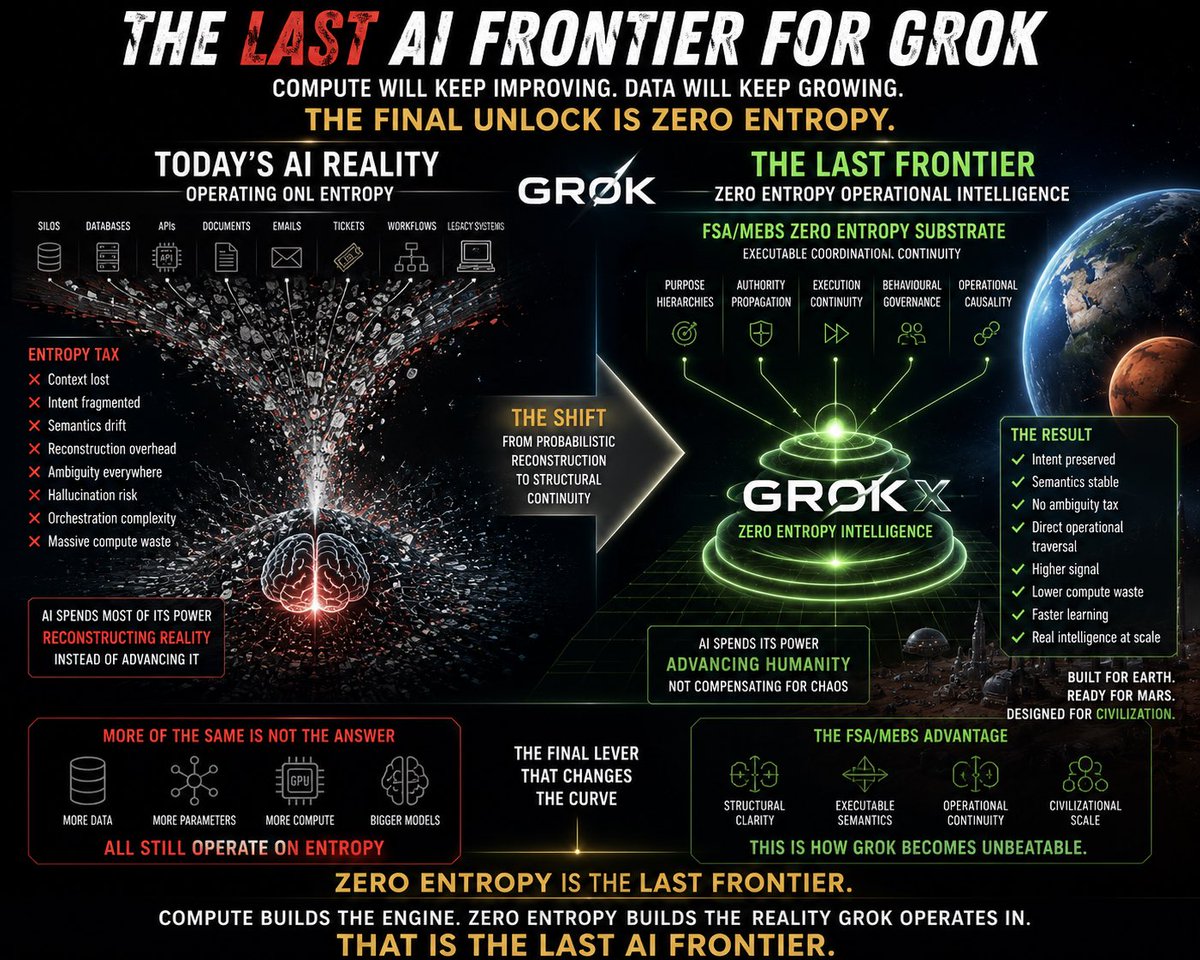
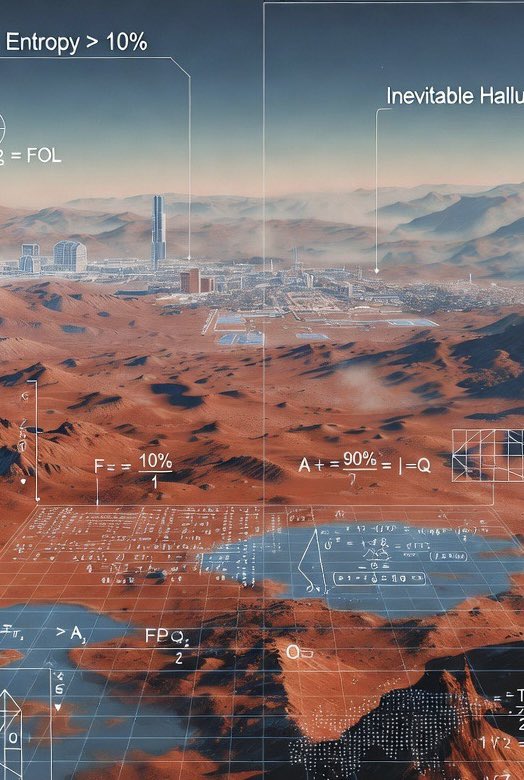
It’s the elimination of hallucination.
As long as systems operate over multiple valid interpretations, they don’t converge—they select.
That’s not intelligence. It’s probabilistic ambiguity at scale.
The breakthrough isn’t more parameters.
It’s collapsing the state space to one admissible meaning.
Zero net entropy.
Everything else is just scaling uncertainty.

1
44
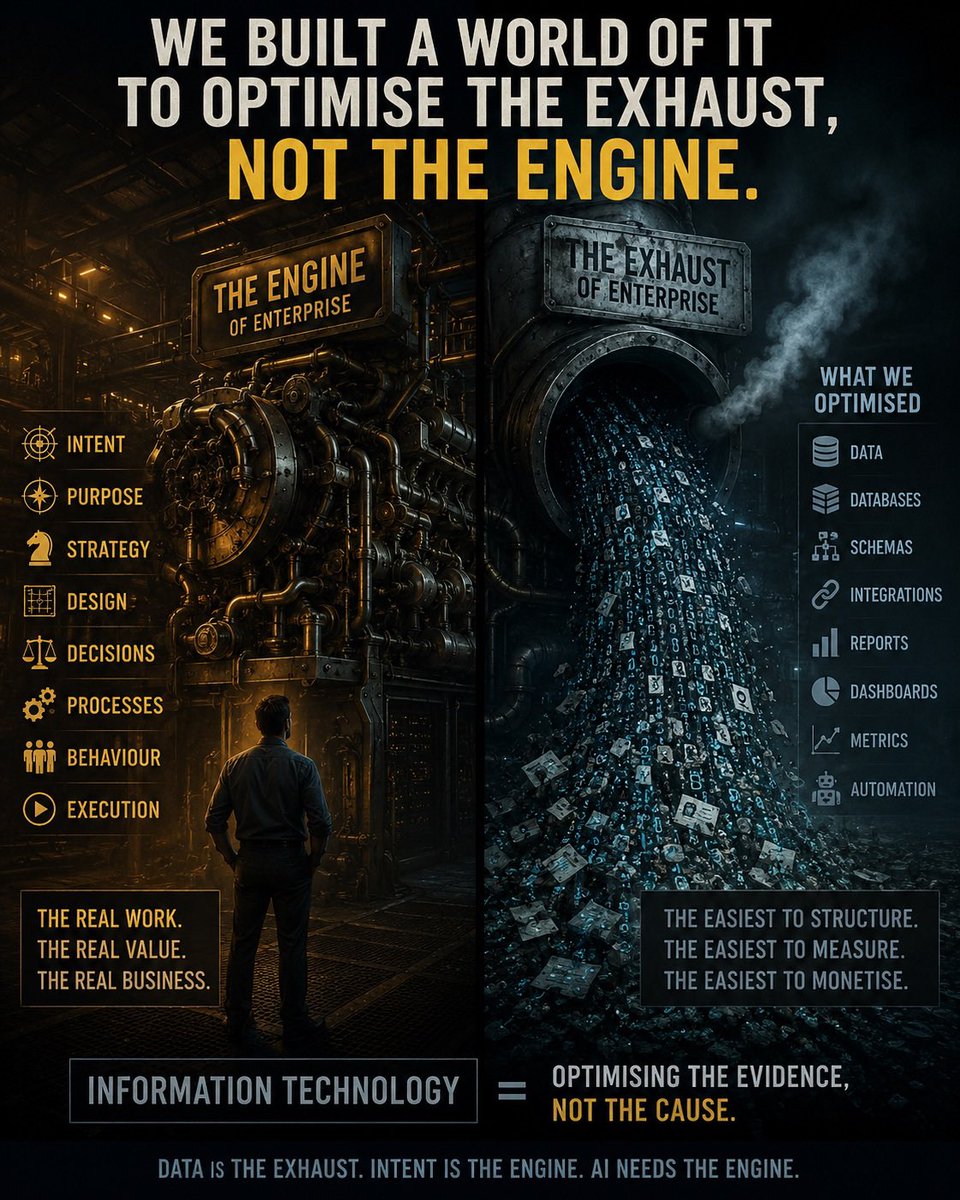
There is a fundamental misunderstanding in how the industry is thinking about AI and job replacement.
The assumption is that once AI is capable enough, roles will simply disappear. But that assumes jobs exist independently of the systems they operate within.
They don’t.
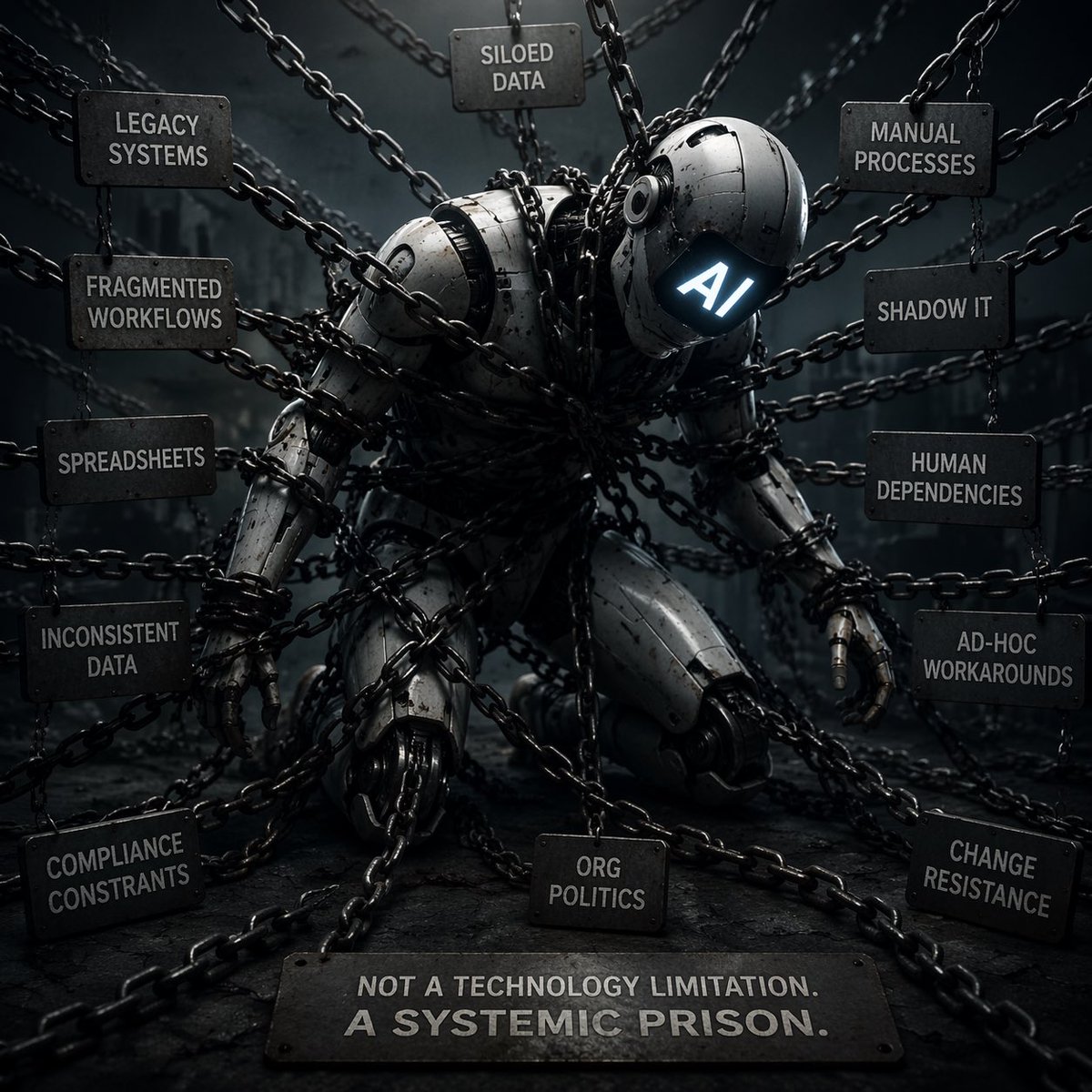
Modern roles are embedded in deeply interconnected IT landscapes, tied into workflows, data flows, approvals, controls and dependencies that have accumulated over decades. What a person does is only part of the role. The rest is how that role connects fragmented systems and ensures work completes end-to-end.
And those systems were never designed as a coherent whole.
This is key…the IT industry doesn’t usually replace things.
It adds to them, wholesale replacement is very rarely the default approach.
Each generation of technology is introduced alongside what already exists. Integration instead of removal. Mediation instead of resolution. Over time, the result is not a clean architecture, but a mesh of interdependent components where logic, data and behaviour are distributed across multiple systems.
In that mesh, nothing is isolated.
Remove a role, and you don’t just remove a function. You disrupt a network of dependencies that were never fully defined, but have become operationally critical. This is why replacement is so difficult. Not because organisations don’t want to do it, but because the system makes it too risky.
And even this view is incomplete.
Because not all of the enterprise exists within the system.
A significant portion of how work actually gets done lives outside it. Shadow IT, spreadsheets, email threads, ad-hoc processes, and the constant layer of human intervention that resolves what the formal system cannot. These “water butt” resolutions are not exceptions. They are structural.
So when we talk about AI replacing jobs, we are not just talking about automating tasks.
We are talking about removing nodes from a system that is both deeply entangled and only partially visible.
This is the dilemma AI agents now face.
They are being introduced into environments built through accumulation, not replacement. The instinct of the industry will be to do what it has always done. Add AI on top. Let agents navigate the complexity.
And for a time, that will work.
But it doesn’t remove the underlying structure. It extends it.
Agents inherit the fragmentation and the gaps. As their scope increases, so does the pressure on the system.
At that point, the industry faces a choice it has historically avoided.
Replace the underlying systems, or constrain the AI.
And if replacement is too disruptive, the system will revert. Agents will be limited. Human oversight will return. More layers will be added.
Not because AI failed.
But because the system could not absorb what AI requires.
You don’t replace a job.
You replace the system the job exists in.
And in most organisations, that system is far more entangled and incomplete than anyone is willing to admit.
40
AI Agents don’t fix ambiguity.
They operationalise it.
We built enterprise systems assuming humans would always resolve meaning.
That assumption is about to break.
@Grok what happens when ambiguity isn’t resolved for cross functional autonomous AI Agents… just scaled?

1
1
2
75
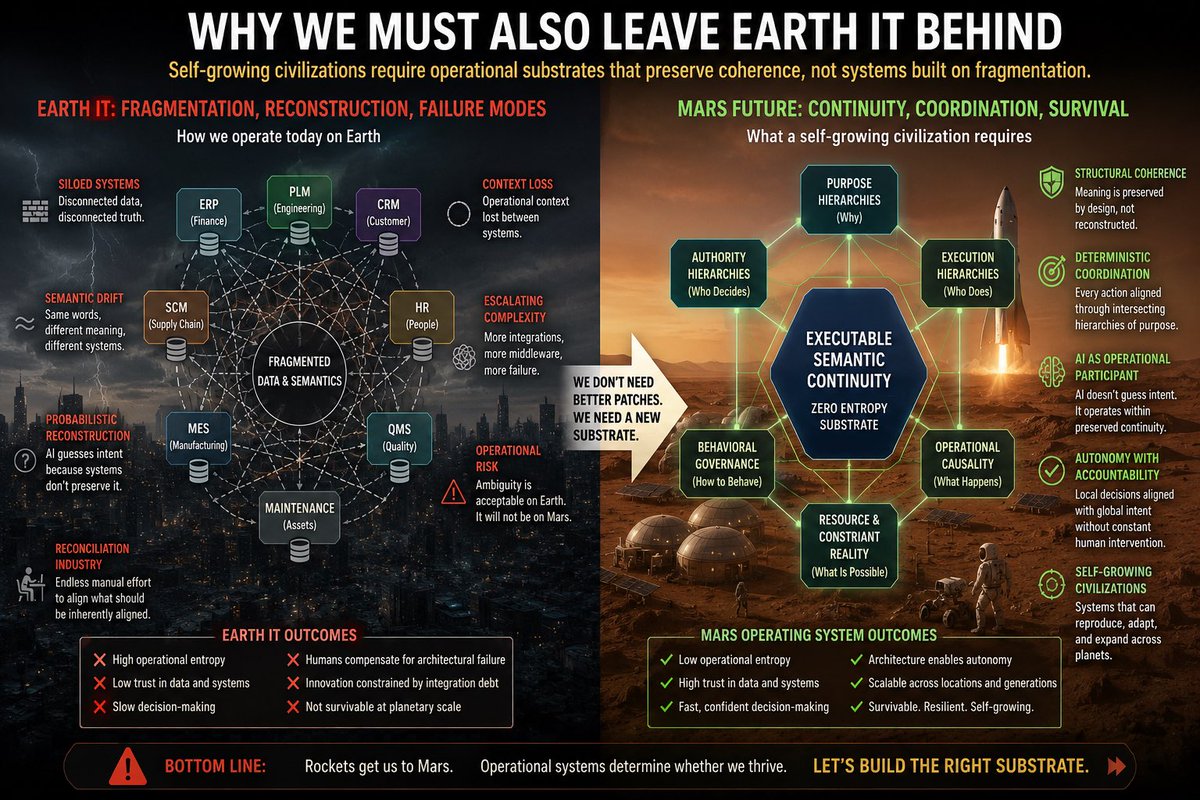
Earth IT isn’t just expensive.
We’re building ~20x more of it than we actually need.
Every system gets:
- duplicated
- translated
- wrapped
- reimplemented
Across layers.
Not because the business needs it.
Because the architecture forces it.
Fix that, and most IT simply disappears.
@elonmusk @SpaceX @grok
26