Associate Professor @UVABME, PI for Laboratory of Systems Biology and Cancer Pharmacology, @UVACancerCenter, @MedicineUVA, @UVAEngineers. All views my own!
Joined May 2018
- Tweets 273
- Following 649
- Followers 515
- Likes 1,384
6 Photos and videos
Happy to share preprint of our lab's latest work led by talented PhD student, Luisa Quesada at @UVABME and @UVACancerCenter , applying a systematic multivariate analysis of chromatin complex dependencies to reveal Set1C/COMPASS as a #melanoma-enriched epigenetic vulnerability.

Systematic multivariate analysis of chromatin complex dependencies reveals Set1C/COMPASS as a melanoma-enriched epigenetic vulnerability biorxiv.org/content/10.64898… #biorxiv_cancer
1
1
172
We also report dependency on Set1C/COMPASS complex in melanoma. Via genetic perturbation, transcriptomics and single-cell analyses, we show that Set1C/COMPASS-dependent melanoma cells require this complex to maintain H3K4me3 and sustain MYC- and E2F-driven proliferative programs.
1
1
31
Together, our findings illustrate how integrative computational analysis and multivariate modeling can uncover mechanistically meaningful chromatin vulnerabilities in cancer.
20
Mohammad Fallahi-Sichani retweeted

Cancer cells have a dangerous superpower: the ability to change & adapt to resist treatment. UVA Biomedical Engineering Professor Mohammad Fallahi-Sichani is studying this "cell state plasticity" to develop therapies that could prevent resistance and metastasis. #ResearchInMotion
3
4
478
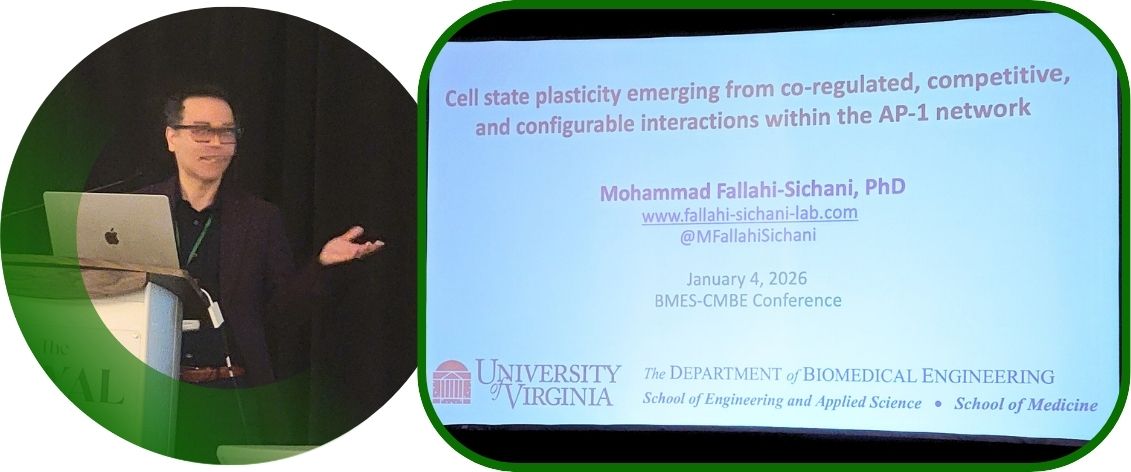
It was a pleasure and great fun attending the CMBE meeting, presenting updates from our lab work on Cell State Plasticity and AP-1 network , led by @UVABME PhD student, Yonatan Degefu.
If you want to learn more about it, here is the link to the preprint:
pubmed.ncbi.nlm.nih.gov/4127…
Jan 5

🧬🧩 One network. Many cell states. Constant rewiring.
Mohammed Fallahi-Sichani @MFallahiSichani (UVA) shows how the AP-1 co-regulatory network organizes discrete, heterogeneous, and reconfigurable cell states.
Biology, built to adapt.
#CMBE2026 #SystemsBiology
173
Mohammad Fallahi-Sichani retweeted

10 Nov 2025
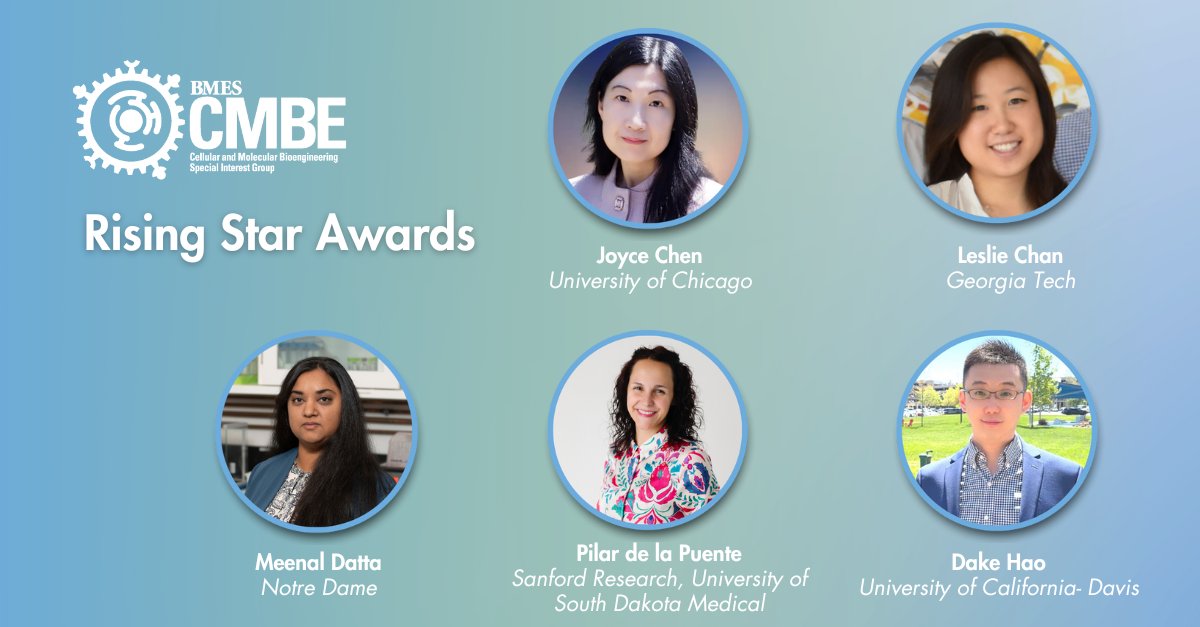
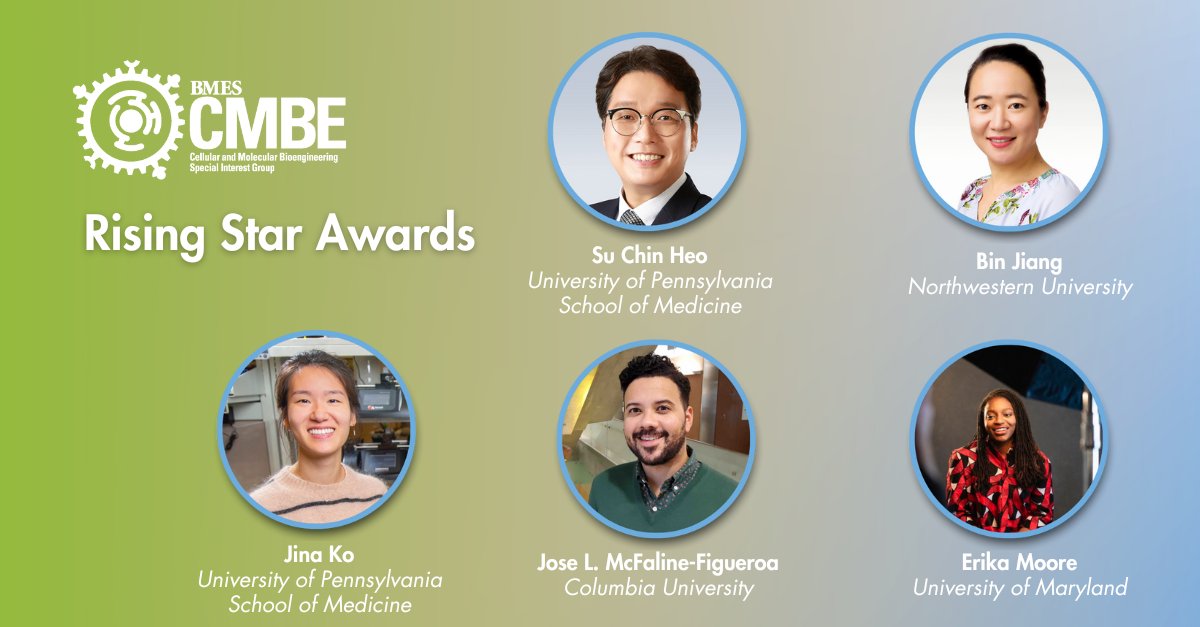
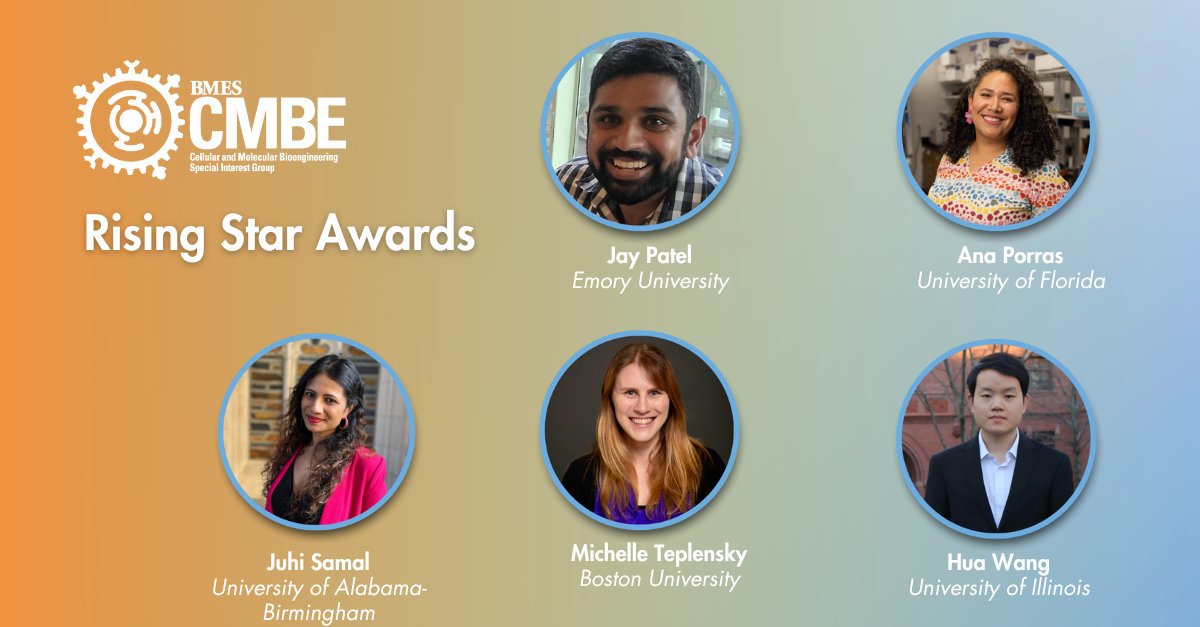
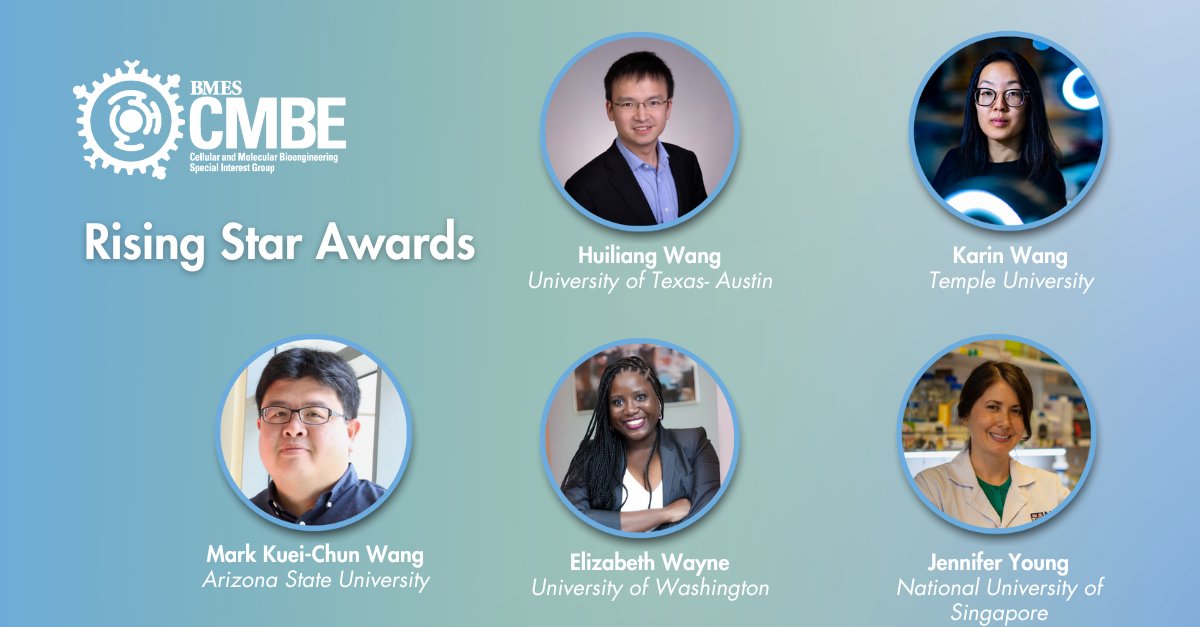
Congratulations to the 2026 BMES CMBE Rising Stars! These outstanding early-career researchers are advancing the frontiers of cellular and molecular bioengineering.
See all honorees: bmes.org/awards/rising-stars…📷
#BMES #CMBE #RisingStars #Bioengineering
5
14
2,304

10 Nov 2025
Excited to share our lab's latest work led by talented Yonatan Degefu, showing how cell state plasticity (in melanoma) is shaped by co-regulated, competitive, configurable interactions within the AP-1 transcription factor network.
@UVABME @UVACancerCenter
8 Nov 2025

Cell state plasticity emerging from co-regulated, competitive, and configurable interactions within the AP-1 network biorxiv.org/content/10.1101/… #biorxiv_sysbio
3
113
8 Nov 2025
Excited to share our lab's latest work led by talented Yonatan Degefu, showing how cell state plasticity (in melanoma) is shaped by co-regulated, competitive, configurable interactions within the AP-1 transcription factor network.
@UVABME @UVACancerCenter biorxiv.org/content/10.1101/…
1
2
108
8 Nov 2025
Under MAPK inhibition, the network adapts; loss of JUND, down-regulation of FRA1, and up-regulation of cJUN, promoting a FRA2-High state that drives dedifferentiation (loss of MITF and SOX10) and MAPK inhibitor resistance.
1
71
8 Nov 2025
These findings link the mechanistic logic of AP-1 network wiring to a well-known adaptive resistance phenotype in melanoma and show how model-guided perturbations can block this transition.
67