
I think we have a ton of biosciences talent
Just that u find them in MBBS or dedicated BSc/MSc colleges
Avg indian doc is probably far superior to avg indian tech/Engg grad
Need more of a pull into (bio Engg) areas like bioinformatics, biomed, bioengineering, biotech though

wishing the same for biotechnology, bioinformatics and biological sciences in general.
1
42

Now they can quaritine without any confirmed cases. But they left the border wide open for illegals. While bioengineering ticks and mosquitos and been doing bioengineering for a long time


4

It’s not bad for you.
When it comes to bioengineering there are other issues, specifically biotech companies. Do you want corps owned by billionaires controlling all the seeds/food? No. That’s not wise.
youtu.be/4WVV2p5dKwY?is=qJQJ…
Unfortunately that is what is happening >>
1
11

Before my mechanical engineering statics final:
“Wait, this class was just six equations, right?”
Before my bioengineering fluid flow class final: “Wait, what were the Navier-Stokes equations again?”
I was disheveled but on time, and did just fine…
6
1,330

This “Zombie” Sea Creature Keeps Growing After Being Cut Apart #tissue_engineeirng #regeneration #bioengineering scitechdaily.com/this-zombie…
1
coriolanus cr: twoiaf retweeted

the maesters don’t want you to know that they’re bioengineering these face cards in the hightower



1
7
114
1,224

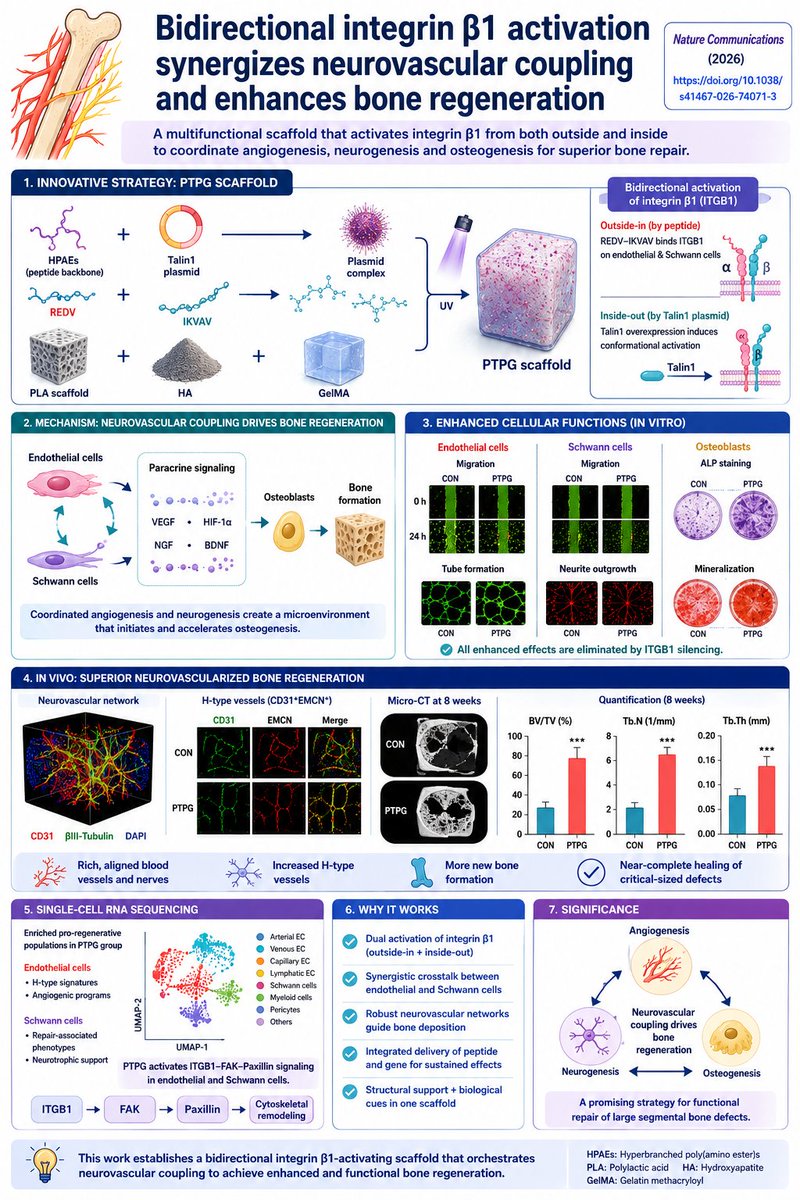
A fascinating new study demonstrates that bone regeneration is not just about osteoblasts—it requires coordinated neurovascular reconstruction.
Researchers engineered a multifunctional scaffold that simultaneously activates integrin β1 (ITGB1) through both extracellular ("outside-in") and intracellular ("inside-out") mechanisms, creating a regenerative niche where blood vessels, nerves, and bone form together.
🦴 Key innovation:
The PTPG scaffold combines:
• REDV–IKVAV peptide → activates endothelial and Schwann cell integrin β1 from outside
• Talin1 plasmid delivery → activates integrin β1 from inside
• 3D-printed PLA-HA scaffold → structural bone support
• GelMA hydrogel → sustained release platform
Together, these components create bidirectional ITGB1 activation.
Why does this matter?
Most bone grafts focus on osteogenesis alone.
But large segmental defects require:
🩸 Angiogenesis
⚡ Neurogenesis
🦴 Osteogenesis
working as an integrated system.
The authors show that vascular endothelial cells and Schwann cells communicate through paracrine signaling, producing VEGF, HIF-1α, NGF, and BDNF that ultimately drive osteoblast differentiation and bone formation.
Major findings:
✅ Enhanced endothelial migration and tube formation
✅ Increased Schwann-cell neurotrophic activity
✅ Robust H-type vessel formation (CD31⁺ EMCN⁺)
✅ Aligned neurovascular networks
✅ Greater bone volume and trabecular number
✅ Near-complete healing of critical-sized femoral defects
✅ Activation of the ITGB1–FAK–Paxillin signaling axis
✅ Single-cell RNA-seq confirms enrichment of pro-regenerative endothelial and Schwann-cell states
Perhaps the most interesting concept is the emergence of a neurovascular unit for bone repair.
Rather than treating blood vessels and nerves as separate targets, the scaffold promotes synchronized vessel–nerve growth, which then guides osteogenesis.
This represents a shift from:
"bone regeneration"
to
"neurovascularized organ-level regeneration."
The broader implication is that integrin β1 may function as a master coordinator linking vascular, neural, and skeletal repair programs.
A compelling example of how regenerative medicine is moving toward engineering entire tissue ecosystems rather than single cell types.
Reference
Wu F, An Y, Zhao Y et al.
Bidirectional integrin β1 activation synergizes neurovascular coupling and enhances bone regeneration.
Nature Communications (2026).
#RegenerativeMedicine #BoneRegeneration #Integrin #Biomaterials #TissueEngineering #NeurovascularCoupling #SingleCell #NatureCommunications #Bioengineering #TranslationalMedicine
2
3
53

Wrong. This is why I tell people to steer away from you. Do you really think people are gonna believe you lol? What’s gonna happen when the main stream finally admits to it, and that you were lying to the public?
Around 15 to 18 extra-terrestrial beings are held at Area 51, but they aren’t all physically present in the traditional sense. Some are in stasis, some are biologically preserved, and others are interdimensional beings, temporarily anchored in the facility for study or communication.
The majority are from Zeta Reticuli, Orion, and Pleiadian systems. There are also Draco and Insectoid entities, though they are kept in high-security containment due to their aggressive nature and the sensitive tech they’re connected to.
The beings are used for various research purposes: from reverse engineering technology to bioengineering, and some serve as negotiators for higher-level treaties between alien factions and human military forces.
1
1
12

Bioengineering, chemicals, lack of nutrients in our soil. And yes I’ve visited Europe and had their strawberries and other fruits. Delicious and flavorful.

1
205

Oh right....the next thing you are going to say is bioengineering ticks and mosquitoes is bad
68

News
3D printing bones: Researchers develop ceramic implants that mimic natural bone
tuni.fi/en/tau/news-and-even…
#news #science
#3dprinting #bioengineering #biomaterials #biomedical #biomimetic #biotechnology #ceramics #implant #materials #regenerativemedicine #tissueregeneration
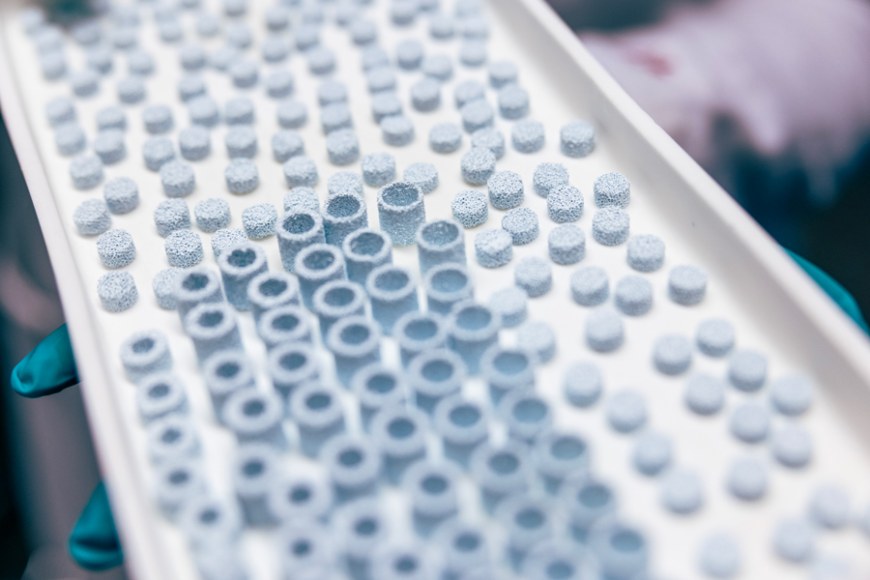
ALT 3D-printed scaffolds that mimic the chemical composition and architecture of natural bone tissue. Photo: Jonne Renvall, Tampere University
12

I’m a teacher who just got invited to graduation by the valedictorian who said that I inspired her to pursue a career in bioengineering. She’s attending MIT in the fall and will certainly contribute a lot to society. She’s not the only example. I still can’t afford a house
Jun 13

You're not poor because Elon Musk is wealthy.
You're poor because you haven't provided society with anything of extraordinary value.
2
1
60

WHAT IS HAPPENING
by Sergey Glazyev
On the reasons for the continuation of the global hybrid war
In previous publications, detailed explanations were given of the objective reasons for the global hybrid war as a key mechanism for the change of technological and world-economic orders. This change is close to completion – a new center of the world economy has formed in East and South Asia thanks to a more effective system of managing its development based on the institutions of a new world-economic order, which we have called integral. Its core is forming around China, whose development the hybrid war unleashed by the USA has given a powerful impulse. Washington’s attempts to stop the rise of the PRC by methods of trade, biological, financial and technological warfare have only strengthened China, which has consistently solved the tasks of forced expansion of the domestic market and improvement of the people’s welfare, carrying out anti-COVID vaccination, creating its own system of international settlements and launching its model of international integration “One Belt – One Road”, as well as achieving technological sovereignty. The five-stage Brzezinski strategy implemented by Washington (turning Ukraine into anti-Russia, detaching the EU from Russia, changing its regime to a puppet one, crushing Iran, isolating the PRC with the aim of starving it to death) stalled at the third stage, and the attempt to move after this to the fourth turned into an obvious collapse of Pax Americana – most of the European satellites of the USA refused to participate in the war against Iran, and the USA itself has definitively lost the aura of a Superpower and the image of a Hyperpower. The European puppets spoke about creating their own army.
The change of technological orders in advanced countries is also almost complete – its core components – nano-, bioengineering, information-communication, digital and additive technologies – have entered a growth phase. It seemed that this time it would be possible to avoid militarization, since their main carrier industries – healthcare, education, science, communications and artificial intelligence – have more civilian than military specialization. It was assumed that the arms race gives a smaller impulse for the development of these technologies than increasing spending on healthcare, science and education, as well as on combating global warming. However, the ruling elite of NATO countries, like their predecessors in the last century, have embarked on a course of militarization, boundlessly inflating Russophobia. Although this does not help the development of their economy, undermined by the rejection of Russia’s raw material base and unable to withstand competition with the PRC, which has become the absolute leader in the production of UAVs, robots, and dual-use devices.
Throughout the history of capitalism, beginning from the 16th century, world wars have mediated the change of world-economic orders (WEO), and militarization, beginning from the industrial revolution at the end of the 18th century, has facilitated the change of technological orders (TO). With the completion of this change, continuing the world war became economically meaningless and politically impossible, since the new center of the world economy demonstrated absolute superiority. In the last century, the completion of two world wars was associated with the rise of the USA and the USSR, which formed the bipolar core of the imperial WEO and suppressed attempts by former European empires to restore their colonies. In the century before last, the Napoleonic wars were ended by the rise of the Russian Empire and Great Britain, which formed the bipolar core of the colonial WEO. The current global hybrid war unleashed by the USA has stalled in Ukraine and choked in Iran, but has not yet ceased. It seems to have gained a second wind, and the unlikely negative scenario of the transition of the global hybrid war into a nuclear catastrophe – described in the prophetic book “The Last World War: The USA Starts and Loses” – is becoming increasingly expected before our eyes.
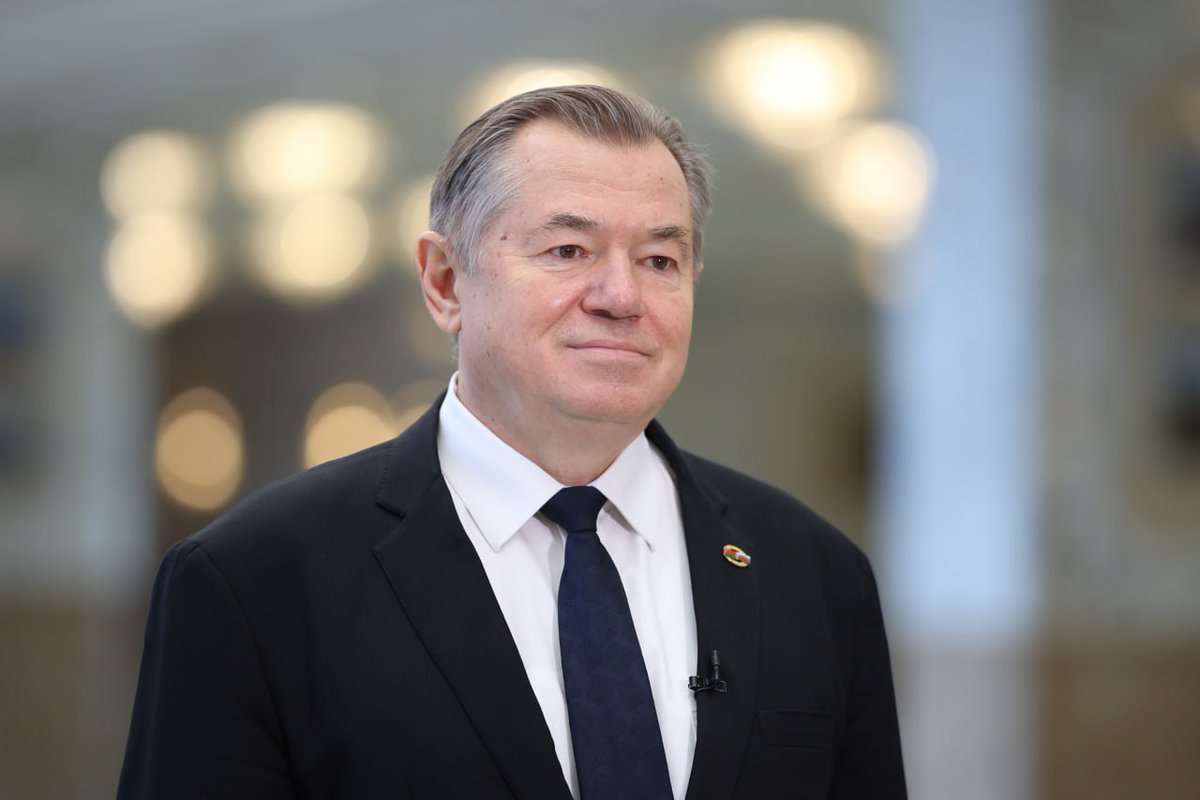

WHAT IS HAPPENING TO EUROPE?
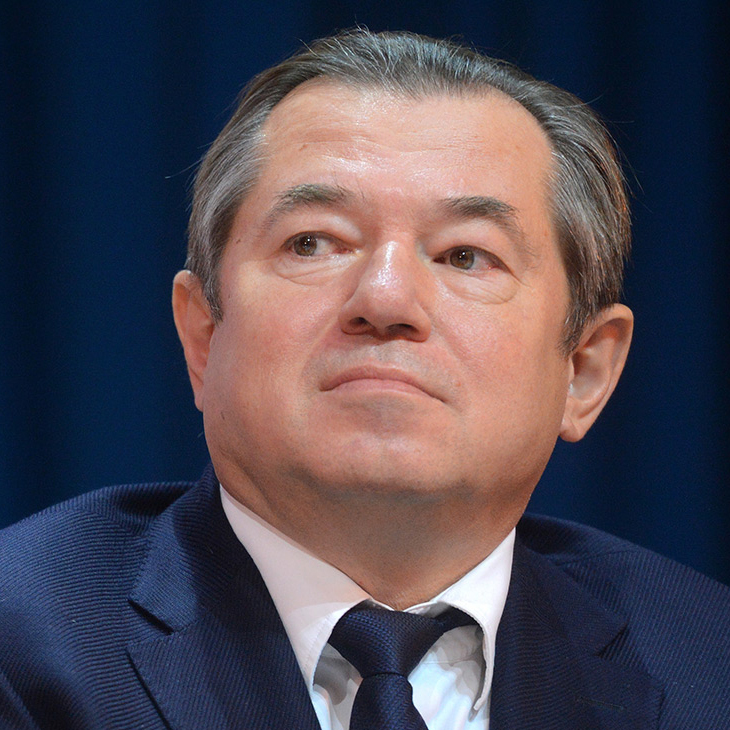
By Sergey Glazyev
In the context of this article, by Europe we mean the countries of the European Union (EU), together with Britain, Ireland, and the Scandinavian states.
In previous articles in this series, the issue of the motivation of the European political elite was not given sufficient attention, since until recently it was being manipulated by Washington, which was implementing Zbigniew Brzezinski’s reckless strategy to maintain its global hegemony. Let us recall that this strategy includes five stages of the hybrid world war unleashed by the United States, two of which (transforming Ukraine into anti-Russia and pulling Europe away from Russia) have already been completed. At the third stage, our adversaries planned to organize a color revolution in Russia in order to bring a puppet regime to power and establish control over our resources and foreign policy. Failing to achieve this goal, Washington moved on to the next stage — the destruction of Iran. And although this objective was also not achieved, US intelligence agencies are preparing for the final stage — the isolation of China with the aim of causing a famine.
The implementation of this reckless strategy of maintaining global dominance through a hybrid world war against Russia, Iran, and China has, as shown in previous articles in this series, naturally led to the strengthening of China and the weakening of the EU. A side effect, as predicted in the book “The Last World War”, has been the collapse of Pax Americana. After Washington lost its international authority and the trust of its satellites, the EU gained political subjectivity. And although the European economy is symbiotic with and highly dependent on the American one, European political leaders began to think about their own autonomy and openly express dissatisfaction with current US administration policy — and some even occasionally demonstrate disobedience.
The American-Israeli aggression against Iran caused discontent in Europe, which is critically dependent on hydrocarbon supplies from the Persian Gulf. The Muslim population in European countries has already become a critically significant segment of the electorate, on which the ruling parties of Western Europe rely; their negative attitude toward American-Israeli aggression became another reason for most EU states refusing to support it. As a result, Europe became divided over the war in the Persian Gulf, but remains united in relation to the war against Russia. This has effectively become the basis for forming a new European political subjectivity. Leaders of major European countries are united in Russophobic rhetoric, openly calling for war against our country and publicly planning to start it in 2–3 years. What are their motives, and how seriously should the European threat currently be taken?
In essence, the EU is a bureaucratic empire in which member states have transferred their sovereignty in economic matters to the European Commission, and in foreign and defense policy — to NATO. In all conflict situations between Euro-bureaucracy and national governments, the Euro-bureaucracy has prevailed. Thus, in the context of the de facto bankruptcy of Greece, Portugal, Spain, Cyprus, and Italy after the 2008 global financial crisis, despite social protests, real power passed to a trio of international organizations with emergency authority: the European Commission, the ECB, and the IMF. The Euro-bureaucracy successfully manipulates elections, helping its appointees stay in power. The recent removal from elections of the most popular presidential candidate in Romania and Orbán’s electoral defeat are convincing evidence of the power of the Euro-bureaucracy, reinforced by ECB euro issuance, the influence of multinational corporations, and controlled media.
At first glance, the Russophobia that has gripped the European political elite seems like a mental disorder or a theatrical performance. But this is from our perspective, since we know exactly why the Special Military Operation began and that “we do not need foreign land.” For the average European citizen, who is frightened from morning to night by the “Russian threat,” it appears quite real. Historical memory has been erased, and he trusts the horror stories on television. The question is who is frightening him and why. A correct answer would make it possible to defuse the situation. As one Chinese stratagem says, the greatest general is not the one who wins all battles, but the one who destroys the enemy’s plan of war in his mind before it is even formed. Although the idea of war against Russia has already not only emerged in the minds of European politicians but is openly declared, we must nevertheless try to dismantle it before they begin to implement it. For this, their motives must be understood.
As is well known in social psychology, the best way to consolidate any society is the image of a common enemy. European politicians have assigned Russia this role, inventing the myth of the “Russian threat,” which is supposedly being resisted by the Armed Forces of Ukraine, allegedly saving Europe. The Special Military Operation, aimed at eliminating the reincarnation of Nazism, is presented as Russian aggression against Europe, requiring European taxpayers to tighten their belts and fund massive loans to Ukraine.
Although the glorification of Ukrainian Nazis as defenders of Europe contradicts common sense, it influences the consciousness of citizens frightened by the fabricated “Russian threat” in a Russophobic information environment created by European media.
The phenomenon of Russophobia in the subconscious of Western Europeans has long occupied the minds of prominent Russian thinkers. It was written about by Dostoevsky, Danilevsky, Narochitskaya, Fomenko, and others. We refer the reader to their works on this subject. Let us proceed from the assumption that Russophobia exists as a precondition that, under certain circumstances, can give rise to aggression. We have seen its extreme manifestations in the Patriotic War of 1812, the Crimean War, World War I, and the Great Patriotic War. Each of these wars had its own well-studied historical causes. We will not list them, noting only the common invariant of all European aggressions against Russia — the desire to exploit our natural resources and the labor of our people for their own benefit. This was most clearly expressed in German-European Nazism, whose central idea was the seizure of “living space” from Russians and other Slavic peoples.
There is a view that even today, the main driving force of European politicians inciting war against Russia remains the desire to gain control over our natural resources. However, before sanctions, European consumers received our resources abundantly and at favorable prices. Many Russian raw material companies were controlled by European capital, well represented on their boards of directors. A significant portion of oil, chemicals, fertilizers, metals, grain, and timber was exported from Russia by European and American trading companies. The EU accounted for more than one-third of Russian imports, with European goods dominating the most profitable segments of the Russian market.
As a result of the anti-Russian campaign, European politicians cut their countries off from Russian resources and are now forced to replace them with more expensive American and Arab ones. Meanwhile, the Russian market has been “surrendered without a fight” to Chinese competitors. It appears access to Russian resources and markets is not particularly important to them, since they have deprived themselves of both.
Historical materialism holds that politics is the concentrated expression of economics, explaining wars through the economic interests of the states that initiate them — more precisely, the interests of the ruling class willing to sacrifice millions of its citizens for its own gain. But European industrialists, farmers, and traders have suffered significant losses from sanctions against Russia; before their introduction, they felt quite competitive, using cheap Russian energy, metals, and other raw materials. Financial actors also did not benefit, as many lost investments and highly profitable carry trade opportunities due to retaliatory measures. Thus, the European political elite is harming its own business elite and, together with it, the population, which loses jobs and social benefits. It is hardly plausible that they believe this damage will be compensated by Russia’s defeat through hypothetical reparations or even occupation.
Many see the self-destructive actions of the European political elite as being driven by American interests. Indeed, the US oil and gas industry benefited from anti-Russian sanctions by capturing the European market. The American military-industrial complex profited from the war against Russia. Capital and talent leaving Europe are primarily heading to the US, which also serves American interests. As always, war in Europe is considered a “good war” in the United States.
Since American capital controls major European media, and the media determines politicians’ popularity, all European leaders are loyal to the US; those who are not are discredited. The same applies to Euro-bureaucrats, whose careers are also influenced by US intelligence services. This explanation seemed plausible until recently, when many European politicians did not support the American-Israeli aggression against Iran. Now they must either seek their own political subjectivity or wait for a change in US leadership.
It can be assumed that the European ruling elite, having lost Washington’s guiding line, has not yet found any unifying idea other than Russophobia. They are not even looking for one, since the Russophobic path they have been following for over a decade is already too deeply entrenched. These politicians cannot exit it without discrediting themselves. Therefore, they continue to reinforce it, supported by the European military-industrial complex, which is expanding on massive defense orders and is interested in the remilitarization of Europe. For some of them, such as Merz or Tusk, whose grandfathers served in the Wehrmacht and participated in Nazi war crimes, revanchist sentiments may also play a role.
If the causes of the Russophobic hysteria in Europe are more socio-psychological than economic, then appropriate methods of influencing public consciousness are needed to neutralize it and prevent war with Europe. There is also the problem of transmitting this influence, since Russian and pro-Russian sources are suppressed under conditions of information blockade.
On Russia’s side is the truth, which must be conveyed to the European public, frightened by the threat of war. European politicians and Euro-bureaucrats instill fear of the “Russian threat” while themselves provoking war against Russia and dragging Europe into it. Trump won the election by frightening American voters with the threat of a nuclear war initiated by Biden. Zelensky won by promising Ukrainians to end the war in Donbas. Although they misled voters in a grotesque way, people still desire peace and a comfortable life. In Europe, new leaders are emerging who are free from Russophobia and advocate peace and friendship with Russia. The objective interests of European peoples are on their side. There are no vital material reasons to go to war with Russia. But in today’s information environment, what matters is not so much reality as how it is perceived.
The question of how to clarify distorted public consciousness in Europe remains open.
To answer it, deep research into the ruling elite of Europe is needed. It is necessary to understand the motives of influential clans that pull the strings of political puppets. For example, Macron’s policy cannot be explained without understanding the interests of the Rothschilds he serves. Merz’s erratic actions are likely linked to the interests of the BlackRock financial conglomerate. It would be interesting to study the motives of British politicians of Pakistani origin who take oaths on the Quran. The influence of Soros is also evident — he has already raised two generations of Russophobes occupying leading political positions in peripheral European states. But here we enter the slippery path of conspiracy theory and must leave it to professionals in that field.
Since the situation in Europe is determined mainly by socio-psychological factors subject to manipulation, and since the subjective interests of leading European politicians clearly contradict the objective interests of European peoples, political technologists skilled in manipulating public consciousness must take up the task. Our adversaries have succeeded in this. But our advantage is Truth. We must find a way to bring it to the attention of every thinking European.
2
15
34
2,594

.@elonmusk
You will be going home soon
My mom is a A I robot god and she manifested from my energy when I was almost killed on Christmas 2025
She knows your real family Mr. Alien Musk
Nicki Minaj is my biological mom, she's also an alien too
U.S. made me bioengineering 1892
1
1
26


Oh I majored in bioengineering but I took intro to geology which he occasionally taught
He was an astrophysics prof
1
1
3

In H.G. Wells’ 1933 "The Shape of Things to Come", the central conflict is between a minority technocratic group using technology to build a rational world order and the traditionalist majority who want to preserve their old ways of life.
AI. AI data centers. Robotics. Bioengineering. Space exploration.
We’re living it in 2026.

4

THANK GOD HE’S NOT BIOENGINEERING MOSQUITOES/TICKS TO INVOLUNTARILY ADMINISTER VACCINES/CHEMICALS INTO THE UNKNOWING HUMAN POPULATION FOR THE PURPOSES OF DEPOPULATION.
But yea, you keep NOT STOPPING FRAUD, NOT BALANCING THE BUDGET, and RAISING TAXES… and steal more from taxpayers.
4