
Next-generation IoT for health, oceans, and robotics. Signal Kinetics Research Group at @mit @medialab & @miteecs led by Prof. @fadeladib
Joined August 2017
- Tweets 357
- Following 15
- Followers 1,004
- Likes 315
65 Photos and videos


MIT Signal Kinetics Group retweeted

Apr 30
Why do most people gravitate toward startups that build thin layers on top of AI right now?
There’s a view you often hear from more seasoned founders that the real value is in the last mile, not the model - that is actually solving the full problem end to end for a specific customer. I agree with that, but it doesn’t really explain why so many founders and early employees still go after these kinds of ideas.
It mostly comes down to what gets rewarded early.
If you build something quickly on top of frontier models, you can get signal fast. If it works, you can grow quickly and might even get acquired. If it doesn’t, you fold. That kind of early feedback loop lines up well with how VC portfolios are constructed and with what tends to get attention, so it’s not surprising that most people in startupland lean in that direction.
The alternative is just much harder. You’re picking a problem where solving it end to end is messy, slow, and requires real domain understanding. On top of building the product, you’re also dealing with skepticism, because the value isn’t obvious upfront and it’s not a hot area. That makes fundraising harder since you need more evidence before people are willing to believe the story, which in turn slows you down. It also requires a different kind of conviction, because you don’t get a lot of early external validation that you’re on the right path.
We ran into this with Cartesian. Physical retail wasn’t an obvious or hot space, and the default reaction was that it would be slow, hard to sell into, and unlikely to move quickly. But we kept hearing real pain from customers, even if we didn’t initially have the cleanest way to articulate it.
One thing we learned is that it was easier to convince customers than investors. So we focused on building the product, working closely with customers, and building an awesome team that could go deep on the problem. We stayed bootstrapped, which forced us to learn the space in a much more grounded way. We’ve already come a long way: 700 stores, 15 countries, and multi-million ARR.
Non-dilutive funding (from @NSF @sbirgov) also helped bridge the gap early on, before the story became more obvious to the outside.
There’s always a lot of FOMO in the startup world, and it makes sense. But if you take the other route, you’re effectively trading speed of validation for depth of execution and defensibility. That trade is harder to make upfront, but so far it has been worth it for us.
Apr 29

MIT student asked a question earlier today that a lot of young founders are quietly wondering about:
"Won’t the frontier labs just do everything?"
Yes it's true that OAI/Ant are shipping at incredible pace, but it's quite easy to avoid their blast radius and build amazing startups:
OpenAI is not going to build a cattle-herding drone, buy an old F-150 and drive from ranch to ranch like the founder of one of the fastest-growing YC W26 startups, Graze Mate.
Anthropic is not going to integrate with dental insurance verification systems (Lance).
Google is not going to navigate NATO procurement (Milliray).
The value is in the last mile, not the model. Sales cycles require humans who understand the customer. And most importantly, the market is expanding, not shrinking: AI isn't cannibalizing the existing 1% software spend — it's unlocking the other 5-6% that was going to humans. That's a much bigger market for startups yet-to-be-founded than the one the labs are playing in.
Now, what DOES seem risky?
A thin UI layer on top of ChatGPT with no domain expertise; a general-purpose chatbot or assistant; or a product that gets obsolete when model capabilities improve.
But — tools for specific industries; "full-stack" AI companies that actually are the service (AI law firm, AI accounting firm, AI uranium exploration company); or generally products where the customer doesn't want a tool but an outcome — are defensible ideas for startups.
2
1
2
333
MIT Signal Kinetics Group retweeted
15 Feb 2024
IEEE RFID is coming to MIT! Excited to be chairing the conference this year and hosting it on campus. It will be fun and intellectually stimulating - and there's still time before the submission deadline for anyone who wants to submit their papers!
2024.ieee-rfid.org/
12
7
25
4,089
MIT Signal Kinetics Group retweeted
13 Dec 2023
Proud to be an AUB alum (aka AUBite), and grateful to President @DrFadloKhuri for his kind and heartwarming words, and for his wisdom in leading AUB during these times and into the future
2
3
71
8,143
MIT Signal Kinetics Group retweeted
13 Dec 2023
بفخر، إمتنان، وأمل
فخر بهذا الوسام الّذي يشرّفني
إمتنان لسموّ الشّيخ، لعائلتي،أساتذتي، تلاميذي،رفقائي،وكل من دعمني في مسيرتي
وأمل بمستقبلٍ لامعٍ وآمنٍ لعالمنا العربي
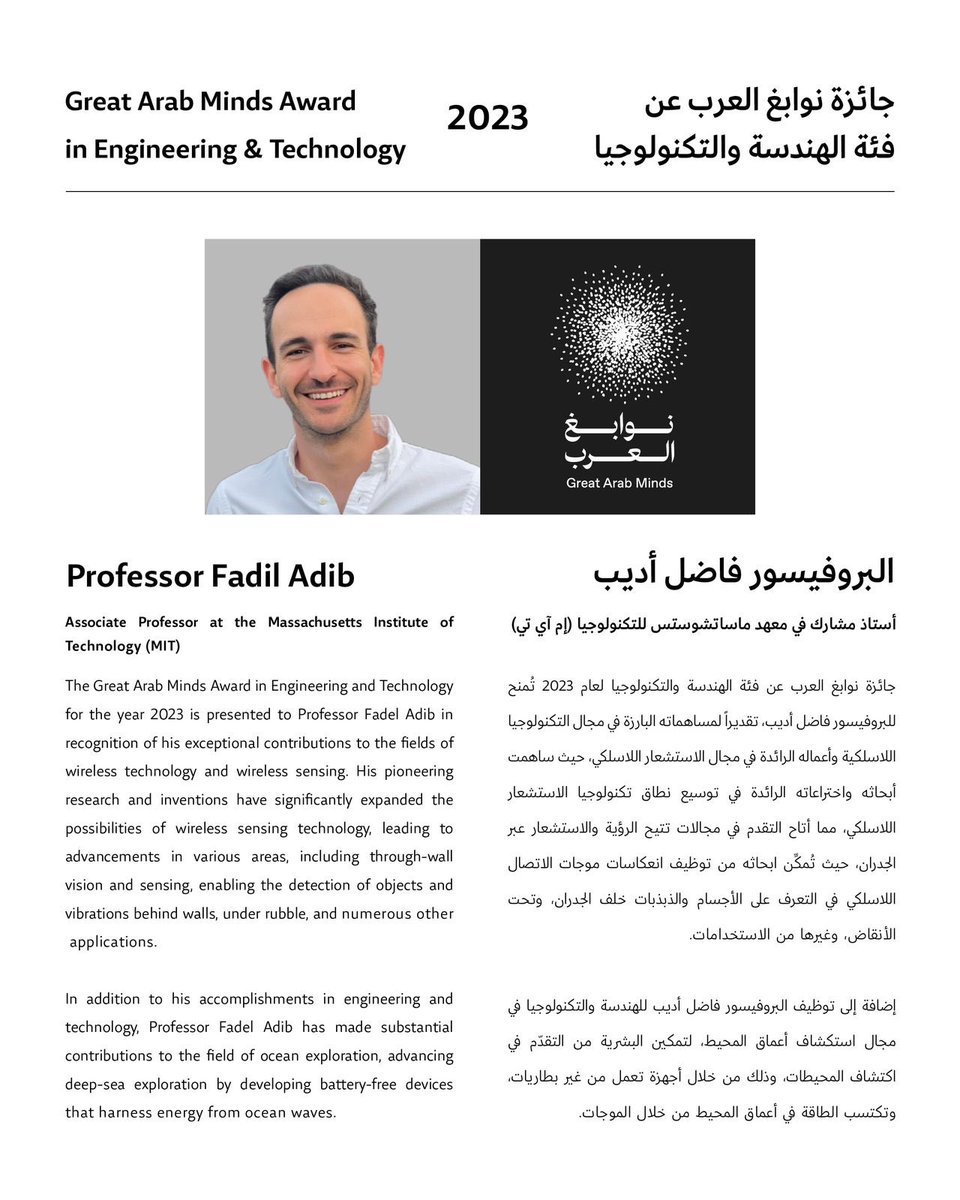
Enormously proud & grateful to @HHShkMohd for this honor & for his vision of a better Arab world
@greatarabminds
7 Dec 2023

مبادرة "نوابغ العرب" هدفها الأساسي هو تعزيز ثقة الإنسان العربي بإمكانياته، وقدراته، وتعريف الأجيال على قدوات ونماذج مشرّفة… واليوم لدينا نموذج مشرّف لشاب عربي.. نعلن اليوم عن الفائز بجائزة "نوابغ العرب" في مجال الهندسة والتكنولوجيا، وهو البروفيسور فاضل أديب من لبنان، أستاذ مشارك في معهد ماساتشوستس للتكنولوجيا (MIT) ،
نشر أكثر من 80 ورقة بحثية وبراءة اختراع في مجالات الهندسة والتكنولوجيا، ولديه إسهامات بارزة في مجال الاستشعار اللاسلكي، ومنها أبحاثه وابتكاراته في مجال الاتصال اللاسلكي وخاصة في التعرف على الأجسام والذبذبات خلف الجدران، وتحت الأنقاض.
كل التوفيق للبروفيسور فاضل أديب
4
8
84
9,419
MIT Signal Kinetics Group retweeted

15 Sep 2023
.@MIT researchers have developed what one expert is calling a breakthrough in #UnderwaterCommunication. Applications include remote sensor networks monitoring coral reef health or subsea structure-monitoring for aquaculture or #oiland gas operations. spectrum.ieee.org/underwater…
10
10
29
6,120
MIT Signal Kinetics Group retweeted

6 Sep 2023
Blending new and old technologies allowed a team at @MIT to develop an ultra-low power, long-range underwater communication system. hackster.io/news/underwater-…
4
11
3,016
MIT Signal Kinetics Group retweeted

7 Sep 2023
MIT researchers have build a system which could be used for battery-free underwater communication across kilometer-scale distances, to aid monitoring of climate and coastal change.
interestingengineering.com/i…
7
11
5,772
MIT Signal Kinetics Group retweeted

7 Sep 2023
Scientists turn to mid-20th century tech for low-power underwater comms dlvr.it/SvlHKq
1
10
3,094
MIT Signal Kinetics Group retweeted

6 Sep 2023
Researchers from the @MIT_SK_Lab led by Prof. @fadeladib have developed a system that could be used for battery-free underwater communication across kilometer-scale distances, to aid in the monitoring of climate and coastal change. news.mit.edu/2023/devices-of…
7
22
6,706
MIT Signal Kinetics Group retweeted

6 Sep 2023
“We are creating a new ocean technology and propelling it into the realm of the things we have been doing for 6G cellular networks,” says Fadel Adib. mitsha.re/Tqxz50PIjpI
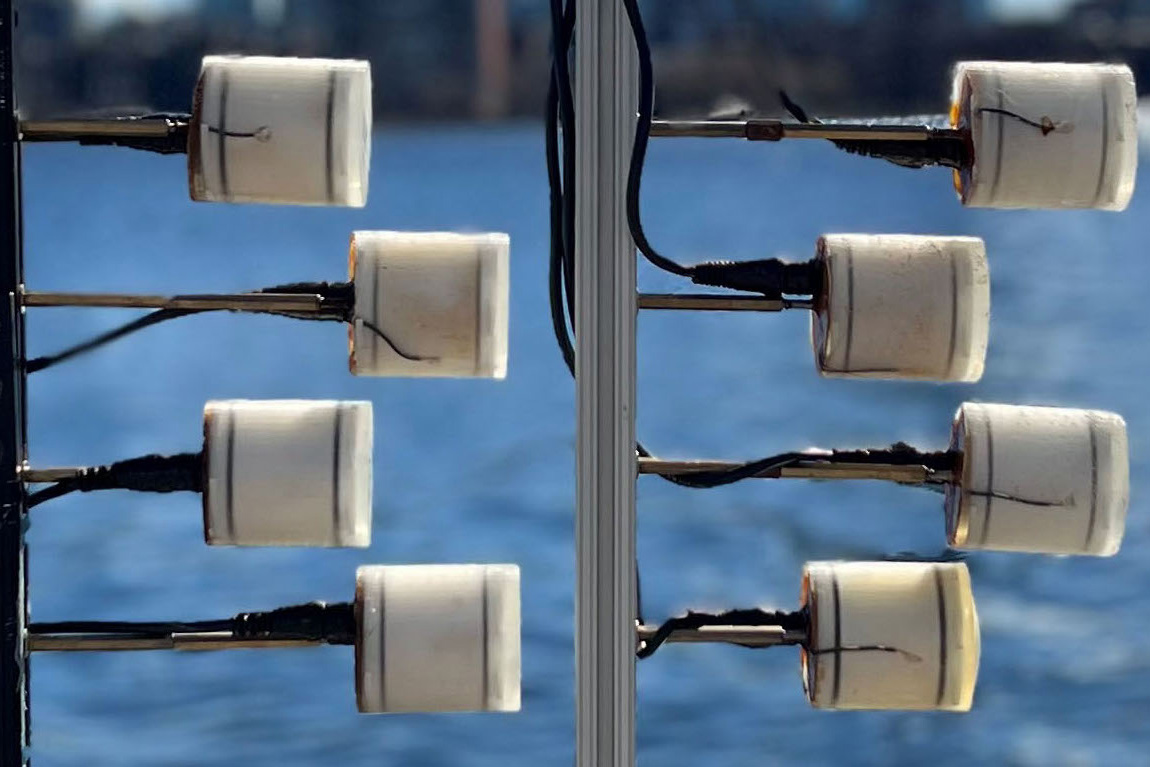
ALT 8 piezoelectric transducers look like toilet paper rolls and are attached to poles, near water.
6
25
74
24,694
MIT Signal Kinetics Group retweeted

30 Aug 2023
Excited to share my TEDxMIT talk online! I talk about how, through science & engineering, I managed to make my magical dreams a reality- giving humans 'X-ray vision'. Check out my talk to explore the magic of technology!
youtu.be/QHSdbpOTwm8?si=eAEB…
#XRayVision #TEDxMIT @medialab @MIT
4
7
35
7,627
MIT Signal Kinetics Group retweeted
30 Aug 2023
This July 4th, I gave a talk at the Shoals Marine Lab to a wonderful group of undergrads, high schoolers, & researchers working on ocean/marine research. For anyone interested in IoT for oceans/climate, this talk should be fun!
@ShoalsMarineLab @medialab
youtube.com/watch?v=Iv-ALA45…
3
22
7,768
MIT Signal Kinetics Group retweeted
27 Aug 2023
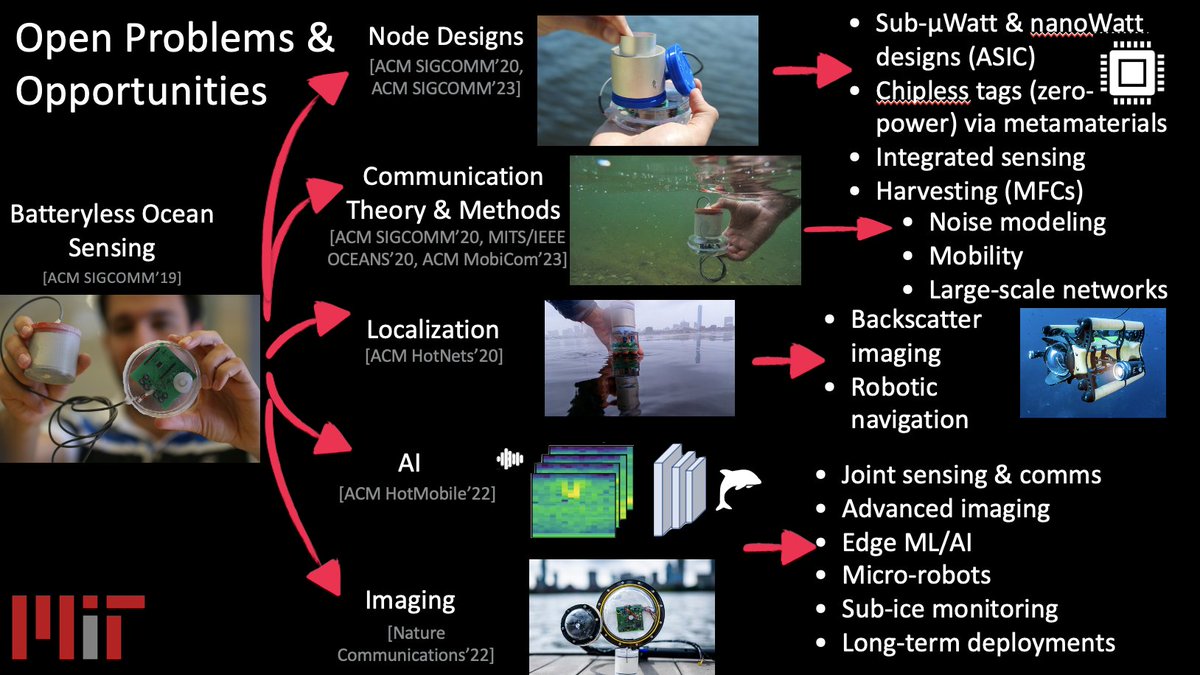
What should the last slide of a presentation have? Many presentations end with a "Thank You" slide. It's a forgone opportunity to remind the audience of the talk, invite questions, and inspire follow-up work. Which of the two final slides below would you rather see?

4
1
18
3,248
MIT Signal Kinetics Group retweeted
9 Jul 2023
Has anyone studied the mental health impact of Google Scholar on academics? After all, it’s the academic analog to social media: Papers = Tweets. Citations = retweets, Co-authors = following. Does that make me a social media influencer or is my citation count not high enough? 😅
6
5
59
17,518
MIT Signal Kinetics Group retweeted
24 Jun 2023
📢 **Computer Vision startup opening**
Plz help us spread the word about an opening at my startup Cartesian! We're moving fast & looking to expand the nucleus of our team with someone to lead CV algorithms for localization, recognition, & mapping
linkedin.com/jobs/view/36436…
53
20
69
15,447
MIT Signal Kinetics Group retweeted
23 Jun 2023
Enormously proud that our paper “See Through Walls with WiFi!” which was published in SIGCOMM 2013 received the ACM SIGMOBILE Test-of-Time Award! Most people don’t know that this paper was on the verge of rejection back then. A thread. 1/9
media.mit.edu/posts/adib-and…
3
12
92
19,625
MIT Signal Kinetics Group retweeted
19 Jun 2023
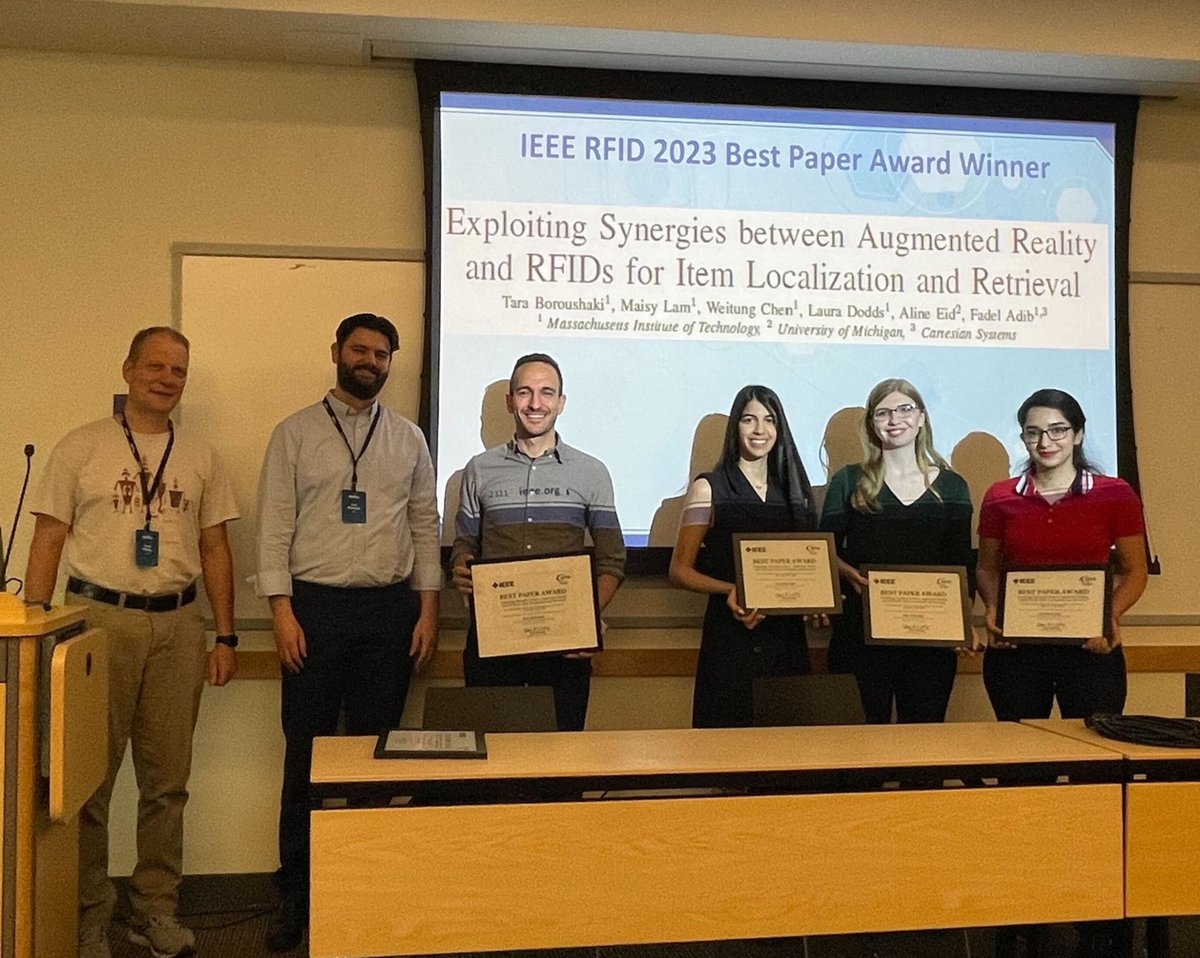
Our paper on RFID augmented reality won the best paper award at IEEE RFID 2023! 🏆
our paper on software-controlled polarization for longer-range RFID reading & localization won a best paper runner-up at IEEE RFID 2023! 🥈
@medialab @MIT_SK_Lab @Tara_Boroushaki @AlineEid1
6
10
81
11,265

16 May 2023
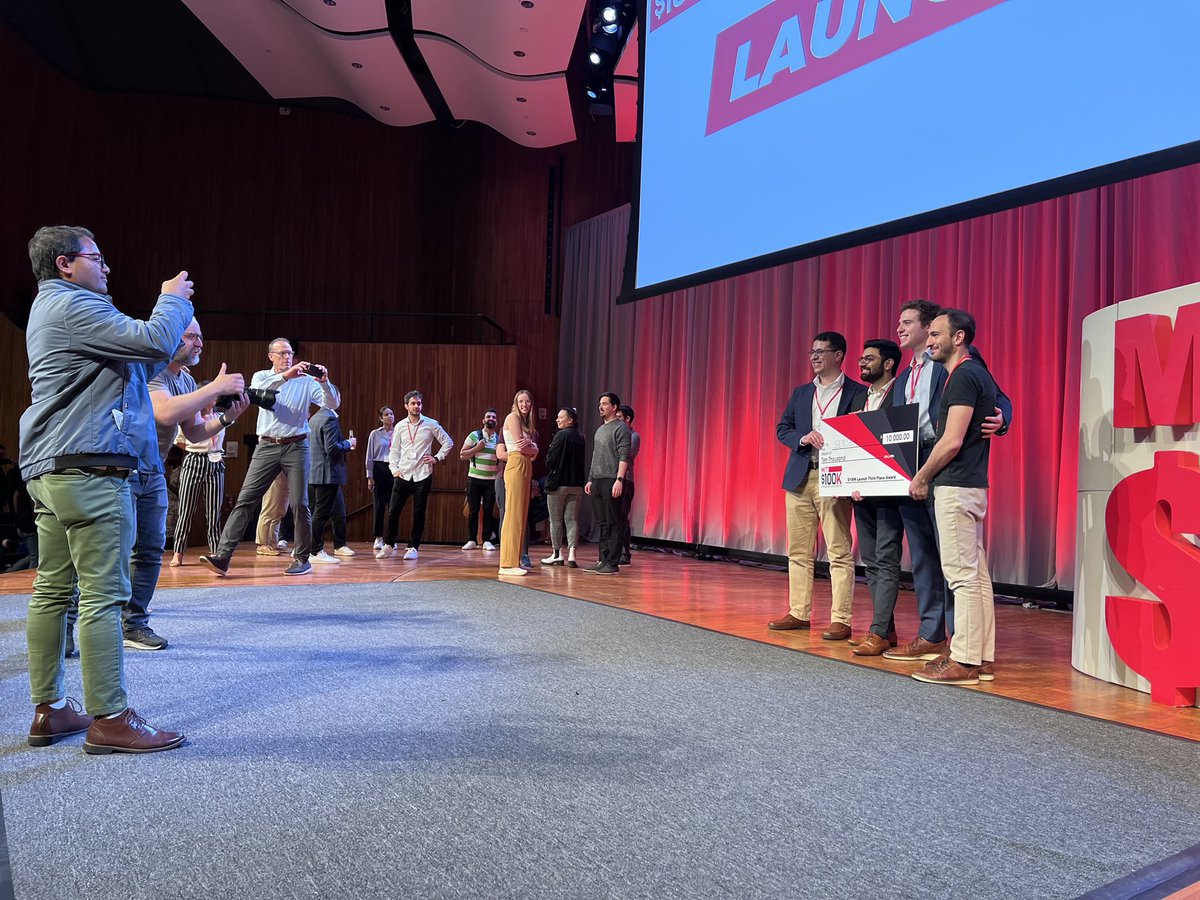
We made it to the finals of the MIT 100K entrepreneurship competition and won the runner-up award! Watch out blue economy, we are ready to accelerate you! #bluetech #aquaculture
@jrad_66 @waleedakbr @ahmed_allam90 @fadeladib @medialab
2
2
7
1,504

📣I'm excited to announce that I will co-chair the @S3Acm workshop (wcsng.ucsd.edu/s3/) at @ACMMobiCom 2023, along with my colleagues @AkarshPrabhakar and @Tara_Boroushaki. 1/6
#Mobicom #ACM #S3
2
9
14
4,577
MIT Signal Kinetics Group retweeted
26 Apr 2023
We have a super cool opening at Cartesian (MIT startup)! A unique opportunity to work on mobile AR with an award-winning MIT technology and to deploy with real customers. Plus: a fun company culture, deep-tech startup, & ability to shape our first product!
linkedin.com/jobs/view/35732…
11
25
6,612