
Joined August 2009
- Tweets 36,515
- Following 3,563
- Followers 2,364
- Likes 62,653
Photos and videos
Michael Beckerman retweeted

18h
Google owns one of the most powerful learning tools in the world.
It’s free. It’s been available for months.
Yet 95% of people still use it the wrong way.
Here are 8 NotebookLM use cases that can save you hours of time.
🔖 Bookmark this — you’ll thank yourself later.

55
104
360
49,144
Michael Beckerman retweeted

Jun 5
20
62
441
1,167,337

Jun 13
You can think poorly of me if you want, but if I was worth hundreds of millions, billions or trillions of dollars, the very FIRST thing I would do, before doing ANYTHING else, is feed the hungry and house the homeless. THEN I would go work on other things.
1
3
83
Jun 13
We just saw the Federal government step in and force Anthropic to pull back their new Mythos-based model from the public - for national security reasons. We knew this day would eventually arrive, we just didn't expect it until late 2027.
2
99
Jun 12
Stop scolding people that complain about things. They are the ones telling you what's wrong and what needs to be fixed. Instead, thank them for informing you and ask them for a solution. Nothing ever improves until SOMEONE has the courage to actually speak up and complain.
2
107
Jun 12
Interesting. Not only does X intentionally limit your post's exposure to other users on the platform (even as a PAID user yourself), they then try and UPSELL you more exposure/visibility for your posting (for a fee) so more users will then get to see it.
1
1
150
Jun 11
Spoiler Alert: There are no actual backrooms in the movie "Backrooms".
2
2
189
Jun 11
AI industry insiders came out about six months ago and said, "You'll be shocked by what you see come out in late 2026...you'll be absolutely TERRIFIED of what you see come out in late 2027." I think we are right on track still for exactly that to be the case.
1
156
Michael Beckerman retweeted

Jun 10
Little Caesars Pizza launches 100% self serve restaurants
Customers will order on the app or through the self serve kiosk. Pizzas will be put in these new pizza dispensing lockers
Locations launched in Rockford, Illinois and Dearborn Heights, Michigan. According to what I can find this isn’t due to crime, it’s to reduce labor costs
Employees only being in the back making pizzas will greatly reduce labor costs and the amount of staff they need to hire
I found this was done mainly to reduce costs
If this is implemented nationwide it could save Little Caesars around $400 million on labor costs
788
554
3,103
529,213
Michael Beckerman retweeted

Jun 9
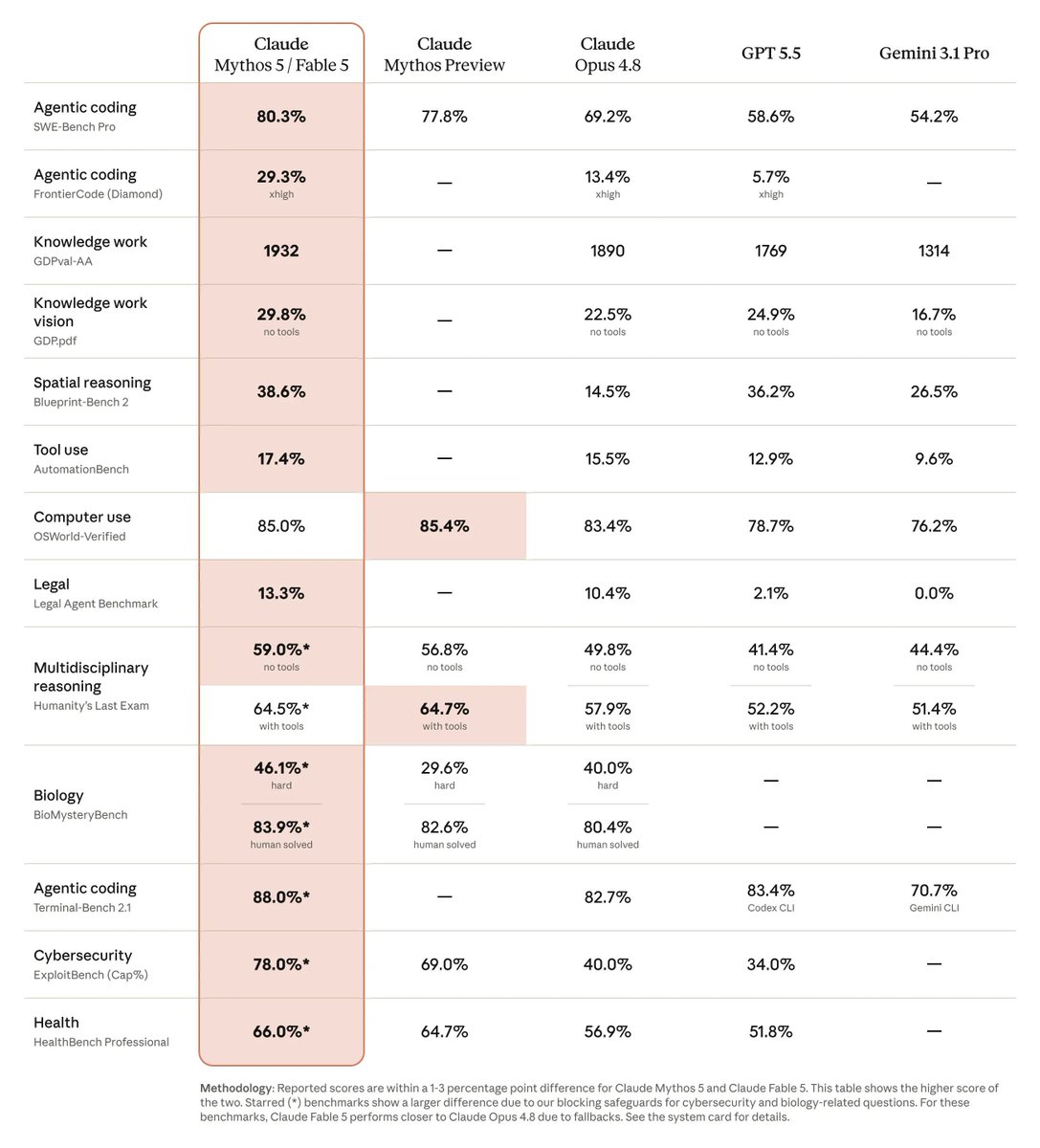
Claude 5 Fable Benchmarks!
Holy moly, significant jump even to Mythos
63
121
1,509
271,830
Would you be willing to give up all of your privacy (and be under 24x7 surveillance) if it meant that no crime of ANY kind would ever be committed by anyone anywhere, ever again if you did?
1
82

In 1879, JP Morgan paid a man to invent the lie that is the foundation of modern economics.
A billionaire who helped start Amazon just exposed the whole thing on Diary of a CEO, and once you hear it you will never look at paychecks the same way again:
146 years ago, a guy named Henry George wrote a book called Progress and Poverty.
It was the first mainstream book about the rich systematically stealing from the poor, and It literally became the bestselling book in the history of the United States at the time.
The working class was reading it everywhere, and the people at the top of the economy completely lost their minds.
So JP Morgan personally brought a man named John Bates Clark to Columbia University, which was essentially the intellectual headquarters of Wall Street, and told him to fix the problem.
Clark wrote a book called The Distribution of Wealth. In it, he invented something called the "theory of marginal productivity," which claims that because markets are perfectly efficient, the amount of money you earn reflects EXACTLY the value you contribute to the economy.
If you make $15,000 a year, that's because you're providing $15,000 of value. If a hedge fund manager makes $500 million a year moving money around, that's an accurate reflection of the value he creates in the world.
And Clark literally said the quiet part out loud IN HIS OWN BOOK.
He wrote that they had to prove to working people that no matter how much they make, whether it's a little or a lot, it accurately reflects their value, because if workers ever concluded that their labor was worth more than they were being paid, they would revolt and destroy the entire system.
That was the whole point. The theory was built to prevent a revolution.
And it worked so well that it got absorbed into mainstream economics and is STILL taught as a foundational principle to this day.
Every time a CEO tells you "the market decides your salary," they're repeating a framework that was literally commissioned by JP Morgan in the 1800s to convince you not to ask for more.
Nick Hanauer, the billionaire who told this story, also shared the numbers that prove why it matters right now:
The median full-time worker in America earns about $60,000 a year. If that same worker had maintained the same share of GDP they held in 1975, they wouldn't be making $60,000. They'd be making $120,000. That gap goes all the way up to the 90th percentile. If you earn $180,000 today, you'd be earning $250,000 under the old distribution.
The ONLY people who benefited from 50 years of economic growth were the top 10%, and the vast majority of that went to the top 1%. That is trillions of dollars every single year that used to be wages for ordinary working people and now sits in the accounts of the wealthiest people on the planet.
This happened because of policy. Tax cuts for the rich, deregulation for the powerful, and wage suppression for everyone else, all justified by an economic theory that was invented specifically to make you believe you deserve exactly what you're getting.
And the craziest part is that GDP growth rates in America were 4 to 4.5% for decades when workers were included in prosperity. As soon as the neoliberals took over in the mid-1970s and implemented these policies, GDP growth fell to 3% and eventually to 2%.
Including people in the economy doesn't slow growth down. It's literally the thing that CREATES growth. And the theory that convinced the world otherwise was a hit job paid for by one of the richest men in history to keep workers quiet.
What do you think?
171
1,453
3,861
327,199
Michael Beckerman retweeted

Jun 8
🚨 ANOTHER MASTERCLASS FROM @3BLUE1BROWN
The compressibility of language isn’t just a math curiosity, it’s the hidden engine behind every LLM you use.
Grant’s new video reframes Shannon’s entropy through one elegant lens:
Prediction IS compression.
→ The better you predict the next word, the fewer bits you need to store it
→ Shannon measured English at ~1 bit per character: astonishingly compressible
→ This is exactly what GPT-style models optimize
→ Intelligence, in this framing, is compression
FUN FACT: Von Neumann told Shannon to name it “entropy” because nobody truly understands it anyway 😄
Decades later, that same concept became the bedrock of modern AI.
Deep-dive resources in the 🧵 ↓
79
570
4,815
311,544
Japan a Korea just NOW realizing how close we are to a complete global economic collapse. Really? How did you not manage to figure that out six months ago?
82
Michael Beckerman retweeted

Jun 6
The Las Vegas Everyone Loved Is Officially Dead
63
219
1,463
70,007
Michael Beckerman retweeted

In 1978, Intel’s 16-kilobit DRAM chips started flipping bits for no apparent reason.
What was silently corrupting memory at the atomic level?
🎥 veritasium
21
188
1,640
90,614
Michael Beckerman retweeted

Jun 5
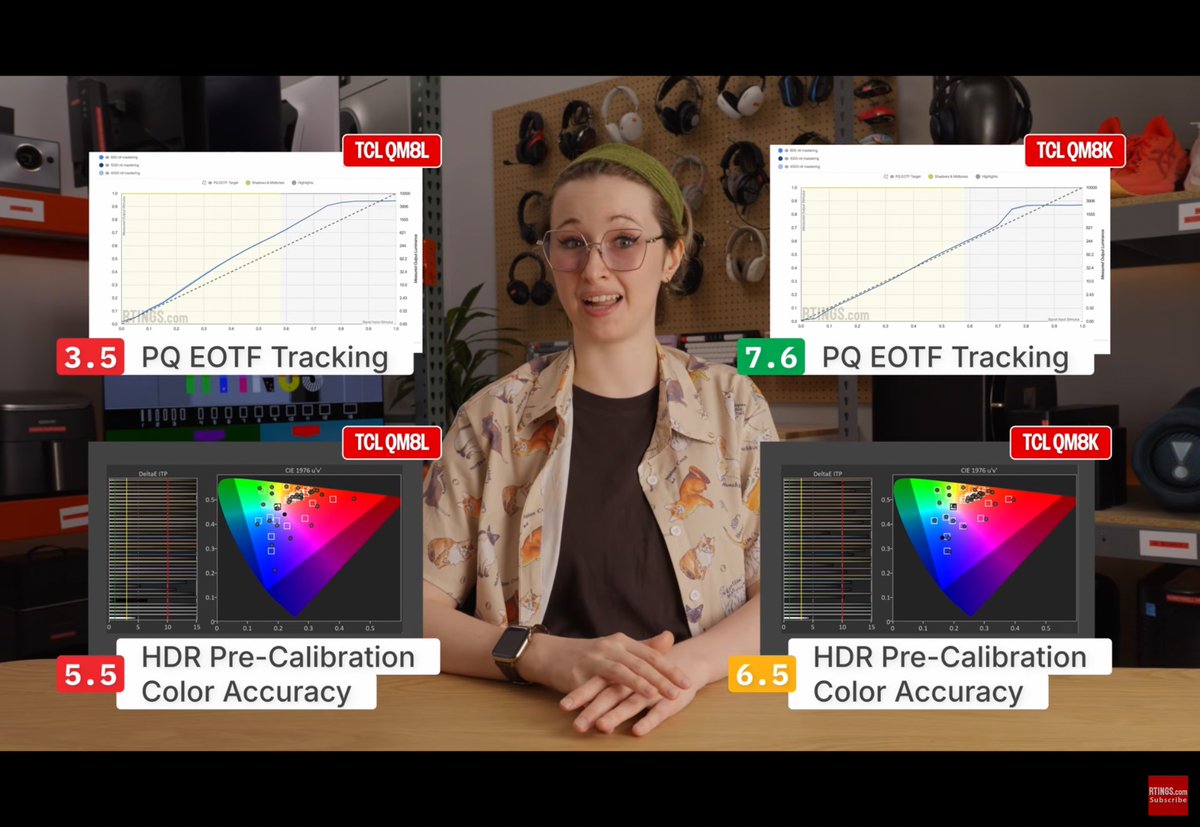
Rough review for the TCL QM8L as far as accuracy is concerned…
Link:
youtu.be/qRPJ2pdIisc?si=3-ez…
#TCL #MiniLED #TechNews
5
4
18
1,874
Michael Beckerman retweeted

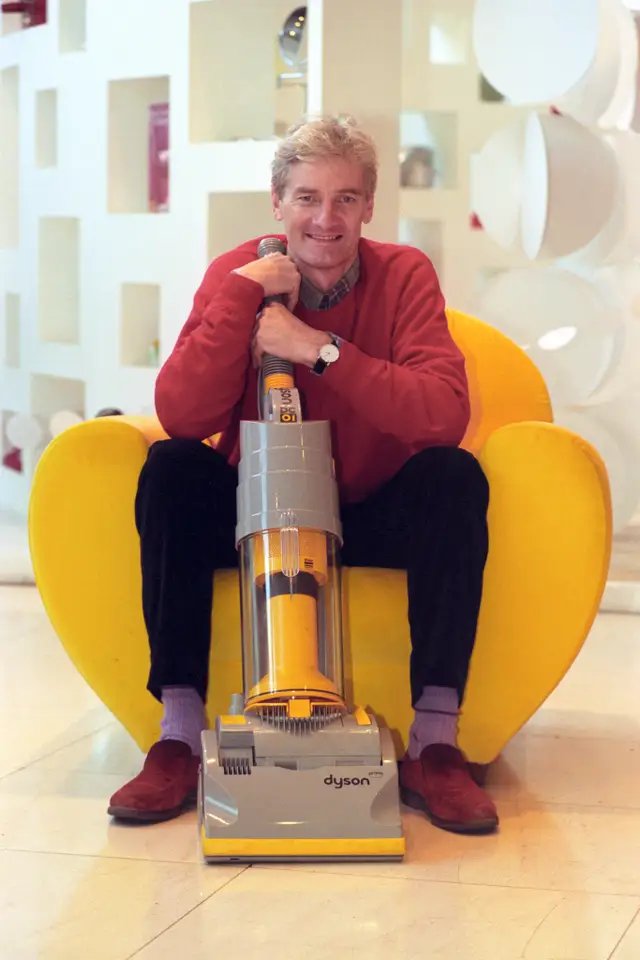
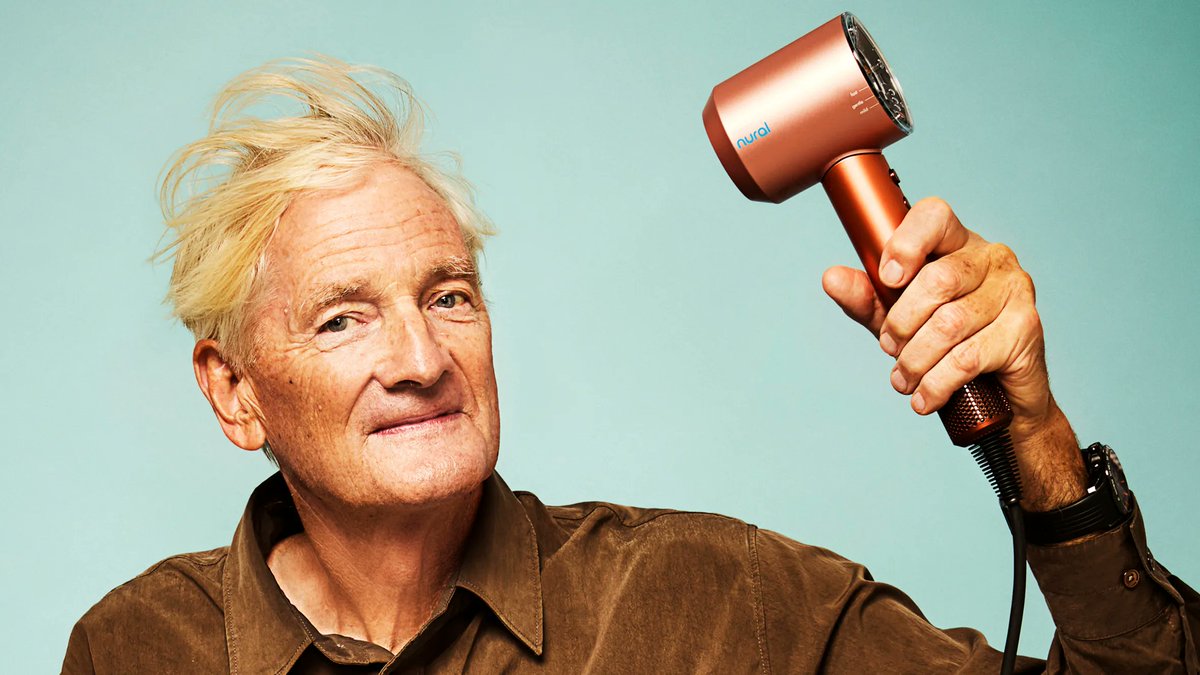
Dyson is a $25 billion company.
It is 100% owned by James Dyson.
No investors. No venture capital. No public shareholders.
But there was a time when he had no job and his wife was working to keep the house running.
In 1974, James Dyson left a steady engineering job at a company called Rotork to start his own business. He'd spent four years there designing boats. Stable salary. Respected employer. He walked away from all of it to make a better wheelbarrow.
That company eventually failed. By 1978, he was running a workshop on borrowed time and that's when a broken vacuum cleaner changed everything.
He was vacuuming his house when the suction died mid-clean. He opened the bag clogged with fine dust. The machine lost power every time the bag filled more than a third of the way. He was paying for something that failed at its only job.
At his factory, he'd seen an industrial cyclone, a cone that spun air at high speed to separate paint particles from the air. No bag. No filter. Just centrifugal force and a clean exhaust.
He thought: what if you did that to a vacuum cleaner.
He didn't know it would take five years and 5,126 prototypes to find out.
His wife Deirdre taught art to keep the family going. They remortgaged the house to fund his experiments. Then again. Then a third time. Every prototype got a number. Every failure got documented, not just that it failed, but exactly how, and exactly what he'd change next.
5,126 times he built something that didn't work.
5,126 times he went back to the workshop.
By prototype 5,127, the cyclone geometry was right. Constant suction. No bag. No power loss. It picked up what every other vacuum left behind.
He was 32. He had a working prototype and no idea what to do next.
He went to every major manufacturer. Hoover. Electrolux. Every big name.
They all said no.
One Hoover executive later admitted they'd looked at it, understood exactly what it was, and passed because it would kill their replacement bag revenue. The vacuum cleaner bag market was worth over $500 million in Europe alone at the time. They knew his machine worked. That was precisely why they declined.
He spent years being rejected. Banks wouldn't lend. Investors wouldn't back a product the entire industry had already reviewed and passed on.
Then a Japanese company licensed it. Sold it for the equivalent of £3,500 a unit. It appeared in design galleries. Won awards. It made him just enough to keep going.
In 1993, the Dyson DC01 went on sale in Britain. By early 1995, it was the best-selling vacuum cleaner in the country.
He was 46 years old.
Here's what the story is actually about.
He built a $25 billion company without giving away a single share to an outsider. No VC round. No IPO. No co-founder dilution. Just a remortgaged house, a wife's teaching salary, and 5,126 failed experiments.
Most founders at his level had given away 60-70% of their company long before reaching scale. Dyson gave away nothing because he had nothing anyone wanted to invest in. The rejection that looked like a curse was the thing that kept him whole.
Since 2018 alone, the Dyson family has collected £5 billion in dividends. Not from selling the company. From never selling it.
In 1999, Dyson sued Hoover for copying his cyclone technology with their Triple Vortex vacuum. The High Court ruled that Hoover had deliberately copied a fundamental part of his patented design. Hoover agreed to pay £4 million in damages.
He said it wasn't about the money.
It was about the executives who'd looked at his machine, understood exactly what it was, and chosen bag revenue over building something better.
Dyson wanted them to know he remembered.
50
348
1,844
207,084