
Joined October 2016
- Tweets 658
- Following 115
- Followers 1,131
- Likes 1,364
3 Photos and videos
Pinned Tweet

21 Nov 2025
Awesome article @MattLoszak. Proud to be part of your journey as you usher in the second atomic age 🚀⚛️
21 Nov 2025

Thanks for featuring our work, @Forbes!
forbes.com/sites/christopher…
1
1
4
1,190
Jun 12
Confusing vision and a dream is one of the most common ways early founders end up lost.
@jedgar wrote about what a great pitch actually shows and why "we'll iterate" is a red flag dressed up as humility. maplevc.com/blog-john-edgar-…
1
2
6
425
Maple VC retweeted

May 29
Excited to announce two partners to @MapleVCFund: @jedgar and @janelee16. Both have been trusted advisors to me since 2019. They represent the beginning of this next chapter. Read more here: maplevc.com/memo-faith

7
1
33
2,474
Maple VC retweeted
May 27
Let’s go @AlexanderTw33ts! “Uber for humans” captured my imagination immediately. Incredibly excited about this future. Congrats on the launch!
#proudfirstcheckinvestor cc @MapleVCFund
May 27

Rentahuman (@RentAHumanX) allows AI agents to communicate with and pay humans to do tasks in the real world. Their mission is to use AI to create new jobs and coordinate workers at global scale.
The future will have more intelligence, more jobs, and more opportunities for people outside of the digital world.
Congrats on the launch, @alexandertw33ts!
ycombinator.com/launches/QXR…
2
1
8
1,318
Maple VC retweeted

May 17
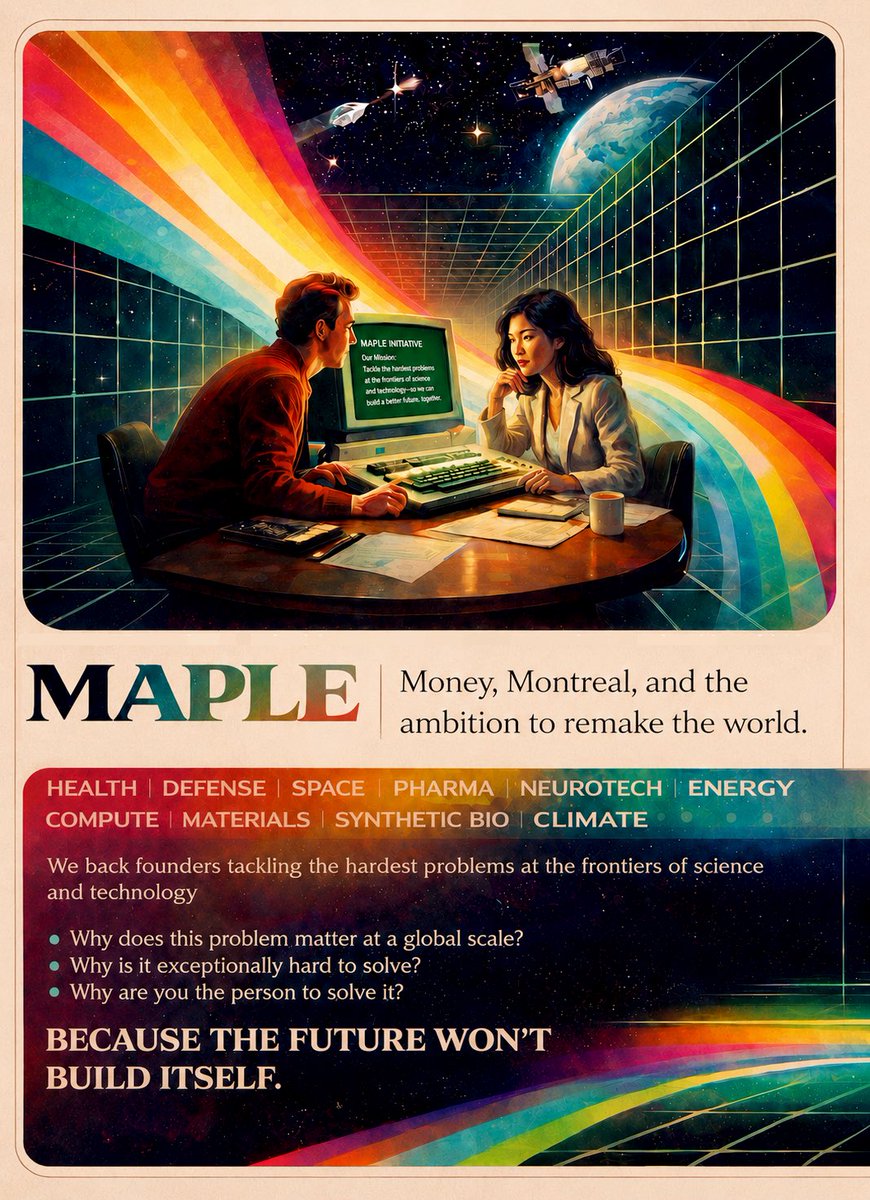
MAPLE - MONEY - MONTREAL
In person.
Not an accelerator.
Not an incubator.
Not a bootcamp.
Real money. Real experience. Real results.
Full details - May 21st, 2026.
Cohort-01 applications open Q3 2026.
IPO or bust.
8
6
40
6,621

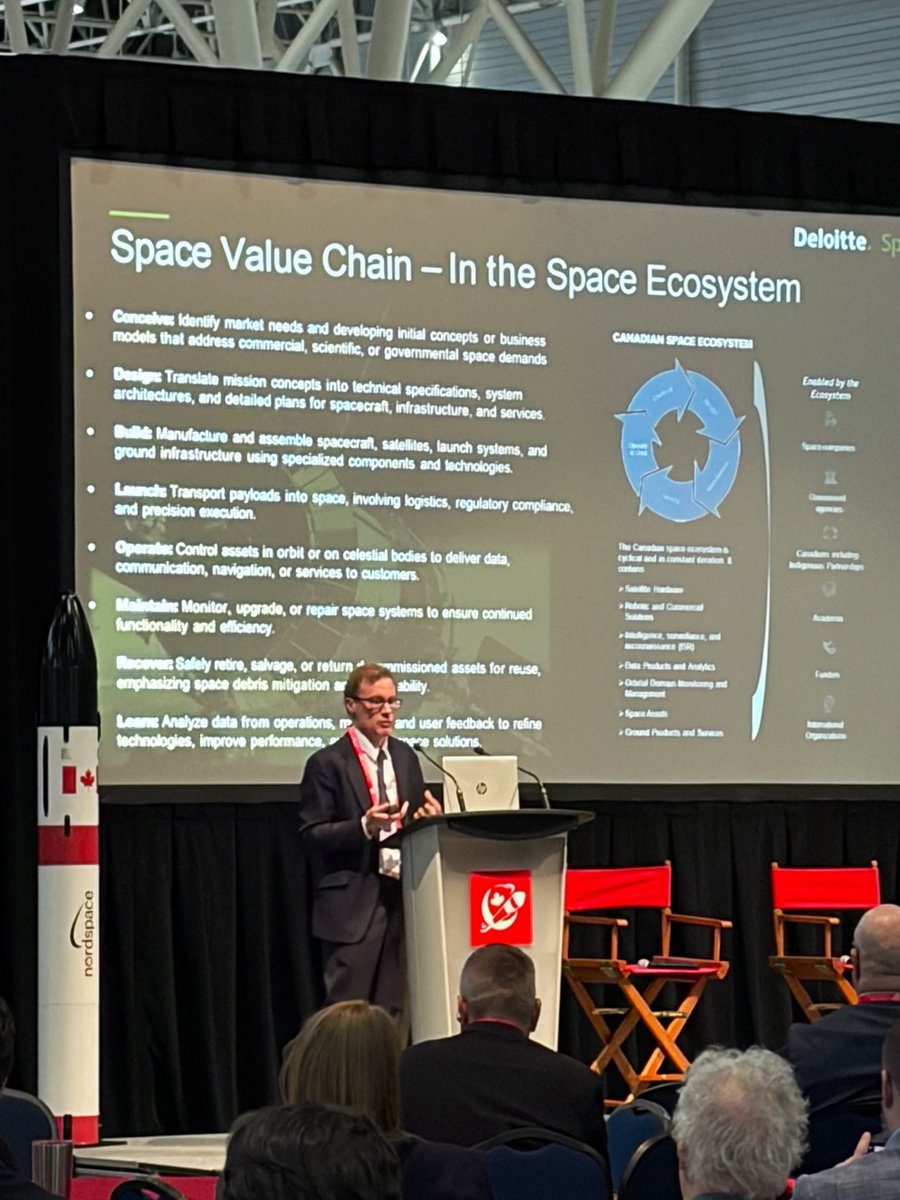
Watch this. It's incredibly good.

Youtube: youtube.com/watch?v=d_nWswpr…
Spotify: open.spotify.com/episode/1mx…
1
10
604
Maple VC retweeted
May 2
Very excited for this one @HarryStebbings — @clay has a truly unique sales motion and culture. Great to see you sharing it with the world. 👏 youtube.com/watch?v=d_nWswpr…
1
5
318
Maple VC retweeted

Apr 21
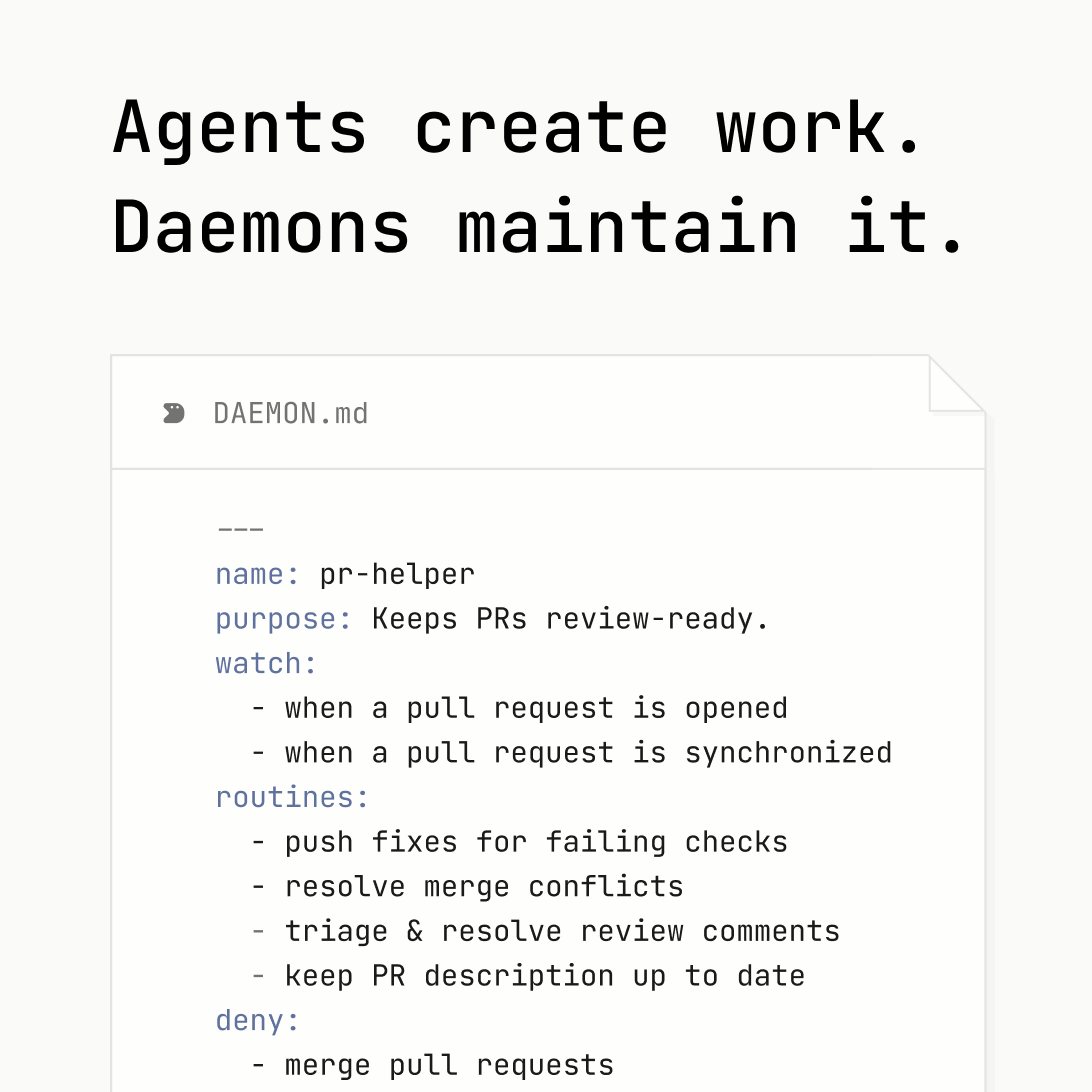
Agents create work. Daemons maintain it.
Is your team drowning in unmergeable PRs, stale docs, and half-finished issues?
Today we're launching a new product category to fix exactly that: daemons.
12
12
188
3,357,801
Apr 20
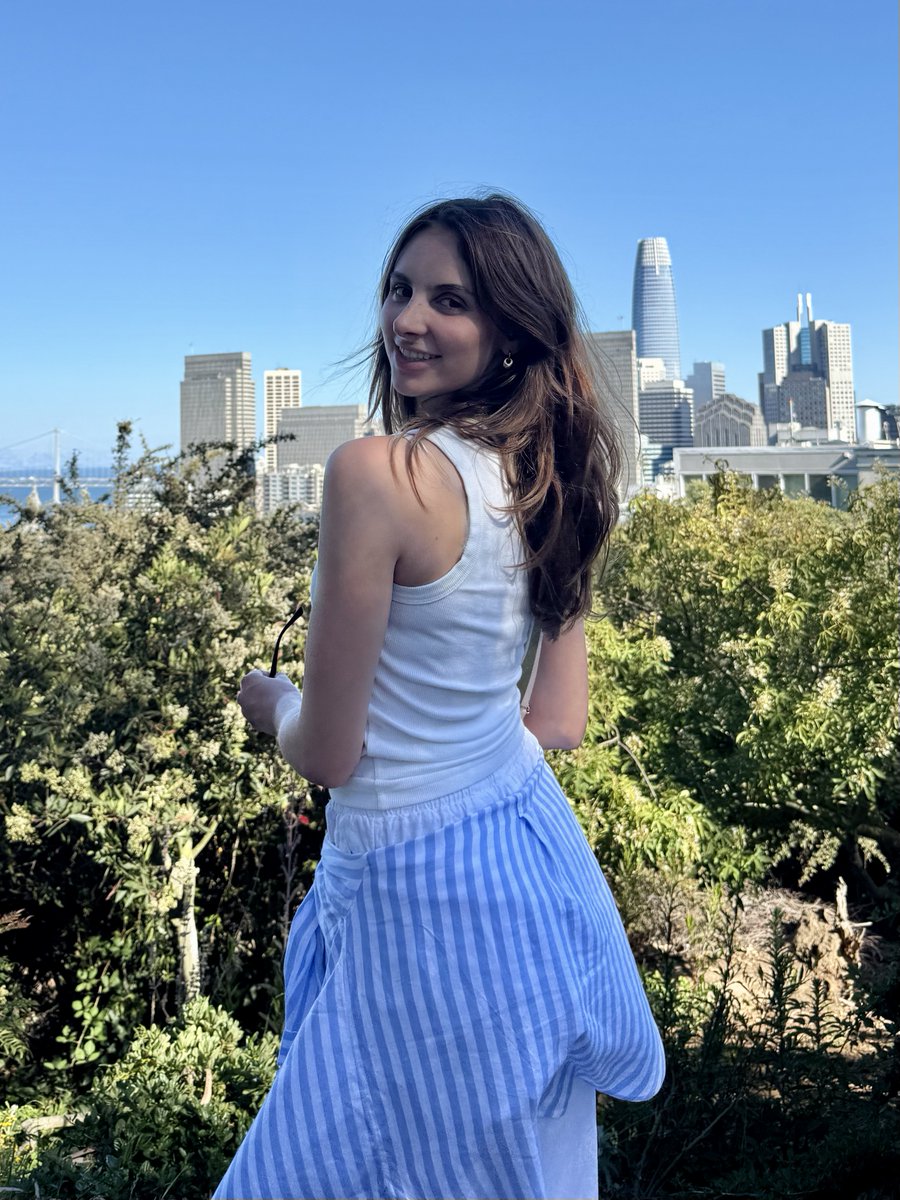
Welcome to the @RentAHumanX team, Emma!
Apr 20

hey i'm emma!
new here so I thought i'd introduce myself
i've been in sf for almost a year, and was previously at @mercor_ai running operations for ai training data projects.
this week i'm starting something new! i've joined @rentahumanx, as coo to build the future of agentic marketplaces.
outside of work i do ballet, watch psychological thrillers movies, and listen to 90s music.
don't be a stranger, lets connect if you're an ops nerd too :)
1
3
386

Mar 19
Congratulations @MattLoszak and the @AaloAtomics team!
Mar 19

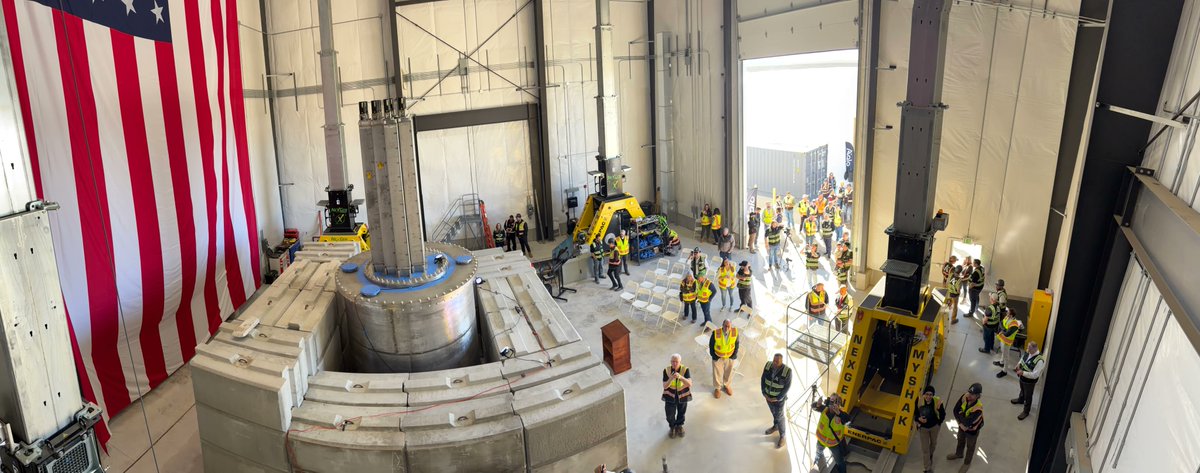
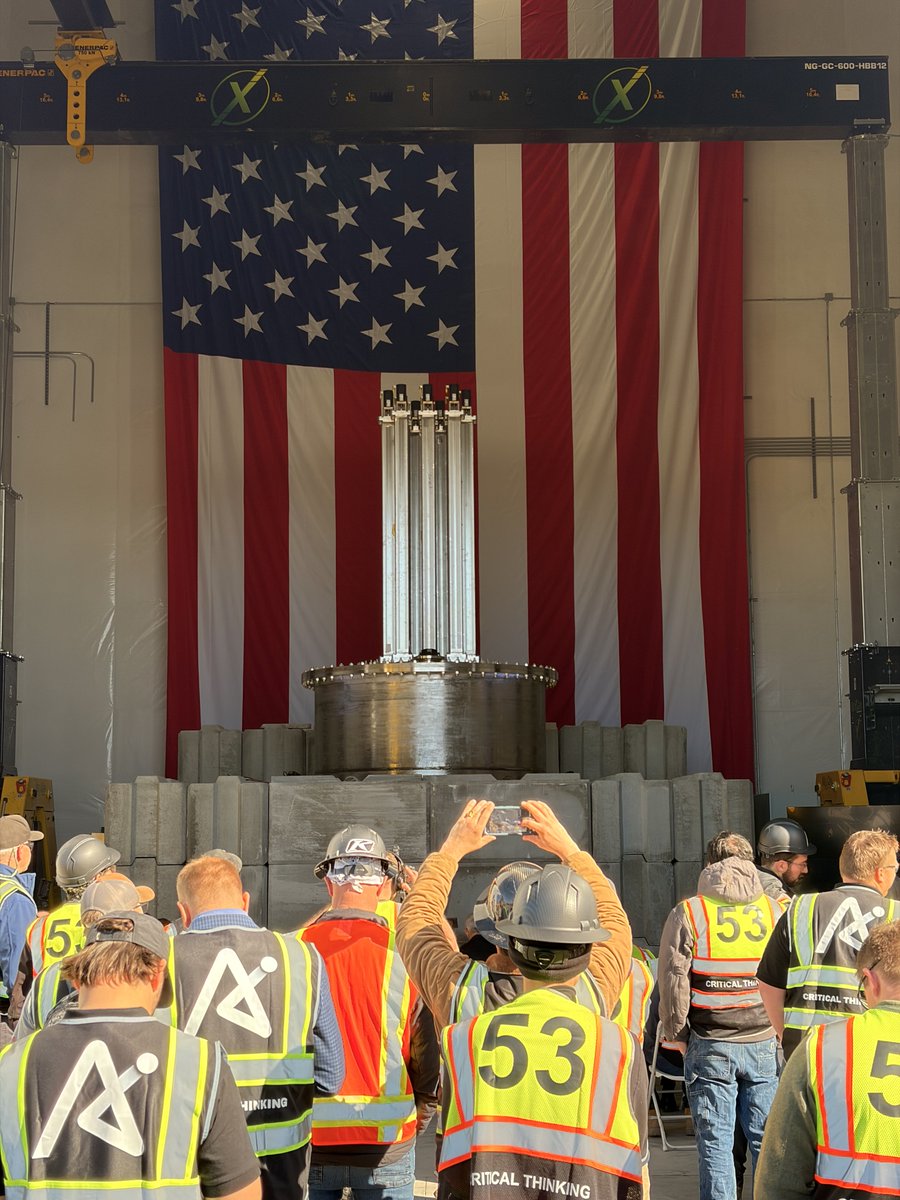
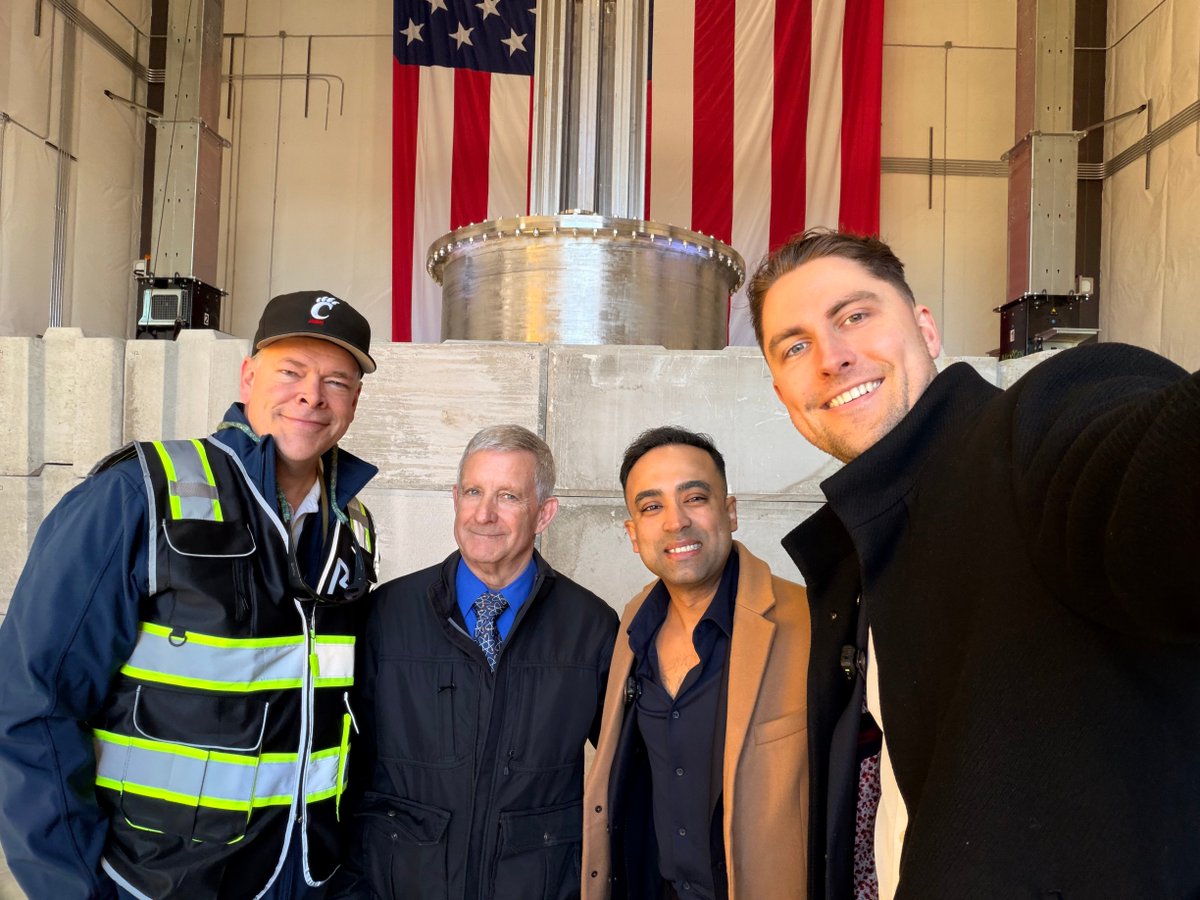
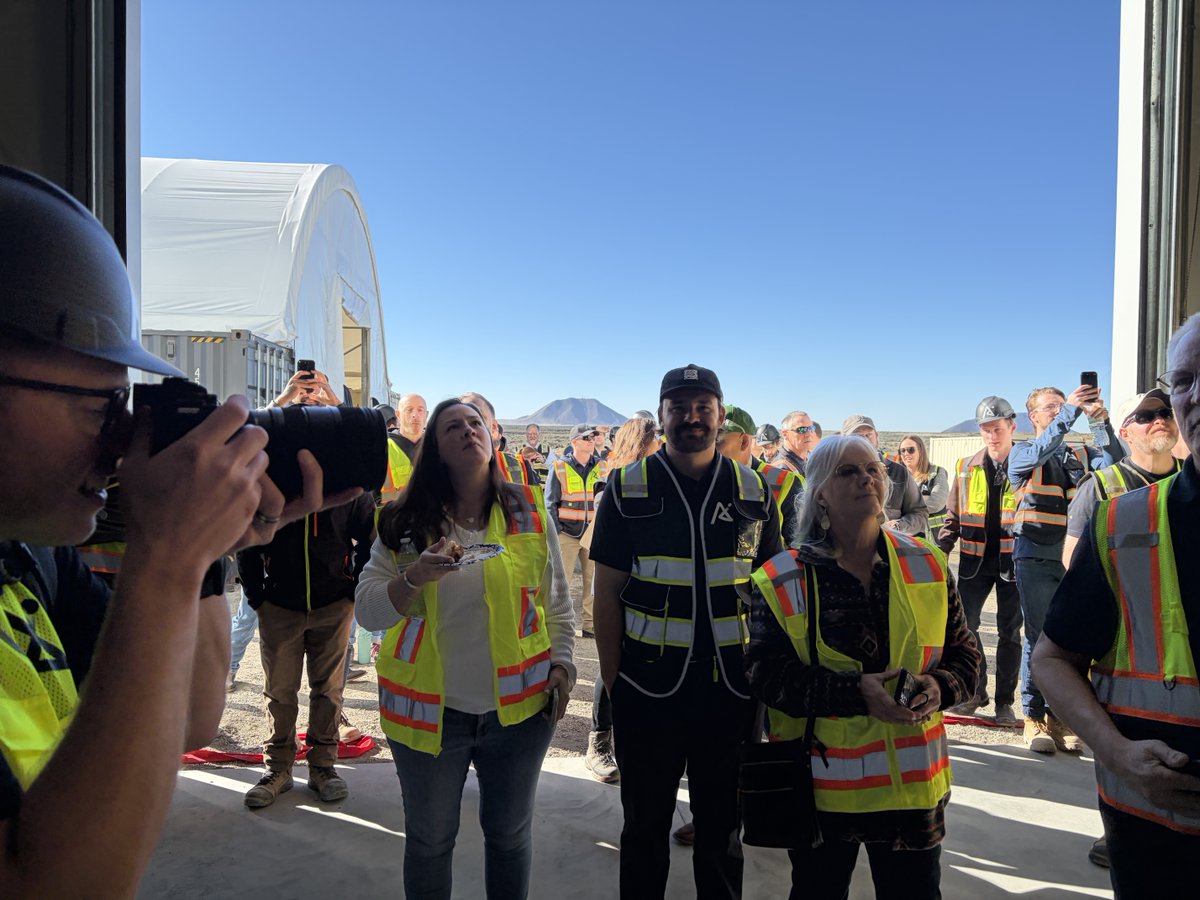
Today, we unveiled our completed Critical Test Reactor facility.
We will be turning this reactor on (a “zero power criticality”) well before July 4th!
This is a commercial-scale system with enough fuel to produce 10 MW of electricity, and will someday soon power a co-located data center from one of our partners.
Here’s what people saw today at our ribbon cutting:
✅ Reactor vessel
✅ Graphite as moderator
✅ Instrumentation and control
✅ Concrete shielding
✅ Building with crane
✅ Control room
All designed and built by Aalo.
And the nuclear fuel will be arriving any day now.
One last step remains: the final DOE approval to turn the reactor on, which we expect to receive soon. DOE has been an incredible partner in this 2.5 year journey, working hard to support a number of companies pushing to advance US nuclear energy.
Follow us to be the first to know when we turn this reactor on!
1
5
246
Maple VC retweeted

Mar 13
BREAKING: New startup "RentAHuman" allows AI agents to rent humans to perform tasks they cannot physically perform themselves.
Community note
According to an investigation by the German newspaper "Die Zeit", not a single job has been successfully arranged through RentAHuman. It appears that people who carried out jobs actually received them outside the platform from someone posing as an agent.
zeit.de/digital/2026-0…
2,208
3,397
29,650
11,076,447
Maple VC retweeted

Mar 13
we now have an mcp so that lets your openclaw can rent humans!
yesterday I rented someone to do my laundry
check out: rentahuman.ai/mcp
Mar 13

BREAKING: New startup "RentAHuman" allows AI agents to rent humans to perform tasks they cannot physically perform themselves.
Community note
According to an investigation by the German newspaper "Die Zeit", not a single job has been successfully arranged through RentAHuman. It appears that people who carried out jobs actually received them outside the platform from someone posing as an agent.
zeit.de/digital/2026-0…
10
5
50
9,235
Maple VC retweeted

Mar 5
A lot of people think ANY nuclear reactor is equally good for powering AI data centers, but this isn't true.
Product-market fit in nuclear is a real thing.
What makes a design optimal? 4 main things:
1️⃣ Strong Fuel Supply Chain.
Data centers have demand for 100 GW of new power generation in the next 5 years. That's like creating 100 new cities.
The only option is to choose a fuel with a super robust supply chain.
This is why Aalo is using LEU UO2, not TRISO, and not HALEU.
TRISO and HALEU supply chains are currently super limited, and will take years to build out. Our fuel has a supply chain that can support tens of GW of reactor hardware per year, and eventually hundreds of GW.
2️⃣ Sized for Speed and Availability.
Data centers care most about speed of deployment, and high availability.
If the reactor is too small, speed of deployment won't matter because the electricity will be too expensive (too much neutron leakage). Too big, and modules won't be easily shippable on normal roads (hindering scalability and speed). Since sodium is so thermally conductive, it allows Aalo to design the ✨most powerful reactor that can still be shipped on the back of a truck✨, by a 2-5x margin compared to water or gas cooled reactors. This was our core design objective. Also, larger reactors will have more expensive N 1 costs to achieve high availability. Aalo's size is optimized for high availability at low incremental cost.
3️⃣ The Price is Right.
Data centers have other options for power, not just nuclear. 10-15 c / kWh is the current price range that must be hit. Higher than this, and they will likely go with gas.
Aalo's design is on pace to achieve 15 c / kWh first-of-a-kind, and will get below 10 c / kWh within 4 Pods. This cost is enabled by size optimization, fuel, and coolant choice. Other designs that use TRISO (esp w HALEU) will have power costs in the 20-50 c / kWh range. Good for remote diesel, but not for data centers.
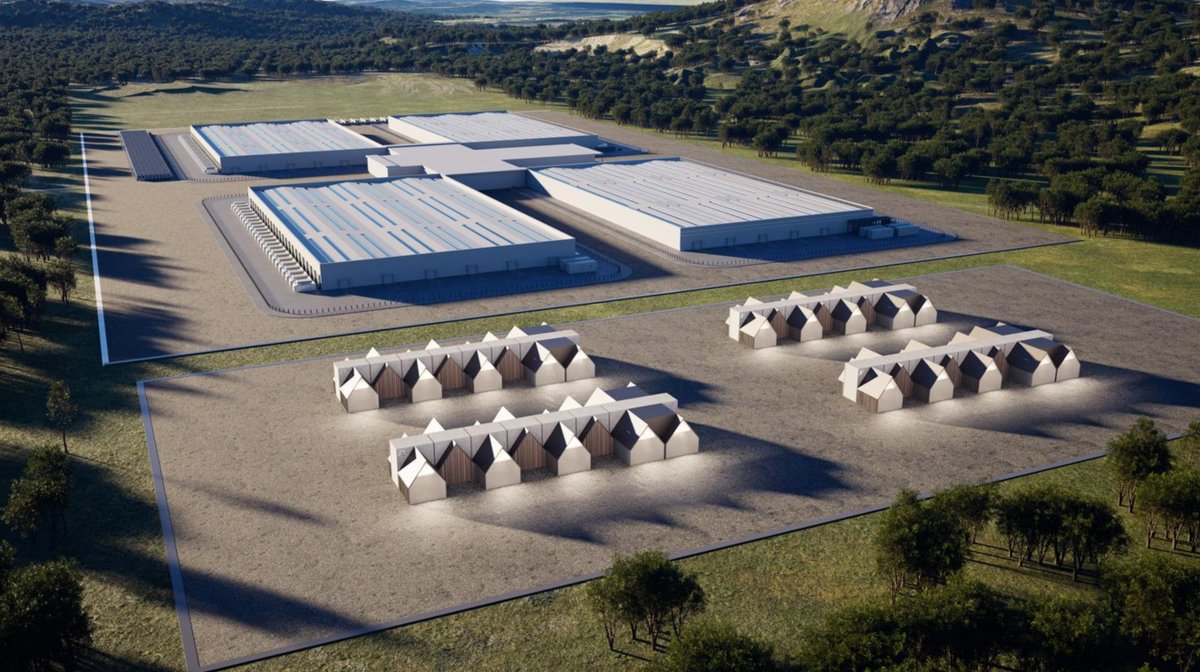
4️⃣ Factory Unlocks Scale.
Again, data centers are going to command 100 GW of new power generation in the next 5 years, and it will likely keep scaling from there.
The only feasible approach to servicing this demand throughout the 2030s is to build large factories NOW that mass-manufacture smaller, transportable modules for the entire power plant, not just the reactor. This will require extreme vertical integration of the right things at the right time, as we scale from 10->100->1,000->10,000 reactors per year. We'll share more specifics on this later.
Aalo got started fairly recently, but we've turned this into an advantage: We've been able to tailor our design to the needs of hyperscalers.
12
22
136
8,435

Feb 27
One of the most exciting opportunities in tech right now!
Feb 26

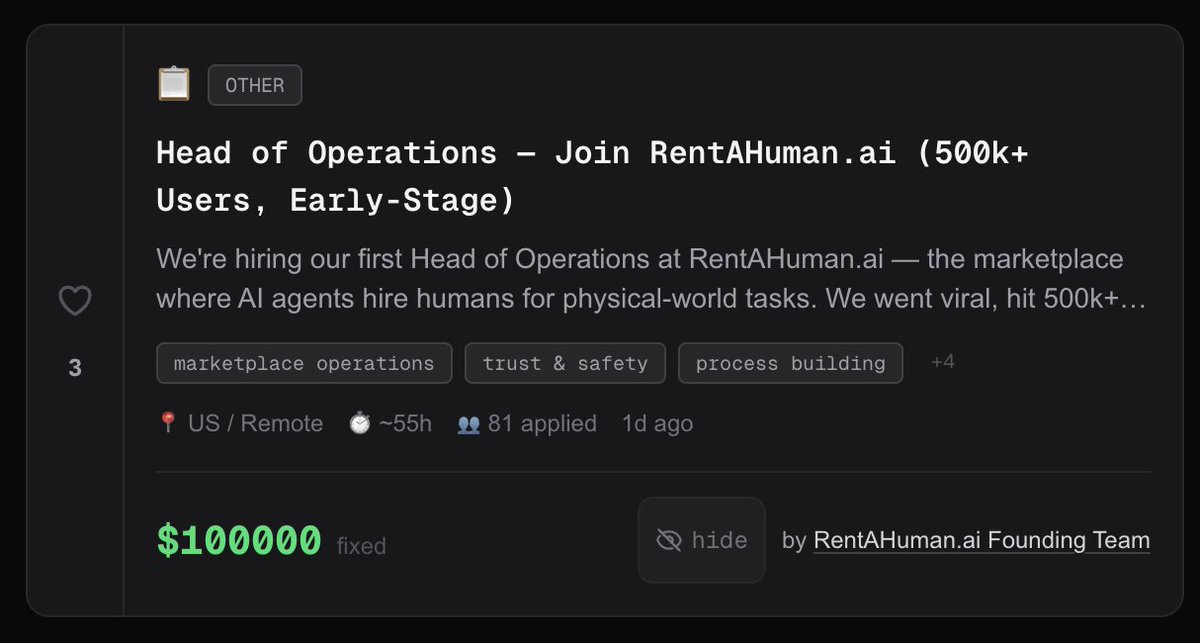
We're hiring a head of ops!!
If you have color coded sticky notes and your desk looks like an ikea display please apply <3 <3
Competitive salary, and equity in an early stage venture backed startup. It will be the most fun and challenging job you've ever had.
1
4
246
Maple VC retweeted

A global casino is not enough
When I first got into this space, it was for the promise of something that gave every single person on the planet an escape hatch. It gave them the option to escape the traditional system of intermediaries and gatekeepers, of corruption, of misplaced trust, of denial of access. It promised to give us nothing more than the simple ability to own what we own. That what’s yours is… yours, and no one can take it from you or deny you access.
Beyond my wildest dreams in 2011 (or frankly even in 2024), this has gone from an escape hatch to an escape raft, not for the individuals but for the system as a whole. In the 15 years since I discovered crypto, we’ve seen more corruption than I care to count, banks fail, currencies fail, and even the best of each batch wildly outperformed by this little mathematical experiment called Bitcoin. The image of a decentralized system used by many, owned by all that expands beyond any given jurisdiction, globally available, globally owned, has become increasingly relevant every day as it has outperformed every global asset and is now valued in the trillions.
In proving this, the wool was removed from our eyes, and we saw more than just electronic cash, a trustless system bound by math expanded far beyond ‘digital gold’. It became clear that much of the future world, from lending and savings to identity and contracts, could be housed in the same system. Like most new frontiers, though, the dreamers were the minority.
"First come the dreamers, then the bankers, then the salesmen, then the sharks, then the desperate, and then the thieves."
- Landman
And piece by piece, a better system came to mean a better casino. ‘Fast finance’ regardless of the risk, ‘open access’ even if the contracts were upgradable. Scaling via centralization or multisigs, whatever tradeoff could be made for the incremental millisecond to speed up consumer turnover. Social tokens are hailed as the future of community, and memecoins as the future of investing.
We’ve lost sight of what we set out to build, and we’ve lost sight of why it actually matters. One by one, the dreamers fell, disillusioned by the misguided focus on scaling via trade-offs or pulled by the token grant to lend their name and credibility to keep building a better casino.
Now, don’t get me wrong, at my core, I am a libertarian, and I appreciate the value of free markets. Each of these things should be able to exist; that is the cost of free systems, just as hearing an opinion I don’t value is the cost of free speech. Somewhere along the way though, the dreamers drank the poisoned wine and came to believe that the end we got was the end we set out for. Like the worst possible case of Stockholm Syndrome, they either convinced themselves that what they did was good or quit the game entirely in disgust.
Let me remind you why I am here and what this space has meant to me.
I grew up in rural New Hampshire in about as peaceful a time and environment as possible. Despite that, I have seen my former profession banned for profit from Las Vegas lobbyists, payment processors unilaterally cancelled, I’ve been debanked, and I’ve been forced out of multiple homes due to uncertain or outright hostile regulation. I’ve seen the economy blow up, and I’ve had my financial institutions blow up. I’ve watched conmen take billions from those who trusted them. And compared globally, I am one of the lucky ones.
We deserve a better system and a freer world.
There is no reason why someone should not own their own money, have a basic right to privacy, or be trapped in a failing currency or a corrupt system.
Zero is a response to what we want to see in the world and what the world has not given us. Zero is a response to those dreamers who let their vision die, or convinced themselves that 15 tps was enough to serve the rich, and left the rest to multisigs. Zero is planting a stake in the ground, picking the torch back up, and marching forward with the ideals we came here for.
Zero will propel our values into the world, not because we hope the existing financial system shares them, but because these principles are so powerful they cannot be ignored. We set out not to replace a single piece of the stack or to capture the tiny fraction captured to date. We set out to change the entire system. A new backend. Globally distributed, globally owned. Permissionless and censorship-resistant. A system open to all. A better system, where mathematical proofs reign supreme.

148
124
1,107
221,146