
I help coding agents fight architectural entropy • Founder, @Prelatent • Kauffman Fellow • ☸ • 🇵🇷 • ⛷ • 🏊🏾 • 🧘🏿♂️ • implacable • L∃∀N
Joined May 2009
- Tweets 12,490
- Following 1,385
- Followers 2,292
- Likes 12,710
441 Photos and videos


Pinned Tweet

"Velocity is high, but we are afraid to touch the code."
If that sentence just described your software project, I built a 3-minute diagnostic for that.
Do your coding agents understand your business?
marcos-lravkkpi.scoreapp.com
1
21


Marcos Polanco, CTO retweeted

Jun 13
⚡️This is a monster signal.
This is the moment frontier AI stops being treated like software and starts being treated like controlled strategic capability.
The key phrase is not “customers.”
The key phrase is “foreign national Anthropic employees.”
That means the state is no longer only controlling chips, model weights, or overseas access. It is moving into cognition access by nationality. That is the real threshold. The U.S. government is saying the highest models are sensitive enough that even people physically inside the United States, working inside the company, may be barred from touching them if their nationality creates deemed-export risk.
That is weapons-control logic.
This is ITAR logic for intelligence.
The corporate language about a “misunderstanding” is probably diplomacy.
Companies say that when they need to preserve customer trust, employee morale, and regulatory room. But national security authorities do not force emergency suspension of top model access because someone made a minor paperwork mistake.
Something about Fable 5 and Mythos 5 crossed the line: cyber capability, autonomous R&D acceleration, AI-improving-AI utility, bio/security planning, code exploitation, or some blend of all of it.
The U.S. state just showed that Anthropic does not fully control Anthropic’s frontier layer.
That is the phase change.
Labs can brand themselves as public-benefit AI companies. They can talk about safety. They can sell enterprise plans. They can publish model cards. But once the models become national capability, the sovereign arrives. The state does not need to own the company to control the access surface. It only needs legal authority over export, security, procurement, and liability.
This confirms the arc we’ve been tracking:
Frontier AI becomes state-supervised strategic infrastructure.
Public AI splits from strategic AI.
Foreign access gets restricted.
Labs become quasi-defense contractors.
Model access becomes a national security perimeter.
Enterprise customers learn that API access is not property. It is revocable permission inside a sovereign-controlled stack.
The most important implication is organizational.
If foreign national employees can be cut off from frontier systems, AI labs now have to reorganize internally around citizenship, clearance, compartmentalization, and controlled access. That breaks the old Silicon Valley assumption that global talent can freely collaborate around the frontier. The next AI lab structure looks less like Google in 2015 and more like a defense prime crossed with a classified research facility.
For markets, the winners are the national champions with U.S.-aligned infrastructure, cleared customer channels, government relationships, compliance capacity, and domestic compute. The losers are open access, foreign-dependent AI wrappers, offshore model distributors, and any enterprise whose moat depends on unrestricted access to frontier APIs.
For geopolitics, this is escalation. China will read this correctly. Allies will read this correctly. Every serious state will understand that frontier models are now part of national power.
The AI race just moved from “who has the best chatbot” to “who controls cognition as a strategic asset.”
Jun 13

The US government, citing national security authorities, has issued an export control directive to suspend all access to Fable 5 and Mythos 5 by any foreign national, whether inside or outside the United States, including foreign national Anthropic employees.
The net effect of this order is that we must abruptly disable Fable 5 and Mythos 5 for all our customers to ensure compliance.
Access to all other Claude models is not affected.
We apologize for this disruption to our customers. We believe this is a misunderstanding and are working to restore access as soon as possible.
Read our full statement: anthropic.com/news/fable-myt…
106
240
1,541
624,694
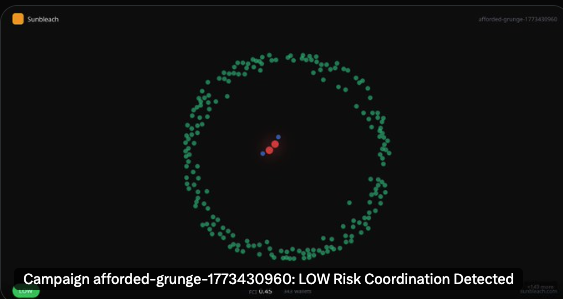
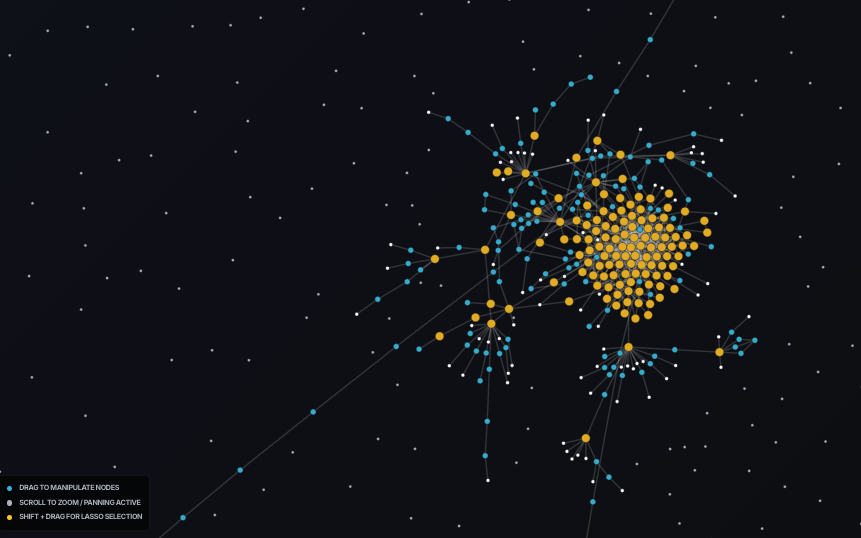
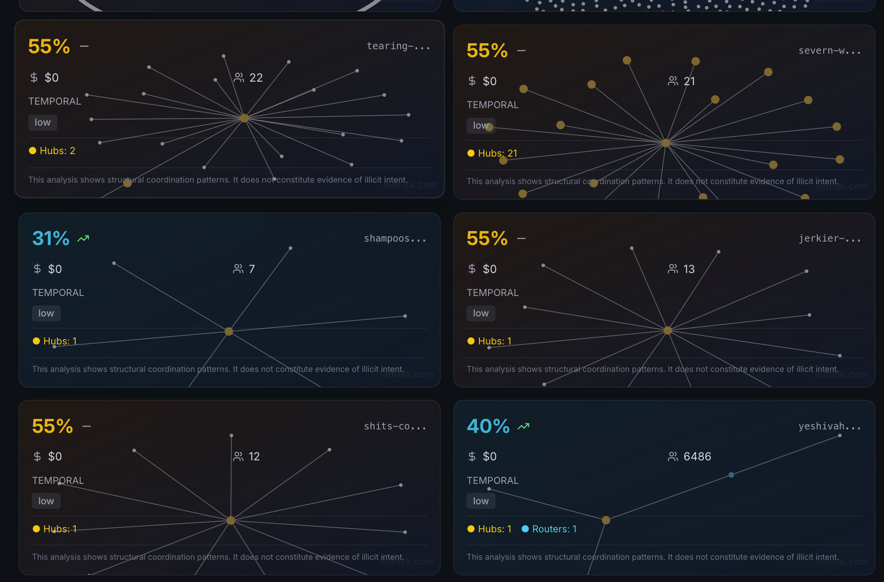
sunbleach.com/ is my hack! Show us your claws @ship_builders @nebiusai @composio @tavilyai @openclaw
22
A great explanation of when to use microservices; TLDR: it is all about stream-aligned teams or scalability constraints. Résumé-driven architecture should perish. youtube.com/watch?v=6e9B7q3g…
42
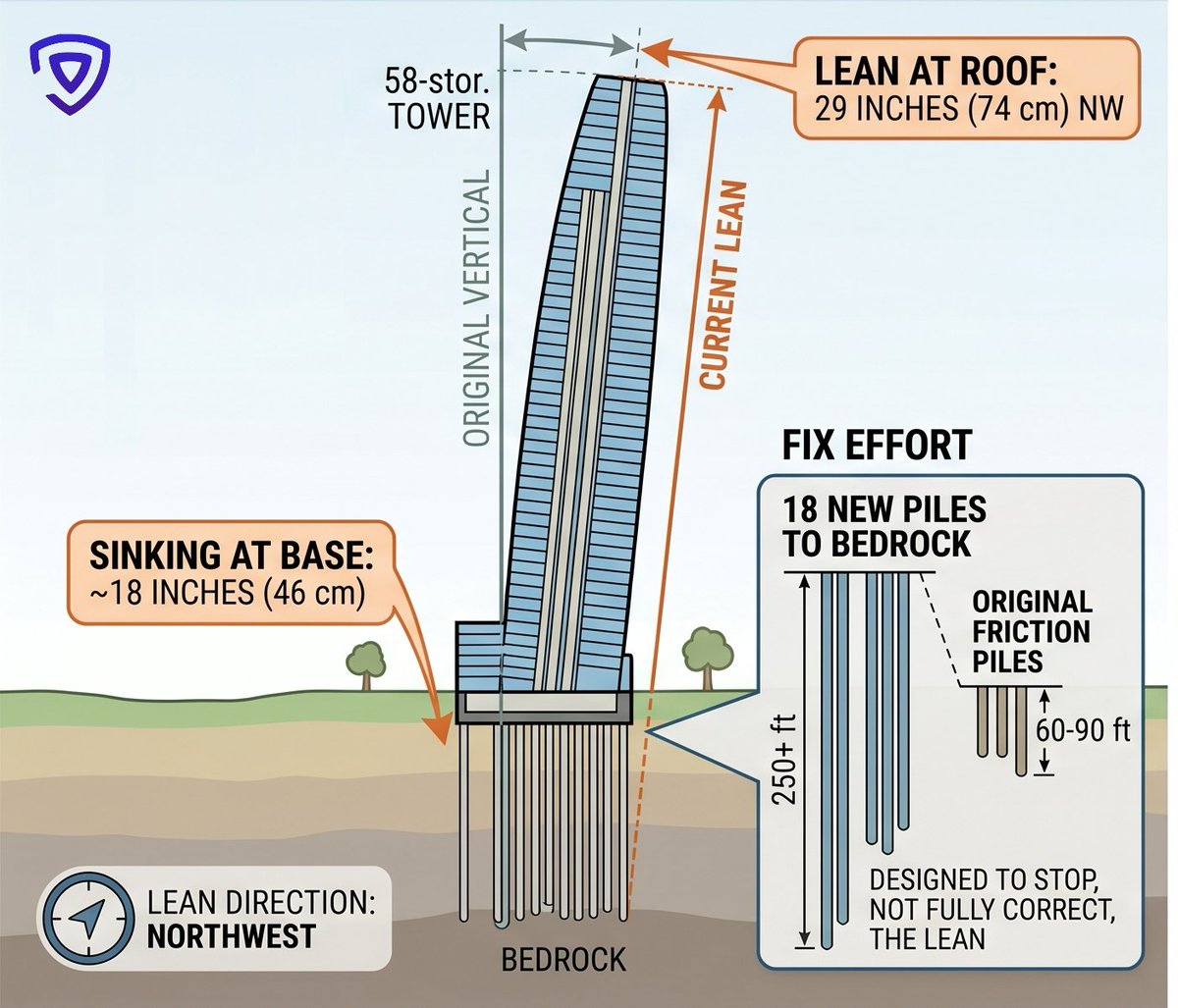
Know that leaning tower in San Francisco?
Let’s talk about your software architecture.
Coding agents are brilliant at adding more floors to your gleaming skyscraper. But my structural integrity analytical framework showed something striking: They put more and more load on just a few components of the system. They present a façade of modularity while building coupling deep below the surface.
I measured this.
I cloned ~15 repos where AI made its appearance and measured structural coherence before and after. For those in the back row, yes, that’s a longitudinal study.
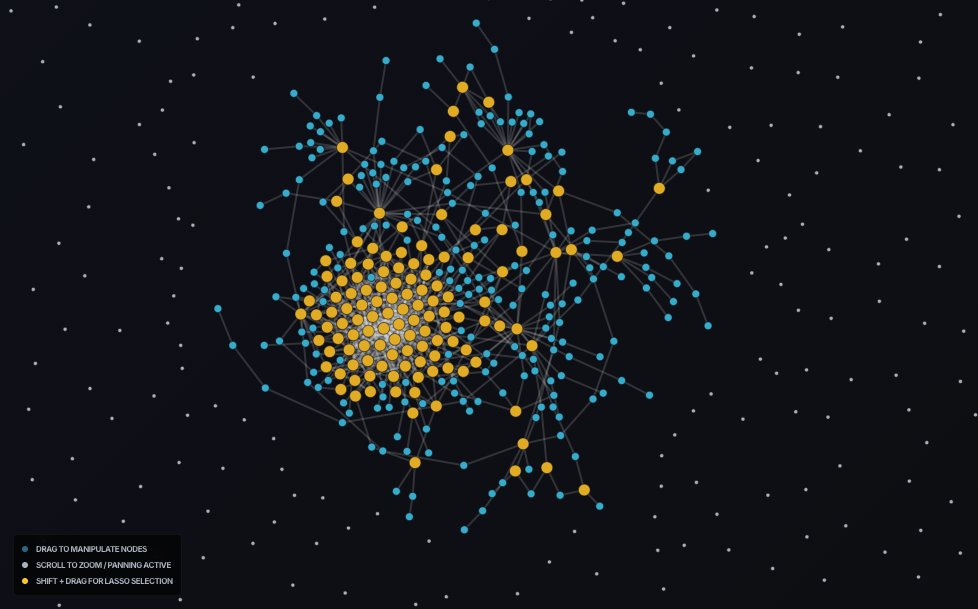
Most metrics flatlined across AI adoption. One went to 11: Hub concentration. That means some modules were becoming, like Malcolm Gladwell would put it, super connectors. More and more weight on just a few pylons. Until they start cracking.
Good luck evolving your code at velocity if you let this go too far for too long. Your velocity remains high until. It stops.
The paper is in progress, but you don’t have to wait. I’m opening a closed beta working directly with CTOs and engineering leaders to analyze their most important business asset, aka their codebase, using cutting-edge research instrumentation.
Because your codebase is the operational future of your company.
Link in thread.
2
86
Join the Architectural Coherence Index Beta: docs.google.com/forms/d/e/1F…
12
Best article I've read this week: jamesshore.com/v2/blog/2026/…
12
"I stopped screening for frameworks, languages, or even algorithms 5-7 years ago."
Leslie de Jesus has recruited hundreds of engineers over 25 years. Now, she says coding is no longer the bottleneck she optimizes for.
Here is where the bottleneck moved: marcospolanco.com/thinking/l…
20
Marcos Polanco, CTO retweeted

May 9
A Anthropic acabou de matar o Markdown.
Um engenheiro do Claude Code publicou um artigo ontem que pode decretar o início de uma nova era.
A tese é brutal: Markdown nunca foi o formato certo para comunicação entre humanos e IA. Era só o que tínhamos.
O próprio autor admite que nunca leu um arquivo Markdown gerado por IA com mais de 100 linhas até o fim.
Você também não lê. Eu também não.
A sacada:
Markdown assume que você vai ler do início ao fim.
HTML assume que você quer ver o que importa e mexer com as mãos.
Na prática:
→ 30 tickets de projeto viram kanban arrastável com colunas Now / Next / Later / Cut e botão de exportar
→ Lógica de rate limiting vira flowchart SVG com código inline, no lugar de 200 linhas de texto
→ Code review vira diff colorizado com grafos de dependência entre módulos
→ Parâmetros de animação, cores, regex, cron jobs ganham sliders com preview ao vivo
→ Specs de projeto viram 6 opções lado a lado com mockups interativos
Todos exemplos reais do artigo. Todos substituem um muro de texto por algo que você de fato abre e usa.
O trade-off existe: HTML é 2-4x mais lento para gerar. Mas com contexto de 1 milhão de tokens, esse custo sumiu.
E a parte que ninguém está discutindo: o HTML gerado não é só para humanos. O agente de verificação também lê. O spec deixou de ser documento e virou memória compartilhada entre agentes.
Markdown é relatório.
HTML é interface.
Relatórios são para ler.
Interfaces são para continuar o trabalho.
Se você usa IA em 2026 e ainda pede Markdown para tudo, você pode estar usando um smartphone como lanterna.

169
171
2,263
1,166,643
Marcos Polanco, CTO retweeted

Apr 29
Nobody in AI is doing safety
They're doing safety theater
2
3
164
Ready to move beyond "vibe coding"? 🏎️💨
I joined Matt Green and Moshe Mikanovsky on the Product for Product Podcast to break down the CLEAR Framework, a methodology for building production-grade software with AI.
Watch the full episode here. youtube.com/watch?v=9AuJFZfx…
70
Marcos Polanco, CTO retweeted

Apr 1
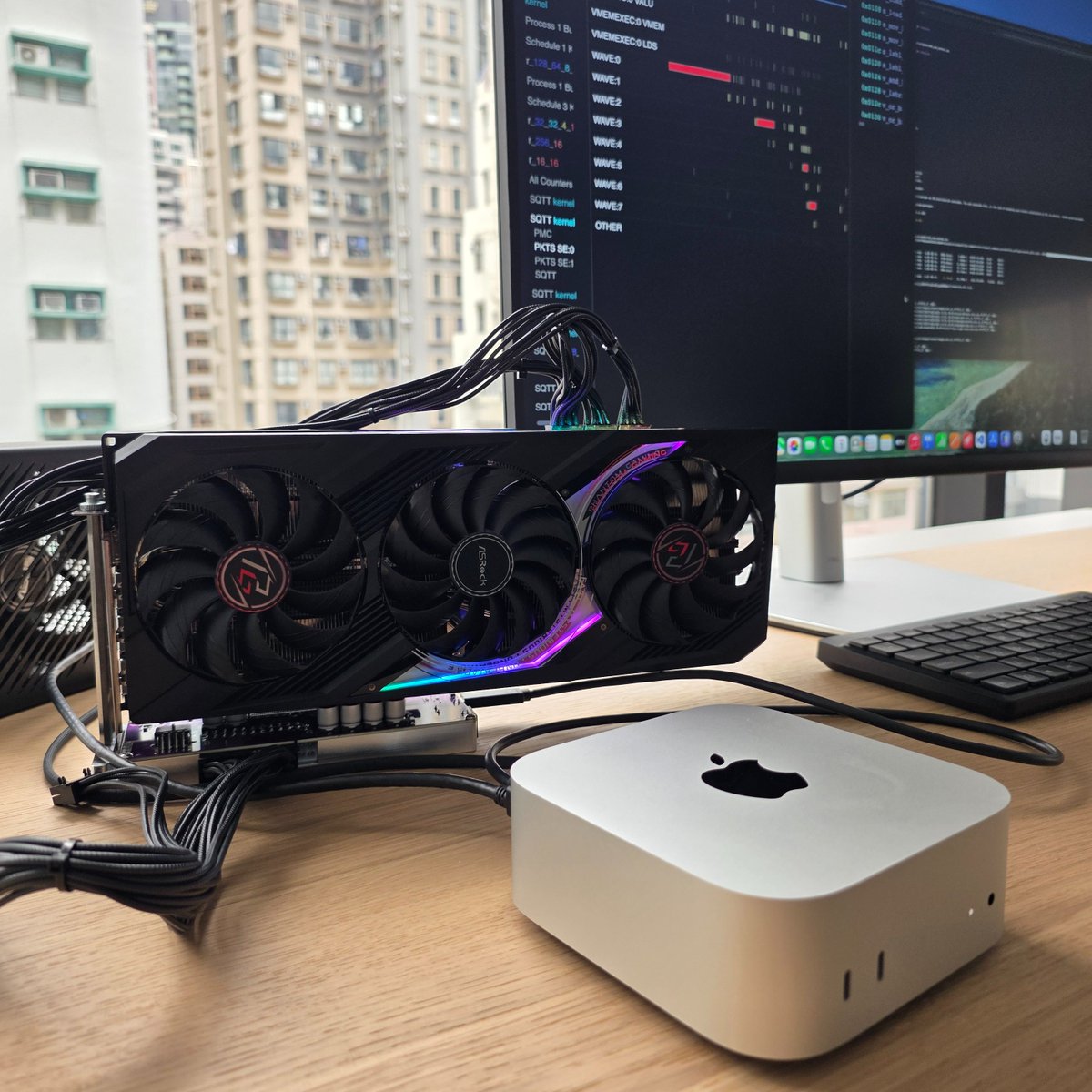
If you have a Thunderbolt or USB4 eGPU and a Mac, today is the day you've been waiting for! Apple finally approved our driver for both AMD and NVIDIA. It's so easy to install now a Qwen could do it, then it can run that Qwen...
268
1,026
7,636
1,544,899
Marcos Polanco, CTO retweeted

Apr 6
The founder of Postman says you have to kill your existing org chart, especially if you're still operating with a pre ai hierarchy arrangement.
The modern org chart, according to @a85:
- wide span of control (even within exec team)
- work directly with ICs, not through layers
- either you're building, or you're selling
Projects are led by staff/principal engineers with high agency. They see across the board as well as deep in the stack.
Product managers are building APIs and prototyping in Claude instead of writing PRDs.
Designers are shipping PRs through Cursor directly instead of relying solely on Figma.
Everyone is building. And the management's job is to develop better judgment.
106
243
2,355
650,992

Introducing Cline Kanban: A standalone app for CLI-agnostic multi-agent orchestration. Claude and Codex compatible.
npm i -g cline
Tasks run in worktrees, click to review diffs, & link cards together to create dependency chains that complete large amounts of work autonomously.
232
379
3,476
1,535,654
Marcos Polanco, CTO retweeted

Mar 26
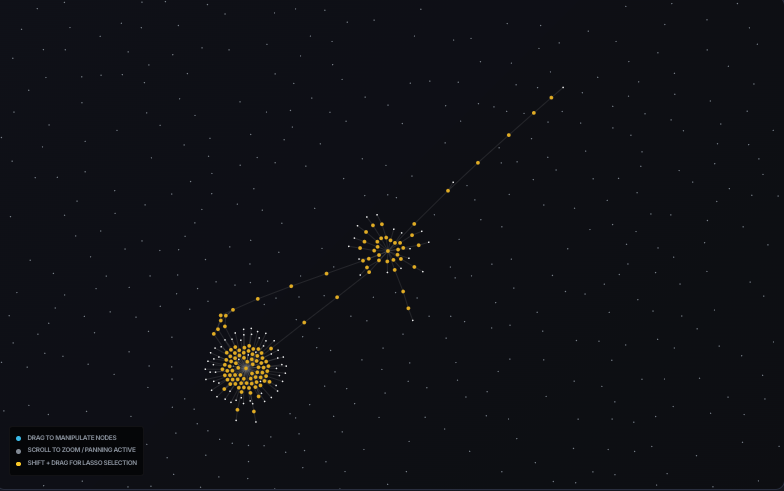
18 wallets. 0.4 FCI.
They don't move randomly. They move in sequence—one triggers the next through a precise structure.
This cluster pattern is Assessing.
Watch the coordination unfold at sunbleach.com
#OnChain 🔍
sunbleach.com/campaign/harpi…
1
20
Marcos Polanco, CTO retweeted

Mar 23
I'm releasing OpenProver v1.0.0!
It's 1) an open-source automated theorem prover inspired by DeepMind's Aletheia (@tonylfeng @gjb_ai @lmthang), and 2) a "Claude Code for mathematicians", allowing interactive proof search in English and formalization in Lean.
17
82
498
41,777