Social scientist | Author of #SomeoneToTalkTo, #PersonalNetworks, and #QualitativeLiteracy | Networks. Inequality. Methods | PTY native | Tweets occasionally.
Joined January 2017
- Tweets 887
- Following 862
- Followers 8,397
- Likes 3,508
8 Photos and videos
Mario L. Small retweeted

Apr 7
Delighted that this conversation with Mario Small @MarioLuisSmall is now public. Mario's ideas are indispensable to any social scientist concerned with social determinants on inequality and disadvantage. As will be evident in the podcast, these ideas have implications for the way one should model neighborhood effects, to given one example.
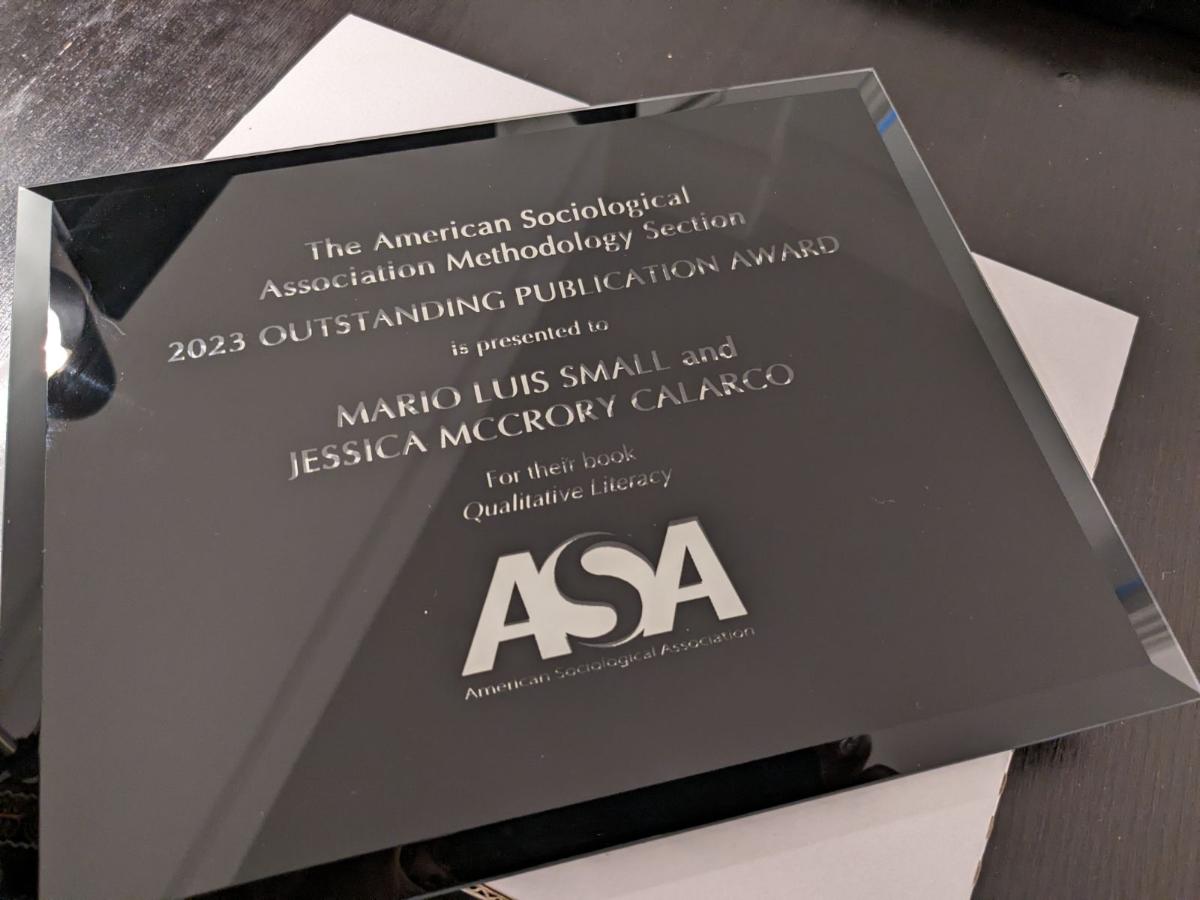
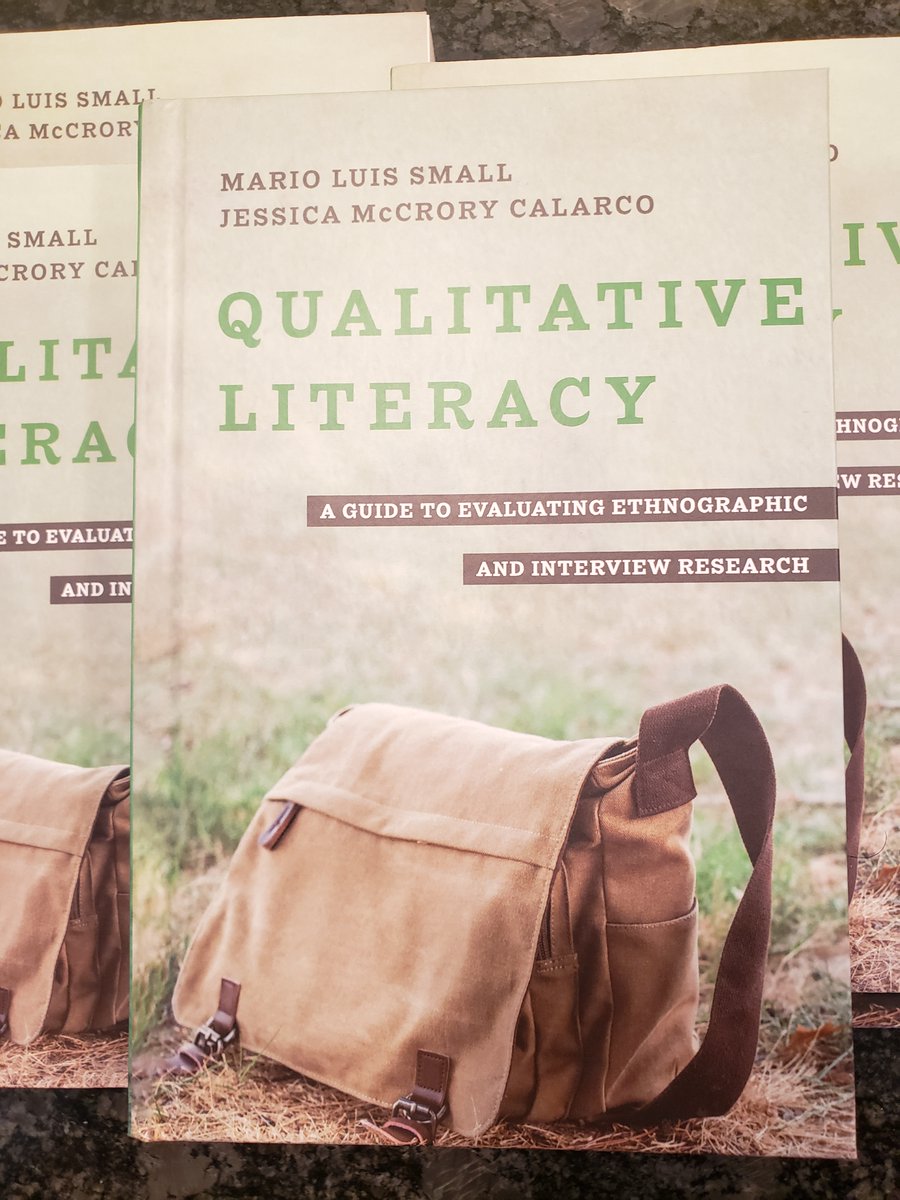
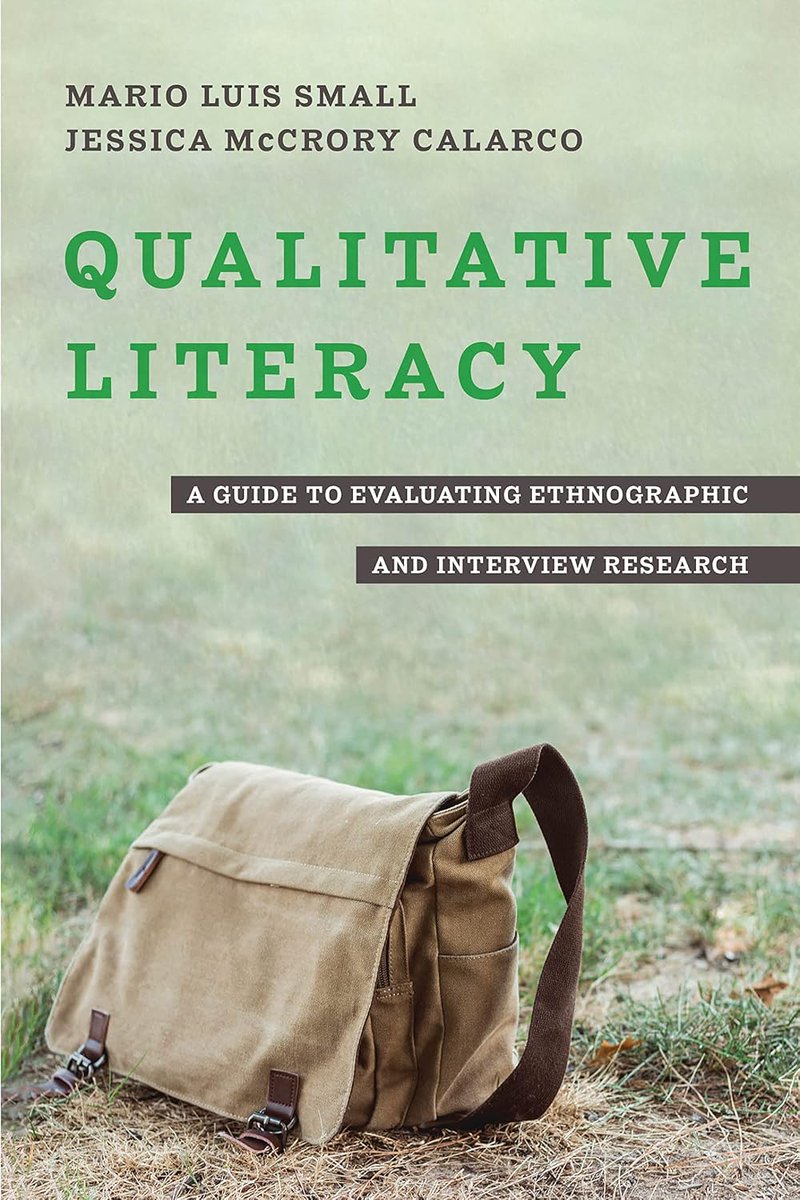
Let me use this occasion to recommend this wonderful book with Jessica McCrory Calarco
Qualitative Literacy: A Guide to Evaluating Ethnographic and Interview Research
which reflects Mario's extraordinary ability to bridge quantitative and qualitative sources of evidence.

It’s not just about who you know; it’s the networks you belong to. @MarioLuisSmall is pushing us to broaden our focus from individuals to the structures that connect them.
Listen to this week's episode of The Inequality Podcast with host @sndurlauf → bit.ly/3PWzw5d
29
99
12,113
Mario L. Small retweeted

It’s not just about who you know; it’s the networks you belong to. @MarioLuisSmall is pushing us to broaden our focus from individuals to the structures that connect them.
Listen to this week's episode of The Inequality Podcast with host @sndurlauf → bit.ly/3PWzw5d
5
11
12,892
Mario L. Small retweeted

16 Apr 2025
New research suggests that "third places" -- social spaces in between home and work -- are crucial to revitalizing neighborhoods. @MarioLuisSmall and @JorgeGuzmanCBS explain: vitalcitynyc.org/articles/ho…
2
3
524
Mario L. Small retweeted
16 Apr 2025
Can a coffee shop stimulate economic development? @MarioLuisSmall & @JorgeGuzmanCBS suggest that social spaces can spark local entrepreneurship. vitalcitynyc.org/articles/ho…
2
1
364
Mario L. Small retweeted

22 Jan 2025
We think of the people we are closest to as the ones we talk to about sensitive or personal issues. But just as often, we avoid talking to them about those things. Fascinating research by @MarioLuisSmall, Kristina Brant, & Maleah Fekete. 1/
psychologytoday.com/us/blog/…
1
4
10
657
Mario L. Small retweeted

11 Dec 2024
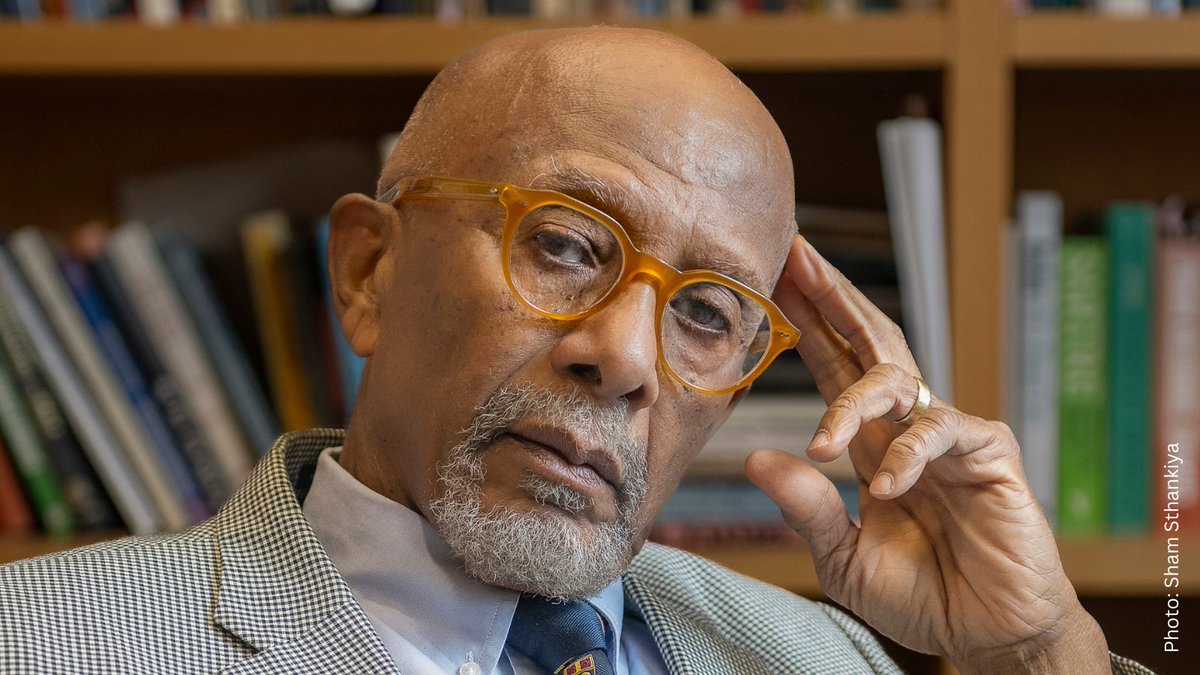
Congratulations to sociologist Orlando Patterson @Harvard, recipient of the 2024 Hegel Award from the City of Stuttgart and Museum Hegel-Haus for his groundbreaking and influential work on the sociology of slavery, freedom, and social justice.
3
30
97
5,900

10 Dec 2024
Great podcast with @EricKlinenberg and Kellie Carter Jackson on the importance of physical spaces for community theatlantic.com/podcasts/arc…
7
12
1,900
4 Dec 2024
Our recent paper, in ASR: While many sociologists assume that people turn to their “strong ties” when they need a confidant, people are actually as likely to avoid as to talk to their closest friends and family.
journals.sagepub.com/doi/ful…
1/
3
56
183
14,728
4 Dec 2024
Who they avoid depends on which topic they are worried about. One bottom line: Close relationships are not, “We are close, therefore I trust you” but “We are close, therefore it’s complicated.”
3/
1
3
11
911
4 Dec 2024
Another: The most he most wretched social isolate is probably not the one with no person to talk to, but the one forced to avoid everyone they are close to.
4/4
2
2
14
971

Excited to share my paper on unemployment and suicide with @pescosol. Using big administrative data on suicide, we show that unemployed people are more likely to die by suicide, but their suicide risk is lower when and where more people are unemployed. doi.org/10.1177/000312242412…
4
28
86
9,113
Mario L. Small retweeted

14 Oct 2024
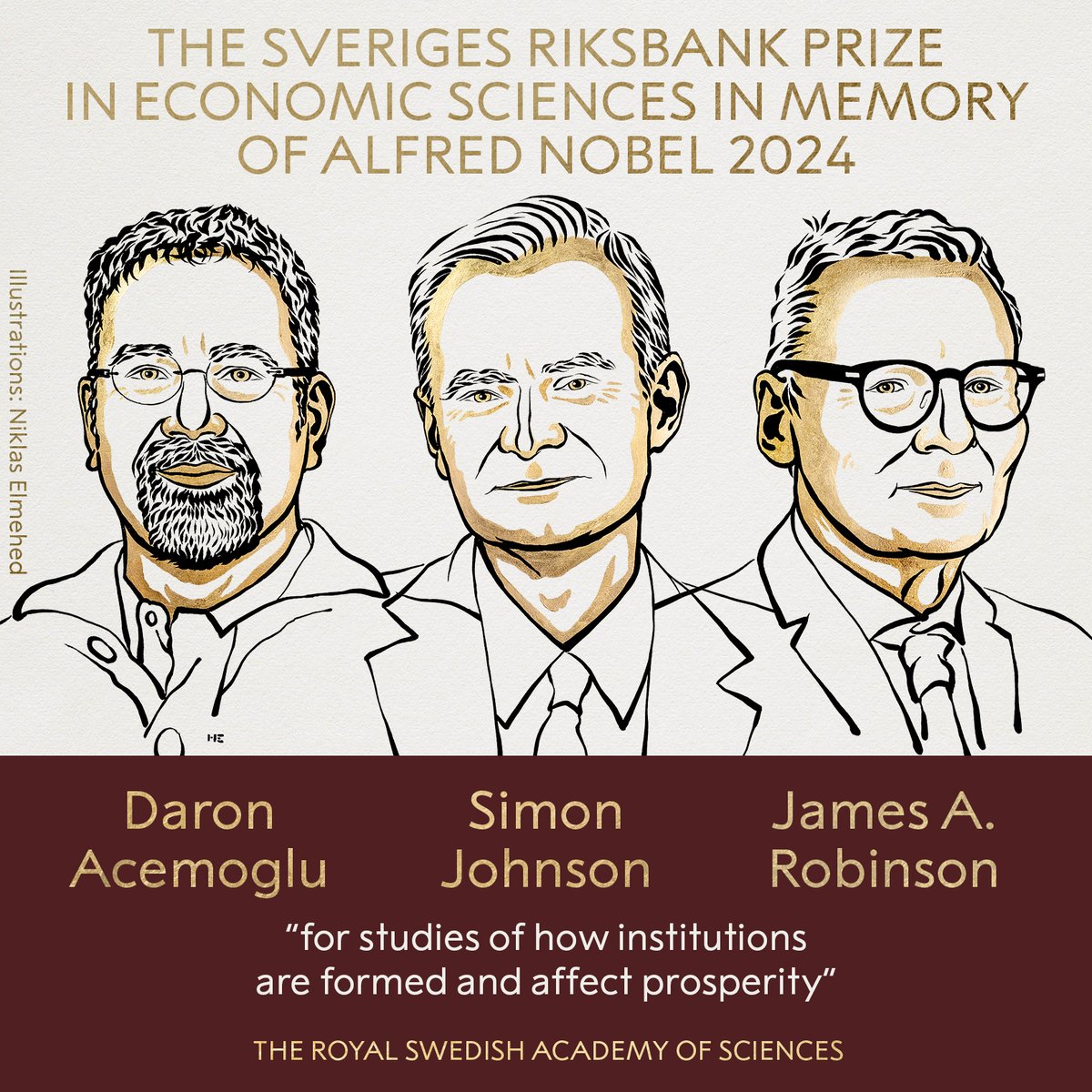
BREAKING NEWS
The Royal Swedish Academy of Sciences has decided to award the 2024 Sveriges Riksbank Prize in Economic Sciences in Memory of Alfred Nobel to Daron Acemoglu, Simon Johnson and James A. Robinson “for studies of how institutions are formed and affect prosperity.”
#NobelPrize
721
9,524
25,082
13,317,753
Mario L. Small retweeted

12 Oct 2024
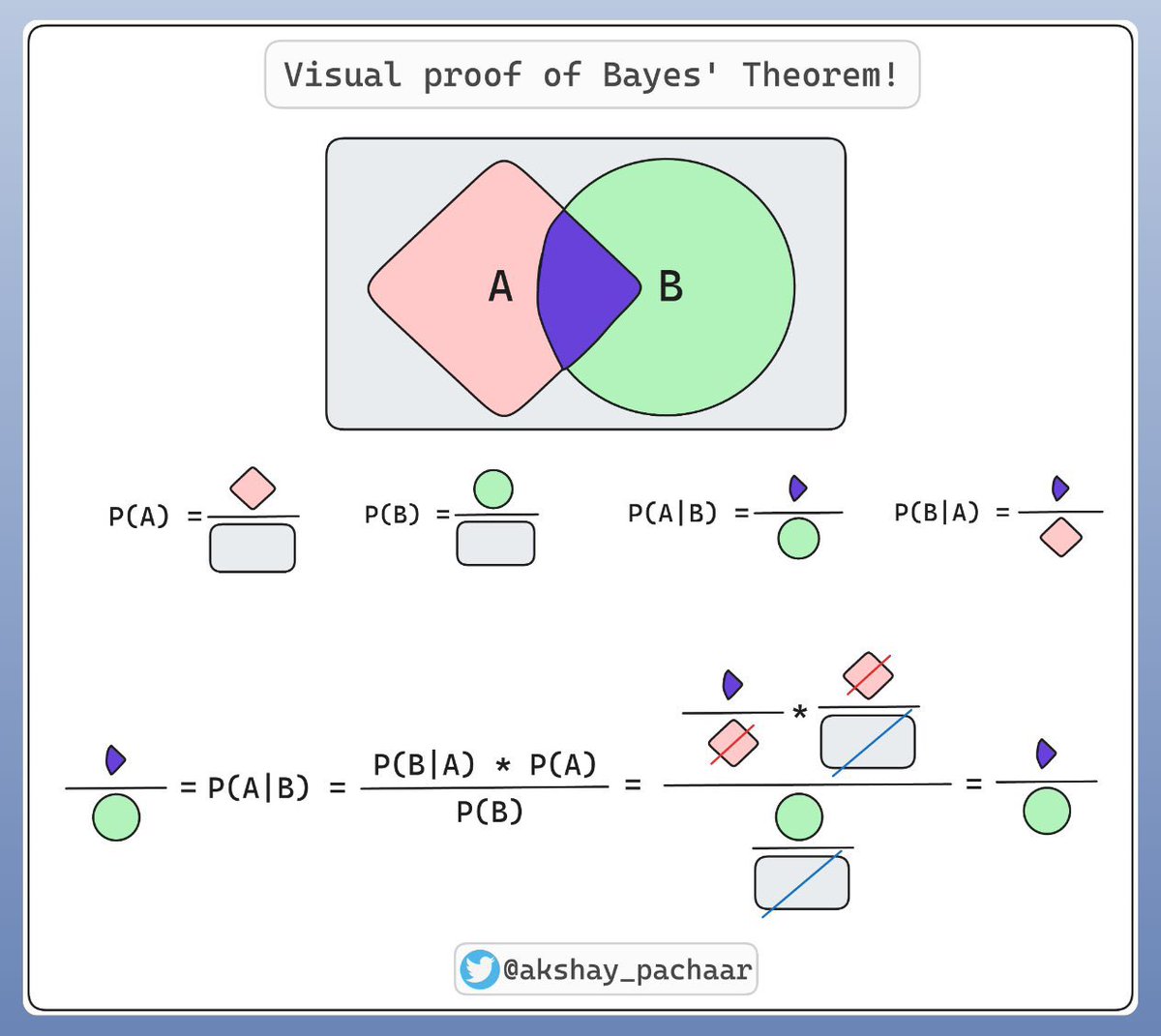
Bayes’ theorem, clearly explained:
78
1,227
8,463
745,550

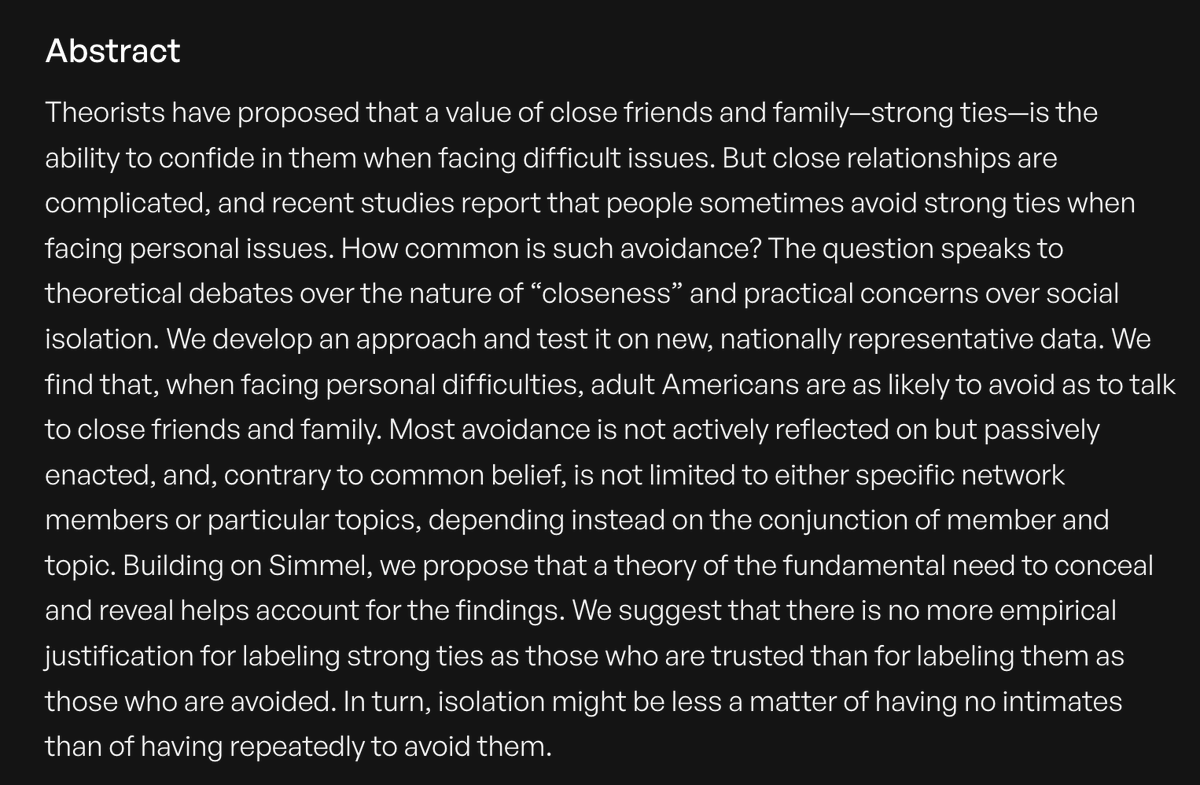
In @ASR_Journal, @MarioLuisSmall @kristinapbrant & Fekete found in a representative survey that adult Americans were as likely to avoid as to talk to friends & family about difficult personal issues, suggesting a need to rethink theories of “strong ties.”
journals.sagepub.com/doi/abs…
1
4
2
1,344
Mario L. Small retweeted

3 Sep 2024
From Department Chair @MarioLuisSmall,
Applications for Assistant Professor/Associate Professor/Professor (Open Rank)
The Department of Sociology at Columbia University invites applications for an open rank position to begin July 1, 2025. Apply here: academic.careers.columbia.ed…
2
13
18
3,258
Mario L. Small retweeted

21 Aug 2024
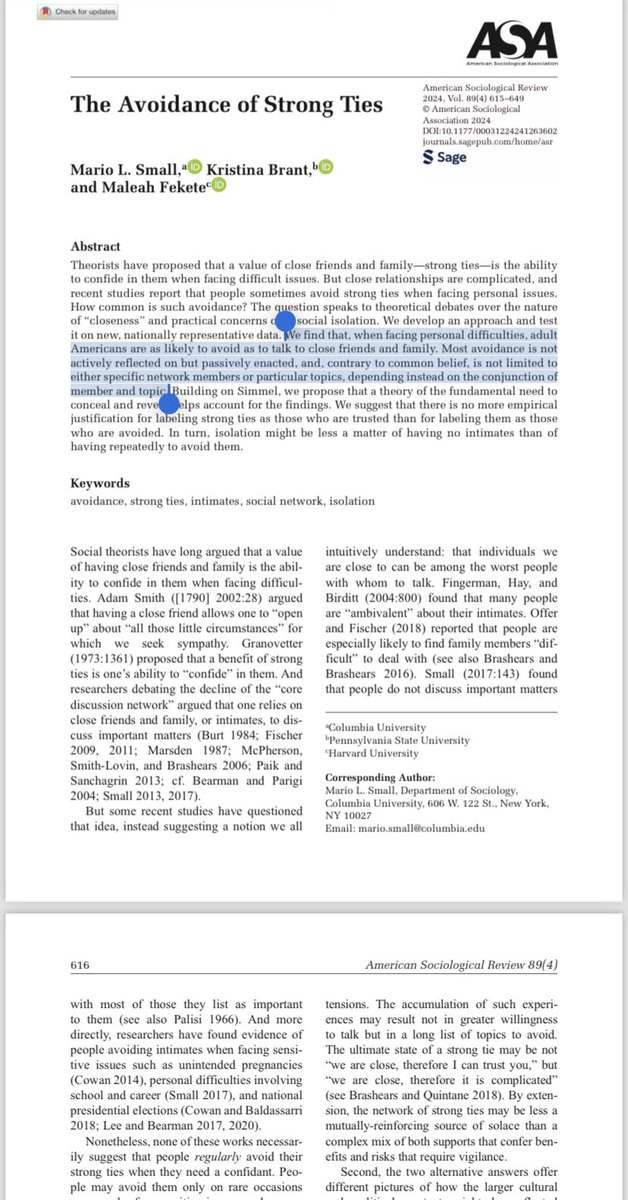
cool new paper in @ASR_Journal by @MarioLuisSmall colleagues on the avoidance of strong ties.
Upshot: avoidance is a constitutive element of how people relate to close friends and family (i.e., more the rule than exception), common across demo groups and income levels.
2
7
936
Mario L. Small retweeted

12 Aug 2024
Research from @marioluissmall shows avoidance happens almost as often as open communication in our closest relationships. Discover how and why we avoid certain topics—and what we can do about it. 🗣️💭 societytoday.org/when-talkin… #Communication #MentalHealth #Relationships

1
1
424
Mario L. Small retweeted

26 Jul 2024
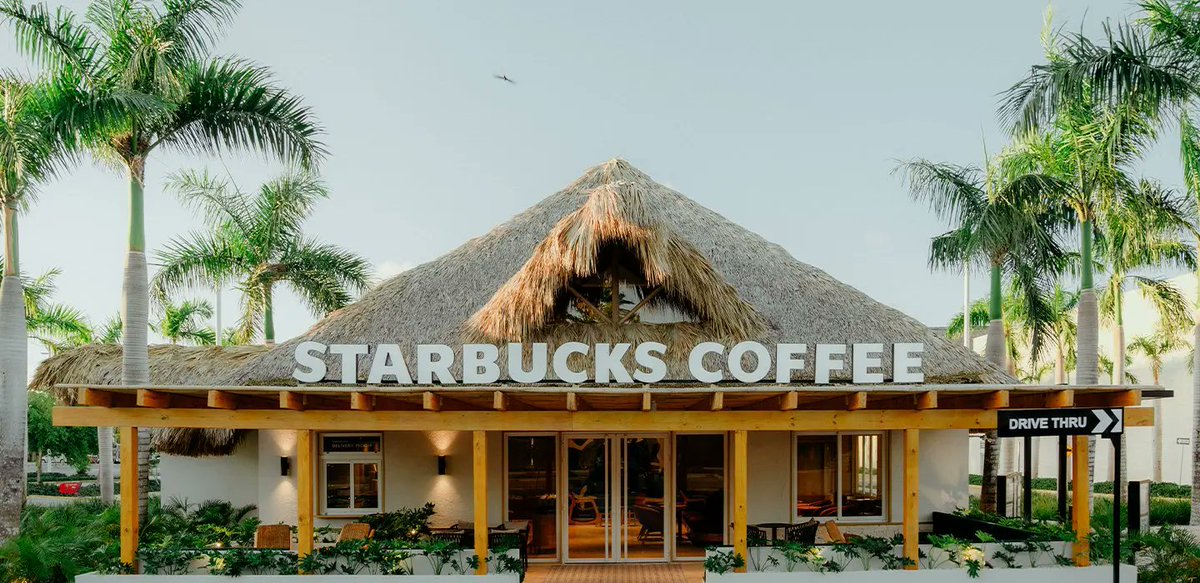
Introducing a @Starbucks in a neighborhood without prior cafés increases “the number of startups of 5.0% to 11.8% (or 1.1 to 3.5 firms) per year, over the subsequent 7 years.” nber.org/papers/w32604 (@JorgeGuzmanCBS/@MarioLuisSmall/@nberpubs).
1
5
761
25 Jul 2024
New work showing what the great sociologist William Julius Wilson argued several decades ago: children suffer when work disappears for the adults in their neighborhoods: wsj.com/economy/economic-mob…
1
5
12
1,245
25 Jul 2024
More from the NYT:
Who Can Achieve the American Dream? Race Matters Less Than It Used To. nytimes.com/interactive/2024…
1
3
6
1,020