Joined March 2012
- Tweets 8,718
- Following 2,629
- Followers 5,487
- Likes 4,320
2,792 Photos and videos
Mark 🇦🇺 retweeted

the world needs the strait of hormuz reopened. should have happened months ago, but today’s outcome is the best option available.
having said that, iran war has been a disaster. no agreement on nukes, ballistic missiles, support for proxies…and one of the world’s most brutal regimes remains in place…and is getting paid off.
biggest foreign policy failure of trump administration by a long margin.
104
291
1,350
60,807

13h
That −5% isn't a productivity collapse, it's a COVID base effect. The 4yr window measures off the 2022Q1 peak (index 105.0), which was a mechanical artefact: hours cratered under lockdowns/JobKeeper while GDP held, inflating output/hour. Since the 2023 trough, productivity's actually flat-to-slightly-up (98.4→99.6).
We have a real productivity problem. No need to over dramatise with a COVID base effect.
1
14
1,153

Mark 🇦🇺 retweeted

As much as people may not like it, this is true.
17h

The cruel irony: The fastest path to a building boom, on this logic, runs through an economic downturn. A government that wants to hit a housing target is therefore in an awkward spot. The same government wants low unemployment and a strong economy.
4
1
33
5,842
18h
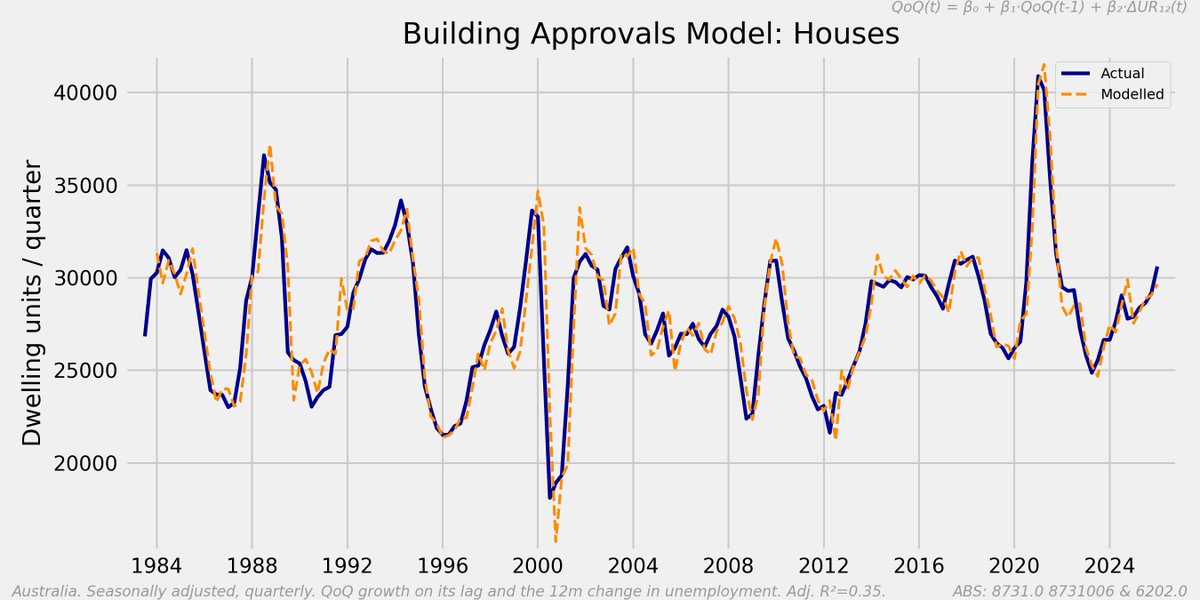
A building approvals regression model - it is about half momentum (AR(1)) and about half the 12m change in the unemployment rate.
The counterintuitive bit: a rising unemployment rate predicts stronger approvals growth, not weaker. That's because approvals lead the economic cycle and are driven by interest rates, and the RBA cuts rates precisely when unemployment is climbing. So "unemployment rose over the past year" really stands in for "the RBA has been easing," which lifts approvals. The unemployment rate is just a cleaner, less noisy way to capture that monetary cycle than the cash rate itself.
Tested and rejected on AIC/BIC gounds: Approvals level, log-level of approvals, year-on-year approvals growth, 1-month approvals growth, 3-month approvals growth, monthly frequency with stepped quarterly GDP, GDP Q/Q growth, GDP-per-capita Q/Q growth, GDP Y/Y growth, GDP-per-capita Y/Y growth, GDP-per-capita Q/Q lagged 1 quarter, GDP-per-capita Q/Q lagged 2 quarters, 3-month change in cash rate, 12-month change in cash rate, 12-month population growth (smoothed 15 ), lagged dependent on Y/Y
3
2
21
2,649
17h
The cruel irony: The fastest path to a building boom, on this logic, runs through an economic downturn. A government that wants to hit a housing target is therefore in an awkward spot. The same government wants low unemployment and a strong economy.
2
1
22
7,574
21h
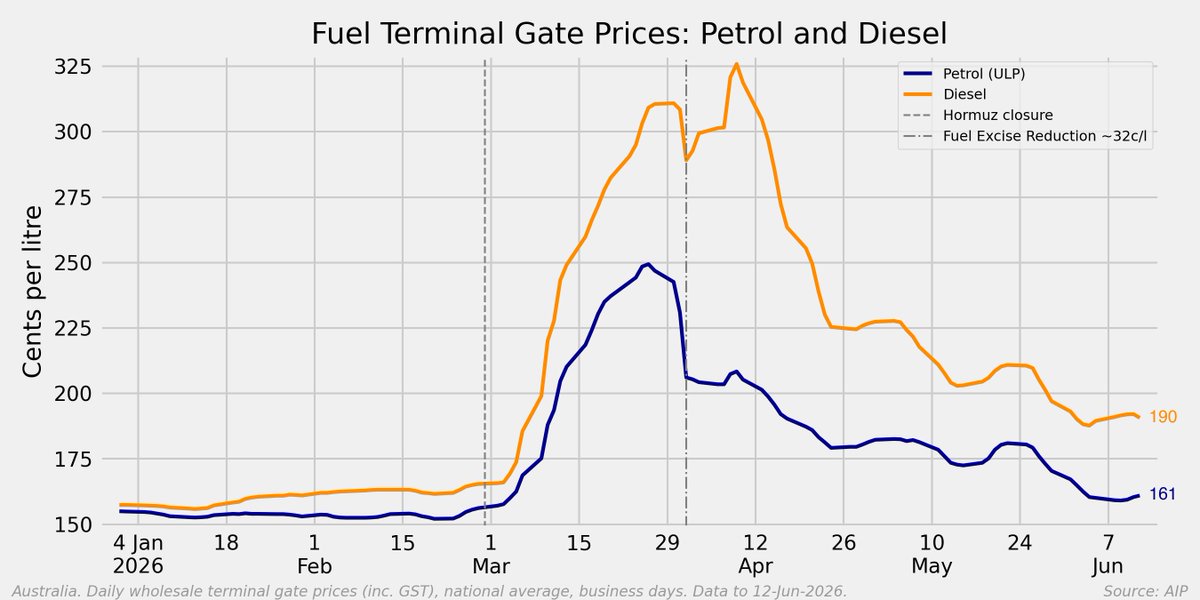
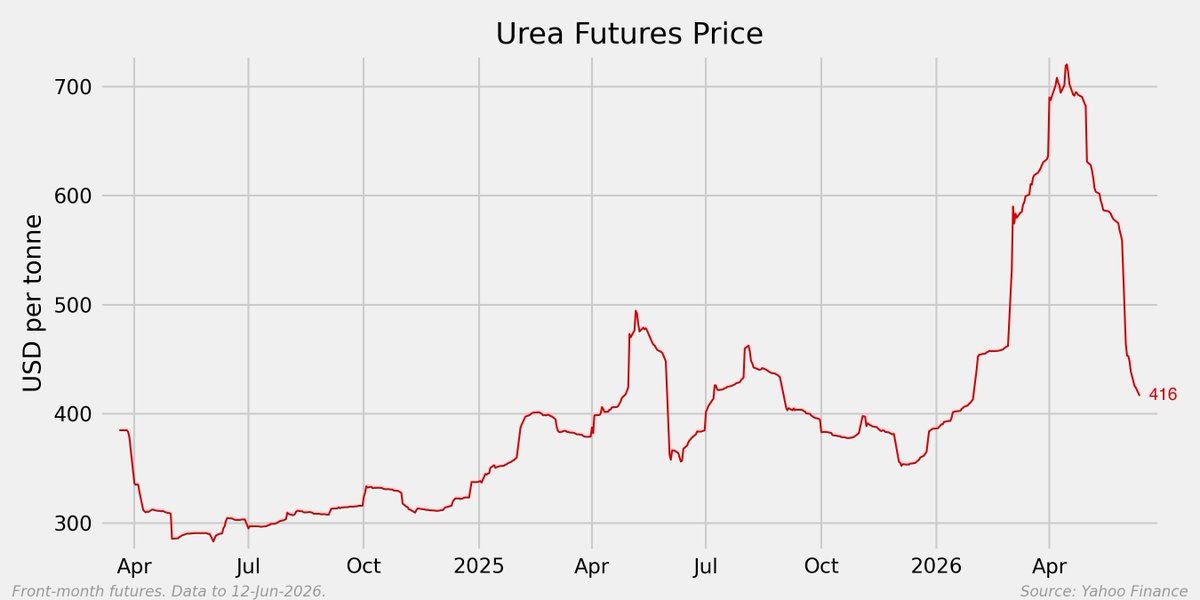
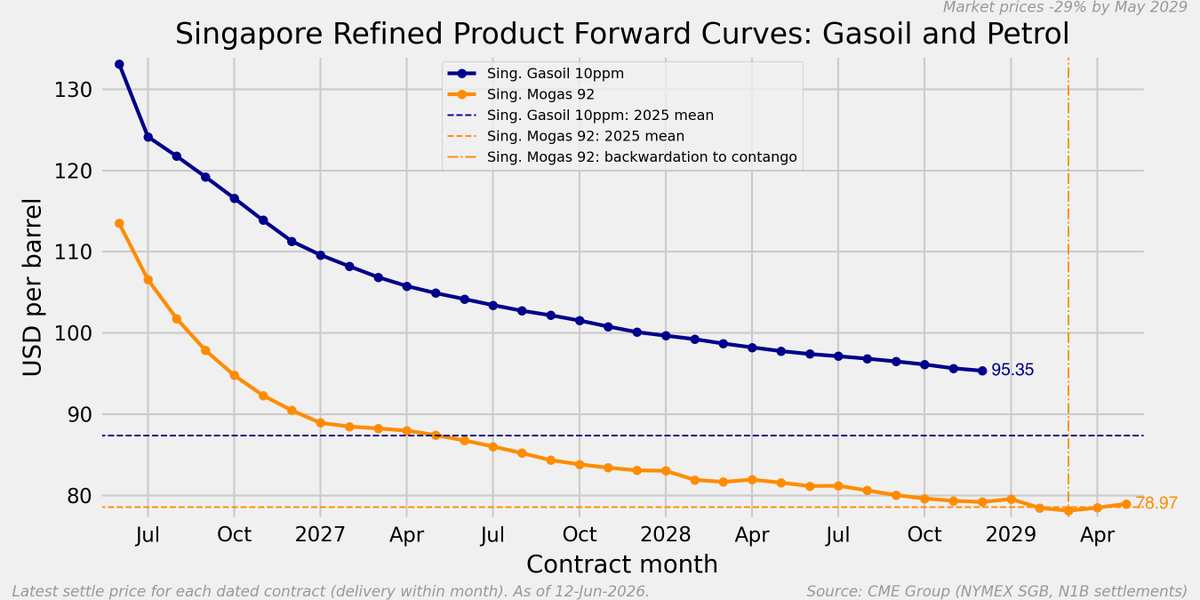
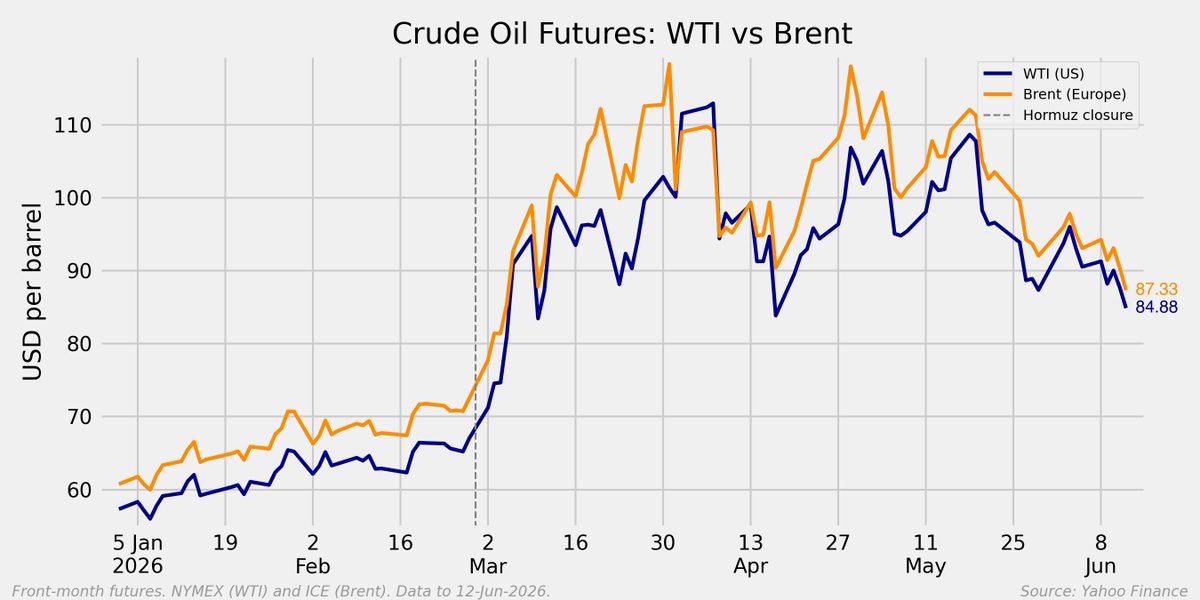
Weekly Energy Update: We have heard it many times before: the United States is on the verge of a deal with Iran. Trump has announced many breakthroughs that never materialised, and markets have learned to discount the rhetoric. This time appears different. markthegraph.blogspot.com/20…
1
408
Mark 🇦🇺 retweeted
Jun 10
Targets are often just political theatre. They demonstrate enthusiasm to solve a problem. They motivate the party faithful. They tell voters, we take your concerns seriously.
They are particularly pernicious when they are largely disconnected from concrete strategies (who will do what by when to achieve the target) and compelling theories of action (we know this will work because ...).
Often the strategy part of targets are just fuzzy goal statements, plans to develop plans, and the appointment of eminent advisory bodies. A more useless collection of bureaucratic process is hard to find.
2
1
12
718
Mark 🇦🇺 retweeted
What exactly what would be point of sacking Clare O'Neil?
It's not like it was ever in doubt the government would fail to meet its target by a country mile and there is broad based incompetence in terms of the public housing build.
Jun 10

The Prime Minister is facing pressure to sack Housing Minister Clare O'Neil after a fresh report revealed Labor's 1.2 million homes target was almost impossible to achieve.
skynews.com.au/australia-new…
37
4
110
8,630
Mark 🇦🇺 retweeted

Jun 9
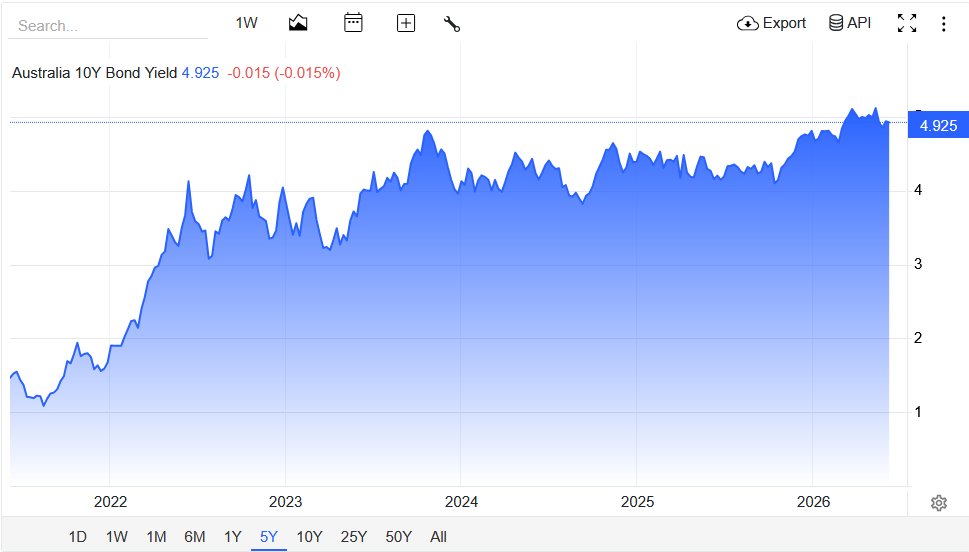
📉 NAB says the next #RBA move will be an interest rate cut but is unsure of timing. The Australian 10-year bond yield is sitting around 4.93% and appears to disagree.
Banks have every incentive to keep confidence flowing through the housing market. Are we looking at genuine economic signals, or another attempt to keep buyers optimistic?
#RBA #InterestRates #Australia #TradingEconomics
25
5
146
10,691
Jun 9
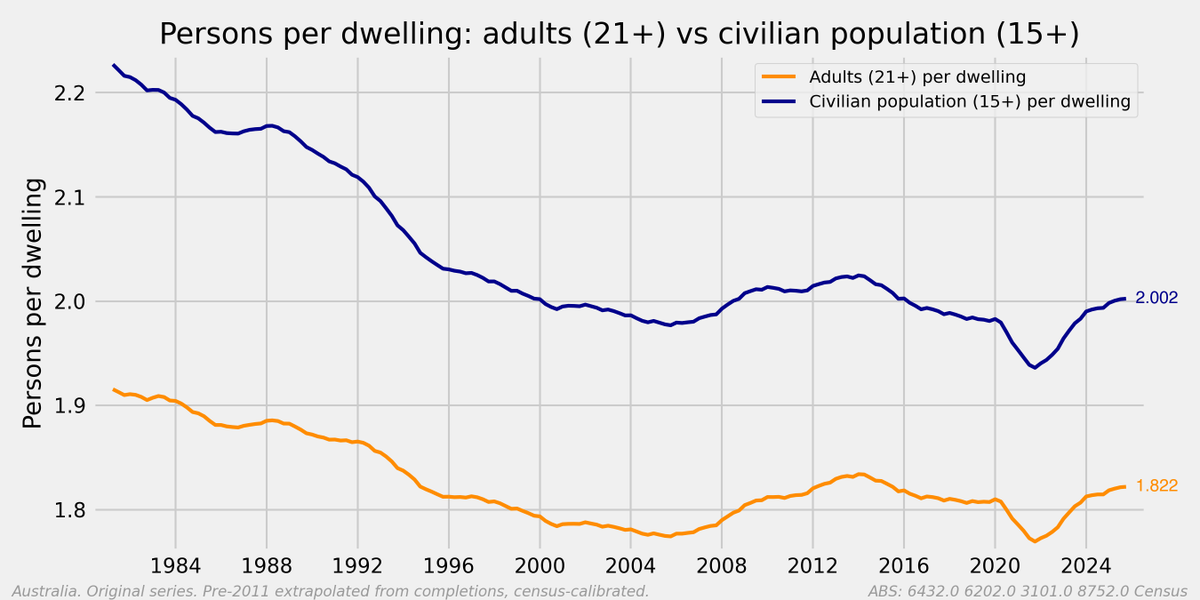
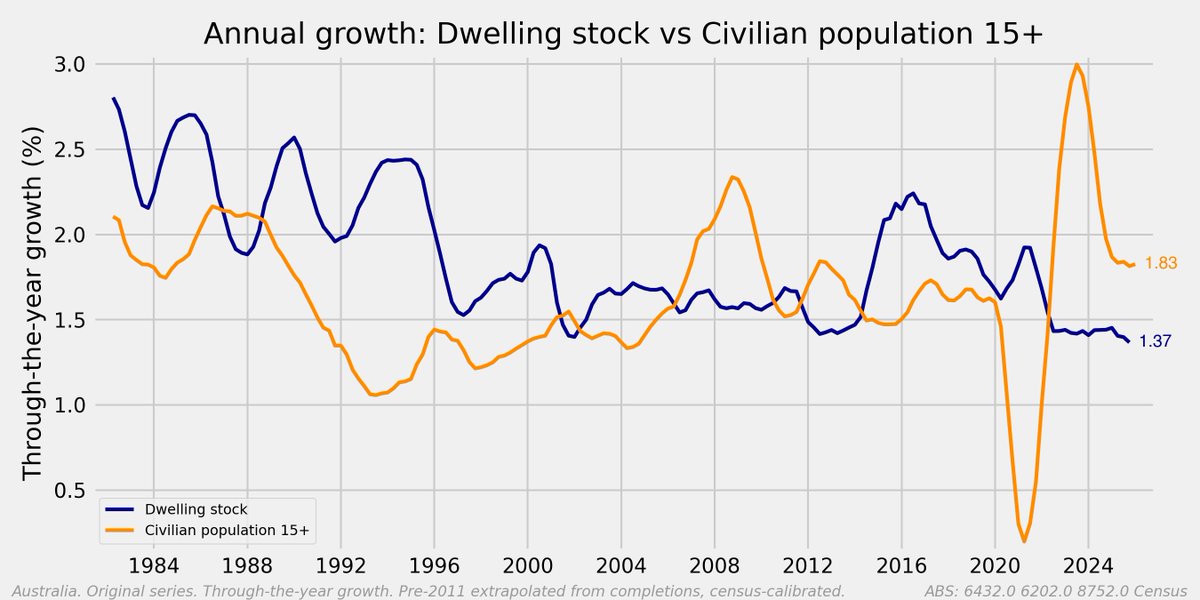
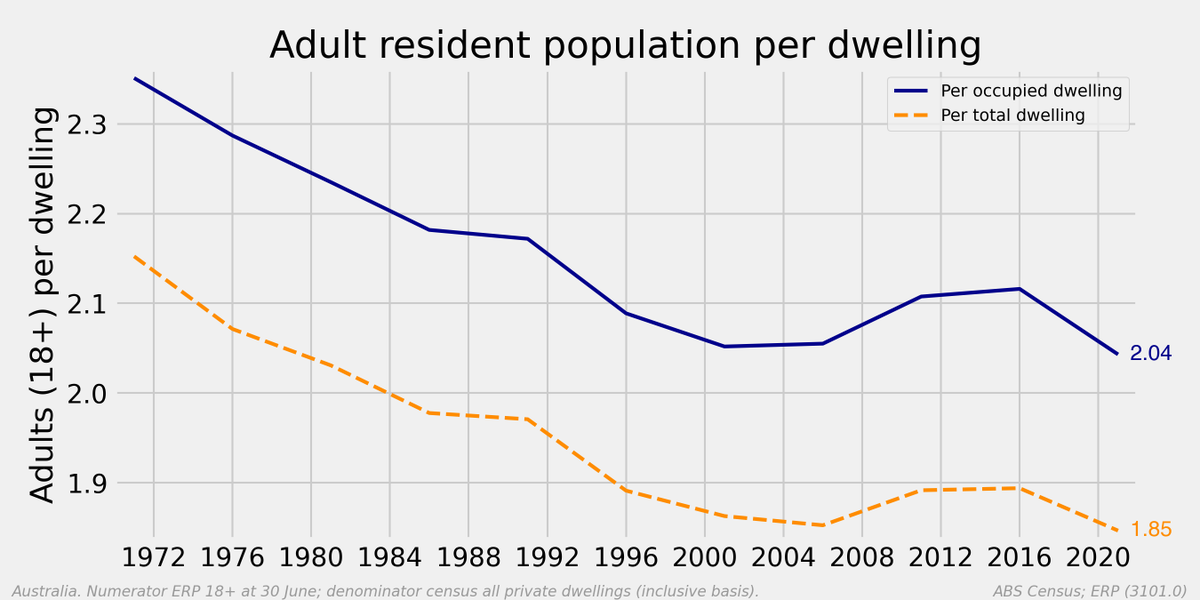
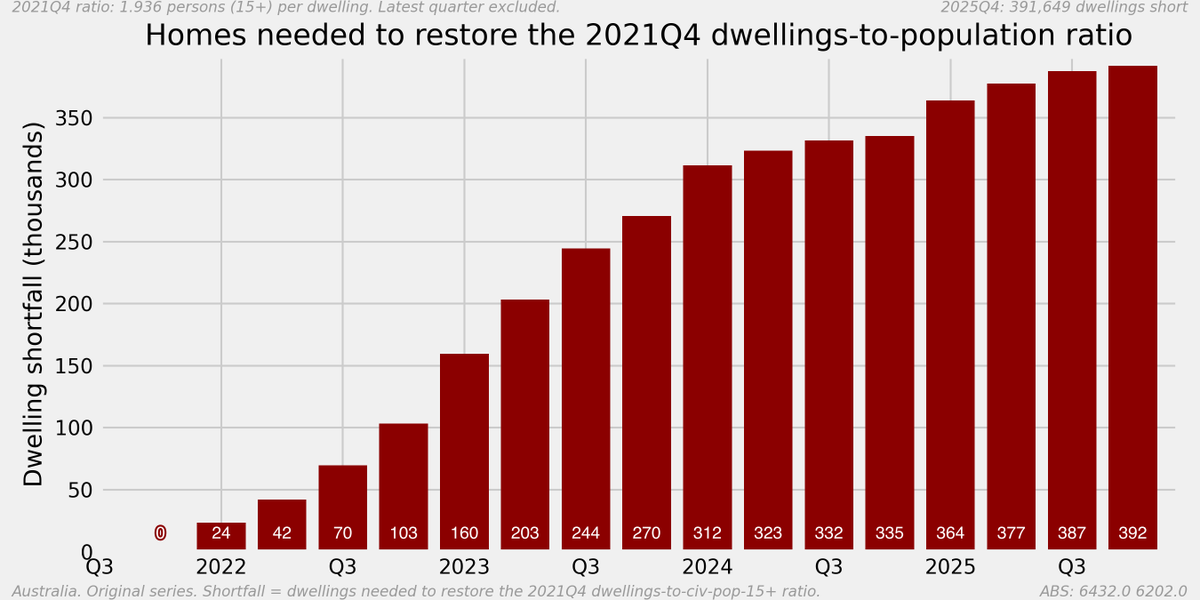
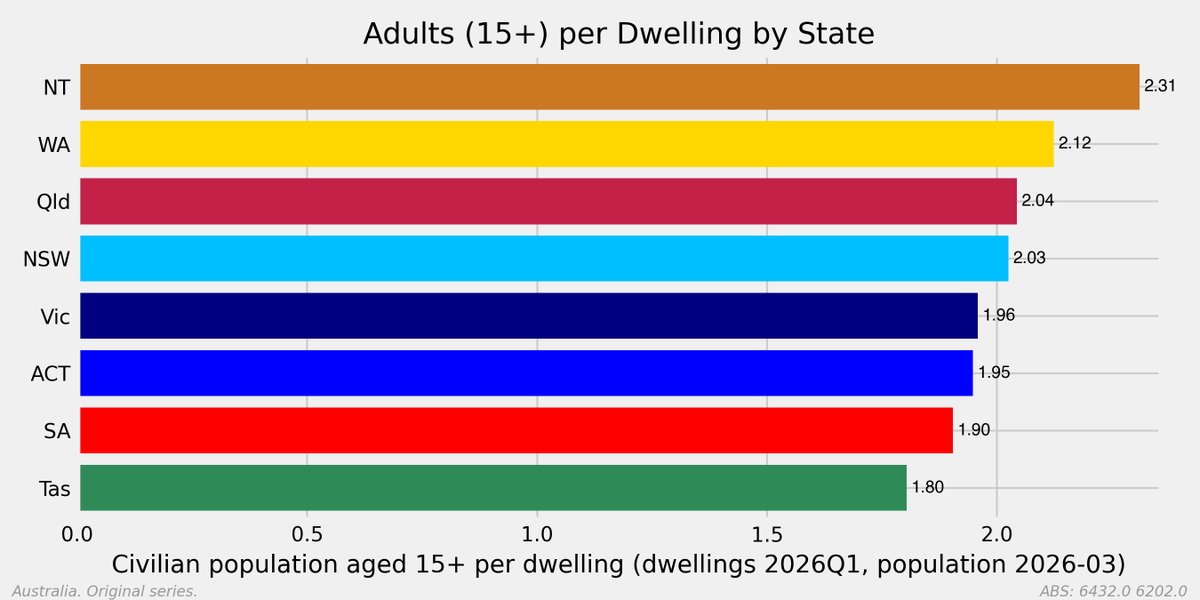
Recent Housing Shortfall: Two caveats, the starting point is an arbitrary choice, and there's no agreed metric for "enough" housing. With that said:
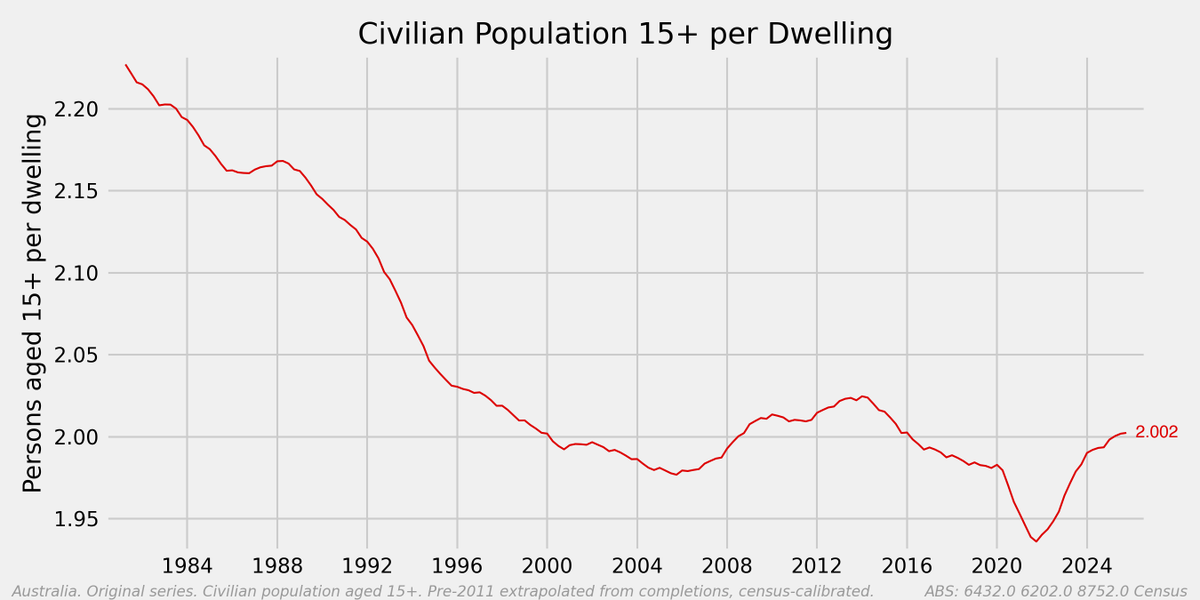
Restoring the 2021-Q4 ratio of dwellings to civilian population aged 15 would take ~392,000 net extra homes (excluding knock-downs). We've slipped from 1.9361 to 2.0024 people (15 ) per dwelling.
3
8
21
2,446
Jun 9
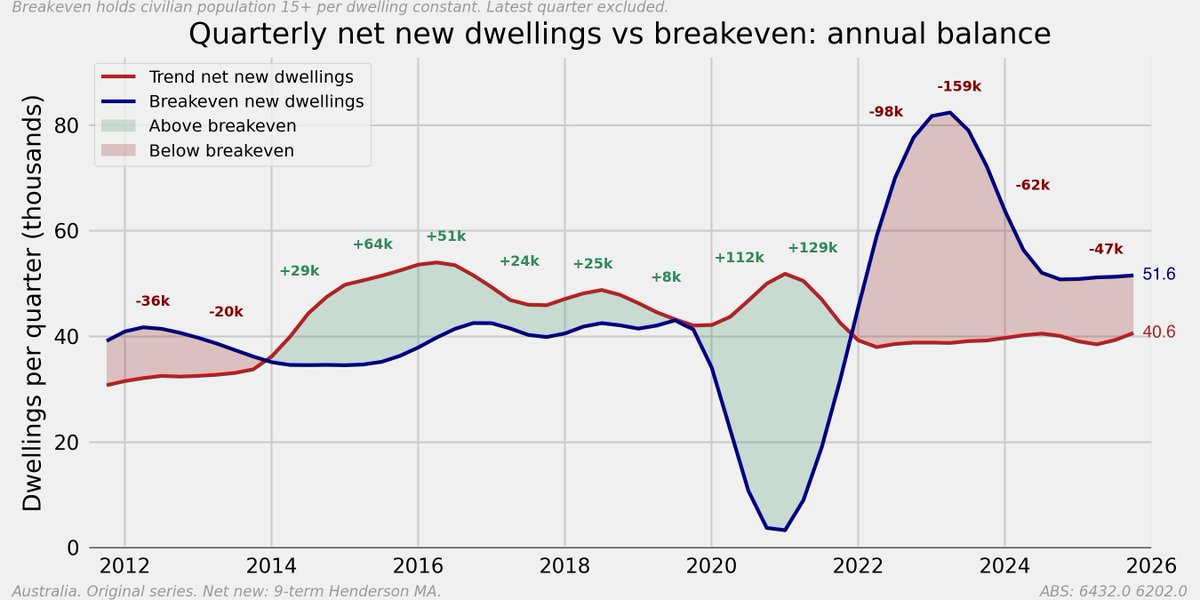
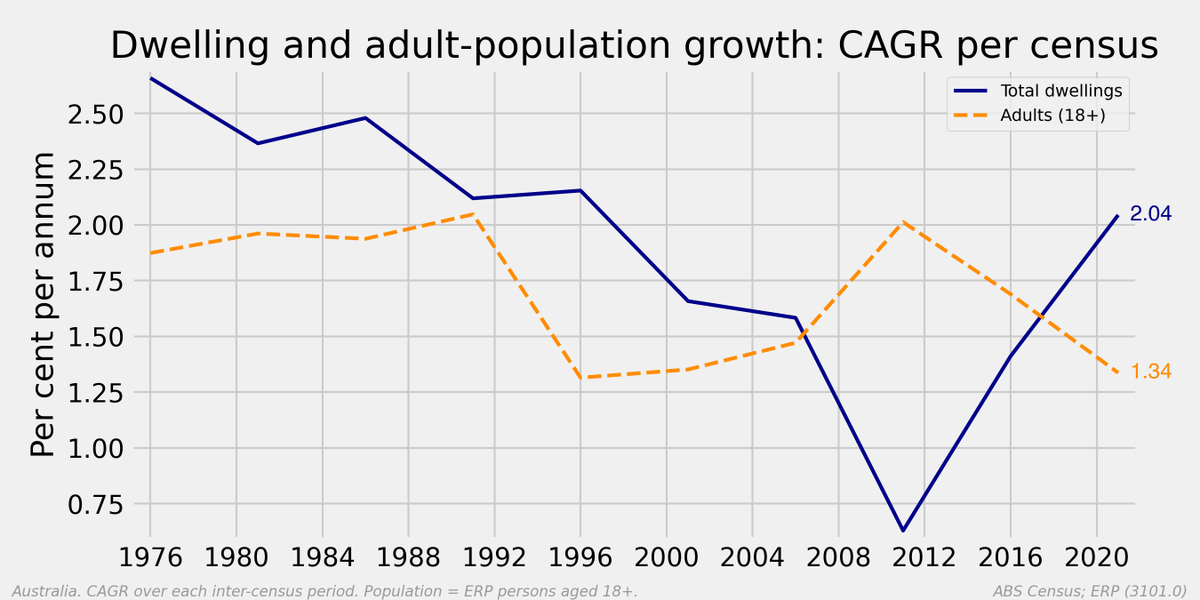
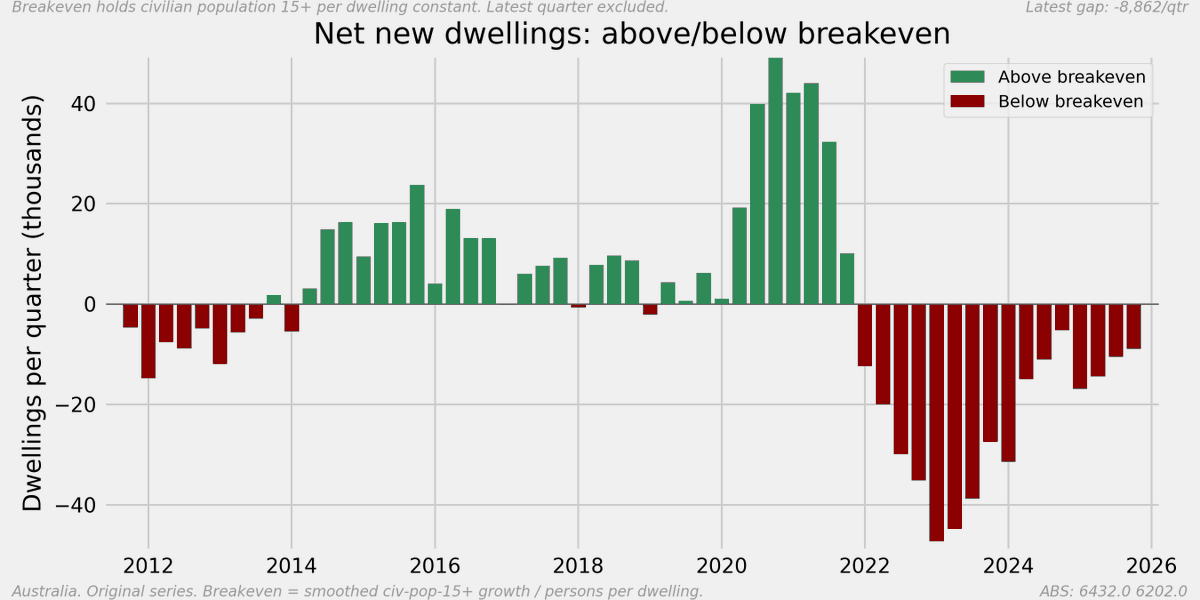
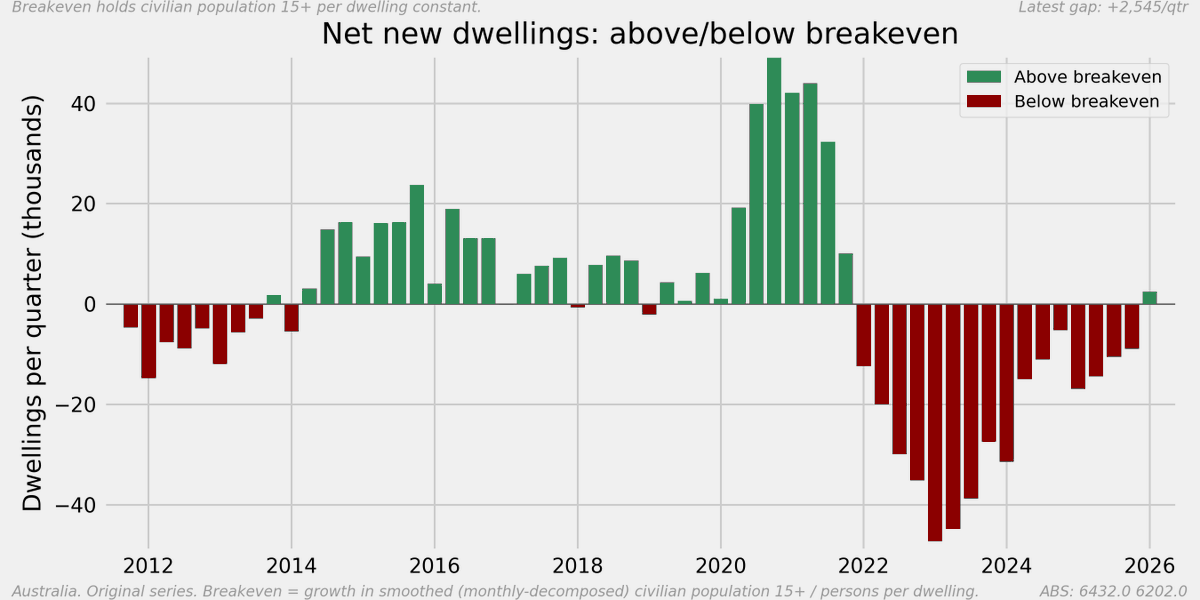
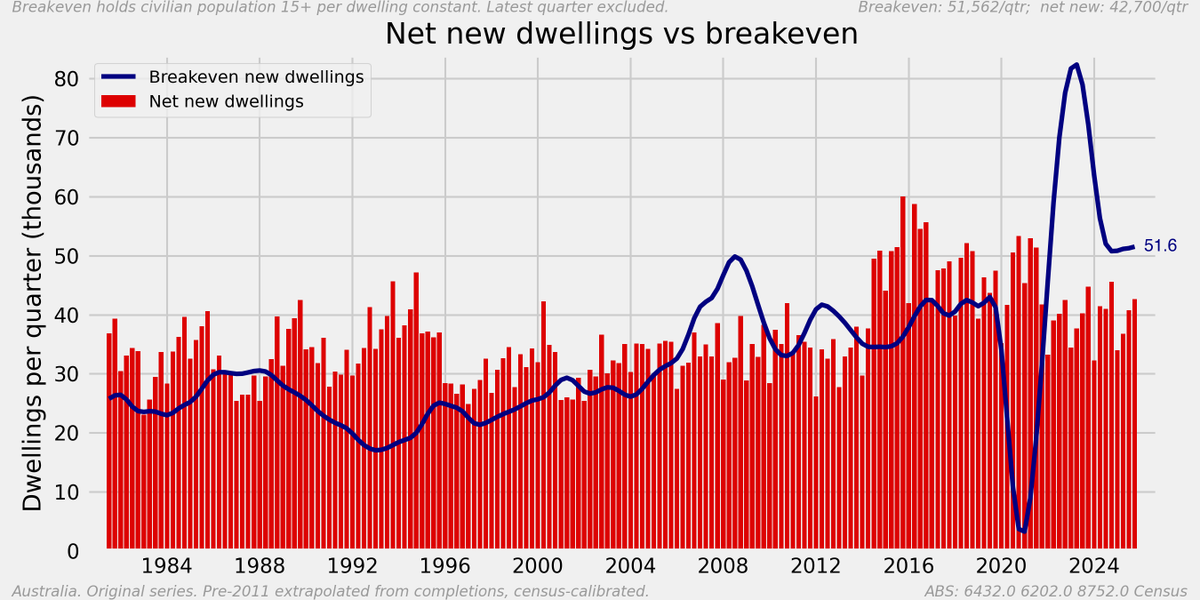
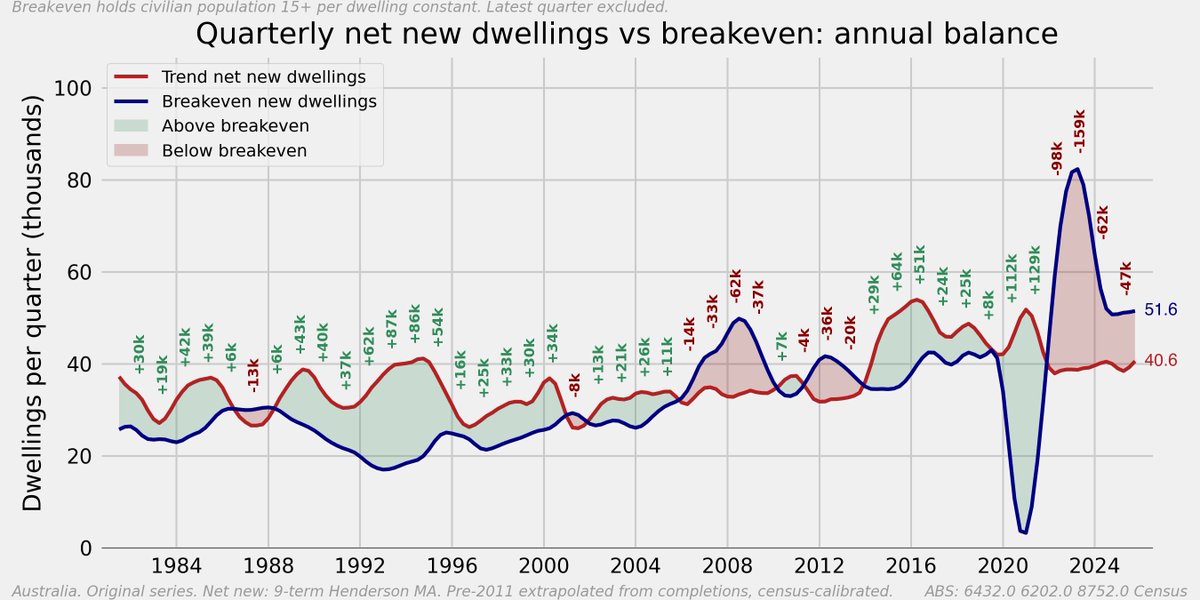
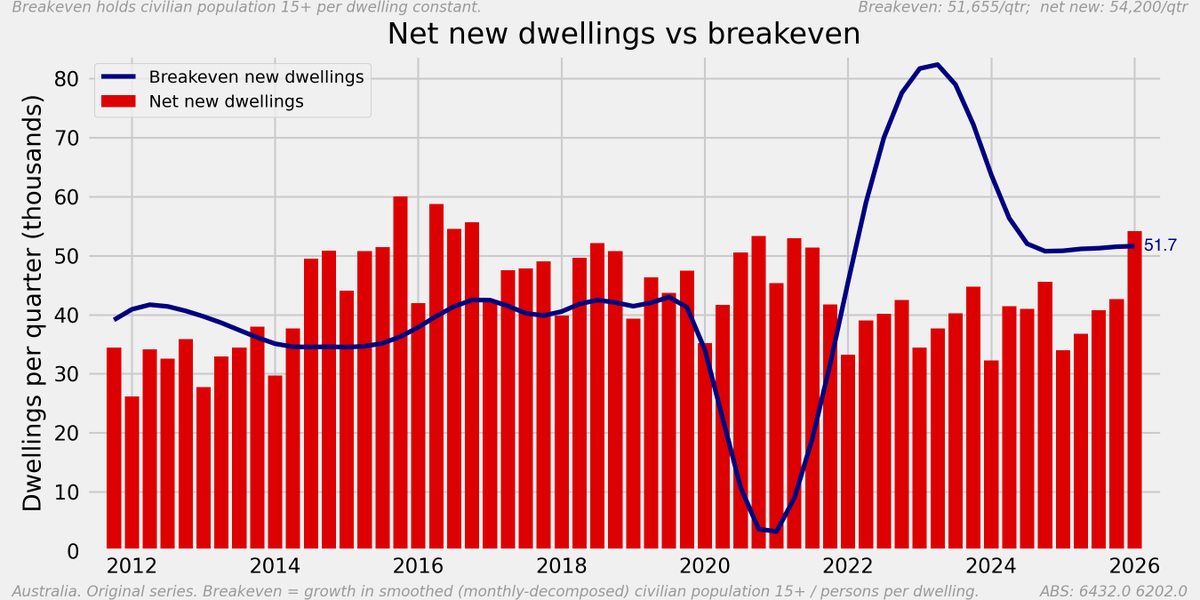
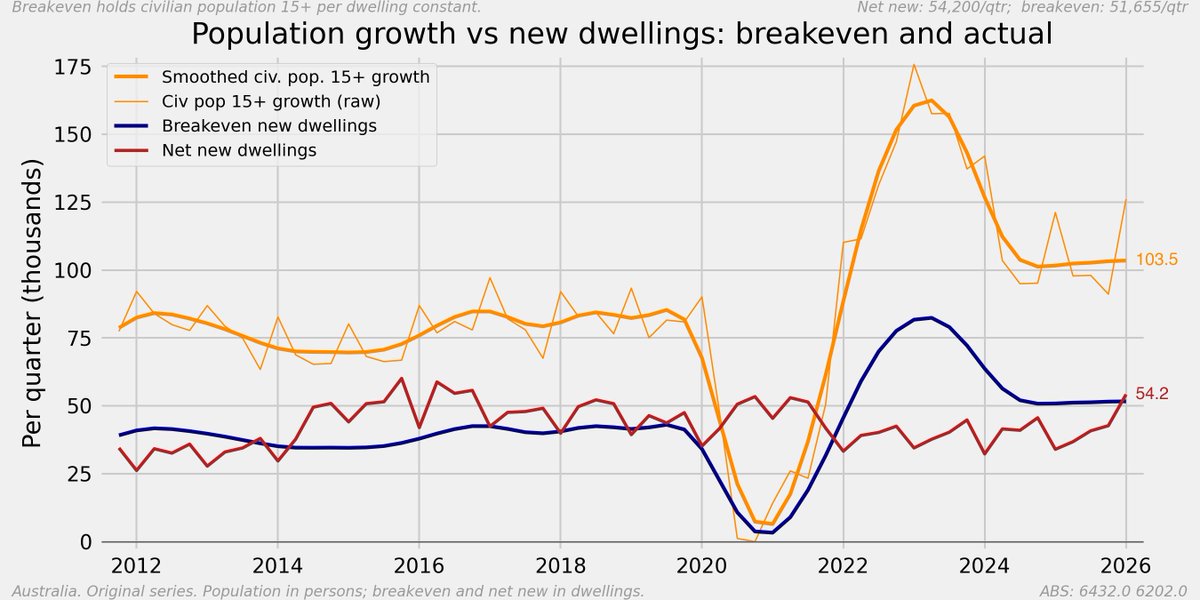
Housing breakeven: After 4 straight years (16 quarters) of net new dwellings falling short of trend population growth (civ pop 15 ), 2026Q1 was the first quarter we finally built enough to hold population-per-dwelling steady: net new ~54,200 vs a breakeven of ~51,700. One quarter, a narrow margin, but the first since 2021.
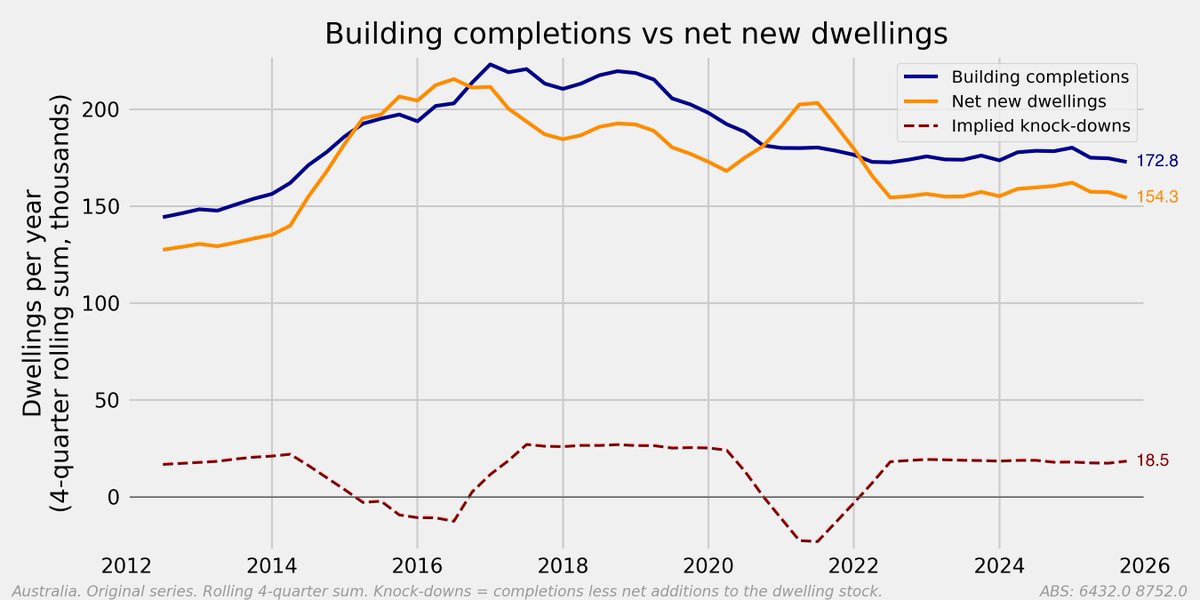
4
3
21
2,126
Jun 9
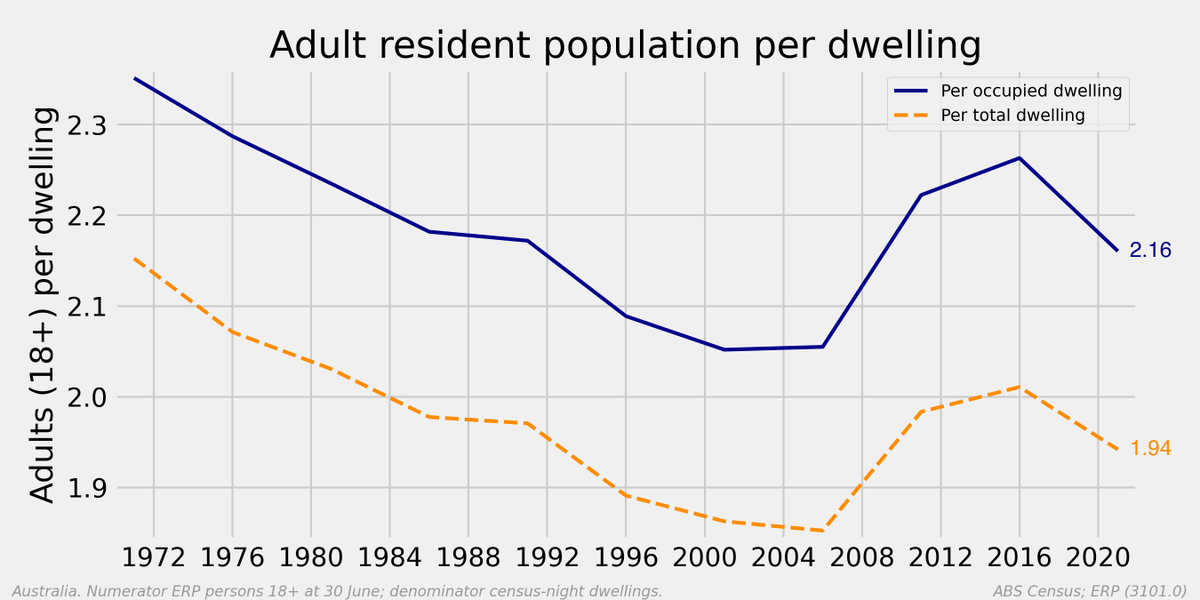
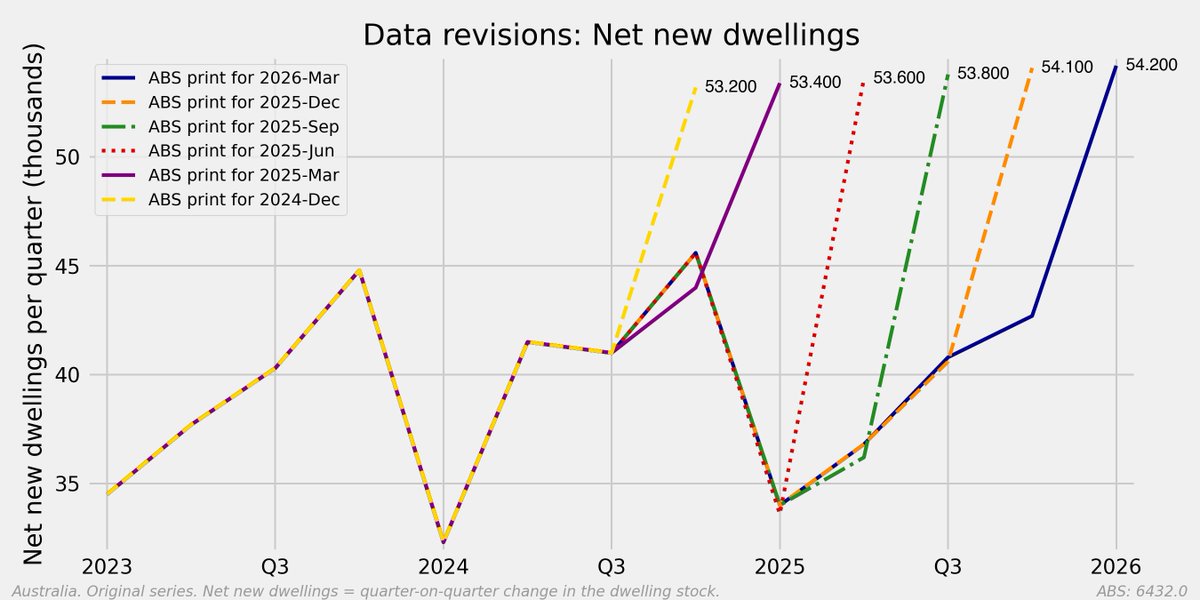
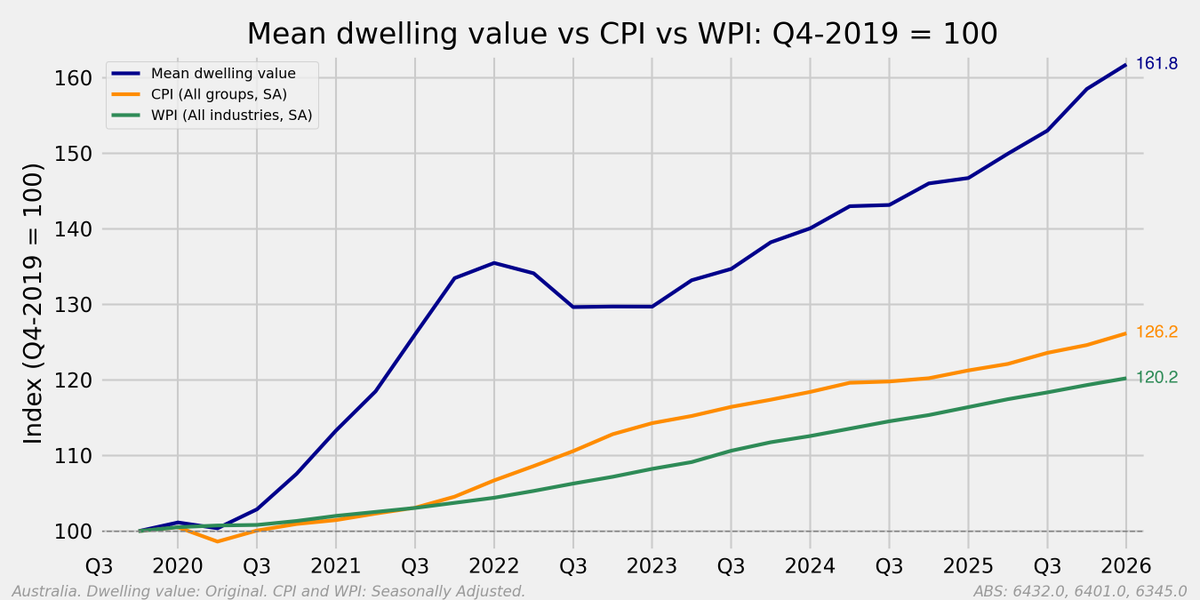
Same charts as above with the dodgy ABS estimate for 2026-Q1 removed from the chart. We
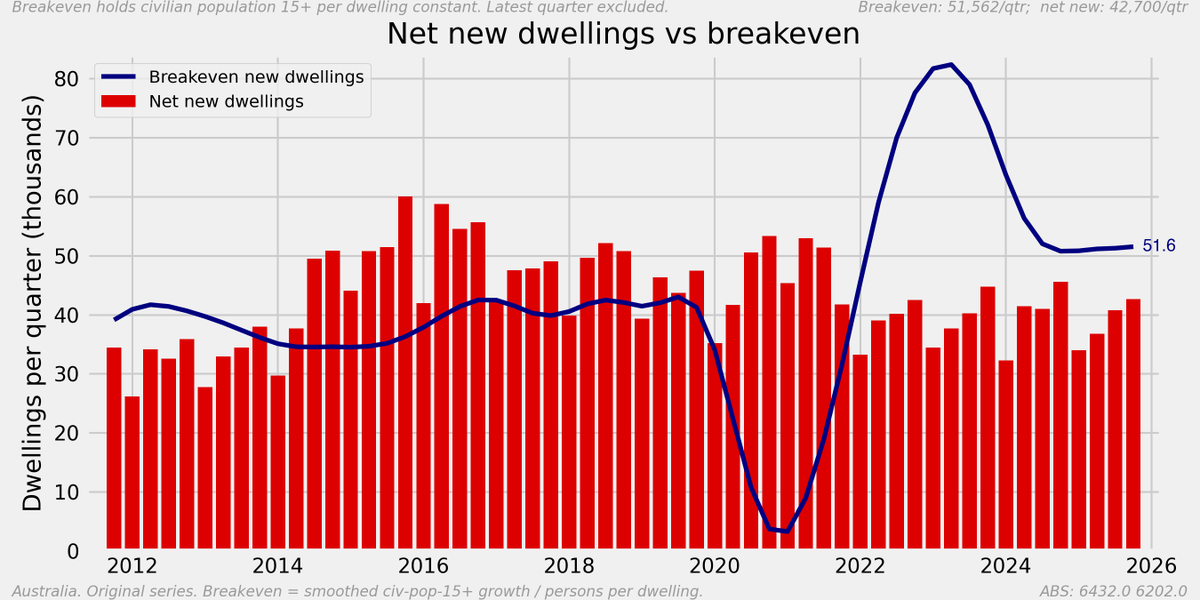
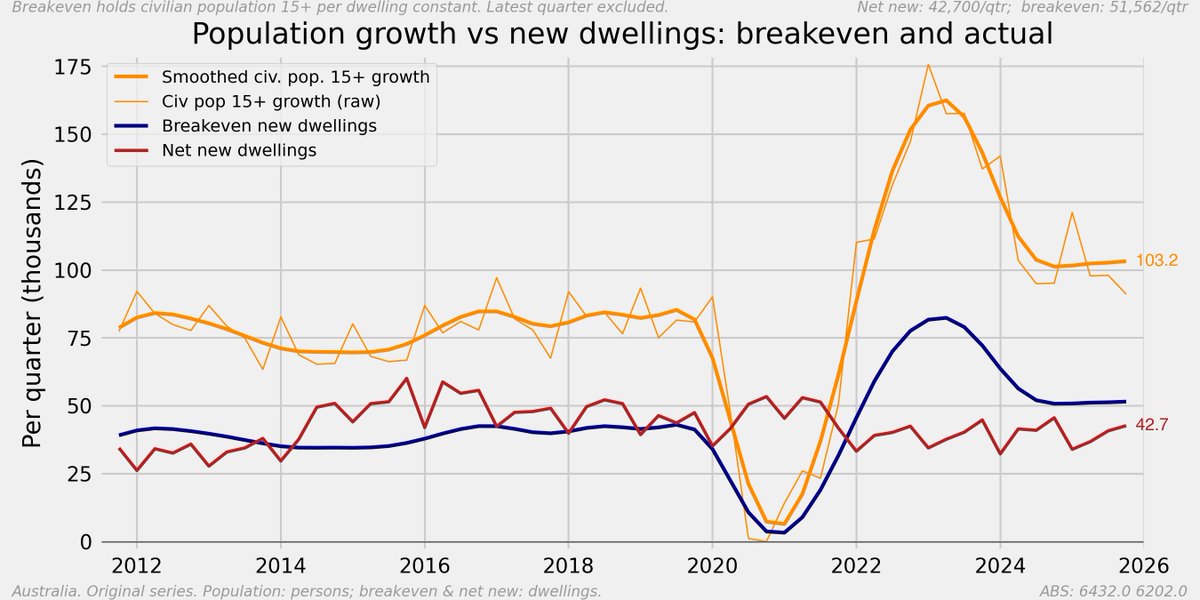
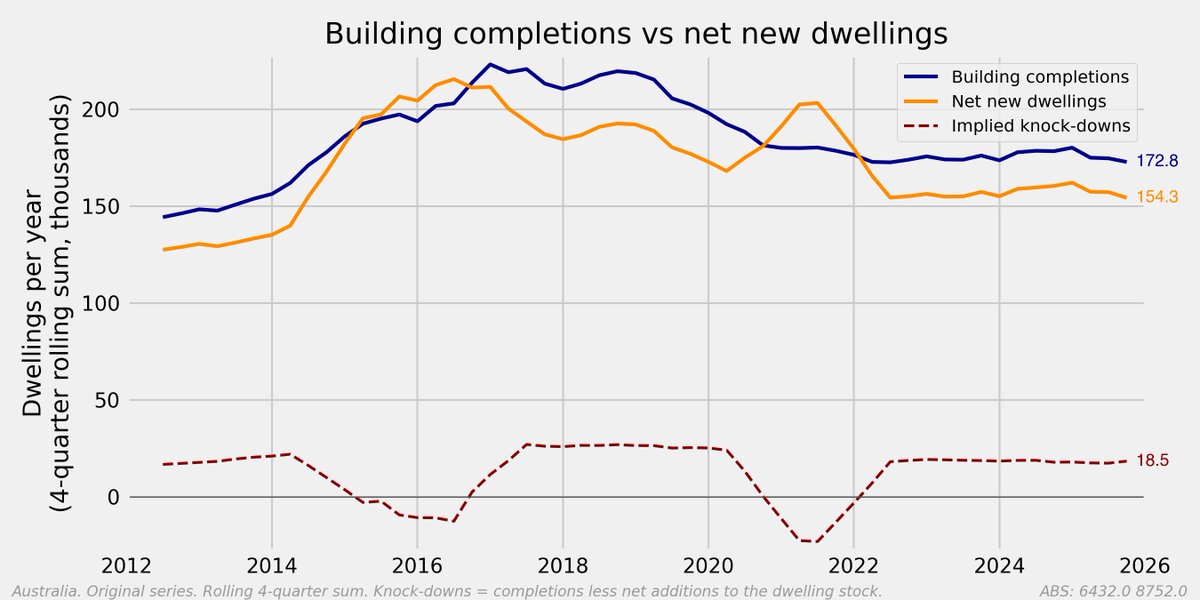
1
3
573
Mark 🇦🇺 retweeted

My favourite quote from Mark’s article so far:
“An efficient system would lean lightly on the productive and harder on the rent, because taxing rent changes little while taxing productive investment raises the cost of capital and shrinks what gets built.”
👇👇👇👇
Jun 9
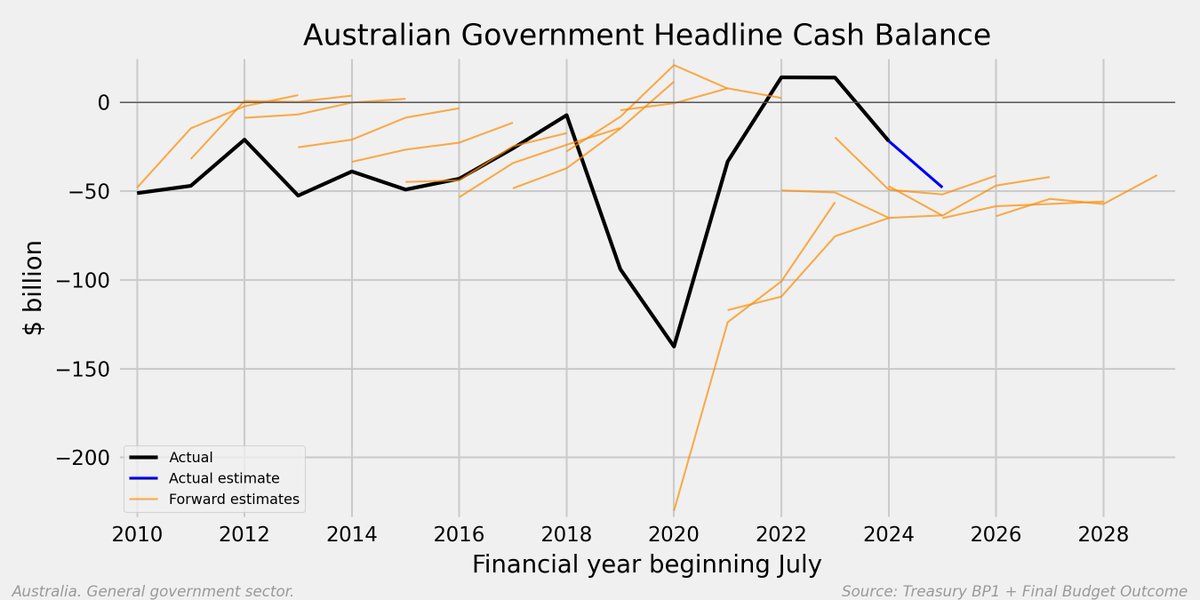
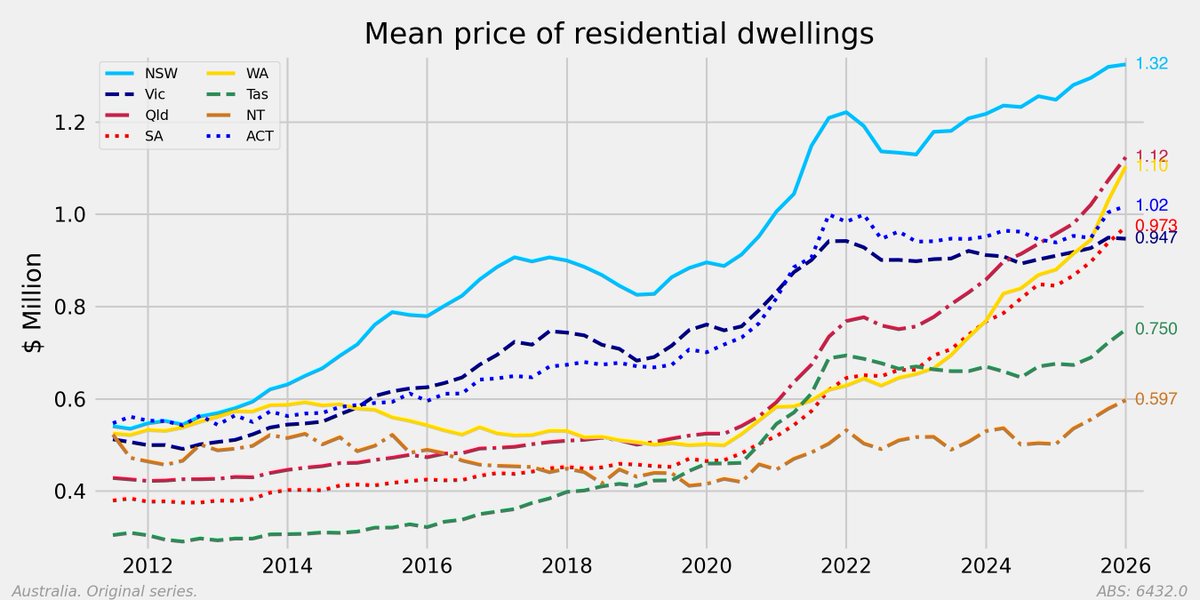
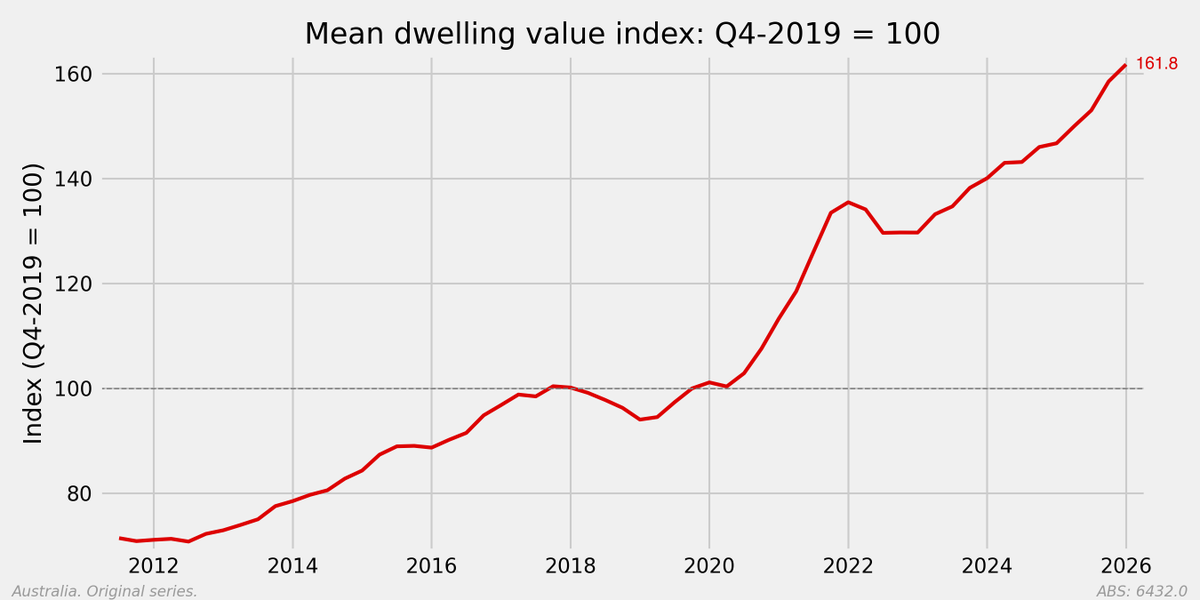
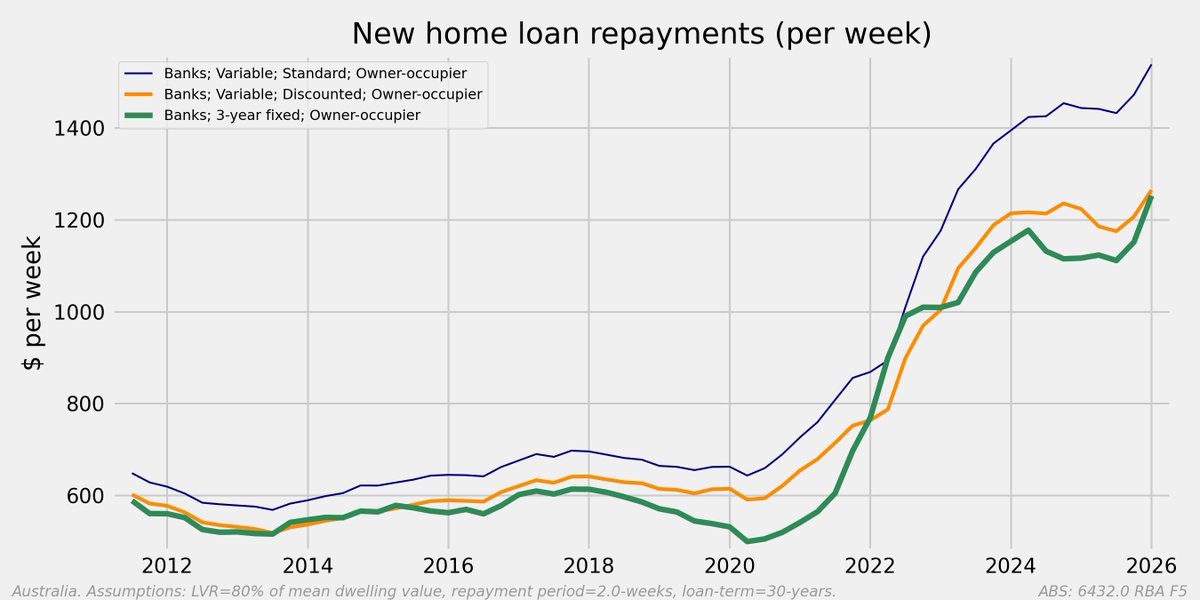
Capital Gains Tax: good reform or bad? Will it fix housing affordability, or just shuffle the deck chairs? My verdict: good in parts, which for an egg and a tax is fatal. Longform essay. markthegraph.blogspot.com/20…
#auspol #ausbiz #ausecon
1
1
12
1,911
Jun 9
Capital Gains Tax: good reform or bad? Will it fix housing affordability, or just shuffle the deck chairs? My verdict: good in parts, which for an egg and a tax is fatal. Longform essay. markthegraph.blogspot.com/20…
#auspol #ausbiz #ausecon
1
4
6
2,599