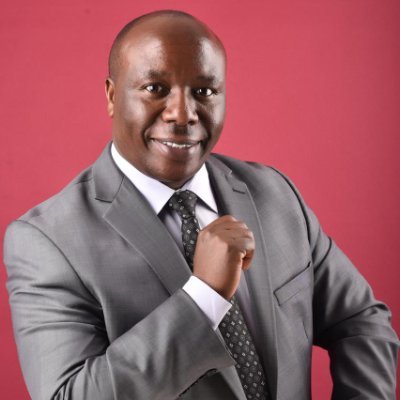
Advising on Retirement Planning, Savings, Investments & Insurance, Lead Consultant Hisa Africa Insurance | Key Intermediary for Absa Life Assurance & Old Mutual
Joined July 2015
- Tweets 8,532
- Following 7,130
- Followers 10,630
- Likes 145,817
780 Photos and videos









Pinned Tweet

Mar 2
This is the story of how I cleared a 10-year mortgage in 2 years
In the year 2000, I signed for my first mortgage KSh 2.7 million, repayable over ten years, with a monthly installment of about KSh 37,000. At the time, it felt significant but manageable. Like many young professionals, I believed the difficult part was getting approved. Once the bank said yes, I was ready to sit back and relax knowing that in 10 years i will be a home owner.
That is what traps most people.
When many people secure a mortgage, they celebrate the approval rather than confront the obligation. They upgrade furniture, expand their lifestyle, and slowly adjust their expenses until the monthly payment blends into routine existence. Ten years quietly becomes normal. The loan stops feeling temporary and starts feeling permanent.
I had a mentor who refused to let that happen. Stewart Henderson, who was serving as CEO of Old Mutual at the time told me something that permanently changed my understanding of debt: a mortgage is not a commitment it is an emergency.
Then he introduced a rule that, at the time, felt extreme. Every month I earned commissions, I had to bring my statement to him before spending any money. We would sit down together and allocate it.
The bank required KSh 37,000.
Stewart ignored that number.
Instead, he focused on capacity. Whenever income rose, payments rose. Whenever earnings improved, we attacked the loan. He called it 𝐟𝐢𝐧𝐚𝐧𝐜𝐢𝐚𝐥 𝐚𝐠𝐠𝐫𝐞𝐬𝐬𝐢𝐨𝐧, treating debt as something to eliminate quickly rather than manage comfortably.
The first few months were uncomfortable. The natural instinct after earning more money is to reward yourself. Income creates a feeling of entitlement to enjoy what you worked hard for. But discipline does not negotiate with feelings. Every additional shilling was assigned before it reached my pocket.
Something surprising happened. As my income grew, but my lifestyle did not.
Because expenses stayed controlled, every increase in earnings accelerated repayment. The balance started shrinking visibly not yearly, but monthly. What had been structured as a ten-year obligation began to feel temporary.
Two years later, I made the final payment.
Now here’s the surprise, after I serviced the mortgage to completion, my mentor did not congratulate late me. He simply told me to start looking for the next property.
Most people follow a familiar sequence: earn, spend, then save what remains. I learned to earn, allocate, then live on the balance. The house was not paid off by income alone; it was paid off by priority.
Over the years, advising many individuals, I have noticed a consistent pattern. Nearly everyone wants financial freedom eventually, but very few accept financial discipline immediately. The distance between the two is not measured in years it is measured in habits.
Your path does not have to begin with a mortgage. In fact, for many people the smarter starting point is elsewhere, structured savings & investments, or disciplined accumulation strategies that eventually position you for homeownership without pressure.
132
800
2,820
419,023
Alfred Mathu retweeted
One of the most common reasons people give for not saving or investing is that they feel they do not earn enough.
At first glance, that reasoning sounds sensible.
But when I reflect on the words of Jesus in Matthew 25:21, I see a different principle:
“Well done, good and faithful servant! You have been faithful with a few things; I will put you in charge of many things.”
Notice that the servant was not commended for how much he had.
He was commended for what he did with what he had. Faithfulness came before increase. Stewardship came before abundance.
Perhaps that is one of the most important financial lessons many people miss.
The habit of managing money wisely does not begin when income becomes large. It begins when income is small.
A person who learns to save a little develops the discipline required to save more later.
A person who learns to invest modest amounts develops the habits that will serve them when greater opportunities come their way.
Waiting for a higher income often feels like a solution, but many people eventually discover that bigger incomes do not automatically create better financial habits. In fact, the same mindset that struggles to manage a small income often follows a person into a larger one.
That is why financial growth is not only about increasing what comes into your hands.
It is also about becoming a better steward of what is already there. This Sunday, perhaps it is worth asking ourselves a simple question:
Am I being faithful with what I have today?
As you spend time with family, friends, and loved ones today, may you find gratitude in what you have, wisdom in how you manage it, and encouragement to take the next step toward your financial goals.
Wishing you a blessed, peaceful, and fulfilling Sunday.
1
3
9
169
Alfred Mathu retweeted
Jun 12
As parents, we spend most of our lives focused on creating a better future for the people we love.
We wake up early, work long hours, and make countless sacrifices along the way. Every decision we make is driven by a simple desire: to provide our families with comfort, security, and opportunities we may never have had ourselves.
But life doesn’t always unfold according to plan.
A sudden illness. An unexpected disability. The loss of a job. Or, in the most difficult circumstances, the loss of life itself.
In a moment, the income that once sustained a household can disappear, leaving loved ones to face challenges they were never prepared for.
The reality is that families rarely struggle because someone is no longer there. They struggle because there was no plan in place when life took an unexpected turn.
No financial cushion to replace lost income.
No structure to maintain the lifestyle that took years of hard work to build.
No provision to protect a child’s education, safeguard future goals, or provide stability during an already difficult time.
True provision goes beyond paying today’s bills. It means creating a plan that continues to protect your family tomorrow, next year, and long after you’re gone.
At Hisa Africa Insurance Agency we help parents put those plans in place through tailored financial protection solutions, from income protection to life cover and long-term financial planning.
Book a one-on-one session with the Financial Doctor and let us help you create a plan that continues to care for your loved ones, even when you no longer can.
Your family’s future is too important to leave to chance. Let’s secure it while you still have the opportunity.
11
33
2,459
Alfred Mathu retweeted
Jun 12
Why are so many men struggling in silence?
As men, we are expected to provide, lead, protect, and succeed. Yet many of us are carrying financial pressures, career challenges, family responsibilities, and personal battles that we rarely talk about.
That is why I am honored to be part of The Man Cave 6. As “The Financial Doctor,” I will be sharing practical insights on financial planning, wealth building, retirement preparation, protecting your family, and creating financial stability in an increasingly demanding world.
This is more than an event.
It is an opportunity for men to come together, learn from one another, build meaningful connections, and have honest conversations about the challenges we face and the solutions that can help us move forward.
Join me alongside an incredible lineup of leaders, professionals, and change-makers as we discuss purpose, leadership, financial wellness, personal growth, and the future of men in today’s society.
Bring your son.
Bring your brother.
Bring your friend.
Bring the men in your life.
I look forward to meeting you there.
@ntvkenya @NationFmKE @NationMediaGrp
1
1
3
534
Jun 12
Why are so many men struggling in silence?
As men, we are expected to provide, lead, protect, and succeed. Yet many of us are carrying financial pressures, career challenges, family responsibilities, and personal battles that we rarely talk about.
That is why I am honored to be part of The Man Cave 6. As “The Financial Doctor,” I will be sharing practical insights on financial planning, wealth building, retirement preparation, protecting your family, and creating financial stability in an increasingly demanding world.
This is more than an event.
It is an opportunity for men to come together, learn from one another, build meaningful connections, and have honest conversations about the challenges we face and the solutions that can help us move forward.
Join me alongside an incredible lineup of leaders, professionals, and change-makers as we discuss purpose, leadership, financial wellness, personal growth, and the future of men in today’s society.
Bring your son.
Bring your brother.
Bring your friend.
Bring the men in your life.
I look forward to meeting you there.
@ntvkenya @NationFmKE @NationMediaGrp
1
1
3
534
Alfred Mathu retweeted
Jun 11
At what age did you start thinking seriously about retirement?
7
6
20
1,853
Alfred Mathu retweeted
Jun 11
If You’re Over 30 and Haven’t Started Investing, Read This Carefully
Take a moment and think about the last 30 years of your life. Think about how much has happened during that period. You have gone from one stage of life to another, watched technology transform the world around you, seen relationships begin and end, and experienced milestones that once seemed impossibly far away.
Yet when you look back, those three decades no longer feel like a long time. They feel like a collection of memories compressed into what seems like a surprisingly short period.
Now consider what that means for your future.
If the last 30 years passed more quickly than you expected, there is every reason to believe the next 30 will do the same. The difference is that those years will take you much closer to retirement than to the beginning of your career.
This is why investing becomes increasingly important after 30.
For most people, the years between 30 and 60 represent the most productive period of their lives. These are typically the years when earning power is highest, professional experience is greatest, and the ability to accumulate assets is strongest.
The financial decisions made during this window often determine whether retirement becomes a period of freedom or a period of financial dependence.
Unfortunately, many people spend these years focusing exclusively on income while neglecting wealth creation.
They work hard, earn promotions, and increase their salaries, but every additional shilling is consumed by a growing lifestyle. As income rises, expenses rise with it. The result is that years of hard work create a higher standard of living but very little financial security.
At some point, every professional will discover that there are limits to how long they can rely on their ability to earn. Energy declines, priorities change, and retirement eventually arrives whether one is financially prepared or not.
The encouraging reality is that you do not need extraordinary wealth to begin investing. What matters most is starting. A modest amount invested consistently over many years is often more powerful than a large amount invested too late. The goal is not perfection. The goal is to ensure that as the years continue to pass you are building assets alongside your career.
The clock is moving regardless of what any of you choose to do.
3
16
37
1,578
Jun 11
If You’re Over 30 and Haven’t Started Investing, Read This Carefully
Take a moment and think about the last 30 years of your life. Think about how much has happened during that period. You have gone from one stage of life to another, watched technology transform the world around you, seen relationships begin and end, and experienced milestones that once seemed impossibly far away.
Yet when you look back, those three decades no longer feel like a long time. They feel like a collection of memories compressed into what seems like a surprisingly short period.
Now consider what that means for your future.
If the last 30 years passed more quickly than you expected, there is every reason to believe the next 30 will do the same. The difference is that those years will take you much closer to retirement than to the beginning of your career.
This is why investing becomes increasingly important after 30.
For most people, the years between 30 and 60 represent the most productive period of their lives. These are typically the years when earning power is highest, professional experience is greatest, and the ability to accumulate assets is strongest.
The financial decisions made during this window often determine whether retirement becomes a period of freedom or a period of financial dependence.
Unfortunately, many people spend these years focusing exclusively on income while neglecting wealth creation.
They work hard, earn promotions, and increase their salaries, but every additional shilling is consumed by a growing lifestyle. As income rises, expenses rise with it. The result is that years of hard work create a higher standard of living but very little financial security.
At some point, every professional will discover that there are limits to how long they can rely on their ability to earn. Energy declines, priorities change, and retirement eventually arrives whether one is financially prepared or not.
The encouraging reality is that you do not need extraordinary wealth to begin investing. What matters most is starting. A modest amount invested consistently over many years is often more powerful than a large amount invested too late. The goal is not perfection. The goal is to ensure that as the years continue to pass you are building assets alongside your career.
The clock is moving regardless of what any of you choose to do.
3
16
37
1,578
Jun 11
I’d love to hear from you: How old were you when you made your first investment or what’s the biggest thing holding you back from starting today?
Share your thoughts below, and if you’re ready to build a financial plan that aligns with your future goals, feel free to get in touch.
3
207
Alfred Mathu retweeted
Jun 10
Many people believe they have missed their chance to build wealth.
They tell themselves:
“If only I had started 10 years ago…”
“If only I had invested when I was younger…”
“Now I’m too old to make a difference.”
I disagree.
One of the biggest enemies of financial success is procrastination. Too many people spend years waiting for the perfect time to start investing, saving, or planning for retirement.
The truth is that financial freedom is not built overnight.
It is built step by step.
Decision by decision.
Habit by habit.
In this conversation, I share why your retirement 10, 15, or 20 years from now will largely depend on the financial decisions you make today. I also explain why it is never too late to begin and why excuses often stand between us and the future we desire.
Whether you are in your 30s, 40s, 50s, or beyond, the most important step is to start.
Because the right time is not tomorrow.
The right time is now.
🎥 In this video, we discuss:
✔️ Retirement planning strategies
✔️ Financial planning for beginners
✔️ Why procrastination destroys wealth
✔️ Building financial discipline
✔️ Long-term investing and wealth creation
✔️ How to start investing later in life
✔️ Creating a secure financial future
✔️ Personal finance lessons every Kenyan should know
If this message resonates with you, share it with someone who keeps saying, “I’ll start later.”
Subscribe for more conversations on investing, retirement planning, wealth creation, personal finance, and financial freedom.
1
16
910
Jun 10
Money has a way of amplifying existing habits.
Good habits create wealth. Poor habits create bigger financial problems.
A higher income creates opportunity, but financial freedom comes from what happens after the money arrives. I’ve seen modest earners build remarkable financial stability through discipline and consistency, while others with impressive incomes struggle under the weight of lifestyle inflation and debt.

Someone who is earning Ksh. 800,000 and taking home a net salary of Ksh. 532,792 is complaining that after paying all the bills, she is always left with a deficit and her life is stagnating.

2
6
42
4,140
Jun 10
You would be surprised how many people earning well above Ksh 100,000 find themselves under significant financial pressure.
In my experience, income is rarely the problem. Financial outcomes are often shaped by habits, debt obligations, lifestyle inflation, and the decisions people make with the money they earn.
I have met individuals earning several times that amount who are heavily indebted, have little or no savings, no investments, and are constantly struggling to keep up with financial commitments.
Financial literacy certainly plays a role, but so do discipline, planning, and consistency. A higher income can solve many problems, but without sound financial management, it can also magnify them.
Jun 10

Net ya over 100K labda tu uko financially illiterate juu there is no way you can't manage that money in a country like KE..
1
4
19
1,779
Alfred Mathu retweeted
Jun 10
What if one decision could completely change your financial future?
In 1998, I started my career earning a net salary of just over KSh 10,000 per month.
At the time, my mentor gave me advice that seemed almost impossible to follow.
He told me to start investing KSh 3,000 every month.
To be honest, I didn’t have much. I was just starting out. I had responsibilities, needs, and dreams like any other young professional. Yet I chose to trust the process.
While many of my friends were spending freely and enjoying every shilling they earned, I committed to a habit of investing consistently.
KSh 3,000 became KSh 5,000.
KSh 5,000 became KSh 9,000.
As my income grew, my investments grew with it.
By the time I turned 50, I was investing KSh 347,000 every month.
The result?
Over the years, my total contributions grew to KSh 16.6 million. Through bonuses, interest, and the power of long-term investing, that fund matured into KSh 38.8 million.
Then I faced another important decision:
Do I spend it, or do I reinvest it?
I chose to reinvest it into a structured portfolio focused on bonds and private wealth investments. Today, that investment generates income that helps support my family’s financial goals, including my children’s education.
My message is simple:
Financial freedom is not built overnight.
It is built through discipline, consistency, patience, and intentional financial planning.
If you have been waiting for the perfect time to start investing, this is your reminder that the perfect time rarely comes.
Start where you are.
Start with what you have.
But start.
🎥 Watch the full video to learn:
✔️ How I grew an investment from KSh 3,000 per month
✔️ The power of long-term investing
✔️ How to prepare for retirement
✔️ Why most people struggle financially later in life
✔️ The mindset shifts required to build lasting wealth
The best time to start was yesterday. The next best time is today.
11
44
2,937
Alfred Mathu retweeted

Jun 10
live below your means i.e your expenses should be lower than your income.
1
2
188
Alfred Mathu retweeted

Ensure that the non-negotiable bills are sorted, and save something as soon as your salary hits the account. Then u can plan how to spend the rest.
1
1
299