
Credit Analyst by day Stock Junkie by night / Born and raised in 🇺🇦 Spoiled by 🇺🇸 / 🥃 lover @LFC supporter 🔴 MMA enthusiast 👊
Joined December 2013
- Tweets 19,217
- Following 660
- Followers 14,339
- Likes 31,672
2,842 Photos and videos



Pinned Tweet

1 Dec 2021
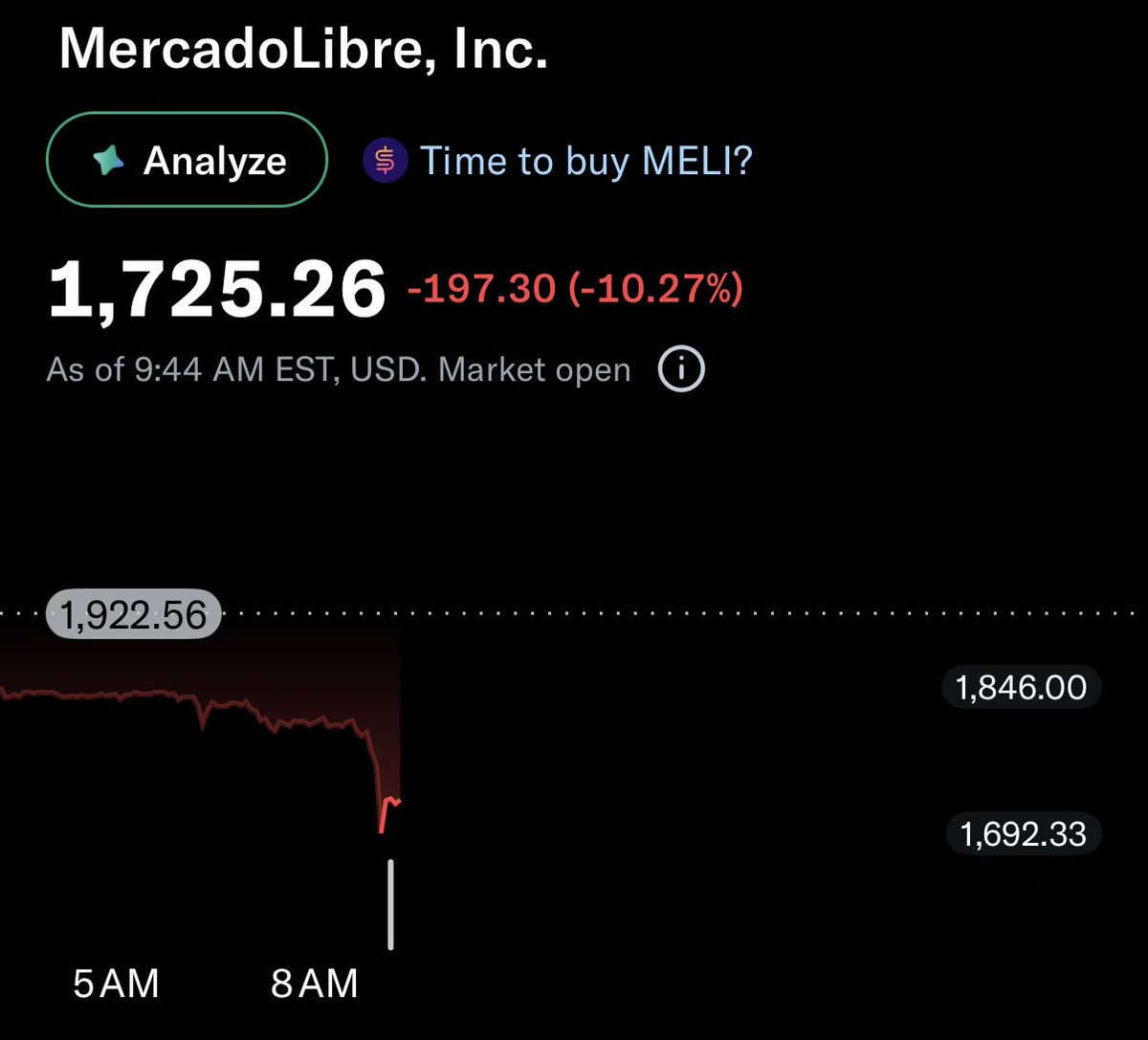
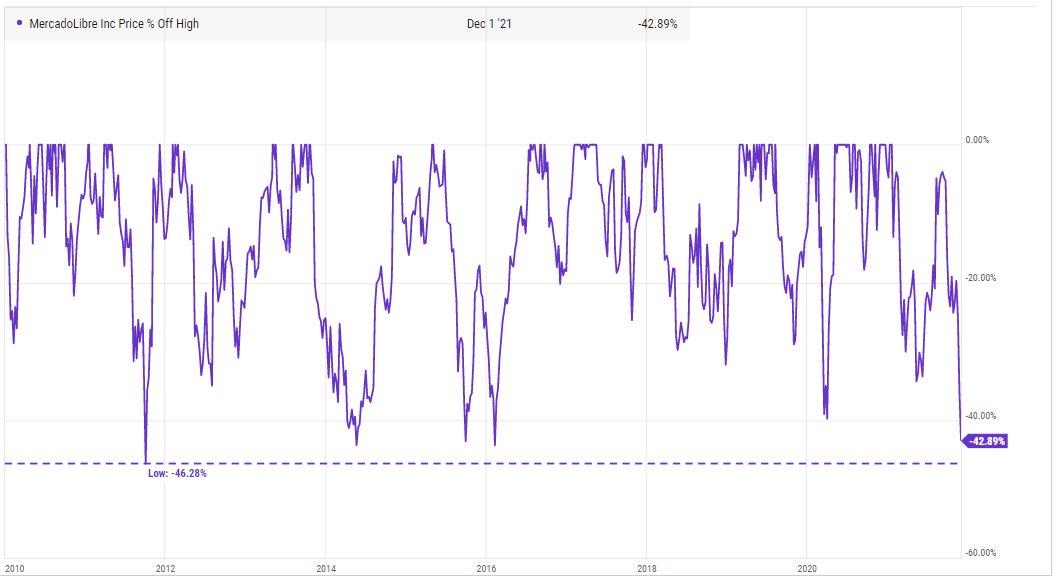
$MELI closed at $1,104.20, about 45% decline from its ATH of $2,020. Since 2012, there has been 5 instances when $MELI dropped more than 40% and recovered. Given the company’s recent performance and the management’s historical track record, I believe 6th time is not an exception.
24
27
311
Jun 10
RT @Couch_Investor: Is Wall Street completely mispricing Mercado Libre's growth runway?
I sat down with Leandro Cuccioli (SVP of Strategy…
11
Max Bosenko retweeted

Apr 15
Luis Díaz is on fire for Bayern Munich in the Champions League 🔥
⚽ vs. Atalanta
⚽ vs. Real Madrid (first leg)
⚽ vs. Real Madrid (second leg)

73
559
7,795
75,832
Mar 26
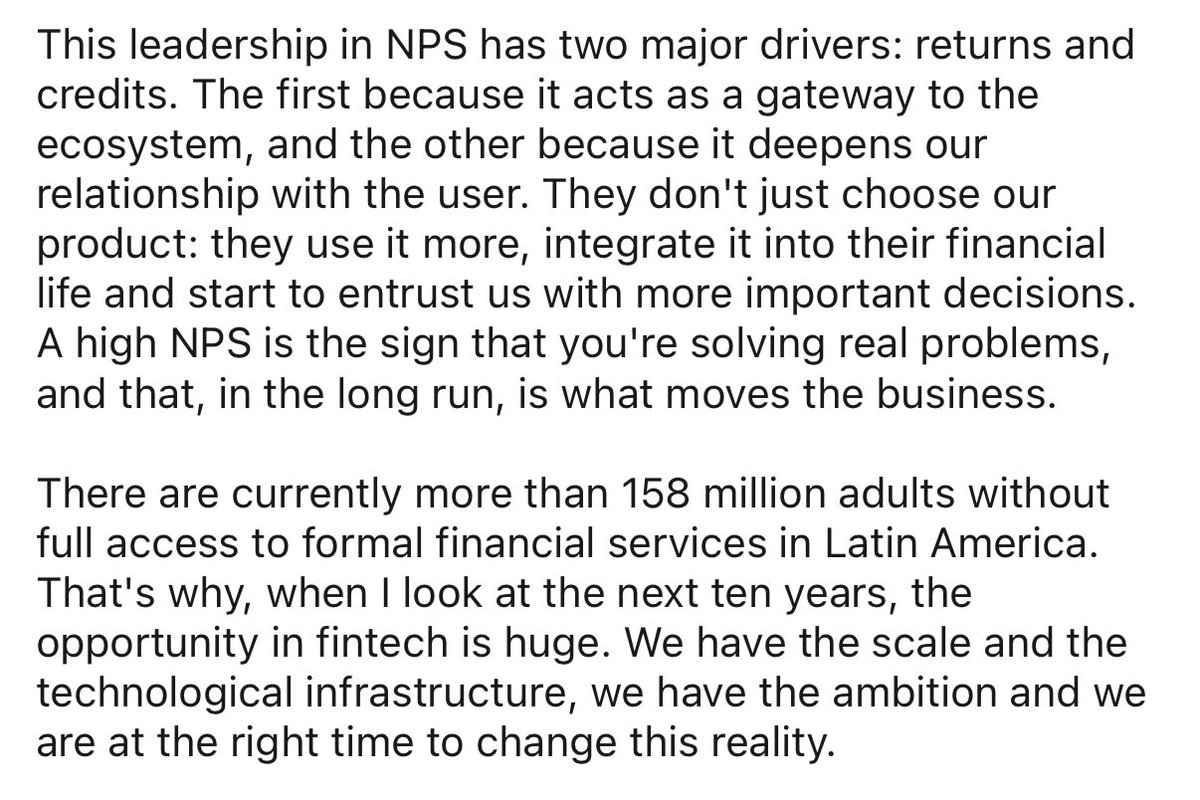
$MELI “Today Mercado Pago is the fastest growing financial app in LatAm. One of the central fundamentals is NPS (customer satisfaction metric). In Q4 of 2025, Pago achieved the highest NPS in our history in 🇧🇷 , 🇲🇽 , 🇦🇷 and 🇨🇱 “ CEO of Mercado Libre.
1
10
972

Feb 25
$MELI “Mercado Libre is scaling one of its fastest-growing ad businesses.
Retail media revenues outpaced expectations reaching ~2.5% of total GMV as new AI-driven tools, automation features, international DSP expansion deepened adoption among both brands and long-tail sellers”.
1
9
1,053
Max Bosenko retweeted

Feb 24
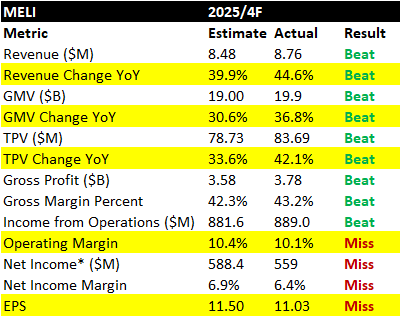
$MELI Big beats; incredible that they are still growing 45% YoY
7
15
251
28,744
Max Bosenko retweeted

Feb 7
$SE
Being my largest position, I obviously think a lot about the risks of owning the business.
I think the clearest one people point to today is TikTok Shop, and rightfully so.
I'll be honest, I have been very impressed by their execution and I believe it is the smartest commerce model seen in years.
They have 3 key strengths imo:
1. Creator-led distribution
Creators are probably the best sales channel any merchant/e-commerce platform can hope for.
They review, demo, compare and entertain while earning affiliate commissions. TikTok Shop gets free content and traffic. Essentially, merchants now have thousands of micro-salespeople that they don't even have to pay to advertise for them.
It is a true win-win-win.
2. Full-stack funnel
Most platforms only control part of the chain.
For instance, Meta/YouTube control attention but don't have the checkout funnel.
Amazon/Shopee and the like control the checkout funnel but don't control discovery.
TikTok Shop is the only business that controls both. That is convenience that cannot be understated. Users discover content, choose the product and checkout all within the same app. It's seamless and perfect.
3. Algorithmic discovery
This is what TikTok Shop is best known for.
Traditionally, e-commerce was just shopping but online. Consumers already knew what they wanted and then hop onto e-commerce platforms to search for the product.
TikTok Shop creates demand. Users buy items that they either didn't know they needed, or actually don't need (but want it anyway).
This expands the addressable market massively, especially for trend-driven, impulse-friendly categories like beauty, fashion, gadgets, and home products.
Why this matters for $SE Shopee:
TikTok Shop isn't just "another marketplace" like Lazada, Tokopedia.
It’s a structurally different commerce model, and a real competitive threat that deserves to be taken seriously.
So what do I think as a $SE shareholder?
First, I don’t think this is a zero-sum game overnight.
TikTok Shop is phenomenal at discovery-led, impulse-driven commerce. But a huge portion of e-commerce is still:
- Planned purchases
- Price comparisons
- Repeat buys
- Necessities and replenishment
- Higher-ticket/Higher-risk items
That sort of behaviour is precisely where Shopee's strengths lie.
To me, Shopee's strengths today lie in:
- Massive buyer and seller liquidity
Shopee has hundreds of millions of active buyers, millions of active sellers. This leads to huge SKU breadth and deep price competition in most categories.
This creates a flywheel where buyers come because there's selection and good prices while sellers come because that's where the buyers are.
TikTok Shop is growing fast, but it still needs to build seller depth in each category, price competition and most importantly, reliability and consistency at scale.
- Deep logistics integration
Over the years, Sea has built and integrated warehouses, sorting hubs, last-mile partners, cross-border logistics etc...
This is especially key in a region like SEA where geographies are fragmented, with varying infrastructure quality and customs regimes.
Fast and reliable delivery increases conversion while predictable delivery increases trust. Owning their own logistics network also allows for lower cost per order and scale improves the unit economics over time.
TikTok Shop lacks this and instead relies on 3rd party logistics partners, meaning they have lower margins and higher cost per order.
- Local market execution
SEA is not one homogenous market. Each country has different nuances.
For instance, Indonesia is more price-sensitive, continues to rely on COD (albeit declining in share gradually) and is a logistical nightmare.
Thailand has high urban concentration which makes it geographically simpler than ID/PH for eg. Thai consumers are more brand-conscious in certain categories and compete more on UX, trust and speed.
Malaysia/Singapore are generally more developed, with higher card and e-wallet penetration. Logistics infrastructure is also much stronger, hence more expectations on delivery speed, reliability etc.
SEA has spent a decade here localising payment methods, logistics partners by country, UI/UX by market, campaigns, promotions and shopping festivals. There is also lots of seller tooling and support.
This regional operational depth is likely to be key for Shopee.
- Habit and repeat usage
A large portion of Shopee's volume is about replenishment of household items, repeat SKUs, similar stores, categories and buying patterns.
This creates habit and behaviour that consumers default to over time. People are not going to want to discover new types of toothpaste/toilet paper each time or watch videos on buying detergent.
Hence for these use cases, Shopee is faster, more predictable and well placed to serve.
TikTok Shop is also creating tons of new demand that Shopee could very well benefit from.
Many consumers in SEA will still revert to price comparison. Due to Shopee's deep liquidity and competitiveness in pricing as discussed above, it is likely that their platform is where prices are lowest. (Although that has been skewed due to TikTok Shop's heavy promotions/discounts)
Shopee is not giving up on the discovery game either. It has partnerships with Meta and YouTube in Southeast Asia.
As part of the Meta deal, there are new features that allow affiliate creators to tag Shopee products in Facebook posts and Reels, enabling shoppers to click and complete purchases on Shopee.
Collaborative ads are also being piloted, letting brands and sellers highlight products from Shopee catalogs during Facebook Live sessions.
There is also the YouTube Shopping Affiliate Program that enables Shopee sellers to have their products promoted by eligible YouTube creators via YouTube videos, Shorts & livestreams.
Creators tag the products promoted in their YouTube videos which will redirect traffic directly to the specific product on Shopee. Viewers can tap the “View Product” button directly in the video to see product details & purchases on Shopee all without leaving YouTube.
As we know, Meta and YouTube together still control a massive share of time spent and possesses the largest creator ecosystems in the world.
This turns those very creators into promoters for Shopee merchants in the same way TikTok Shop has.
So far, there is quite limited information on how successful these have been, but I expect it to be a needle-mover sooner rather than later.
Bottom line as a $SE shareholder
TikTok Shop is a real, credible, and structurally strong competitor. It absolutely raises the bar for Shopee.
But Shopee isn't standing still and they have operational moats that allow it to continue being a major player.
My base case today is that TikTok Shop becomes a major commerce channel in SEA, especially for discovery-led categories and Shopee remains the dominant utility for price discovery, planned purchases, everyday commerce etc, while increasingly plugging into the social discovery upstream.
That's why I'm still very comfortable owning $SE today.
8
15
158
30,261
Max Bosenko retweeted

Feb 5
$SE is down -45% over the past few months. The prevailing bear case seems to hinge on two points:
1) Rising fear of TikTok Shop competition, and
2) Shopee reinvesting more heavily into logistics, capping margins at ~0.7% of GMV this year vs. prior expectations of ~1.2%.
The concern is that this spend is defensive - a necessary response to TikTok rather than a choice.
But alt data is telling a different story. TikTok Shop’s Southeast Asia GMV growth has slowed materially over the past few quarters - from 70% in 2Q25 to ~30% by late 2025. That’s only modestly above Shopee’s own growth rate. More notably, TikTok’s relative share vs. Shopee in Indonesia (~50% of regional GMV) has effectively flat-lined over the past year.
If this data is directionally right, Shopee’s ~50 bps of reinvestment looks discretionary and offensive -widening the moat - rather than a defensive reaction to competitive pressure.
And critically, that implies the margin compression is temporary, not structural.
Oh, and both Shopee & Tiktok are raising take-rates. Not usually the sign of a competitor trying to aggressively take share...
Curious, what am I missing?
Is the -45% drawdown really just “2026 margins down > negative 2026 earnings revisions > stock down,” even if margins are likely to re-expand next year? And Shopee emerges with a wider moat after?
The competitive backdrop looks like it’s improving, not deteriorating...
13
21
246
33,368
$IGV given the extent to which SaaS stocks have been slaughtered lately and the number of names currently trading at multi-year lows, seems like having some exposure to this ETF may not be the worst idea ever. Obv not an advice, just an observation.
4
959
21 Nov 2025
$MELI broke Buen Fin records again! Interesting facts: Monday was the best sales day in the history of Mercado Libre Mexico with >3,000 purchases per minute / >40 million offers / more men than women shopped / best-selling categories: home, tech, auto parts, fashion, electronics.
1
2
23
1,807
20 Nov 2025
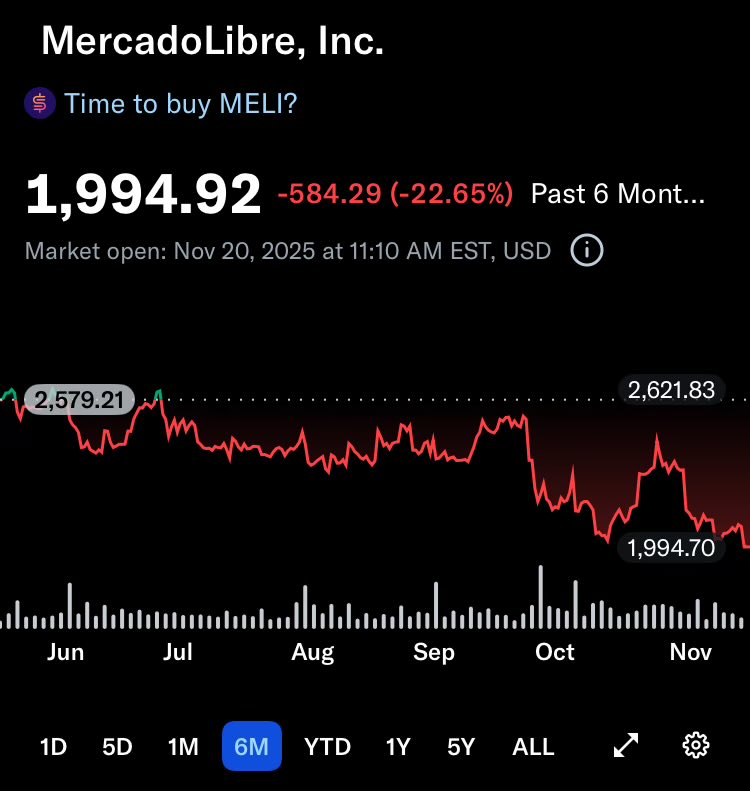
$MELI below 2k, 6 months of gains wiped out, the company keeps breaking sales records Q after Q, my holiday shopping might be starting soon.
12
9
246
31,740
5 Nov 2025
$MELI “In 2026, retail ecommerce will represent 17.7% of total retail sales in Mexico, surpassing the US (17.0%) for the first time. By 2029, Mexico will be one of only 6 countries worldwide where ecommerce accounts for >20% of retail sales” 🇲🇽 💪
3
981
30 Oct 2025
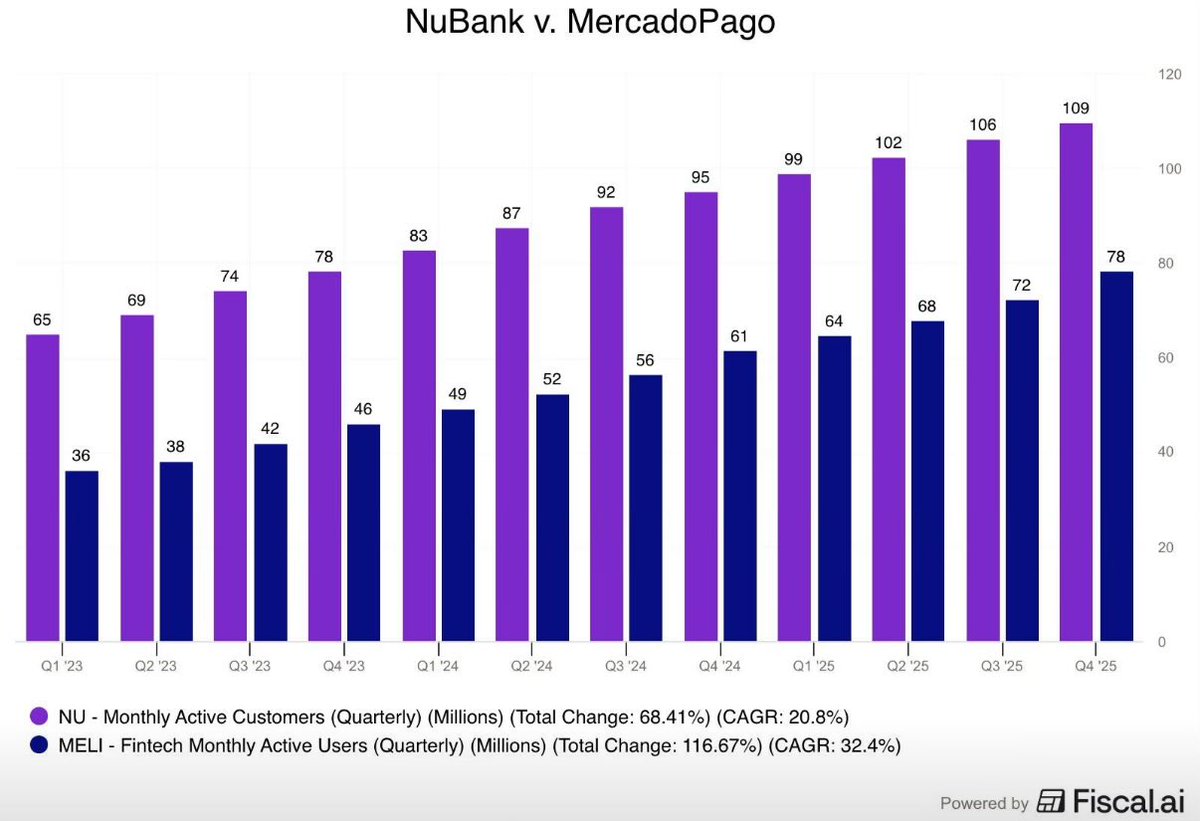
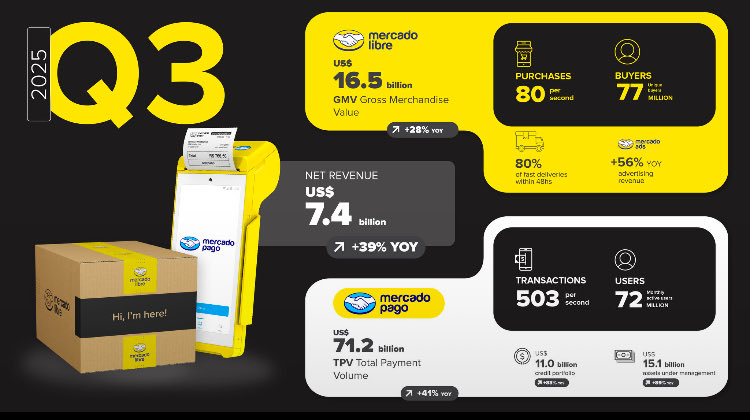
$MELI Mercado Pago Q3 highlights “Net income of US$3.2B ( 49% YoY) / Volume of payments (POS) of US$71B ( 41%), with 72 million monthly active users / Credit portfolio of US$11B ( 83%) / Assets under management reached US$15.1B ( 89%)” 💪
29 Oct 2025

$MELI Q3 25 ER “Net revenue of US$7.4B, up 39% YoY (27 consecutive Qs of growth >30% and with strong market share gains across all regions / 80% of deliveries now arrive within 48 hours or less / Pago has >72 million active users, credit portfolio up 83% YoY”
7
1,519
29 Oct 2025
$MELI Q3 25 ER “Net revenue of US$7.4B, up 39% YoY (27 consecutive Qs of growth >30% and with strong market share gains across all regions / 80% of deliveries now arrive within 48 hours or less / Pago has >72 million active users, credit portfolio up 83% YoY”
1
13
3,204
24 Oct 2025
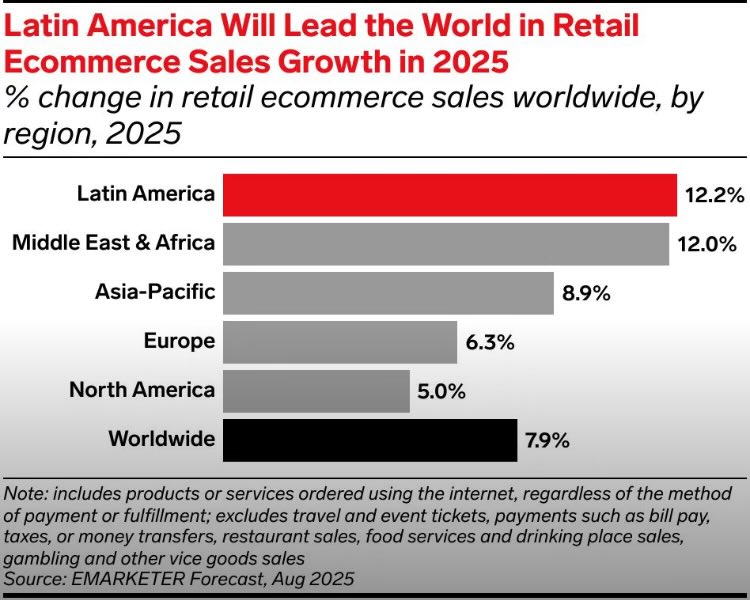
$MELI Retail e-comm sales across LatAm will rise 12.2% this Y to $191.25B, 1.5x faster than the global average . This will make LatAm home to the fastest-growing retail e-comm market in the world. 🇦🇷 🇧🇷 🇲🇽 continue to power the region’s growth, > 84% of total retail e-comm sales.
3
11
2,369