
Trainer @IFMSA (HEAT)|| SCOCB NPC @NiMSA_Nigeria|| DBMS Expert|| MBBS UATH|| GrandMaster @IntelCSNetwork 👀🎤⚡🧭
Joined November 2022
- Tweets 1,399
- Following 285
- Followers 305
- Likes 3,062
146 Photos and videos


Pinned Tweet

Jun 12
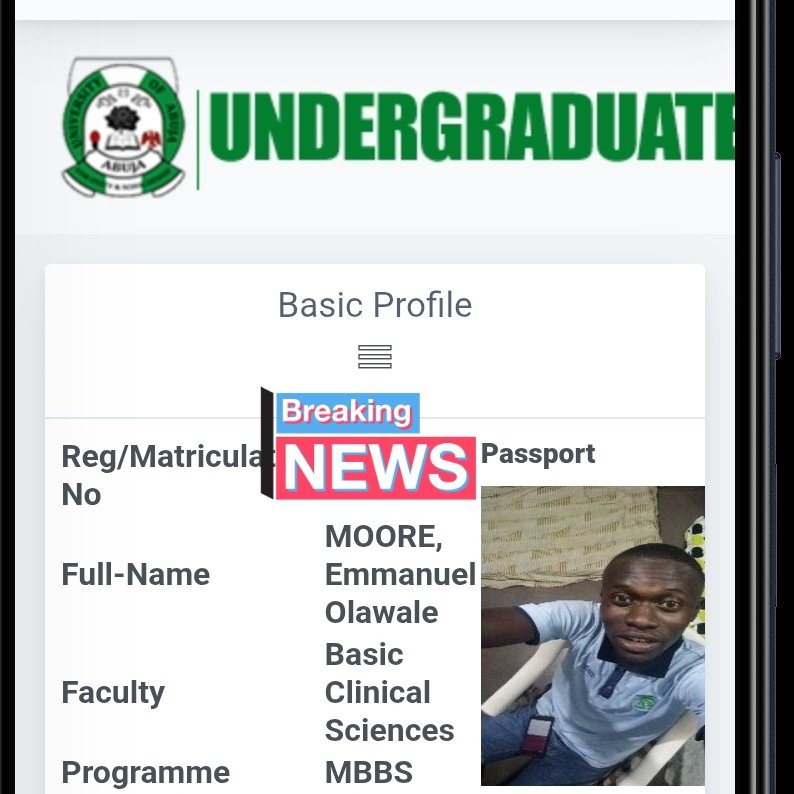
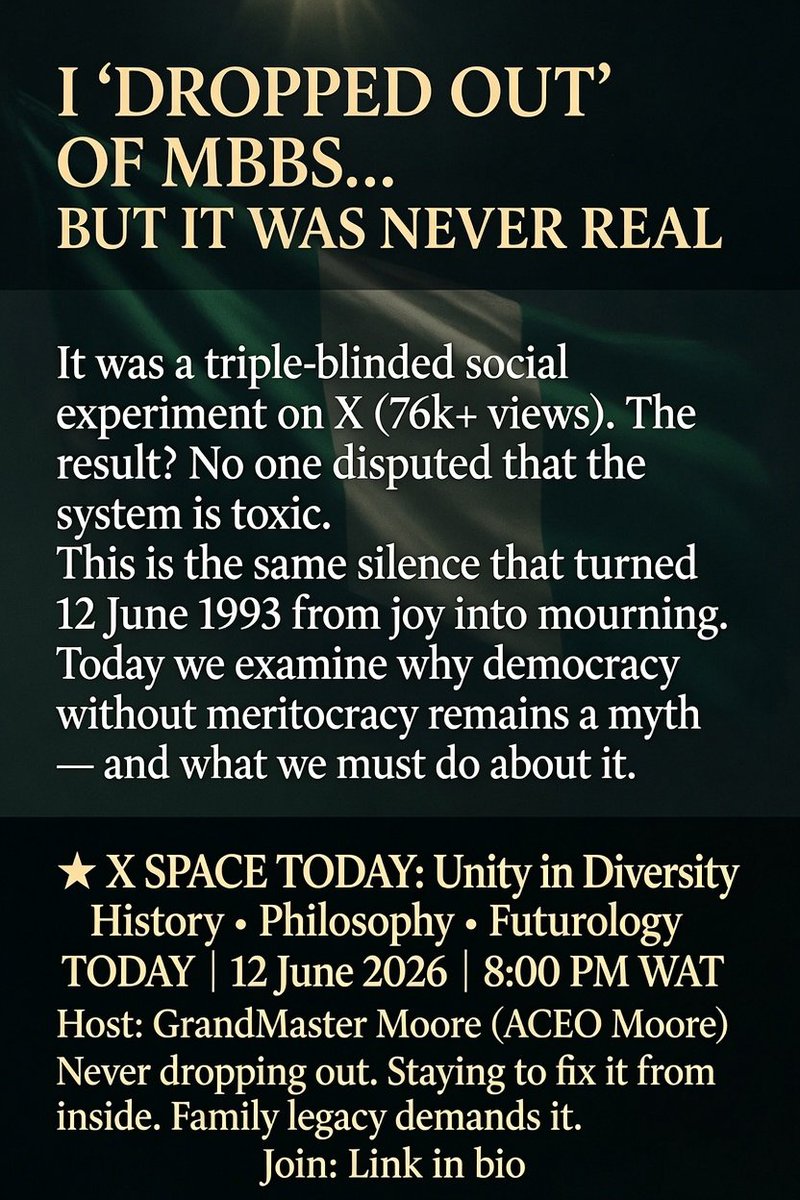
In August 2025, I published a post announcing my withdrawal from the MBBS programme at the University of Abuja. The post recorded 76,588 views, 527 likes, 86 replies, and widespread engagement. Many reached out publicly and privately with concern, encouragement, and their own stories.
That announcement was never a genuine intention to drop out. It was a deliberate, triple-blinded social experiment — the only person not blinded was my mother, who was deliberately excluded from the study population. The goal was to observe, in real time, how our society reacts when a young person from a visible leadership track appears to walk away from medicine after a decade of investment.
The results were revealing. While hundreds offered support, advice, and solidarity, not one person disputed the central claim that the system is toxic and traumatic. The silence on that point, amid genuine concern for my well-being, was itself the most significant data point.
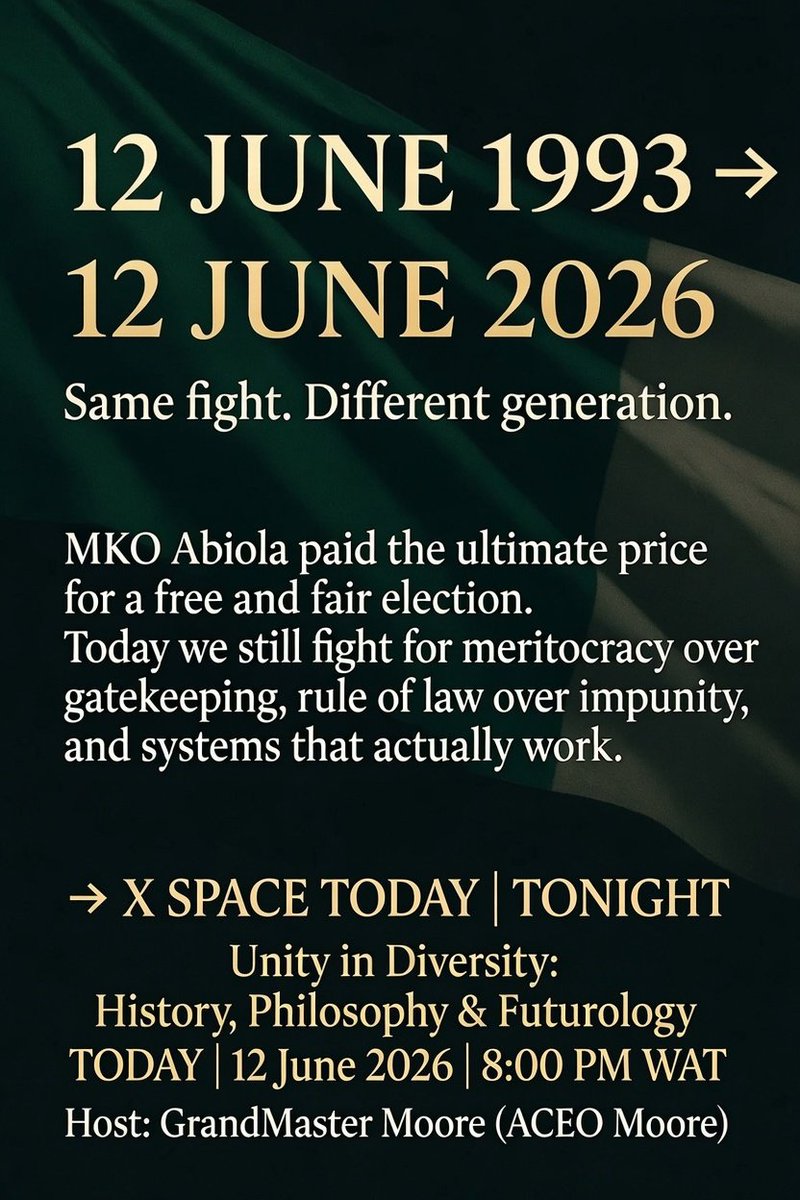
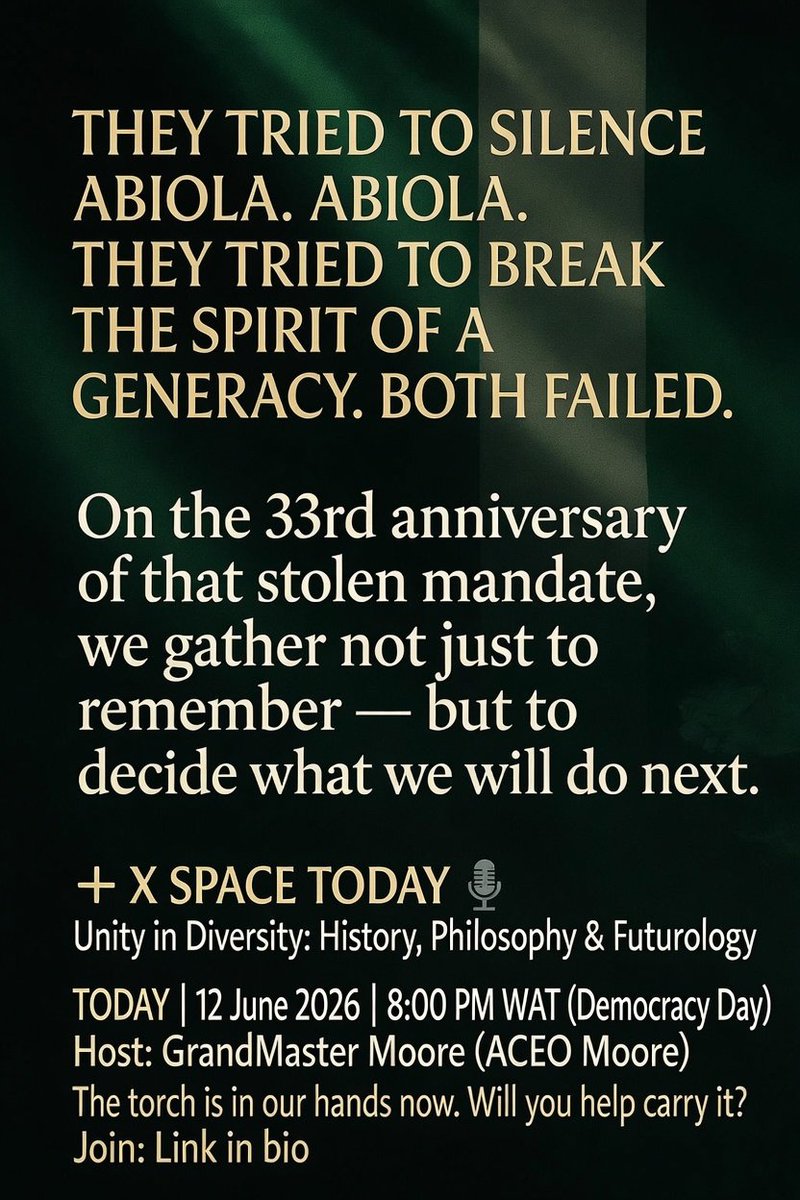
This mirrors the tragedy of 12 June 1993. What should have been Nigeria’s proudest day of democratic validation — a free, fair, and credible election — was turned into a day of national mourning through the annulment of Chief M.K.O. Abiola’s mandate. Abiola, a globally successful businessman and philanthropist who could have remained comfortable abroad, chose instead to return and stand with the Nigerian people. For that choice he was denied his victory, arrested, and detained for nearly four years. While arrangements for his release were being finalised, he died in custody on 7 July 1998.
His sacrifice was not in vain. Later governments offered formal apologies, and President Muhammadu Buhari rightly honoured 12 June as Democracy Day and conferred national recognition on Abiola posthumously. These were necessary acts of acknowledgment. Yet the deeper struggle — for a democracy anchored in meritocracy, competence, and the rule of law — remains unfinished.
My own experience has taught me the same lesson in personal terms. Coming from a richly diverse background — Christian and Muslim heritage, Hausa, Igbo, and Yoruba roots — I have encountered institutional injustice and multi-directional persecution. These experiences have crystallised a conviction: democracy without meritocracy is a myth. When gatekeeping, narratives, and power dynamics override competence and integrity, the system betrays the very promise of self-governance.
I will never willingly drop out of medical school. My family’s legacy makes that unthinkable. My mother graduated from the University of Jos in 1991. My brother is an alumnus of the Federal University, Dutsin-Ma. My sister graduated from Bayero University, Kano. When people with first-hand knowledge of the system’s flaws choose to remain inside it, they do so not out of naivety, but out of responsibility. We cannot abandon the work of transformation to those who have never felt its weight.
The detailed findings of the social experiment remain private, to be applied strategically in my ongoing leadership, research, and advocacy work. What I can say publicly is this: the outpouring of support I received — even while the “toxicity” claim went unchallenged — gives me hope. It shows that Nigerians, across divides, still long for systems that reward merit, protect dignity, and deliver justice.
A luta continua. Vitória é certa.
The struggle continues. Victory is certain — if we refuse to let go of the torch.
God bless Nigeria.
God bless democracy.
God bless every citizen still fighting for a country worthy of its promise.
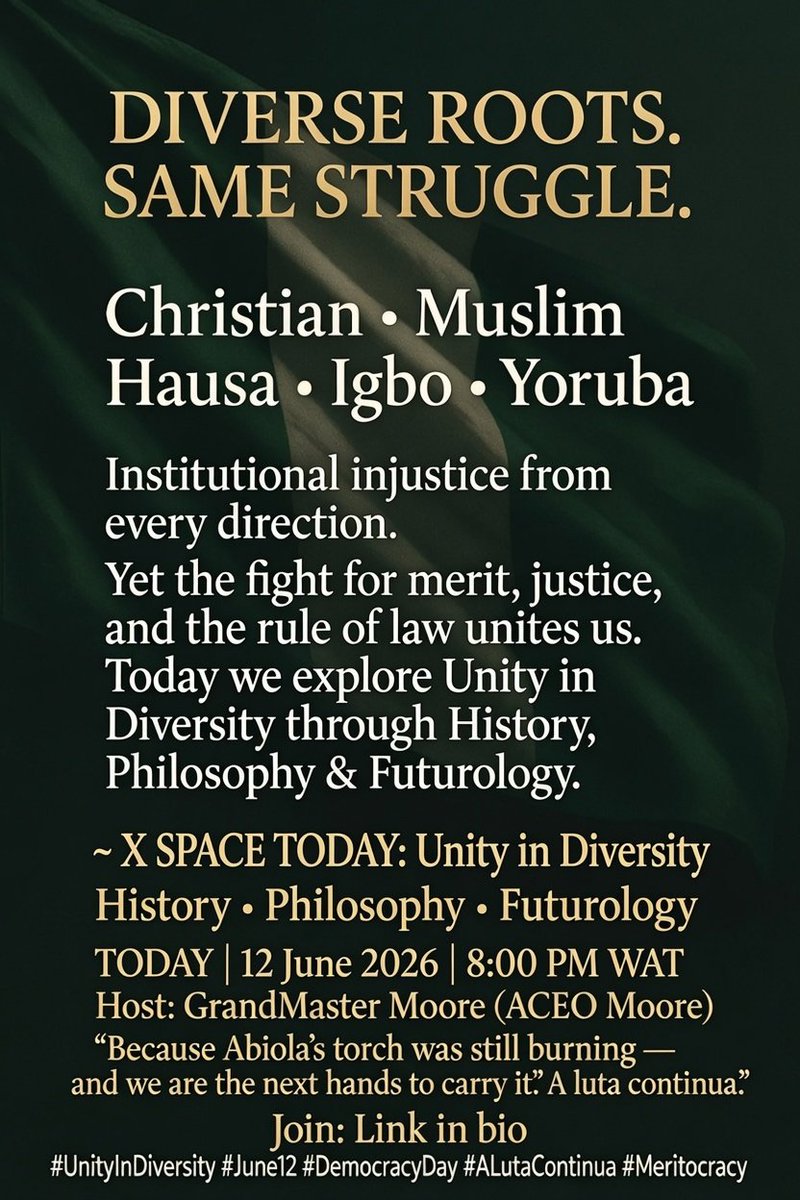
If you are joining the X Space tomorrow on Unity in Diversity: History, Philosophy and Futurology, I look forward to continuing this conversation in greater depth.
The work is not done. The struggle is alive. And the next chapter is ours to write — together.
x.com/i/spaces/1AGRnnLXvXyGl
15 Aug 2025

📌 I hereby Drop Out of MBBS. UniAbuja Nigeria
😏📊Pursuit been obviously too long(10yrs), palpably toxic, and too many traumatic experiences.
⚡📏If we are honest, I am more of a Computational and Iterative guy.
Best of luck to students, staff and management.
ACEO Moore
112
🦁

1
5
Update!
Said I should remind y'all 📌⚡🧭
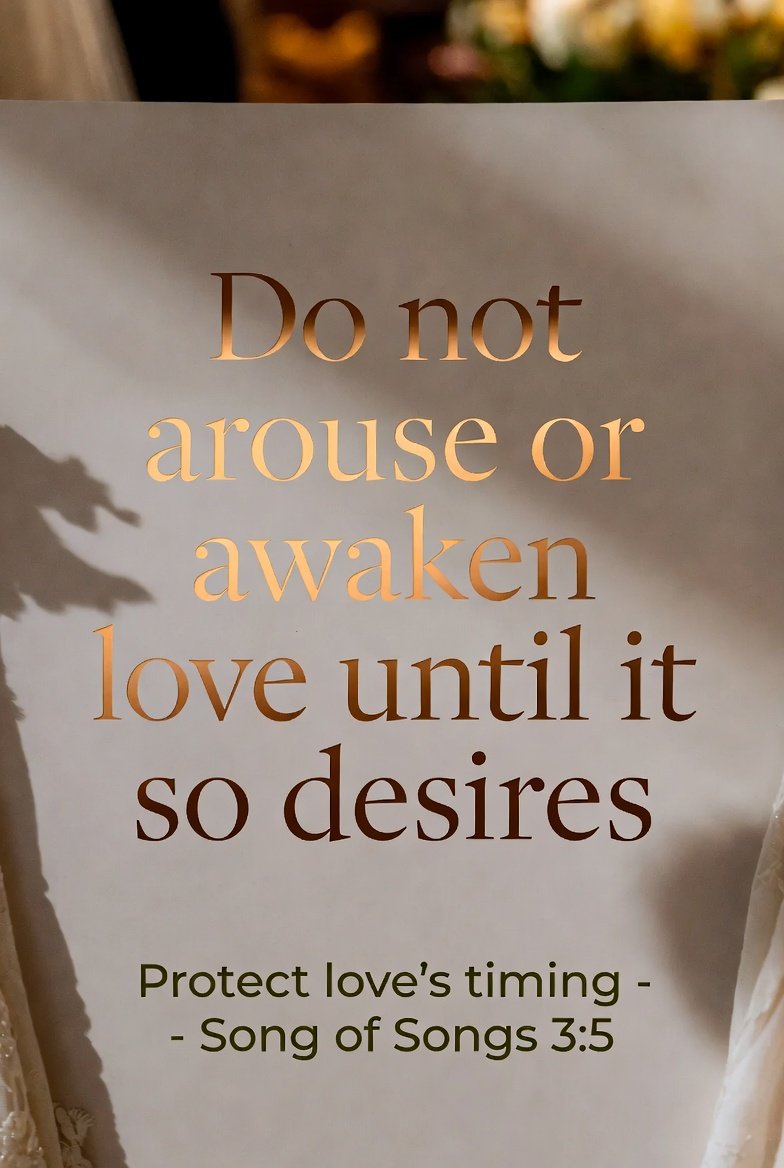
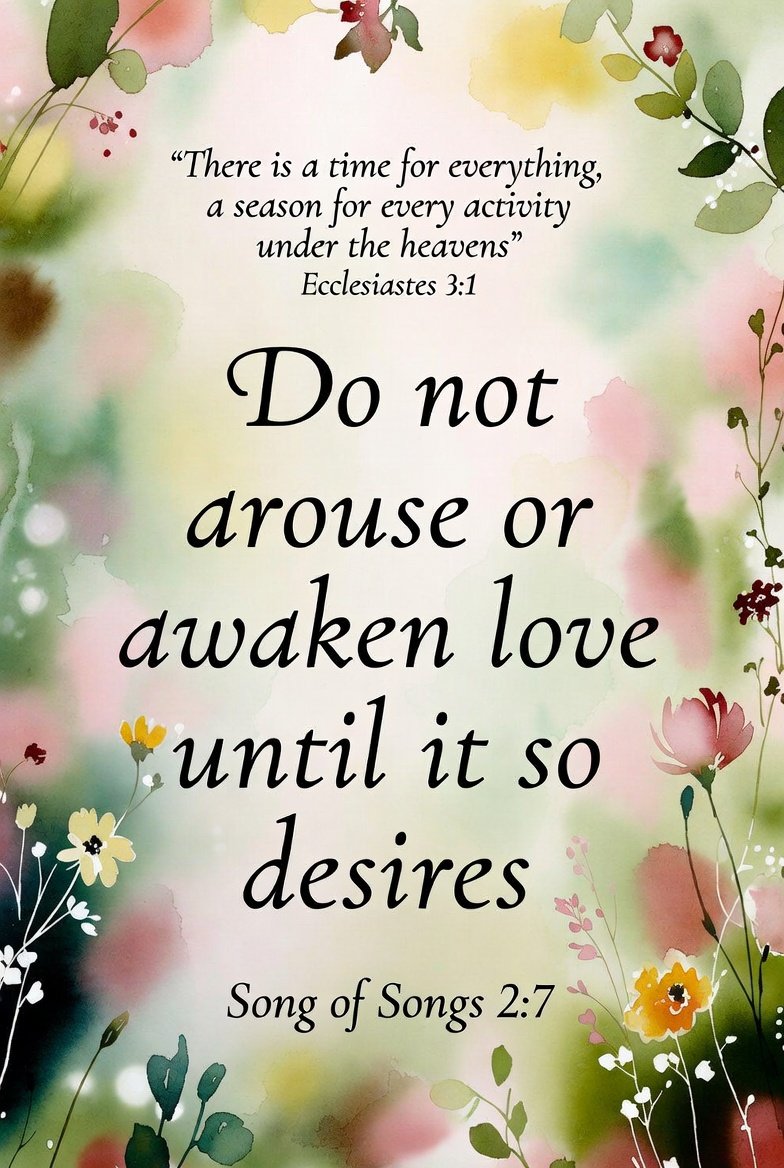
Songs of Solomon. Filled with hidden meanings.
2
GrandMaster Moore© retweeted

Jun 14
Why do I have a feeling she’s the very one the guy was looking for?
155
404
2,379
61,349
GrandMaster Moore© retweeted

Jun 16
Starlink support is probably the best in the globe. Companies do not take over by chance, but by intentionality!!
428
602
6,078
92,273
Oya off the mic 😢😭😅
Jun 16

Ronaldo should come and learn how to answer a question properly 👌🏽🤷🏽♂️
Messi’ humility is worth emulating !!!
14
GrandMaster Moore© retweeted

Jun 15
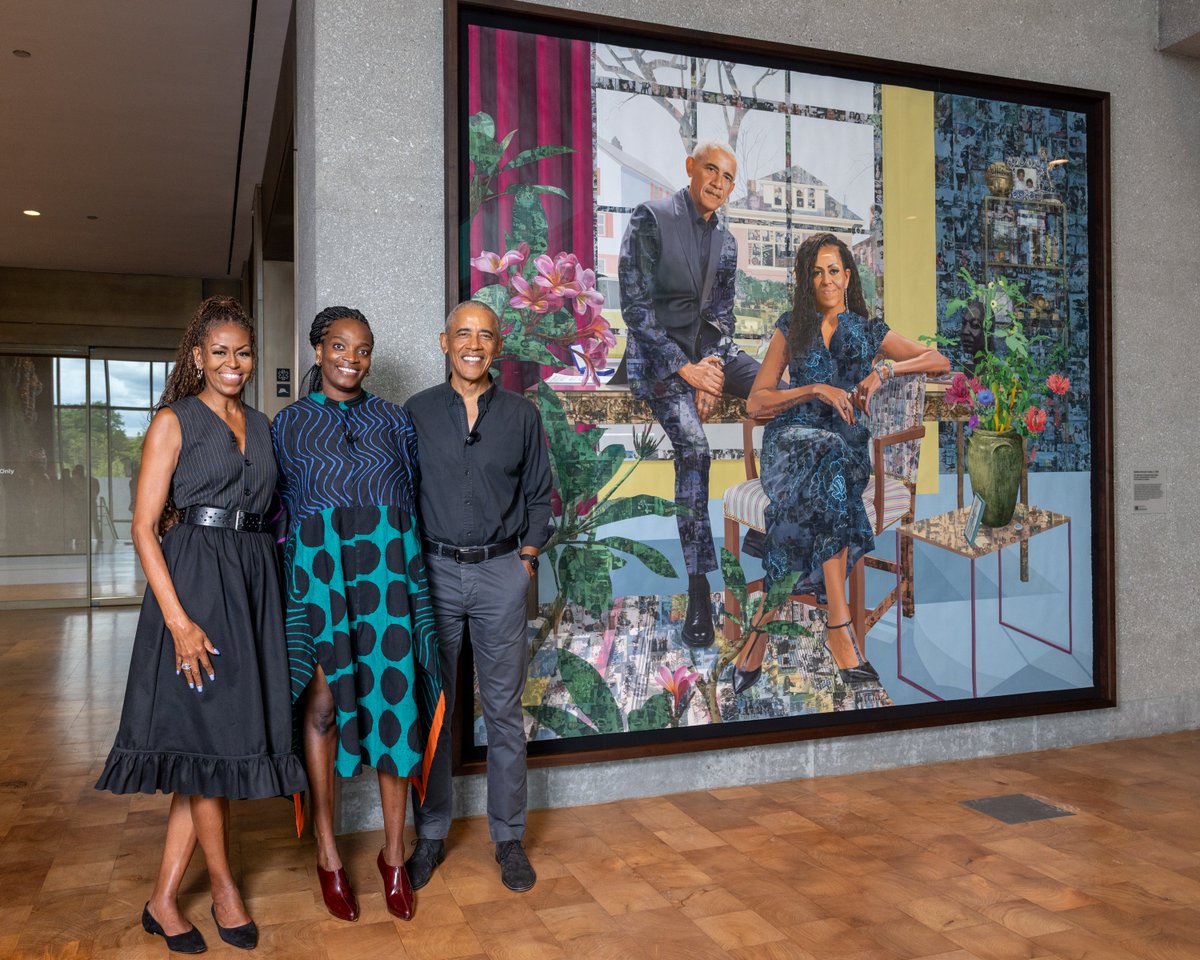
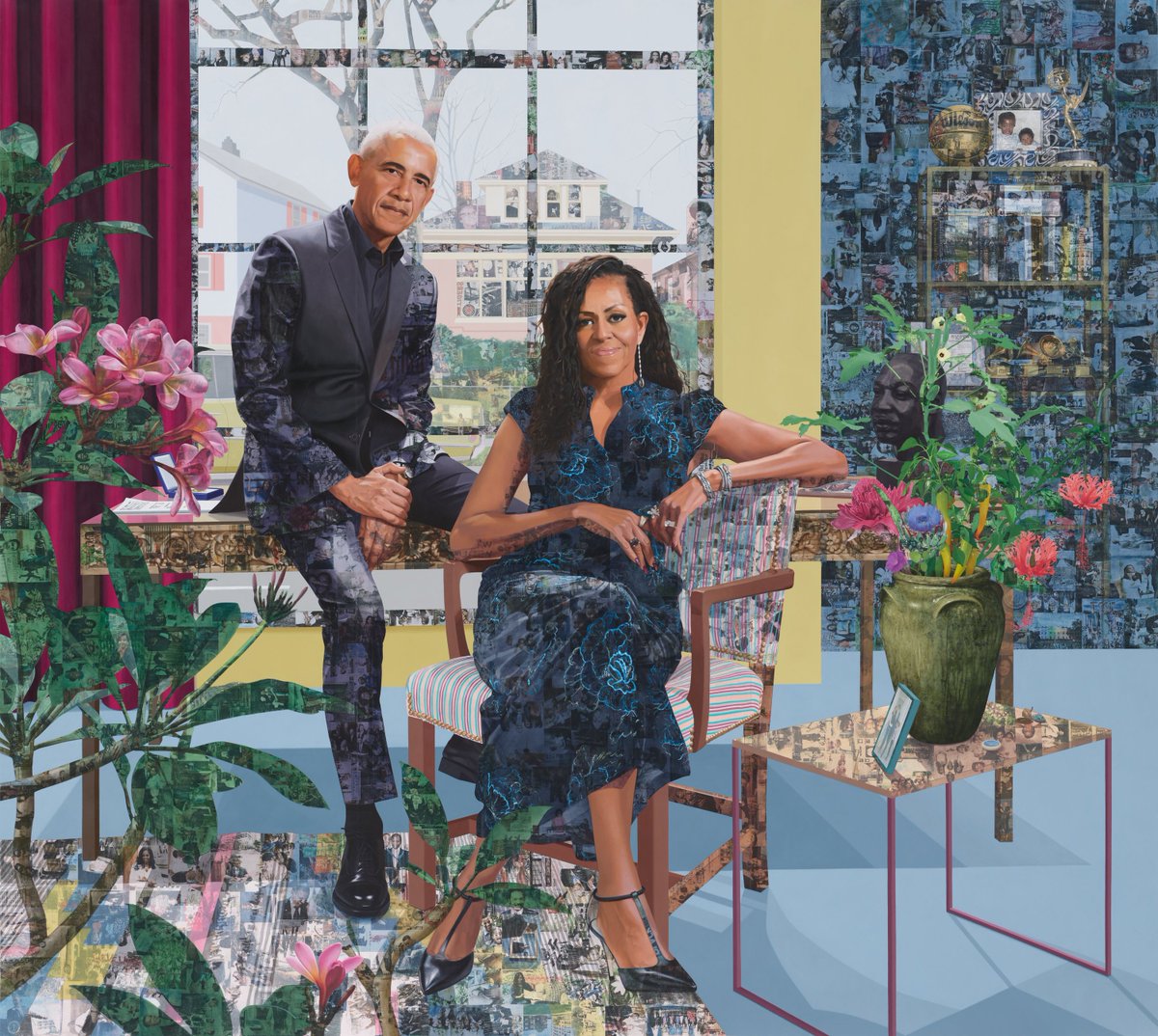
It was great joining Njideka Akunyili Crosby — a gifted Nigerian-born, Los Angeles-based artist — to unveil our first portrait together. This piece reflects so many chapters of Michelle and my story, and we’re thrilled that it will be on display in the Hope and Change lobby at the Obama Presidential Center starting this Juneteenth.
8,269
29,740
281,329
17,919,618
GrandMaster Moore© retweeted

Jun 11
Celebrity’s surprise their fans
2,049
11,105
229,522
13,457,544
GrandMaster Moore© retweeted

Jun 12
“I smuggled Peter Obi to Borno and others to market him.” Datti
Now I understand why he thought Cardinal Arinze could smuggle him in.
25
54
175
12,785
GrandMaster Moore© retweeted

Jun 8
Peter Obi is "the head of criminality"... Kenneth oknowkwo
He further alleges that individuals involved in the party's primary process brought their grievances to him. #Peterobi #atruthatatime #kennethokonkwo #NDC
364
341
1,918
43,623
GrandMaster Moore© retweeted

Crypto money comes and goes. You criticizing him will still make such mistakes.
I used to criticize people who roundtrip funds till I round tripped $1m.
Keep believing and keep hustling.

Peak net worth of $45M. Now sitting on roughly $17.2k.
Ask me anything (AMA).
257
470
4,261
198,583
GrandMaster Moore© retweeted

Jun 11
Between Senate President Godswill Akpabio and Senator Adams Oshiomhole as he expressed his grievances during plenary over the NNPC.
Jun 11

"Even if the whole world condemns me, I am free and will remain faithful to my duties."
— Senator Adams Oshiomhole mounted a spirited defence on the floor of the Senate, pushing back against criticism of his controversial remarks during the ongoing National Assembly investigation into the Nigerian National Petroleum Company Limited.
Responding to allegations that he described NNPCL as “a bunch of crim!nåls and thi€ves,” Oshiomhole maintained that his comments were made within the context of a heated oversight process triggered by audit queries involving alleged discrepancies exceeding ₦210 trillion.
38
247
688
73,944
GrandMaster Moore© retweeted

Jun 12
Criticise me, disagree with me, but never stop believing in the nation, President Bola Tinubu tells Nigerians on Democracy Day.
#CTVTweets
#DemocracyDay
#June12
823
1,109
3,791
217,237
GrandMaster Moore© retweeted

Jun 11
Shakira is truly the Queen of World Cup 😭🔥
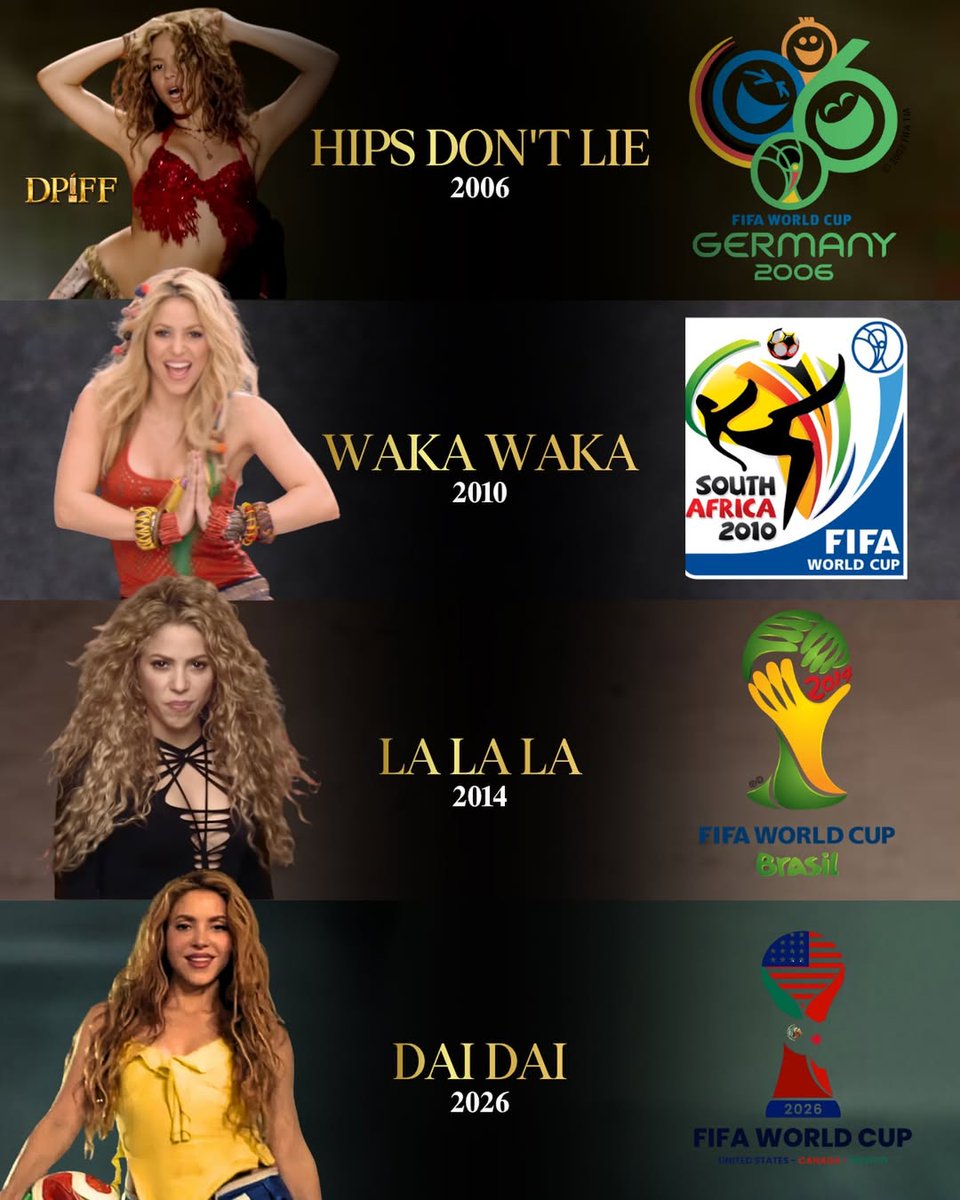
520
6,597
68,422
2,379,828
GrandMaster Moore© retweeted

Jun 5
Can I beg that after elections
All campaign buses be converted to Ambulances and donated across the country to save lives
Some can also be converted to school buses
512
5,285
18,365
311,463
Jun 4
Hmmmmmn well said
Jun 1

In the Age of the Aristocracy of Talent, Nigeria Keeps Managing to Depress Talent for Experience - Utomi
Instead of smart, capable people being pushed into positions, the system makes the flawed argument that prioritises experience over talent. We have people with one year of experience that has been repeated so many times, claiming they experience while staying in the way of talent and constricting Nigeria's progress.
Prof. Pat Utomi, Scholar, Activist, and Former Presidential Candidate
13
Jun 4
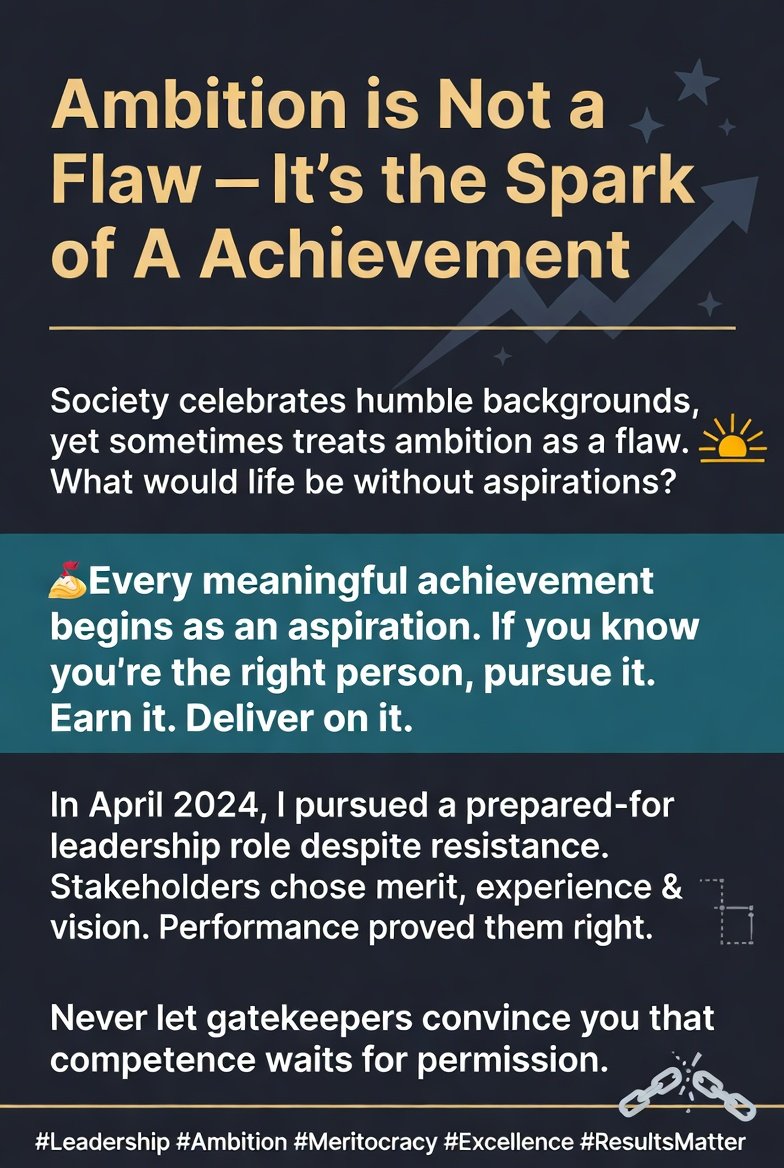
Society often celebrates the "humble background" story, yet sometimes treats ambition as a flaw. But what would life be without aspirations?
Not every goal becomes reality, but every meaningful achievement begins as an aspiration.
If you know you are the right man or woman for the job, pursue it. Earn it. Deliver on it.
In April 2024, I sought an office I had prepared extensively for. Despite resistance from some who felt I wasn't entitled to it, stakeholders reviewed the facts, the experience, and the vision—and I was entrusted with the responsibility.
The result? Performance spoke louder than opinions.
Never let self-appointed gatekeepers convince you that competence should wait for permission.
#Leadership #Ambition #Meritocracy #ProfessionalGrowth #CareerSuccess #Excellence #LeadershipDevelopment #PersonalGrowth #ResultsMatter #SuccessMindset #ICSN
2
28
Jun 4
📌...

The claims reference real flashpoints in Anambra's history. Political thuggery and godfatherism intensified sharply around 2003 during Mbadinuju's exit and the violent Chris Uba-backed transition to Ngige (abductions, property destruction, PDP primaries chaos). Bakassi Boys vigilantes operated earlier under Mbadinuju amid rising crime post-1999.
Kidnapping for ransom surged notably 2009–2013 under Peter Obi, making parts of Anambra/SE insecure per multiple reports. Obi cites federal collaboration that reduced major incidents for periods; critics highlight the epidemic and political crises (his 2006 impeachment).
These issues stem from godfatherism, weak institutions, and post-military transition dynamics—not one governor alone. Timelines show escalation points, but criminality has deeper roots and persisted variably. Nuanced history, not simple blame.
8
GrandMaster Moore© retweeted

Jun 3
Violence and thuggery started in Anambra during the time Mbadinuju was about to be removed as governor.
Criminality got entrenched under Peter Obi as the Governor of Anambra State!
~IjeleSpeaks
126
351
727
49,514