
Web3 enthusiast | Blockchain | AI | IoT | Crypto | Community Builder @hubxyz
Joined October 2022
- Tweets 2,928
- Following 3,243
- Followers 1,100
- Likes 3,423
183 Photos and videos





Pinned Tweet

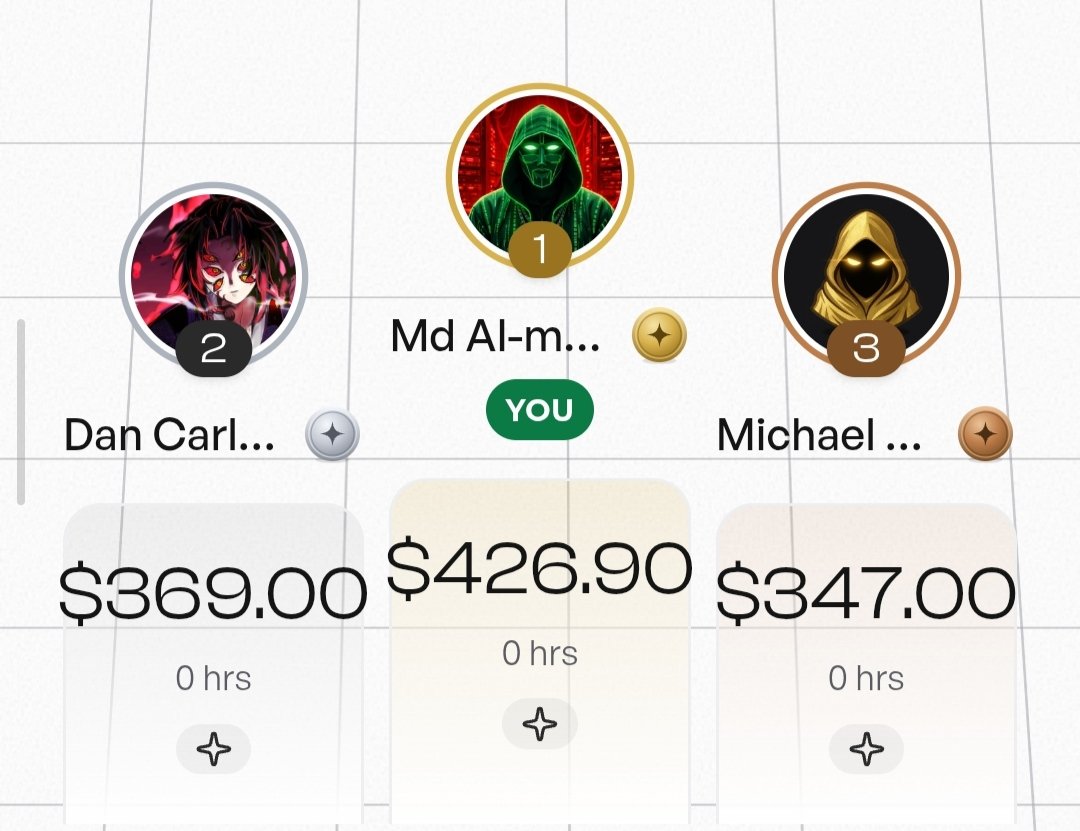
💚 Thank You, @hubxyz ! 💚
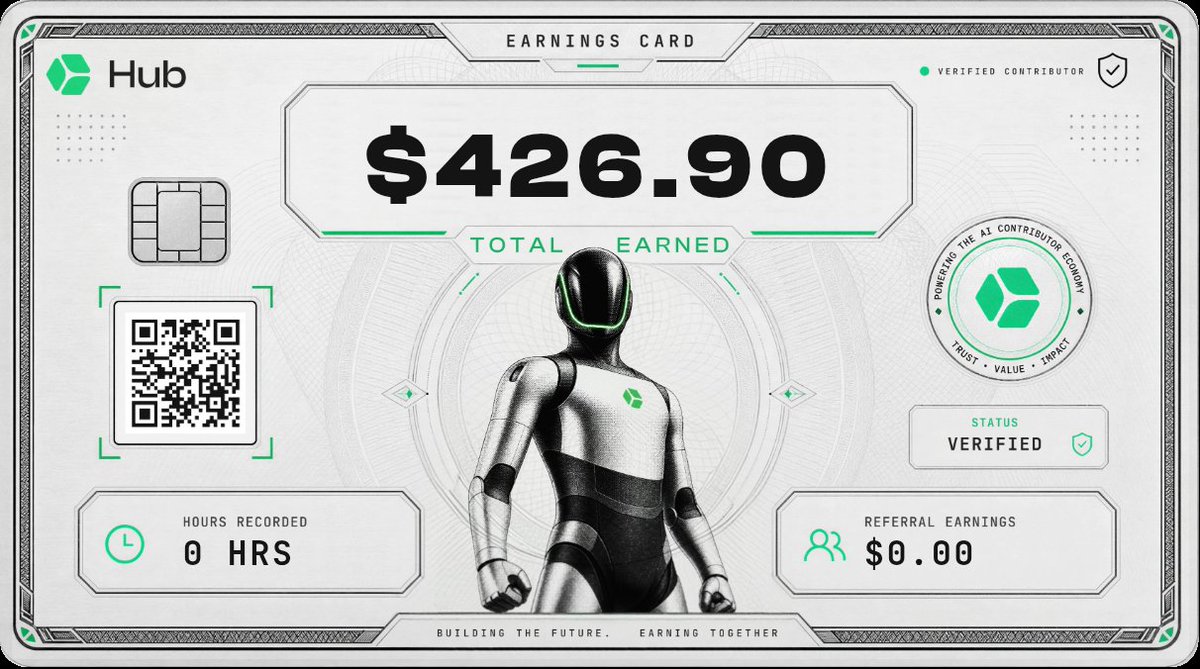
Today, I successfully received a $100 payout from Hub App, and I’m truly grateful to the entire Hub team. 🙏
You didn’t just build a platform you created opportunities for thousands of people around the world to earn, grow, and contribute to the future of AI.
People from all over the world are getting rewarded for their efforts, and I’m proud to be one of them. For someone like me, Hub has opened a door to new possibilities where learning, contributing, and earning all come together.
This is more than a payout it’s proof that the right opportunity can make a real difference.
Thank you for empowering people, creating value, and building a future where everyone has a chance to participate and succeed. 💚
The future is being built by people, and @hubxyz is making sure everyone can be part of it. 💚
💝💝Thank you @hubxyz team
@tim404x @MrCrypPrivacy @Icea75 💖💖

2
1
7
34
Al-mobin | Cult Member retweeted
💚 Thank You, @hubxyz ! 💚
Today, I successfully received a $100 payout from Hub App, and I’m truly grateful to the entire Hub team. 🙏
You didn’t just build a platform you created opportunities for thousands of people around the world to earn, grow, and contribute to the future of AI.
People from all over the world are getting rewarded for their efforts, and I’m proud to be one of them. For someone like me, Hub has opened a door to new possibilities where learning, contributing, and earning all come together.
This is more than a payout it’s proof that the right opportunity can make a real difference.
Thank you for empowering people, creating value, and building a future where everyone has a chance to participate and succeed. 💚
The future is being built by people, and @hubxyz is making sure everyone can be part of it. 💚
💝💝Thank you @hubxyz team
@tim404x @MrCrypPrivacy @Icea75 💖💖
2
1
7
34
Al-mobin | Cult Member retweeted
Every major technological revolution changed what society considered valuable. The Industrial Age rewarded physical effort. The Internet Age rewarded attention and information. The AI Age will reward something far more powerful: lived human experience.
The greatest limitation facing AI today isn't compute it's reality. Machines can process oceans of text, but they still struggle with the unspoken knowledge humans use every day: intuition, context, adaptability, and common sense. The wisdom behind how we care, teach, build, repair, navigate, and decide has never been digitized at scale.
Hub turns that hidden knowledge into a new form of economic participation. It enables people everywhere not because of their credentials, but because of their unique experiences to contribute directly to the development of intelligent systems and be compensated for it.
A parent soothing a child, a technician diagnosing a fault, a chef preparing a meal, a farmer responding to changing conditions these aren't ordinary moments anymore. They're lessons that shape the next generation of AI and robotics.
What makes @hubxyz revolutionary is that it changes the relationship between humans and technology. Instead of concentrating the rewards of AI in the hands of a few, it allows the people who teach these systems to benefit from the value they create.
This is more than a marketplace for data.
It's the beginning of an economy where human insight becomes capital, participation becomes ownership, and progress becomes something people build together not something that happens to them.
@hubxyz
1
4
47
Al-mobin | Cult Member retweeted
Some opportunities give you a title.
The rare ones give you a chance to leave your fingerprint on something bigger than yourself.
If you're driven by ownership, love turning ideas into reality, and want to look back knowing you helped build a success story from the ground up this could be the moment you've been waiting for.
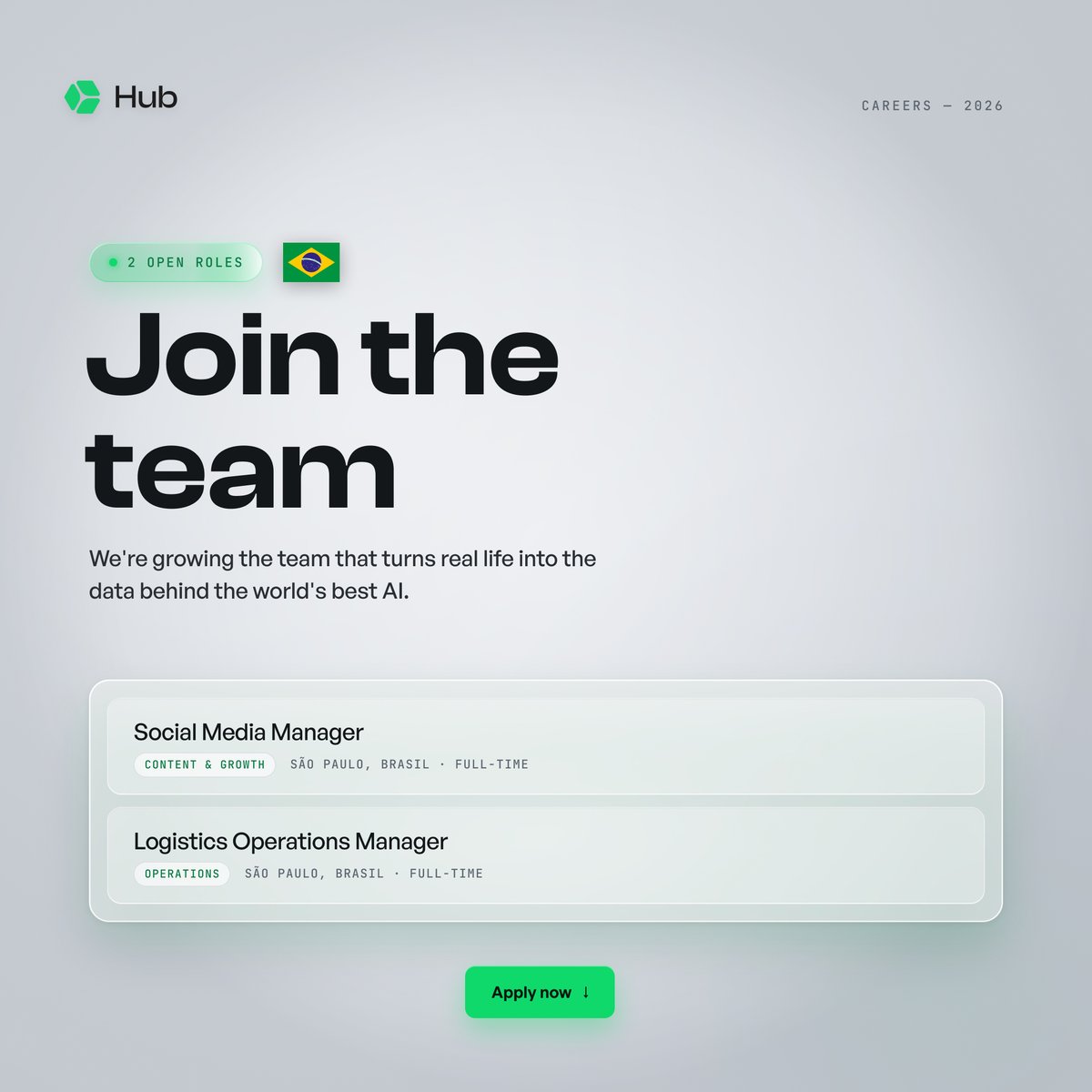
Hub Brazil is looking for two people in São Paulo who are ready to own their piece of something extraordinary:
📲 Social Media Manager → x.com/i/jobs/2066869…
📦 Operations & Logistics Lead → x.com/i/jobs/2066849…
The comfort zone will always be there.
Opportunities like this won't.
Take the leap. The future often rewards those who are brave enough to say, "Why not me?"🇧🇷
@hubxyz

We don't hand you a brand.
We hand you a country.
Two roles in São Paulo. Both own their piece of Hub Brazil end to end.
📲 Social Media Manager → x.com/i/jobs/206684957680020…
📦 Operations & Logistics Lead → x.com/i/jobs/206686942888138…
3
5
23
922

We don't hand you a brand.
We hand you a country.
Two roles in São Paulo. Both own their piece of Hub Brazil end to end.
📲 Social Media Manager → x.com/i/jobs/206684957680020…
📦 Operations & Logistics Lead → x.com/i/jobs/206686942888138…
34
20
91
3,793
Al-mobin | Cult Member retweeted
Human labor represents nearly half of global GDP, yet almost none of it has ever been captured as data.
The internet trained language models, but robots can't learn force, judgment, dexterity, and real-world adaptation from YouTube videos. The next generation of AI depends on authentic human experience that doesn't exist online.
Hub's breakthrough is turning that experience into economic value. A nurse's expertise, a teacher's feedback, a carpenter's intuition, or a grandmother's cooking routine can now help train AI and robots allowing billions of people to earn by teaching machines how the real world actually works.
Instead of AI replacing humans, Hub makes humans more valuable as AI advances. It creates a new global labor market where anyone with a phone can participate, earn, and help shape the intelligence of the future.
This isn't just a data business. It's the foundation of a new economy where human experience becomes infrastructure, and the people who teach the machines finally share in the value they create.
1
10
539
Al-mobin | Cult Member retweeted
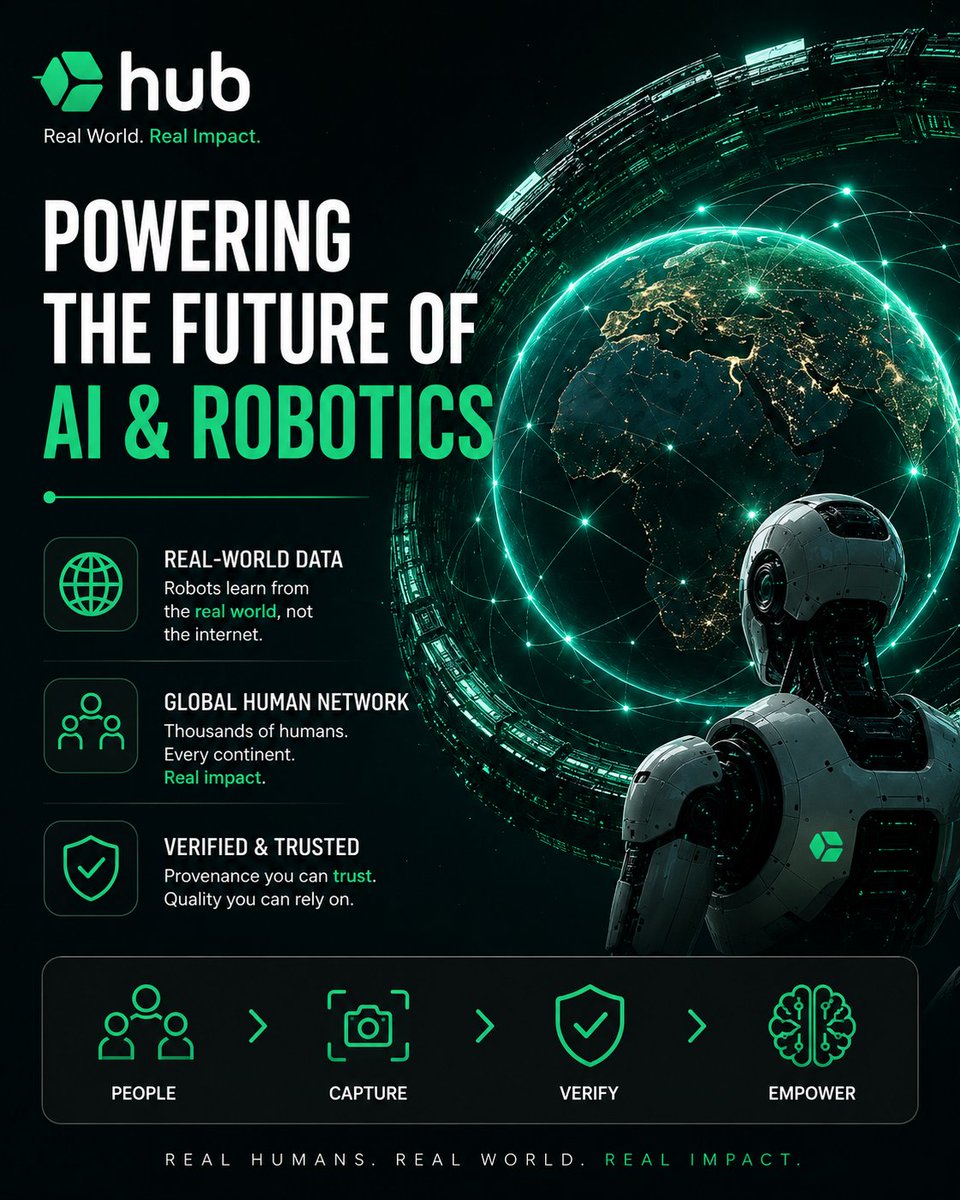
Robots can't learn from the internet alone. YouTube shows what humans see, not the force, split-second decisions, and micro-adjustments needed to act in the real world.
Hub is building a global human network that can deliver verified real-world data in days, not months.
This isn't just a product it's the infrastructure layer for the AI and robotics economy. Whoever controls this pipeline will shape the next technological revolution.
1
11
444
Al-mobin | Cult Member retweeted
The internet taught AI what humans say.
Hub is teaching AI what humans do.
Every steady hand, split-second decision, and lifetime of experience becomes part of the intelligence shaping tomorrow's machines.
That's not automation replacing people it's human expertise becoming the foundation of the AI era.
Backed by Y Combinator. The future is being trained by us @hubxyz

1
5
21
216

AI, shaped by humanity.
Jun 15

Hub (@hubxyz) provides real-world training data to frontier AI labs and robotics.
Human labor is half of global GDP. Almost none of it has ever been recorded.
Hub opens access to it through a global network of contributors capturing hard-to-access data.
Congrats on the launch, @xarmin and @tim404x!
ycombinator.com/launches/Qoe…
16
12
39
2,657
Al-mobin | Cult Member retweeted
A powerful shift is happening.
AI learned to talk from the internet.
Now, it'll learn to act from us.
The future of robotics won't be built on synthetic data alone it will be shaped by real human experience, judgment, and skills from people around the world.
Huge congratulations to the team @hubxyz @Icea75 @tim404x @xarmin @MrCrypPrivacy ,well deserved recognition from Y Combinator.
AI learned to talk from the internet
It'll learn to act from us
Backed by Y Combinator
1
12
109
AI learned to talk from the internet
It'll learn to act from us
Backed by Y Combinator
Jun 15
Hub (@hubxyz) provides real-world training data to frontier AI labs and robotics.
Human labor is half of global GDP. Almost none of it has ever been recorded.
Hub opens access to it through a global network of contributors capturing hard-to-access data.
Congrats on the launch, @xarmin and @tim404x!
ycombinator.com/launches/Qoe…
30
26
100
4,199
Al-mobin | Cult Member retweeted
The Industrial Revolution transformed human muscle into money. The Internet Revolution transformed human attention into money. And the AI Revolution will transform human intelligence into money.
Hub is building an economy where human experience, judgment, and real-world skills become the most valuable assets. We won't just use AI we'll teach it, guide it, and get paid in return.
This is the economy of the future.
1
8
123
Al-mobin | Cult Member retweeted
Internet data is exhausted. The next breakthroughs won't come from scraping another billion web pages they'll come from millions of real-world edge cases that have never been recorded before.This isn't just data collection; it's an attempt to democratize the AI economy. In the past, those who owned the machines captured most of the value. Now, ordinary people may finally get to benefit too because they're the ones teaching the machines. This work is being done through Hub
Congratulations @Icea75 @tim404x @xarmin @hubxyz @MrCrypPrivacy
1
6
106
Al-mobin | Cult Member retweeted

Jun 15
Hub (@hubxyz) provides real-world training data to frontier AI labs and robotics.
Human labor is half of global GDP. Almost none of it has ever been recorded.
Hub opens access to it through a global network of contributors capturing hard-to-access data.
Congrats on the launch, @xarmin and @tim404x!
ycombinator.com/launches/Qoe…
229
91
384
35,918
Al-mobin | Cult Member retweeted
🌎 Somewhere in the world tonight, ordinary life is unfolding.
A father is folding freshly washed clothes before bed.
A student is washing the dinner dishes, one cup at a time.
Someone is straightening the sheets, preparing for tomorrow.
On a small balcony, a plant is being watered after a long day.
None of these moments look extraordinary.
But @hubxyz sees them differently.
These everyday actions carry years of human experience habits shaped by culture, instinct, patience, and repetition. We learned them through life itself, not from manuals or tutorials.
And that's exactly what makes them valuable.
Hub invites people to record simple tasks they already do every day, helping AI understand how real humans move, organize, and interact with the world around them.
In return, Hub pays for those contributions.
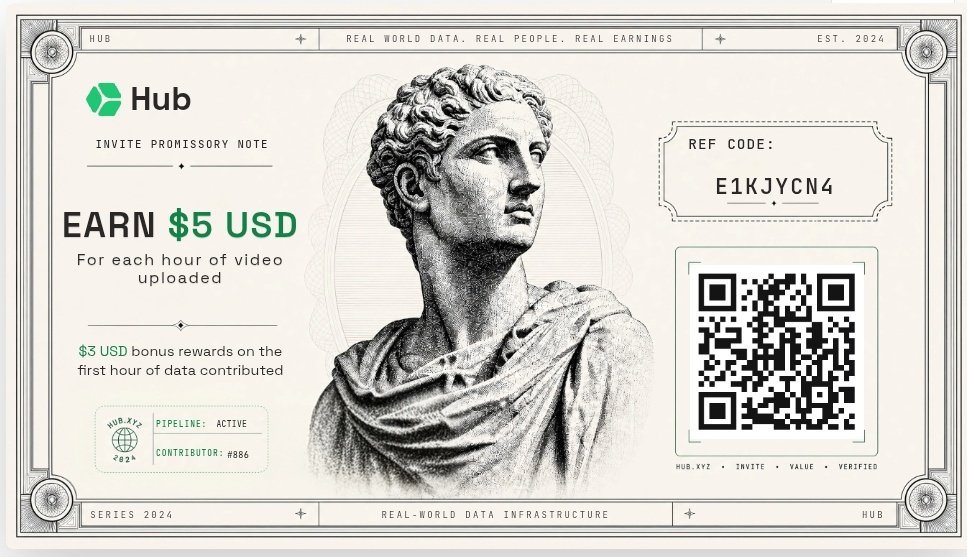
Around $4 per hour.
For some, it's extra income.
For others, it's groceries for the week, school supplies for their children, or a little breathing room at the end of the month.
From Buenos Aires to São Paulo to Bogotá, people are discovering that the routines they once overlooked have real value.
Because the future of AI isn't built only in research labs.
It's shaped by the hands that fold laundry.
The hands that wash dishes.
The hands that make beds and care for their homes.
The small things we do without thinking may be impossible for machines to truly understand without us.
Maybe your ordinary evening isn't so ordinary after all.
Maybe the skills you've carried your whole life are worth more than you ever imagined.
And maybe, for the first time, simply being human is part of building the future.
@hubxyz
🇦🇷 It's a Tuesday night in Buenos Aires
Third floor. A woman folds laundry.
Her hands move the way yours do, without thinking.
Smoothing the towel flat. Finding the corners.
She isn't filming her face. She's filming her hands.
Two floors down, someone fills the sink until it steams.
One plate at a time.
Down the hall, a bed gets made.
On a sill above, a watering can tips and the soil goes dark.
Your body knows every one of these motions.
A machine knows none of them.
That's why the lights are on.
Every movement so worn-in you forgot you learned it. Robots can't do it. Can't find it online.
Nobody ever thought to record it.
Hub does. $4/hour.
For a lot of people behind this glass, that's more than a day's wage.
Paid for things they'd be doing anyway.
São Paulo. Bogotá. Buenos Aires.
One building of unremarkable evenings.
In the cities the industry keeps forgetting to look at.
The other side of AI isn't a lab.
It's the life behind the windows.
The door downstairs is open.
Someone's already walking in.

3
11
174
Al-mobin | Cult Member retweeted

Jun 11
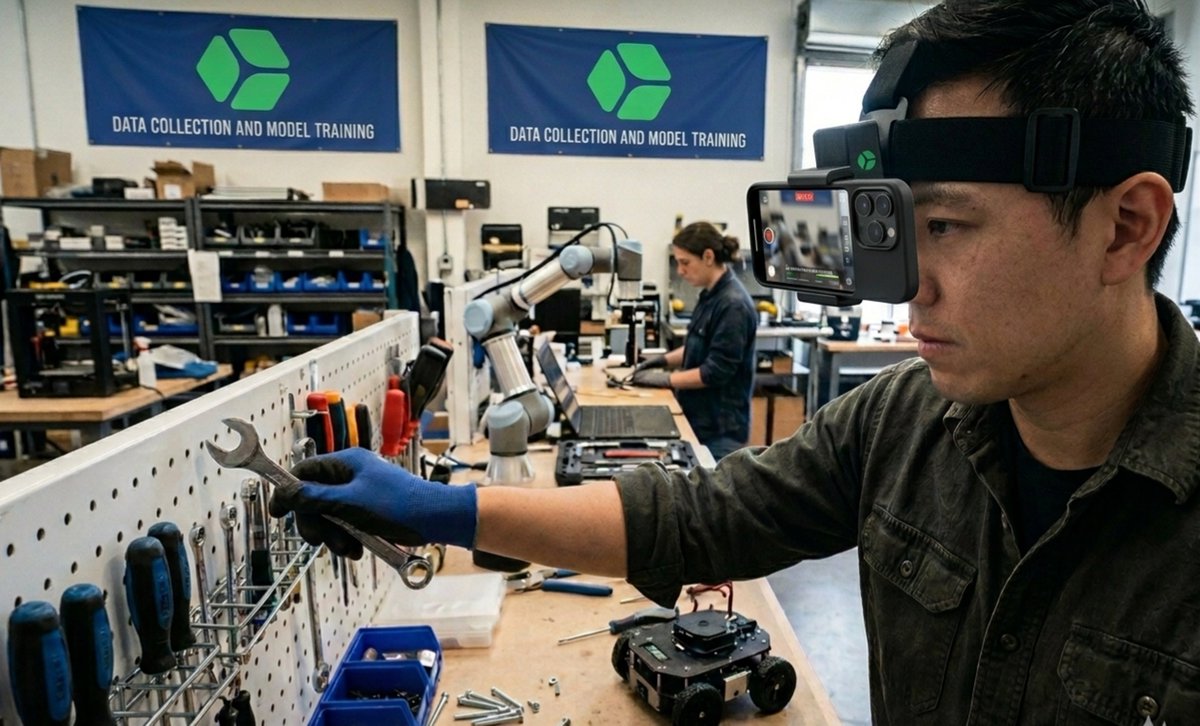
Earn with @hubxyz POV Tasks
Help train physical AI & robotics!
HUB pays $4 to $6/hour to record everyday physical actions using your smartphone or head-mounted device.
1
3
7
205
Al-mobin | Cult Member retweeted

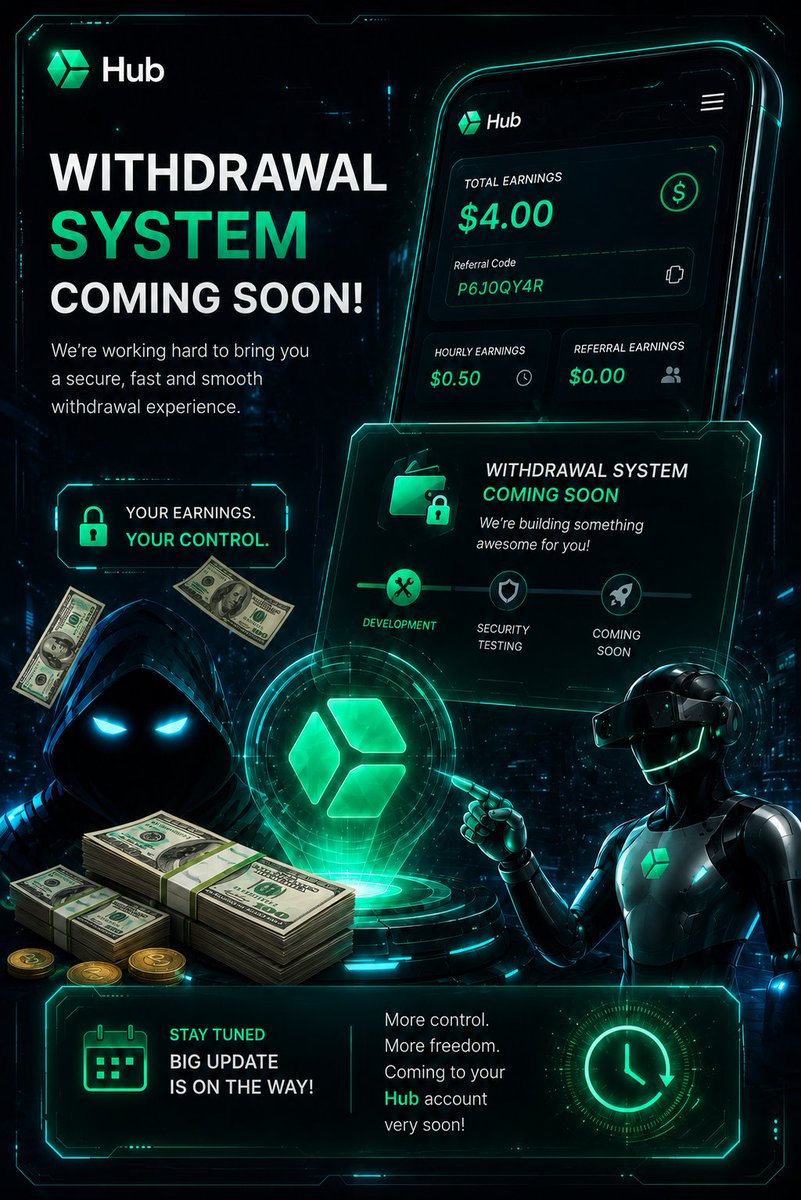
The Withdrawal System is entering its final stage and will be live very soon.The wait is almost over
A new era of fast, secure & seamless withdrawals is coming.
Your earnings will soon be fully in your hands.
Stay ready. Big update incoming.
Follow @hubxyz
1
13
114