
Joined March 2014
- Tweets 231,222
- Following 786
- Followers 1,244
- Likes 156,716
15,652 Photos and videos

Pinned Tweet

9 Jun 2024
Swarg se modi ka shapath samaroh dekh rhe honge wo 10 log ki kaise ek failed defence aur national security minister firse minister ban gye, aur koi TV ya opposition wala unki baat nhi kar rha hai, RIP all of them
9 Jun 2024

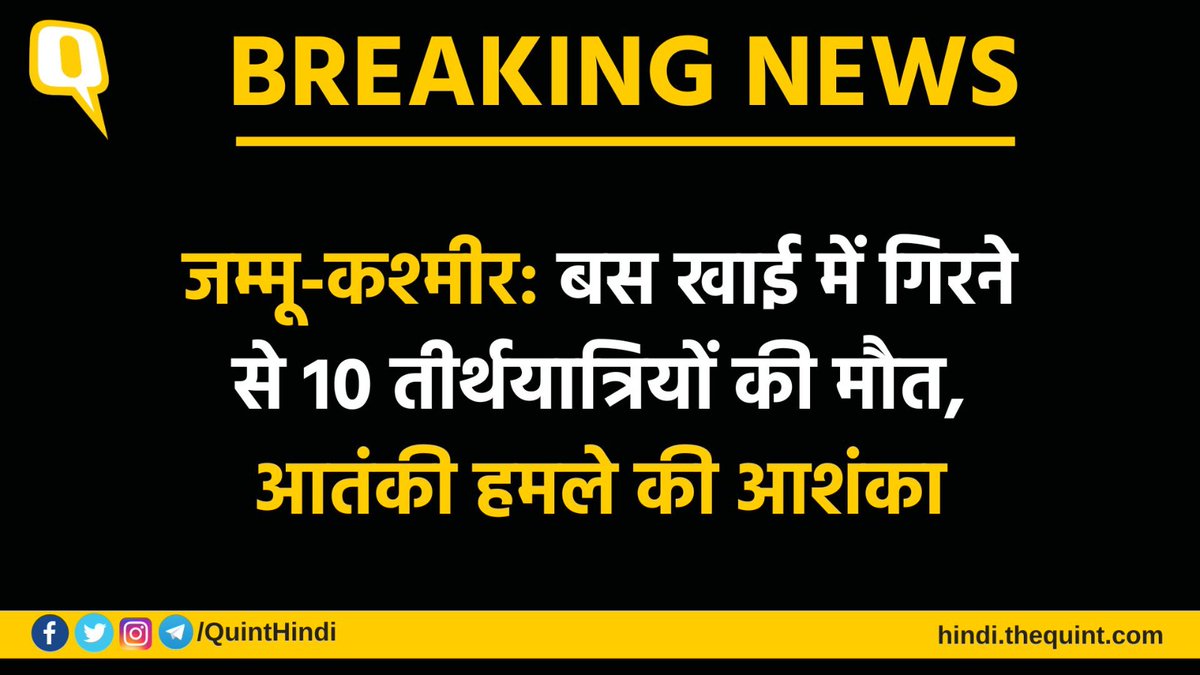
#LIVE | जम्मू-कश्मीर में आंतकी हमले की आशंका, बस खाई में गिरने से 10 तीर्थयात्रियों की हुई मौत
देश और दुनिया की तमाम बड़ी खबरों के अपडेट्स यहां पढ़ें: tinyurl.com/44xkv3t6
4
12
9,938
9 Jun 2024
Swarg se modi ka shapath samaroh dekh rhe honge wo 10 log ki kaise ek failed defence aur national security minister firse minister ban gye, aur koi TV ya opposition wala unki baat nhi kar rha hai, RIP all of them
9 Jun 2024
#LIVE | जम्मू-कश्मीर में आंतकी हमले की आशंका, बस खाई में गिरने से 10 तीर्थयात्रियों की हुई मौत
देश और दुनिया की तमाम बड़ी खबरों के अपडेट्स यहां पढ़ें: tinyurl.com/44xkv3t6
4
12
9,938

its good to see on twitter, how different people around the world with different languages and cultures are arriving at similar conclusion, which is to focus on what you can control, and keep working towards your purpose, let everything else go, as said by krishna, buddha etc
1
2
just wow, i had it backwards all along, real simplest way to become millionaire
1
just wow, i had it backwards all along, real simplest way to become millionaire

3
Chandravijay Agrawal retweeted

This is the easiest way to get rich ‼️
5
36
1,858
its good to see on twitter, how different people around the world with different languages and cultures are arriving at similar conclusion, which is to focus on what you can control, and keep working towards your purpose, let everything else go, as said by krishna, buddha etc

4

Chandravijay Agrawal retweeted

Bakuku is a digital animator and artist recognized for creating impressive animated memes. This is a balloon being transformed into Alan from Gumball.
[🎞️ artmaker113]
13
14
170
30,039
Chandravijay Agrawal retweeted

135
386
1,345
35,211
Chandravijay Agrawal retweeted

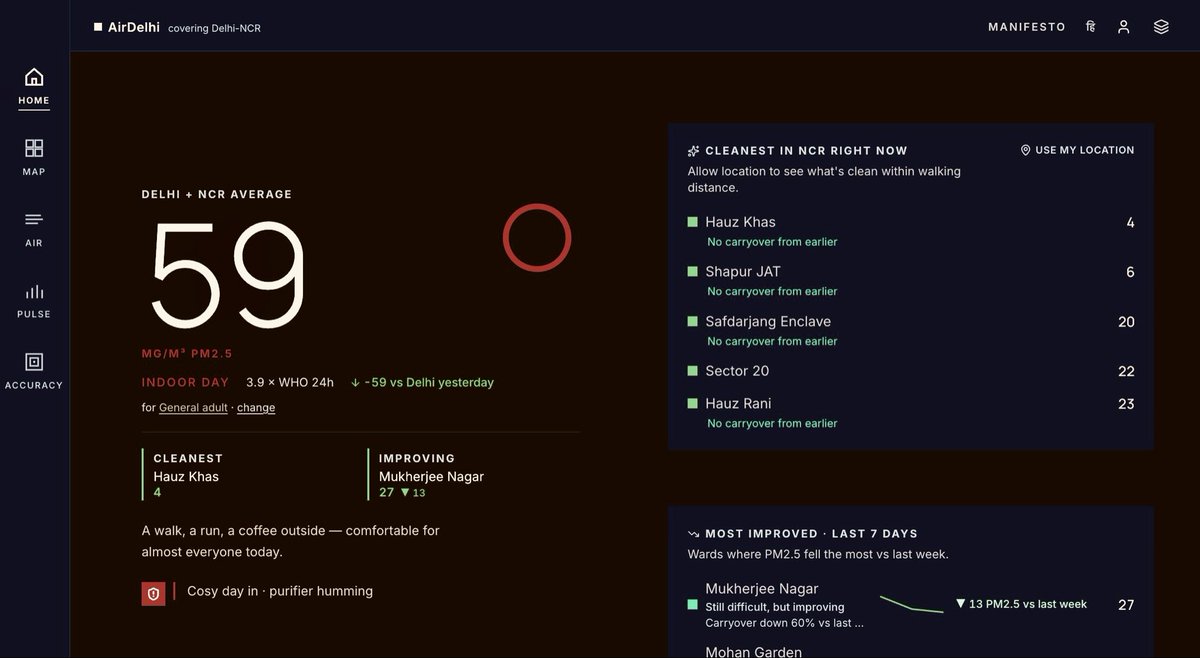
Introducing ■ AirDelhi.net
Delhi has 40 official air quality monitors for 33 million people.
Most air quality apps give you one number. One city-wide average. Whether you're in Rohini or Vasant Kunj, the number is the same.
We built something different.🧵
4
8
131
95,387

Так даже лучше
Риелтор из Японии не разобралась, как убрать её напарника в хромакее из видео, и выставила его как есть. В результате ролик набрал 810 000 просмотров за сутки, хотя предыдущие видео собирали максимум несколько тысяч.
88
932
24,718
801,535
Chandravijay Agrawal retweeted

Today's Telegram ban is proof of why an indigenous social media or messaging app can never grow in India.
If @durov was Indian, he would be in jail along with his entire team and his entire infrastructure seized because a question paper was supposedly leaked on Telegram. It would have taken a few months to get bail. Line of FIRs stretching to Kanyakumari. Court cases dragging on for a decade or more. TV channels would have gone to town with all kinds of consipracies of how Soros is involved.
We have vaguely written laws, open to the worst interpretation and bureaucratic overreactions. It's not a stable foundation for anyone to build on.
The same applies to now AI. Anyday someone will be offended in this country by anything an indigenous AI generates in text or images and the founders can find themselves in jail and fighting court cases.
98
742
4,483
105,338
I already somehow knew this, brain considers the photos or written notes as its own space, which is true, also helpful, for example when I don't want to remember things I can just write and take a look later, so i can remember consciously things i really want to remember

The research behind this is wild. The moment you decide to photograph something, your brain recalls fewer details about it. A 2014 Psychological Science study by Linda Henkel at Fairfield University confirmed this at a museum: visitors who photographed exhibits remembered fewer objects and fewer details than visitors who just observed. Capturing creates the illusion you've already processed what you saw.
Self-disclosure hits the same brain reward circuits as food or money. Harvard neuroscientists found that posting for reactions fires the nucleus accumbens (your brain's reward center, the same region involved in addiction) and the ventral tegmental area (where dopamine gets produced). This circuitry evolved to make you feel seen by your group. Social media pointed it at a notification button.
Psychologists call this the split between performance mode and experience mode, two brain states that can't both run at full capacity. These two states don't share well. When you're composing a caption or imagining reactions, you're running performance mode. The actual experience, being somewhere real, runs on whatever attention you have left. Duke research from 2016 found that tracking your activities to share them later makes those same activities feel less enjoyable.
Sean Parker, Facebook's first president, admitted in 2017 the platform was deliberately engineered around "social validation feedback loops." Posts decay in reach within hours, creating urgency to keep posting.
Nicholas Epley, a psychologist at Chicago Booth, found that people consistently overestimate how much others notice and care about them. The audience watching your life, the imagined one you're performing for, is much smaller than it feels.
Van Gogh produced roughly 900 paintings in a decade. He sold exactly one painting in his lifetime. Irises, painted in 1889, sold for $53.9 million at auction in 1987. When someone shows you their vacation photos and you feel like you kind of saw the trip, the feeling is roughly accurate.
1
Chandravijay Agrawal retweeted

We’re escalating this with du.
The fact that a telecom operator in INDIA can disrupt Internet access for millions of unrelated people IN THE UAE is mind-boggling.
22
28
575
17,761
Chandravijay Agrawal retweeted

my brother’s NEET PG notes, videos and paid study groups were all on telegram
telegram got banned. so now he’s stuck messaging pirated-content scammers just to access what he already paid for
to stop one leaked NEET UG paper, you broke access for thousands of honest aspirants
the source of the leak walks free. the medium gets banned. the students get punished
this is the solution?
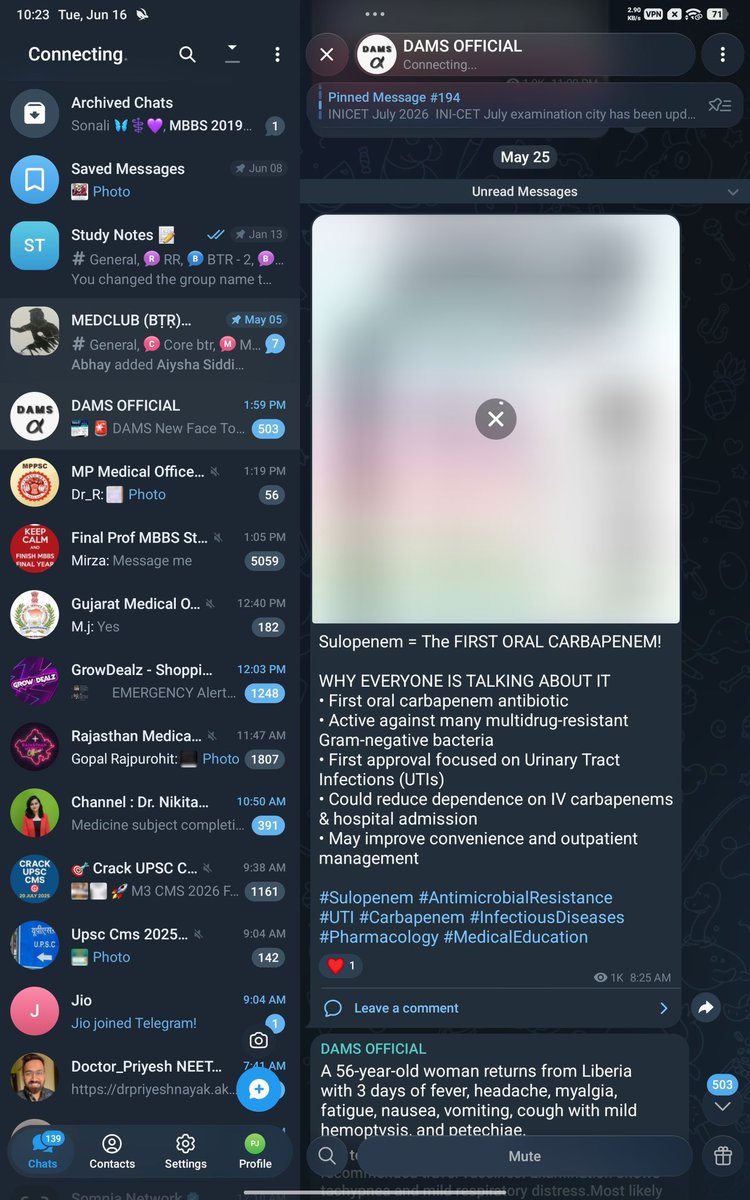

India’s IT ministry banned Telegram for one week because some users shared leaked exam questions.
This punishes 150M ordinary Telegram users in India — not the insiders who leaked the exam materials.
And the ban hasn't stopped anything. The leaks just moved to other apps.
152
295
2,403
167,324
Chandravijay Agrawal retweeted
Indian telecom Reliance is sabotaging access to Telegram for millions of users OUTSIDE India (including the UAE) via a rogue method called BGP hijacking.
The sabotage seems intentional, as Reliance has ignored multiple reports.
This may be part of a competitive war, as Reliance is partially owned by Meta — the company behind WhatsApp.
Network operators are advised to reject unauthorized BGP announcements from Reliance (AS18101) to prevent route hijacks and ensure stable Internet access for their users.
Such abuse of global Internet routing is alarming. I wouldn’t be surprised if Reliance/WhatsApp were also behind the recent lobbying effort to ban Telegram in India.
915
2,838
16,658
664,827
I hope joker does something about it, only he can do something

3
Chandravijay Agrawal retweeted

Jun 15
Your just trying to Exist
164
1,291
4,081
96,361
🤣🤣🤣

5
Chandravijay Agrawal retweeted

When you forget you’re forty years old! 😁😅
1,564
14,141
143,784
4,774,231
