
Chemical engineer, biotechnologist, entrepreneur
Joined May 2014
- Tweets 7,566
- Following 1,114
- Followers 5,376
- Likes 22,303
81 Photos and videos



Meher Roy retweeted

14 Mar 2025
avalanche is on the precipice of absolutely obliterating bandwidth capacity upper limits of all other networks
28
59
394
32,982

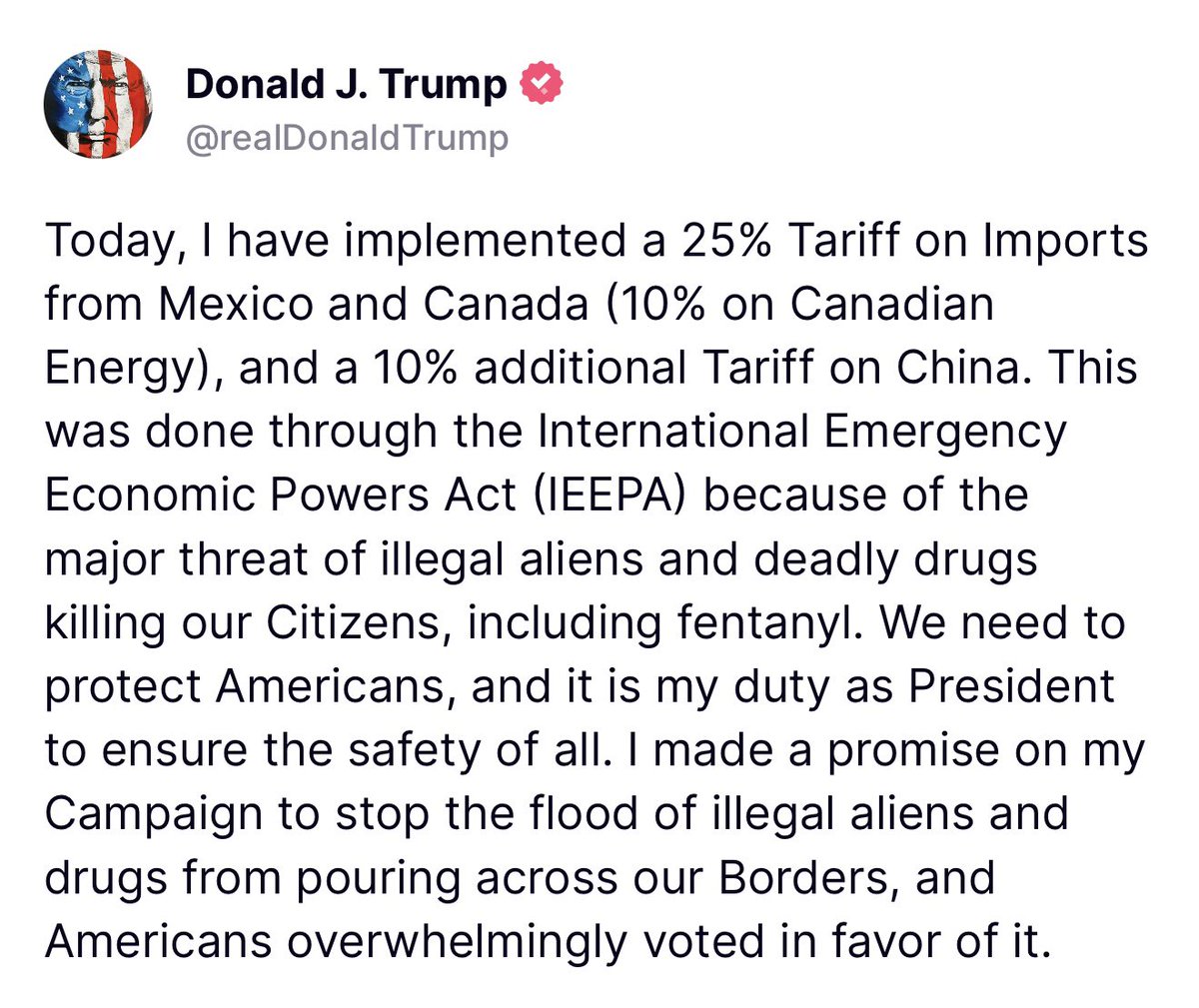
And now. my last wish.. stop picking fights with cool nations like Canada and Denmark, and you*'ll be one of the best.
8 Mar 2025

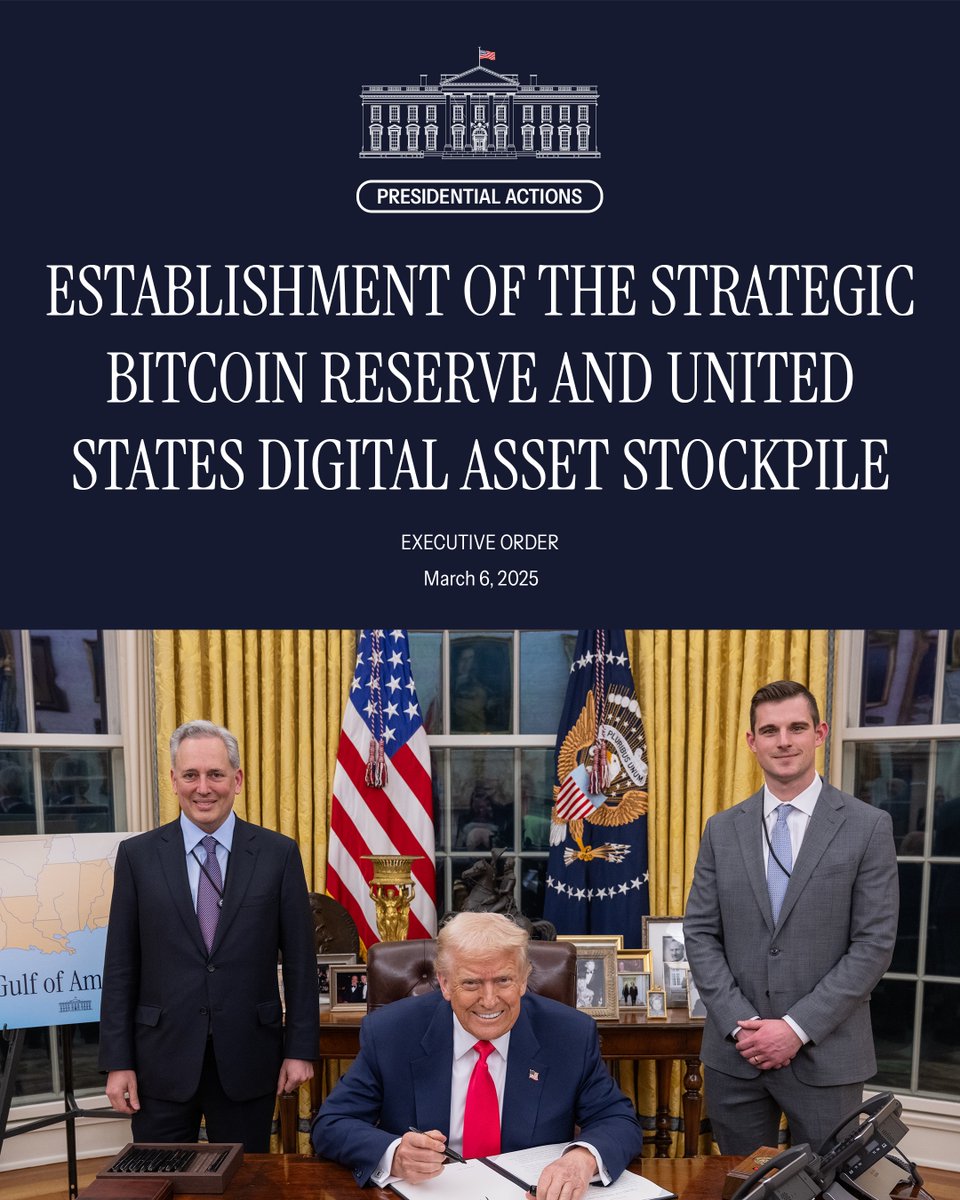
America will be the Bitcoin superpower of the world.
The Golden Age of America has BEGUN!
1
14
3,376
Meher Roy retweeted

27 Feb 2025
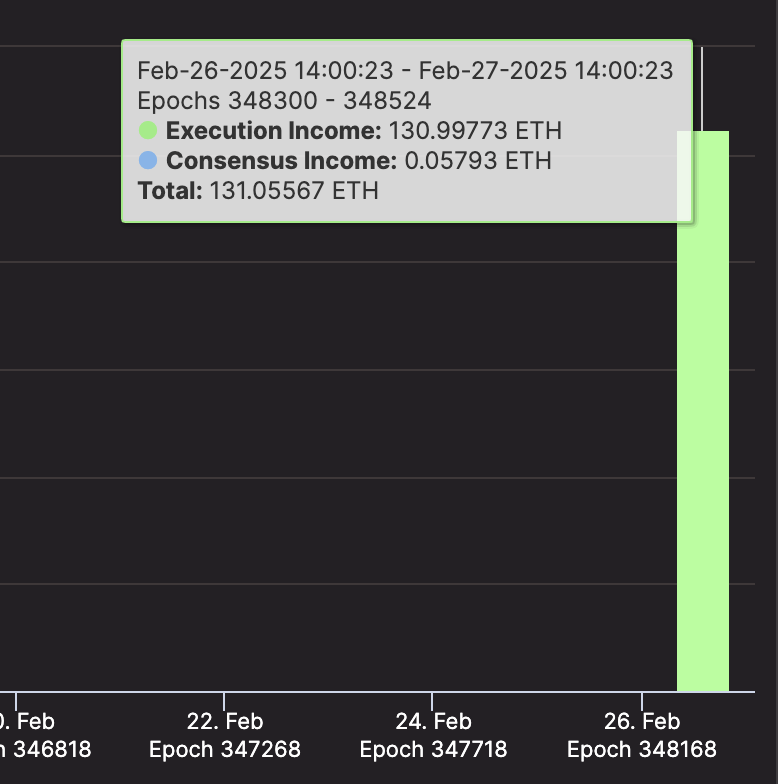
Congrats to @ChorusOne on receiving a 131 ETH block reward in their @stakewise_io vault: app.stakewise.io/vault/mainn…
Lucky you if you were staking and boosting through their vault. 🚀
1
9
34
4,552
Meher Roy retweeted

12 Feb 2025
All the @ethereum news in real-time from onethereum.org/.
Subscribe for a daily email.
4
19
1,505
The joker and the penguin have taken over Gotham, and Batman is nowhere to be seen
youtu.be/VwxqkiK95-s?si=lnGg…
1
3
1,300
The moment fun turns into disaster. Party is over.
1 Feb 2025

2
1,020
RT @MarcosArrut: On the one hand, aspartame: a massively sold chemical linked to the increase of cancer. On the other, CCR5 gene editing in…
1
47
Haha, the walrus!!
youtube.com/shorts/bFKy5La53…
1
3
1,608
Meher Roy retweeted

5 Jan 2025
Is there something that could disrupt Proof-of-Stake?
In my view, the most likely contender would be zk proofs. In the end, PoS tells you the state of some system. And you can trust it because economically it would be infeasible to lie. With zk proofs you can also get the state of some system, but potentially much cheaper.
Of course, zk is not consensus and you often still need consensus. But you could have a single chain provide consensus for many zk systems. And that might dramatically reduce the need for PoS chains some day.
5
2
19
2,235
Meher Roy retweeted

23 Dec 2024
Why you shouldn't build your career around existential risk.
I feel weird writing this because the core of the argument is almost metaphysical for me. I believe that attention is the most powerful thing in the world and I have a very deep sense that whatever we pay attention to -- whether positively or negatively -- we bring more of into the universe. [1]
Patrick MacKenzie once noted that if you want a problem solved, you give it to someone as a project. If you don't want a problem to be solved, you give it to someone as a job [2]:
"The Department of X, for the 25th straight year, has reported that they did a lot about X, that they have made progress on initiatives A, B, and C with metrics to show for it, that X is nonetheless more pressing than last year, and that they need more headcount."
If you're anti-capitalist, you need capitalism. If you're anti-communist, you need communism. "Any PR is good PR". Any attention is good attention. If you're anti-something it means that something exists and it's important enough to be anti-it. In fact, the bigger it is, the better for your career.
I'm especially bothered by people having existential risk jobs and careers. If you built your entire career around a certain existential risk, then what happens to you if this risk is dealt away with? You no longer have a job. You no longer have a career.
I mean, what happens to Eliezer Yudkowsky's -- the biggest advocate of stopping all AI research due to AI existential risk -- career if it turns out that AI risk is simply not an existential concern? Would anyone care about him at all? And what would he do with his life then? Become an e/acc? People believe what they must believe. And they bring their beliefs into the world with all of their life force and intelligence.
(notably, Nick Bostrom, who taught Yudkowsky about AI risk -- but hasn't centered his entire career around it -- has recoiled and now believes the risks are overblown. [3])
There's clearly a way in which this argument is stupid. Like, if there's a giant asteroid hurtling towards Earth that will reach us in 10 years causing a mass extinction, that's an existential risk. And I think working on it would be amazing. But it would be amazing because it's a concrete problem facing us and nobody will build their careers around it. We'll deal with the asteroid and move on to other things.
There's also the immense opportunity cost of working on existential risks.
All of these incredibly talented and smart people, all of the capital, and instead of working towards building a better future, solving real problems, they got one-shotted by scary thought experiments when they were in high school and college, built their entire career around these thought experiments, and are now stuck. That's just so sad.
How many diseases would we have cured? How much physics and engineering progress would we have made? How much great art would've been created? But instead we have some of the smartest minds of the generation staring into the abyss most of their waking time, waiting for the abyss to stare back.
In fact, it has already stared back at many of them. Sam Altman noted that Eliezer Yudkowsky probably did more than anyone else to speed up the advent of AGI by waking everyone up to AI, inspiring Altman to start OpenAI, and helping Hassabis to fundraise for DeepMind very early on. [4]
Let's not wait until the abyss stares at the rest of us as well. Let's work towards the future we want, not against the future we don't want. After all, the fate of the universe might depend on this.
18
7
141
19,123
Meher Roy retweeted

31 Dec 2024
8
16
271
62,490


Meher Roy retweeted

27 Dec 2024
Sébastien Bubeck of OpenAI says post-training transforms AI models from next-word prediction machines to chatbots in the case of GPT-3.5 and GPT-4 and reasoners in the case of o1 and o3, and this will lead to big, open problems being solved in the next few years
11
23
202
17,831

📢 Now Available! The Best of 2024: Part 1. Over the next 2 weeks, we'll revisit the stories and guests that shaped the GRTiQ Podcast this past year!
🫶 Happy holidays to every listener and guest who made 2024 another unforgettable year!
These episodes feature highlights from some of the year’s best conversations 👇
Ep. 151: Maarten Henskens (Head of @AstarNetwork) on why Astar integrated with The Graph & their vision for Japan’s blockchain ecosystem.
Ep. 152: Uri Kolodny (@ukolodny, Co-Founder of @StarkWareLtd) breaks down Layer 2 solutions, StarkNet’s innovations, and why scalability is essential for Ethereum’s future.
Ep. 153 & 154: Rodrigo Coelho (@rodventures, @edgeandnode) reflecting on being employee #1, early challenges, and lessons that shaped The Graph.
Ep. 155: Juan Manuel Rodriguez Defago (@juanmardefago, @graphopsxyz) on how The Graph’s ecosystem evolved, plus Graph Horizon’s impact on the future.
Ep. 156: Pablo Carranza Velez (@pcarranzav, @edgeandnode) explores the Graph Horizon initiative and its modular, permissionless vision for the protocol.
Ep. 157: Ayoola John (AJ) (@web3aj, @astronautchat) discusses how AI empowers web3 community managers & reflections from his time at Facebook and Coinbase.
Ep. 158: Chris Were (@tahpot, @Verida_io) explains decentralized storage and its role in hyper-personalized web3 solutions; collaborations with The Graph.
Ep. 159: Baki Er (@defilibrary, @getclave) shares insights on launching DeFi Library to educate Turkey’s crypto community and building on web3 wallets.
Ep. 160: Daniel Keyes (@daniel_keyes, @PinaxNetwork) explains why Pinax joined The Graph’s core dev team and its alignment with web3’s multi-chain future.
Ep. 161: Kirsten Pomales (@kirstenrpomales, @talentlayer) discusses transforming service marketplaces using open protocols and displacing traditional intermediaries.
Ep. 162: Red Sheehan (@redvelvetzip, @MessariCrypto) shares perspectives on protocol economics and crypto’s relationship with traditional financial markets.
Ep. 163: Zubin Pratap (@ZubinPratap, @chainlinklabs) explains connecting blockchain to real-world data; a career journey from law to Google to Chainlink Labs.
Ep. 164: Ariel Barmat (@abarmat, @edgeandnode) reflects on The Graph’s technical evolution and the early days of the protocol.
Ep. 165: Meher Roy (@MeherRoy, @ChorusOne, @epicenterbtc) explains why successful networks need sustainable economics and his views on airdrops and liquidity mining.
Ep. 166: Connor Howe (@connor_enso, @ensofinance) discusses how user intent will drive the next big web3 cycle, making chains and applications seamless.
Ep. 167: Shermin Voshmgir (@sherminvo, @token3conomy @tokenkitchen) shares concerns about centralization, tokenization’s societal risks, and blockchain’s governance potential.
Ep. 168: Kean Birch (@keanbirch) provides academic insights into how blockchain challenges traditional ownership models.
Ep. 169: Meina Zhou (@CryptoMeina, @native_fi) explains why web3’s culture extends beyond DeFi and its impact on democratizing participation.
Ep. 170: Joe Vezzani (@joevezz, @LunarCrush) shares his journey balancing entrepreneurship, family life, and staying true to personal values.
Ep. 171: Dr. James Hendler (@jahendler) reflects on web3’s vision and parallels with the transition from ARPANET to the open web.
Ep. 172: Dan French (@danjfrench) explores blockchain’s role in democratizing real estate ownership and improving liquidity.
Ep. 173: Raullen Chai (@Raullen, @iotex_io) explains how DePIN merges IoT and DeFi, enabling machines to generate financial value.
Ep. 174: John Paller (@PallerJohn, @Opolis) shares his journey building @EthereumDenver into the world’s largest web3 event through unwavering belief and conviction.
Ep. 175: Charlie Hu (@CharlieHusats, @BitlayerLabs) discusses the evolution of web3 from a niche group to a mainstream ecosystem with institutional adoption.
🎙️Listen: grtiq.com/grtiq-podcast-201-…
🔥 What was your favorite episode from 2024?

2
17
55
10,014
Tweet thread summarizes my issues with Bryan Johnson's longevity protocol.
@bryan_johnson

If you look at Brian's list of "supplements" (they include loads of things classed as medicine), it's massive. There is evidence for individual drugs. But he combines tens of these things. I worry there is an unanticipated effect resulting from such mixing.
1
3
833
Yes!
Artificial Intelligence is coming, what's the point of importing "tech workers". The Einsteins and von Neumanns are really critical though.
24 Dec 2024

End H-1B and keep the O-1 visa.
We want Einstein and Von Neumann to come here, not armies of foreign “tech workers”
708
Exactly, an age of low immigration is naturally upon us (in 10 years).
When machines fulfil intellectual labor needs elastically, why bother filtering and importing people that look and talk strange, and could conflict in values?

the skilled immigration argument will of course be rendered moot by the third thing of importing a billion aliens into us-central-1
1
3
906