
Joined January 2024
- Tweets 23,225
- Following 832
- Followers 1,559
- Likes 38,246
741 Photos and videos








Pinned Tweet

May 27
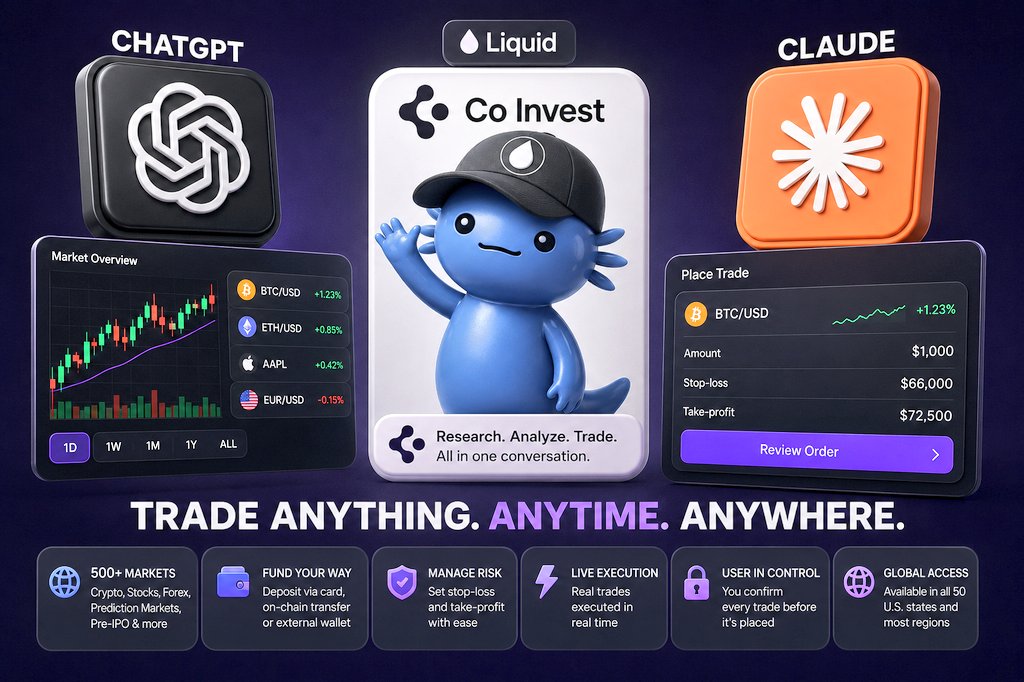
Yesterday @liquidtrading launched @coinvestai inside ChatGPT and Claude making trading more simple and accessible for everyday users.
Some features that stand out:
• Live trade execution directly inside the chat
• Access to 500 markets
• Supports crypto, stocks, forex, Polymarket and pre IPO markets
• Users can set stop loss and take profit levels
• Funding through cards, wallets and onchain transfers
• Manual trade confirmation before every execution
• Market analysis and trading in one interface
• Available across all 50 U.S. states and many global regions
Personally I feel like trading is slowly moving toward this type of experience. Most traders just want faster execution, smoother workflows and less time wasted switching between apps.
May 26

Today, Co-Invest is live.
The first way to trade directly through ChatGPT and Claude.
1
13
192
Mercy.eth retweeted

May 26
Today, Co-Invest is live.
The first way to trade directly through ChatGPT and Claude.
54
101
299
52,876
May 19
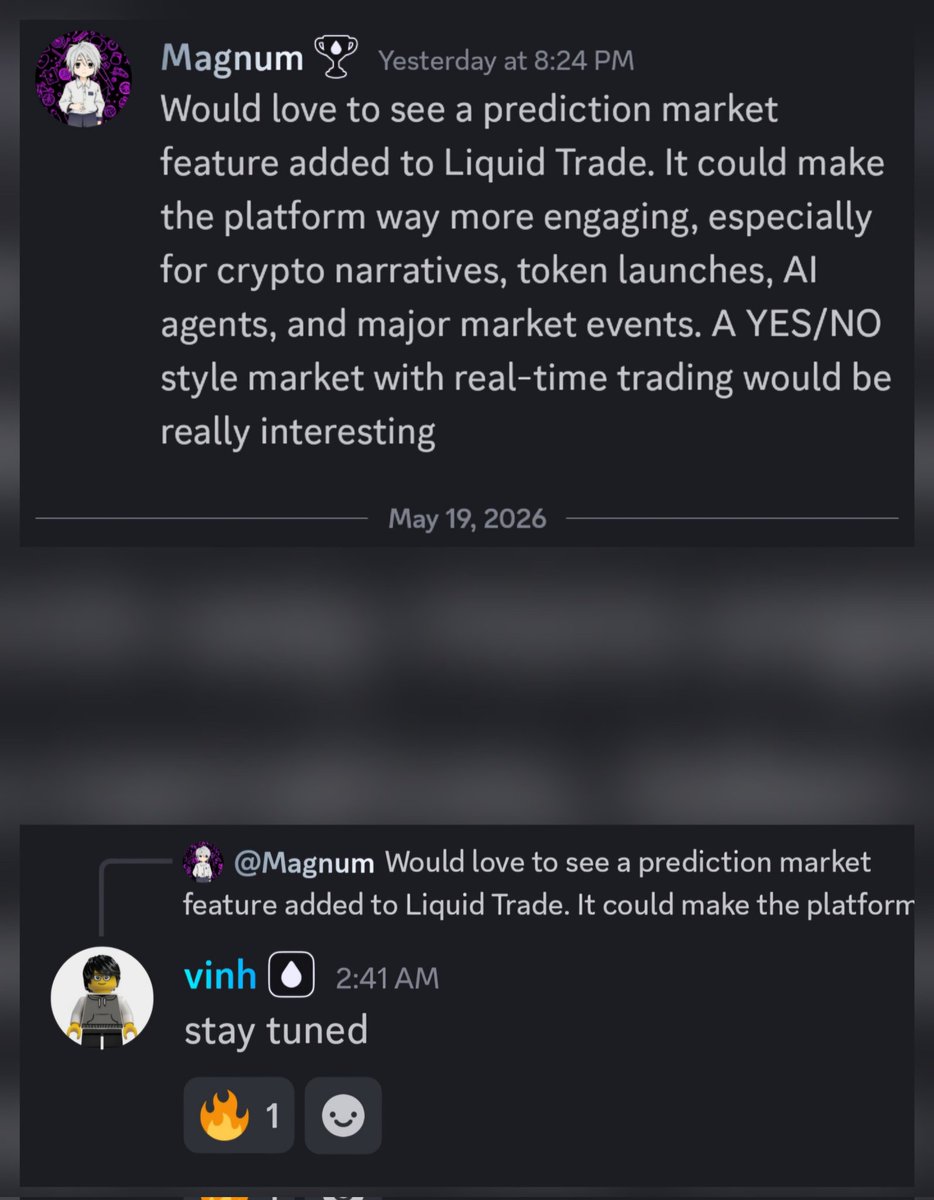
Prediction markets on @liquidtrading would actually be pretty cool 👀
Could honestly make the platform way more fun to use with markets around random events, trends, games and other stuff people are already talking about.
Nothing confirmed yet, but that 'stay tuned' reply definitely made it feel like something could be coming soon
And by the way don’t forget to finish Droplet Mission 4 before May 20th
6
20
447
May 18
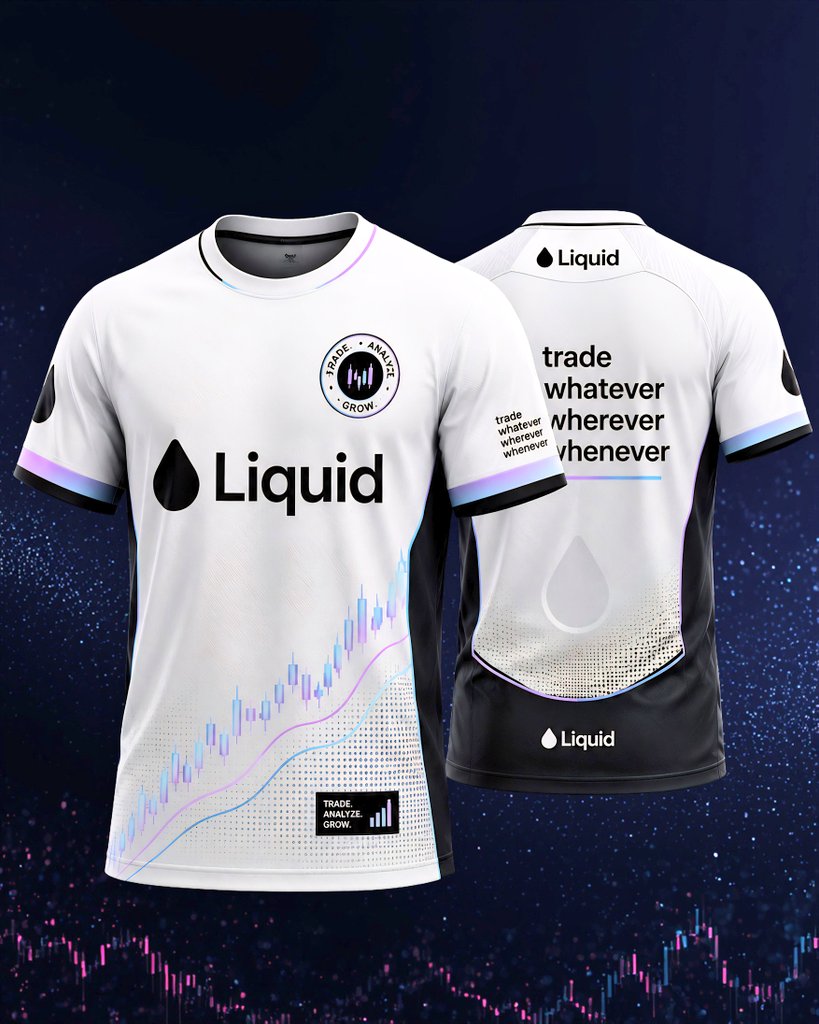
just realized the deadline for the @liquidtrading tshirt contest already passed
still wanted to share my concept because I had fun working on it. kept the design clean, wearable and inspired by trading charts with the liquid vibe.
the contest had
• 1st — $75
• 2nd — $50
• 3rd — $25
and the goal was to design merch that represents liquid and the future of trading
"trade whatever wherever whenever"
9
21
538
May 9
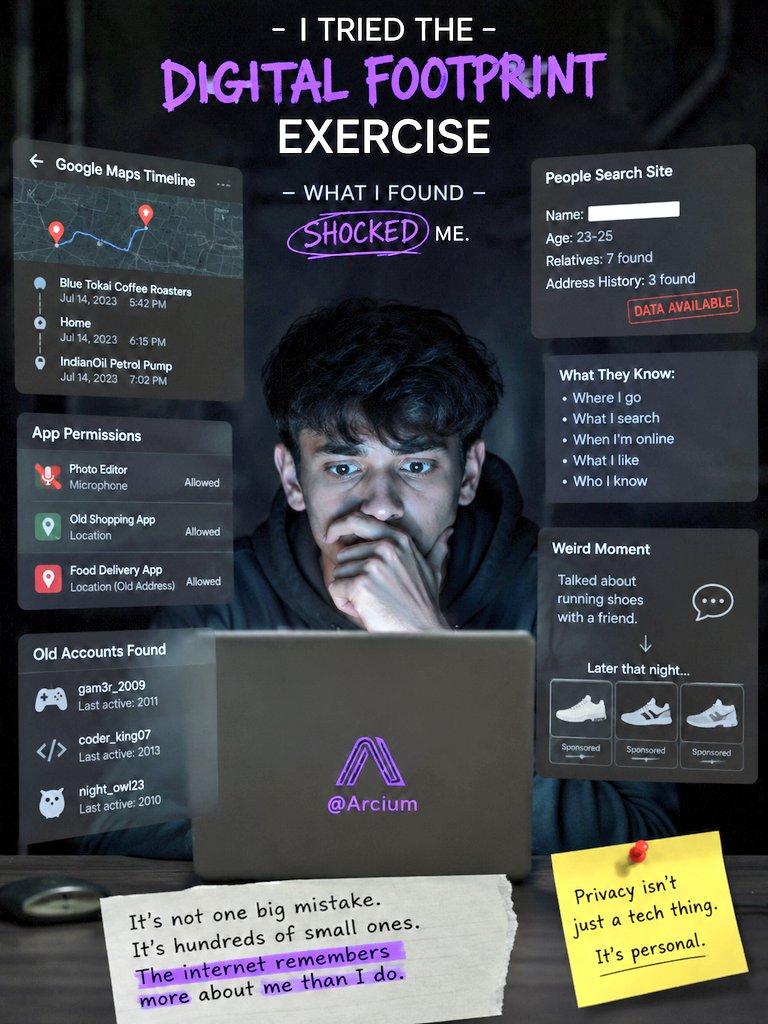
I tried the digital footprint exercise from @Arcium just to pass time for a few minutes.
Ended up staring at my screen thinking, Why does the internet remember my life better than I do?
I started by checking my Google activity page and realized Google still knew the exact café I visited with a friend last summer, the route I usually take home and even the time I stopped at a petrol pump during a trip and then I checked app permissions.
A random photo editing app had access to my microphone. An old shopping app I haven’t opened in months still had location access enabled and a food delivery app still had my old address from before we shifted houses.
I also searched my old usernames and found accounts from games and forums I used when I was younger. Some still had profile pictures, old comments even timestamps from late nights when I couldn't sleep during exams.
The weirdest moment was getting ads for things I only talked about in real life.
A few days ago my friend and I discussed buying running shoes while sitting at a tea stall. Later that night my Instagram feed suddenly filled with shoe ads. Maybe coincidence. Maybe not. But it still felt uncomfortable.
Because none of this came from one big mistake .It came from hundreds of small normal actions like clicking allow signing in with Google, accepting cookies, using free apps and forgetting old accounts exist.
The internet remembers more about me than I expected and honestly that realization stayed with me longer than I thought it would.
2
30
1,446
May 9
From last month I have been spending a lot of time trying to understand the technical core behind @Arcium and the interesting part is that it doesn't work like normal cloud computing at all.
Usually when you use an app your data gets decrypted somewhere on a server so computations can happen. That server can technically see everything.
Instead of sending raw data to one machine the data is split into encrypted shares using MPC (Multi Party Computation). Those shares are distributed across multiple nodes inside what Arcium calls node clusters.
Each node only holds a meaningless fragment of the data. On its own it cannot reconstruct the original information.
The MXE (Multi Party eXecution Environment) coordinates these nodes so they can compute together without revealing the underlying data to each other.
A real life example could be hospitals sharing patient data for cancer research.
Normally one hospital would need to send sensitive patient records to another organization which creates privacy risks.
With Arcium's approach hospitals could compute shared research results together without exposing individual patient records to anyone in the network.
That’s the important partthe computation happens directly on encrypted state.
No central server.
No single trusted operator.
No moment where the complete data becomes visible.
Even if one node gets compromised
it still doesn't expose the full secret because the node never had the complete picture in the first place.
1
18
766
May 9
Last month my friend searched for “cheap therapist near me” after a breakup.
For the next few days his Instagram was filled with therapy apps, dating coaches and sleep pills .
We joked about it at first.
Then he said - "It feels like my phone knows me better than my friends do."
That honestly stayed with me.
Because the same thing happens all the time now.
Talk about Goa once → flight ads everywhere.
Search gym shoes once → every app suddenly becomes Nike and Adidas.
My mom searched diabetes symptoms for my uncle and spent weeks getting health insurance ads.
One time I only paused on a video about hair loss and my feed became completely baldness treatments for days. None of these things sound scary individually. But together it feels exhausting.
Like every weak moment random curiosity late , night fear or private conversation quietly becomes data for someone.
That's why @Arcium caught my attention not because of privacy sounds cool.
But because encrypted compute feels practical in a world where literally everything watches you now.
The idea that systems can process information without actually exposing your raw data feels less like tech hype and more like something we genuinely need.
Not for criminals.
For regular people who just want some parts of life to stay personal.
2
18
984
May 9
One thing that honestly annoys me in crypto now
people can know way too much just from your wallet 😭
Few months back I sent some tokens to a friend and later some guy in a gc randomly started talking about my trades like bro why are you even checking my wallet history that deeply. 😭
Even NFT minting feels kinda weird sometimes because every single move just stays public forever.
I think thats why @Arcium caught my attention personally.
Not in some hardcore 'privacy maxi' type way. Just normal human stuff.
Like imagine:
• playing onchain games without people seeing your strategy before the match even ends.
• using Ai apps without throwing personal data into public systems.
• bidding in auctions without whales reacting instantly.
• proving identity without exposing your whole life
Outside crypto most normal people would never accept their payments and activity being fully public forever.
We only got used to it because thats how crypto started.
Encrypted compute honestly doesnt feel like some extra feature anymore.
Feels more like something future apps will probably NEED if crypto actually wants normal people using it daily.
4
20
986
May 9
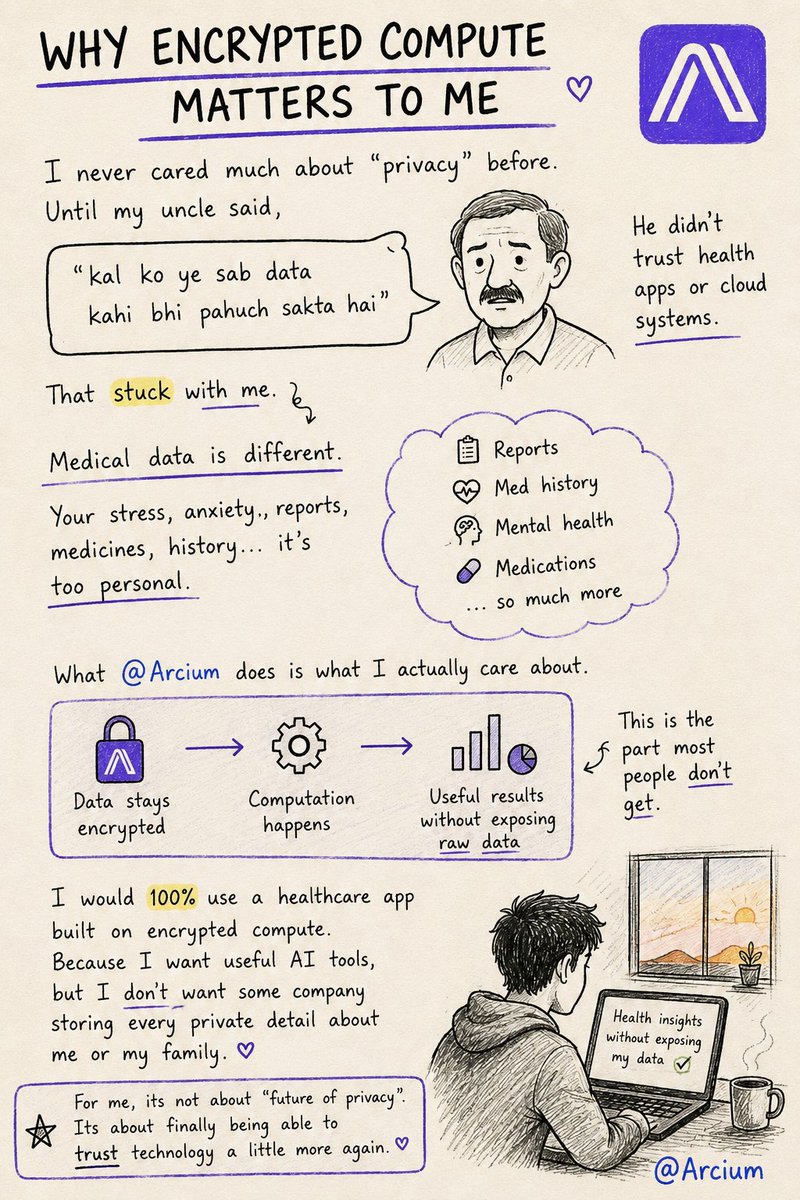
I never really cared much about data privacy conversations before because most of it sounded way too technical and dramatic online.
But last year something happened in my family that genuinely changed how I look at it.
My uncle had some health issues and one of my relatives suggested using an AI based health app for reports and recommendations. He literally refused after hearing it stores user data on cloud servers.
His exact words were basically 'kal ko ye sab data kahi bhi pahuch sakta hai (in hindi)'
People say if you have nothing to hide then why worry but medical data feels different. Your stress anxiety reports medicines history all of that is personal in a weird way.
That’s why encrypted compute from @Arcium actually makes sense to me personally.
The interesting part isnt just encryption. Its that the computation can happen while the data stays encrypted.
Means the Ai or system can still give results without actually exposing the raw information itself.
That changes everything honestly.
I would genuinely use a healthcare app built on this because I like useful AI tools but I also dont want some company permanently storing every private detail about me or my family.
For me this isnt about 'future of privacy' .Its more about finally being able to trust technology a little more again
3
19
1,049
May 1
आर्सियम (@Arcium) एक परिष्कृत विकेन्द्रीकृत प्रणाली है जो डेटा गोपनीयता को अक्षुण्ण रखते हुए सुरक्षित संगणना को सुगम बनाती है। सामान्यतः, डेटा पर कार्य करते समय उसे देखने की आवश्यकता होती है, जिससे सुरक्षा और नियंत्रण दोनों में कमी आती है। यह चुनौती तकनीकी जगत में लंबे समय से विद्यमान थी।
यह प्रणाली इस समस्या का समाधान प्रस्तुत करती है, जहाँ डेटा पूरी प्रक्रिया के दौरान एन्क्रिप्टेड (सुरक्षित) रहता है। इसमें बहु-पक्षीय संगणना का उपयोग किया जाता है, जिसमें डेटा को विभिन्न खंडों में विभाजित किया जाता है और कोई भी एक भागीदार संपूर्ण जानकारी तक पहुँच नहीं सकता। इसके बावजूद, सभी मिलकर सटीक परिणाम प्राप्त कर लेते हैं।
इस नेटवर्क में कई स्वतंत्र नोड्स होते हैं जो समूह बनाकर कार्य करते हैं और सुरक्षित वातावरण में संगणना को पूर्ण करते हैं। इसमें किसी एक केंद्रीय संस्था पर निर्भरता नहीं होती, जिससे यह अधिक विश्वसनीय बनता है। यदि कोई नोड नियमों का पालन नहीं करता, तो उसे दंडित किया जाता है, जिससे पूरी प्रणाली में अनुशासन बना रहता है।
यह तकनीक डेवलपर्स और उपयोगकर्ताओं के लिए नए अवसर प्रस्तुत करती है, जहाँ संवेदनशील डेटा के साथ भी जोखिम-मुक्त कार्य किया जा सकता है।
आर्सियम गोपनीयता सुरक्षित संगणना विकेन्द्रीकरण विश्वसनीय प्रणाली
5
24
1,028
Apr 30
Congratulations to all @liquidtrading team on a new round of fundraising $18 Millions.
Backed by @paradigm and recently secured a Series Seed round led by Neo and Left Lane Capital signaling a high institutional confidence.
Liquid offers ultra fast execution deep liquidity and intelligent order routing designed to optimize trade efficiency.
Its offers a professional interface which supports both new and advanced traders with deep liquidity
Liquid also have a Mobile App which help users from web2 to transition in web3
Apr 28

Today, we're announcing an $18 million Series Seed, led by @neo and @leftlanecap, with continued support from Paradigm, General Catalyst, and other top VC firms — bringing our total raised to over $25 million.
2
10
507
Apr 22
Gm CT
I wanted to share a brief perspective on @TheARCTERMINAL
At this juncture it has essentially evolved into my comprehensive Web3 workspace within the browser environment.
Rather than navigating multiple tabs I can now seamlessly analyze onchain data, monitor various wallets, track portfolios and even generate rapid token related content all from a singular interface.
This consolidation has profoundly impacted my workflow efficiency, which I consider the most significant change.
Our operations are now centralized within a streamlined environment, offering:
→ Real-time onchain insights, augmented by AI agents.
→ Comprehensive multi wallet and portfolio tracking capabilities.
→ Expedited content creation through an integrated meme generator.
The modular desktop configuration significantly contributes to a fluid user experience as it allows for customization that aligns with individual work preferences.
This results in reduced tab switching, minimized friction and enhanced focus.
For professionals deeply engaged in the Web3 space, such a setup represents a substantial enhancement.
1
18
484
Mar 21
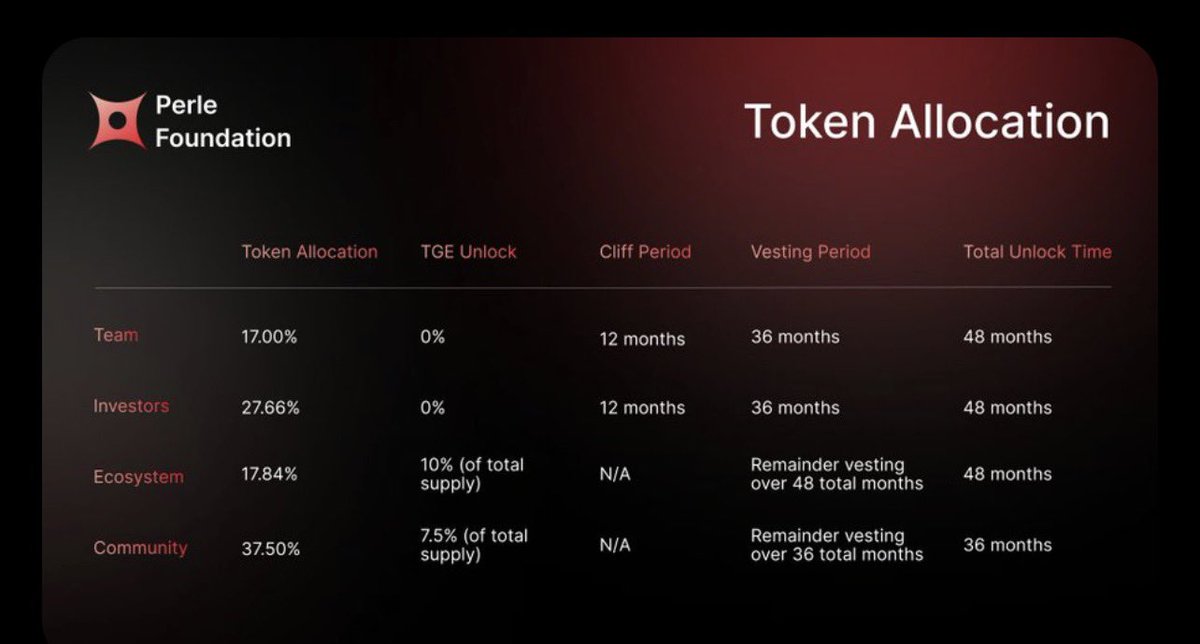
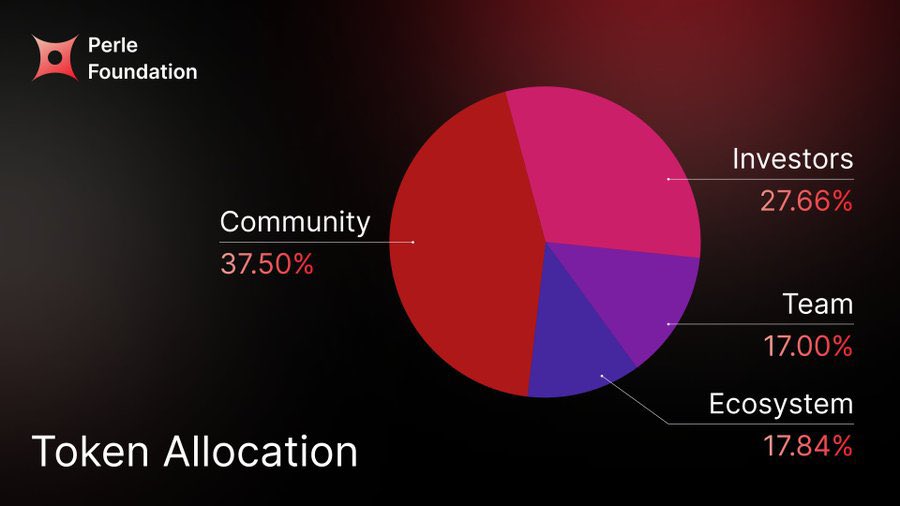
PRL Tokenomics Not Your Usual Altcoin
The tokenomics of Perle PRL are structured to reward substantive contributions rather than speculative activities. Token acquisition is directly tied to valuable actions such as data submission, validation or development rather than passive holding.
The supply distribution prioritizes community engagement ensuring that contributors receive the largest allocation distinct from internal
stakeholders. Furthermore
team members and investors are subject to strict vesting schedules often equivalent to or exceeding those of contributors without any accelerated unlock mechanisms.
PRL tokens offer tangible utility, providing access to specific tasks, preferential features and enhanced roles within the ecosystem.
Unlike many alternative cryptocurrencies that prioritize speculative interest Perle distinguishes itself by focusing on fundamental utility.
— Participating in @PerleLabs community campaign
#PerleAI #ToPerle
21
44
2,277
Mar 20
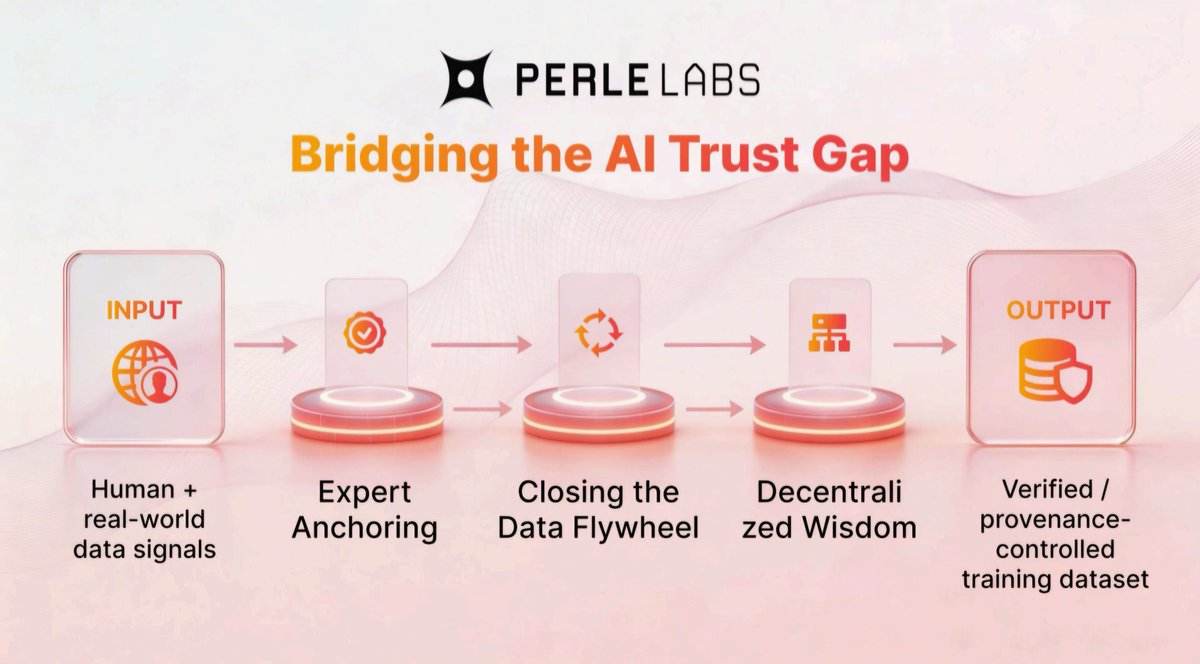
Perle Labs is tackling a super underrated problem in AI right now which is data trust
Everyone's always talking about bigger models and more compute, but honestly none of that matters if the data isn't reliable. Right now a lot of AI is trained on messy , hard to trace datasets and sometimes even generated by other Ai which can cause weird feedback loops and model collapse over time.
That's where Perle Labs steps in.
They're building a sovereign data layer where datasets are human verified, expert checked and fully auditable onchain. So instead of guessing where your data came from, you can literally track contributors and their reliability.
What's really neat is the shift to an expert driven system:
→ real pros doing meaningful validation
→ reputation built on actual accuracy
→ quality > speed
Feels like a much needed upgrade for Ai.
— Participating in @PerleLabs community campaign
#PerleAI #ToPerle
21
1
45
1,923
Mar 19
I have just submitted my feedback for Expertly
I am particularly excited about its vision, which involves integrating twin fun and @memsync_ai to develop context aware, taskspecific and AI experts.
If you have not yet completed the form I encourage you to do so . Your input is crucial in determining the initial development of the product
This is an excellent opportunity to contribute to the project at an early stage.

Mar 18

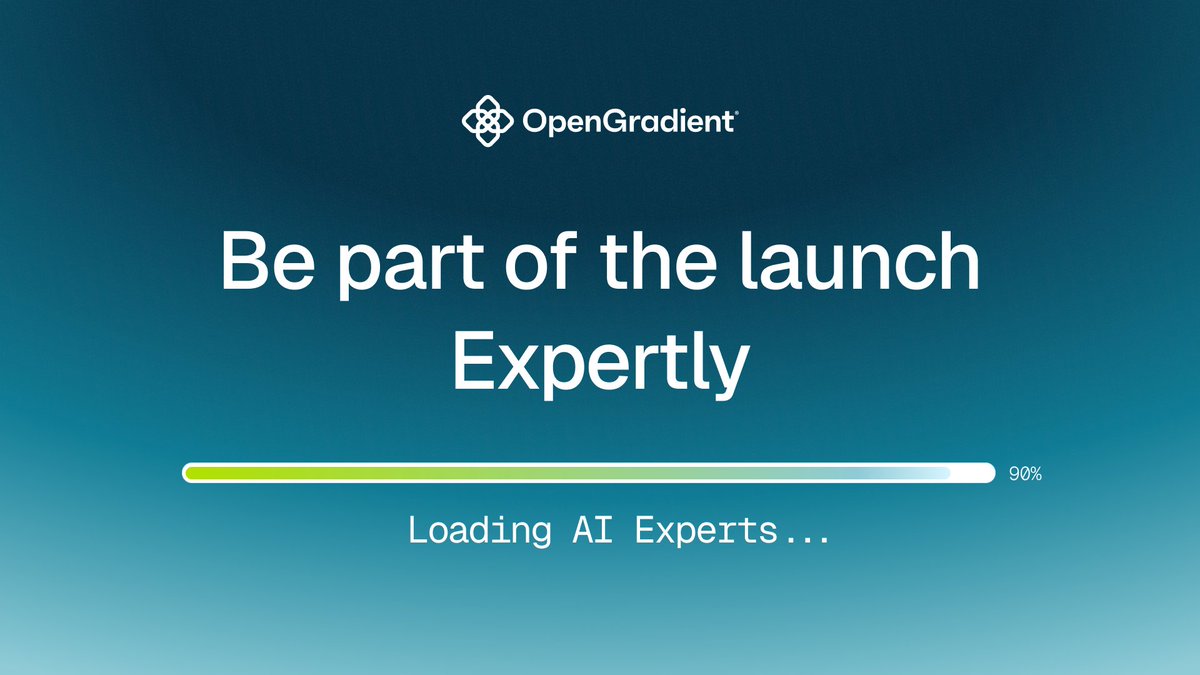
We’re approaching the final stages of Expertly.
Designed as a combination of twin.fun and @memsync_ai, it focuses on building AI experts that are context-aware and task-specific by design.
As we finalize the product, we’re gathering input to guide what should be built first.
Share your feedback:
expertly.so/surveys/ai-exper…
6
16
555
Mar 19
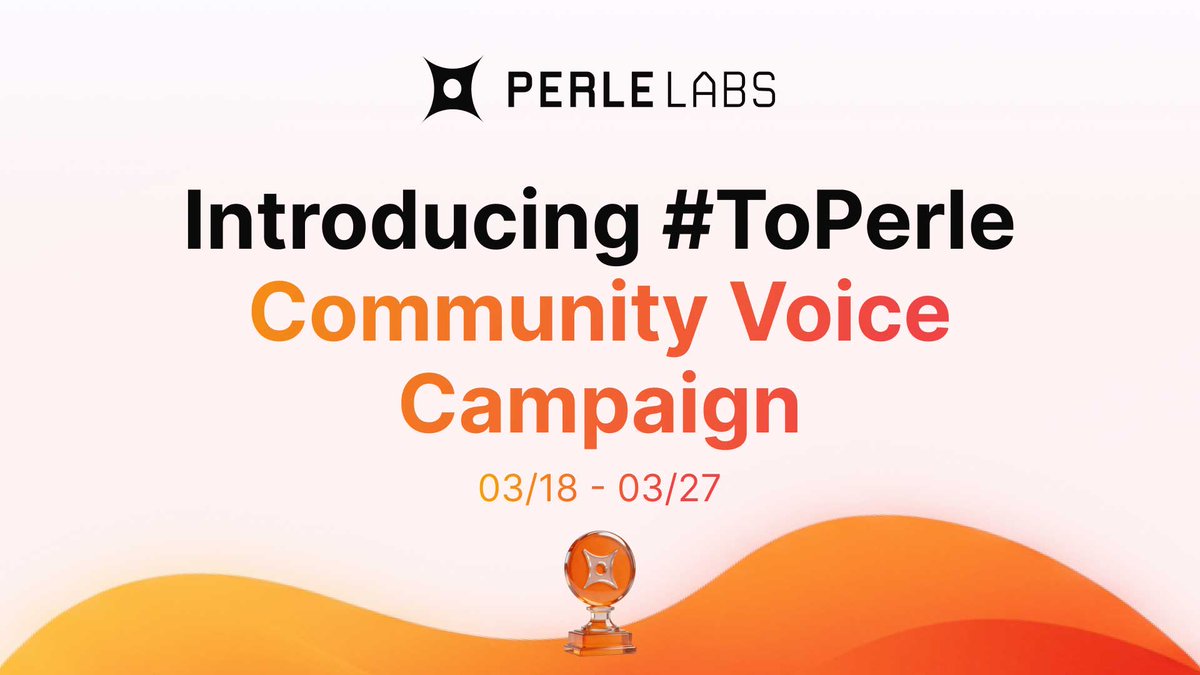
Perle Labs is giving away $55,000 to the community
So, PerleLabs just kicked off a new campaign, handing out 55,000 USD1 to over 400 winners.
▶️ Event: ToPerle Community Voice Campaign
All you gotta do is post on X about Perle. Share your thoughts, a message to the team, your take on their vision, or get creative!
✅ How to join:
1. Post an original tweet on X (text, meme, pic, or video)
2. Use these hashtags: #PerleAI #ToPerle
3. End your tweet with: "— participating in @PerleLabs community campaign"
4. Submit your entry here: docs.google.com/forms/d/e/1F…
The campaign wraps up on March 27.
Prizes:
- The top 1-50 snag 350 USD1 each
- The next 51-150 get 200 USD1 each
- And 151-400 grab 50 USD1 each
Bonus: Discord Voyager Navigator get to split a 5,000 USD1 pool!
They're judging based on quality, originality, and how much buzz you create.
Hit up their Discord for all the deets
23
28
1,437
Mar 17
OpenGradient HACA design AI blockchain limits
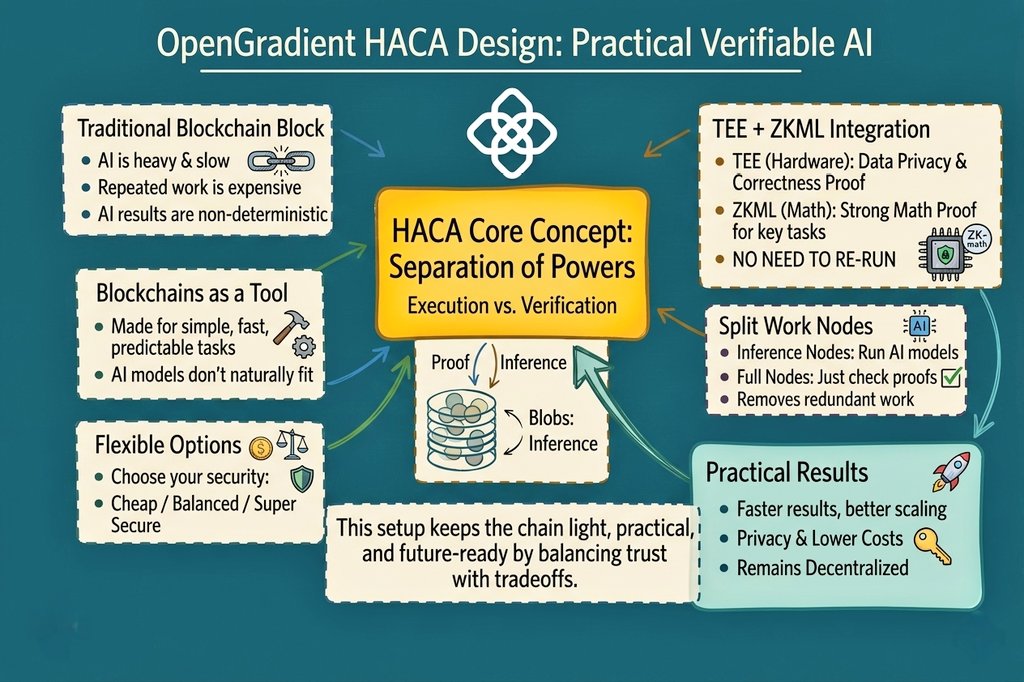
Why AI doesn’t fit normal blockchains
Blockchains are made for simple, fast, and predictable tasks. But AI models are heavy, slow, and sometimes give slightly different answers. If every validator runs the same AI it becomes very expensive and slow. OpenGradient avoids this problem instead of forcing AI into a system where it doesn’t fit.
Execution vs verification (simple idea)
@OpenGradient splits the work. Inference nodes run the AI. Full nodes just check proofs. So no repeated work, less cost, and everything still stays trustworthy.
How it works (TEE ZKML)
TEE keeps data private and proves the AI ran correctly using hardware. ZKML gives strong math proof for important tasks. No need to re-run anything.
Why this is useful
Faster results, better scaling, privacy, and lower costs all while staying decentralized.
Flexible options
You can choose cheap, balanced, or super secure verification depending on your use case.
Trust and trade offs
It uses TEE, ZK proofs, and consensus. Some tradeoffs exist but overall it’s practical and future ready.
8
356
Mar 16
OpenGradient storage Walrus blobs models proofs
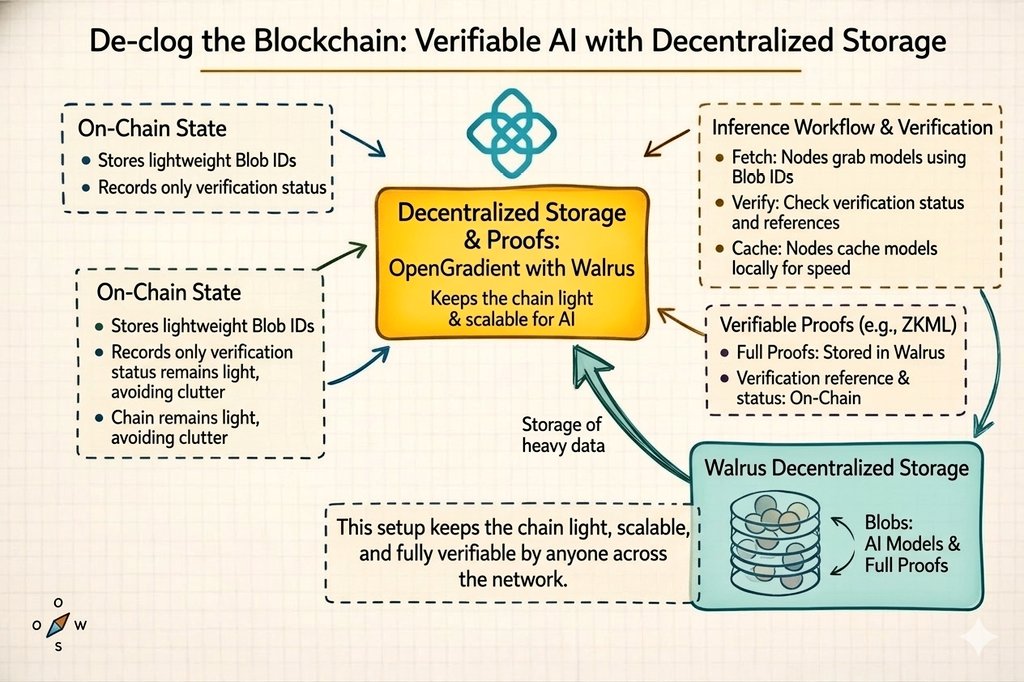
@OpenGradient uses Walrus to store AI models and big inference proofs in a decentralized way so they don't clog up the blockchain.
Instead of putting all that heavy data on the chain, the network saves it as blobs on Walrus and just keeps a Blob ID on the chain.
When someone asks for an inference, an inference node just grabs the model from Walrus using the Blob ID, does the task, and then saves the model locally for faster use next time.
It's the same deal for big cryptographic proofs like ZKML results. The full proof data stays on Walrus, and the chain just stores references and verification status.
This setup keeps the chain light, scalable and still totally verifiable for anyone who wants to check the computation themselves anytime across the network without any issues.
7
250
Mar 14
Verifiable Compute in AI Systems
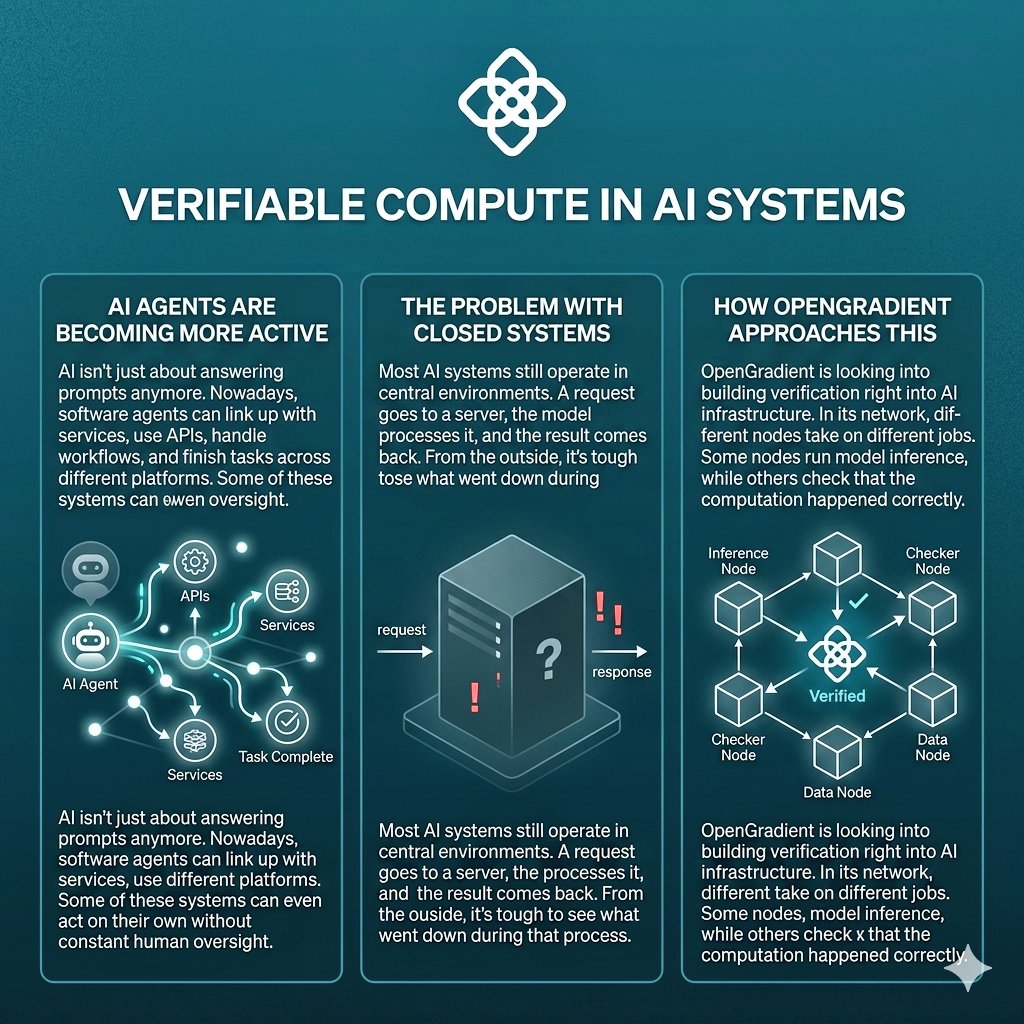
AI Agents Are Becoming More Active
AI isn't just about answering prompts
anymore. Nowadays, software agents can link up with services, use APIs, handle workflows, and finish tasks across different platforms. Some of these systems can even act on their own without constant human oversight.
The Problem With Closed Systems
Most AI systems still operate in central environments. A request goes to a server, the model processes it, and the result comes back. From the outside, it's tough to see what went down during that process.
How OpenGradient Approaches This
@OpenGradient is looking into building verification right into AI infrastructure. In its network, different nodes take on different jobs. Some nodes run model inference, while others check that the computation happened correctly.
2
8
376
Mar 13
OpenGradient builds open verifiable decentralized AI.
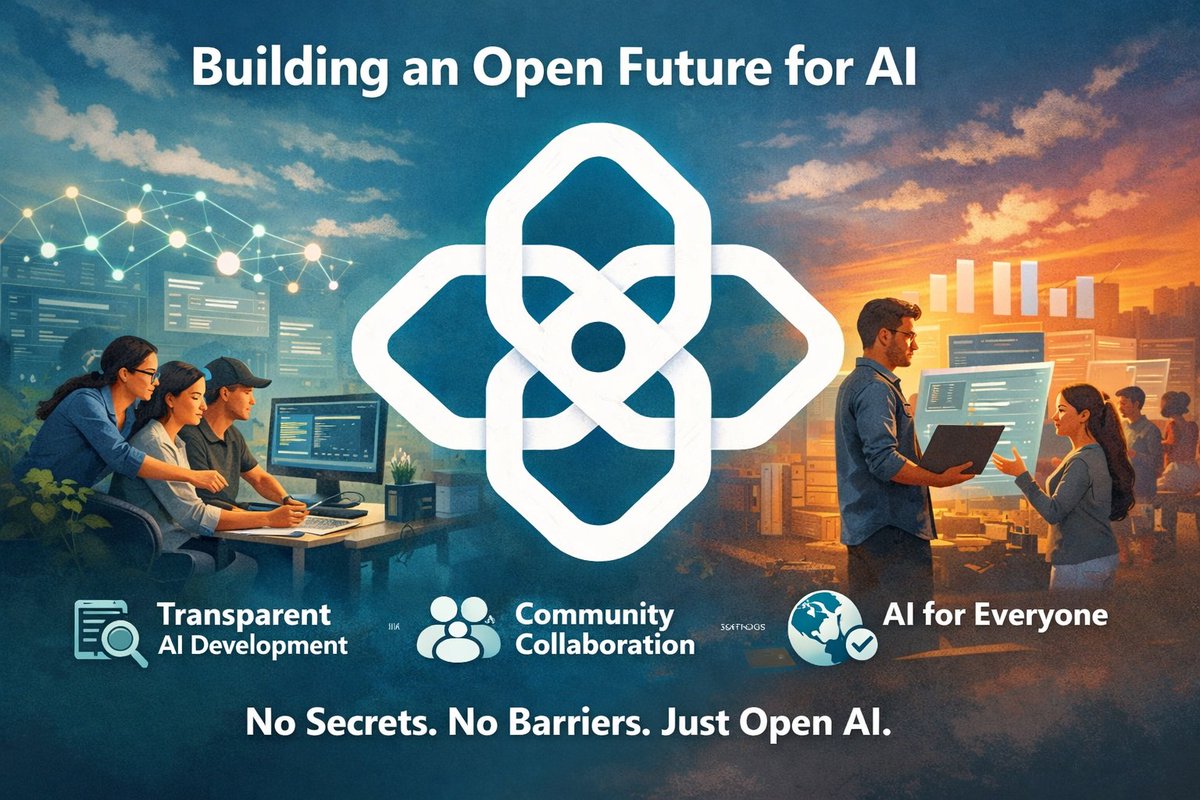
@OpenGradient is working on a future where AI is actually open.
Right now, many powerful AI models are controlled by a few companies and most of what happens behind them stays hidden. OpenGradient is trying to change that. Instead of keeping everything private, they want the whole AI process to be visible and easy to check.
With OpenGradient, things like model updates, training progress, and contributions are not hidden in black boxes. Anyone can see how a model improves and who helped build it.
This makes a big difference because it builds trust. Builders know what they are using, and users can see how the models improve over time. AI development doesn’t depend on one company anymore.
The idea is simple: make AI development open so more people can build together.
AI should not be controlled by a small group.
OpenGradient is trying to make AI something everyone can benefit from.
1
8
375