
Electric grid issues, nuclear energy, renewable energy, capacity markets and more. By Meredith Angwin #RTOs #grid #nuclear #electricity
Joined January 2010
- Tweets 35,094
- Following 2,385
- Followers 12,757
- Likes 35,979
390 Photos and videos
Pinned Tweet

30 Oct 2024
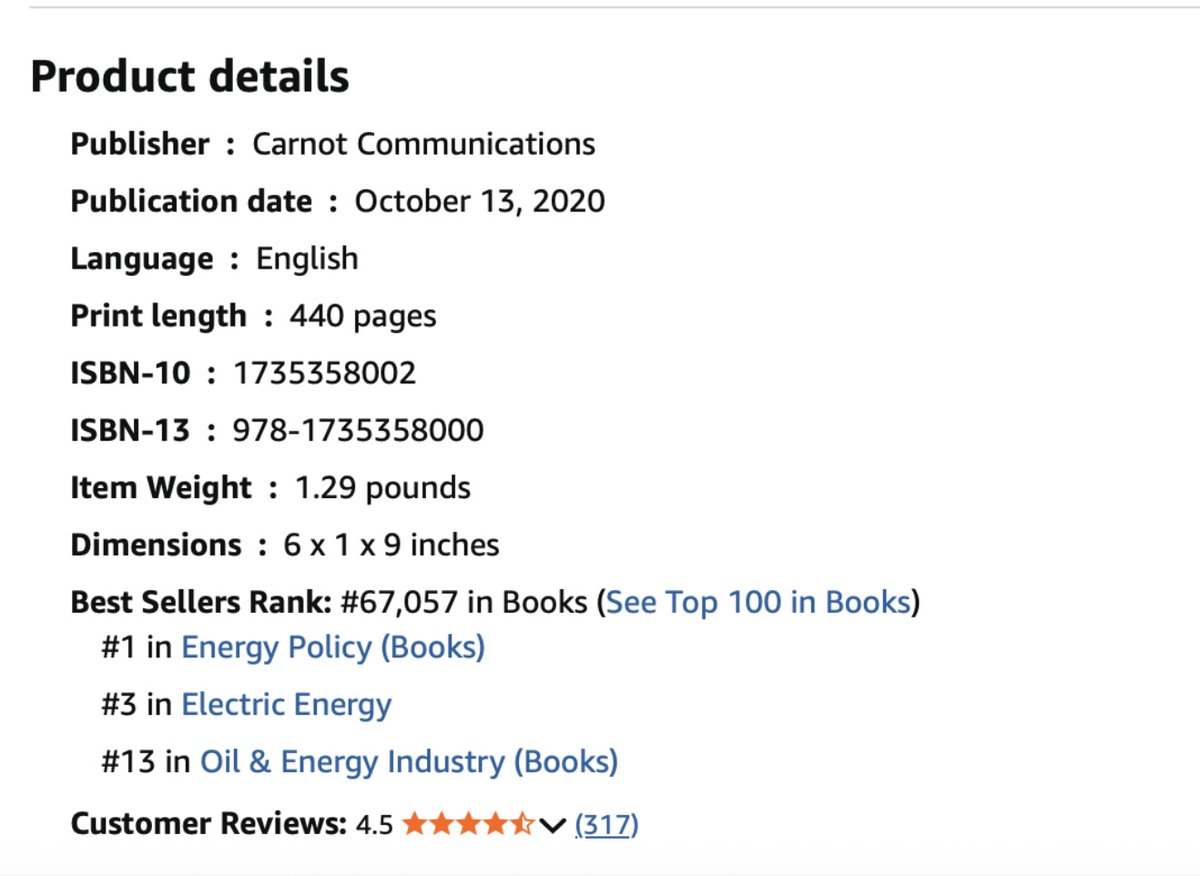
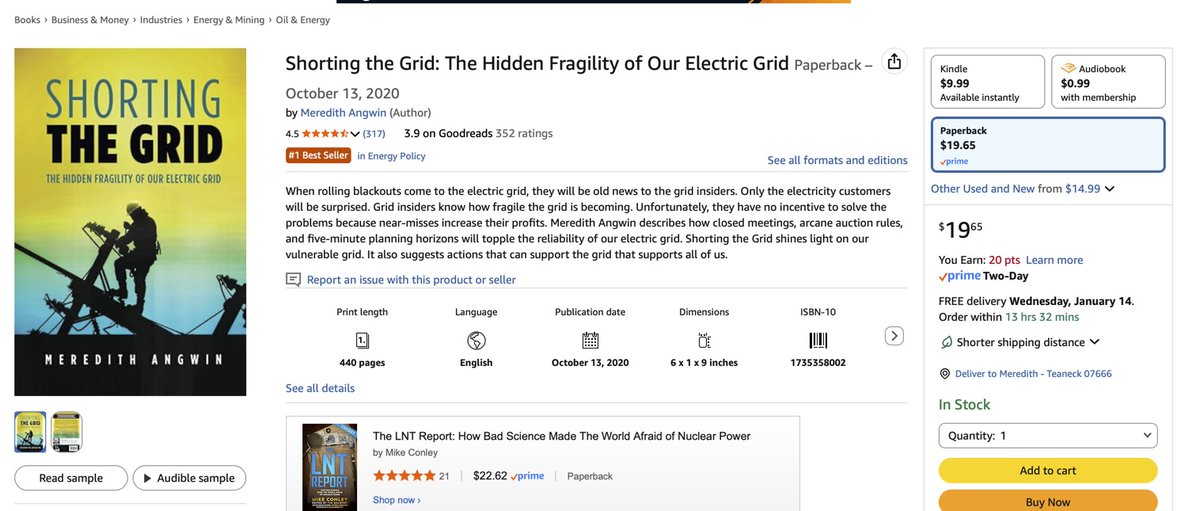
I encourage people to read “Shorting the Grid” in order to understand decision-making on our modern grids. amazon.com/Shorting-Grid-Hid…
24
56
233
22,172
Meredith Angwin retweeted

Jun 13
Jun 13

#ICYMI: New York’s electric grid faces a historic squeeze, with old fossil fuel power plants shutting down before clean energy can replace them. news10.com/capitol/ny-electr…
1
2
3
696
Meredith Angwin retweeted

A British novelist whose father worked in a bank explained the entire 2008 financial crisis in a 272-page book that a 12-year-old can follow, and the part that should scare you is how simple the fraud was once he stripped the jargon off it.
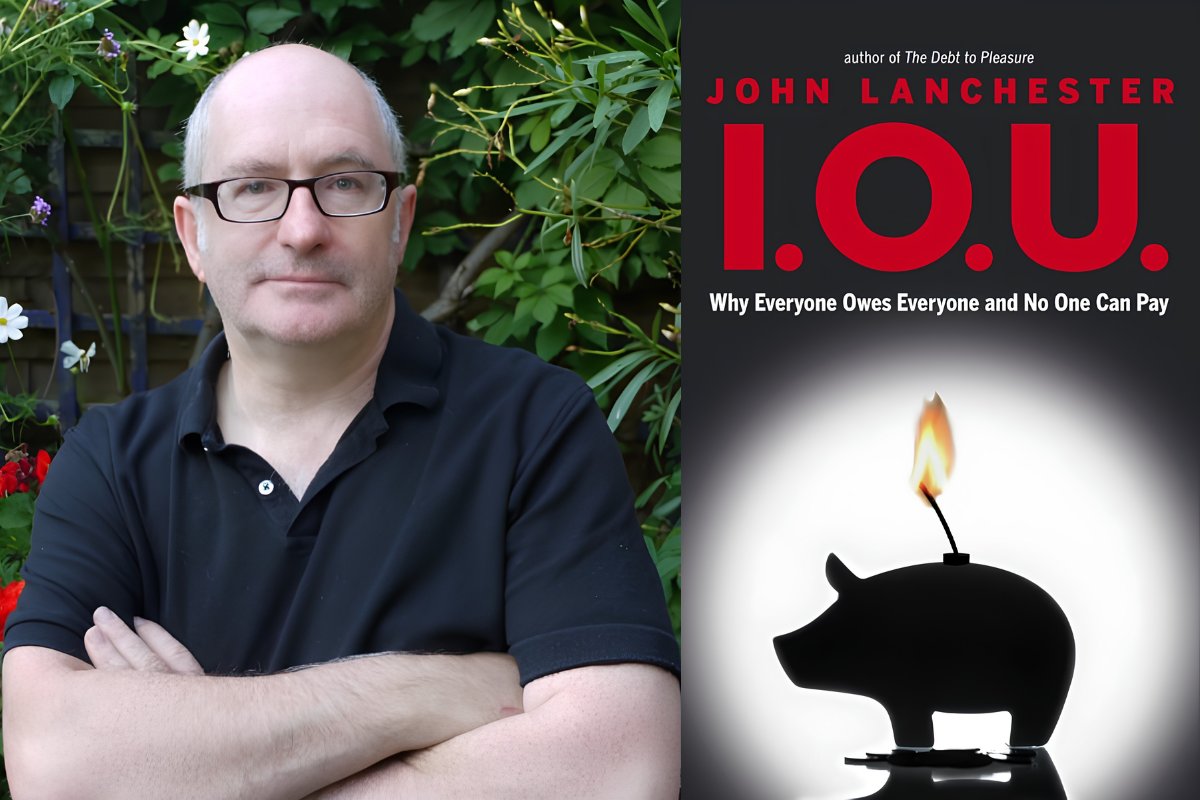
His name is John Lanchester.
He is a novelist by trade. He writes for the London Review of Books and The New Yorker. He grew up in Hong Kong because his father worked at a bank there, which means he absorbed the language of finance the way most kids absorb the language of cartoons. By the time the 2008 crisis hit, he was one of the very few writers on earth who could speak both finance and English fluently.
He sat down and wrote a book called I.O.U.: Why Everyone Owes Everyone and No One Can Pay.
In the UK it was published under the title Whoops! It came out in 2010. 272 pages. The reviews from financial journalists were almost embarrassed in their praise, because Lanchester had done in plain English what most of them had failed to do in years of professional coverage. He had actually explained what happened.
Here is the version a middle schooler can understand.
Step one. A bank gives a home loan to a person who clearly cannot pay it back. No real job. No savings. No way to make the monthly payments. The industry had a nickname for these loans. They called them NINJA loans. No Income. No Job. No Assets. The bank knew the person could not pay. The bank did not care.
Why did the bank not care?
Because the bank was not going to keep the loan.
Step two. The bank takes thousands of these loans, puts them in one giant pile, and sells the entire pile to a Wall Street firm. The Wall Street firm now owns the right to collect all those monthly payments. The original bank has been paid. Whether the homeowners actually pay or not is now someone else's problem.
Step three. The Wall Street firm takes the giant pile of loans and chops it into slices. They call the slices tranches. The top slice is supposed to be the safest because it gets paid first. The bottom slice is supposed to be the riskiest because it gets paid last. They give each slice a credit rating. The top slice gets stamped AAA, which is the highest rating you can get on earth. It is the rating used for the bonds of the United States government.
A pile of loans to people with no income and no job has just produced an investment product rated as safe as the United States government.
Step four is where the trick gets worse.
The bottom slices, the ones full of the riskiest loans, are hard to sell. Nobody wants junk. So the Wall Street firm takes the bottom slices from a hundred different piles, mixes them together into a new pile, and chops that new pile into new slices. And the top slice of this new pile, made entirely from the junk of the old piles, also gets stamped AAA.
This new product has a name. It is called a Collateralized Debt Obligation, or CDO.
A 12-year-old can see what is wrong here. You cannot take a hundred bags of garbage, dump them into one big bag, and then declare that the top of the big bag is now gold. The garbage is still garbage. The math does not change it.
But the people who ran the ratings agencies were not 12-year-olds. They were adults with finance degrees. And they stamped this stuff AAA over and over again because the Wall Street firms were paying them to do the stamping. The ratings agencies had become a paid service. The people they were rating were also the people writing their checks.
Step five. The Wall Street firms sell these AAA-rated CDOs to pension funds, foreign governments, insurance companies, and retirement accounts all over the world. Everyone buys them because the rating says they are safe.
Step six is the final trick.
Someone invents a product called a Credit Default Swap. It is insurance against a CDO going bad. The clever part, the part that Lanchester explains so well, is that you do not have to actually own the CDO to buy insurance on it. You can buy insurance on a CDO that belongs to someone else. You can buy insurance on a CDO ten times over. A hundred times over. There is no limit.
This is the equivalent of taking out fire insurance on your neighbor's house. And then on a thousand strangers' houses. And then betting against the entire neighborhood.
The smart people in the industry realized the CDOs were garbage. So they started buying credit default swaps against them. Not to protect themselves. To bet on the collapse.
Step seven was the part nobody planned for.
Housing prices stopped going up. The NINJA borrowers, who had been refinancing every year by using the rising value of their houses as collateral, suddenly could not refinance. They started missing payments. The bottom tranches of the CDOs started failing. Then the middle. Then the AAA tranches that had been declared safer than government bonds turned out to be made of the same garbage as the rest.
Then the insurance bills came due.
The biggest insurer in the world, AIG, had written hundreds of billions of dollars in credit default swaps on these CDOs. They did not have the money to pay. If AIG collapsed, every major bank on earth that had bought insurance from them would also collapse, because their "safe" CDOs would suddenly have no insurance. The American taxpayer ended up writing AIG a check for 182 billion dollars to keep the entire global financial system from falling apart.
The total damage of the crisis, by every honest estimate, runs into the trillions of dollars. Millions of people lost their homes. Millions lost their jobs. Almost nobody on Wall Street went to jail.
Here is the part Lanchester drives home in the final chapters, and the part you should not forget.
The fraud was not hidden in the math. The fraud was hidden in the complexity. Each individual step looked legitimate. Each individual product had a name, a rating, a paper trail. The reason nobody stopped it was that no single regulator, no single executive, no single auditor was forced to look at the entire chain from end to end. The garbage at the start and the AAA stamp at the end were separated by so many layers of paperwork that everyone could honestly say their specific layer looked fine.
Lanchester's central argument is the one that should haunt every person reading this in 2026.
Complexity is the disguise. Anytime a financial product is so complicated that the person selling it cannot explain it in 60 seconds, the complexity itself is the warning sign. The complexity is not protecting the customer. The complexity is hiding the fact that the customer is the product.
The 2008 crisis was not a failure of intelligence. It was a failure of plain language.
Almost every product on the market today that is being sold to retail investors, from leveraged ETFs to certain crypto derivatives to private credit funds, has the same structural pattern. Layered. Hard to explain. Stamped with an authoritative rating. And the people selling it can never quite tell you what is inside.
Which brings me to the question.
The next 2008 is already being built somewhere in the financial system right now.
Which industry, or which product, do you think is hiding the same trick under the same kind of complexity right now in 2026, and what makes you suspicious of it?
59
480
1,191
52,805
Wonderful early reviews for our daughter’s book, “On Courage”. It will be released at the end of June.
Read the reviews. Pre-order it. Enjoy!
amazon.com/Courage-How-Dissi…
1
2
1
409
Meredith Angwin retweeted

Jun 4
TMI revival is back on track!
Backstory:
In March, Constellation Energy, the owner and operator of the Crane Clean Energy Center– formerly known as Three Mile Island (TMI) Unit 1 – was informed by PJM (the regional grid operator) that the restarted plant could not be connected to the grid until 2031, four years after its scheduled 2027 refurbishment completion date.
For those who watch these things closely, that sounded both stupid and depressing. Why would the operator of a grid that is paying enormous sums in capacity payments make a plant that can steadily produce over 800 MW of clean electricity twiddle its thumbs for 4 years waiting for a grid connection?
For Constellation, the plant owner, a four-year delay would represent about $3 billion in lost sales. (Assuming 835 MWe, 90% CF, $120/MWh)
For Microsoft, the customer whose PPA stimulated the plant restart, it would represent a significant interruption in its corporate decarbonization and data center BYOP plans.
Recent update:
On June 2, the Federal Energy Regulator Commission (FERC) granted a waiver that would allow Constellation Energy to connect Crane Clean Energy Center promptly after the project is ready by transferring grid connection rights from a power plant that it has scheduled to retire.
Phew. We can all breathe a little easier with just a little more confidence that the system can work and make useful decisions.
6
13
60
12,869
Meredith Angwin retweeted

May 21
8 GW of oil in May to keep lights on... net zero indeed 🌿 Same story unfolding in Canada - policies without infrastructure = dirtier outcomes. We need stable policy AND real investment, not just ambitious targets that leave grids burning oil.
3
2
536
May 21
New England's Grid Failed Resiliency and Burned Oil this Week New England’s power grid just reminded everyone why resiliency must come first. open.substack.com/pub/theene…
3
7
13
2,386
May 18
Combined NextEra-Dominion would have 130-GW large-load pipeline
"Analysts say the deal....marks a shift backward to an integrated utility model."
IMO, it's not a shift "backward." It's a shift to reliability.
utilitydive.com/news/nextera… via @UtilityDive
4
12
811

Meredith Angwin retweeted

Obligation to serve meant reliability had an owner. PJM's auction comes up short. Who builds? Nobody has that mandate. Angwin identified this structural gap years ago.
1
4
819
Meredith Angwin retweeted
888 to 2222: each order expands participation rights. None creates delivery obligation. RTOs clear markets, can't compel generation. Swett's July conference addresses governance. Nobody has to build.
1
1
379
Meredith Angwin retweeted

May 13
I love the term "value factor." It's from @MeredithAngwin's book "Shorting The Grid."
When focusing on “value factor”, which is wind energy actually coming online when it’s called upon, that number plummets for wind to about 11%. (Source: shorting the grid)
3
5
19
840
Meredith Angwin retweeted
May 14
Maybe sometime soon, more pundits will acknowledge the truths contained in Meredith Angwin's @MeredithAngwin "Shorting the Grid."
One of the fundamental truths is that RTOs/ISOs are not responsible for generation. They have no ownership of the resources and no authority to build them if they are needed.
They also don't have any oversight that demands they provide reliable service all the way to the consumer.
I'll freely admit that I pine for the pre-Enron days of rate regulated, vertically integrated monopoly utilities. The regulatory compact included an obligation to serve all customers in their service territories, reasonable profits and oversight by regulators that keep prices under control.
Those utilities were not Wall St darlings, but their stocks were good investments for widows, orphans and pension funds that valued reliable dividends and modest, reasonably steady price appreciation..
2
2
10
777
Meredith Angwin retweeted

May 12
A German woman proved a single theorem in 1915 that quietly became the foundation of every law of physics on Earth. She taught for seven years without pay because the University of Göttingen refused to hire a woman. Then she fled the Nazis and died in Pennsylvania at 53.
I started reading about her and could not believe how much of modern physics traces back to one woman the world refused to pay for her work.
Her name was Emmy Noether. The theorem is called Noether's theorem.
Every law of physics ever discovered. Conservation of energy. Conservation of momentum. The Standard Model. General relativity. Quantum field theory. All of them are direct consequences of a single mathematical insight she proved 110 years ago. And most physics students will graduate without ever hearing her name once.
Emmy Noether was born in 1882 in Erlangen, Germany. Her father was a respected mathematician at the local university. The university would not allow women to enroll as students. So she audited classes from the back of the room and was not allowed to receive credit for anything she learned. She finished her PhD anyway in 1907.
Then she could not get a job.
For seven years she worked at the Mathematical Institute in Erlangen without a single paycheck. She supervised students. She published papers. She filled in for her aging father when he was too sick to teach. She did the work of a full professor and was paid nothing. There was no policy preventing her payment. There was simply no precedent for paying a woman.
In 1915 David Hilbert and Felix Klein invited her to Göttingen, the most important mathematics department in the world. Hilbert wanted her there because he was working on Einstein's new general relativity and there was a problem nobody could solve. The philosophy faculty blocked her hiring.
They argued returning soldiers should not learn from a woman. Hilbert stood up in the faculty meeting and said the line that has echoed for a century. He did not see how the sex of the candidate could be an argument against her admission, because the university senate was not a bathing establishment.
She still was not hired. So Hilbert listed her courses under his own name on the official schedule. She taught them under his title. This is how the most important mathematician of the 20th century was forced to operate for years inside one of the most prestigious universities in the world.
That same year she solved Hilbert and Einstein's problem.
The puzzle was technical. In general relativity, energy did not seem to be conserved the way classical physics required. Einstein could not figure out why. Hilbert could not figure out why. Noether figured out why in a few months. Then, instead of just solving their specific problem, she proved a much deeper theorem that solved every problem of that shape forever.
Her result was this. Every continuous symmetry in a physical system corresponds to a conservation law. If the laws of physics do not change over time, energy must be conserved. If they do not change with location, momentum must be conserved. The conservation laws were not separate facts. They were inevitable consequences of the symmetries underneath the universe.
This single theorem is the foundation of every law of physics ever discovered after her. The Standard Model is built on it. The Higgs boson Nobel Prize is built on it. Quantum field theory is built on it. Einstein read her paper and wrote to Hilbert that he was astonished. He had never met anyone with her capacity for abstract thought.
She finally got a paid teaching position in 1923. She was 41. She had been doing professor-level work for 16 years without compensation. While the German physicists kept getting credit for the consequences of her theorem, she quietly founded modern abstract algebra.
The structures we now call Noetherian rings are named after her. Modern algebraic geometry, the math that powers cryptography and parts of machine learning, runs on her foundations.
Then the Nazis came.
In 1933 she was fired for being Jewish. Bryn Mawr College in Pennsylvania offered her a position. She took it. She taught there for two years that were among the most productive of her life.
In April 1935 she went in for routine surgery to remove an ovarian cyst. Complications developed. She died four days later. She was 53.
Einstein wrote a public letter to the New York Times the day after her death. He said she was the most significant creative mathematical genius thus far produced since the higher education of women began. Almost nobody reading that letter knew her name.
She is buried in the courtyard of the library at Bryn Mawr College. The grave is small. Most students walk past it without noticing.
The woman who built the mathematical foundation of modern physics was paid almost nothing for almost all of it. The world she worked in told her every single day that she did not belong there.
She built it anyway.

22
250
558
23,734
May 10
Thank you. 🙏🏻
May 10

I wish I could have been there but my disability makes it hard
I stand with British Jews
1
3
591
Meredith Angwin retweeted

Apr 30
Just looking at the way people are excusing and minimising these attacks is disgusting and an illustration of the depth of the problem
Today I've been called a vile disgusting Jew, told to move to Israel and told I have no right to stay in the UK
I'm not actually Jewish. I'm a UK citizen. I was born in the UK as were my parents
But it goes to show how deep the rot is
I still stand with British Jews
37
40
367
4,550
Meredith Angwin retweeted

Hallelujah for Nuclear Resurgence. I knew Little Bill would be right in the end. Tweet-tweet.
1
3
528
Apr 17
Full On Communications celebrated its 10th anniversary with this video. Jarret Adams and I have known each other for years. Happy to see the company he founded doing well!
Nuclear Resurgence youtu.be/hsVuIbpM_ec?si=qUUG… via @YouTube
1
1
3
707
Apr 17
FERC orders American Efficient to pay $1.1B for ‘brazen fraud’
Finally, many of PJM payments for Energy Efficiency described as the result of Brazen Fraud.
I deeply questioned those payments.I'm not FERC, so I didn't say "fraud."
utilitydive.com/news/ferc-am… via @UtilityDive
1
1
3
566
Meredith Angwin retweeted

Apr 14
Incidentally, we've been having some voltage "dancing" these past couple of weeks. During the sunniest hours of the day. Odd, that.
5
6
706