
Dad. Doc. Dork. Dog Dad. He / him.
Joined May 2008
- Tweets 13,195
- Following 110
- Followers 346
- Likes 23,646
1,188 Photos and videos













Not joking but @elonmusk should have to pay for this right?
You broke it, why do we all have to pay for it?
Jun 15

The Trump administration has announced they'll need to spend an estimated $1 billion to combat the New World Screwworm.


213
3,309
44,553
1,578,481
MikeAustin retweeted

Jun 15
A Walmart shoplifting call, allegedly involving stolen diapers, ended with a 1-year-old child being shot and killed by Senatobia, Mississippi police.
#kohenwiley #senatobiamississippi #tatecountyms
77
599
897
29,479
MikeAustin retweeted

Jun 14
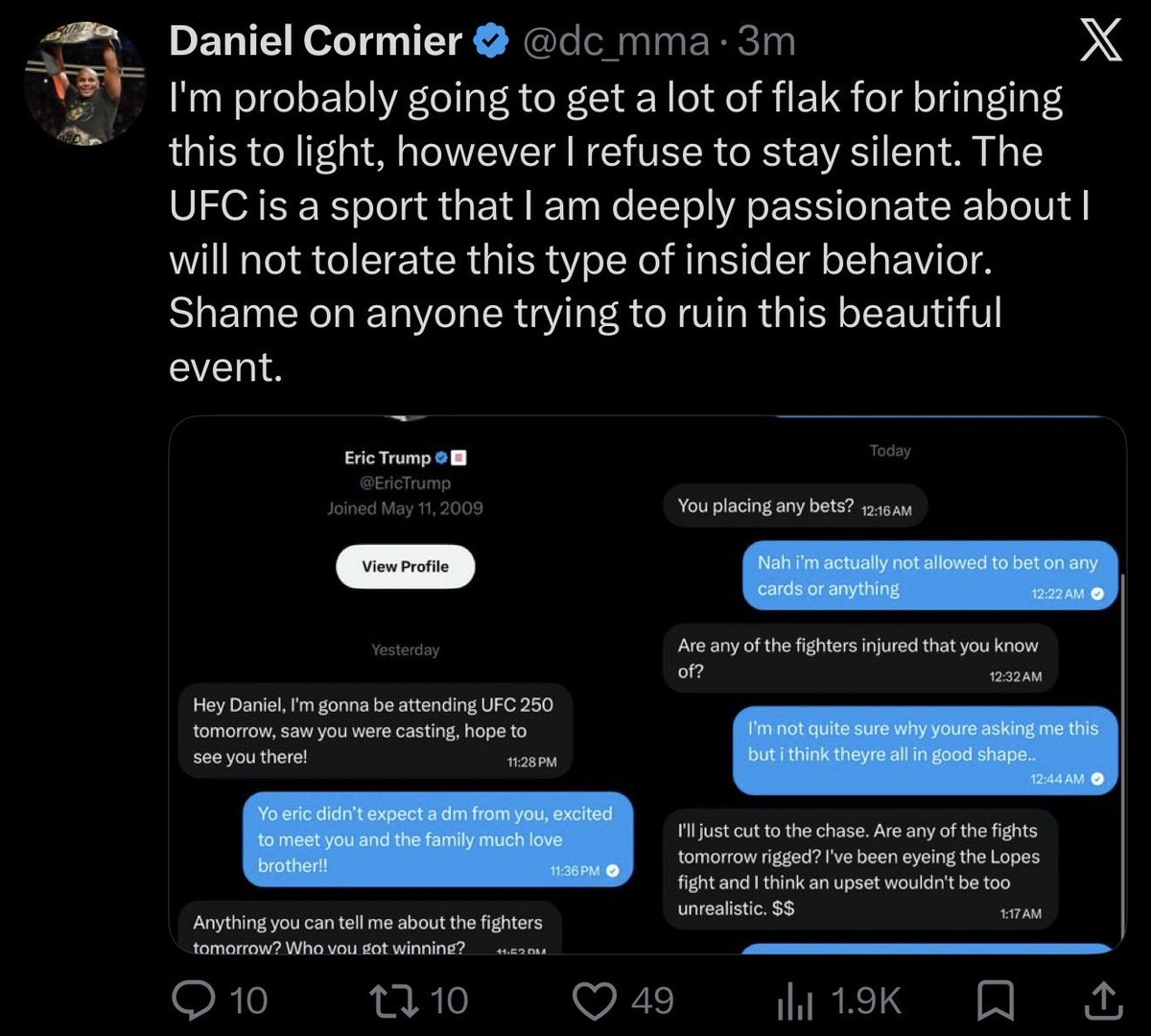
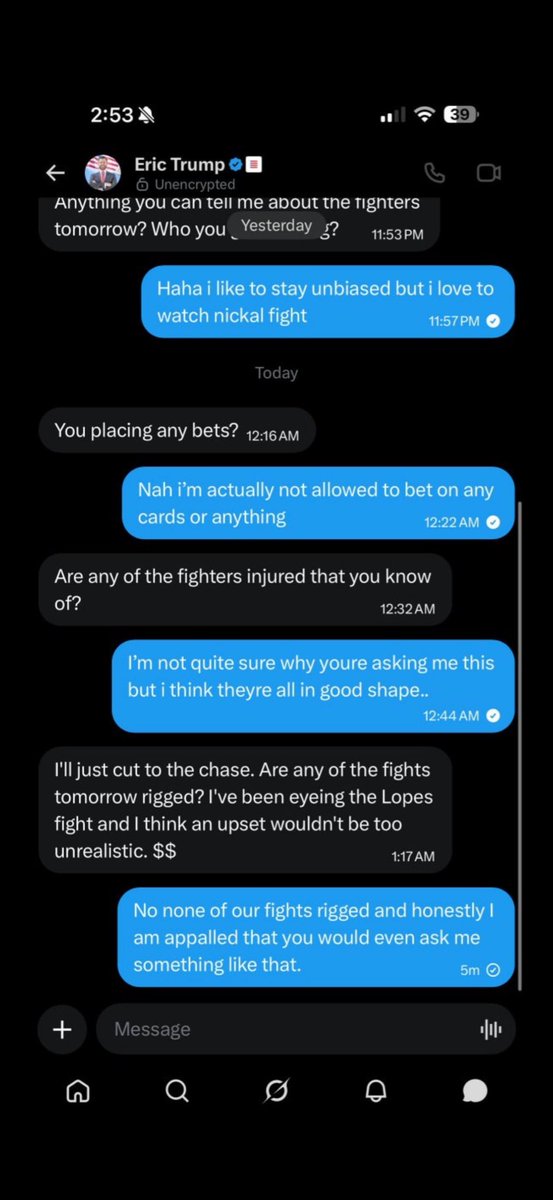
I’m a now deleted post by Daniel Cormier, Eric Trump DM’d him and asked him “are any of the fights tomorrow rigged?” 👀
#UFCWhiteHouse

679
3,050
28,110
15,822,279
MikeAustin retweeted

Jun 11
NEW: Ken Paxton backed the DOGE cuts that weakened screwworm defenses and put Texas cattle at risk. meidasnews.com/news/ken-paxt…
278
3,338
8,289
408,955
MikeAustin retweeted

Jun 10
Dr. Annie Andrews has won the Democratic primary for U.S. Senate in South Carolina.
She will face Republican incumbent Lindsey Graham in November.


111
1,255
12,933
187,910
MikeAustin retweeted

Jun 9
At times we experience the night of faith, the weariness of believing, the fatigue of the spirit, a sense of inadequacy in the face of the Gospel’s call, the bitterness of our failures. These nights are a time of blessing and a place for rebirth. #ApostolicJourney
316
1,106
7,768
236,317
MikeAustin retweeted

.@SenTedCruz the guy who didn’t defend his wife and who left Texas as an brutal Snow storm was arriving to Texas, talking about the meaning of “masculine”…🤣🤣🤣😆😅😇hello?
Jun 9

Ted Cruz on Talarico: "If you were making a list of 1,000 adjectives to describe this guy, 'masculine' would not be one of them. I mean, if a stiff breeze came by it would blow him over like a feather."
292
1,608
6,750
240,616
MikeAustin retweeted

Jun 7
NYT: [Trump] said you were part of this gang of 'stupid, crooked people that don’t care about your country.'
SCOTT PELLEY: "Stupid? I can take that. Stiff? Yeah, probably. Don't care about the country? I've never worn the uniform. But I've been in combat for this country, in Afghanistan and Iraq, Kuwait. I've been shot at, spent nights in foxholes filling up with water in the desert. I'm not aware that the president of the United States has ever done any of those things for his country. Please correct me if I'm wrong. You become a journalist because you love the First Amendment. You become a journalist because you love the country. And while all the other descriptions that the president used about me might be applicable, not that one. [Tears up] There is no democracy without journalism. It can't be done. That is why I am a journalist."
Jun 7

NEW: Scott Pelley to NYT on Bari Weiss:
"I don't want to be hyperbolic. My impression at the time was that she was putting a thumb on the scale on behalf of the administration. Constantly looking out for the views of the president. We're reporting those views. There's nothing wrong with reporting those views, but it was never enough."
15
414
2,101
146,864
MikeAustin retweeted

.@BillLeeTN & @AndyOgles, please rethink your position.
Jun 6

Tennessee ranked among least safe states for LGBTQ residents, report says wsmv.com/2026/06/05/tennesse…
1
2
150
MikeAustin retweeted

Jun 5
Bari Weiss built her entire public identity on the proposition that cancel culture was destroying American discourse. She wrote about it. She founded a publication around it. She championed the Intellectual Dark Web as brave thinkers being silenced for saying forbidden things.
Scott Pelley said factually true things, without yelling, without cursing, without threatening anyone, in a staff meeting. He said Bilton had slender qualifications. He said Weiss was murdering 60 Minutes. He said these things because they are true and because saying true things in rooms where powerful people prefer comfortable silence is - per Weiss's own stated philosophy - exactly what journalists are supposed to do.
She fired him.
JVL names what this exposes precisely. They never wanted to end cancel culture. They wanted to control it. Some forbidden ideas - the ones MAGA likes - must be protected and platformed. Other ideas - the ones Bari Weiss dislikes - are genuinely verboten. Say them out loud and you lose your job.
The Pentagon press office is now classified. Tim Miller was threatened with FARA for sharing a public news report. Comey is being prosecuted for seashells on a beach. The federal workforce faces proposed NDAs. Pelley was fired for refusing instructions to broadcast unverified assertions and then saying so in a meeting.
The through line is not chaos. It is a consistent, documented project to determine who gets to speak, about what, to whom, and under whose authority. Cancel culture was never the target. It was always the tactic. Weiss just proved it by doing the thing she built her career opposing, the moment she had the power to do it.

Jun 3

"Pelley was not uncivil. He didn’t threaten anyone. He didn’t curse or scream. He was professionally disagreeable. Which is basically the job description for journalists. It’s the job description that Weiss herself wrote. She just didn’t mean it."
lnk.thebulwark.com/4uabp1r
196
1,448
4,313
351,235
MikeAustin retweeted

Jun 4
NEWS: A @lawfare report finds that *97* Jan. 6ers who received clemency for their role in the attack were arrested, charged, or convicted of subsequent crimes—a number much higher than previously reported.
Incredible work from Katherine Pompilio:
lawfaremedia.org/article/the…

97
2,207
3,425
169,518
MikeAustin retweeted

There’s a viral clip of @PeterAlexander coming to the aid of @Acosta when @realDonaldTrump bullied him. Where are they now when Trump bullies @kaitlancollins?
5
16
94
1,520
MikeAustin retweeted
Y'all, it was announced today that Raymond Berry passed away last week at the age of 93. Raymond, whose name is probably unfamiliar to a bunch of y'all, especially the younger ones in the bunch, was one of the greatest NFL receiver of all time and --- naturally --- a Texan.
Raymond was born in Corpus Christi in 1933 and raised in Paris, Texas. He was not considered a natural athletic prodigy. He lacked blazing speed. He went to college at SMU and caught only 33 passes --- a figure so low that Raymond was drafted by the Baltimore Colts in the 20th round of the 1954 NFL Draft. Nobody expected him to do much as a pro. The irony is one of the great Texas football stories: a receiver who caught only 33 passes in college went on to retire as the NFL's all-time leader with 631 career receptions, earning induction into the Pro Football Hall of Fame in 1973. His 68 touchdowns in the NFL was an astonishing number for his era.
Raymond became great through relentless preparation and precision, becoming the favorite target of legendary quarterback Johnny Unitas. Together they formed one of football's most celebrated passing combinations, helping lead the Colts to NFL championships in 1958 and 1959. Ramond said "the most prepared are the most dedicated." His performance in the 1958 NFL Championship Game, often called the "Greatest Game Ever Played," remains one of the most famous in league history. All he did was catch 12 passes for 178 yards and a touchdown. The heights reached today by the NFL can be traced to that one game.
During his 13 seasons with the Colts, Raymond revolutionized the wide receiver position with his meticulous route running, film study, and practice habits. He led the NFL in receptions three straight years, made six Pro Bowls, and retired in 1967 as the league's all-time leader in both receptions and receiving yards.
After his playing career, Raymond became a respected NFL coach. His most notable coaching achievement came with the New England Patriots, whom he led to the first Super Bowl appearance in franchise history following the 1985 season. Many football historians credit him with helping transform pass receiving from an improvisational skill into a highly technical craft, making him one of the true architects of the modern passing game.
But here's the best thing: he was a genuinely nice man, and humble, too. I've been reading some of the testimonies from his former teammates and players and each of them say, essentially, that as great a player as he was, he was an even better human being.
RIP Raymond Berry!

15
36
265
6,853

Andrelton Simmons was one of the best defensive shortstops ever.
But at age 32, w/ a shoulder injury, his MLB career ended. He disappeared. No explanation. No rehab/return. Just gone.
“I don’t regret it. I needed a mental break.”
Interview w/ Simmons: nytimes.com/athletic/7322869…


34
96
2,014
611,049
MikeAustin retweeted

May 25
They did, it was called America
May 25

Why don’t the immigrants start their own countries?
857
20,029
190,623
3,946,977
MikeAustin retweeted

May 31
Wemby talking about Coach Pop ❤️
267
4,274
60,341
1,468,583

The Orioles replaced the player pics on their scoreboard tonight with photos of adoptable dogs 😭
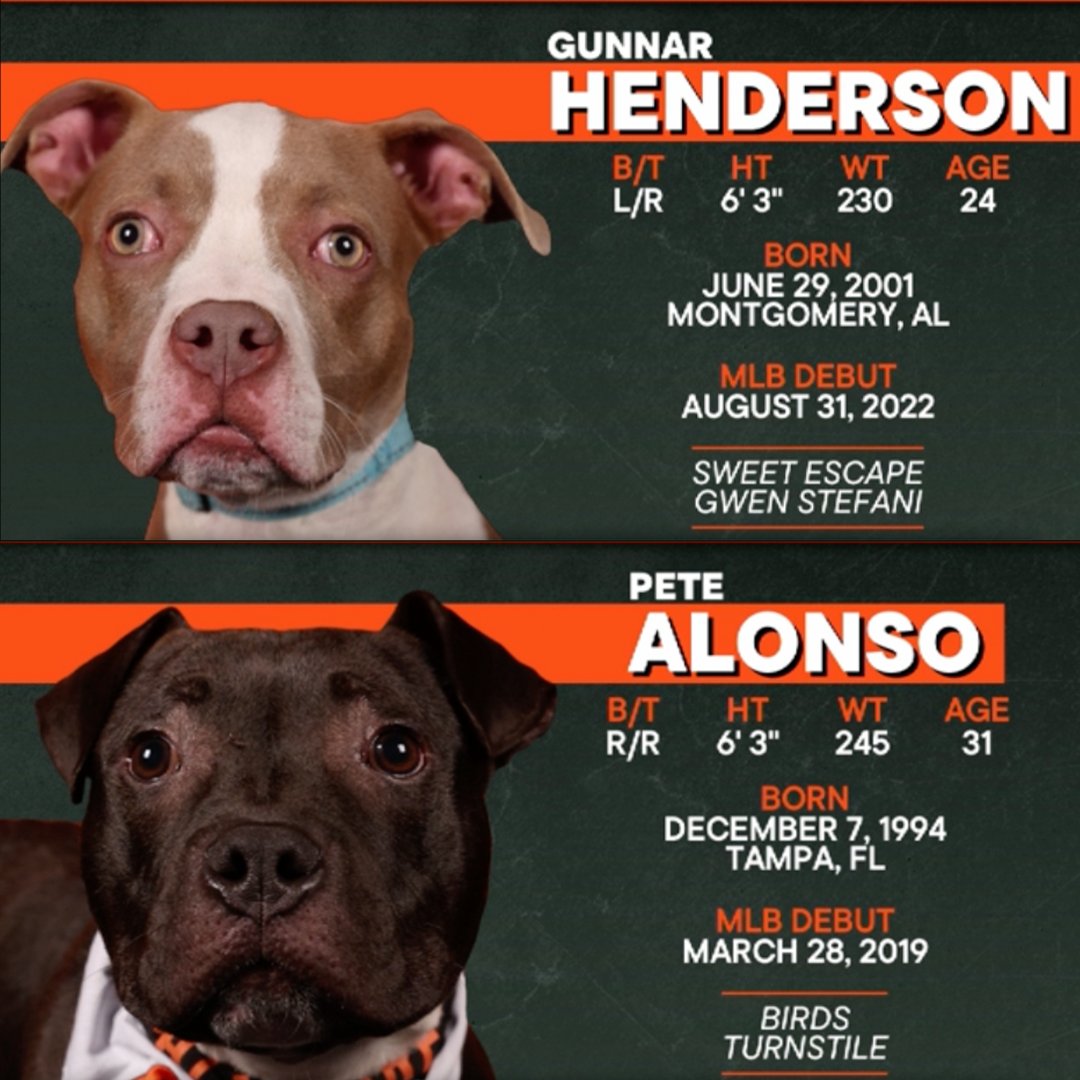
ALT Top - A brown and white dog’s face is shown next to Gunnar Henderson’s name and info on the Orioles in-stadium scoreboard. Bottom - A dark brown dog’s face is shown next to Pete Alonso’s name and info on the Orioles in-stadium scoreboard.
77
354
3,452
210,795
MikeAustin retweeted

May 27
I want to thank Senator John Cornyn for his years representing our state.
We don’t agree on everything, but we both still believe in public service.
To Senator Cornyn’s supporters: you have a place in our campaign.
4,545
5,958
54,209
2,090,247
MikeAustin retweeted

May 26
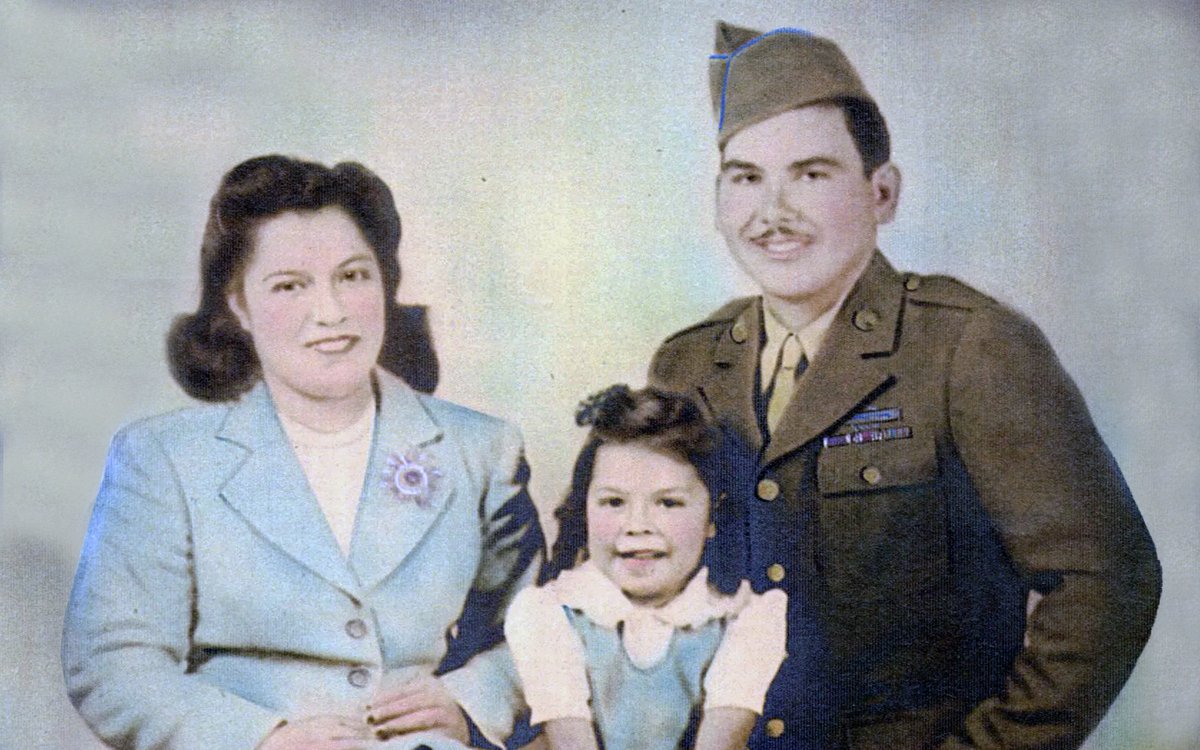
Felix Z. Longoria Jr. was a Mexican-American soldier born on April 16, 1920, in Three Rivers, Texas. Raised in this small South Texas town, he later moved to Corpus Christi with his wife, Beatrice, in search of work, where he was employed as a truck driver. The couple had a young daughter, Adela, who was four years old when Longoria enlisted in the U.S. Army in November 1944, motivated by a sense of duty during World War II.
In the spring of 1945 Felix received his orders. He was being deployed to the Philippines. Years later, Adela hazily remembered traveling with her mother to a town near Fort Hood to say goodbye before he shipped out. On that day, father danced one last polka with wife and daughter. Felix shipped out in late April 1945 to join the 27th Infantry Regiment of the 25th Infantry Division in Luzon, Philippines.
Upon their return to Three Rivers in 1949, Longoria’s widow, Beatrice, attempted to arrange a wake at the town’s only funeral home. The director, Tom Kennedy, refused to allow the service in the chapel, citing that “the whites would not like it” due to Longoria’s Mexican-American heritage and alleged disturbances at prior Mexican-American services. He offered to hold the wake at the Longoria family home in the segregated Mexican-American section of town, across the railroad tracks. This act of discrimination sparked outrage.
Beatrice and her sister contacted Dr. Hector P. Garcia, a civil rights activist and founder of the American G.I. Forum, a veterans’ advocacy group established in 1948. Garcia mobilized the G.I. Forum, organizing a protest meeting and sending telegrams to Texas congressmen. U.S. Senator Lyndon B. Johnson, then newly elected, responded swiftly, condemning the prejudice and arranging for Longoria’s burial with full military honors at Arlington National Cemetery. On February 16, 1949, Longoria was laid to rest alongside 18 other soldiers, with Johnson and a representative of President Truman in attendance. The event, known as the “Longoria Affair,” drew national and international attention, with media outlets like the New York Times and Walter Winchell’s radio program highlighting the injustice.
The Texas House of Representatives investigated the incident, holding hearings in Three Rivers. The majority report concluded there was no discrimination, claiming the funeral director acted in anger and later apologized. However, two members dissented, with one, Frank Oltorf, stating the actions were discriminatory. The reports were never officially filed.
The Longoria Affair became a pivotal moment in the Mexican-American civil rights movement, galvanizing the American G.I. Forum’s growth into a national organization with chapters across the U.S. It highlighted systemic discrimination against Mexican-Americans, who faced segregation in Texas and beyond, despite their contributions to the war effort (over 350,000 served in WWII). The incident also forged a lasting alliance between Garcia and Lyndon Johnson, influencing the latter’s civil rights advocacy, including the Civil Rights Act of 1964.
Shown here: Felix Longoria, his wife Beatrice, and daughter Adela. Photo courtesy the Mary and Jeff Bell Library Special Collections and Archives.
2
20
189
7,896
MikeAustin retweeted
May 25
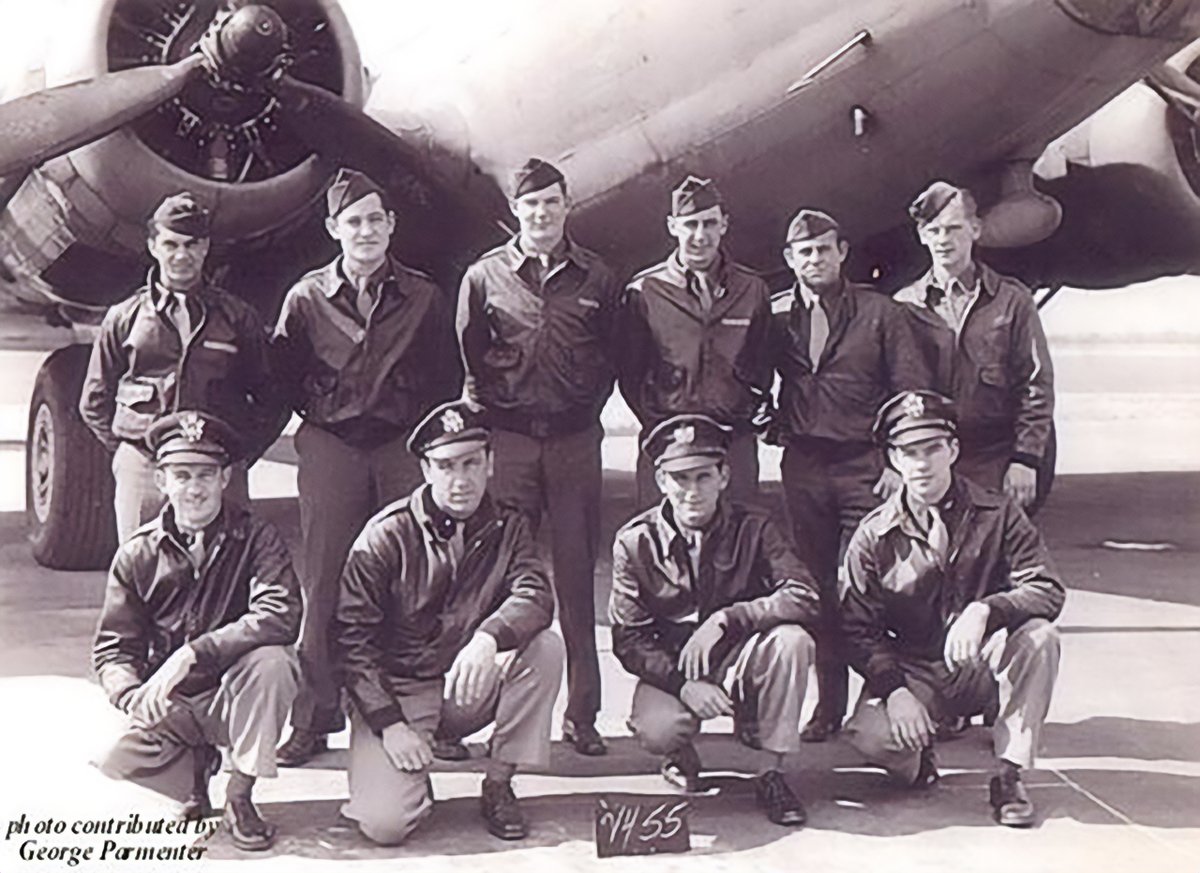
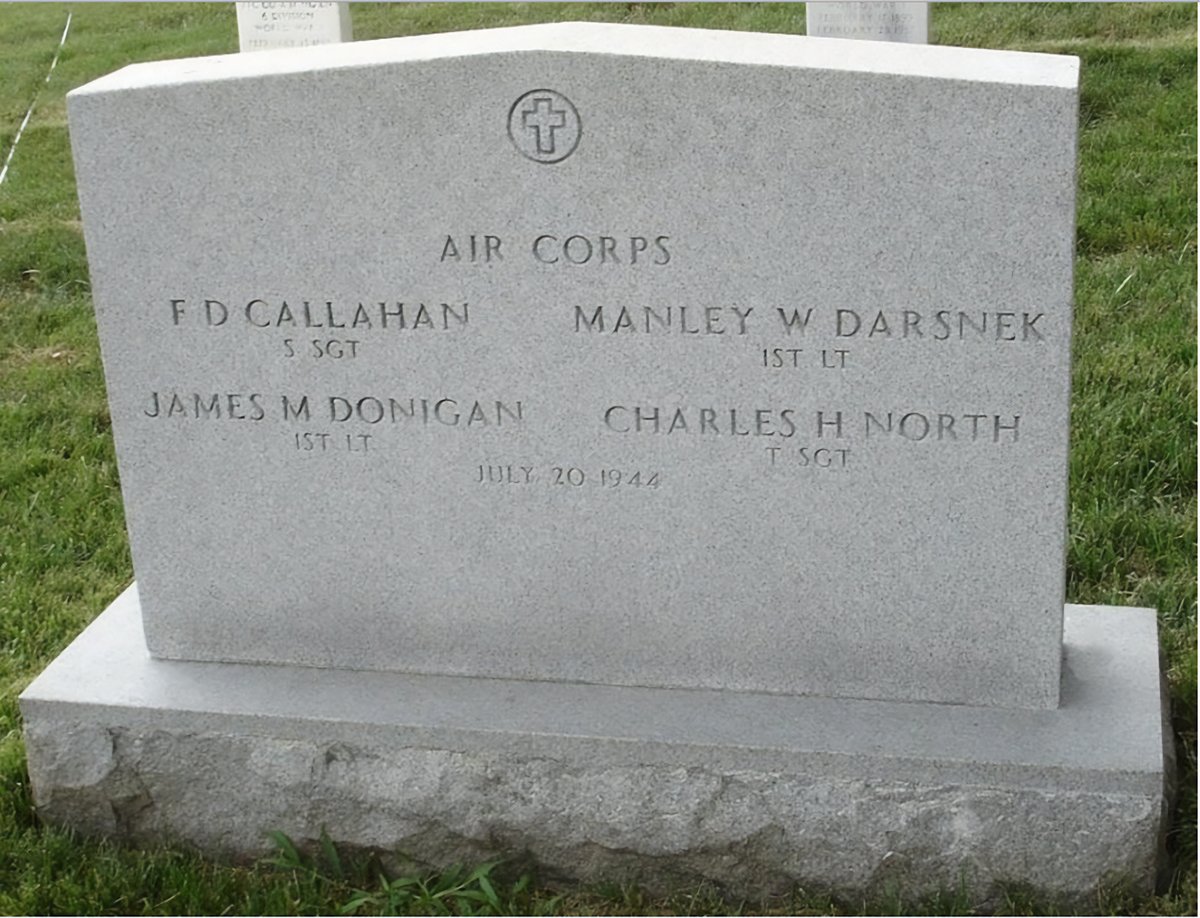
I want to tell y'all a crazy family story, a story about a remarkable family coincidence. It involves the young man shown squatting down on the far right of the first photo. His name was Manley W. Darsnek, and he was my second cousin. He was killed in a bombing raid over Germany in 1944.
In early 2007 I was talking to my dad on the phone. My dad was already 70 years old, living a quiet, retired life, and didn't have any use for computers. He'd say things like "I've been on the planet for 70 years and never needed one ... why start now? Let's go fishing."
So we were talking and my dad said, "Hey, why don't you go into that Google thing on your computer and search for some alternative spellings of our last name? Maybe we have some cousins out there that we don't know about." My dad's father had immigrated from Latvia through Ellis Island about two years after his older brother and, via the capriciousness of the functionaries behind the desk when the brothers arrived, the two ended up with slightly different spellings of our family name. It's a common story, of course: I've read about five family members arriving at different times and ending up with five different spellings of their last name.
While on the phone with my dad, I typed in the word "Darznick." And it was this random misspelling of my last name that brought me to the weirdest coincidence of my life. I happened upon an account written seven years prior, on June 3, 2000, by a man named Lt. Col. Raymond E. Jones of Hemphill, Texas. On that date, Lt. Col. Jones posted a message on the 91st Bomb Group website, a site dedicated to preserving the memory of the 91st Bomber Group, which was a squadron that flew out of Bassingbourn, England, and bombed various Axis sites, primarily in Germany. If you've seen the series "Masters of the Air" on Apple TV you know the story of how incredibly brave these men were. And so it was that, 56 years after it happened, on that June day in 2000, Lt. Col. Raymond E. Jones posted this message:
"We were shot down on the 20th of July, 1944, over Zwickau, Germany while on a Leipzig mission. We lost 4 crew members that day. They were Donigan, Darznick, North and Callahan. Don Knapp and I and Bob Hart wound up in Stalagluft-I at Barth, Germany. Jim Veres was taken to a German army hospital and treated. I got Jim out of his station bloody, incoherent and without a chute. I got him a chute on, fastened a snap to his d ring, fastened that to the aircraft and pushed him out wishing him well. He was treated and released and sent to, of all places, Bergin Belsen consentration camp. A Luftwaffe officer and a SS doctor discovered American airmen in the camp. They were released and sent to a regular POW camp. When American troops reached Bergen Belsen they found approximately 30,000 corpses! I am the sole survivor of the crew of Winnie, Frank and Joe. Jim Veres, my very good friend, passed away in August, 1999. I can be reached at HC 53, Box 335, Hemphill, Texas 75948. My phone number is 409-579-3670."
I read this post to my father and he said "the Darznick that he's referring to is my cousin Manley, your second cousin." I didn't know anything about Manley. He'd been killed when my dad was seven years old and neither my dad nor my grandparents had ever mentioned him, nor could my dad remember ever having met him. When I read the plane's name, Winnie Frank and Joe, my dad instantly made the connection: Winston Churchill, Franklin Roosevelt, and Joseph Stalin. My dad said that the only thing he knew was that Manley had been killed in a bombing mission in 1944. All of this was news to me. Then dad said, "you've got to call Mr. Jones." I said "Dad, it's 8:00 p.m. and Mr. Jones has to be 80 years old or so. And he wrote this account seven years ago. He might not even be alive. I'll call him tomorrow." My dad said "You'll call him right now."
So I did.
After a couple of rings, retired Lt. Col. Raymond E. Jones picked up the phone. I explained who I was and that I was calling in reference to the post he'd made on the 91st bombing group's webpage seven years earlier. He said "and who are you again?" I said "I'm Manley Darsnek's second cousin." He said "hold on."
I heard him rummaging around for a minute. He got back on the phone and said "I'm holding in my hands a piece of paper that has Manley's parents' address and phone number on it. It also has the names of the other crew members. All of us wrote this information down so that, if the plane went down, any survivors could write letters to the next of kin and explain what had happened."
I was stunned. 30 minutes before I had never heard of Manley and now, because of a random misspelling of my last name, I was talking to the sole survivor --- the pilot, no less ---- of the B-17 in which he had died. Col. Jones related to me the whole story. He said that the plane had been shot in half, so that the tail section fell away. Manley, whom he knew pretty well and with whom he played quite a few games of poker, was a bombardier, right up in the nose of the B-17. The plane had sustained fire in such a way that Col. Jones could see that Manley had been killed instantly. In the next chaotic moments, Col. Jones rescued Jim Veres by snapping a parachute on to him, pushing him out the door, then jumping himself. All this as the plane was plunging to the earth. Col. Jones spent almost a year in a German POW camp before the war ended.
Then Lt. Col. Jones told me something that neither my dad or my grandparents or Manley's parents ever knew: that some time after the war Manley's body was disinterred from where the Germans had buried him after the plane crash and Manley was returned to Arlington National Cemetery, where he was buried alongside the other three members of the crew who died on that fateful mission. I was dumbfounded. But a search of the Arlington National Cemetery website turned up the second photo that you see here.
I listened to all of this in amazement. I told Col. Jones that I was going to give my dad his phone number and that he would call him the next morning. I hung up, called my dad back, and related what Col. Jones had told me about his cousin. You should know that my dad is himself a retired Lt. Col. who served two tours of duty in Vietnam. He's not prone to sentimentality or expressing emotions. But when I told him the story that Col. Jones told me, he was completely silent. When he finally spoke, his voice croaked with emotion. "I'll call the Col. in the morning," he said, and I swear I could hear him crying. There's nothing like an old war story to make a tough old soldier really feel it, I reckon.
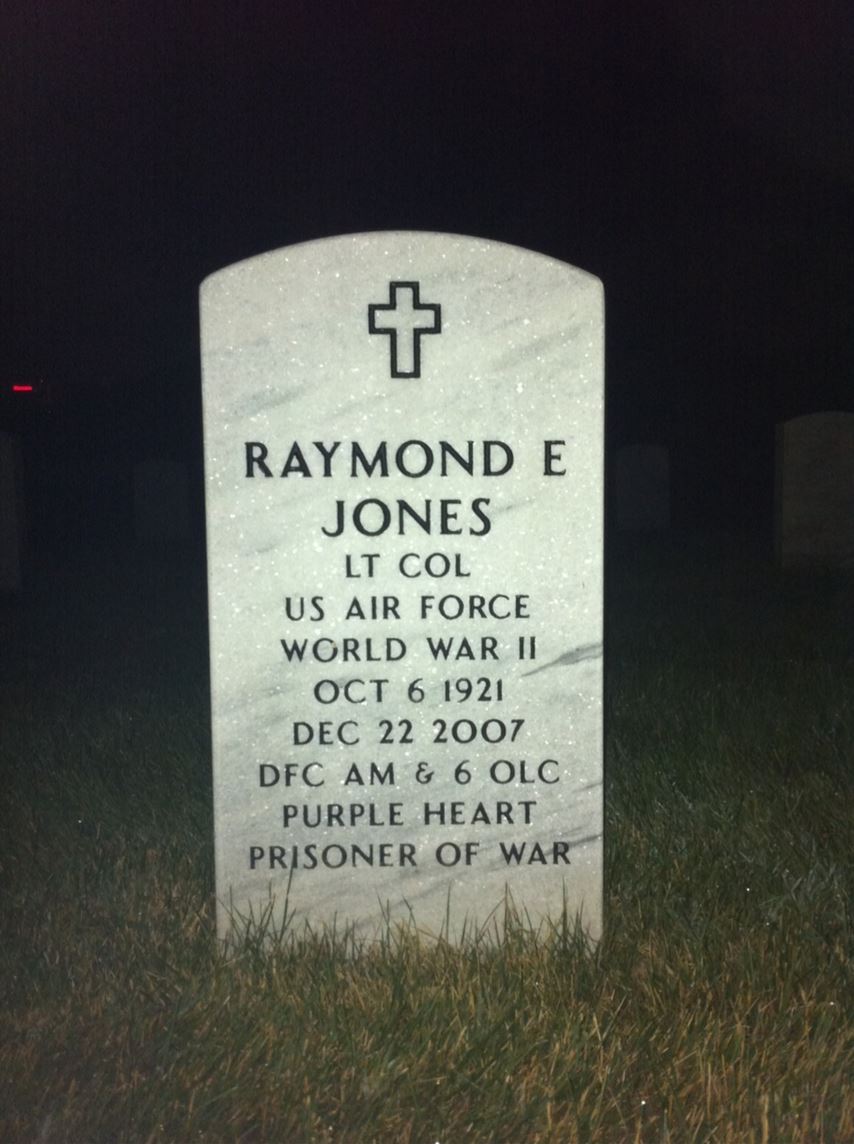
My dad called Lt. Col. Jones the next day. They talked for a long time. I called Col. Jones back and said that I'd like to visit him over the summer, which he said would be fine. However, whenever I called him back, I got no answer. I could never reconnect with him. I didn't know if he got sick or was off visiting kinfolk or whatever but I feared the worst. I later found out that he died on Dec. 22, 2007—just months after I spoke to him. He's buried in Arlington National Cemetery, close to where his comrades in arms had been buried all those years ago. I'm not one to look for metaphysical things or deeper meanings, but some small part of me could not help but wonder if Lt. Col. Jones had stuck around all those years in order to tell the story to me and then, having fulfilled this last mission, went on his way.
On November 17, 2009, U.S. Representative Poe read the following into the Congressional Record:
LIEUTENANT COLONEL RAYMOND ERIC JONES, A MEMBER OF THE GREATEST GENERATION
Mr. POE of Texas: "Mr. Speaker, Raymond Eric Jones got married at the tender age of 19 to Lucille, and then he was off to serve his country 2 years later in the great World War II. Raymond flew B-17s over Germany,including bombing Normandy to prepare for the D-day invasion. In 1944, before his 25th mission, he was informed that upon completion of that mission, he would be taken back home to America as a hero and do public relations for the Air Force.
But that was not meant to be. His B-17 on that 25th mission was shot up and quickly crashed in a German field. Four members died on impact.
Even though he was wounded, Lieutenant Colonel Jones pulled the remaining two from the wreckage, and he would remain in a German prisoner of war camp for the next 11 months. Fifty-eight years later,Lieutenant Colonel Jones received the distinguished Flying Cross for saving his two crew members. He has also received the Purple Heart, the Air Medal with six oak leaf clusters, the POW medal and the Presidential Unit Citation.
Monday, in the presence of his family, Taps will be played at Arlington National Cemetery, where Lieutenant Colonel Raymond Jones will be buried with full military honors, another member of the Greatest Generation who made America proud. Amazing breed--a rare breed, these World War II veterans.
And that's just the way it is."
After all of this happened my dad went out and bought himself a computer. He reconnected with all sorts of Army buddies he'd lost track of and made some new friends, too. They visit each other etc... And, as his mobility has become a bit limited, his computer has been a lifeline to whole other worlds. The man who, at 70, had no use for computers is now sending me digital slide shows that he's made, with music and slow dissolves and everything else. Life's funny.
And so I look at Manley in this photo, the one trace I have of him. He was a handsome young man. He arrived in Bassingbourn and was dead just 3-4 months later. I'm not sure what the life span of the average bombardier in a B-17 was but I don't think it was very long. Like everybody else I've written about today, he had his whole life in front of him.
I have to say that, from the comfort of my air-conditioned chair, I just don't get it. I can't understand the rationale of war. You and I try to kill one another and destroy each other's industrial bases when we don't even know one another. In another circumstance, we might meet over dinner and become great friends. The man who fired the guns that killed Manley might have met him after the war, given him a cab ride, and stopped with him for a drink. I wonder if that man survived the war. I wonder if he knew what he done, or if he felt remorse. I wonder about so much.
But if there's one thing that doing this page for all these years has illuminated for me it's that the killing and the sorrow and tears are ceaseless and eternal. . From the Comanches going against the Apaches to the current troubles around the world, we just can't stop ourselves. World War I was to be the war to end all wars. And surely after World War II we learned our lesson, right? They say that if the men who choose to start the wars had to fight the wars there would be no wars. I wonder if that's true.
I'm sorry for this digression. But looking at Manley so rakish in his jacket just brings it all home for me. So I raise my glass to Manley W. Darsnek and to every lost soldier, sailor and airman. The only way we can truly honor their sacrifices is to resolve our differences peacefully.
Sadly, I don't know if we can. From where I sit, the odds don't look good.
12
22
190
6,070