Scot, academic, Celtic fan, internationalist
Joined August 2013
- Tweets 23,553
- Following 1,895
- Followers 1,967
- Likes 53,820
153 Photos and videos

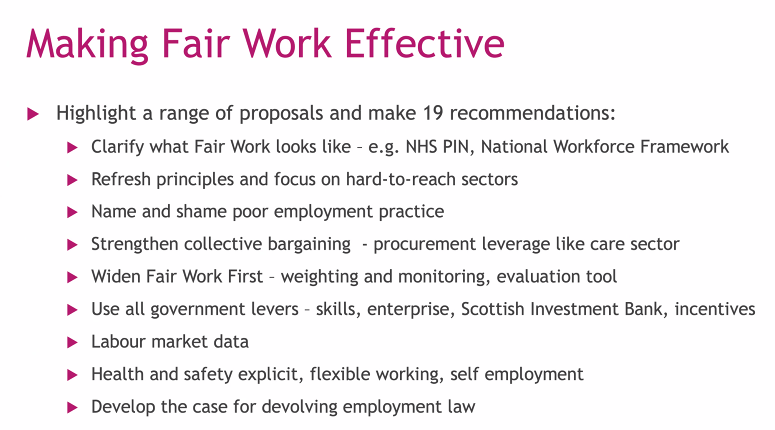

Mike Danson retweeted

The @BMA vote on charging for #GP appointments applies in #England, not #Scotland, but people right across the UK need to be aware of what is happening and the principle at stake!
open.substack.com/pub/jujuli…
5
158
203
4,172
Mike Danson retweeted

I'm watching a programme about Scottish football. Guess who this is
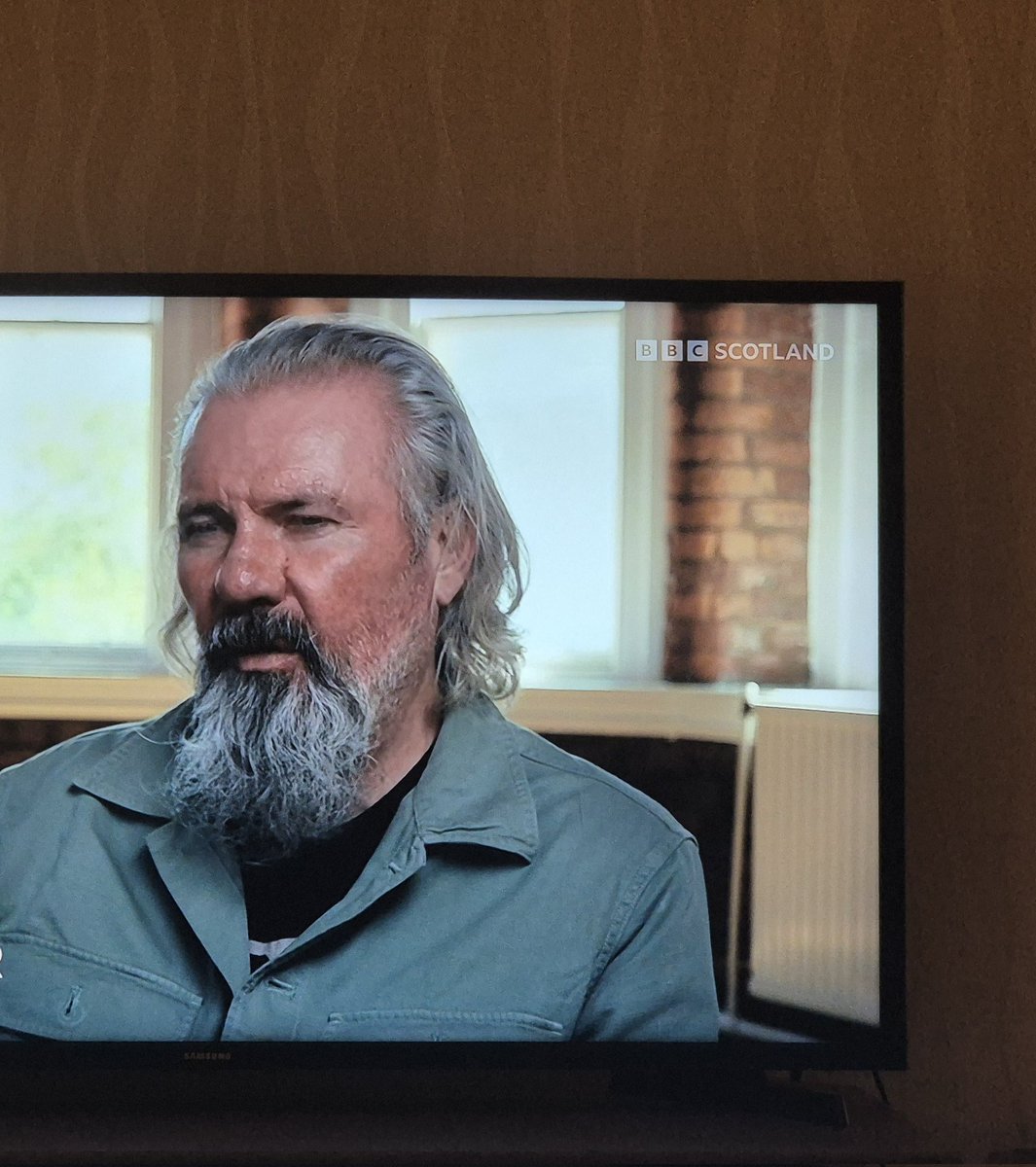
104
3
71
14,396
Mike Danson retweeted

May 21
I am deeply appalled by the conduct and rhetoric of Israeli Cabinet minister Itamar Ben-Gvir in relation to the Global Sumud Flotilla.
Scotland stands with the people of Gaza. We need to see more humanitarian aid coming in, and every effort must be made to secure lasting peace.
1,369
805
4,178
123,514
Mike Danson retweeted
And Scottish Gov still provides a #NursingBursary!

Why not point out that nurses in Scotland earn £thousands more (after tax) than in England?
And have better pensions.
And work fewer hours.
And have much higher rates of staff.
@theRCN
3
211
401
7,102

May 16
Absolutely pathetic!
May 16

Scottish football lost today. Celtic could not have won the league without the dodgy VAR decision v Motherwell. Hearts gave their all, defeated the Old Firm five times & Derek McInnes was magnificent. But what chance have non-Old Firm challengers got with such Old Firm biases?
2
94
Mike Danson retweeted

May 14
Now the dust has settled.. The reaction from many high profile people is way over the top. John Beaton was advised to go to the monitor and saw that the ball hit the arm in an unnatural position Bottom line is people would hate to see Celtic win the title again and that is all.
1,788
2,027
15,996
546,330
May 13
Today led by @CleoGoodman and @cbinscot over 300 artists, arts organisations & academics have signed the open letter calling for a #UBI for artists in Scotland: actionnetwork.org/forms/an-o…. @cbinscot is delighted to be involved and supporting this campaign: cbin.scot/2026/05/13/new-msp…
3
7
604
Mike Danson retweeted

RE: @scottishgreens ScottishGreens MSP Q Manivannan and those with limited right to remain in the UK.
We don’t all see all bills that go through Parliament. The thing that worries me here is that there are some journalists whose job it is to cover the workings of parliament and they are making it seem like the MSP has done something wrong or that they must have been untruthful or something in order to be eligible for selection and election. Hopefully people will see thought it and see that the individual did exactly what the law set out they should and that the provisions now being questioned were supported across all parties.
The SNP ran on a manifesto commitment in 2021 (p33) - “Whilst in government, we have made great strides to extend the right to vote. We have extended the voting franchise in Scottish Parliament and local government elections to 16 and 17 year olds, and all foreign nationals with leave to remain, including all those granted refugee status. We will now go further and extend entitlement to stand for election to all those who are entitled to vote, ensuring a more diverse parliament and local government.”
It’s not even that the Bill was pushed through, the proposals were put to public consultation on the 14th December 2022 until 15th March 2023 as part of a larger package of electoral reform following the additional powers devolved as a result of the Smith Commission. On 23rd January 2024 the Bill was introduced to Parliament. On 7th February 2024, the Standards, Procedures and Public Appointments Committee opened a ‘call for views’ and held multiple committee sessions examining the Bill. There was also involvement by the Local Government, Housing and Planning Committee, Local Government, Housing and Planning Committee Correspondence, Finance and Public Administration Committee and the Delegated Powers and Law Reform Committee.
On 27th June 2024, the Bill was debated and passed Stage One. On 2nd October 2024, the Bill began its Stage Two journey which resulted in multiple meetings of the Meetings of the Standards, Procedures and Public Appointments Committee followed by multiple debates and the consideration of amendments. A number of amendments were accepted and the Bill moved forward to Stage Three and a debate on 17th December 2024 followed by a vote by the whole Parliament.
I provide this just to show to others, that the process of the manifesto commitment, the public consultation, the parliamentary scrutiny both at large and in committee(s), the amendments and final debate and vote were far from rushed or truncated.
The rationale of making the changes was to ensure that all of those in Scotland (studying, working, living) had the opportunity to both vote in Scottish Parliament elections and, subject to standard exclusions over bankruptcy, criminal proceedings etc, be able to run for elected office.
I’ll put the link below and I would highly recommend anyone interested to have a look at the submissions received from third sector organisations, charities, civic groups and members of the public at each stage of the Bill. Hopefully if people have more information they can understand why the changes were made and level of scrutiny which the Bill was exposed to.
The @theSNP ought to speak to Ian Blackford and make him aware (something he should be aware of as it was a manifesto commitment and this specific circumstance was raised and discussed in Holyrood by those elected to that place). I shouldn’t have to type out the above, journalists should be capable of doing the most basic research.
People shouldn’t attempt to engage in revisionist history and journalists should feed them. The only outlets covering this honestly and accurately is @ScotNational @bellacaledonia and @broadcastscot. The SNP have a duty to call this out.
6
28
94
11,829
Mike Danson retweeted
Raising #StatePensionAge with a fall in #HealthyLifeExpectancy has created a widening gap where more people have to rely on #Disability benefits!
May 11

Labour cannot talk about dignity while treating disabled people as a Treasury saving line. The problem is not that PIP is too high. It is that disability is expensive, housing is unaffordable, care is threadbare, and benefits do not come close to real-life costs.
5
75
118
2,370
Mike Danson retweeted
How the heck is that meant to work for those with life-long disabilities?
Young people are defined as adult by 18 at the latest, so are those with a #Disability only allowed to live independently from 23 years?
I guess #Labour have learnt NOTHING from their election drubbing!
May 11

The King's Speech is to include banning under 22s from claiming incapacity benefits.
This will see severely disabled people suffer for absolutely no benefit to the economy.
The only exemption will be for those terminally ill with less than 6 months to live.
31
341
692
19,634
Mike Danson retweeted

Edinburgh now has the highest GDP per capita of any UK city. Since 2008 Scotland’s productivity growth has been double that of the UK.
You should try visiting here more often @afneil rather than writing specious drivel from France.

Andrew Neil: ‘Scotland is rudderless, increasingly shabby, living on memories of past glories while its cities and towns are gripped with an urban squalor unrivalled anywhere else in Western Europe’. Read more in today’s @MailOnlineScot 👇
79
307
1,277
277,848
Mike Danson retweeted
🏴 Ten reflections on Scottish election:
1. For the SNP to win so decisively after nearly two decades in government is remarkable. Such staying power has to be respected, regardless of where you stand politically. John Swinney has pulled off a remarkable turnaround after being dealt an awful hand, helped a lot by Keir Starmer’s unprecedented unpopularity.
2. The result speaks to an apparent paradox in Scottish politics. On the one hand, people have voted in large numbers for the status quo, even though by all accounts Scots are not very happy. Of course, many SNP voters don’t see it that way - they see it as a vehicle for radical change via independence. It’s clear the constitutional divide still dominates voting patterns, even if it wasn’t as prominent in this campaign as it has been.
3. Despite the victory, the SNP’s vote is down quite substantially. Ironically, the victory was greatly helped by Reform further splitting the unionist vote. As long as the unionist vote is split four ways, while the independence vote is split two ways, the arithmetic will always favour the pro-indy side.
4. That being said, there were quite a few seats where the Tory and Reform vote together would beat the SNP. This should concern Swinney, as it leaves them exposed to a right-wing pact / alliance in future. It also puts to bed the myth that right-wing politics has no foothold in Scotland. It absolutely does, and it’s growing. The presence of Reform will have a huge impact on the debate in Parliament, on everything from climate and the economy to welfare and culture wars.
5. Labour and the Tories both received their worst results ever in a Holyrood election. The two party system fragmented in Scotland a long time ago, but this election feels like its final funeral. Both have some existential soul searching to do. This should include looking at separating from their UK parents, and becoming fully independent Scottish parties. It’s impossible to win Scotland and England on the same policy platform and messaging.
6. The Scottish Greens had a spectacular result, winning their first constituency seats and finishing just two seats short of the opposition. Across the UK, it’s clear the Greens are breaking free of their glass ceiling and becoming a mainstream, popular party. Whether they can go further in Scotland will depend on their ability to grow their appeal beyond their new, larger base.
7. The key question is how the SNP plan to govern. I doubt we’ll see another formal pact with the Greens, as both parties still bear the scars of last time. I suspect Swinney will lead a minority government, relying on the Greens on some issues, and others (likely Lib Dems) on others. Given nearly half the MSPs elected are brand new to Holyrood, hopefully we’ll see an influx of new energy and ideas, which is badly needed.
8. The influence of the Scottish media has hugely diminished. Much of the newspaper landscape (minus the National) were hostile towards the SNP, and yet they’ve delivered a thumping victory after nearly two decades in government. The days of newspapers deciding elections are well and truly over.
9. Despite the pro-indy majority, nobody expects Keir Starmer to grant another referendum, including the SNP. And so the constitutional debate looks set for five more years of stalemate.
10. If Reform win the next UK election, the question won’t be whether they grant another referendum — it will be whether the Scottish Parliament can survive attempts to abolish or curtail it.
Overall, we’re in for an interesting Parliament…
17
28
107
21,267
Mike Danson retweeted
I wonder what happened?
#Poverty is biggest driver of ill-health and UK Gov #Austerity is biggest driver of poverty!
May 6

🚨 BREAKING: The gap in life expectancy between people living in the UK’s poorest and wealthiest areas has grown to 20 years.
Worryingly, most areas across the UK have seen healthy life expectancy fall since 2012.
This isn’t right. Everyone should be able to live a healthy, secure life - no matter where they live or how much they earn.
5
97
149
3,029
Mike Danson retweeted
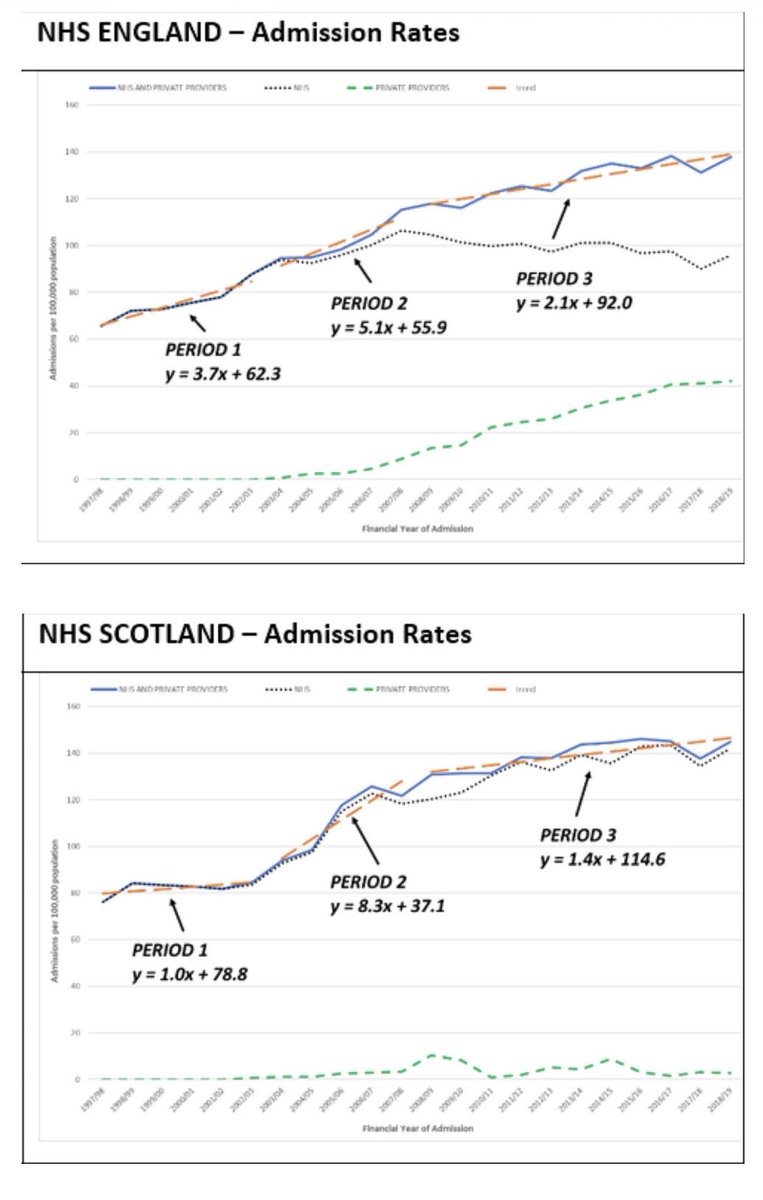
The graphs from @AllysonPollock’s original paper demonstrate that hip & knee operations have increased in #Scotland and #England.
But outsourcing in England has led to almost direct REPLACEMENT of #NHS capacity with expansion of #PrivateHealthcare!
May 3

@ScotNational Read the full story here: thenational.scot/news/260725…
1
71
80
4,313
Mike Danson retweeted
It is all about #Netanyahu seizing every opportunity for #Israeli expansionism & creation of #GreaterIsrael!
Apr 20

Israel claims ownership of Lebanese gas field after establishing Gaza-style ‘Yellow Line’ near border
ift.tt/kRT67cU
2
51
74
1,060
Mike Danson retweeted
Why turning out to vote is essential!
Don’t be a bystander moaning about the outcome on 8th May - #VoteSNP
Apr 20
More than half of Scotland’s 73 constituencies are on a knife-edge putting an SNP majority in doubt, a new poll has suggested thenational.scot/news/260341…
19
250
438
6,835
Mike Danson retweeted
#Poverty is biggest single driver of ill-health & #Austerity is a key driver of poverty!
We used to call it #Tory Austerity but, after ~2 years of the same, #Labour now own it!
People living in poverty could spend 1/3 of their lives in poor health.
Also = ⬆️ pressure on #NHS!
Apr 19

UK Government ‘austerity’ measures the key driver of Scotland's falling life expectancy in good health and Labour will do nothing to reverse it talkingupscotlandtwo.com/202…
14
189
282
7,518
Mike Danson retweeted

Highly amused to see the @ScotTories election leaflet saying that it's a "once-in-a-generation opportunity".
I take it then that they won't be contesting the subsequent elections? Because we'll have had our say, and the question has been settled?
3
80
240
2,907
Mike Danson retweeted
‘Scottish’ Labour - just following London’s lead as usual!
x.com/explosiveenema2/status…

Mr, Sarwar, you’ve taken £60,000 in donations from the CEO and founder of a private healthcare firm - Kasim Gulzar.
£40,000 from him directly and £20,000 through his company Rightdose Pharmacy/Healthcare Ltd.
On whose behalf are you really working - the NHS’s or Mr. Gulzar’s?
3
157
219
3,118
Mike Danson retweeted

This boy jumped for joy welcoming the pope in Lebanon in November and today they pulled his body from the rubble after Israel’s bombing.
Last year, only 5 members of Congress voted with me when I tried to defund Israel, who bombs and kills the innocent.
3,850
25,473
147,064
7,569,539