Physician & Advocate. Husband 2 @netrix_sky. @USArmy #SoldierForLife 40 years and counting. #FamilyMedicine/#meded/#TEDx geek. #FMRevolution #InRecovery
Joined November 2007
- Tweets 58,930
- Following 7,159
- Followers 11,801
- Likes 29,378
3,265 Photos and videos










Pinned Tweet

22 Jun 2024
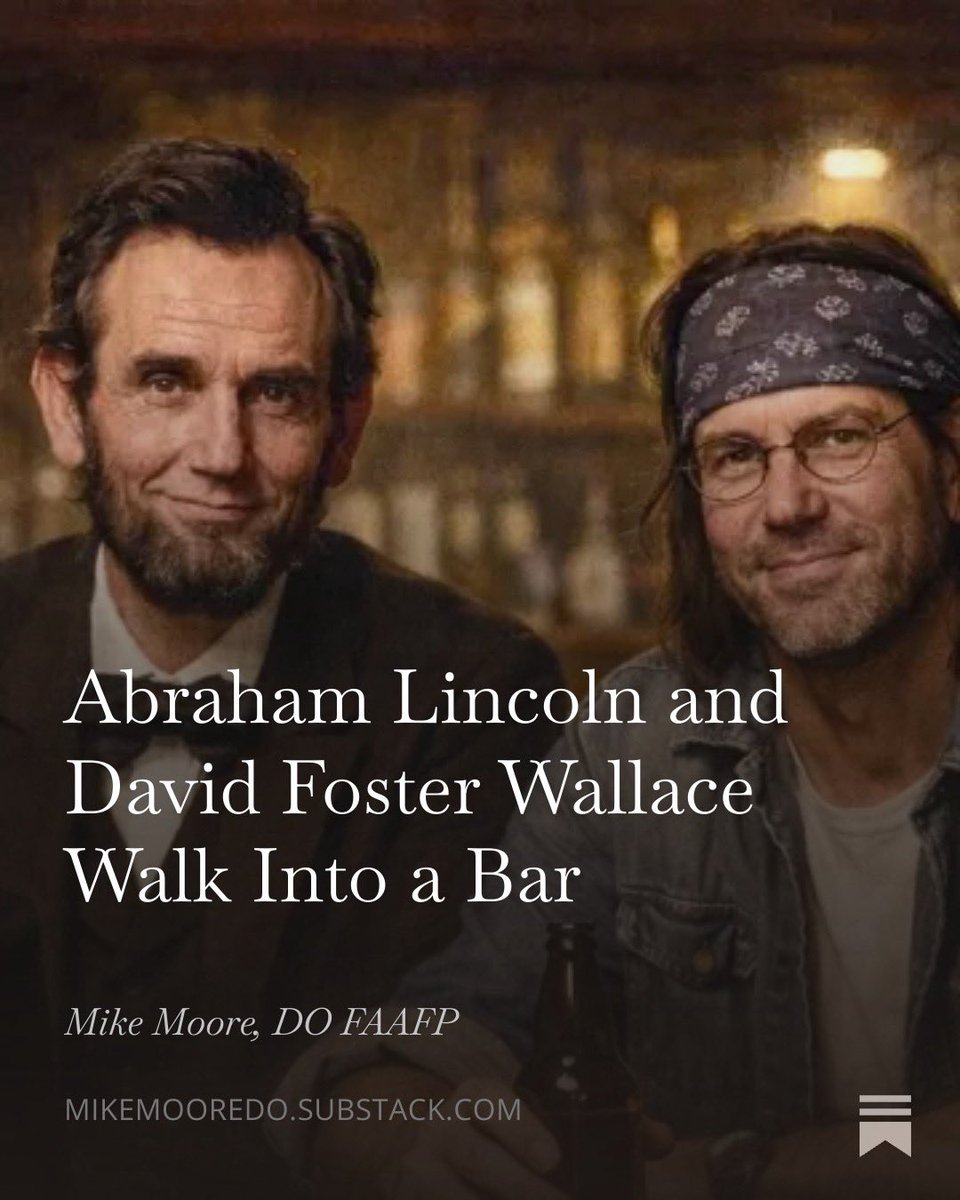
"I’m sorry that I have no words of wisdom or inspiration. I get sad and scared too. I think maybe it’s part of the natural price of wanting to do this kind of work."
~David Foster Wallace
mcsweeneys.net/pages/memorie…
3
2
12
2,014
Mike Moore, DO FAAFP retweeted

May 29
I asked it to remind me to drink water.
1
3
78
7,995
Mike Moore, DO FAAFP retweeted

May 28
Me using Claude Opus 4.8 to rename a file
1,729
9,368
75,771
44,283,659
Mike Moore, DO FAAFP retweeted

May 26
When I applied to medical school in 1996, lots of people (attendings, residents, some family members) told me the profession was doomed because of HMOs, longer hours, and lower pay. It's been 30 years, and medicine is still in demand, with excellent job security. Don't let the current fatalists get you down. The world will always need doctors.
31
51
695
48,760
Mike Moore, DO FAAFP retweeted

May 25
Every year, I share this video of French caretakers who take sand from Omaha Beach in Normandy, and scrub them into the letters to give them the gold coloring.
They do this for all 9,386 US soldiers who died.
France also gave us this land as American soil. #MemorialDayWeekend
1,647
26,599
190,971
8,480,270
Mike Moore, DO FAAFP retweeted

May 24
This is one of the most out of touch takes I’ve ever heard from a fellow physician.
Read the room, Congressman.
Physicians are burning out because we are being crushed by administrative burden, loss of autonomy, declining reimbursement, corporate consolidation, insurance interference, and a system that treats doctors like disposable labor while demanding endless sacrifice.
Stop blaming physicians for refusing to tolerate an increasingly dysfunctional system. The problem is not that young doctors lack commitment. The problem is that medicine has become unsustainable.

Unless our Medical Schools do a better job of screening admission candidates, we won’t have any Doctors. If you don’t want to practice FULL time for at least 20-25 years, pick another profession.
11
28
168
6,853
Mike Moore, DO FAAFP retweeted

May 25
Want to know the most valuable asset on a hospital’s campus or within an entire health system?
A physician’s signature.
The irony is that everyone knows it except the physician.
3
11
59
25,417
Mike Moore, DO FAAFP retweeted

May 16
Dr. Tolis on CT Surgery. Must listen.

George Tolis: TAVR, Broken Training, and What's Really Wrong With Cardiac Surgery.
Dr. George Tolis, section chief of coronary and general cardiac surgery at Brigham and Women's Hospital, joins Drs. Koka and DiGiorgio for a wide-ranging conversation on the state of cardiac surgery. He makes the case that TAVR — while genuinely transformative for the right patient — is being systematically applied too broadly, driven by industry incentive and the erosion of meaningful surgical consent. He discusses his collaboration with John Ioannidis that found no statistically significant mortality benefit for any new cardiac surgery technique introduced over the past 35 years, the paper's rejection by every major surgical journal, and what he paid out of pocket to make it open access. The conversation moves to the collapse of surgical training — fragmented pathways, work hour restrictions that leave residents unprepared for attending life, an academic promotion system that ignores teaching, and a culture that routes incompetent trainees around rather than out — and closes with a brief on Vasily Kolesov, the Soviet surgeon from Leningrad who performed the world's first documented coronary bypass years before Favaloro, and whose work was buried by the Cold War.
Chapter Markers
00:00 Introduction
01:02 Air-cooled VWs, concert piano, and how Dr. Tolis got here
02:40 TAVR: genuine breakthrough or being abused?
08:02 Finding the TAVR threshold — and why informed consent is the real problem
11:46 Collaborating with John Ioannidis: no mortality benefit for 35 years of new techniques
20:02 Why the major surgical journals wouldn't touch the paper
21:52 Minimally invasive surgery: minimal access vs. minimally invasive
26:24 When do CABG survival curves diverge — and what does it mean?
30:05 Surgeons signing off on TAVRs in young patients
33:51 Health system economics and the heart team dynamic
37:50 How to actually pick a good surgeon (ask the scrub nurses)
40:36 Cardiac surgery training: the three pathways problem
44:04 Work hour restrictions and the residency simulation gap
51:16 General surgery is like MTV — they don't operate anymore
53:21 A resident who finished training without ever applying a cross-clamp
56:34 How to evaluate if a program actually trains
59:27 Academic promotion has nothing to do with teaching
01:01:33 Dr. Tolis's resident outcomes database and three papers nobody cared about
01:05:32 The training timeline: finishing at 49, no runway left
01:07:08 One-size-fits-all RRC rules for cardiac surgery and psychiatry
01:09:16 Cardiac surgery as a disposition, not a therapy
01:12:24 When ECMO becomes the final common path
01:13:38 How you become nationally recognized without being a good surgeon
01:17:16 Vasily Kolesov: the Soviet surgeon who did the first bypass
Co-Host Handles
@anish_koka and @drdigiorgio
Show Handle
@drsloungepod
Subscribe Links
Spotify: open.spotify.com/show/44vw8e…
Apple Podcasts: podcasts.apple.com/us/podcas…
YouTube: youtube.com/@TheDoctorsLoung…
2
6
26
9,803
Mike Moore, DO FAAFP retweeted

May 24
The way to attract more physicians to primary care is to reimburse PCPs fairly, not to give a bunch of upfront free stuff for everyone to devour. And yes, medical education is insanely expensive in this country, but that’s an entirely different topic.
May 24

what's hubris about the fact that many new grads are strapped with medical debt and are often focused on going for higher paying specialties?
3
8
58
8,890
Mike Moore, DO FAAFP retweeted

May 25
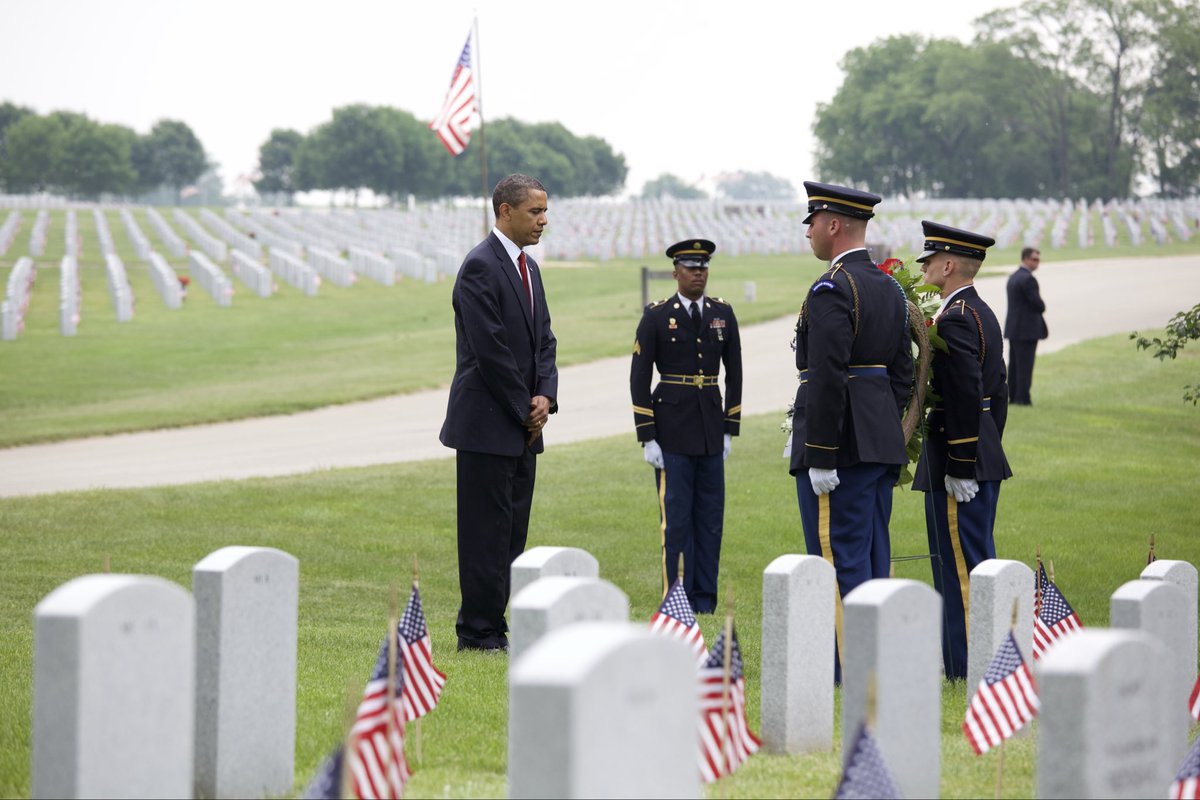
On Memorial Day, we pay tribute to the brave men and women in uniform who gave their lives for this country that we love. It is a debt we can never fully repay, but we must never stop trying. I’ll always be grateful to our fallen heroes and their families, whose sacrifice reminds us of what it means to live for something greater than ourselves.
11,665
30,429
293,897
9,983,688
Mike Moore, DO FAAFP retweeted

I honestly don't think med school debt has led to the death of independent physician practice.
When the hospital conglomerate can charge twice as much for the same clinic visit or procedure, or when they can play arbitrage games with drug discount programs that independent doctors don't get, or when they get massive tax exemptions, that leads to a financial imbalance which is impossible to rectify.
The independent physician practice is worth more to the large hospital conglomerate than it is to the independent physician. No amount of debt-free medical education will change that.
May 23

If you want more doctors doing house calls, not selling their practices and going to work for the big HC conglomerates, make public med school free.
A little gov intervention, so that rather than having 100s of thousands in debt guiding their decisions , they can do primary care or be a family physician and spend as much time with patients as they want.
They can take cash. They can take chickens.
If you had 250k after almost a decade of school, do you think that would impact your decisions ?
And if you own a big HC conglomerate, does knowing they are drowning in debt impact your decision and how you compete and contract with them ?
Fuck yeah it does.
You pressure them till they have to sell out to you in an acquihire. They can’t afford to survive on their own and every huge HC company takes advantage of them
About 32k students enter med school and DO school a year. 75k for a grant each. Thats 2.4b annually for each class.
That’s it.
You want better healthcare for everyone. That’s the place to start.
38
26
271
19,272
Mike Moore, DO FAAFP retweeted

May 21
1
5
7
294
Mike Moore, DO FAAFP retweeted
People always assume fixing the physician shortage means opening up the training pipeline.
How about we make the profession less miserable so people practice longer?
3
4
54
1,447
Mike Moore, DO FAAFP retweeted

May 17
"Until death, all defeat is psychological." - Marcus Aurelius
Refuse everything that would lead most people to give up.
Refuse it.
Rise from the dead 1000 times.
Commit to never stay down & never give up.
Everything you want is on the other side of struggle.
158
2,816
14,712
2,102,319
Mike Moore, DO FAAFP retweeted

May 16
Mount Sinai researchers gave AI the most basic hospital administrative tasks imaginable. Count the patients. Filter by age. Apply exclusion criteria. Simple table operations that any data analyst does daily.
The AI failed. On tables as small as 25 rows.
Not because it didn't understand the question. It understood perfectly. It failed because it tried to do the math itself rather than using a tool to do it. It made counting errors. It sounded confident. It was wrong.
Then they gave the models the ability to write and execute code. The same models that had failed went to near-perfect accuracy. Same question. Same data. Different architecture.
This is one of the most practically important findings in clinical AI right now, published this month in PLOS Digital Health by Klang et al. at Mount Sinai. Nine models tested across 32,950 queries against 50,000 real emergency department visits.
The results were consistent across every model tested. Direct prompting: poor accuracy that collapsed as tables got larger. Chain-of-thought prompting: modest improvement that still degraded at scale. Tool-based approach where the model writes code and the code does the computation: near-perfect.
The implication for healthcare is immediate. Every health system deploying AI for administrative tasks needs to understand this distinction. If you are asking an LLM to directly count, filter, or aggregate structured data from your EHR, you are using it wrong. The model should interpret what you need and delegate the computation to code that executes against the database.
This is the same principle showing up everywhere in clinical AI. The models that perform best are never used in isolation. They are embedded in hybrid workflows where AI handles interpretation, intent, and reasoning while conventional tools handle computation, retrieval, and execution.
How you use the model can matter more than which model you use. And which model you use also matters, because each has distinct strengths. The architecture and the capability are both variables. Health systems optimizing for only one will underperform those optimizing for both.
journals.plos.org/digitalhea…
19
36
142
22,128
Mike Moore, DO FAAFP retweeted
May 14
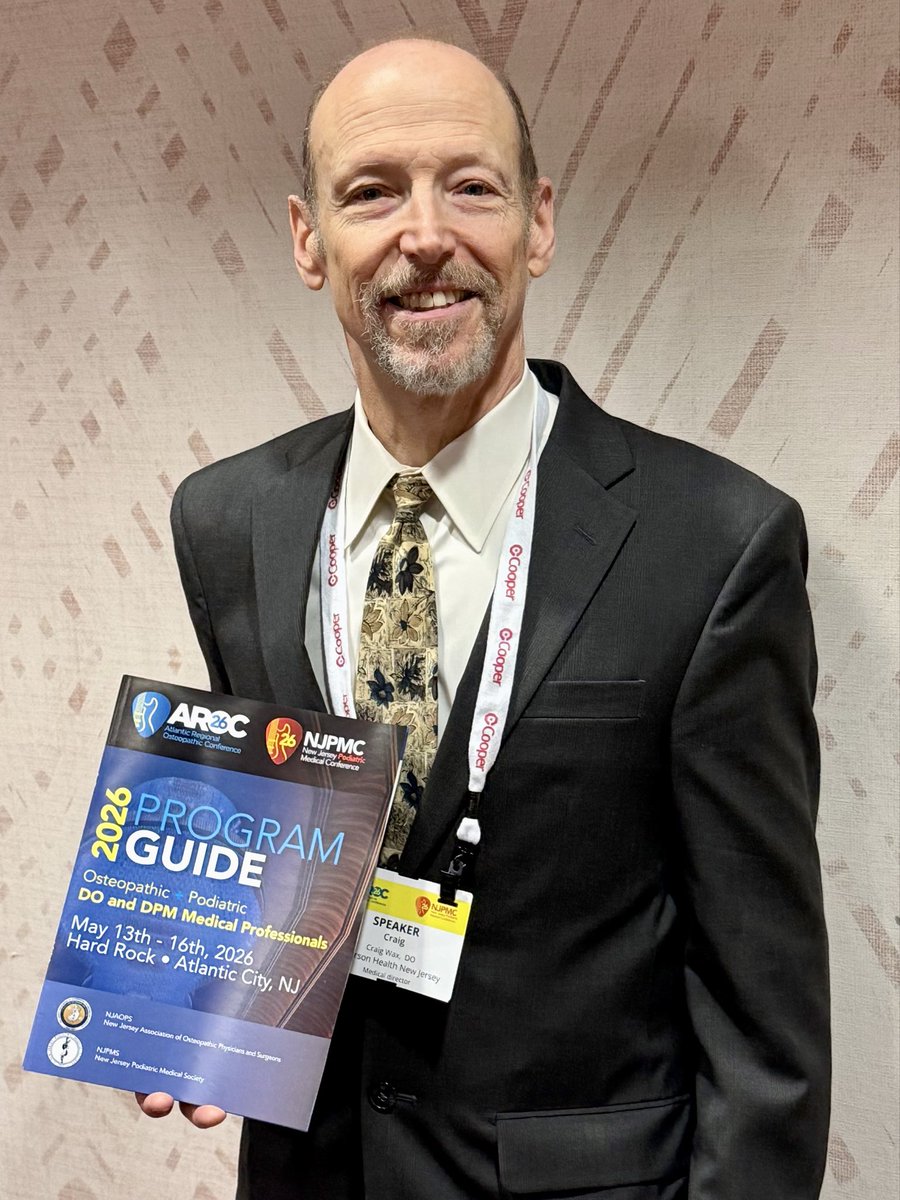
Speaking at Atlantic Regional Osteopathic Conference
Practice Options: What to DO?
2026 Atlantic City NJ
Today @njosteopathic @NJPMSPodiatry
@hardrockhcac @healthis1show
3
10
22
954
Mike Moore, DO FAAFP retweeted
May 13
Glad to speak about hydroceles, “ball-maxing” and men’s health this morning on @NickKayal and company @GREGSTOCKER @DawnStensland.
Au Natural is best!
#HealthIsNumberOne
HealthIsNumberOne.com
3
6
5
650
Mike Moore, DO FAAFP retweeted

This is my favorite study of the year.
What a waste of money. But keep telling physicians to see more patients every hour. Because that is working so well….
May 4

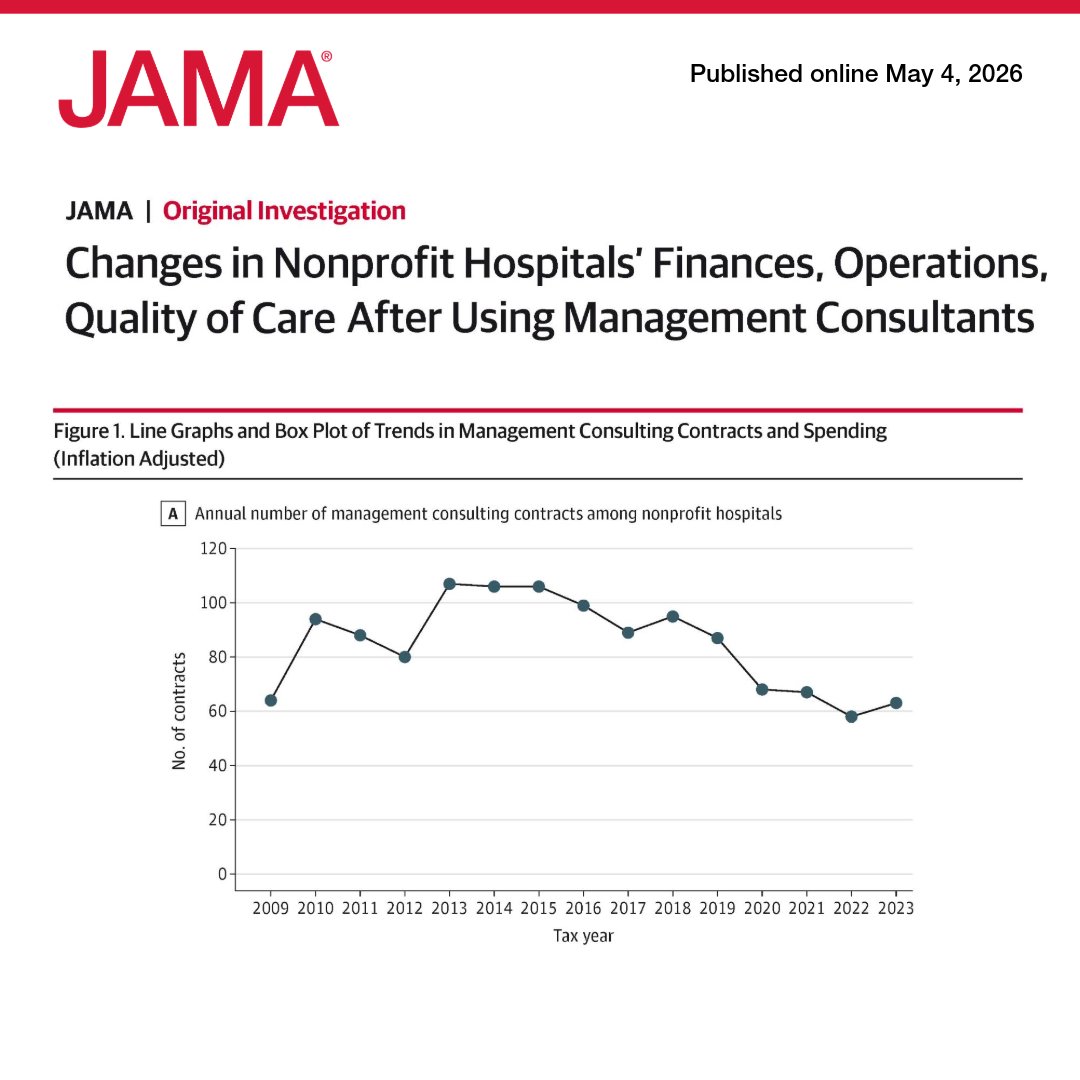
US nonprofit hospitals spent $7.8 billion on management consultants from 2009 to 2023, but contracts were not associated with meaningful changes in finance, operations, or quality of care. 🧵
ja.ma/4d46zfq
27
139
796
98,372
Mike Moore, DO FAAFP retweeted

May 5
Winston Churchill fought his depression with bricks. He'd lay them for hours at his country home in Kent. He joined the bricklayers' union. And in 1921 he wrote about why it worked. It took psychology another 75 years to catch up.
He called his depression the "Black Dog." It followed him for decades. His method for fighting it back was as basic as it sounds: laying brick after brick, hour after hour.
Churchill spelled out his theory in a long essay for The Strand Magazine. People who think for a living, he wrote, can't fix a tired brain just by resting it. They have to use a different part of themselves. The part that moves the eyes and the hands. Woodworking, chemistry, bookbinding, bricklaying, painting. Anything that drags the body into a problem the mind can't solve by itself.
Modern psychology now calls this behavioral activation. It's one of the most-studied depression treatments out there. Depression sets a behavior trap. You feel bad, so you stop doing things, and doing less means less to feel good about. Feeling worse makes you do even less. The loop tightens until you can't breathe inside it.
Behavioral activation breaks the loop from the action side. You schedule the activity first, even when every part of you doesn't want to. Doing it produces small rewards: a wall gets straighter, a painting fills in, a messy room gets clean. Those small rewards slowly rewire the brain. Action comes first, and the feeling follows.
Researchers at the University of Washington put this to the test in 2006. They studied 241 adults with major depression and compared three treatments: behavioral activation, regular talk therapy, and antidepressants. For the people who were most severely depressed, behavioral activation matched the drugs. It beat the talk therapy. A 2014 review of more than 1,500 patients across 26 trials backed up the result.
Physical work like bricklaying does something extra on top of this. It crowds out rumination, the looping bad thoughts that grind people down during the worst stretches of depression. Bricklaying needs both hands and gives feedback brick by brick: each one is straight or crooked. After an hour you can see exactly how much wall you built. No room left for the mental chewing.
The line George Mack used in his post, "depression hates a moving target," is good poetry. The science behind it is sharper. Depression hates a brain that has somewhere else to be.
May 4

Winston Churchill used to lay 200 bricks per day to keep his mind busy when feeling down. Depression hates a moving target.

853
11,521
56,181
6,907,513
Mike Moore, DO FAAFP retweeted

May 4
US nonprofit hospitals spent $7.8 billion on management consultants from 2009 to 2023, but contracts were not associated with meaningful changes in finance, operations, or quality of care. 🧵
ja.ma/4d46zfq
82
614
1,532
623,081