
Joined June 2021
- Tweets 8,827
- Following 207
- Followers 340
- Likes 1,783
1,757 Photos and videos



Pinned Tweet

Ми раді співпрацювати з @playonjoy для підтримки наступного етапу розвитку Web3-ігор.
Ігрова екосистема Moonbeam, що швидко зростає, продовжує масштабуватися на нових платформах, таких як JOY Genesis, завдяки нативній інтеграції наших ігор і турнірів.
x.com/playonjoy/status/20374…
Mar 27

Web3 gaming chains often make developers choose between performance or composability.
Moonbeam offers a better reality - one where developers don’t have to choose💛
We’re partnering with @MoonbeamNetwork, an EVM compatible chain with one of the fastest growing gaming ecosystems🌐
Their flagship titles from @N3musFdn are coming to JOY Genesis, running natively on our hardware.
More chains. More games. More JOY🎮
30
Що б ви збудували, якби ніщо не могло вас зупинити?
Дайте відповідь. Ми читаємо.
1
Майбутнє це не те, що з вами трапляється. Це те, що ви створюєте.
Moonbeam
2
Moonbeam Ukraine retweeted

May 28
Growth is key for any entrepreneur, project and team. Last week, we held review meetups with our accelerator projects and asked them to present about their growth.
Staggering results from the 12 week program which ended in their appearance on @KillerWhalesTV LIVE!
Judges @illaDaProducer @DougHype and @JesusMartinez put the heat to the contestants, three out of four received the desired SWIM! Hosted by @cryptojourneyrs
Together with @MoonbeamNetwork we’re proud on the results achieved by @playoutmine @Olderfall @Kuglesworld and @N3musFdn
11
13
49
14,340
Moonbeam Ukraine retweeted

May 28
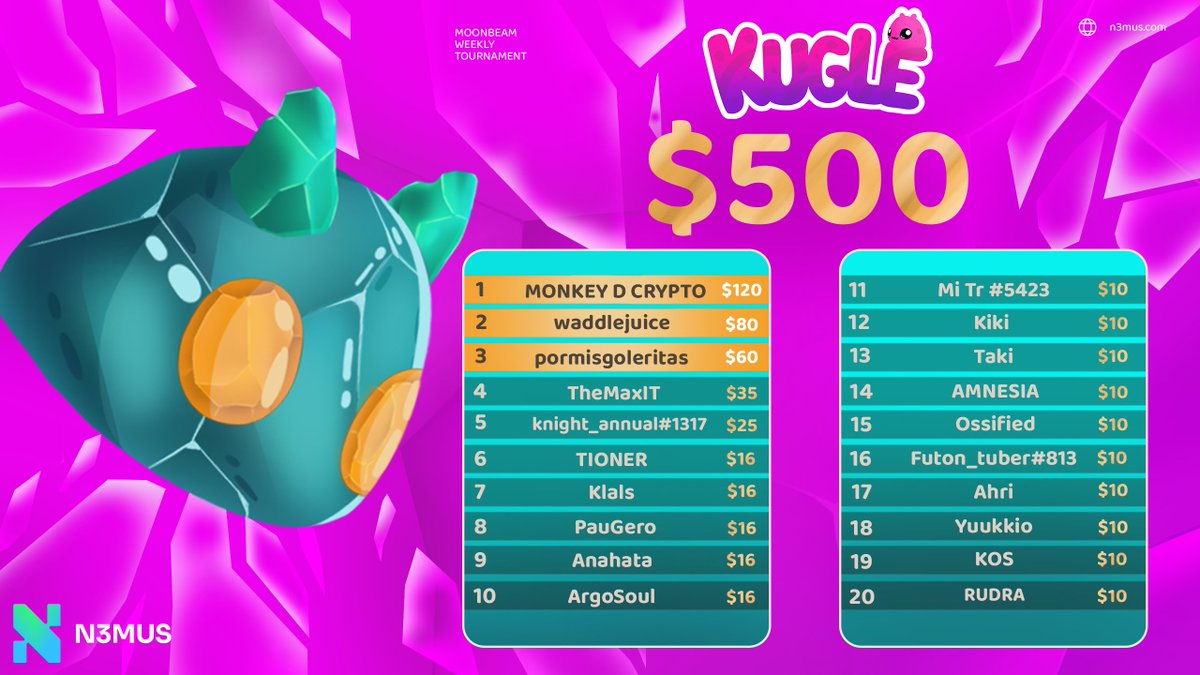
🏆 Congrats to the winners of the $500 Kugle Protocol 5 tournament with @N3musFdn!
You didn't just open the Crystal Fracture Booster. You fractured the competition. 💎🔥
The top 20 players are listed just below 👇
Not on N3MUS yet? Protocol 6 is coming… what are you waiting for? 🫵
10
4
13
2,080
Moonbeam Ukraine retweeted

May 23
Join a thriving community where tens of thousands are already playing! We've distributed almost $200,000 in rewards. Now's the perfect time to scale monetization and grow with us. #GamingCommunity #PlayToEarn
2
3
19
2,671
Moonbeam Ukraine retweeted
May 25
Led by @annastoic, crypto gaming start-up @playoutmine has only 5 full-time employees. Is this 'Lean and Mean' approach to gaming enough to impress the Whales?
3
11
33
2,565
Moonbeam Ukraine retweeted
May 19
Get ready for the HELLO x @MoonbeamNetwork Accelerator FINALE! With all 4 contestants pitching to our whales!
Let's give it up for @playoutmine @Olderfall @N3musFdn and @Kuglesworld as this is a gamers paradise!
Also, ensure to follow our Whales: @illaDaProducer @JesusMartinez and @DougHype
May 19, 10Am PT!
May 18

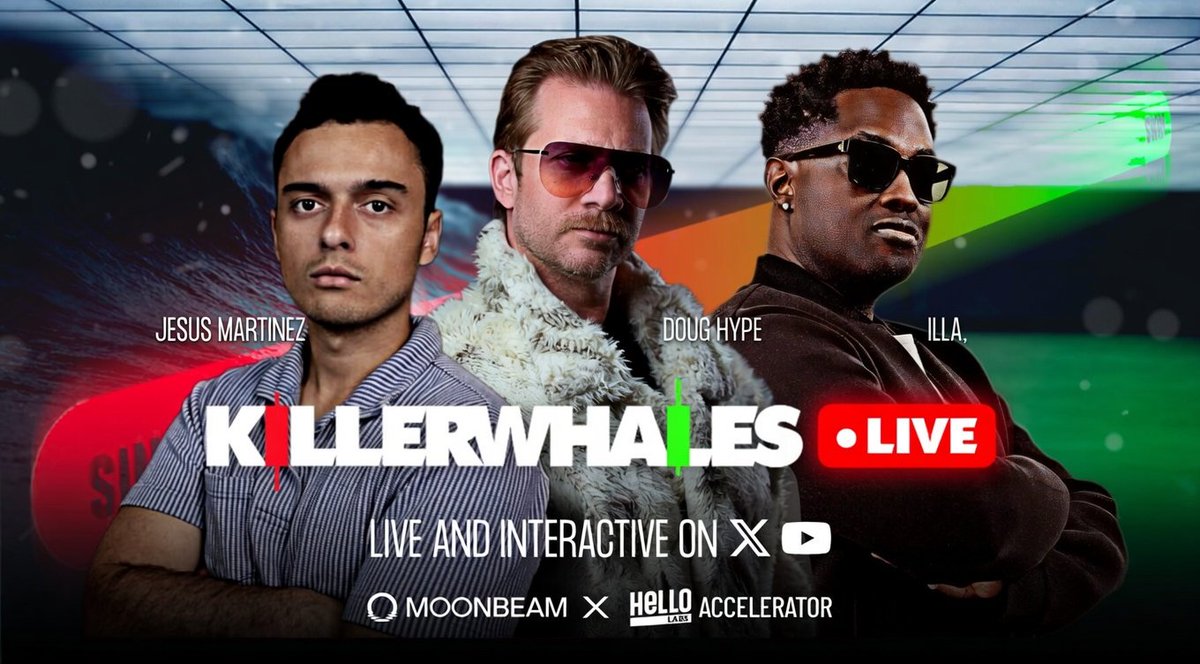
Introducing the Whale Line up for tomorrow's Gaming Special of Killer Whales: LIVE !
Bringing the SWAG @illaDaProducer 😎
Bringing the TECH @JesusMartinez 💾
Bringing the HYPE, non other than @DougHype 🚀
Directed by @FlyRyde. Tune in tomorrow, 19th May at 10am PT on Youtube and X to see how it goes down 👀
6
14
56
5,671
Moonbeam Ukraine retweeted
May 16
Killer Whales: Live is back!
Partnering with @MoonbeamNetwork to find the hottest games in Web3 🕹️
Get ready for @playoutmine,@Kuglesworld,@Olderfall, and @N3musFdn to pitch to the Whales and try everything they can to secure a SWIM vote!
Tune in May 19th @ 10am PT on X and YouTube
12
21
62
7,654
Moonbeam Ukraine retweeted

May 12
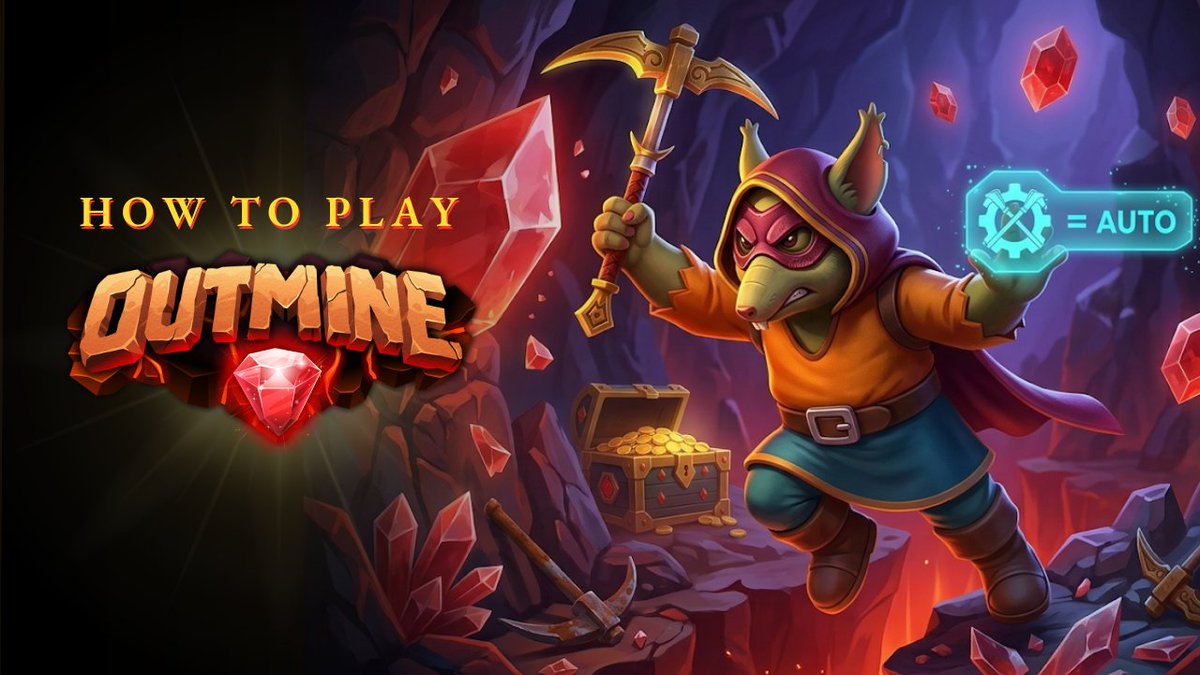
🚨 How to Play Outmine in 2026
📽️ New video out now:
→ Outmine in 2026 A-Z
→ Everything you need to know about Automining mechanics
→ How to get ready & setup for the brand new tournament on @N3musFdn (live now, don't miss out 🔥)
👉 Watch on Youtube: youtu.be/HUljwWmG64s
1
5
12
2,461

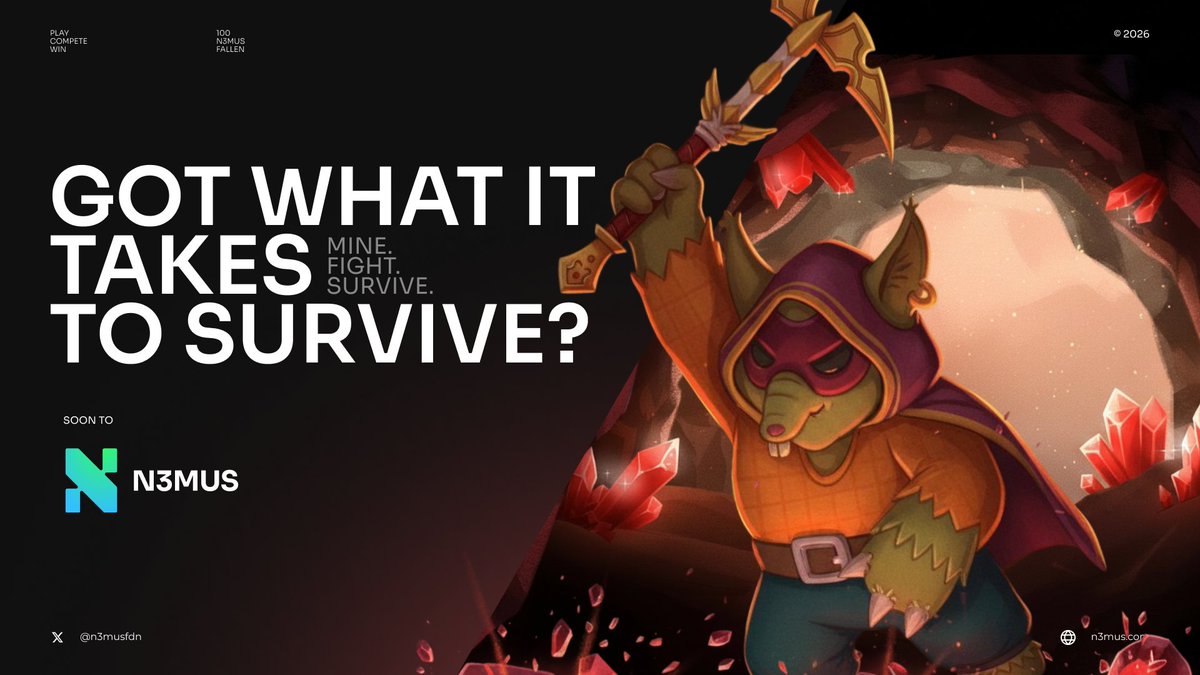
1/ Less than 24 hours until the @playoutmine Tournament begins on N3MUS, powered by @MoonbeamNetwork.
The mines never forget. ⛏️
And tomorrow, neither will the leaderboard.
Secure your spot before the grind starts 👇
8
19
159
2,865
Moonbeam Ukraine retweeted
May 11
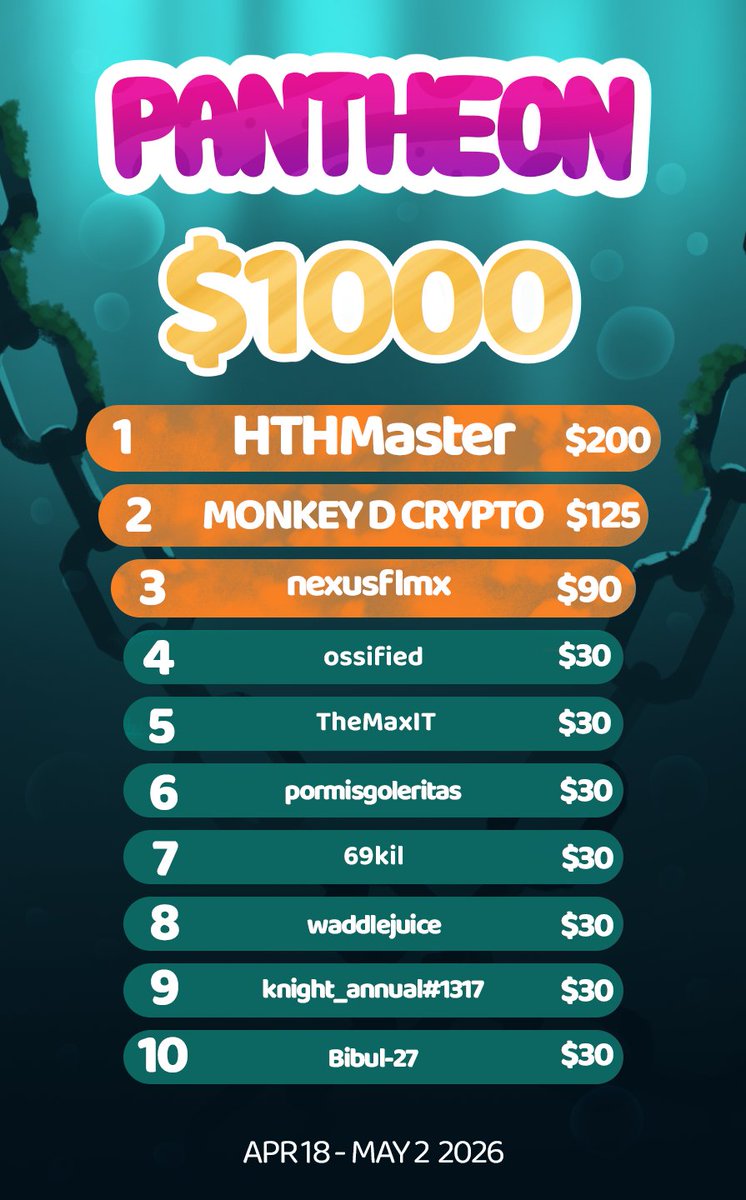
🏆 KUGLE PROTOCOL 4 WRAPPED
💰 $1,000 cash prize pool for the Top 100
We just crossed:
🔥 5,000 Kugle accounts
👥 200 players registered on N3MUS
⚡ 350 peak online on Day 1
⛓️ 8,000 on-chain race transactions
From Protocol 1 ($500) → Protocol 4 ($1,000)
The numbers keep growing.🔥
@N3musFdn x @thehellolabs x @MoonbeamNetwork
3
4
14
2,867
Moonbeam Ukraine retweeted

May 13
We’ve spent a lot of time reviewing decks in the accelerator recently, and a few patterns keep showing up. Not as red flags, but as areas where teams are actively tightening things up.
The first is around sequencing. There’s a natural tendency to lead with the broader vision: the full universe, the long-term roadmap, where this could go. That’s all useful context, but it tends to land much better once there’s a clear sense that the core game already works today. Without that, the vision can feel a bit untethered.
The second is how metrics are presented. Numbers like daily active users or growth rates are often included, which is a good sign. But on their own, they’re hard to interpret. What’s becoming clearer is the need to connect those metrics to something more concrete. How they translate into retention, into engagement, and eventually into revenue or a credible path toward it.
The third is around monetization clarity. Not in the sense of having everything figured out, but in making the direction legible. If it’s not obvious how the game is intended to make money over time, it becomes difficult to evaluate the opportunity, even if the concept itself is strong.
None of this is especially complex, but it does require a certain level of discipline in how things are communicated. At a minimum, the strongest decks are starting to do three things consistently: show that the product works today, demonstrate that people are actually using it, and make a clear connection to how that can evolve into a real business.
Teams that get those pieces aligned aren’t just easier to understand. They stand out immediately.
7
7
73
7,171
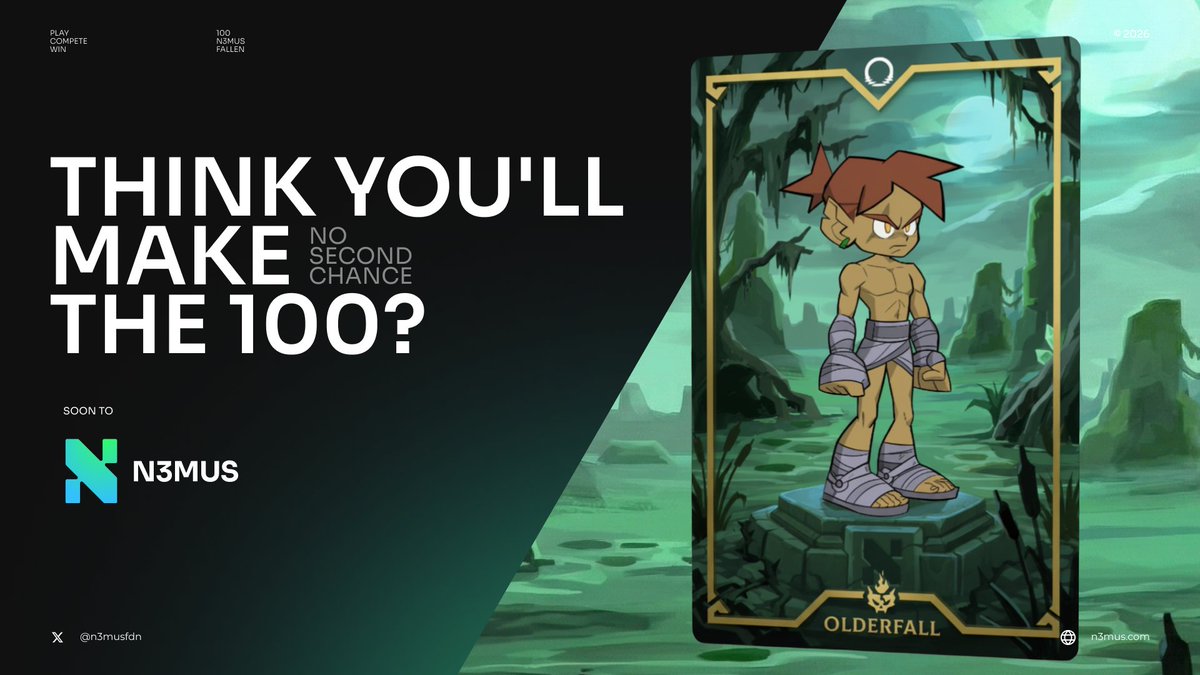
1/ 100 Fallen. That’s it.
Today we launch the N3MUS Fallen NFT, in collaboration with @Olderfall and powered by @MoonbeamNetwork.
A limited drop of 100 units only.
10:00 PM UTC (Monday).
$10 xcUSDC each.
Simple. Accessible. Not for long.
14
112
153
4,645
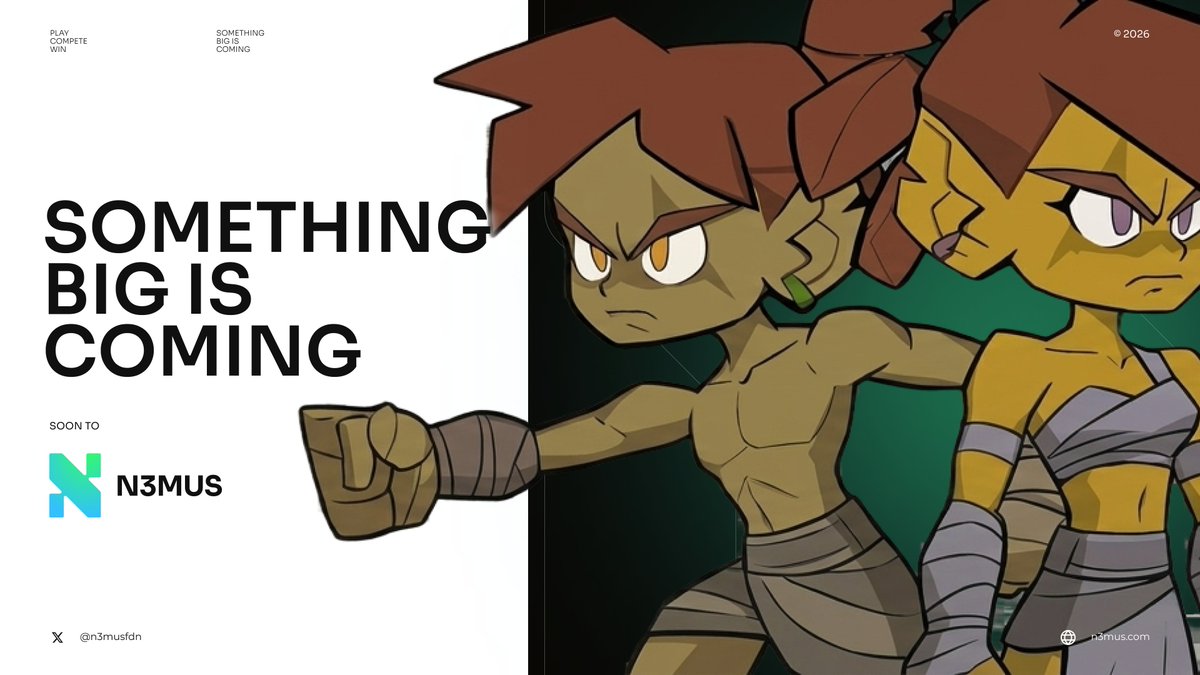
Something has 'Fallen'… and this time, it’s yours to claim.
100 N3MUS Fallen NFTs. $10 xcUSDC each.
Special tributes on @Olderfall. Powered by @MoonbeamNetwork.
This Monday on N3MUS Marketplace.
Be ready.
5
33
54
3,417