Start your day right... Mornings with Richard Cross on SuperTalk Mississippi | Weekdays 6-9am
Joined August 2011
- Tweets 26,739
- Following 1,017
- Followers 10,215
- Likes 299
2,879 Photos and videos






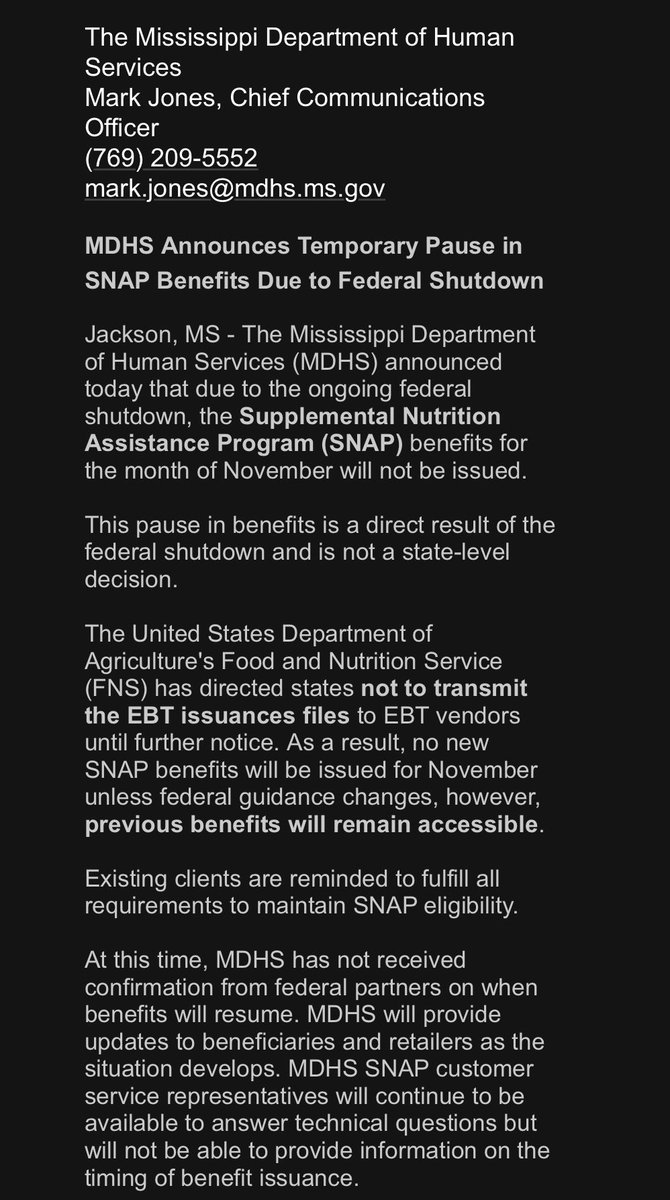

So, Mississippi chose to stay out of online sports betting, missing out on 10s of millions in tax revenue for our state. Now, DraftKings has rolled out a "super app" that places prediction markets side by side with their standard betting app. Good thing we ddin't need any of money for K-12 eduacation, roads and bridges, higher ed or anything else. As @SenDavidBlount told me earlier this year on @MorningsCross , "with prediction markets like Kalshi growing, it's not that much tax revenue anymore." Glad we protected those "brick and mortar" gaming properties. Hope it was worth it.
4
2
5
848
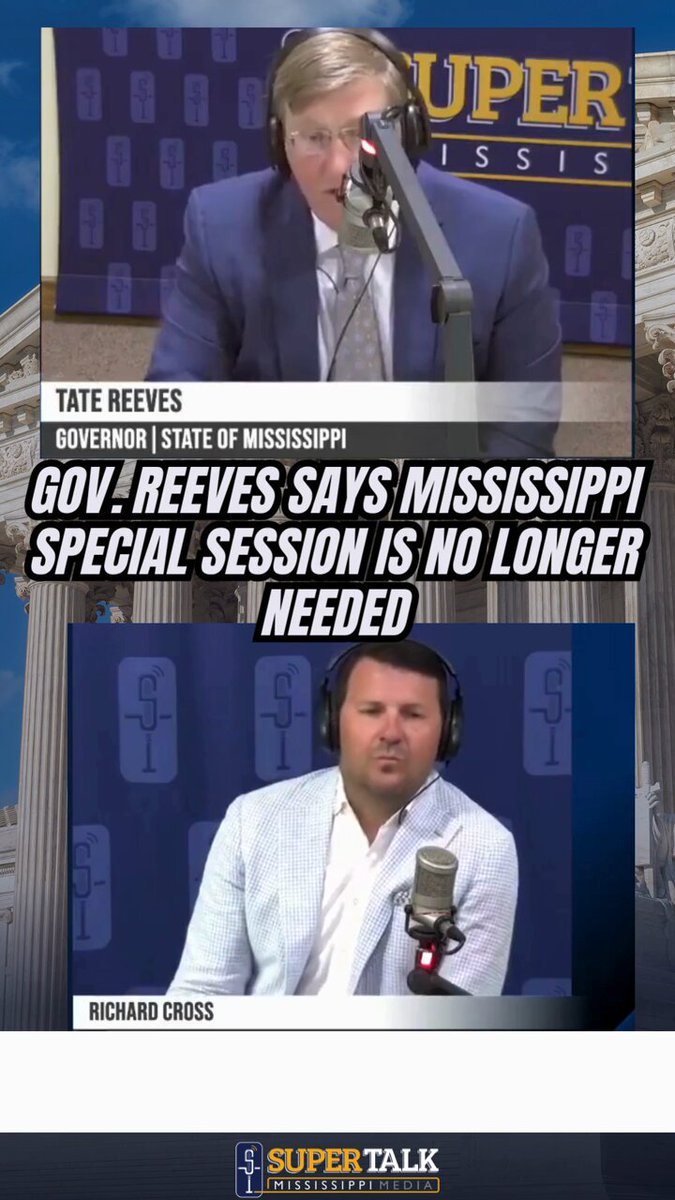
Governor @tatereeves made news on Mornings with Richard Cross, saying there is “no longer any reason” for the Mississippi Legislature to come in next Wednesday for a special session on judicial redistricting.
1
1
1
721
Wow! Kinney Ferris with @VisitOxfordMS tells us @DoubleDeckerArt drew 111,700 visitors last Saturday and the city of Oxford had 228,000 in town for DD, @olemissbsb, @mtradepark and @OxfordSD baseball!
1
1
428
CONTEXT IS NECESSARY HERE:
This special session gives the Mississippi Legislature the opportunity to redraw Mississippi Supreme Court District maps (which will also affect commissioner positions - public service, transportation, etc).
The reaction nationally is “Mississippi is going to redistrict, like Virginia.” That is not accurate…at least not yet.
The Callais decision COULD open the door to congressional restricting in Mississippi, but precious few (if any) legislators or politicos in Mississippi have given an indication there is an appetite for this. Mississippi is currently 3-1 R/D in the US House. While 4-0 is possible if the lines are carefully drawn, 2-2 is also in play.
Perhaps the most interesting part of this conversation going forward is whether Callais would allow the Mississippi Legislature to undo the state legislative district lines that were drawn a year ago, which led to Republicans losing their supermajority in the Mississippi Senate.
Apr 24

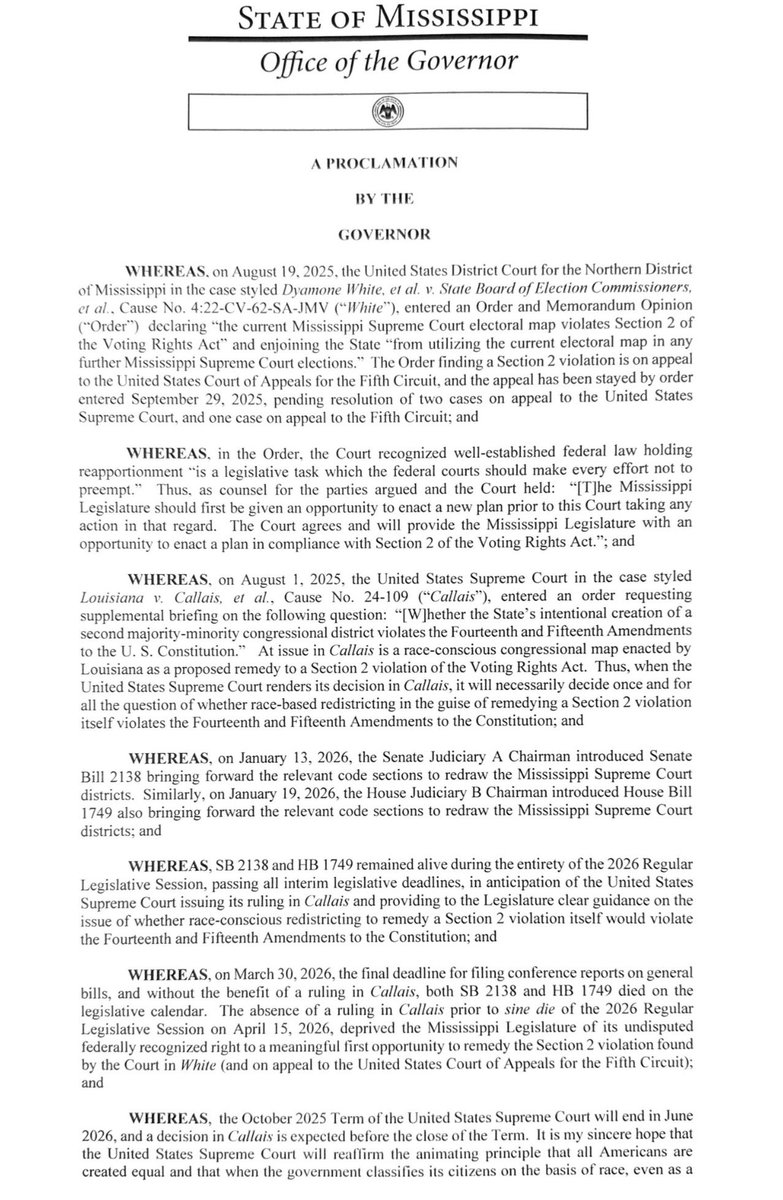
I don’t typically make news on a Friday afternoon, but today I am going to make an exception:
I’m calling a special session.
During the recently completed regular session, the Legislature discussed drawing new maps to comply with a decision from a federal judge from the Northern District of Mississippi - a decision that has been appealed to the 5th Circuit and the appeal has been heretofore stayed pending future U.S. Supreme Court decisions.
The entire world knows the Callais decision has not yet been handed down by the U.S. Supreme Court. It is a decision that could (and in my view should) forever change the way we draw electoral maps.
It is my belief and federal law requires that the Mississippi Legislature be given the first opportunity to draw these maps. And the fact is, they haven’t had a fair opportunity to do that because of the pending Callais decision.
For those reasons, I am using my constitutional authority to allow the Mississippi Legislature to use their constitutionally recognized right to draw these maps once the new rules of the game are known following Callais.
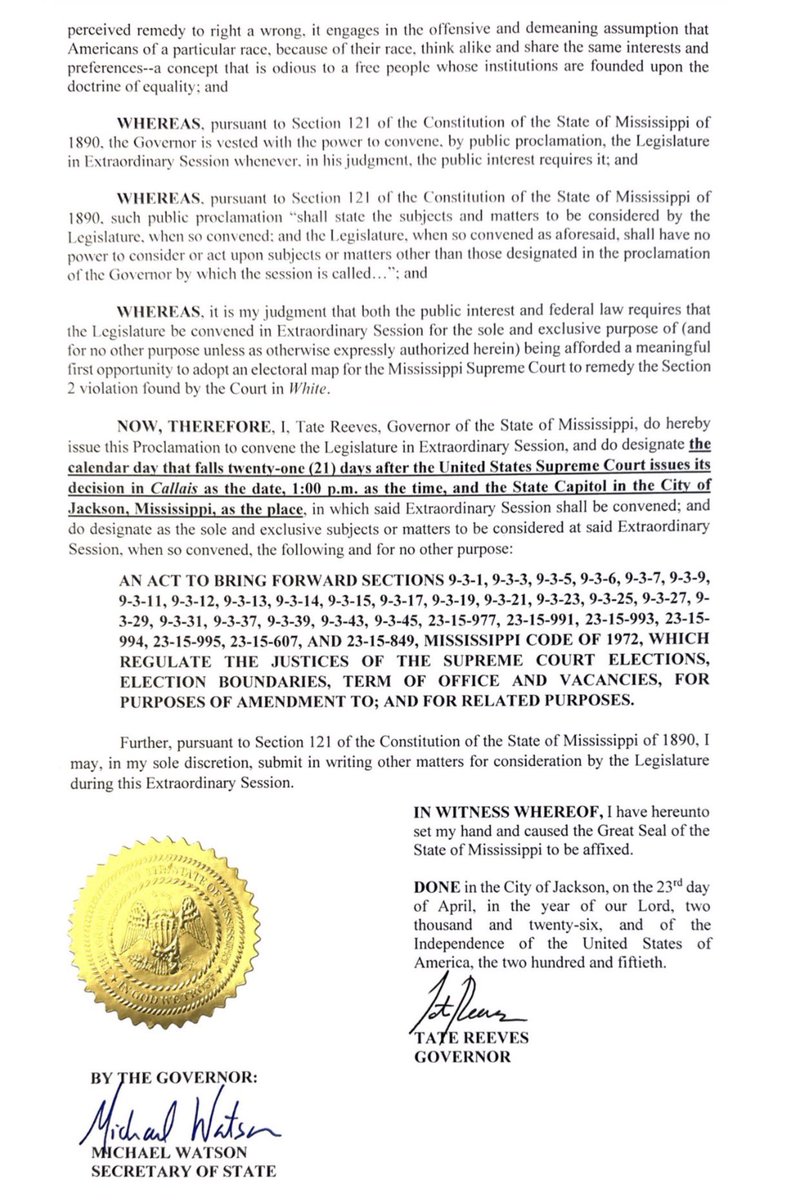
It is my sincere hope that, in deciding Callais, the U.S. Supreme Court will reaffirm the animating principle that all Americans are created equal and that when the government classifies its citizens on the basis of race, even as a perceived remedy to right a wrong, it engages in the offensive and demeaning assumption that Americans of a particular race, because of their race, think alike and share the same interests and preferences – a concept that is odious to a free people whose institutions are founded upon the doctrine of equality.
The special session will take place on the calendar day that falls 21 days after the U.S. Supreme Court issues the Callais decision.
1
1
988
Mornings with Richard Cross retweeted

Apr 15
Same song…
Different verse.
But it is still FALSE!
In 2019, it was Democrat Jim Hood.
In 2023, it was Democrat Brandon Presley.
And, in 2026, it is liberal Democrat Hob Bryan!
And those “secret meetings” he is talking about. Yes I admit it.
I have had many meetings with:
The MS Department of Health.
The MS Dept of Mental Health.
The Division of Medicaid.
Physicians.
Hospitals serving 75% of the Medicaid population.
FQHCs.
Other Republican Governors.
And, believe it or not, I even admit that I had a “secret meeting” with Democrat Senator Bryan and Senator Boyd and Senator Hopson!!
Apr 14

“It’s the Governor’s action, trying for some reason to force Greenwood to close.”
Senator Hob Bryan says decisions surrounding $200 million in federal healthcare funding are being made behind closed doors.
20
15
56
17,234
Mornings with Richard Cross retweeted
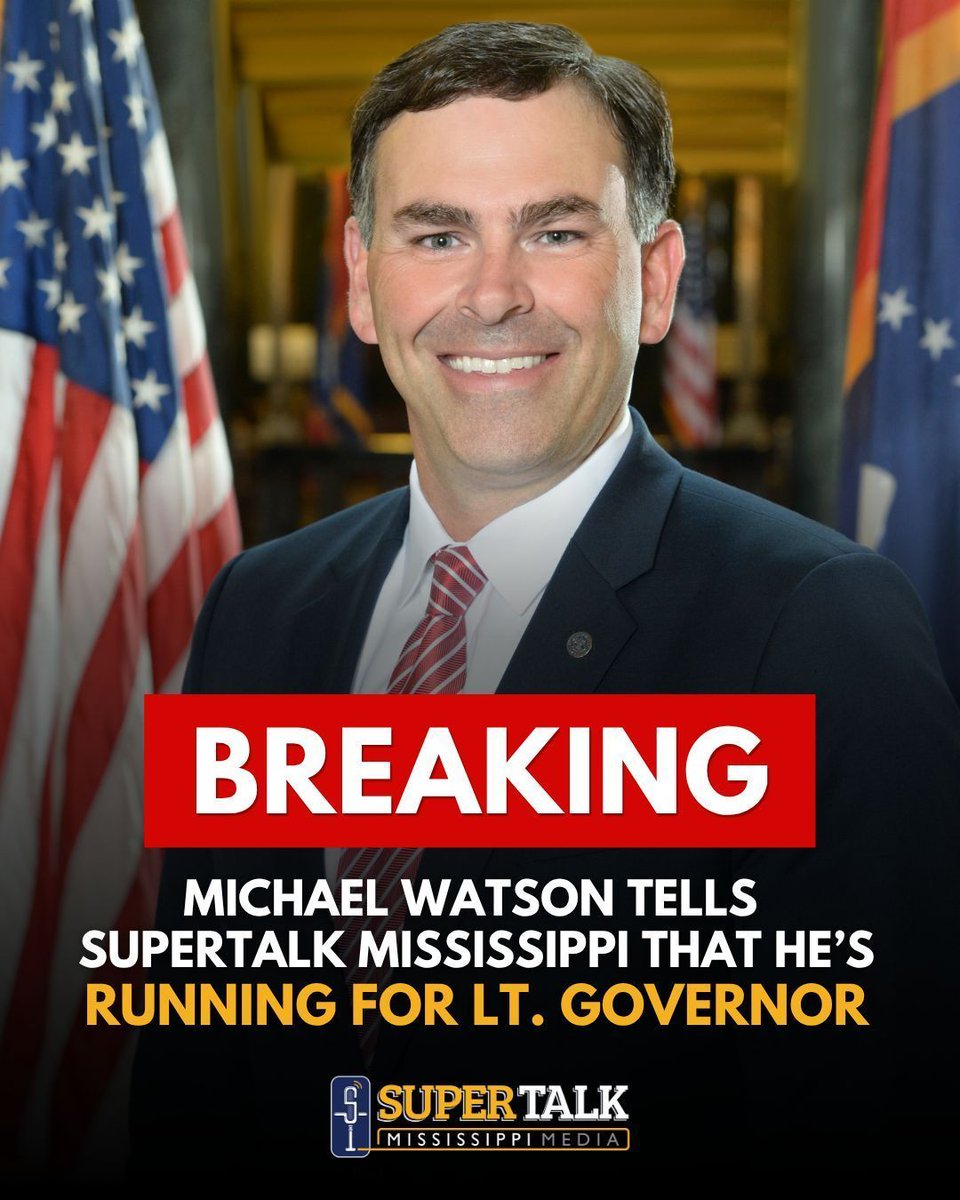
BREAKING NEWS: Michael Watson tells @MorningsCross that he will run for Lieutenant Governor, which would make him the first candidate to officially enter the 2027 race.
Watson, a Republican, has served as Mississippi’s Secretary of State since 2020. He previously represented the 51st District in the Mississippi State Senate from 2008 to 2020.More info to follow.
3
9
39
6,300
LIVE from @VisitColumbusMS: @bassmaster Elite Series 🎣
Mornings with Richard Cross, MidDays with Gerard Gibert, and SportsTalk Mississippi are broadcasting from the Columbus Marina as the Bassmaster Elite Series gets underway on the Tenn-Tom Waterway.
This is the highest level of professional bass fishing, happening right here in Mississippi March 26–29.
326
Mornings with Richard Cross retweeted

Mar 24
🎣 We’re LIVE from Columbus tomorrow!
Mornings with Richard Cross, Middays with Gerard Gibert, and SportsTalk Mississippi will be broadcasting from the Columbus Marina as the Bassmaster Elite Series comes to town!
This is the highest level of professional bass fishing, and it’s happening right here in Mississippi, March 26–29.
🕖 Takeoffs at 7 AM | ⚖️ Weigh-ins at 3 PM
🎶 Live music, food trucks, vendors & more this weekend
FREE and open to the public!
👉 More info: Bassmaster.com

1
1
539
Was curious how long it would take me to get a new, certified copy of my birth certificate. Googled “obtain a new copy of birth certificate TN (where I was born).”
Clicked the link for the TN Dept of Vital Records.
Filled out the online form and reached the checkout in 4 and half minutes.
513
Significant and positive work done today in the Mississippi House of Representatives. Ball now in the Senate’s court. Time to set aside personal differences and #dowhatisbestformississippi!
Well done, House members.
Mar 6

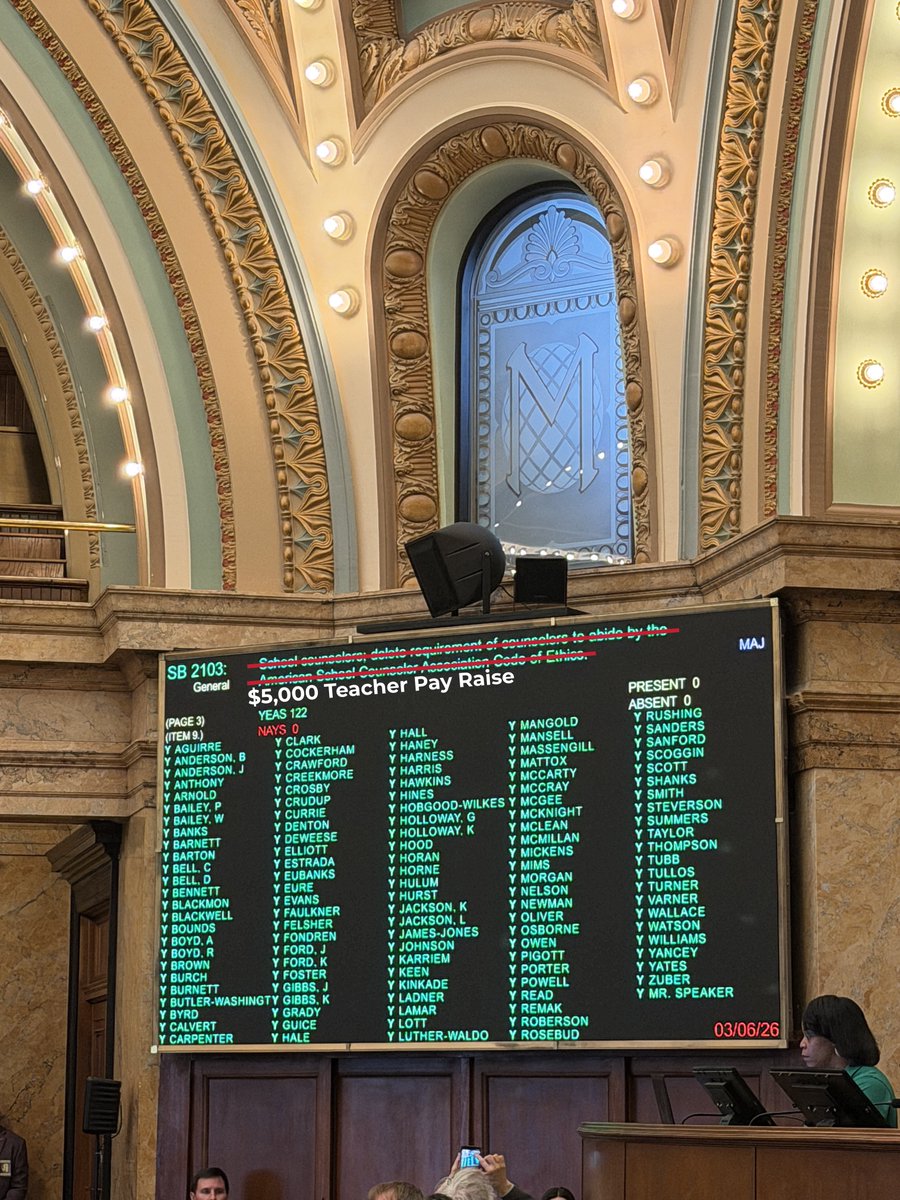
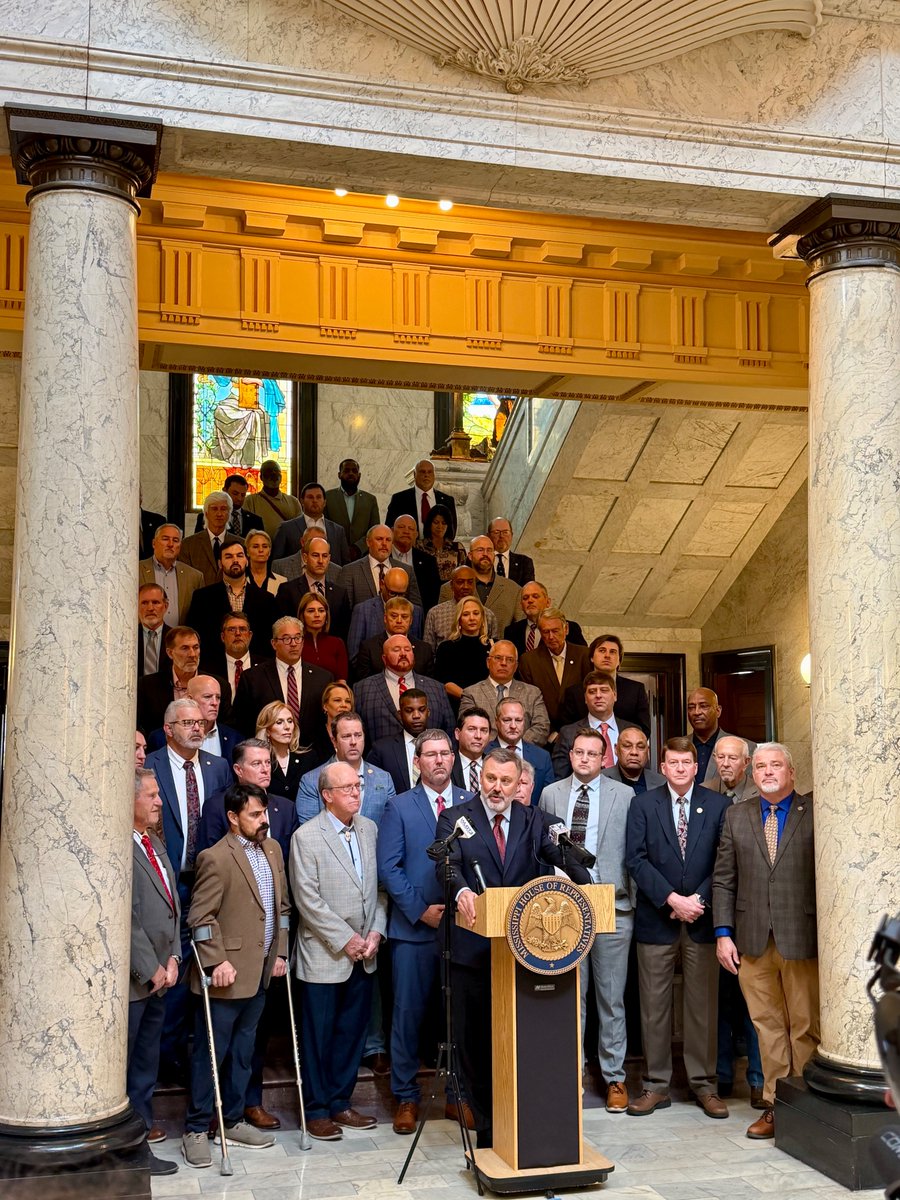
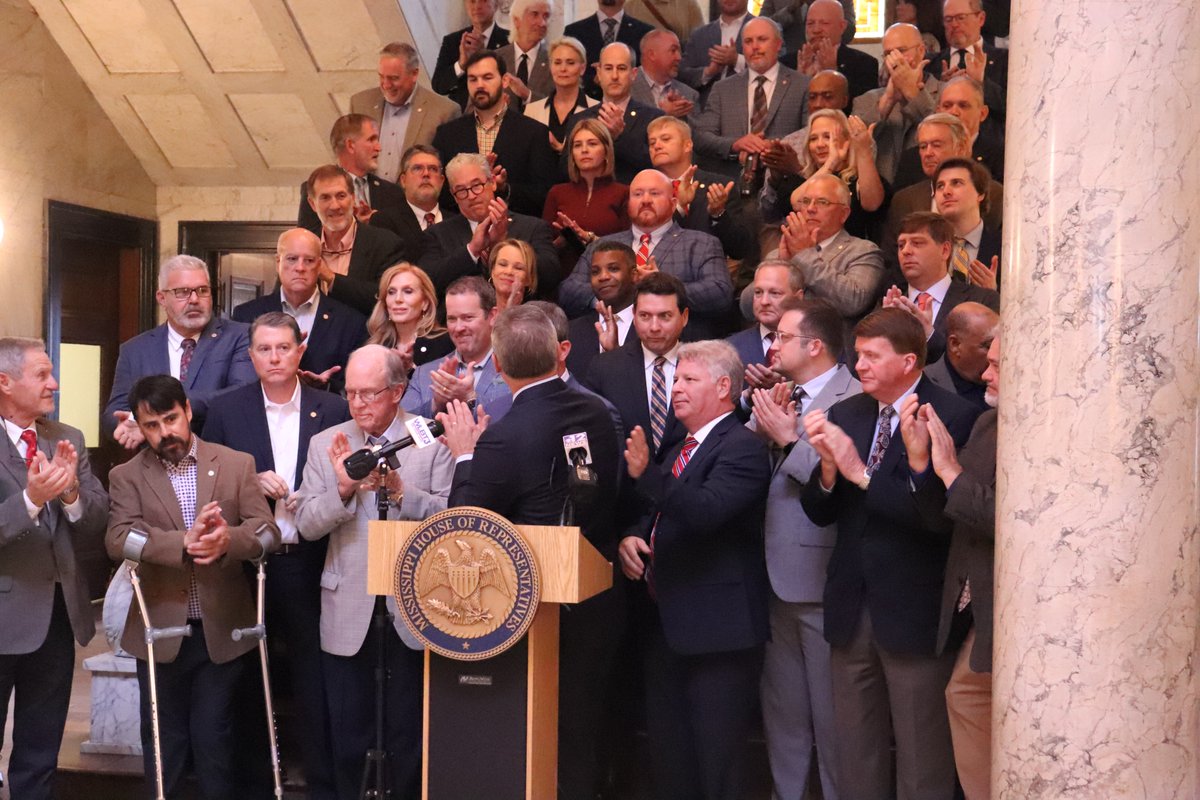
Thank you to the 122 House members that voted to prioritize Mississippi teachers, state employees, and taxpayers. House Education Chairman @robroberson43 and Reps. @KentMcCarty, @JansenOwen, and @Repkwfelsher have worked tirelessly and are to be commended. The House will not rest on the time we have been afforded here. We are going to focus on doing big things that positively impact Mississippians.
To our teachers, you deserve no less and you deserve the truth. If you are an educator, or passionate about our education system, a first responder, or concerned about PERS Tier 5, read Senate Bill 2103 as amended by the House and decide for yourself if want your State Senate to deliberate, or continue with inaction.
This is not about ownership or legislation being finalized in a House Bill versus a Senate bill; as the only vehicle alive now is a Senate Bill amended by the House. This is about pursuing the best policy on the table for Mississippians. In the House, Mississippians will remain the focus, not political plays.
1
2
716
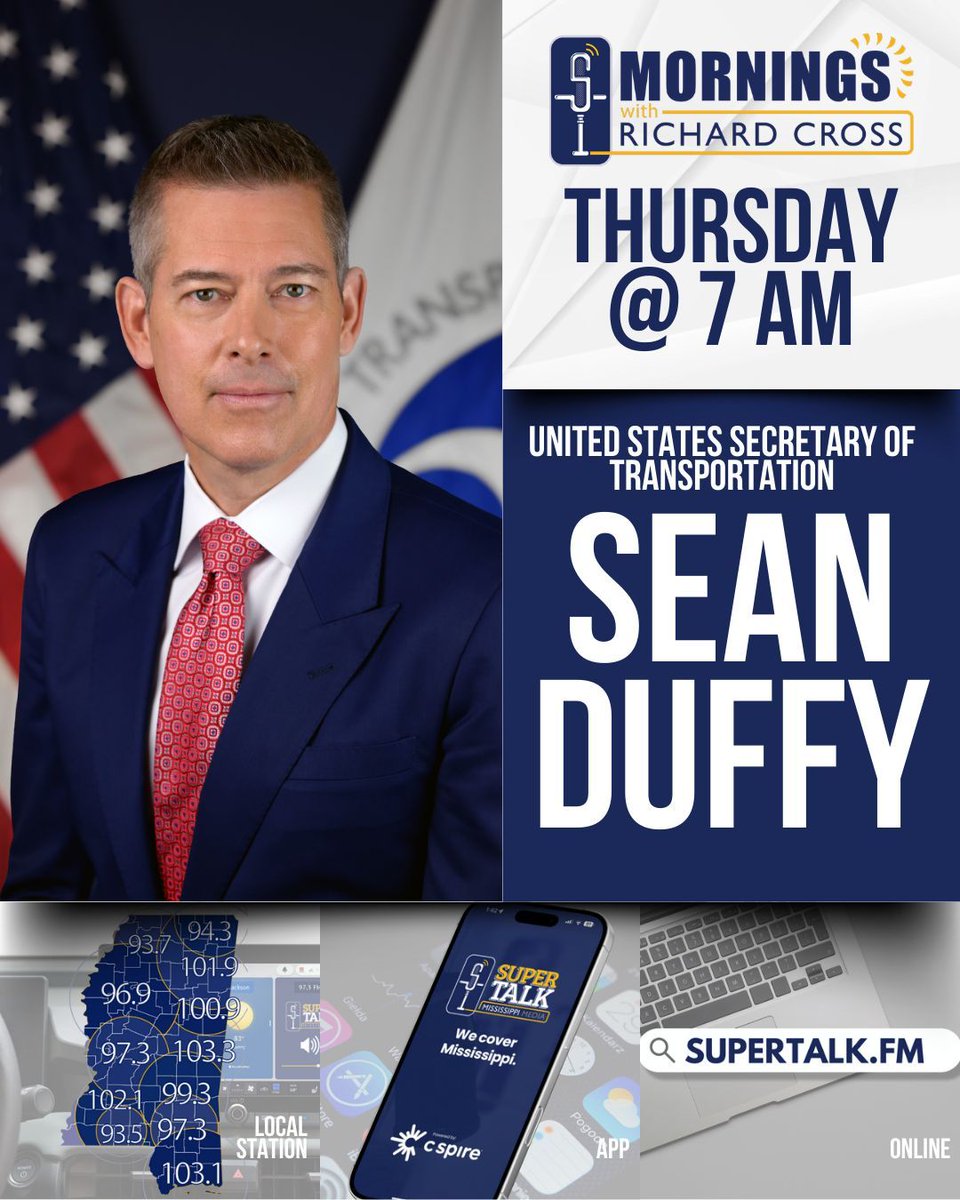
Big guest tomorrow morning on Mornings with Richard Cross.
@SecDuffy will join Richard Cross on Thursday at 7 AM to discuss transportation issues impacting Mississippi and the nation.
🎧 🎧 Listen live across the SuperTalk Mississippi network, on the SuperTalk app, or online at Supertalk.fm.
2
1
3
258
The Mississippi House Education Committee decided to let SB 2523 (performance based funding) die in committee today. The excuse for not advancing the bill to the House floor is to give time for the development of a new funding formula by a consulting company, the National Center for Higher Education Management Systems.
NCHEMS is the same company that developed a funding formula about a decade ago that was never implemented. Assume they will want to be paid again?
That formula would have allocated state tax dollars based largely on performance metrics. Instead, the IHL opted for socialism.
Status quo remains incredibly popular.
The IHL won’t fix its own problems. They want the legislature to allocate money and then leave them alone.
So at least for now, the legislature chooses not to hold the IHL accountable for poor graduation rates and laughably low retention rates at a majority of its schools.
Compared to its colleagues in the SEC, Mississippi State and Ole Miss are woefully underfunded. But I suppose that’s understandable when they are tasked with propping up 6 other in-state schools.
10
2
9
4,218
Getting the SAVE America Act "on the floor" and putting Democarts "on the record" is nothing but performative. 60 votes for this bill don't exist. Why is Senator Thune playing word games? 85% of all Americans support voter ID and proof of citizenship. Pass the bill with the talking filibuster. Now.
Feb 25

🚨 BREAKING: Senate Leader John Thune confirms HE'S FORCING A VOTE on the SAVE America Act, he will put Democrats ON THE RECORD opposing the 85-15 issue
This MUST pass! Voter ID, citizenship — common sense 🇺🇸
"We will put the Democrats on the record! [...] We'll get it on the floor, have a vote, we will make sure the Democrats are ON THE RECORD."
"It's a stark contrast between Republicans and Democrats on how they want to handle elections."
"This is gonna put them in a VERY difficult position. If I were running as a Democrat in the 2026 midterm elections, I would NOT want to have to defend that position!" @LeaderJohnThune
3
1
6
772
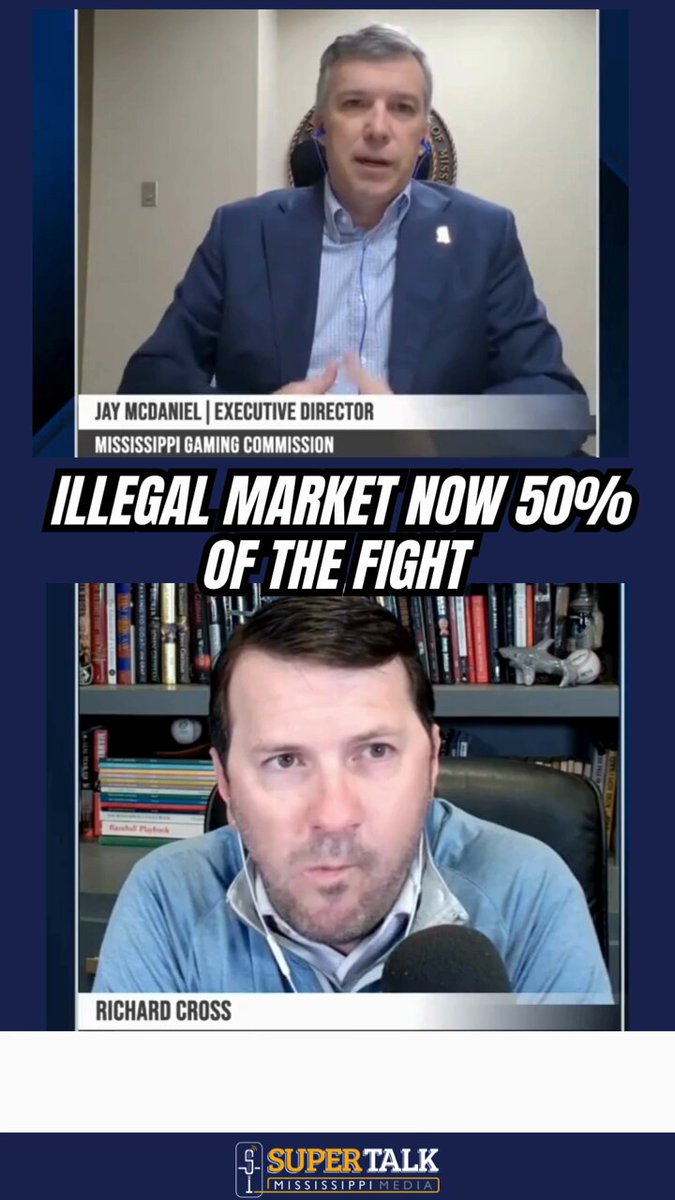
Jay McDaniel, Executive Director of the Mississippi Gaming Commission, says the fight against illegal operators has become a nationwide battle. “For every five we shut down, ten more take their place.”
McDaniel says what used to be a small part of his job is now half of it, as offshore sites and unregulated platforms continue targeting Americans.
The bigger question? Why hasn’t federal enforcement made this a higher priority? Especially as high-profile sports betting scandals make headlines.
1
2
803
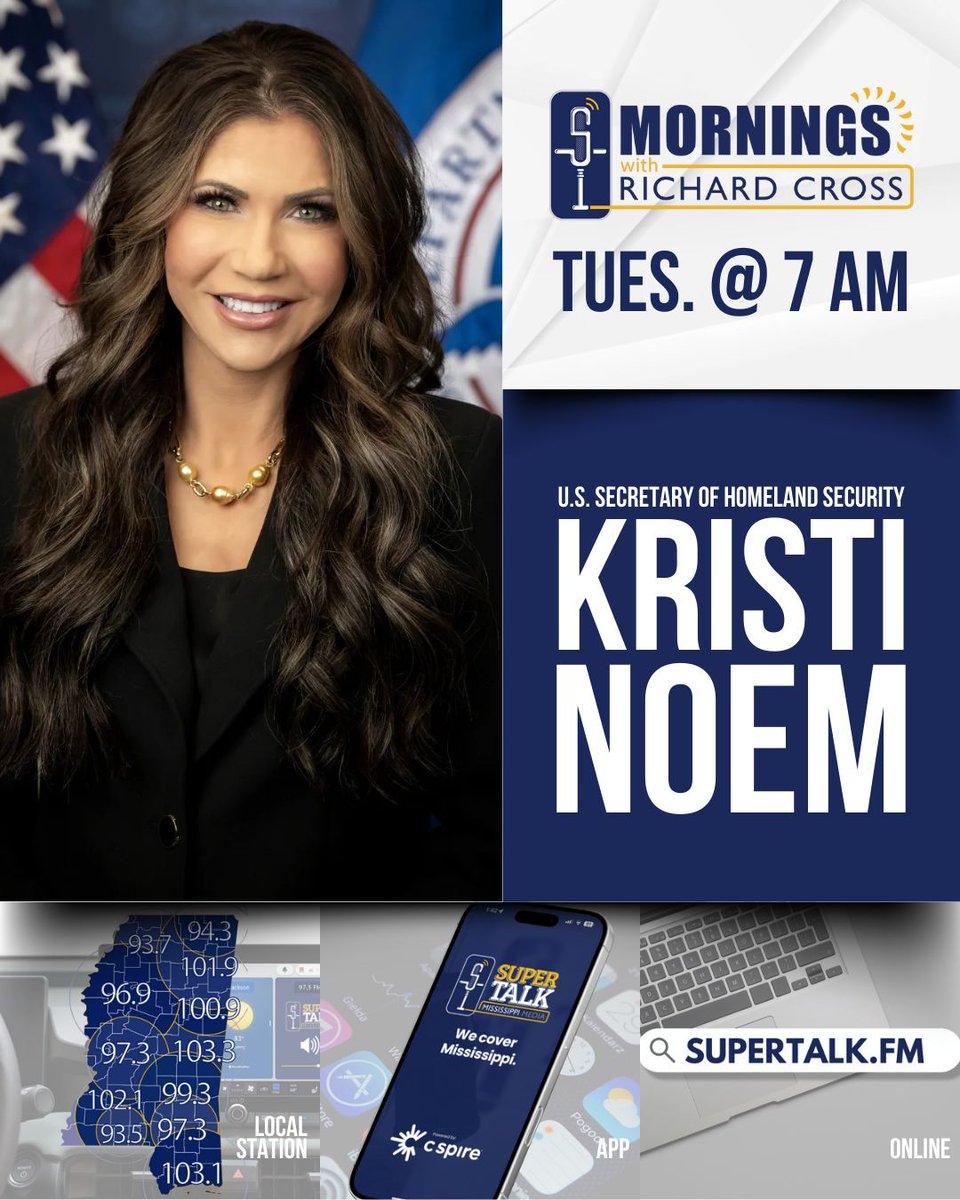
If you missed my conversation with @KristiNoem, you can listen here ⬇️. Appreciate the Secretary taking the time to sit down and visit with me. She was kind, smart and came across incredibly genuine…and was very complimentary of Mississippi.
Watch the full exclusive interview with Richard Cross here: youtu.be/QXs2nYjFHNU youtu.be/QXs2nYjFHNU
2
440
🚨 EXCLUSIVE - AIRING THIS MORNING 🚨
Kristi Noem, U.S. Secretary of Homeland Security, joins Richard Cross for an exclusive interview airing this morning at 7 AM on Mornings with Richard Cross.
Don’t miss this must-hear conversation.
⏰ 7 AM
📱 Listen live on the SuperTalk app or at supertalk.fm
1
274
🚨 EXCLUSIVE INTERVIEW - AIRS TOMORROW 🚨
Kristi Noem, U.S. Secretary of Homeland Security, sat down exclusively with Richard Cross for a pre-recorded, one-on-one interview you’ll hear only on Mornings with Richard Cross.
⏰ Tuesday @ 7 AM
📱 Listen live on the SuperTalk app or at supertalk.fm
4
335
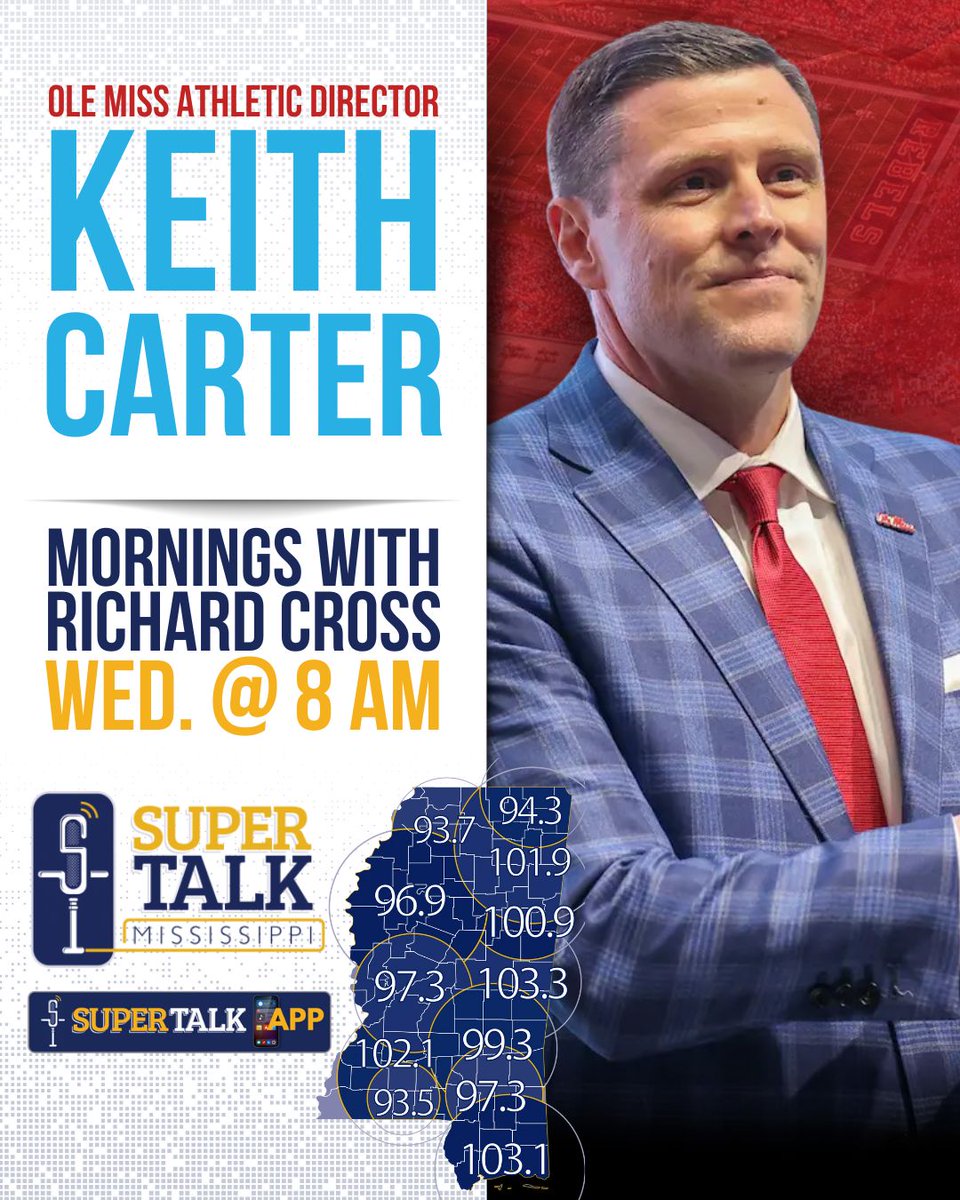
Chaotic week, OM crowd estimate for Fiesta and update on Trinidad 🇹🇹 from @KeithCarterOM this morning. Watch ⬇️
Full interview: youtu.be/SPAYiSbvuEY
686

17 Dec 2025
Powerful conversation with Crystal Reed and Dr Barry Bertolet.
17 Dec 2025
“I had a life, and then I didn’t.”
Crystal Reed shares her powerful story of living with hypertrophic cardiomyopathy (HCM), a serious heart condition that slowly took away her ability to do everyday things.
A newer medication gave her life back.
3
833
Mornings with Richard Cross retweeted
17 Dec 2025
“I had a life, and then I didn’t.”
Crystal Reed shares her powerful story of living with hypertrophic cardiomyopathy (HCM), a serious heart condition that slowly took away her ability to do everyday things.
A newer medication gave her life back.
1
2
6
4,500