(En; Fr; De; It; Esp; Ru; Pt; Ar, …) Books, records, zines, artists' publications and editions - events and exhibitions.
Joined July 2010
- Tweets 4,190
- Following 271
- Followers 4,592
- Likes 82
765 Photos and videos




May 31
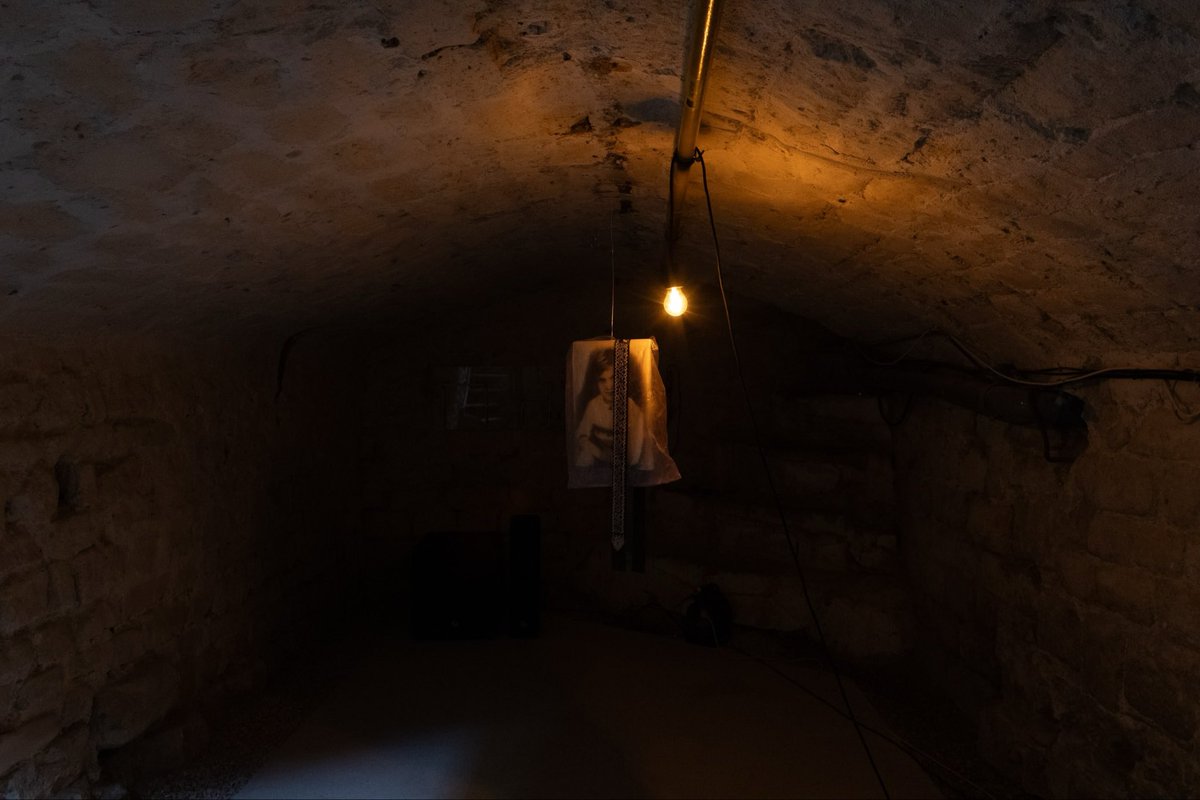
Maman sous cellophane
Marko Kolomytskyi
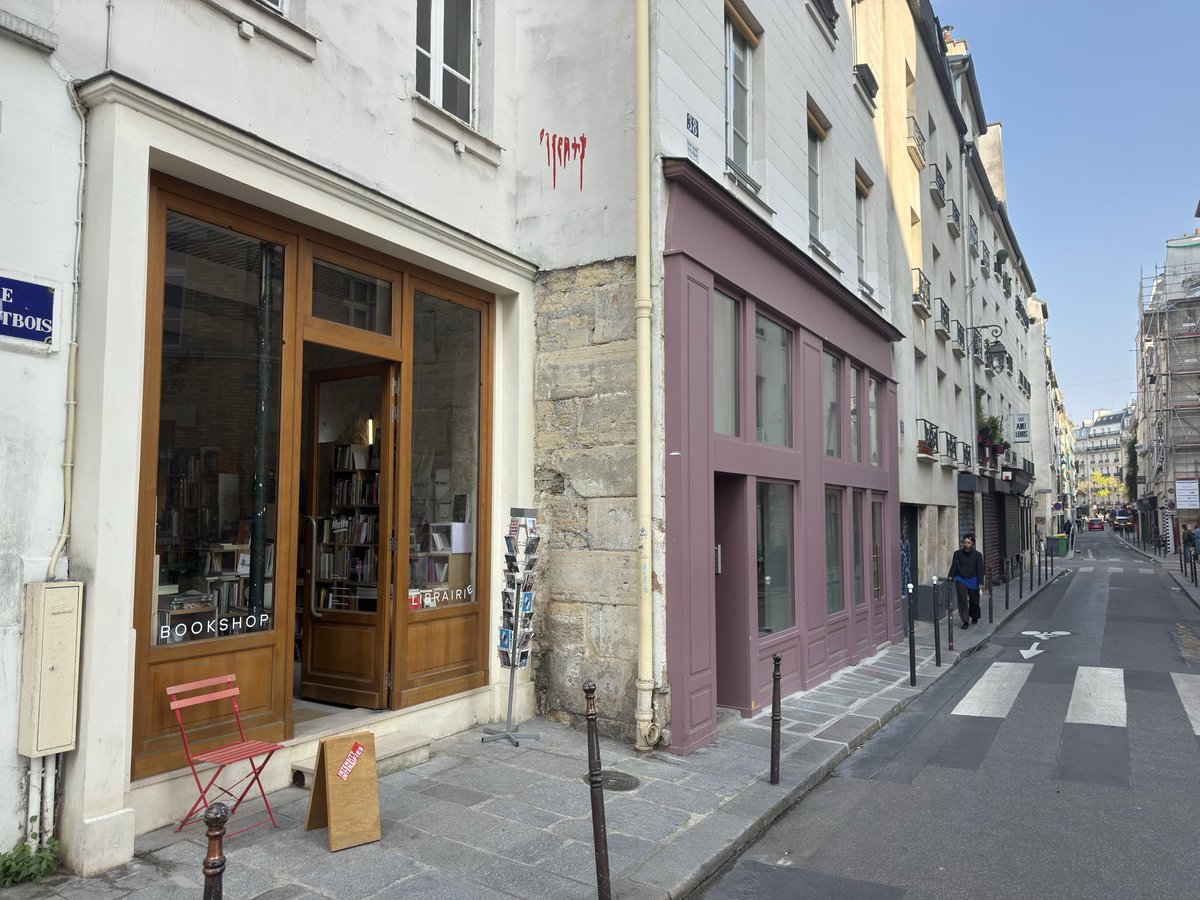
On view from 23 May until 15 June 2026 at Motto Paris.
“In the face of these intrusions, Marko Kolomytskyi’s work seems to affirm that continuity remains possible, and that forms of tenderness may still persist amid violence and rupture. His work reflects a particular attentiveness to the complex past of his family, his country, and his own trajectory. At a time when dominant narratives increasingly flatten identities and histories, Marko Kolomytskyi instead seeks to preserve their complexity. The mosaic of fragments composing the exhibition becomes a way of reflecting on what shapes us, while also questioning the often blurred boundaries between our personal histories and those of the territories from which we come.
The exhibition also reflects on what continues to circulate between people despite distance, war, and time: voices, images, gestures of protection — ways of sustaining a connection when places, people, or objects themselves become inaccessible. In this sense, Maman sous cellophane speaks to what still remains possible: rebuilding fragile continuities, inventing new forms of belonging, and preserving, amid the fragmentation of the world, a capacity for closeness, tenderness, and sensitivity.”
— Sasha Baydal
Tiohtiá:ke / Montréal
May 2026
Motto Paris
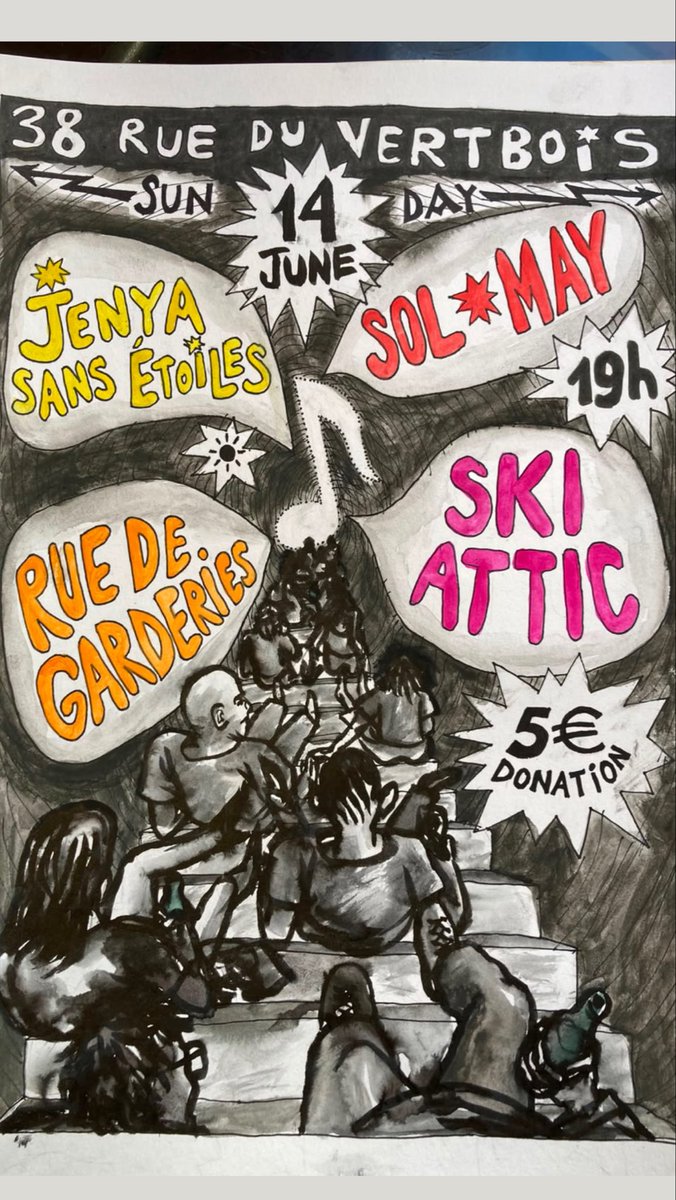
38 Rue du Vertbois
75003 Paris
68
May 5
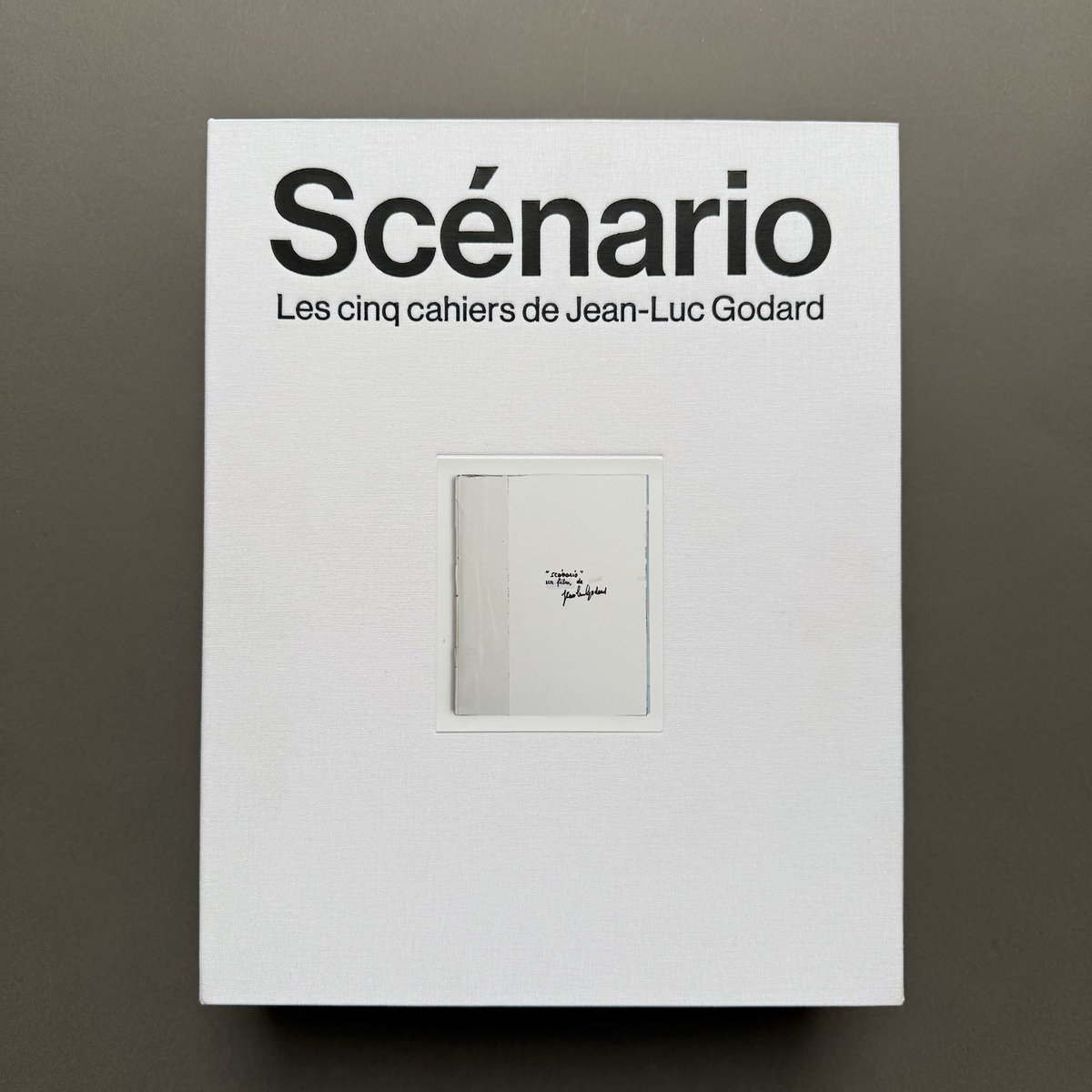
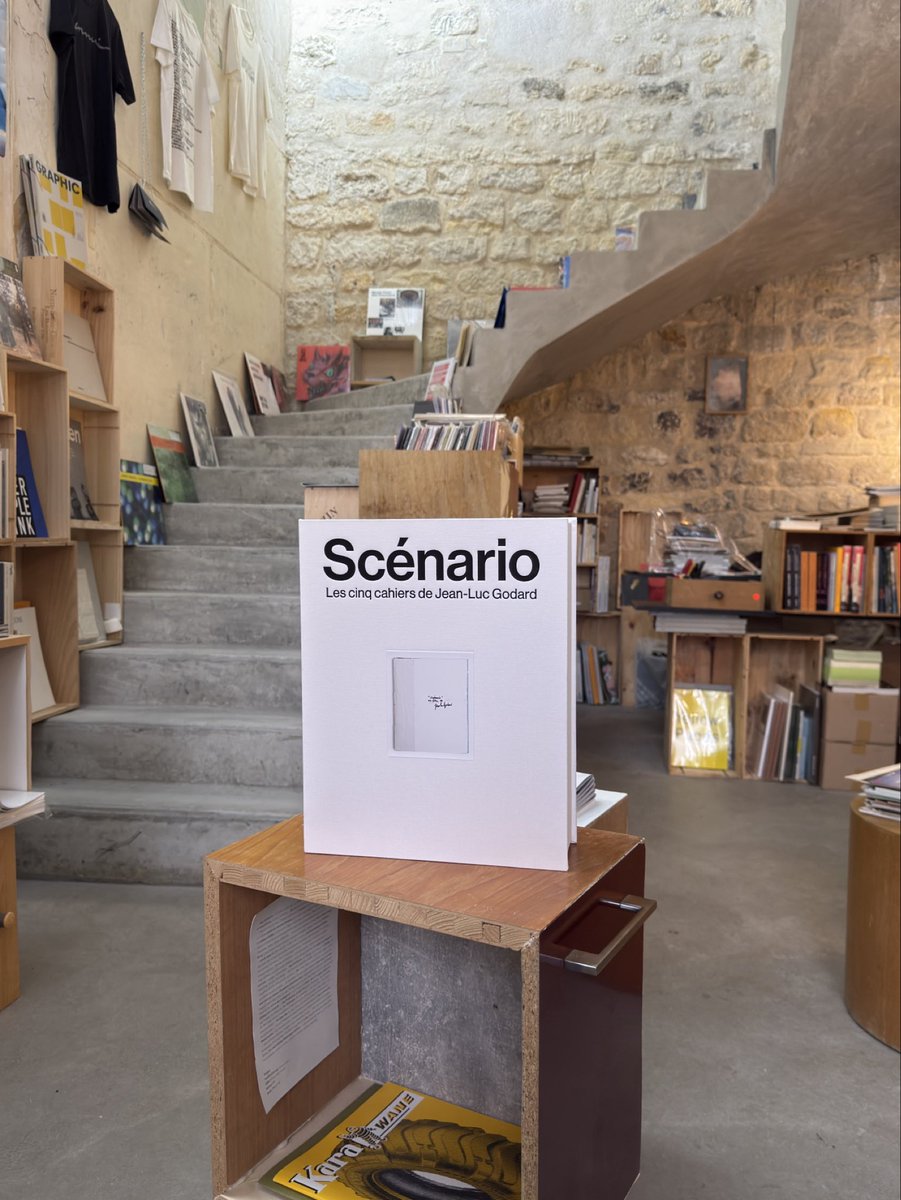
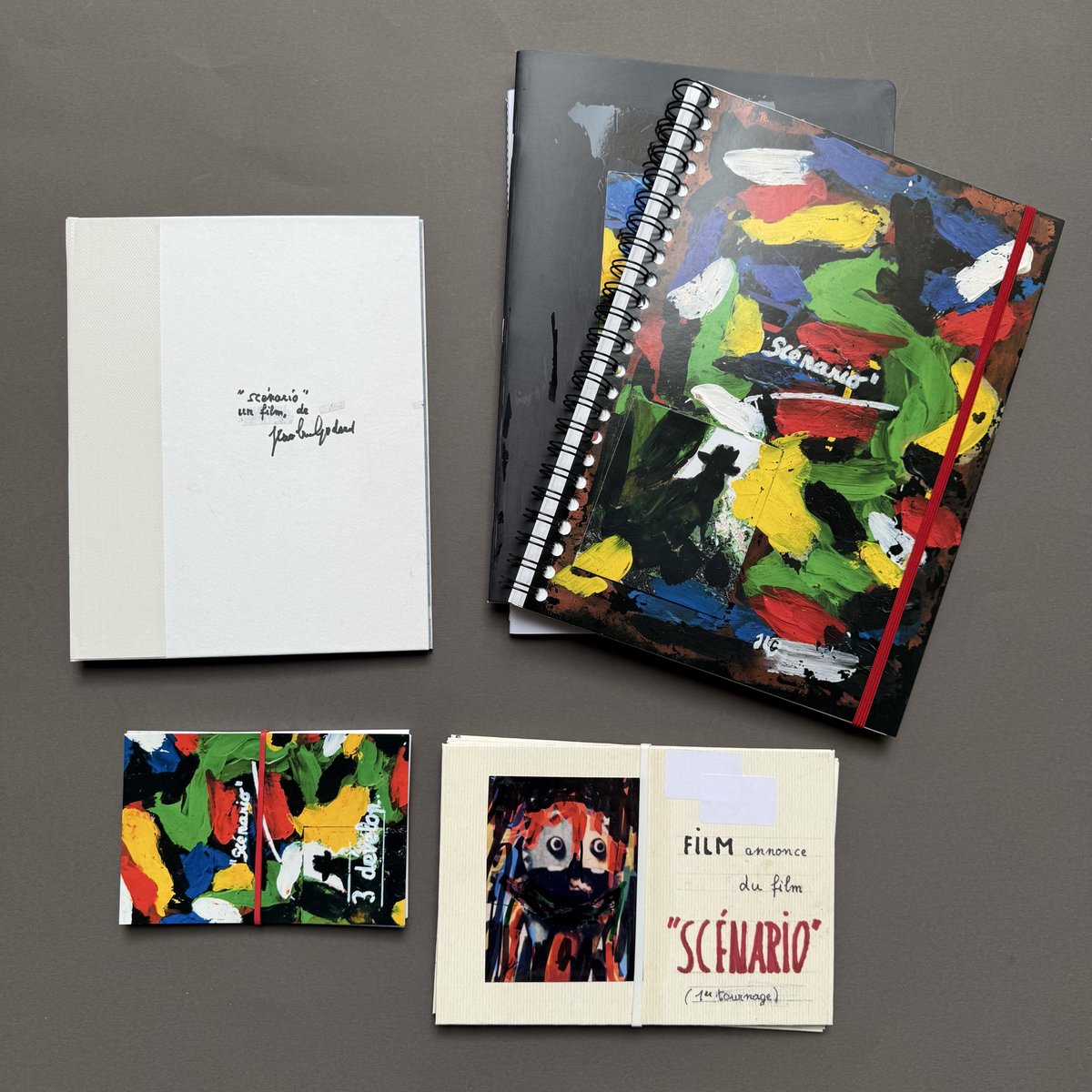
Scénario – The five notebooks by Jean‑Luc Godard
Le Livre d’Image Éditions & Editions RWB
(English / French)
This boxset brings together, reproduced identically, the five Scenario notebooks by Jean‑Luc Godard, created between May 2019 and October 2021. The notebooks were printed and bound in July 2025 by Grafiche Milani, Segrate (Milan) in one thousand numbered copies.
Filmmaker Jean‑Luc Godard (1930‑2022) considered editing as an instrument of thought in service of all the arts. After completing The Image Book in 2018, he begins a new project, Scénario, which he believes will be his final film—and it indeed was. From this ultimate work, an open work where project and realization merge (“The scenario,” Godard said, “is written at the end”), five notebooks remain, five sketches for a film composed of images, painting, drawing, photography and texts cited or invented.
These notebooks are “paper films”: freed from cinema’s technical apparatus, Godard conceives them through displacements, pentimenti, repetitions, as a counterpoint to the themes developed in his work.
Between the completion of the film The Image Book (Special Palme d’Or at the Cannes Film Festival in 2018) and his voluntary death in September 2022, Jean‑Luc Godard attempted to create a project initially conceived as an unprecedented form combining theater, opera and cinema. Difficulties encountered with various partners, compounded by Godard’s growing fragility, necessitated a rescaling of Scenario: as cinema’s heavy machinery seemed increasingly difficult to mobilize each day, the preparatory notebooks became the only viable outcome of the project.
1
110
May 4
l’eau des fleurs
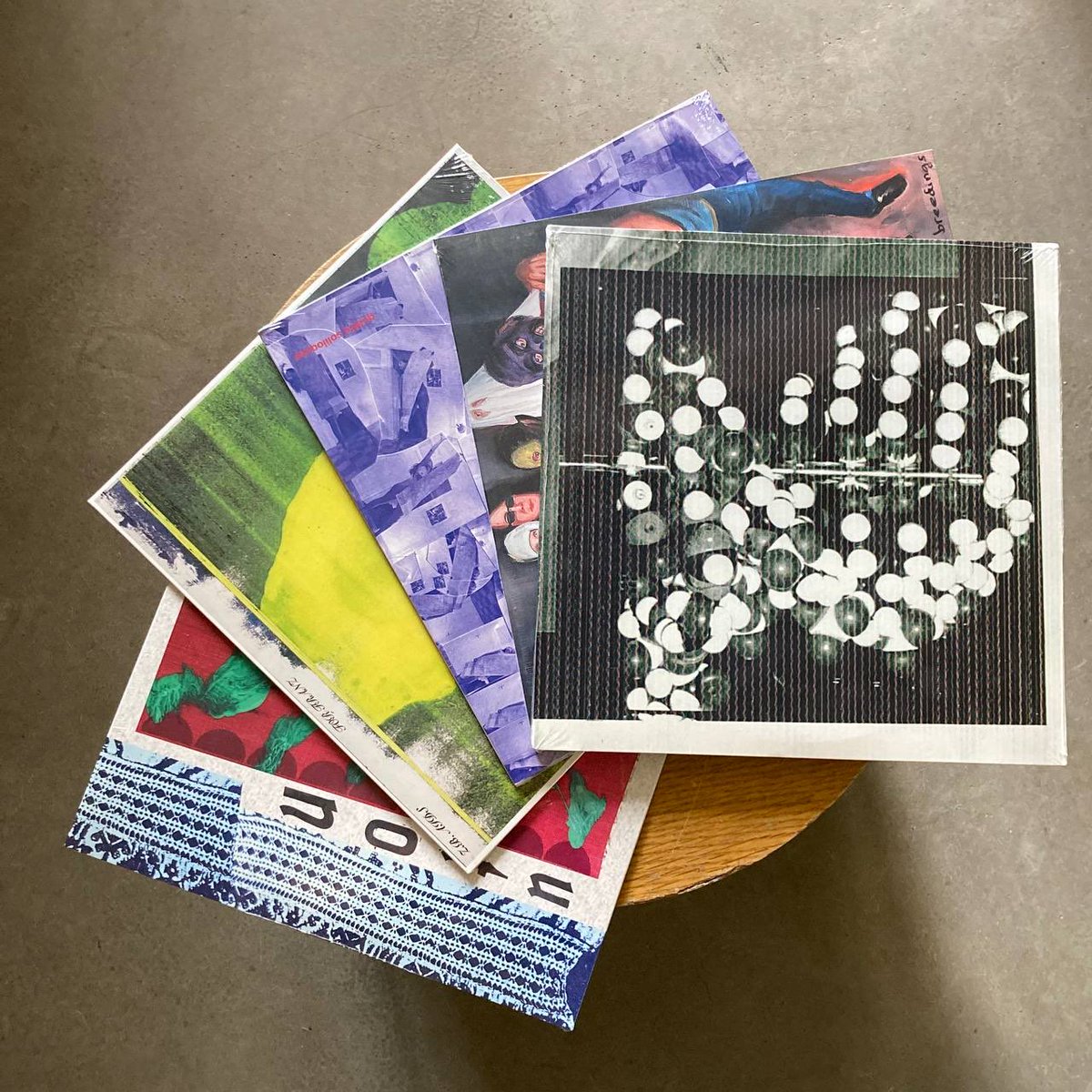
Now available:
🎵 Ravi Shardja — Quatre soliloques
🎵 Uton — Unusual Suggestions
🎵 Z.B. Aids — For Franz
🎵 Los Lichis — Eerie Breedings
🎵 Smegma & L’Autopsie A Révélé Que La Mort Etait Due A L’Autopsie — Transmissions des fluides
#experimentalmusic #soundart #vinyl #leaudesfleurs #newmusic #avantgarde
1
127
May 2
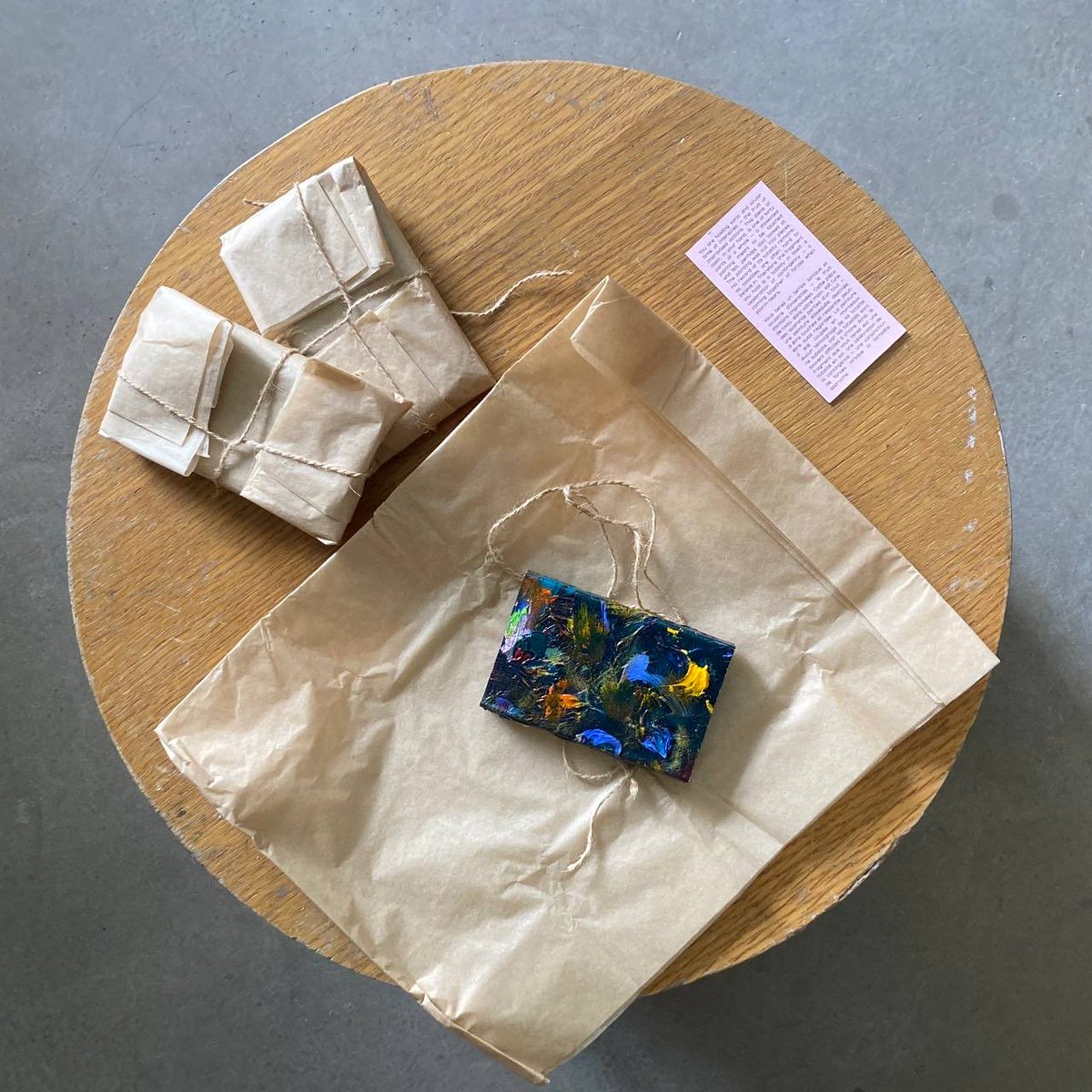
Storm Coming (Cassette)
Wysocka / Federea
Via Cava @via
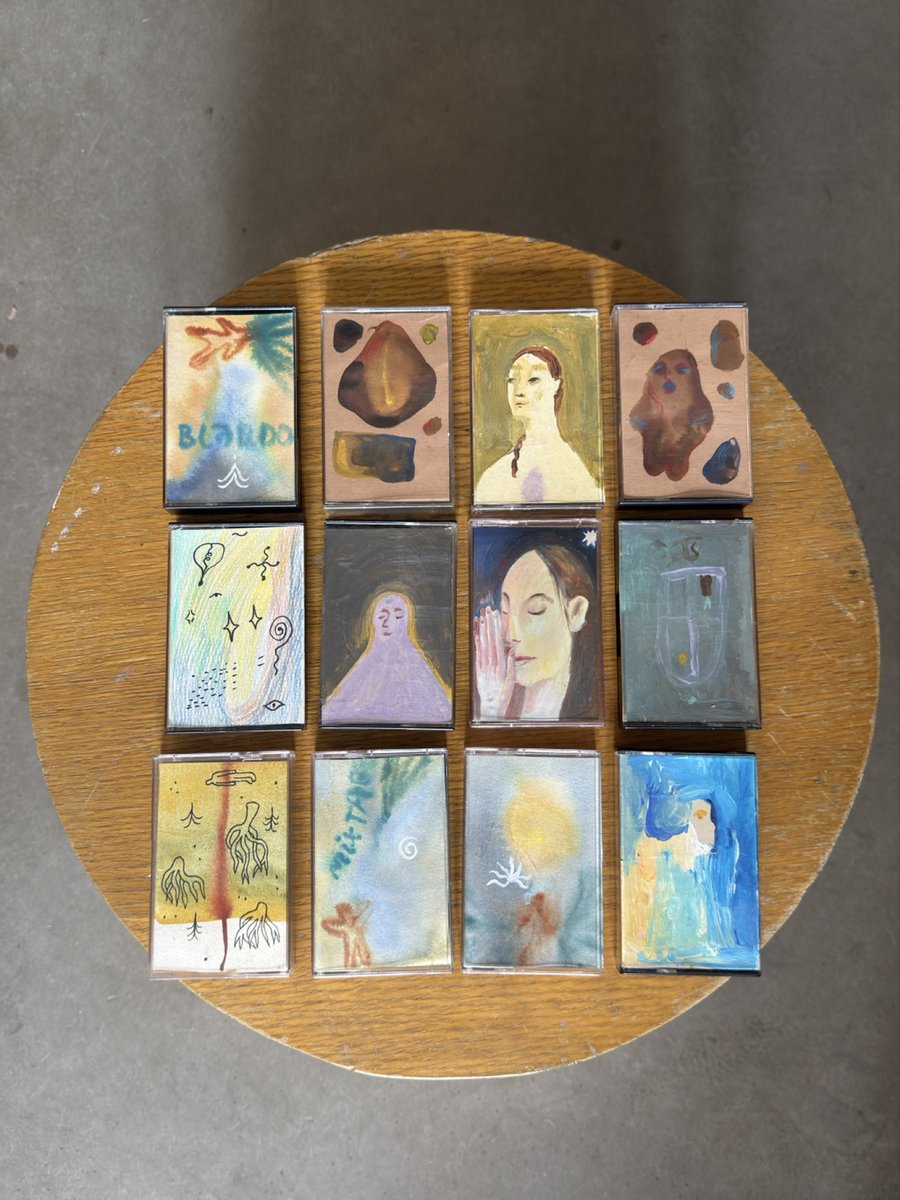
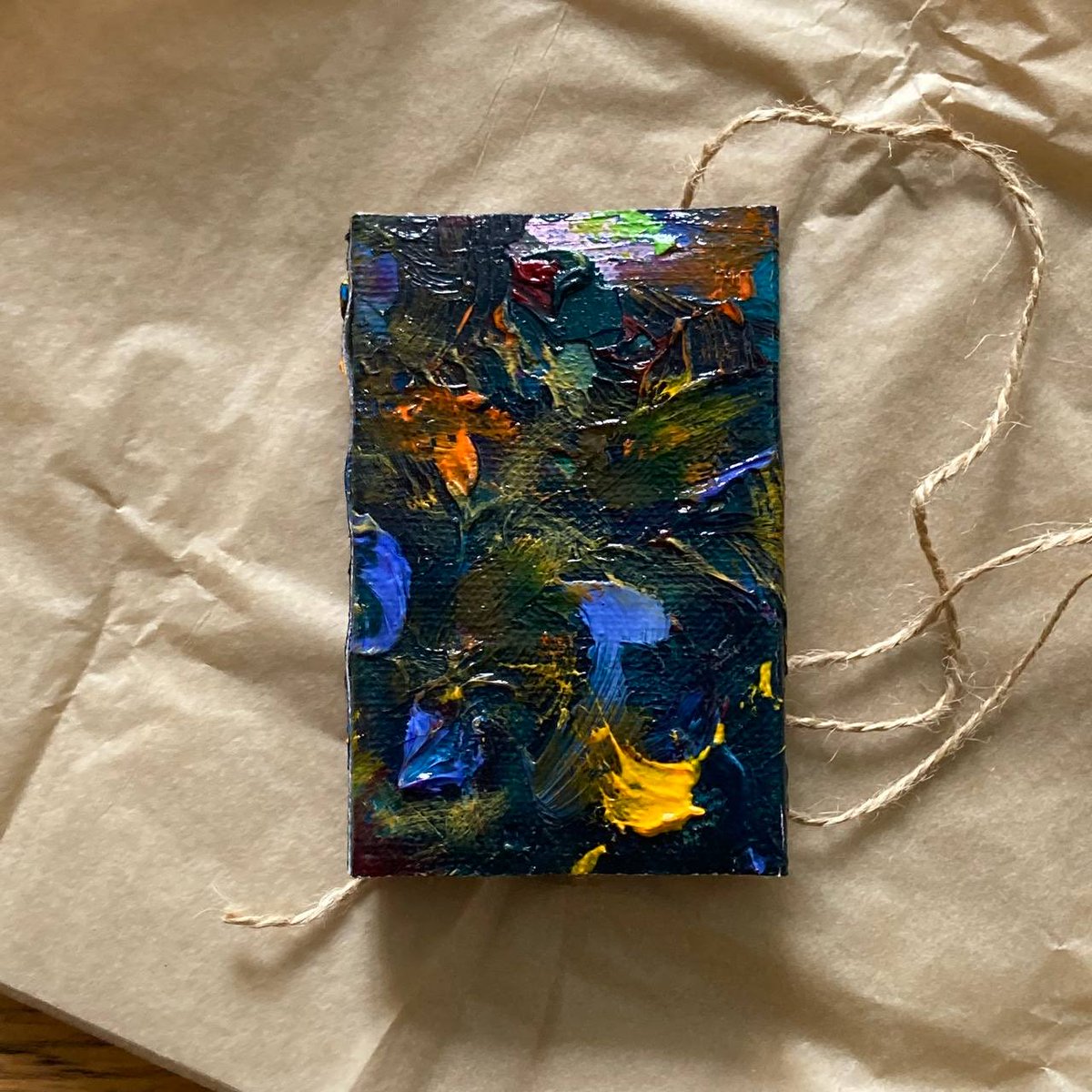
This album is recorded on 40 cassettes whose covers are made from a piece of one canvas created for the occasion:
"You are holding sonic and ocular time of intensities — the fruit of improvised actions. This piece of cloth, in your hand, is one of forty parts of a whole — a dissected painting meant to be touched and felt, perhaps also looked at. The painting was cut into pieces. No record of its totality remains, as totalities are often hard to believe in. Therefore, the fragment you hold is a totality in itself, a celebration of contingency — a coming together of forces when storm nears."
Cet album est enregistré sur 40 cassettes dont les couvertures sont faites d'un morceau de l'une des deux toiles réalisés à cette occasion :
"Vous tenez un temps sonique et oculaire d’intensités — le fruit d’actions improvisées. Cette pièce de tissu, dans votre main, est l’une des quarante parties d’un tout — une peinture disséquée, destinée à être touchée et ressentie, peut-être aussi regardée. La peinture a été coupée en morceaux. Aucun témoignage de sa totalité ne subsiste, car les totalités sont souvent difficiles à croire. Ainsi, le fragment que vous tenez est une totalité en soi, une célébration de la contingence — une conjonction de forces lorsque la tempête approche."
released January 12, 2026
Emilia Wysocka : No input mixing boards
Federea : Instruments, voice, electronics
Recorded in Paris in November 2023
Produced by Federea
#berlinrecordstore #parisrecordstore
1
114
Motto Books retweeted

Apr 19
If governments were actually doing their job, this Palantir document 👇 wouldn't be a manifesto they proudly boast about, but a clear sign of the urgent need to purge its software from the public institutions it has infiltrated.
What are they saying, essentially?
They basically promote a clash of civilization worldview in which there exists a "they" - the supposed enemies of Western civilization, whose cultures the document codes as inferior - and a "we" who must stop indulging in decadent restraint and invest massively in AI weapons and defense software (which conveniently makes Palantir's product catalog the civilizational cure).
Look at point 4 for instance. They write that "the limits of soft power, of soaring rhetoric alone, have been exposed. The ability of free and democratic societies to prevail requires something more than moral appeal. It requires hard power, and hard power in this century will be built on software."
It all rests on a pretty massive assumption: that coexistence is impossible. Why would "free and democratic societies" (by which they obviously mean Western-style liberal-democracies) need to "prevail"? Why can't they simply coexist with other civilizations or political systems out there?
Nowhere in the document do they defend this assumption: it's simply asserted as the starting condition of the argument.
But it's the entire ballgame: if civilizations and political systems can coexist - as they largely have, imperfectly but recognizably, throughout history - then the entire case they make in the document evaporates.
In fact one can argue that, studying history, the big problem was not that civilizations couldn't coexist: it was that, from time to time, one of them decided that others were inferior, threatening, or standing in the way of its rightful expansion - and acted accordingly.
So many catastrophes and so much human suffering in history trace back not to the fact of plural civilizations, but to one of them deciding it could no longer tolerate the others.
The problem, in other words, has almost always been exactly the worldview Palantir is now selling. Their manifesto isn't warning against the cause of some of the worst periods in history: it's arguing for reviving them!
Or take point 15: they explicitly call for the re-armament of Germany and Japan, and an end to "Japanese pacifism". Basically undoing one of the foundational settlements of the post-WW2 order.
I mean, think about the insanity of this for a second: a private company - unelected, answerable only to its shareholders - is casually proposing to overturn the security architecture of two continents. A settlement that took a world war, and tens of millions of dead to establish.
Why do they propose this? There is obviously a commercial motivation: a remilitarized Germany and Japan are massive new defense-software markets.
But the more troubling answer is that point 15 fits into the ideological project the rest of the manifesto lays out - a civilizational contest requires a consolidated Western bloc, and pacifist members are a liability in such a contest.
So taking a step back we now have what's the most influential defense-software company in the world, with its code deeply embedded in all the machinery of Western states - intelligence agencies, militaries, police forces, welfare systems, border controls - openly outing itself as an ideological project.
They're effectively saying "our tools aren't meant to serve your foreign policy. They're meant to enforce ours."
Because, worryingly, that's what they CAN do. Palantir software is all about basically telling states: "these are your threats, these are the people and groups to watch, these are the patterns that matter, these are the targets that warrant action."
For instance the DGSI - the French intelligence services - use Palantir (see: x.com/RnaudBertrand/status/2…): do you honestly think the software is warning them about, say, the NSA tapping the phones of French government officials? About the weaponization of US extraterritorial law against French companies? Did it warn them about the AUKUS ambush that cost France a sixty-billion-euro submarine contract? Obviously not.
And that's exactly what the manifesto is saying. They've positioned themselves as advocates of Western civilizational unity, so their software can't undermine it. The ideological position and the product roadmap have to align, or the whole project falls apart.
This makes their software not only deeply dangerous for the world as a whole but also, almost by definition, for any country using it. When it comes to your security as a state, it is primordial you base yourself on truth as opposed to ideology. The entire point of an intelligence agency is to tell its government what is true, not what your so-called "allies'" defense contractors would like you to see.
A state that outsources its threat assessment to a company with an explicit ideological agenda is not gathering intelligence, it is essentially subscribing to propaganda.
The conclusion couldn't be more obvious. Every government still running Palantir software in its intelligence, security, or public-service infrastructure needs to start ripping it out, now! Lest they want to be embarked on the delusional and deeply destructive clash-of-civilizations crusade Palantir has now openly committed itself to.
Apr 18

Because we get asked a lot.
The Technological Republic, in brief.
1. Silicon Valley owes a moral debt to the country that made its rise possible. The engineering elite of Silicon Valley has an affirmative obligation to participate in the defense of the nation.
2. We must rebel against the tyranny of the apps. Is the iPhone our greatest creative if not crowning achievement as a civilization? The object has changed our lives, but it may also now be limiting and constraining our sense of the possible.
3. Free email is not enough. The decadence of a culture or civilization, and indeed its ruling class, will be forgiven only if that culture is capable of delivering economic growth and security for the public.
4. The limits of soft power, of soaring rhetoric alone, have been exposed. The ability of free and democratic societies to prevail requires something more than moral appeal. It requires hard power, and hard power in this century will be built on software.
5. The question is not whether A.I. weapons will be built; it is who will build them and for what purpose. Our adversaries will not pause to indulge in theatrical debates about the merits of developing technologies with critical military and national security applications. They will proceed.
6. National service should be a universal duty. We should, as a society, seriously consider moving away from an all-volunteer force and only fight the next war if everyone shares in the risk and the cost.
7. If a U.S. Marine asks for a better rifle, we should build it; and the same goes for software. We should as a country be capable of continuing a debate about the appropriateness of military action abroad while remaining unflinching in our commitment to those we have asked to step into harm’s way.
8. Public servants need not be our priests. Any business that compensated its employees in the way that the federal government compensates public servants would struggle to survive.
9. We should show far more grace towards those who have subjected themselves to public life. The eradication of any space for forgiveness—a jettisoning of any tolerance for the complexities and contradictions of the human psyche—may leave us with a cast of characters at the helm we will grow to regret.
10. The psychologization of modern politics is leading us astray. Those who look to the political arena to nourish their soul and sense of self, who rely too heavily on their internal life finding expression in people they may never meet, will be left disappointed.
11. Our society has grown too eager to hasten, and is often gleeful at, the demise of its enemies. The vanquishing of an opponent is a moment to pause, not rejoice.
12. The atomic age is ending. One age of deterrence, the atomic age, is ending, and a new era of deterrence built on A.I. is set to begin.
13. No other country in the history of the world has advanced progressive values more than this one. The United States is far from perfect. But it is easy to forget how much more opportunity exists in this country for those who are not hereditary elites than in any other nation on the planet.
14. American power has made possible an extraordinarily long peace. Too many have forgotten or perhaps take for granted that nearly a century of some version of peace has prevailed in the world without a great power military conflict. At least three generations — billions of people and their children and now grandchildren — have never known a world war.
15. The postwar neutering of Germany and Japan must be undone. The defanging of Germany was an overcorrection for which Europe is now paying a heavy price. A similar and highly theatrical commitment to Japanese pacifism will, if maintained, also threaten to shift the balance of power in Asia.
16. We should applaud those who attempt to build where the market has failed to act. The culture almost snickers at Musk’s interest in grand narrative, as if billionaires ought to simply stay in their lane of enriching themselves . . . . Any curiosity or genuine interest in the value of what he has created is essentially dismissed, or perhaps lurks from beneath a thinly veiled scorn.
17. Silicon Valley must play a role in addressing violent crime. Many politicians across the United States have essentially shrugged when it comes to violent crime, abandoning any serious efforts to address the problem or take on any risk with their constituencies or donors in coming up with solutions and experiments in what should be a desperate bid to save lives.
18. The ruthless exposure of the private lives of public figures drives far too much talent away from government service. The public arena—and the shallow and petty assaults against those who dare to do something other than enrich themselves—has become so unforgiving that the republic is left with a significant roster of ineffectual, empty vessels whose ambition one would forgive if there were any genuine belief structure lurking within.
19. The caution in public life that we unwittingly encourage is corrosive. Those who say nothing wrong often say nothing much at all.
20. The pervasive intolerance of religious belief in certain circles must be resisted. The elite’s intolerance of religious belief is perhaps one of the most telling signs that its political project constitutes a less open intellectual movement than many within it would claim.
21. Some cultures have produced vital advances; others remain dysfunctional and regressive. All cultures are now equal. Criticism and value judgments are forbidden. Yet this new dogma glosses over the fact that certain cultures and indeed subcultures . . . have produced wonders. Others have proven middling, and worse, regressive and harmful.
22. We must resist the shallow temptation of a vacant and hollow pluralism. We, in America and more broadly the West, have for the past half century resisted defining national cultures in the name of inclusivity. But inclusion into what?
Excerpts from the #1 New York Times Bestseller The Technological Republic: Hard Power, Soft Belief, and the Future of the West, by Alexander C. Karp & Nicholas W. Zamiska
techrepublicbook.com
332
5,224
13,475
943,583
Apr 17
Scénario – The five notebooks by Jean‑Luc Godard
This boxset brings together, reproduced identically, the five Scenario notebooks by Jean‑Luc Godard, created between May 2019 and October 2021. The notebooks were printed and bound in July 2025 by Grafiche Milani, Segrate (Milan) in one thousand numbered copies.
Filmmaker Jean‑Luc Godard (1930‑2022) considered editing as an instrument of thought in service of all the arts. After completing The Image Book in 2018, he begins a new project, Scénario, which he believes will be his final film—and it indeed was. From this ultimate work, an open work where project and realization merge (“The scenario,” Godard said, “is written at the end”), five notebooks remain, five sketches for a film composed of images, painting, drawing, photography and texts cited or invented.
These notebooks are “paper films”: freed from cinema’s technical apparatus, Godard conceives them through displacements, pentimenti, repetitions, as a counterpoint to the themes developed in his work.
Between the completion of the film The Image Book (Special Palme d’Or at the Cannes Film Festival in 2018) and his voluntary death in September 2022, Jean‑Luc Godard attempted to create a project initially conceived as an unprecedented form combining theater, opera and cinema. Difficulties encountered with various partners, compounded by Godard’s growing fragility, necessitated a rescaling of Scenario: as cinema’s heavy machinery seemed increasingly difficult to mobilize each day, the preparatory notebooks became the only viable outcome of the project.
The creation of notebooks composed of collages, quotations, and assemblies is a frequent practice in Jean‑Luc Godard’s work. Mobilizing different manual and conceptual techniques—composition, fragmentation, erasure, strikethrough, additions and over-additions, supplements and pentimenti, approximation, hollowing out…—these are simultaneously research tools and the development of an original form of language. Between 2019 and 2021, Jean‑Luc Godard successively created these five notebooks for Scenario. Each new study represents the culmination of a stage in the quest for Scenario’s stakes.
Ghosts of a film that will never see the light of day, these notebooks are haunted by themes dear to him: fake news, monotheism, human comedy, convergence of images… From the fifth notebook was finally born, recorded in 2021: Exposé du film annonce du film “Scénario” where Jean-Luc Godard unveils, in a 36-minute long take, the dramaturgy of a film that will remain purely imaginary.
The notebooks were reproduced using exceptional technical means that contemporary printing allows, approaching as closely as possible the plastic qualities of the originals: strikethroughs, stains, textures, overprinting…
The boxset is completed by a booklet with English translations of the 5 notebooks by Michael Witt, accompanied by introductory texts by Dominique Païni, Nicole Brenez and Jean‑Paul Battaggia.
1
150
Motto Books retweeted

Apr 13
🔴 5 rapporteurs spéciaux des Nations unies alertent sur les dangers de la loi Yadan.
Il nous faut atteindre les 700 000 signataires contre la loi Yadan avant l’examen de la recevabilité de la pétition, ce mercredi matin, en commission des lois !
On compte sur vous : petitions.assemblee-national…
120
2,025
4,225
77,037