
Joined May 2026
- Tweets 12
- Following 14
- Followers 22
- Likes 1
9 Photos and videos

Pinned Tweet

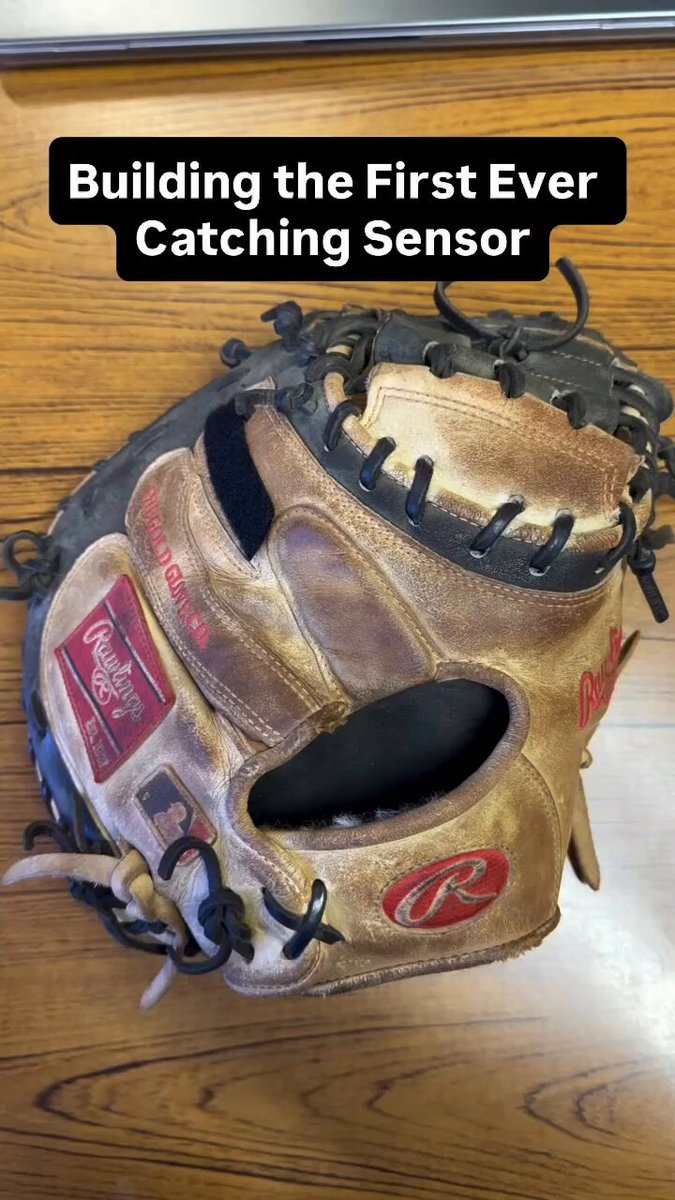
Day 1 of building a catching sensor.
The goal: turn glove movement, receiving, framing, blocking, and transfer work into real data, not just feel.
We’re building this from the ground up and documenting the process.
Catchers and coaches, what would you want to see tracked?
3
55
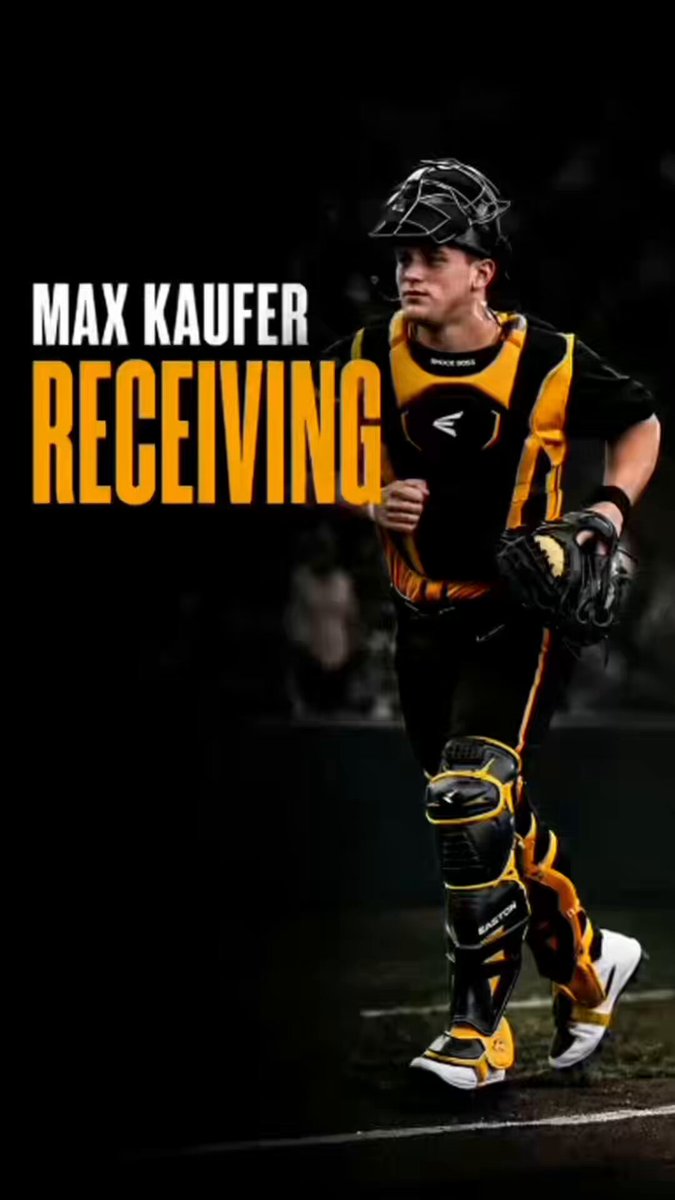
More receiving highlights for your viewing pleasure.
One of the best parts about breaking down video of someone you know is that you don’t have to guess what they were thinking.
The cues Max is working through here are simple:
Late and fast.
Wait, wait, wait… go.
Move it fast. Stop it fast.
The exact self-talk changes depending on what he feels in that moment, but the goal stays the same:
Stay patient, trust the read, then win the pitch with conviction.
#Catching #CatcherTraining #Receiving #PitchFraming #BaseballDevelopment #CatchingDevelopment #BaseballTraining #Catcher #Catchers #MoveAnalytics #BaseballIQ #PlayerDevelopment #Framing #GloveWork #CatchersMatter
22
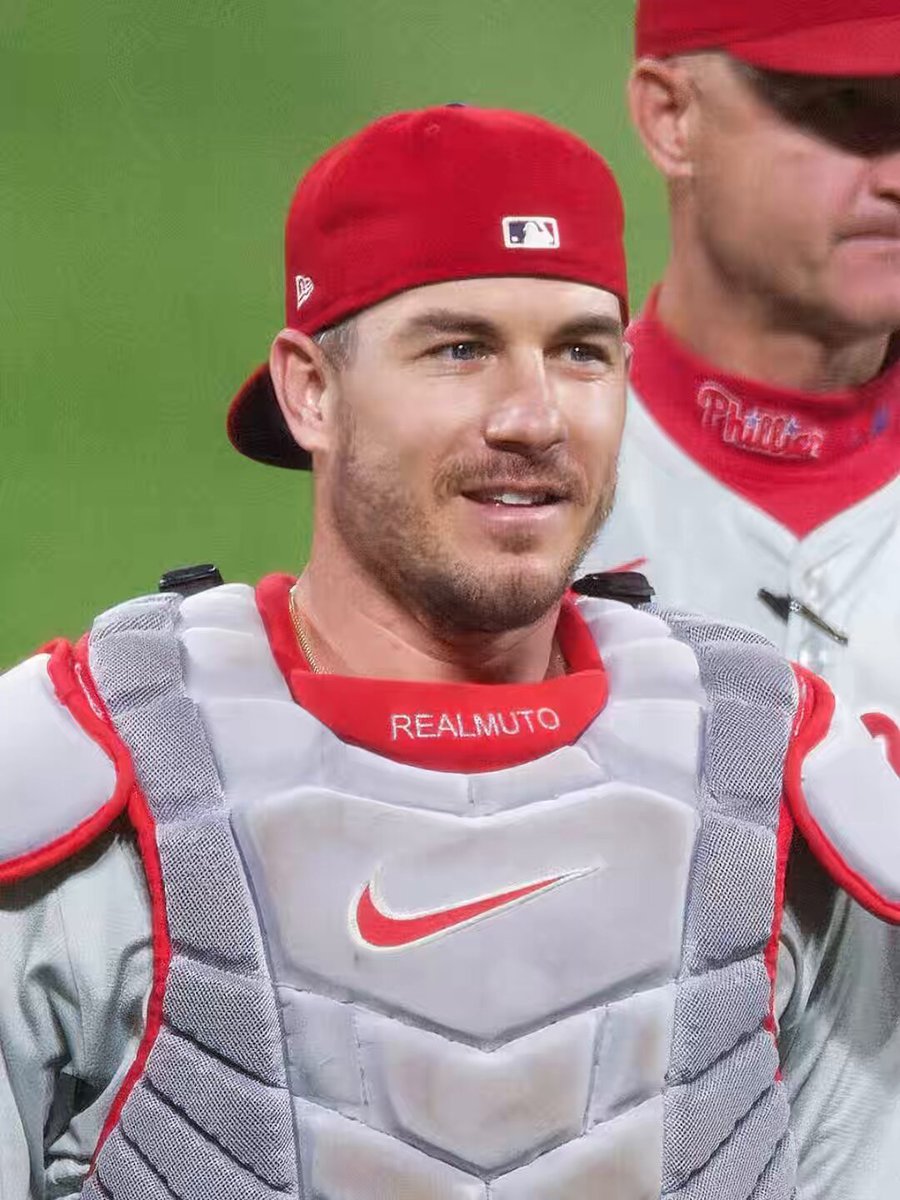
JT Realmuto is still one of the best throwing catchers in baseball.
But the receiving profile is where it gets interesting.
The data shows he has been really strong to his glove side, but has struggled more to his arm side. That usually raises one big question, is this a glove speed problem, or is it a setup problem?
From the outside, it looks like Realmuto relies heavily on being in the right spot early. When he gets squared up, he can still present pitches really well. But when the ball takes him arm side, there may not be enough time or glove speed to consistently win those pitches back.
So the real question is, could a small setup adjustment toward his arm side help even out the profile?
Maybe. But it comes with a tradeoff. Moving the setup arm side could clean up the weakness, but it may also take away from what already makes him elite to the glove side.
That’s exactly why objective catcher data matters. MOVE can help answer questions like this by measuring starting position, glove speed, move distance, and move efficiency, instead of just guessing off video.
This is how we start turning catcher development into actual feedback.
#MoveAnalytics #Catching #Catchers #MLB #BaseballAnalytics #CatcherDevelopment #Framing #Receiving #PopTime #BaseballTraining #CatcherTraining #JTRealmuto #Phillies #BaseballData #PlayerDevelopment
1
122
This is it. Pat Bailey special right here.

1
1
76
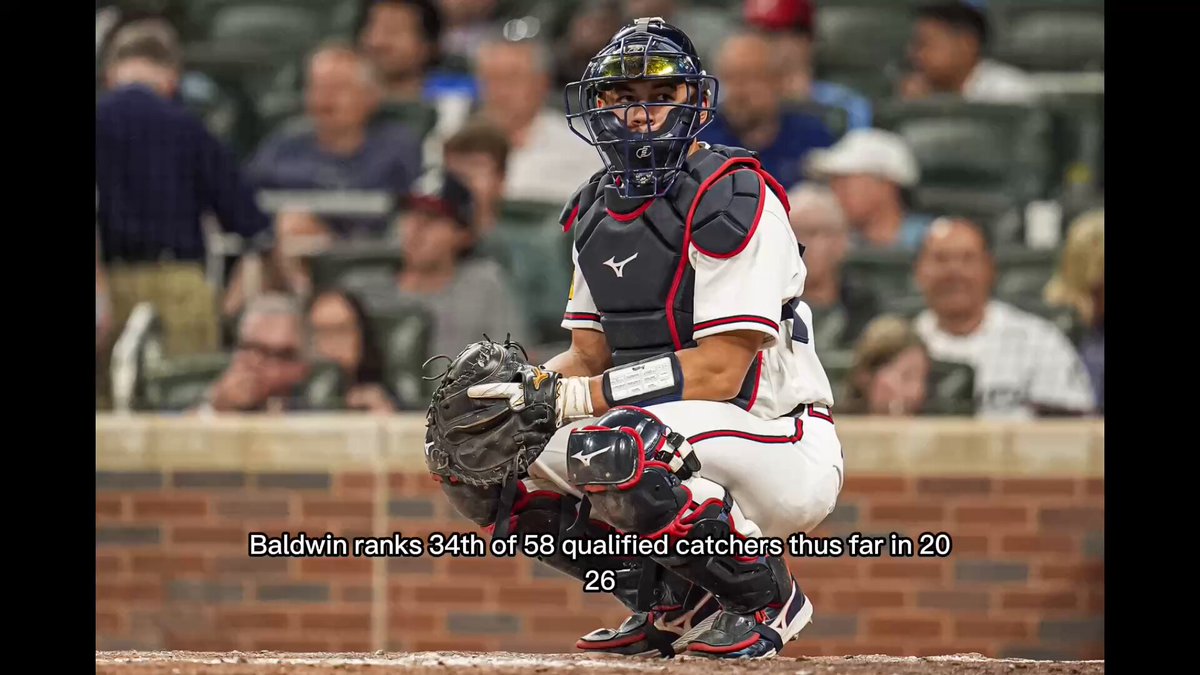
When the pitcher squares you up, receiving gets a whole lot easier.
But elite receiving can’t depend on perfect misses.
Drake Baldwin is a good example here. When the ball beats the body, or the pitcher doesn’t bring you back to the zone, pitches start leaking. That’s where catchers separate themselves.
The best receivers aren’t just “quiet.” They’re reading the pitch early, reacting on time, and making an efficient move back to the zone.
That’s why training has to be unpredictable.
Don’t just sit on the machine knowing where it’s going. Have someone move it around the zone pitch to pitch without you seeing. Force yourself to read, react, and move.
Because in games, the pitch isn’t always going to square you up.
You have to square it up.
#MoveAnalytics #Catching #CatcherTraining #BaseballDevelopment #Receiving #PitchFraming #CatcherDevelopment #BaseballTraining #Catchers #MLB #BaseballAnalytics #PlayerDevelopment #TrainLikeAPro
92
Can a catcher have it all?
The top 4 catchers in bottom shadow framing runs are all at 1 or below in top shadow framing runs.
That brings up a real question:
Is receiving one skill, or is it a collection of different skills depending on where the pitch is?
The future of catching development is not just saying a guy “receives well.”
It is knowing where he receives well, why he wins there, and what movement patterns show up when he doesn’t.
That’s where MOVE is going.
Can you be elite at the bottom and the top?
#MOVEAnalytics #Catching #Receiving #PitchFraming #BaseballAnalytics #MLB #Catchers #CatcherDevelopment #BaseballDevelopment #Framing #BaseballTraining
44
Love this!
May 28

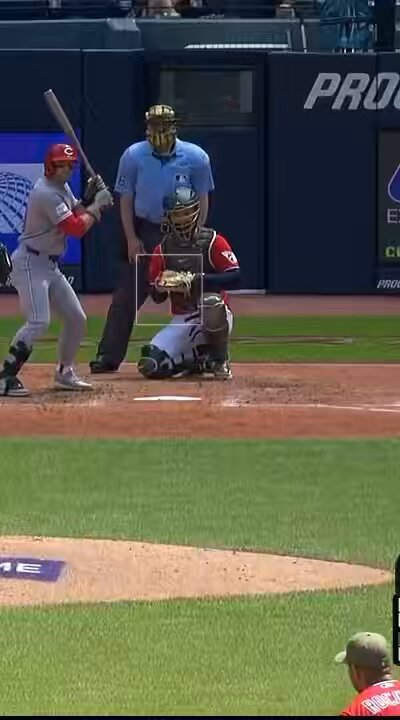
THE ANATOMY OF TWO BIG CATCHER ARM SIDE MISSES THAT LAND IN THE STRIKE ZONE
CARSON KELLY CHICAGO CUBS
1) The 1st is away from a RHH. Note the extension to catch & the body stillness( No pivot or loss of contact with the umpire). This pitch was called a ball because of the big miss & it was away from the umpire’s visual tunnel. It was challenged & reversed.
2) The 2nd is in to a LHH. The intent was away. Again extension,little or no movement & adequate hold timing. This pitch was called strike because of the efficiency of Kelly’s movement but more than anything else, it was into the umpire’s visual tunnel.
1
100
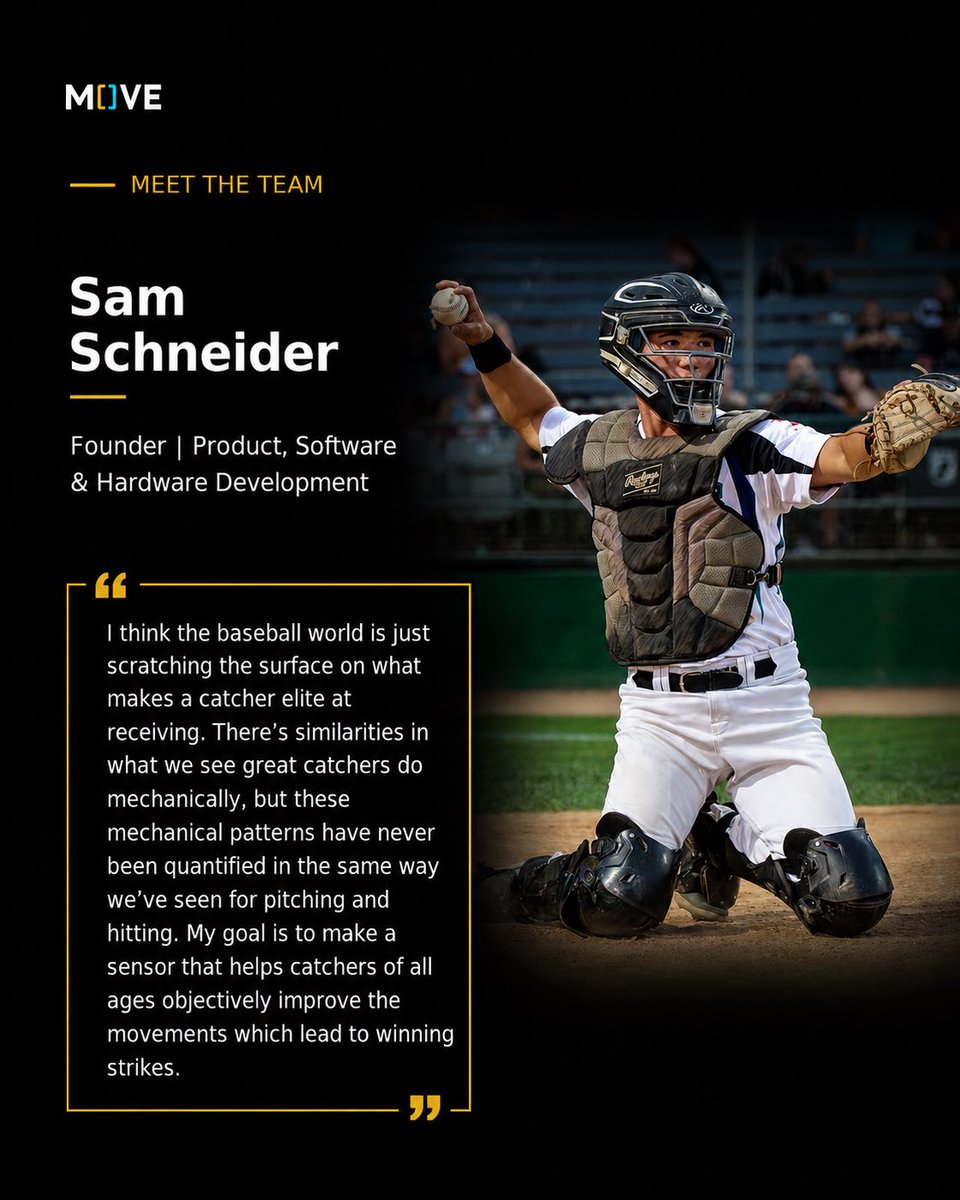
We’re building MOVE to bring more objective feedback to catcher development.
For years, receiving has been evaluated largely through feel, opinion, and outcome-based results. We believe catchers should have a clearer way to understand how their glove actually moves — from setup, to receive, to stick.
MOVE is being built by a team with playing experience, data analysis, product development, business operations, sales, content creation, and catching-specific insight. Each of us has seen how much detail goes into the position, and how difficult it can be to measure the small movements that separate good receiving from elite receiving.
This is still the beginning, but our mission is clear: help catchers train with better feedback, better data, and a deeper understanding of their movement.
More to come.
MOVE is an independent company and is not affiliated with or endorsed by any university, professional baseball organization, or team shown in personal player photos.
#CatcherDevelopment #BaseballTraining #Catching #BaseballTech #MoveCatching
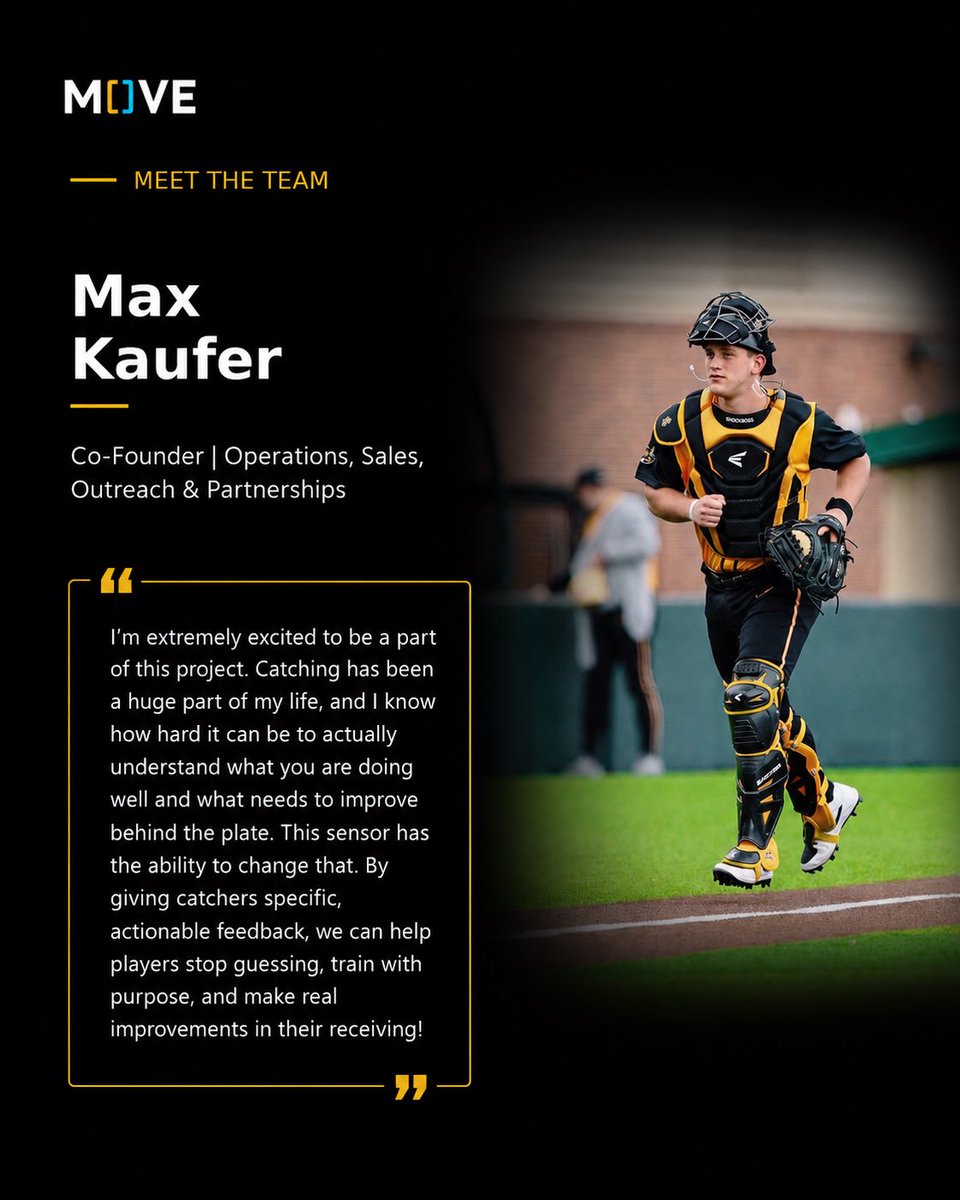
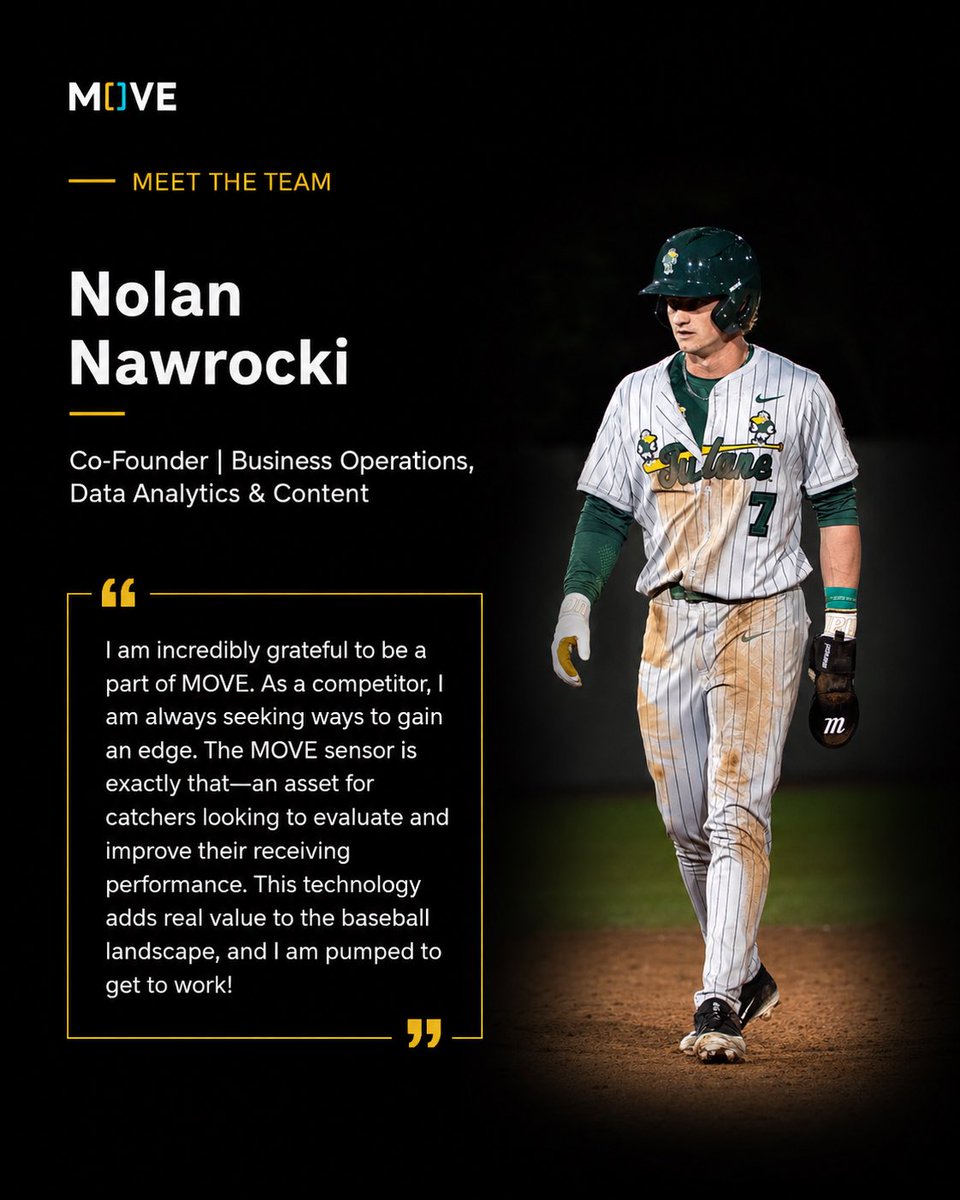
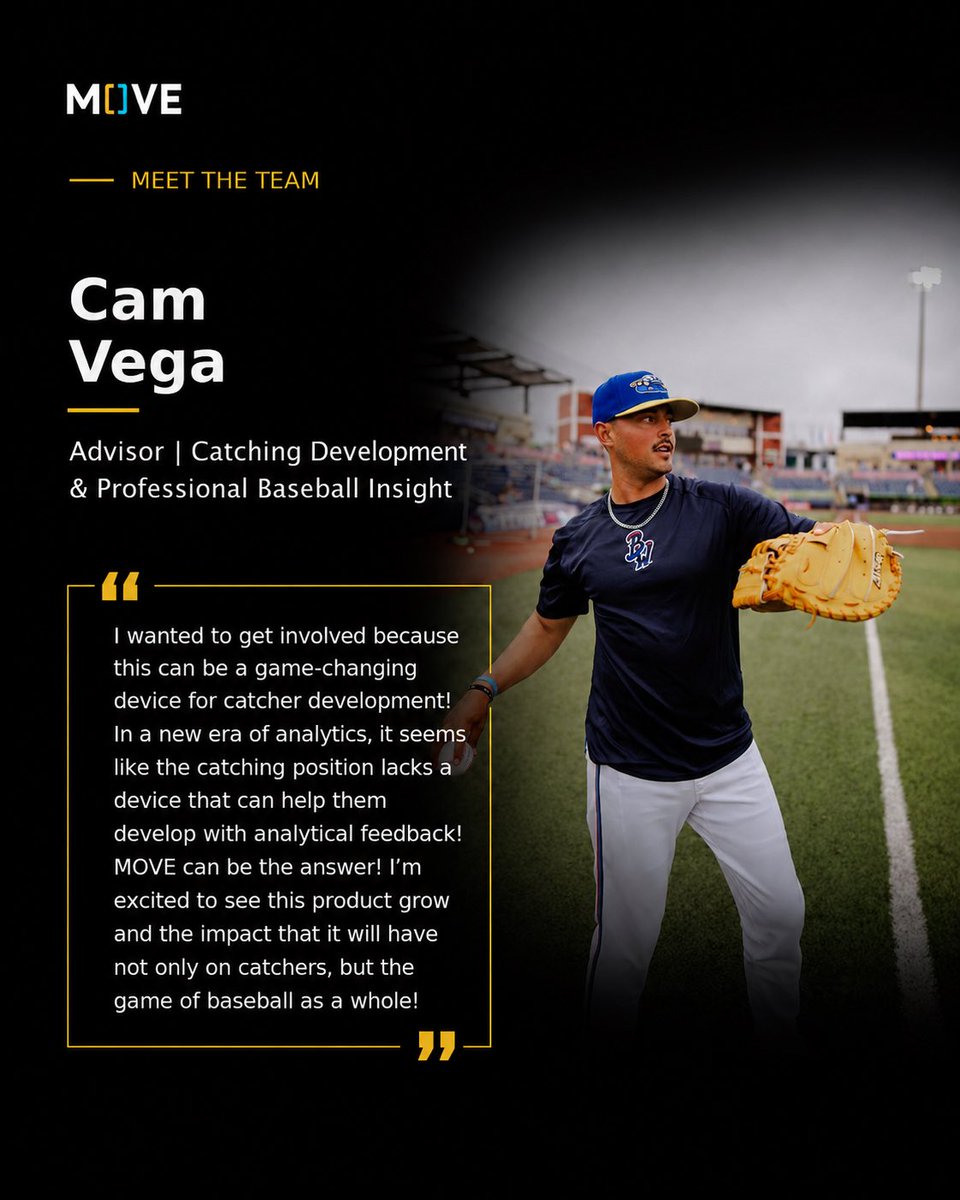
2
1
329
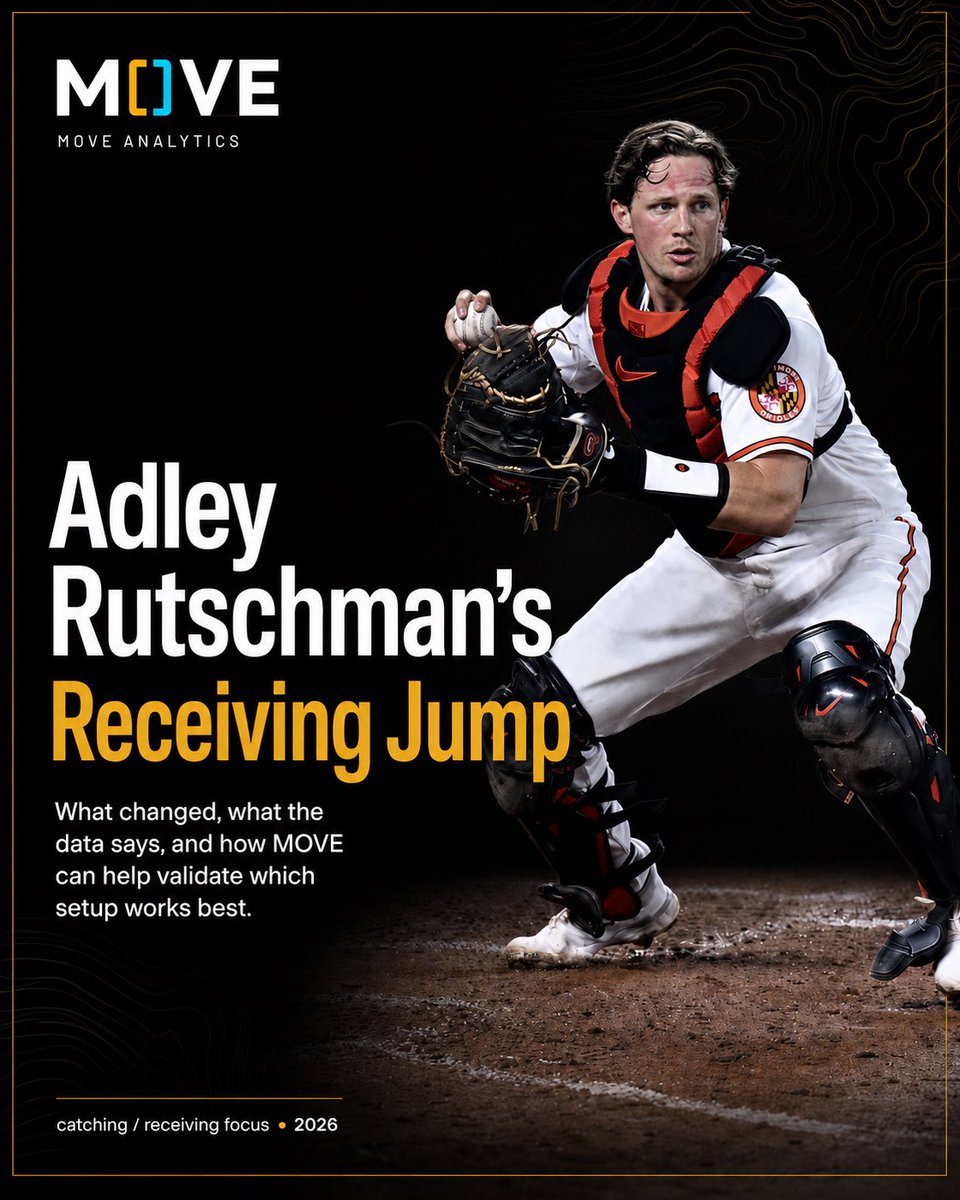
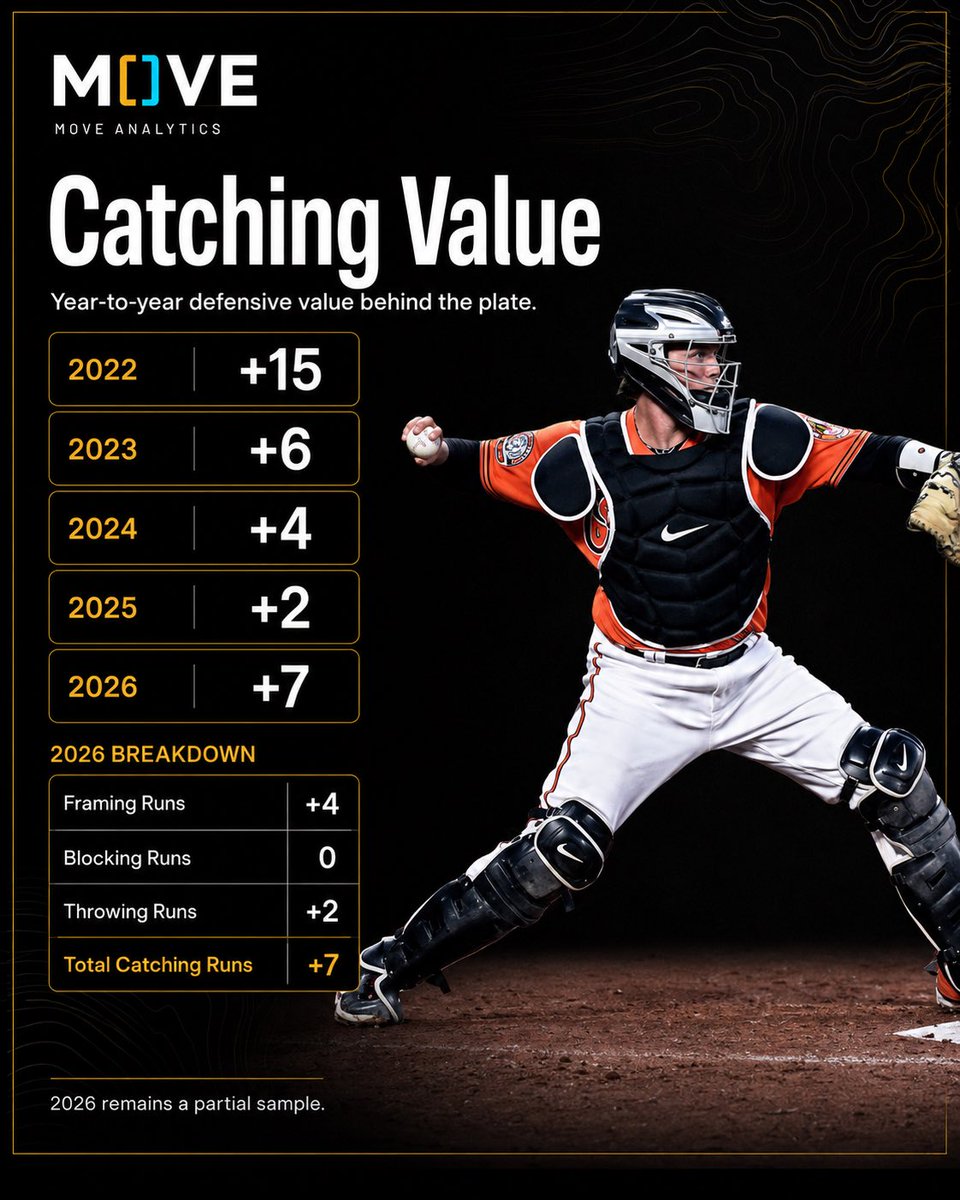
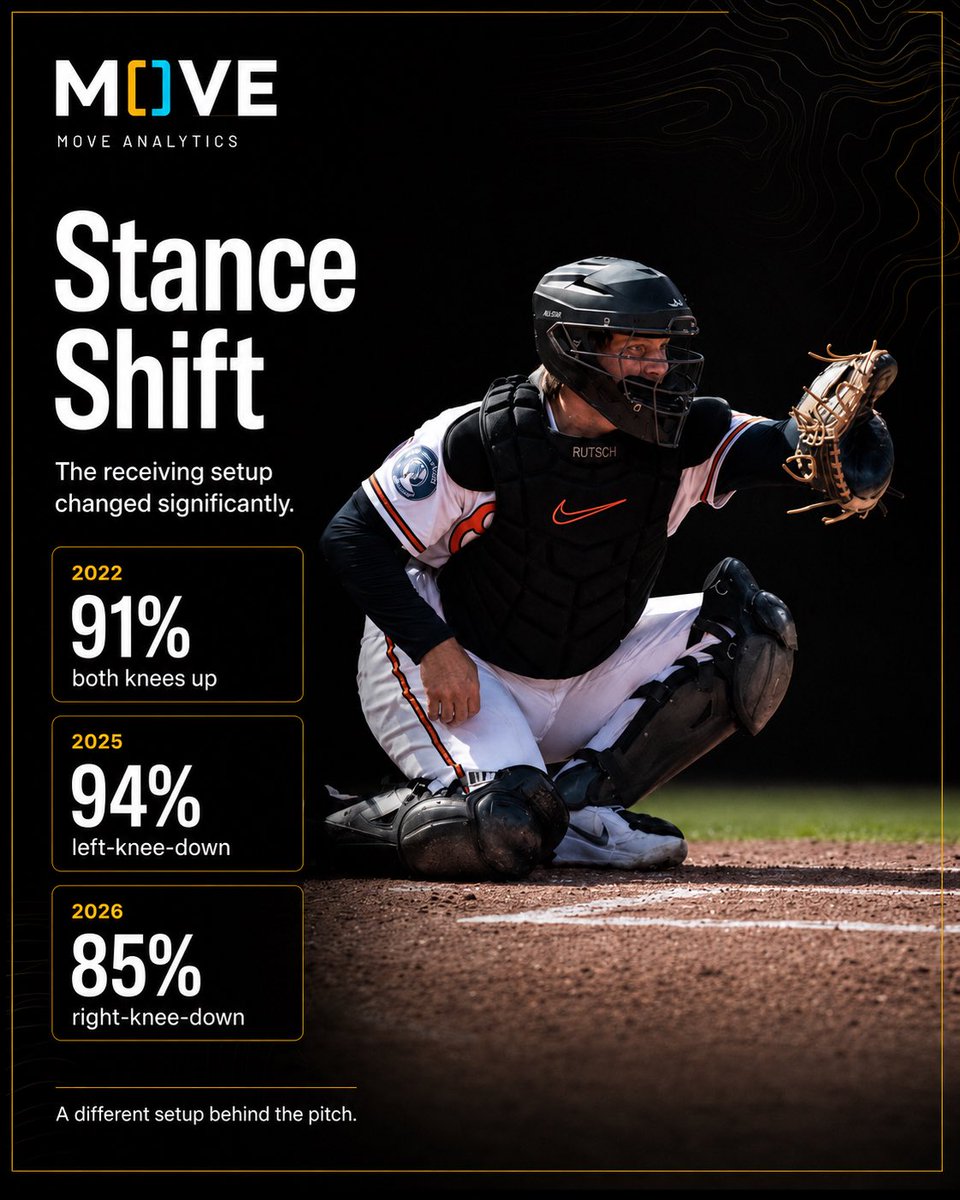
We can’t say stance is the entire reason for the change, but we also can’t ignore the pattern. 2022 was Adley’s best receiving season, and after that, his catching value steadily declined until this year. Now in 2026, with a major stance shift, he is back on pace for one of his best seasons behind the plate. Stance may not tell the whole story, but for Adley Rutschman, it looks like it tells a big part of it.
That does not mean every catcher should copy Adley’s stance. It means your stance has to match how you move best.
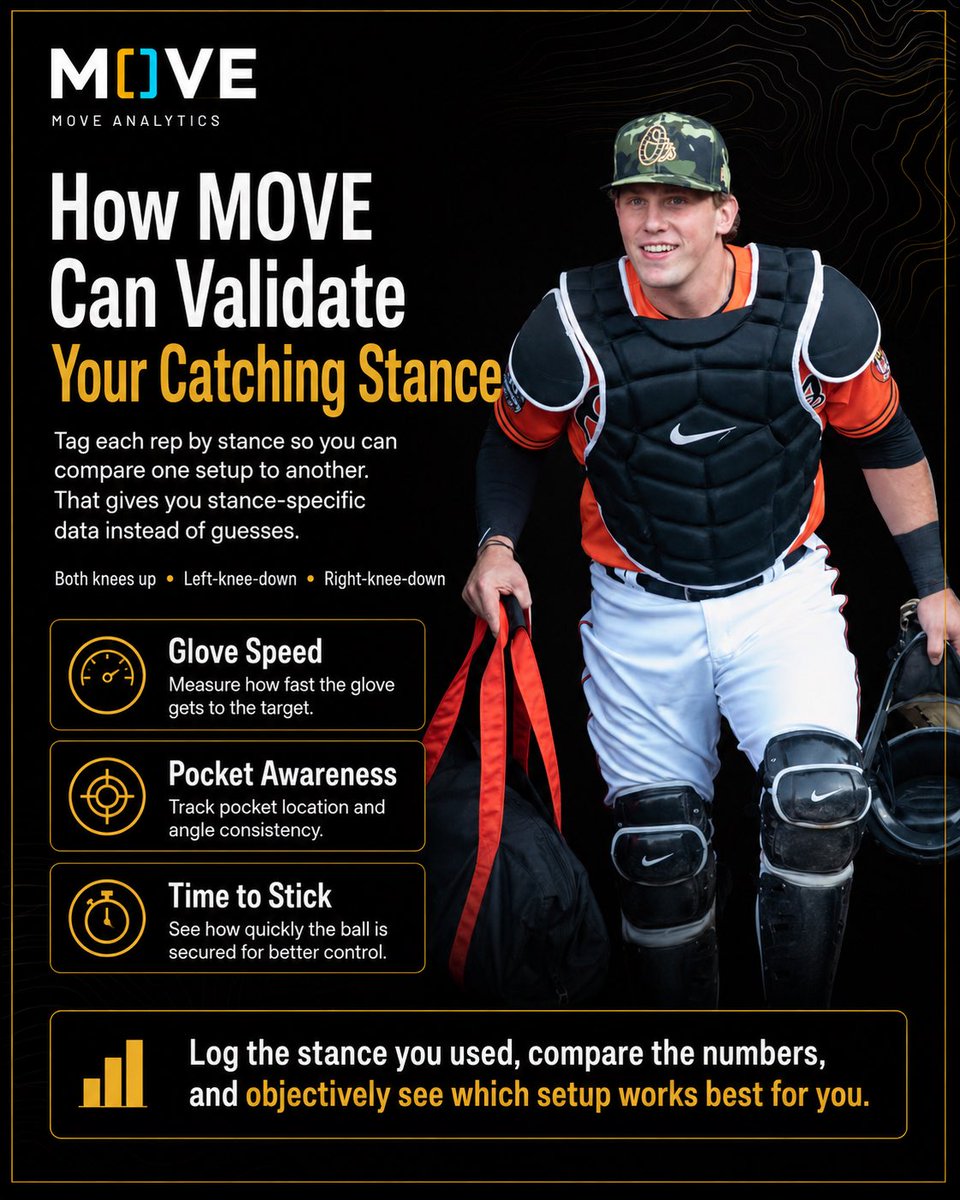
Posture, leverage, glove speed, pocket awareness, and time to stick all start before the pitch even gets there.
That is where MOVE comes in.
With MOVE, catchers will be able to tag each rep by stance, compare the numbers from one setup to another, and actually see which stance produces the cleanest receives.
No guessing.
No copying someone just because it looks good.
Just real feedback on what works best for you.
Stance is not a small detail. It is the foundation.
#MOVEAnalytics #MOVEBaseball #Catching #Catchers #CatcherDevelopment #Receiving #PitchFraming #AdleyRutschman #Orioles #MLB #BaseballAnalytics #Statcast #BaseballSavant #BaseballDevelopment #CatchingIQ #SportsTech #BaseballTech #DataDrivenTraining #BehindThePlate #PlayerDevelopment #CatchersOnly
1
30
What do you think is the hardest skill to develop in catching
Receiving?
Blocking?
Throwing?
…..follow-up, what’s the most important and why?
1
21
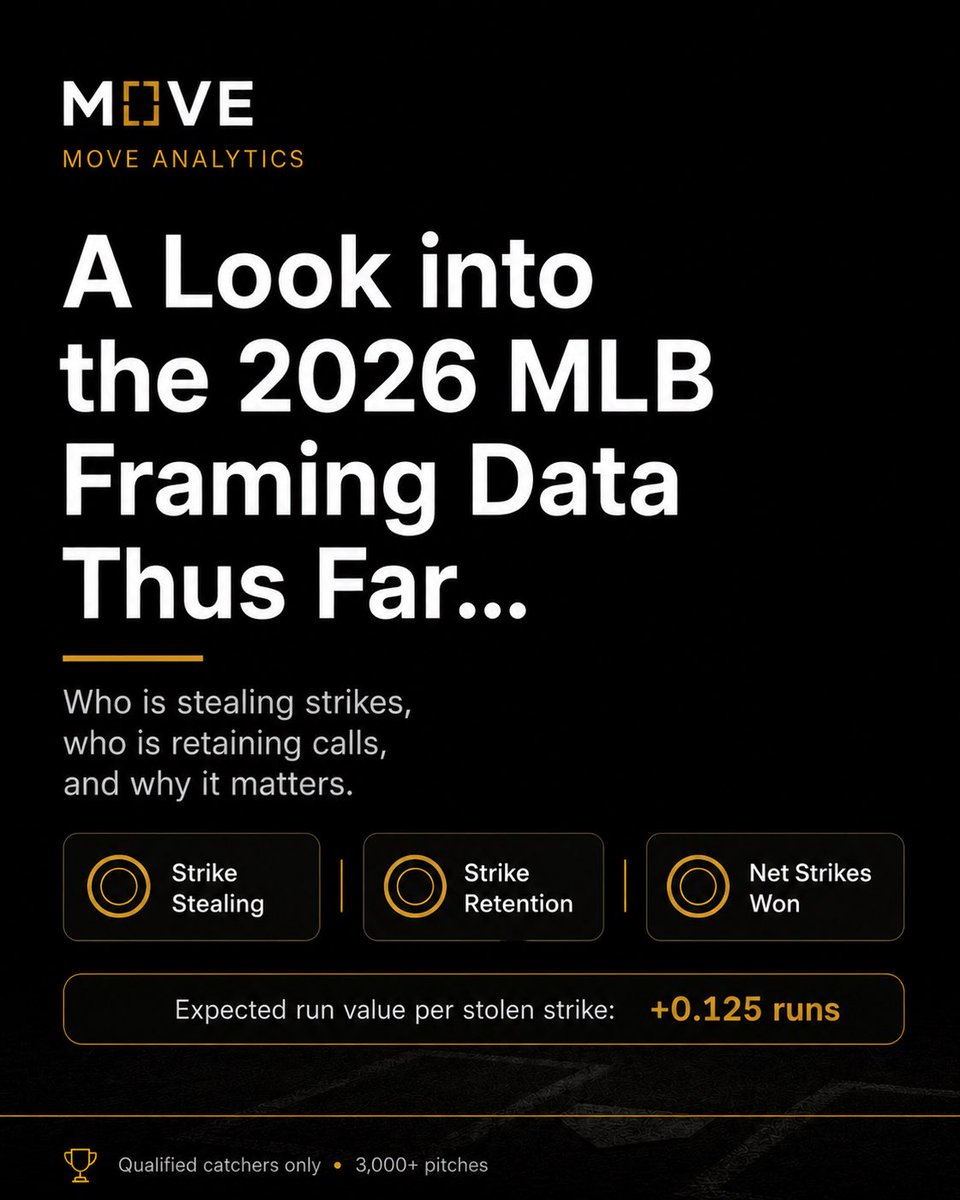
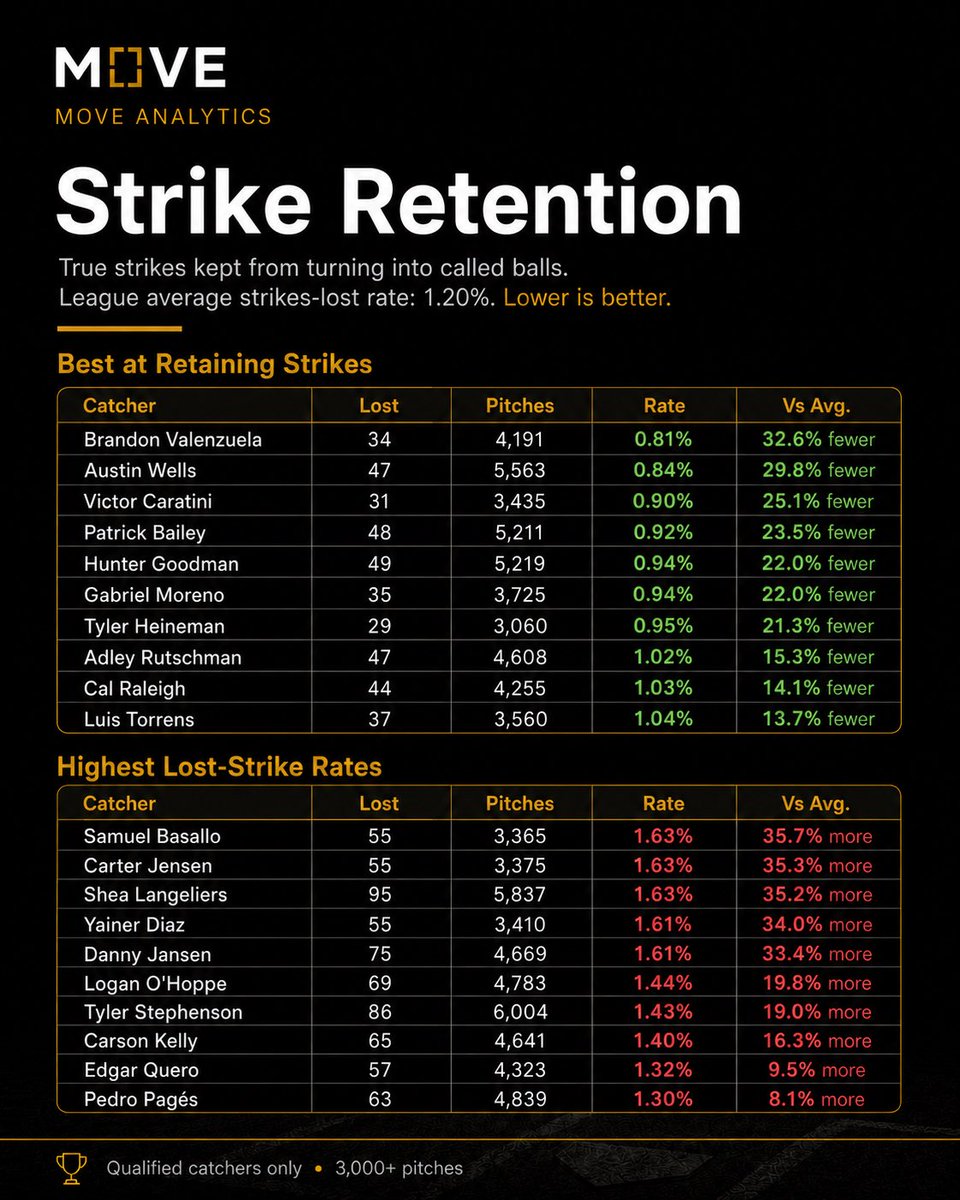
A look into the 2026 MLB framing data thus far…
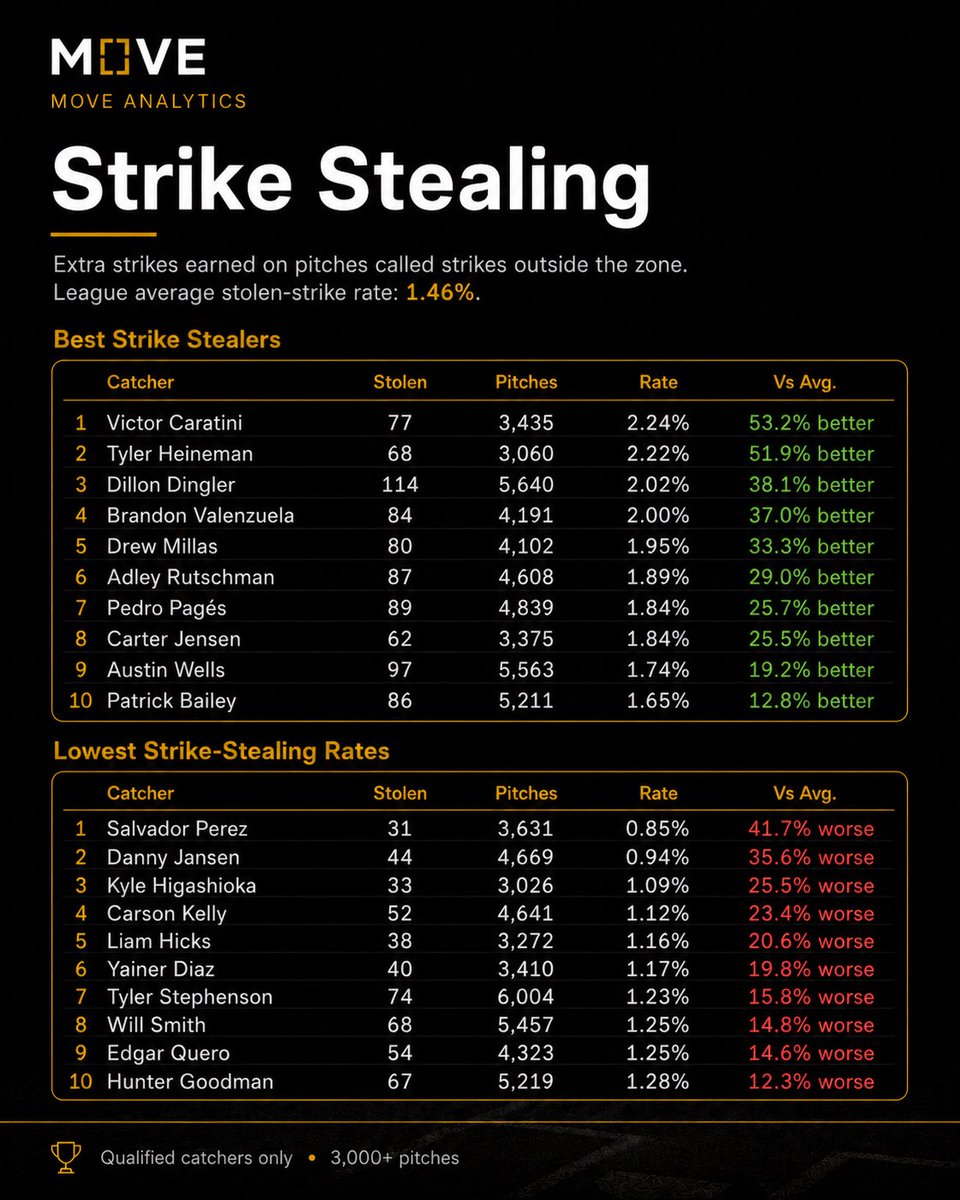
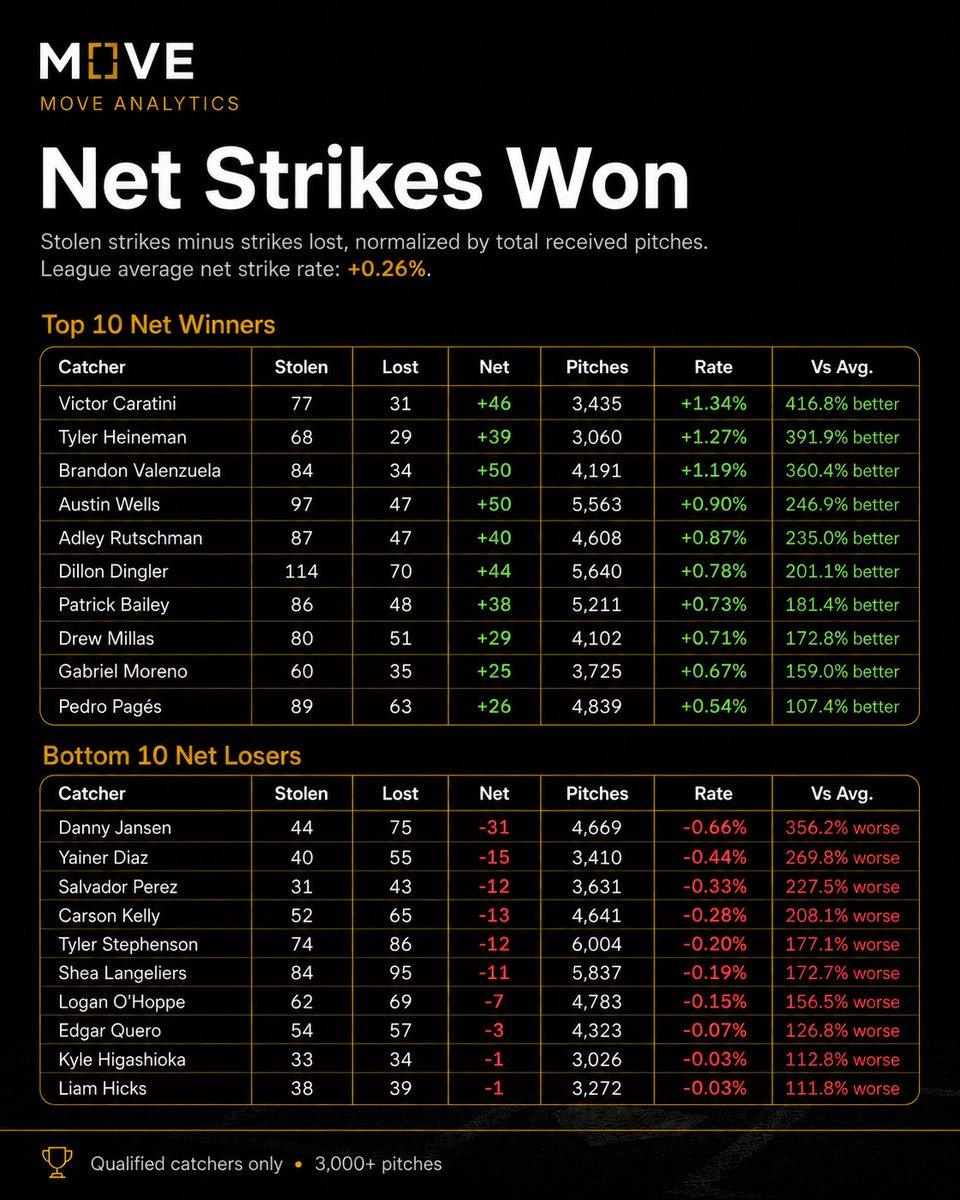
We pulled Baseball Savant catcher receiving/framing data from the start of the 2026 MLB season through May 27th to look at three key receiving categories:
1. Strike Stealing — extra strikes earned on pitches called strikes outside the zone.
2. Strike Retention — true strikes kept from turning into called balls.
3. Net Strikes Won — stolen strikes minus strikes lost, normalized by total received pitches.
Why does this matter?
Baseball Savant converts catcher framing value at approximately 0.125 runs per extra strike, meaning every additional strike a catcher earns can have real run-prevention value over time.
That said, this is not the entire picture of receiving value.
Not every stolen or retained strike carries the same run value. A stolen strike just off the edge in a low-leverage count is not equal to stealing a borderline pitch with two strikes, runners on base, or in a high-leverage run environment. Location, count, pitch shape, pitcher command, umpire tendencies, and game situation all change the true value of the call.
But this data is still extremely valuable.
It gives us a cleaner way to identify which catchers are consistently earning extra strikes, which catchers are protecting called strikes, and which players may be giving away value behind the plate. From there, the next step is asking why: glove path, setup distance, presentation, body stability, timing, pocket angle, pitch approach, and how each catcher handles different pitch locations.
The goal is not just to rank catchers.
The goal is to find patterns.
What do the best strike stealers have in common?
What do the best strike retainers do differently?
And what can developing catchers learn from both ends of the leaderboard?
Data from Baseball Savant, gathered May 27, 2026. Qualified catchers only: 3,000 received pitches.
#CatcherFraming #PitchFraming #Catching #Catchers #BaseballCatching #Receiving #CatcherReceiving #MLBCatchers #MLB #Baseball #BaseballAnalytics #BaseballData #Statcast #BaseballSavant #SportsAnalytics #PitchDesign #Pitching #BaseballDevelopment #BaseballTraining #CatchingCoach #CatcherTraining #BaseballPerformance #Biomechanics #SportsScience #PlayerDevelopment #CollegeBaseball #D1Baseball #BaseballIQ #BaseballTech #MOVEAnalytics
1
28