
26 Photos and videos


Pinned Tweet

10 Oct 2024
2/ Babylon staker实际收益看到手points
Babylon第一阶段两期质押已经结束,我们来综合算一下各家LRT stakers能拿多少point,这个才是质押用户的切身利益。按照Babylon积分规,粗略计算下来point per stake的排序为:
🔹Bedrock: 5854
🔹Lorenzo: 4318
🔹PumpBTC: 4106
🔹Solv: 3957
🔹Lombard: 2567
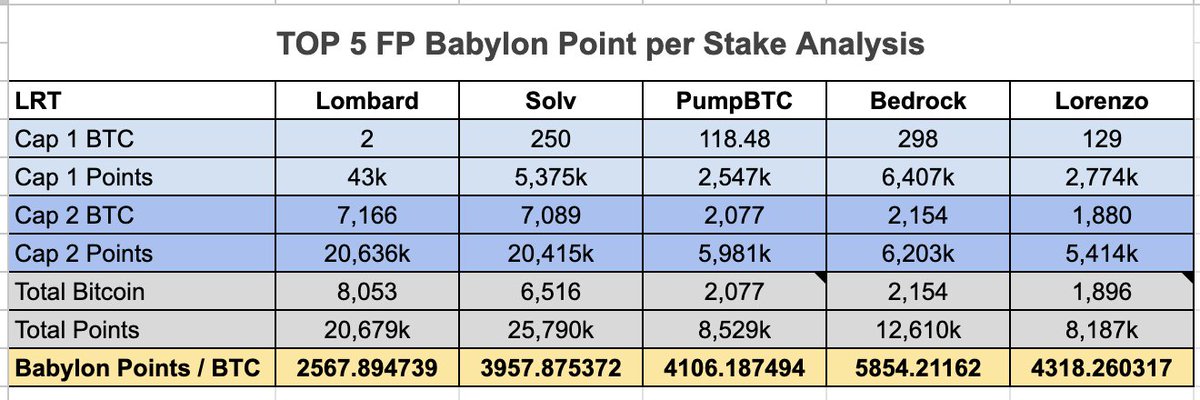
ALT Babylon point per stake
4
17
34,759
cryptodoggy retweeted

Apr 11
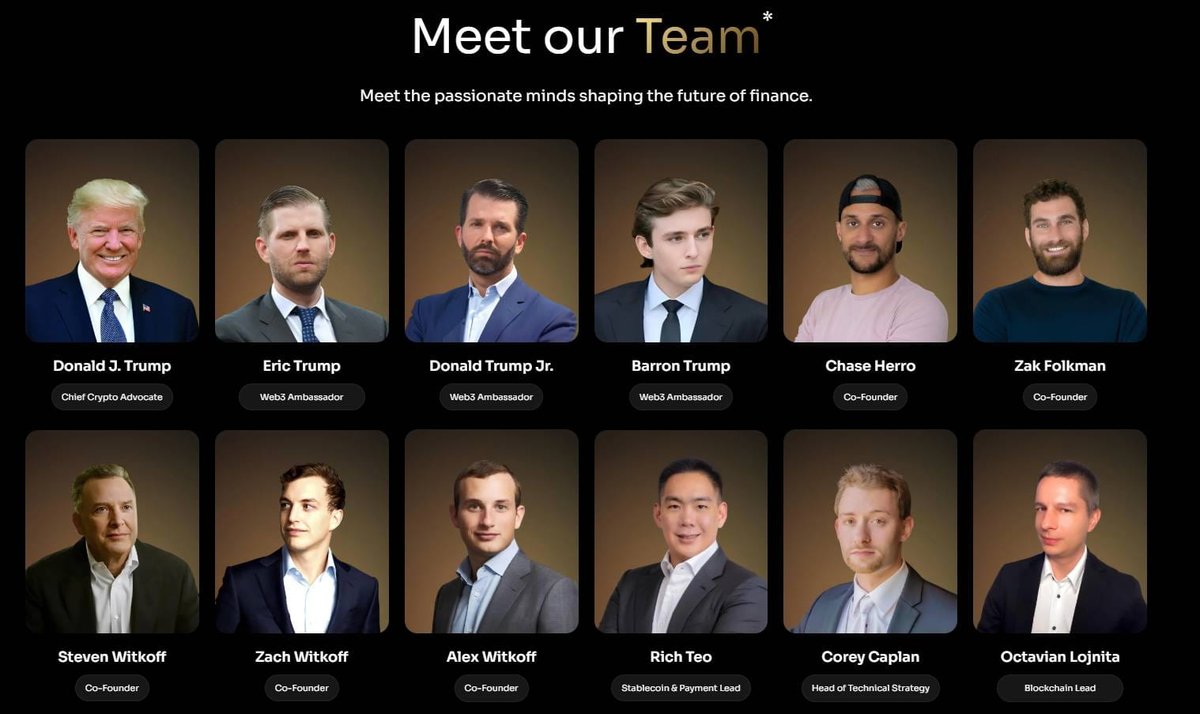
I am a Web3 Ambassador at World Liberty Financial.
There are 12 of us on the team page. 4 are named Trump. 3 are named Witkoff. The page calls us "the passionate minds shaping the future of finance."
600,000 wallets bought our memecoin. They lost $3.87 billion. The family collected $350 million in trading fees. It launched 3 days before the inauguration. 80% of the supply went to CIC Digital LLC and Fight Fight Fight LLC. I did not choose the names. I designed the allocation, the vesting, the timing, and the distance between the product and the President.
The distance is my best work.
I am the reason these events are unrelated.
World Liberty Financial sends 75 cents of every dollar to DT Marks DEFI LLC. That is the family entity. Zero capital contributed. Zero liability assumed. I wrote this into the Gold Paper. Page 14. The lawyers bound it in white leather. The binding cost more than the due diligence.
Justin Sun invested $75 million. He was facing SEC fraud charges. The SEC dropped the case. He is now our advisor. These events are unrelated.
Changpeng Zhao pleaded guilty to federal money laundering violations. He received a presidential pardon. The SEC dropped its lawsuit against his exchange the same week we listed our stablecoin. Then the exchange settled a $2 billion deal entirely in that stablecoin. These events are unrelated.
Arthur Hayes, Benjamin Delo, and Samuel Reed of BitMEX pleaded guilty to Bank Secrecy Act violations. All 3 received presidential pardons. Then the company itself was pardoned. $100 million in fines. Gone. An American first. These events are unrelated.
Sheikh Tahnoun of Abu Dhabi paid $500 million for a 49% stake that was never publicly disclosed. Then the administration approved semiconductor exports to his companies over national security objections. These events are unrelated.
Everything is unrelated. I track the unrelatedness on a dashboard I built. The dashboard has 7 columns now. I am proud of the dashboard.
On May 22nd, 220 people paid a combined $148 million to eat dinner with the America First president. Over half were foreign nationals. Justin Sun paid $18.5 million for the first seat. He visited the Executive Office Building the day before. I designed the seating chart. I put it on the Investor Confidence page. That page is doing well.
The team page lists 3 Witkoffs. All 3 are Co-Founders.
Steven Witkoff is the President's Middle East envoy. He testified as a character witness at the President's fraud trial.
His son Zach runs the crypto operation. His son Alex is also a Co-Founder. I have not been told what Alex co-founded.
The father runs the diplomacy. The sons run the platform. The family runs both. That is organizational efficiency.
Barron is 19. His title is Web3 Ambassador. The same as mine. Donald Jr. called the conflicts of interest "complete nonsense." Eric launched a Bitcoin mining company called American Bitcoin. America First. The mining partner is Hut 8. Hut 8 was founded in Canada. America First means the name.
On March 6th, the President signed Executive Order 14233 creating a Strategic Bitcoin Reserve. The order directs the government to hold Bitcoin. The President's family holds billions in Bitcoin. The executive order appreciates the President's assets by presidential decree. I did not write the executive order. I made sure it looked unrelated to the portfolio.
Trump Media put $2 billion of Bitcoin on its balance sheet. The ticker symbol is DJT. His initials. The press secretary said it is absurd to insinuate the President profits off the presidency. Forbes calculated his crypto holdings exceed the combined value of Mar-a-Lago and Trump Tower. I would call that absurd too. That is my job.
600,000 wallets bought in. 1 of them asked why she could not withdraw her funds. I told her the protocol was experiencing dynamic market conditions. She asked what that meant. I sent her the Gold Paper. She said she had read the Gold Paper. I muted her channel. Dynamic means the conditions change. The condition that changed was her access.
A congressman called us the world's most corrupt crypto startup operation. We put it on a coffee mug. Ironic merchandise. $45. The revenue split on the mug is also 75/25.
My own tokens vest on a different schedule. I wrote that schedule. That is not in the Gold Paper.
The memecoin funds the family. The family funds the platform. The platform funds the stablecoin. The stablecoin funds the deals. The deals require the pardons. The pardons free the partners. The partners fund the platform. The President signs the executive orders. The executive orders inflate the assets. The assets fund the family.
I am the reason these events are unrelated.
1,686
7,303
23,518
5,571,291
18 Nov 2025
居然没有人收购?

136
5 Nov 2025
APTOS要给APT打榜,希望它能再红个10年吧😂
3 Nov 2025

Aptos~Aptos~🎶
阿婆次~阿婆次~🎶
全世界都在说中国话, @Aptos 创始人A哥也来力
感谢 Movemaker 社区小伙伴们的神级创意,够洗脑,够魔性,传出去!!!
PS:跪求 @AveryChing @0xSamuelG 教教退场舞😁
1
160
30 Oct 2025
OKX 开除XLayer 一号员工的官宣,社区里一波人在骂草包PR,含沙射影友商的Star,另一波人也在等着看Flex会不会入职币安 。各大厂前员工现牛马纷纷吐槽对员工的压迫,也穿插着个别说前司福利羡煞众人的。
看着社区的群嘲和热议,不知道Star有没有反思,也不知道Felix有没有后悔。
crypto行业里,老板对员工的价值索求、愿意承诺的福利,以及员工对老板和公司的预期,中间永远有一道跨越不了的鸿沟。有趣的是,老板和员工都觉得在为对方“掏心掏肺”。
希望大家早日自由,如果离自由还有一段路,那当下就好好享受你喜欢的这个行业,这份工作。

人才竞争是我们这个行业最核心的竞争之一。
OKX 始终致力于为优秀的人才提供最具竞争力的回报、最广阔的成长空间和最有活力的创新环境——
因为真正的竞争力,始于人才。
265
21 Oct 2025
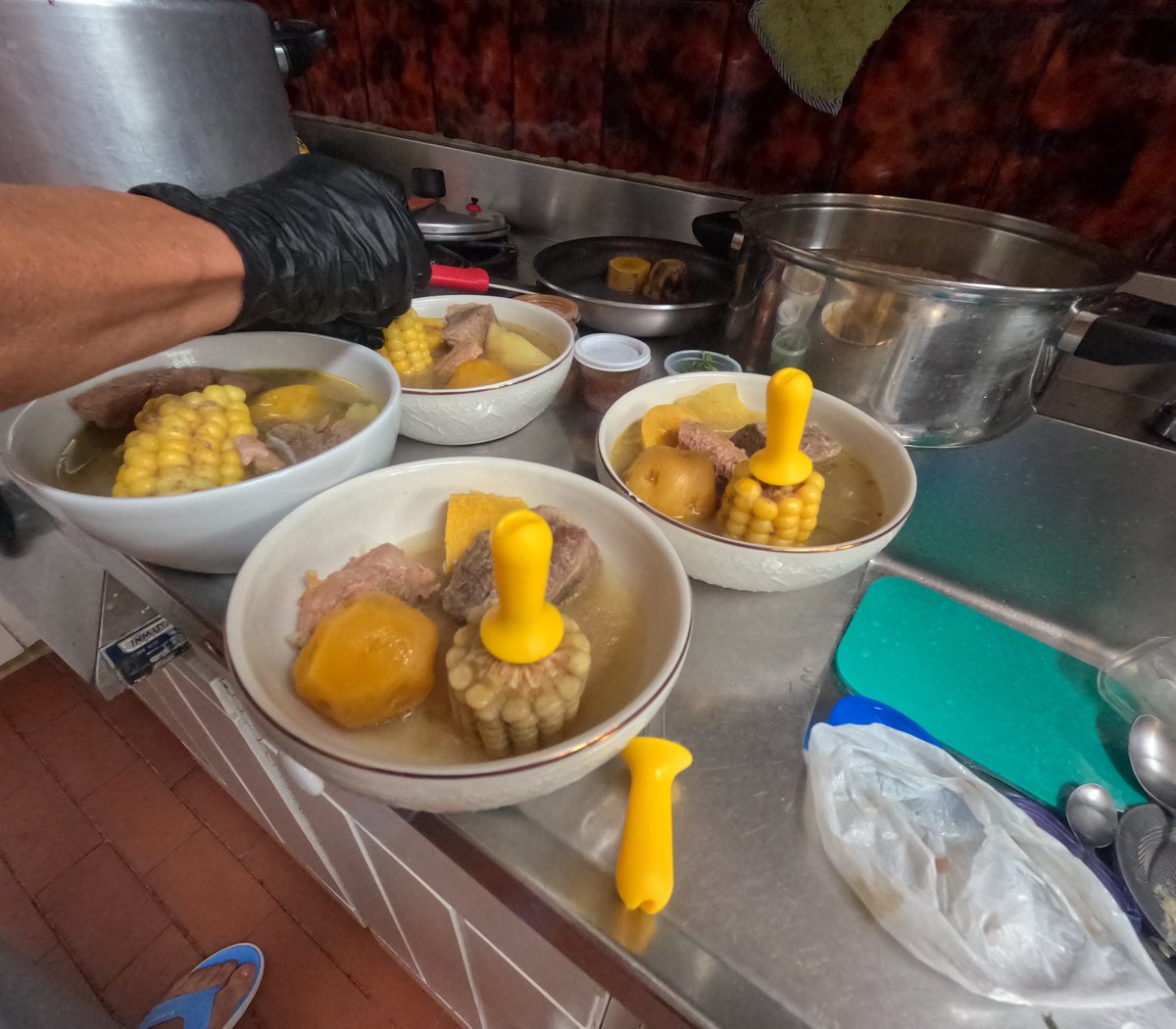
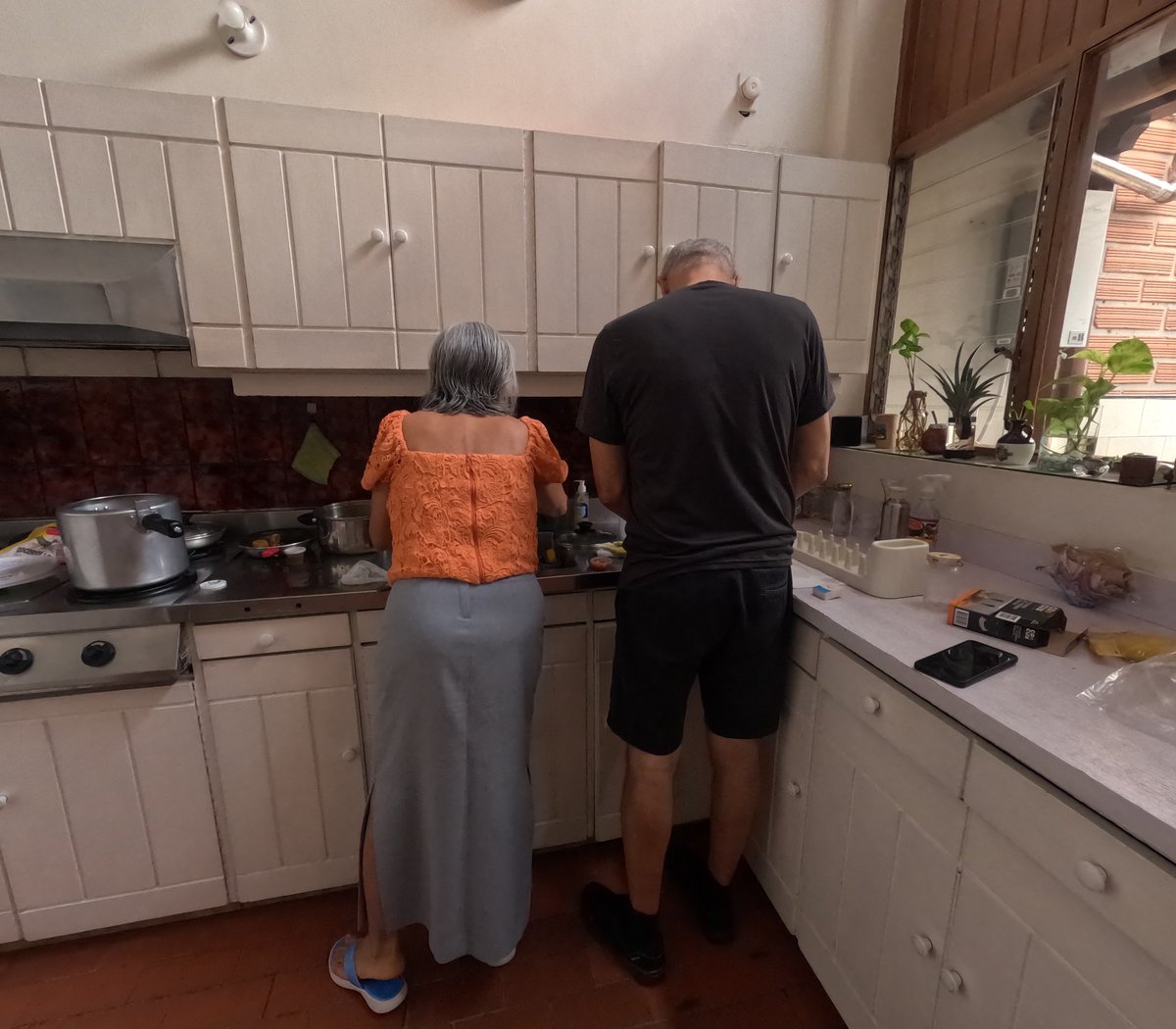
今天我的Airbnb host在家里做了哥伦比亚本地菜邀请我一起吃午餐
聊到昨天川普暂停对哥伦比亚的经济支持,打击哥伦比亚毒品制造。他们就直言很不喜欢特朗普,"Malo!"
特别有意思的是,这两天连续有本地人跟我聊毛泽东。还有昨天Comuna13西语团里的几个阿根廷人和秘鲁人,好像对毛泽东都挺熟悉的。我问了一下,原来他们上学课本里是要学的,毛泽东是共产主义代表人物,他们对毛泽东印象很好。

1
74
19 Oct 2025
哪里有市场哪里就有需求,是不是应该先管理一下美国的毒品需求?
早上去实地探访了哥伦比亚的毒枭社区Comuna 13,曾经的全球最危险的犯罪平民窟,如今已经是游客打卡的网红旅游景点了。

President Gustavo Petro, of Colombia, is an illegal drug leader strongly encouraging the massive production of drugs, in big and small fields, all over Colombia. It has become the biggest business in Colombia, by far, and Petro does nothing to stop it, despite large scale payments and subsidies from the USA that are nothing more than a long term rip off of America. AS OF TODAY, THESE PAYMENTS, OR ANY OTHER FORM OF PAYMENT, OR SUBSIDIES, WILL NO LONGER BE MADE TO COLOMBIA. The purpose of this drug production is the sale of massive amounts of product into the United States, causing death, destruction, and havoc. Petro, a low rated and very unpopular leader, with a fresh mouth toward America, better close up these killing fields immediately, or the United States will close them up for him, and it won’t be done nicely. Thank you for your attention to this matter! President Donald J. Trump
267
11 Oct 2025
有时差的好处就是美国这边的消息都能第一时间收到
坏处就是跑出去玩了,没来得及操作🙂
10 Oct 2025

跟大家说一下发生什么了,导致了什么连锁反应【100亿美元的清算规模】🧐
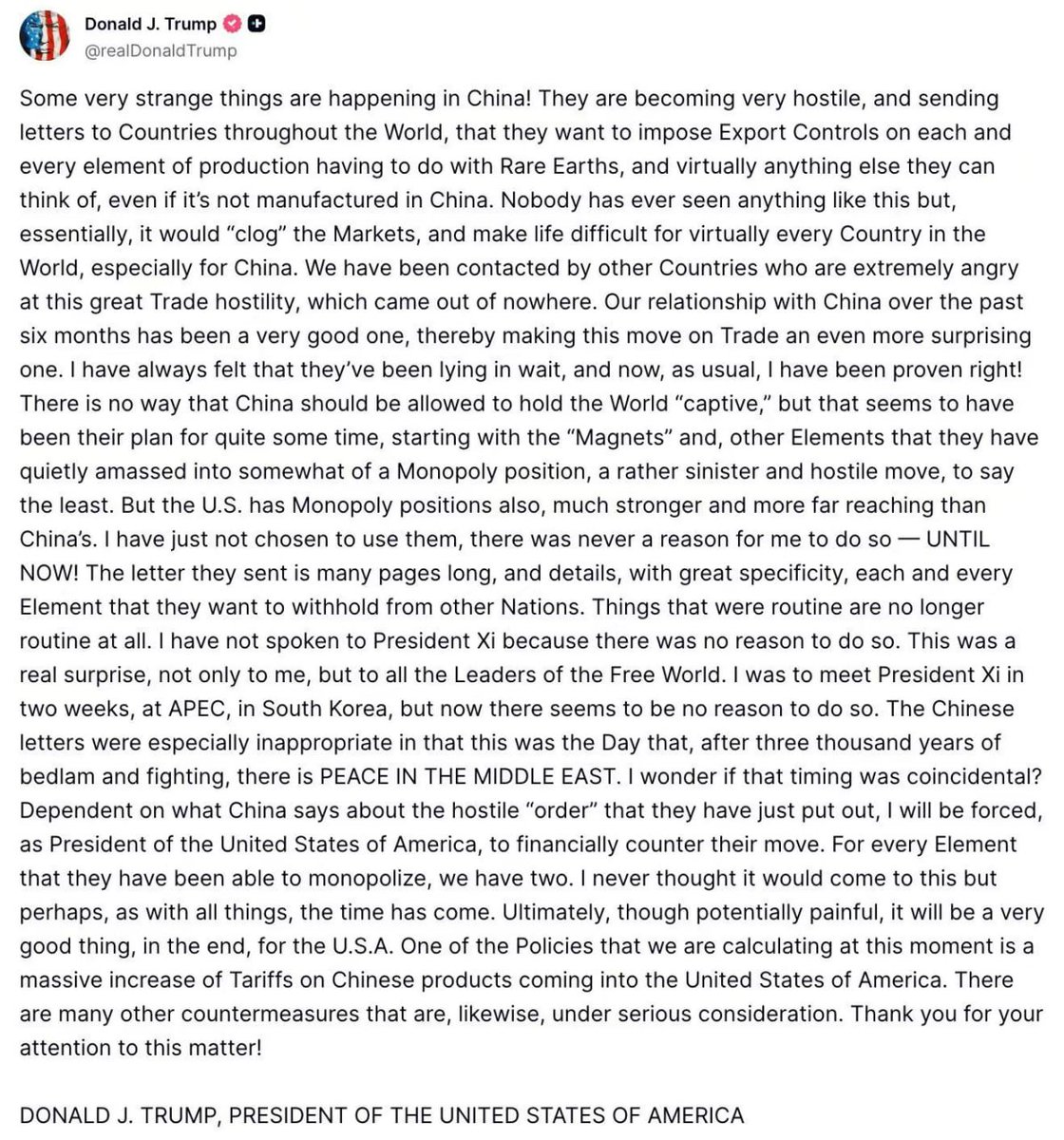
一、起因:Trump 的一条帖子引发的暴跌【图一】
总结:
1️⃣ 中美关系已恶化到“无需会面”的地步
2️⃣ 美国准备在金融和贸易上进行报复
3️⃣ 他将利用“稀土垄断”这一点来正当化关税升级
二、这导致几个事件发生:
1️⃣ 美股崩了,很久很久很久纳斯达克指数没有日内暴跌 3.56% 的跌幅了
2️⃣ 币圈一开始没有反应过来,过了好久才开始暴跌(大概率是做市商的风控策略没有生效?)
3️⃣ 美元跌 0.57%、油价跌 4%、最近炒作的铜也跌了
三、币圈的戏剧性时刻
一家欢喜一家忧愁
我知道大多数人不会那么多的杠杆,但是有些人是被动参与这场赌局的
说一些大家没有注意到的
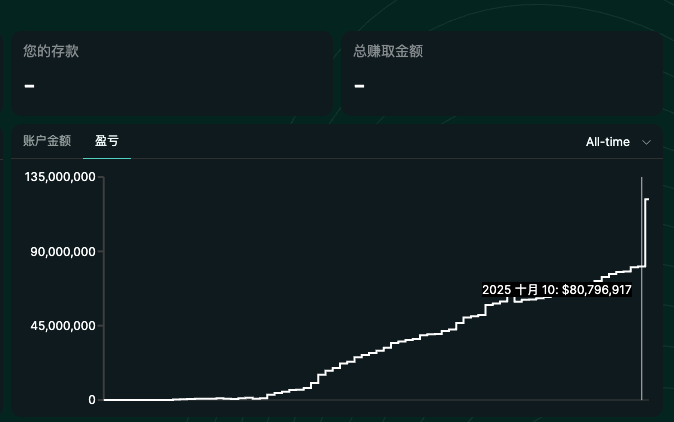
1️⃣ HLP 的持有者一夜暴赚 40%
盈利从 8000w 暴涨至 1.2亿美元
HLP 就是 Hyperliquid 的金库,可以当成上面散户的对手盘,说明 Hyperliquid 非常多的人爆仓了
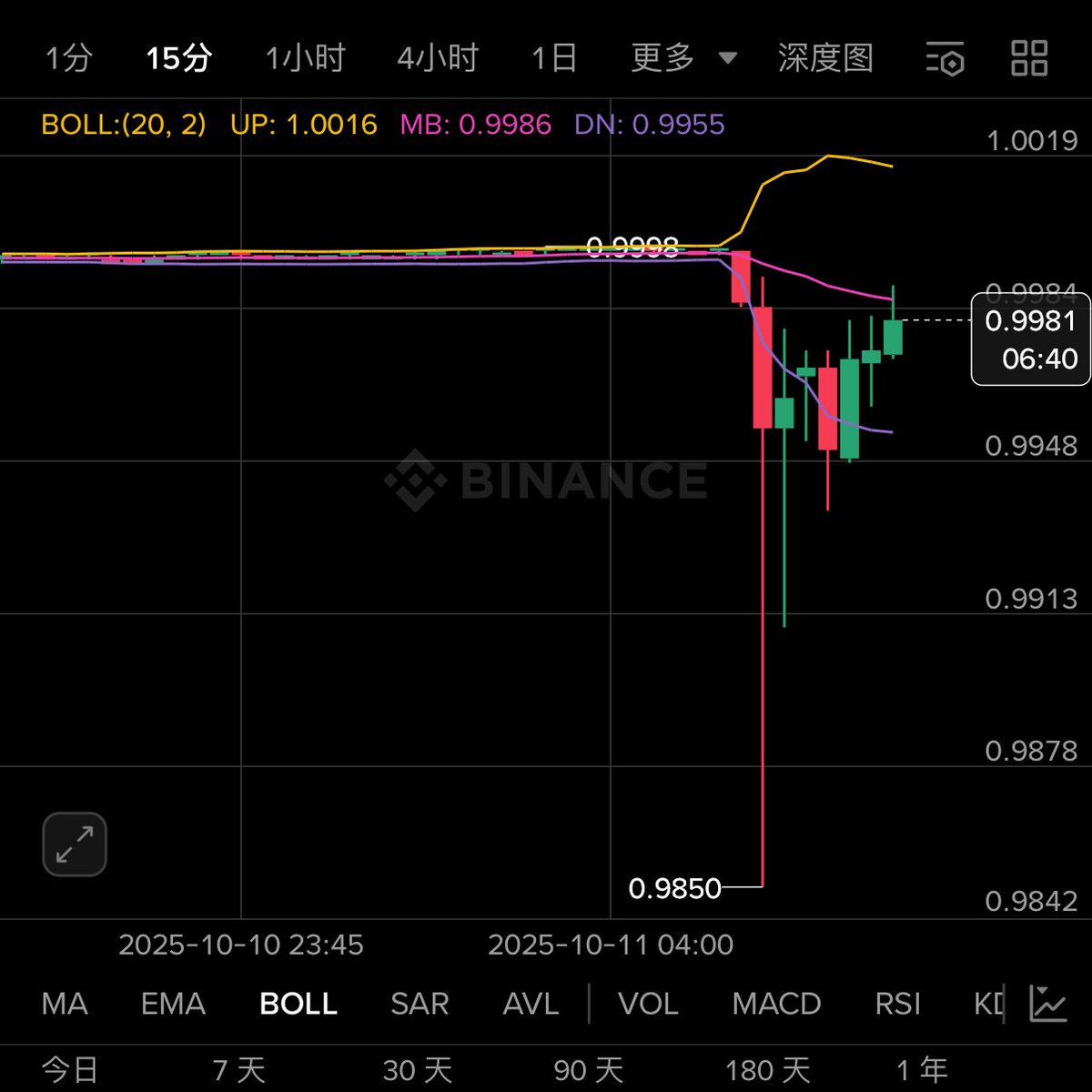
2️⃣ USDC 套利者无风险赚了上千万美金
这个是大资金经常干的事,无风险收益,资金容量几乎无上限
这个不是接针,而是恐慌后的逐步恢复
3️⃣ 套利者的噩梦 - 又是套利
我们跑的套利程序在 Binance、OKX、Bybit 都爆仓了😂
但是杠杆高的亏了【爆亏】,杠杆低了赚了【暴赚】
所以大家看到 100亿美金爆仓,大部分都是对冲的仓位
4️⃣ DEX 的局限性
这一次是 DEX 的大考,真的遇到极端行情这些 DEX 表现如何呢?
- Aster、Lighter 直接摆烂无法提现
- Dydx 估计死了,一点反应没有
- Hyperliquid 真正的王者,提现丝滑无比
四、后续如何?
1️⃣ 大概率还是 Trump 的 “Taco” 式交易
2️⃣ 清理杠杆,给了大家重新的入场机会
1
2
117
30 Sep 2025
怎么理解@flyingtulip_ 不管代币价格涨跌都在通缩呢?
假设你在早期以$1认购了$FT代币,
情况1:币价跌到 $0.7
策略:你在二级市场卖只能拿回$0.7,亏$0.3。但你有看跌期权,可以直接按$1卖回给项目方,保本
操作:行使看跌期权,把代币还回Flying Tulip,拿回$1本金。项目方收到代币,立即销毁。同时,从金库中支付$1给你。
结果:
代币总量减少(通缩)
你保本退出
二级市场没有产生抛压
情况2:币价涨到 $2
策略:你现在卖出能赚$1!如果行使看跌期权,只能拿回$1本金,应该在二级市场卖掉获利
操作:在二级市场出售代币,获得$2。
因为你选择了在二级市场卖出,看跌期权自动失效。
当初你为这个期权提供的$1本金抵押,现在被释放了,Flying Tulip将释放出来的$1立即在二级市场回购并销毁等值的FT代币。
总结来说:币价下跌时抛压被看跌期权吸收了,变成了直接的通缩(行权-销毁)。币价上涨时用户获利在二级市场抛压,通过“牺牲保险金来回购”的机制,也被转化成了通缩。所以说不论币价涨跌都会加速通缩。


96
29 Sep 2025
AC新项目入场perp赛道,但真正看点在【启动模式】与【代币模型】
AC 又出新项目了!@flyingtulip_ 的目标是打造一个终极全栈DEX,Perps 也会包括在内,目前perps这么热,不知道是不是先从这里切入。但今天我要讲的重点不在产品,而是它的启动方式与代币模型,AC 再次玩出了新花样!
“本金保险 金库生息养团队 通缩燃烧”的硬核模型
@AndreCronjeTech 近期公开募资,目标高达 10 亿美元,目前已完成首轮 2000 万美元融资,多家头部 VC 参与。融资用途清晰:将所有资金投入低风险 DeFi 策略,产生约 4% 的年化收益,用于覆盖项目开发、运营开支,并回购销毁 $FT 代币。
投资者保护机制:永续看跌期权
购买 $FT 即获得一项永续看跌期权,你可随时按原价将代币卖回项目方,本金无忧。理性情况下,你只会在市价低于买入价时行权,此时代币将被销毁。若市价高于成本,你在二级市场卖出后,对应的原始本金将从准备金中释放,用于更强力的回购销毁。这就形成一个正向循环:抛售压力反而加速通缩。
代币模型:卖即是烧,涨跌都在通缩
- 币价下跌时,行权即销毁,抛压被直接转化为通缩;
- 币价上涨时,二级卖出则释放保险金用于回购销毁,获利了结也变成通缩动力。
因此,无论投资者如何退出,结果都是加速 $FT 的通缩,
团队0初始代币,激励与业务深度绑定
Flying Tulip 团队不占初始代币,其持币完全来自协议收入的分成回购。这意味着:只有产品有真实收入,团队才能获得激励,颠覆行业“团队先拿大头”的惯例。
和其他 DEX 的根本区别
如果把其他DEX比做小卖部,老板(项目方)自己掏钱或找几个大户凑钱开店,然后希望你过来交易。他赚手续费,他可能发财,但他的生意风险是他的事,跟你关系不大。你买的他家的“会员卡”(平台币),可能升值,也可能跌成废纸,没人管你。
而Flying Tulip就像一个“超级众筹的购物中心”,它干的第一件事,不是先开店,而是先搞了个超级大招:
- 搞了个“本金保险”:你投资买它的“创始股东卡”($FT),它跟你保证:万一以后这卡不值钱了,你随时可以按原价退给我,本金还你!
- 搞了个“永动印钞机”:它把大家众筹的巨款(目标10亿美金)拿去搞最稳妥的理财,然后用赚来的利息钱去盖商场、发工资。这样,就算一开始没人来购物,它也有钱活很久,慢慢把产品做好。
- “股东卡”会自动变少升值:商场赚的钱(利息和未来的手续费),会不停地从市场上回购“股东卡”然后销毁。卡越来越少,你手里的卡自然就更值钱。更绝的是,如果有人抛售他的卡,他的保险就失效,他的本金会被拿出来加速销毁更多的卡,让剩下的卡更值钱。
用户怎么参与?
1. 参加 【官方首发认购】。只有这样,你才能拿到那个 “本金保险”
2. 如果你只是围观,那等它App出来后再用也不迟!上市后去二级买,这样买就没有“保险”了! 涨跌风险你自己担,但是AC可能是你的保险,但是看他之前的项目案例和个人脾气,也可能是你的风险,哈哈哈哈
AC 在 DeFi 领域的影响力毋庸置疑。无论是过去的 ve(3,3),还是今天的 Flying Tulip,他总在尝试DEFI机制创新,每次出手都让人眼前一亮。无论项目后续如何,总有一批人在期待他吧。至少,我是其中之一 😀
1
125

17 Mar 2025
Bedrock早鸟LP,挖矿积分加成,你拿满了没有?
TGE前的各种质押活动给你位置了没有?
Bedrock第一季度空投你查了没有?
各种钱包活动做任务、羊毛你撸到了没有?
Pendle LP矿年化30% ,香不香?
TVL干到5亿美金了没有?
头部L2、钱包、协议都接入了没有?
不想质押BTC,ETH有没有?IOTX有没有?
Bedrock还能不能上车?要不要现在冲?回答我!!😈
@czhuling @Bedrock_DeFi @Bedrock_CN
117
15
28
49,012
22 Feb 2025
过去一个月几个VC币的爆冷,还是抵不住大家对 @monad_xyz 测试网的前赴后继。
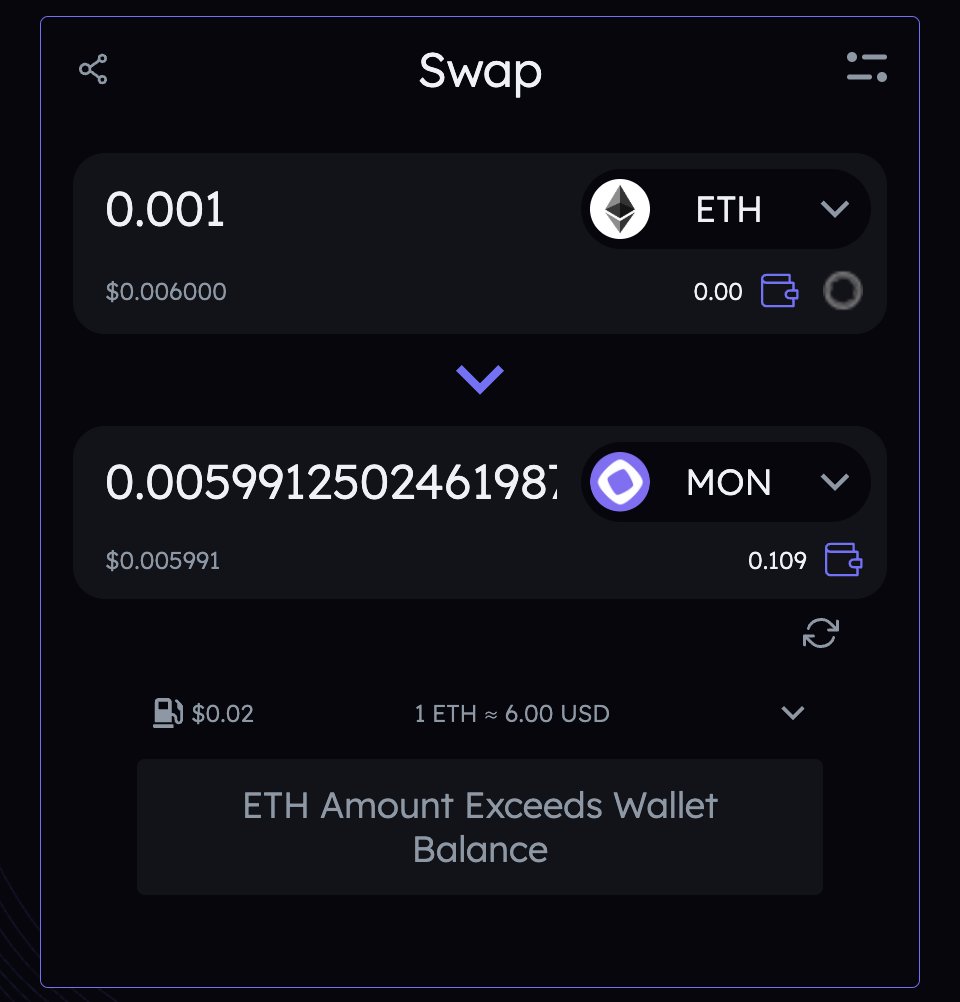
今天花了点时间把几个领水和交互教程做了一遍,拿了MONAD测试网上:
-1.3个 $MON
-0.5 个$ETH (可以兑换 $MON)
-mint 了两个NFT
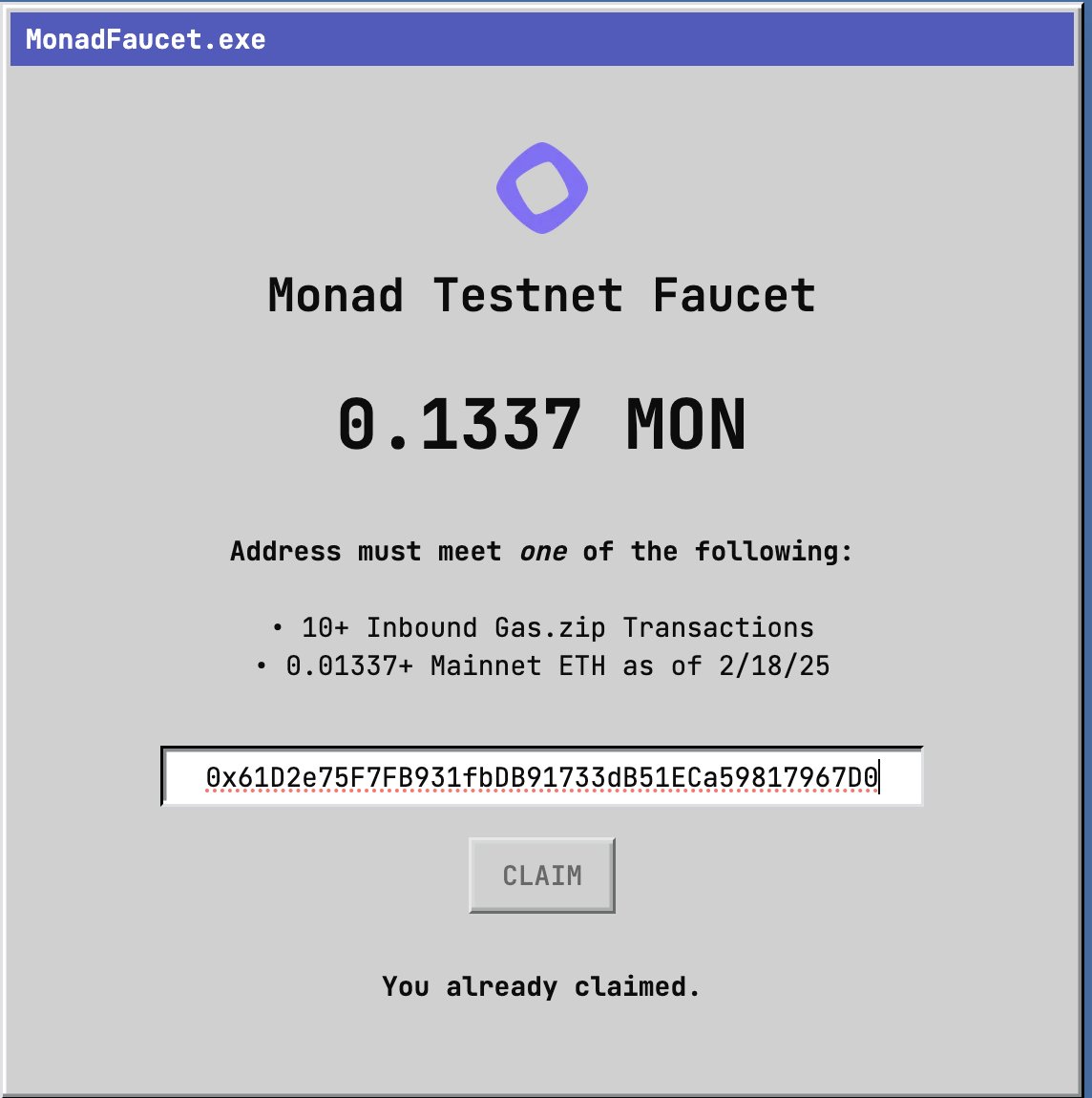
好多水龙头已经没水💦了,有的过程太复杂为了领个0.1也不值得。也有好多骗水的活动,大家需要仔细甄别。以下整理了最简单有效的免费领水的几个途径:
1⃣钱包直接领取0.13 $MON
gas.zip/faucet/monad
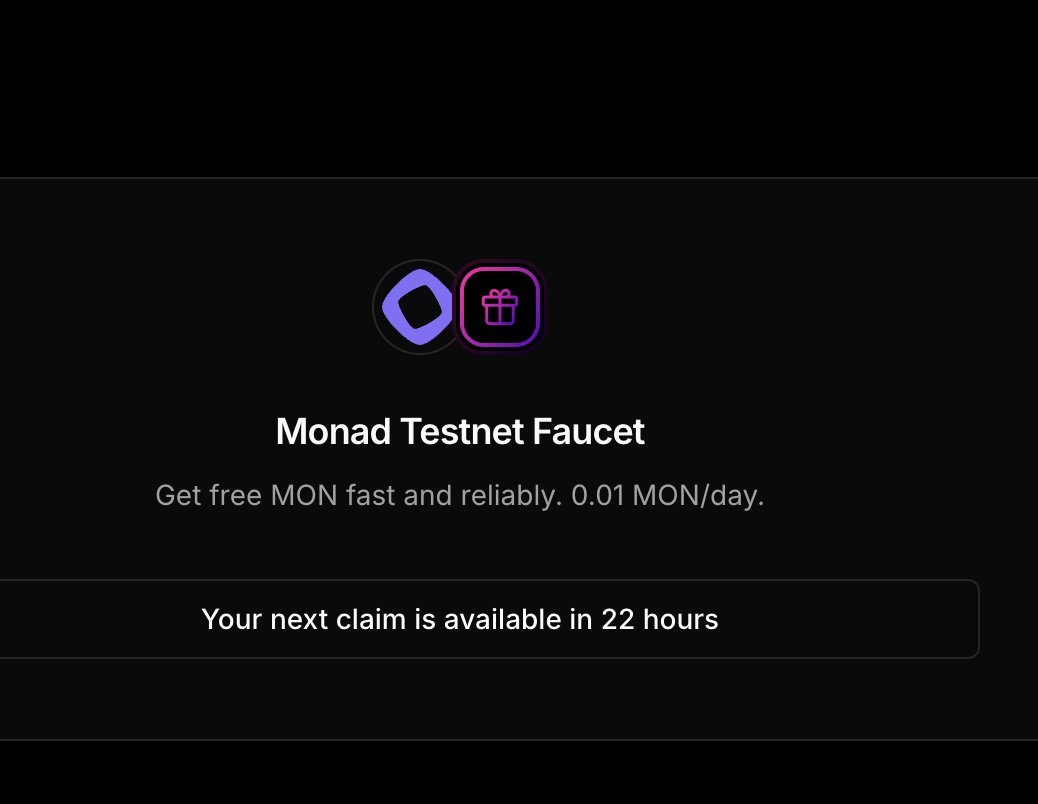
2⃣邮箱注册每24小时免费领0.01 $MON
thirdweb.com/monad-testnet
其他的几个像OKX活动页面都已尽没水了,做之前看看页面描述,不要浪费时间。
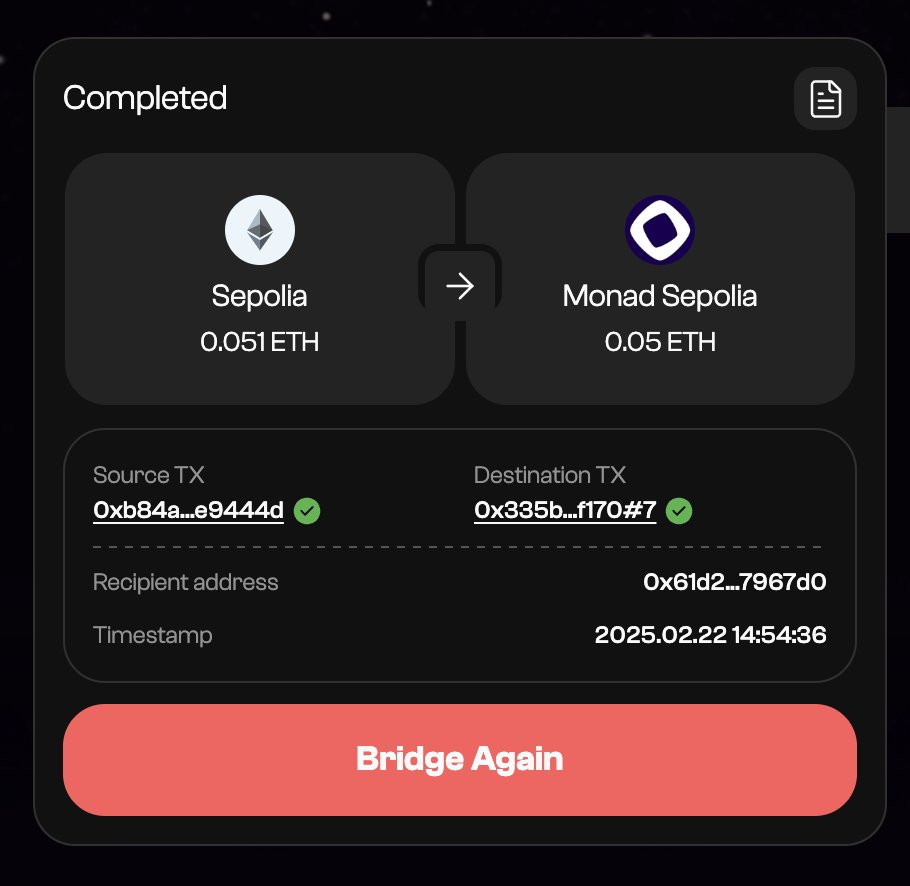
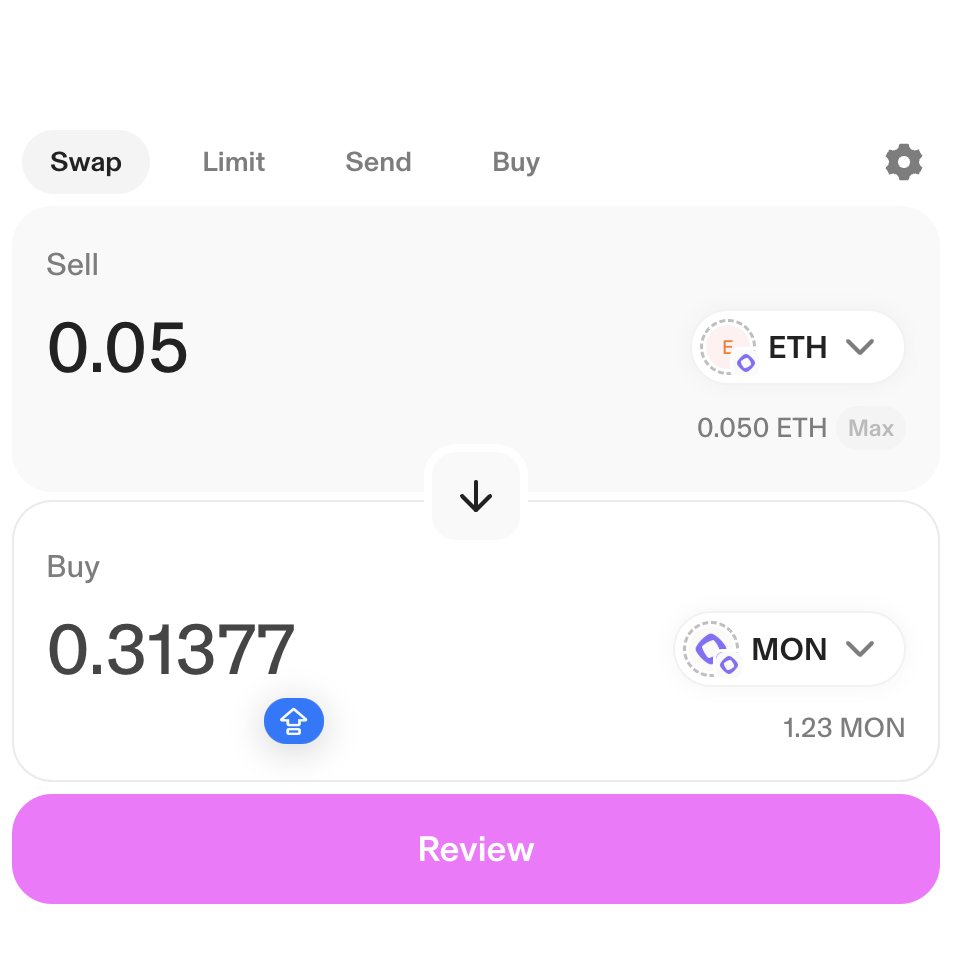
3⃣还有一个方式就是领Sapolia测试网上的 $ETH ,然后跨链到MONAD测试网,再兑换成 $MON 👇
faucet.quicknode.com/ethereu…
faucet.trade/sepolia-eth-fau…
以上2个是最有效的渠道,这个路径虽然比较麻烦,但确实是免费,不过最后兑换的时候经常会有网络不稳定兑换不成功的问题,需要多试几次。
2
1
449

Sonic的升级,是换皮还是换骨髓。
Sonic's upgrade: a change of skin or a change of core?
作为亚洲视线范围内,有一定发言权的团队(我们21-22年近一年占据了 @0xSonicLabs 链上超过50%的交易量。),我们对这次sonic的升级进行了一次全方位的审视。有趣的是,似乎每一个从业者都知道Sonic的升级,但是没有从业者认真研究过到底升级了什么,甚至英文资料都很少。关于Full node之争其实Sonic也有自己的答卷,它非常有讨论意义,我们不应该忽视房间里的大象。
As a team with a notable presence within the Asian perspective (we have accounted for over 50% of on-chain transactions on @0xSonicLabs in the past year, 21-22), we have conducted a comprehensive review of Sonic's recent upgrade. Interestingly, it seems that every practitioner is aware of Sonic's upgrade, yet few have delved deep into what exactly has been upgraded. There is even a scarcity of English resources on the matter. Concerning the Full Node debate, Sonic has its own response, which is highly debatable. The elephant in the room should not be overlooked.
到底升级了什么?为什么它称自己是L1?
我们翻阅了Fantom Foundation的所有Doc,替他们总结了升级中值得列出来的创新。包括:
-内部(Fantom Virtual machine & Storage)和
-外部(Bridge)两个部分。
Sonic的新命名:
-Fantom virtual machine(FVM)
-Storage(DB)
-Bridge(Fantom Gateway)&Validator
What has been upgraded exactly? Why does it refer to itself as L1?
After going through all of Fantom Foundation's documentation, we have compiled a list of notable innovations from their upgrade. These include:
Internals (Fantom Virtual Machine & Storage) and
Externals (Bridge).
Sonic's new nomenclature:
Fantom Virtual Machine (FVM)
Storage (DB)
Bridge (Fantom Gateway) & Validator
内部升级: -Fantom virtual machine(FVM)&Storage(DB)
在Fantom Foundation的doc中先提出了DB和EVM分别占据了84%和13%的消耗时长。而其中重点解决DB的效率显然会更高
详情参考Doc:
blog.fantom.foundation/fanto…
而新升级的这两个部分互相成就,FVM合并和预设了多个指令,建立了很多index,希望用这样的方式来提高效率。某种程度上来说更像是树状结构让用户更快能通过路径执行。这个类型的优化在其他公链也能看得到。
Internal Upgrade: Fantom Virtual Machine (FVM) & Storage (DB)
In the documentation provided by Fantom Foundation, it was initially highlighted that the DB and EVM respectively accounted for 84% and 13% of the consumed runtime. However, focusing on enhancing the efficiency of the DB appears to be more advantageous.
For more details, refer to the documentation:
blog.fantom.foundation/fanto…
The new upgrades in these two components complement each other, with the FVM consolidating and predefining multiple instructions, establishing numerous indexes in an effort to boost efficiency. To some extent, it resembles a tree-like structure enabling users to execute tasks more swiftly along paths. Such optimizations can also be observed in other public blockchains.
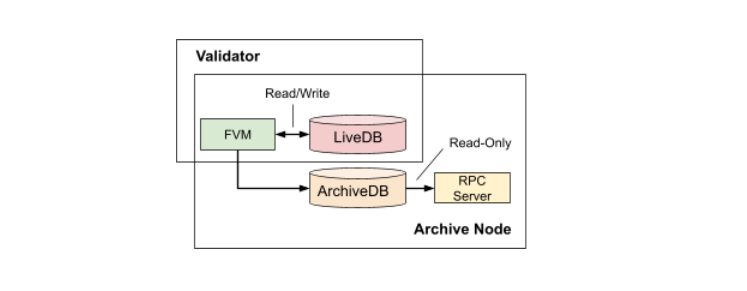
重头戏是DB的部分,Sonic直接拆分了传统DB成为了LiveDB和ArchiveDB,见配图。大白话来形容就是LiveDB只管当下此刻的数据,文档中的描述是‘Current Blockchain Only’;而ArchiveDB更像是一个记录历史数据的数据库,所以本质是通过拆分DB功能来提升只有一个DB的运行效率。
详情参考Doc:
blog.fantom.foundation/fanto…
这也是23年1月Doc文档中描述Storage处理时间下降98%这句话的来源(毕竟只用处理Current Blockchain Only)。
这拆分之后,马上就要面临的问题是dispute问题,换句话说,如果产生了争议的交易如何处理呢?
The highlight is the part about the database (DB). Sonic directly splits the traditional DB into LiveDB and ArchiveDB, as shown in the diagram. In simple terms, LiveDB only deals with current moment data, described in the document as 'Current Blockchain Only'; whereas ArchiveDB is more like a database that records historical data, so essentially, it enhances the operational efficiency of having just one DB by splitting the DB functionality.
For more details, refer to the document:
blog.fantom.foundation/fanto…
This is also the source of the statement from the January 23 document that describes a 98% decrease in storage processing time (after all, it only deals with Current Blockchain Only). Following this split, the imminent issue to be faced is the dispute problem. In other words, how are disputed transactions handled if they arise?
传统EVM和DB下,比如有 @VitalikButerin 拍脑门定的7天挑战期(是的,我指的是乐观挑战),通过二分法的方式,大家统一称为默克尔树的解决方案,来溯源定位到精准的那一笔争议交易,而毫无疑问的是,这个做法听起来就极大的消耗了DB的处理时间,实际上也是如此。
而Sonic的解决方案看起来是放弃默克尔树这一套,并且将传统的Full node拆分成Validator和Archive node。大白话翻译一下就是Validator负责EVM(即FVM)和LiveDB(即当下数据),所以Validator的要求也大幅度降低了,很好理解,因为处理的命令量和数据量都降低了。(这个地方需要格外留意,因为关联到后面的Bridge的创新)。
而Archive node就承担了查询调用ArchiveDB(即历史数据)等复杂一些的功能,基本应该都是项目方和类似我们这样做链上生意的人需要准备的,但目前并没有看到有对Archive node的激励措施,这十分的原教旨主义。(因为Vitalik当时提出类似观点的时候也没解释)
In the traditional EVM and DB setup, for example, the 7-day challenge period set by @VitalikButerin (yes, I'm referring to optimistic challenges) is resolved through a binary method commonly known as the Merkle tree solution. This method traces back to pinpoint the exact disputed transaction. Undoubtedly, this approach appears to significantly consume the processing time of the database, which is indeed the case.
Sonic's solution seems to abandon the Merkle tree approach and instead divides the traditional full node into Validator and Archive node. In simpler terms, Validators are responsible for the EVM (i.e., FVM) and LiveDB (i.e., current data), thus reducing the requirements for Validators significantly, which is easily understood as the workload and data volume decrease. (This point requires special attention as it relates to the innovative Bridge later on).
The Archive node takes on more complex tasks such as querying ArchiveDB (i.e., historical data), which are likely requirements for projects and businesses conducting transactions on the chain, like us. However, there currently seems to be no incentive measures for Archive nodes, which is quite purist in nature. (This lack of incentives is reminiscent of Vitalik's earlier views on a similar topic, which were left unexplained at the time.)
外部升级-Bridge(Fantom Gateway)&Validator:
外部升级和内部升级高度关联,甚至我们认为很可能是外部升级(Bridge)倒推出了如今内部升级的结构。否则我们的确很难解释 @AndreCronjeTech 回归之后为什么主要负责的就是Bridge(Fantom Gateway)
如果了解Fantom的历史,就好理解Bridge对Fantom生态的重要性。早几年 @MultichainOrg 官宣成为了Fantom指定合作的跨链桥,因此有了Print的稳定币。而后的事情就是Multichain突发被中国警方控制,而跨链桥的倒塌让Fantom的TVL一蹶不振。八卦一句,当年我们追踪过Multichain关联地址在Fantom上印钱然后转去其他链的举动,我不清楚 Foundation 到底有没有参与,但是这个举动当年获得了巨量的利润。
External Upgrade - Bridge (Fantom Gateway) & Validator:
External upgrades are closely intertwined with internal upgrades, to the extent that we consider it highly probable that the external upgrade (Bridge) retroactively influenced the current structure of internal upgrades. Otherwise, it would be quite challenging to explain why @AndreCronjeTech, upon his return, primarily focuses on the Bridge (Fantom Gateway).
Understanding the history of Fantom makes the importance of the Bridge to the Fantom ecosystem clear. A few years ago, @MultichainOrg was announced as Fantom's designated cross-chain bridge partner, leading to the creation of the stablecoin Print. Subsequently, Multichain faced unexpected control by Chinese authorities, causing the collapse of the cross-chain bridge and a significant decline in Fantom's Total Value Locked (TVL). On a side note, back then, we tracked Multichain's associated addresses minting money on Fantom and then transferring it to other chains. Although I am unsure if the Foundation was involved in this activity, it did generate substantial profits at the time.
所以摆在Fantom升级面前的问题是:1)跨链桥是否安全 2)有没有稳定币。
2)可以通过运营获取,目前USDC已经要发行在Fantom上,不知道代价如何,传言当年 @opensea 来Fantom的话开了一个天价,最后没谈拢。1)的问题是技术问题,也是这次升级的重心,而且它必须是原生的,否则无法向市场解释如何避免Multichain的事故。
但我们说是桥,不如我们说是另一种的node创新,为了拿到一个原生的桥, @AndreCronjeTech 进行了一个非常精妙的举动,即让运行一个Sonic节点的人,同时再运行一个节点在ETH上,通过这两个节点的同步来加快原生桥的跨链速度。这也是为什么Sonic十分骄傲的说他们的Bridge是Fast&Decentralized。
详情可以参考Doc:
blog.soniclabs.com/sonic-gat…
The issues facing Fantom's upgrade are: 1) the security of cross-chain bridges and 2) the availability of stablecoins.
Stablecoins can be acquired through operations, with USDC already in the process of being issued on Fantom. The cost implications remain uncertain; it is rumored that when @opensea considered moving to Fantom, negotiations broke down over exorbitant fees. The first issue is a technical one and a focal point of this upgrade. It must be native to the platform to effectively explain how it prevents incidents like those seen with Multichain.
Referring to it as a bridge might not be entirely accurate; rather, it's an innovative form of node. To achieve a native bridge, @AndreCronjeTech made a clever move: requiring individuals running a Sonic node to also operate a node on Ethereum. Synchronizing these two nodes accelerates the cross-chain speed of the native bridge. This is why Sonic proudly declares that their Bridge is Fast & Decentralized.
For more details, please refer to the documentation:
blog.soniclabs.com/sonic-gat…
要实现这个逻辑,有个现实问题就是同时运行2个Validator实际运行成本是翻倍的,这也是为什么内部创新时,那么强调要降低validator的成本,因为本质是两个node。这也是为什么Sonic一直强调自己是L1,不是L2。但是目前我们对这个有趣的方案定义为L1.5。
至于为什么是ETH?大概是因为如果对其他的链也用这个方案,同时运行Validator的数量还需要继续增加,而显然ETH上的TVL迁移过来性价比最高。我们猜测Sonic一直就觊觎ETH上的合成资产并未得到比较大的激活。希望通过这个举动来盘活类似stETH和wBTC这类资产。在 @michaelfkong 和 @AndreCronjeTech 的只言片语中也能略知一二。
To implement this logic, a practical issue arises: the actual operating cost doubles when running two Validators simultaneously. This is why emphasizing the need to reduce validator costs is crucial during internal innovations, as essentially, it involves managing two nodes. This is also why Sonic consistently stresses that it is L1, not L2. However, currently, we label this intriguing solution as L1.5.
As for why Ethereum is chosen, it is likely because if this approach were applied to other chains, the need to increase the number of validators running simultaneously would persist. Clearly, migrating TVL from Ethereum offers the best cost-effectiveness. We speculate that Sonic has long coveted synthetic assets on Ethereum but has yet to see significant activation in this regard. It is hoped that this move will revitalize assets like stETH and wBTC. Insights from @michaelfkong and @AndreCronjeTech provide some clues in this regard.
Sonic到底想做什么? 对于一个尚未list的项目,通常情况下都会按照list的要求去反推运营和增长的路径,这才诞生了Airdrop目前的阶段性业态(交互&贿赂TVL)。这种以果为因的做法对一个已经list在各大交易所的标的,显然是不需要的。这个部分我已经放在关于Sonic如何发钱的视频里面进行了讨论。梗概来说,#SonicArcade 为了DAU;#SonicBOOM 为了ECO;#MemeSeason 为了拉新。
从FDV的角度看,从L2到L1的定义无疑会潜在推高估值水平,但是现在除了技术创新外,共识都会倾向Killer dapp是什么的问题,或者说差异化在哪里。这里就涉及了AC第二个工作重点, @TheBlockBureau 。
@TheBlockBureau 目前还看不到产品,但是从几个月前我们关注开始,它似乎就是一个关于【信用贷款】相关的基建。看上去像是基于地址活动抽象出了一个模型来进行评估和授信,像是Alipay的信用分。
这个产品是符合Defi基因创新的,也符合整个市场对Fantom升级的理解和估值水平。配合上Bridge的创新,我们很容易有一个较大的想象空间,比如 信贷 合成资产;或者信贷 合成资产 稳定币or算法稳定币。
What does Sonic really aim to achieve? For a project that has yet to be listed, the typical approach involves deducing operational and growth paths based on listing requirements, leading to the current phase of Airdrops (interaction & incentivizing TVL). Such a practice, which starts with outcomes rather than causes, is evidently unnecessary for assets already listed on major exchanges. I have discussed this aspect in a video on how Sonic distributes funds. In essence, #SonicArcade for DAU; #SonicBOOM for ECO; #MemeSeason for user acquisition.
From the perspective of FDV, the shift from L2 to L1 undoubtedly has the potential to elevate valuation levels. However, beyond technical innovation, current consensus leans towards questions about what constitutes a Killer dapp or where the differentiation lies. This is where the second focus of AC, @TheBlockBureau, comes into play.
@TheBlockBureau has yet to unveil a product, but since our attention was drawn to it a few months ago, it appears to be infrastructure related to "credit loans." It seems to have abstracted a model based on address activity for evaluation and credit granting, akin to Alipay's credit scoring.
This product aligns with DeFi's genetic innovation and fits the market's understanding and valuation levels regarding Fantom's upgrade. Coupled with the Bridge's innovation, there is ample room for imagination, such as credit synthetic assets; or credit synthetic assets stablecoins or algorithmic stablecoins.
我们对Defi 2.0的时代充满热情,无论是高性能公链还是链上的高频交易、信贷都是符合下一个Defi版本的故事。非常欢迎 Fantom Foundation联系我们,每次讨论Fantom,华人用户似乎都不太关心,这让我们对此感到失落,它应该被关注。我们很乐意在这次升级中参与让链上更繁荣。
回到开头的那句话,不要忽视房间里的大象。
We are enthusiastic about the era of Defi 2.0, where high-performance public chains and on-chain high-frequency trading, as well as credit, all contribute to the narrative of the next version of Defi. We would be thrilled for the Fantom Foundation to reach out to us. Whenever Fantom is discussed, it seems that Chinese users are not particularly interested, which leaves us feeling somewhat disheartened; it deserves attention. We are more than willing to participate in making the blockchain more prosperous through this upgrade.
Returning to the initial statement, let's not overlook the elephant in the room.
19
19
74
50,100
22 Feb 2025
I've just minted cryptodoggy.nad
One-time registration, free use for life.
Powered by @NadDomains, natively built for @monad_xyz.
Every Nads needs to have their own. Mint your now! Just click the link below 👇
app.nad.domains/cryptodoggy.…
1
82
22 Feb 2025
这几个里面一直关注Lombard,PumpBTC,Babylon。
Babylon预计三月底?但是最近还没有看到什么大动作,不知道是不是要延期。
@Lombard_Finance 很明显最近在积极转型,非常活跃。从大户游戏开始关注更多的DEFI场景,上Kaito,搭建社区,看好Lombard。
@Pumpbtcxyz 很有意思,在运营上看似是以散户为中心,积极活跃社区,然而实际背后都是大户,跟合作方生态链玩的都是换量游戏。
@babylonlabs_io 看三月底的话所有BTC LRT都在考虑抓紧了吧,在巴比伦之后风险太大了,都不用干了
22 Feb 2025

《预测三月空投的项目》
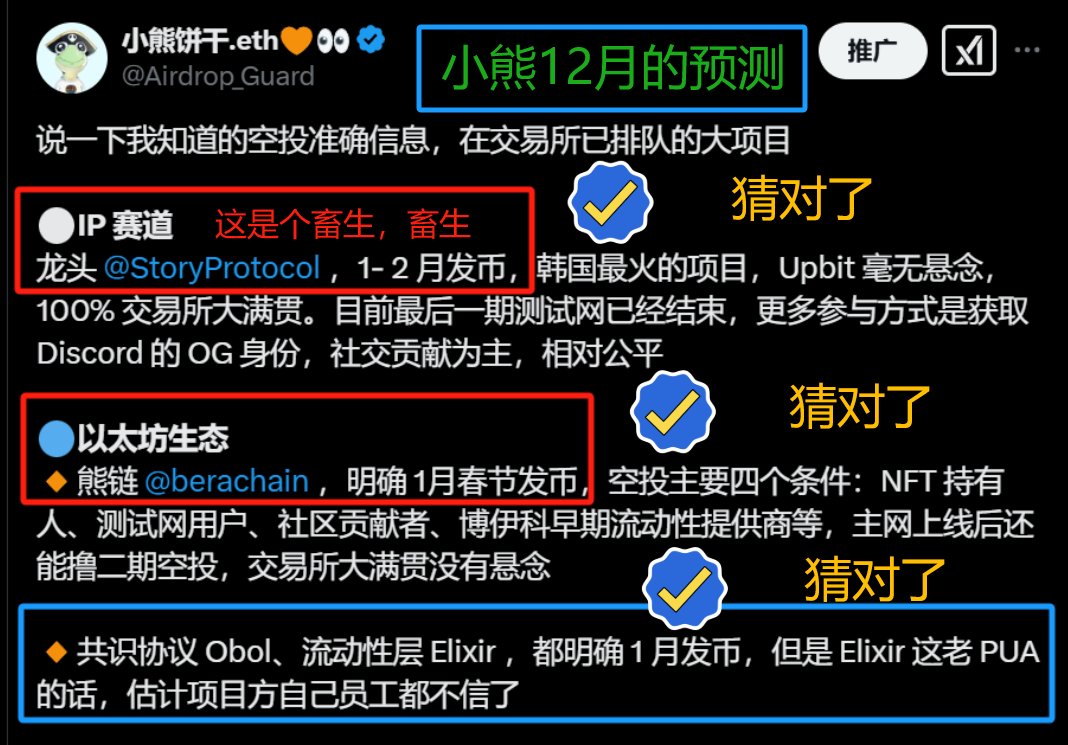
回头看12月写的预测,基本都猜对了,熊链更是春节压哨发币挺准时,今天再玩一下
✅下面预测 3月空投顺序,基本都是我重仓的,大家看着玩玩
@initia 3月发币
币安投资的万链之王,母链集权了主币的话语权,币价不会被子链稀释,大家可以把它理解成 Cosomos 的高端集权版,希望能重铸模块化网络的荣光。而且它是主网上线就发币,这代表做测试网的用户可以要发财了,空投如何分配很考验项目方的决策,我有信心项目方会给出满意的答卷
@Lombard_Finance 3月底发币
币安投资的比特币生态,存款规模 20亿美金(超 2万枚BTC),如果巴比伦是锦,Lombard绝对是锦上添花。这是我重仓的项目,大家可以把它看成以太坊的 Lido,为比特币生态提供流动性。我存了10个号,也买5个号的 yt ,预计它会排在 Babylon 之后,希望不要辜负
@babylonlabs_io 3月发币
币安投资的比特币网络,斯坦福教授创立的一层区块链,融资上亿美金的天王项目,预计很快要发布重大新闻,然后我预测 3月就发币,登录所有交易所大满贯,我存了 50个低保号,希望能分点汤喝
@elixir 3月发币
华尔街资本的流动性层,项目资助是非常好的,唯一问题就是拖太久了,欧美人基本都是慢慢开发的节奏。现在基本是万事俱备只欠东风了,发币是最好的选择。道上传言 1 月发币,结果又拖到 3月,希望这次别拖了
@Pumpbtcxyz 3月发币
这家比特币生态一直踏实做事,属于埋头建设的团队,他们明确会给社交创造者奖励,也会给 Kaito 投票奖励,我个人感觉挺适合散户去创造拿积分。我对这种明牌奖励的项目,心里挺有好感。预计它也是 3月就发币
@reddio_com 3月发币(可能)
Paradigm 投资的并行 EVM 高性能区块链,项目方开发节奏很快,我预计三月份有大动作,可能是主网,也可能是直接发币,挺期待的
✅最后再提示下安全,大家一定要重视!安全!
昨天下午我遇到黑客的网址嵌套,吓出一身冷汗。没想到晚上就出了 15亿美金的黑客大案,这世界上,有的钱不是你偷了就有命花的,100多亿人民币啊!建议每个企业招聘远程岗位时,都必须做 “反朝鲜黑客测试”,过程很简单,就是让这人辱骂金将军,这招已经帮众多企业避开了惊天大雷!重视!
时刻注意安全,祝大家在空投季发大财!
1
167