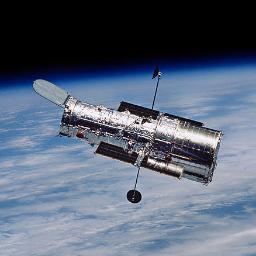
The official X account for the NASA Hubble Space Telescope, managed and operated by NASA's Goddard Space Flight Center.
- Tweets 8,362
- Following 44
- Followers 8,911,884
- Likes 1,224

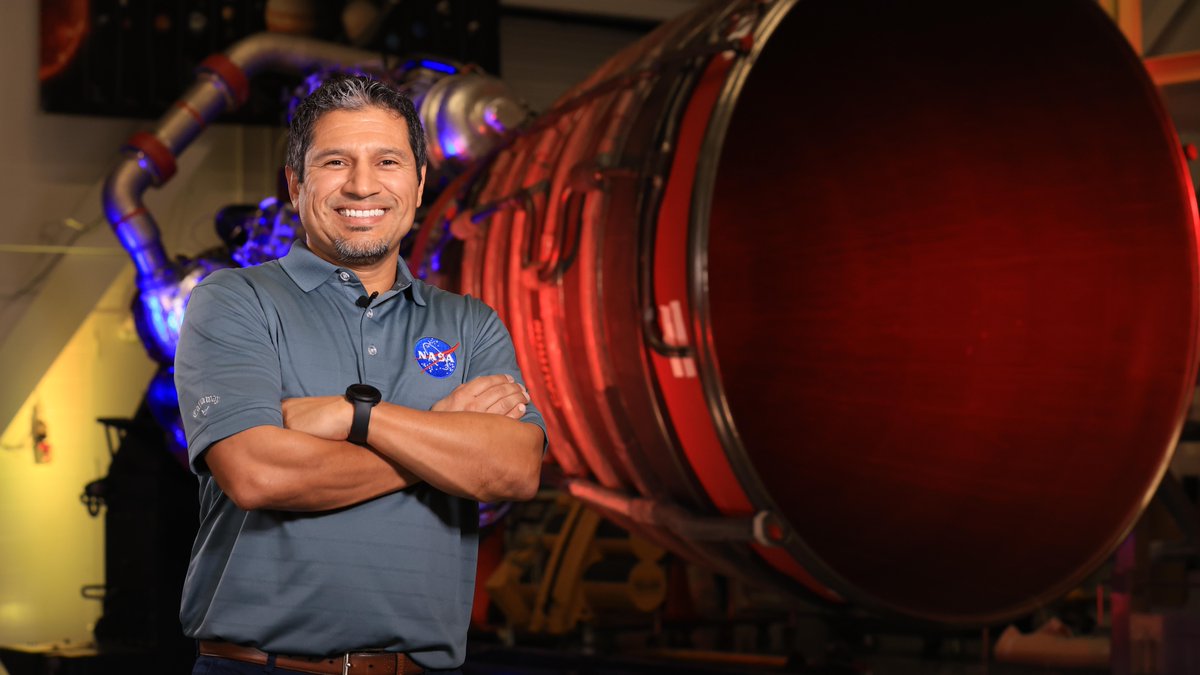
ALT Elkin Norena, who serves as an SLS resident management officer at NASA’s Kennedy Space Center in Florida, stands in front of an RS-25 engine. NASA

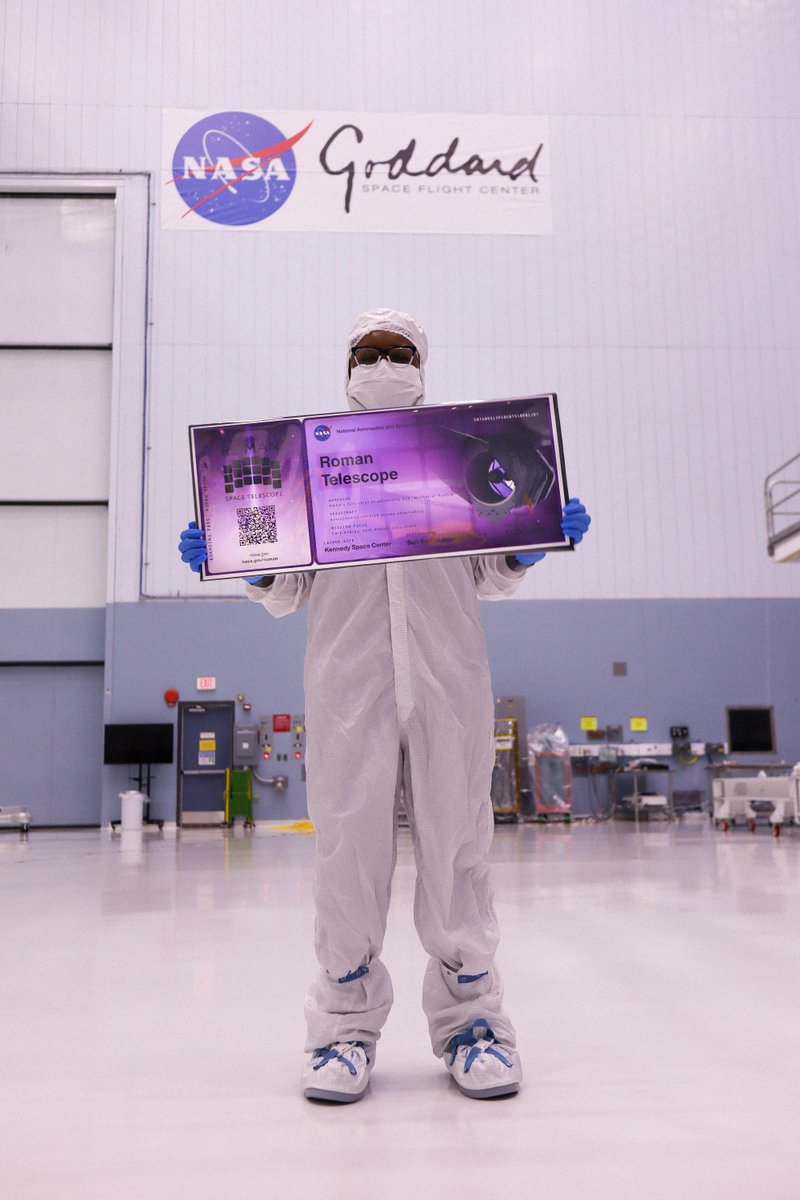
ALT A person holds a large, purple "boarding pass" for NASA's Nancy Grace Roman Space Telescope in Goddard's large cleanroom wearing a full white cleanroom suit. The boarding pass has the detector logo for Roman, an artist concept image of Roman, as well as a QR code, the telescope, and the NASA logo. "Roman Telescope" is written where the name would go.
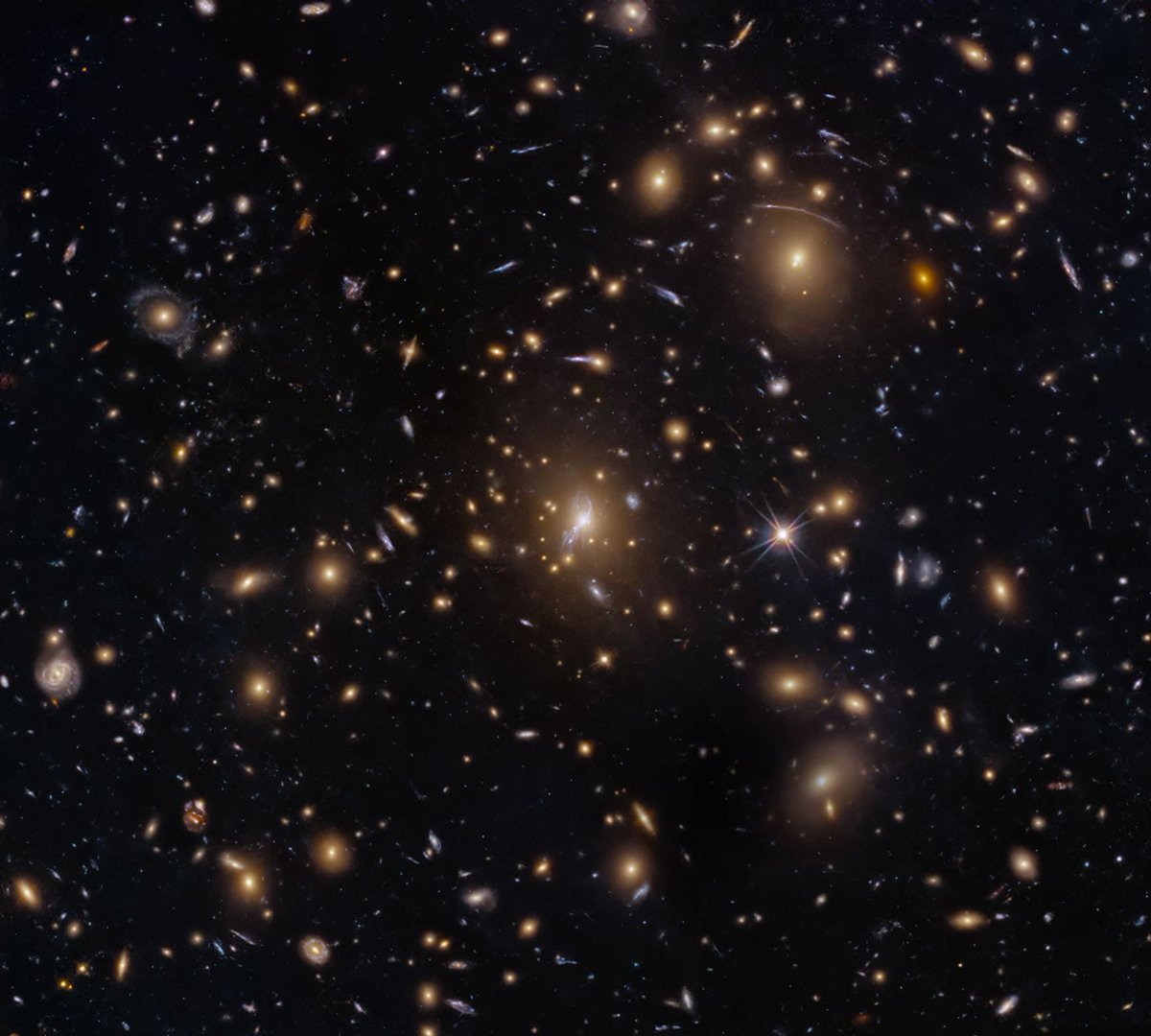
ALT Numerous galaxies dot the scene and appear to cluster around the image center. The view includes large elliptical galaxies along with spiral and lenticular galaxies. Faint arcs of distant galaxies gravitationally lensed by the cluster appear in the upper-right quadrant of the image. A couple of foreground stars are also visible and easily distinguished by their diffraction spikes.

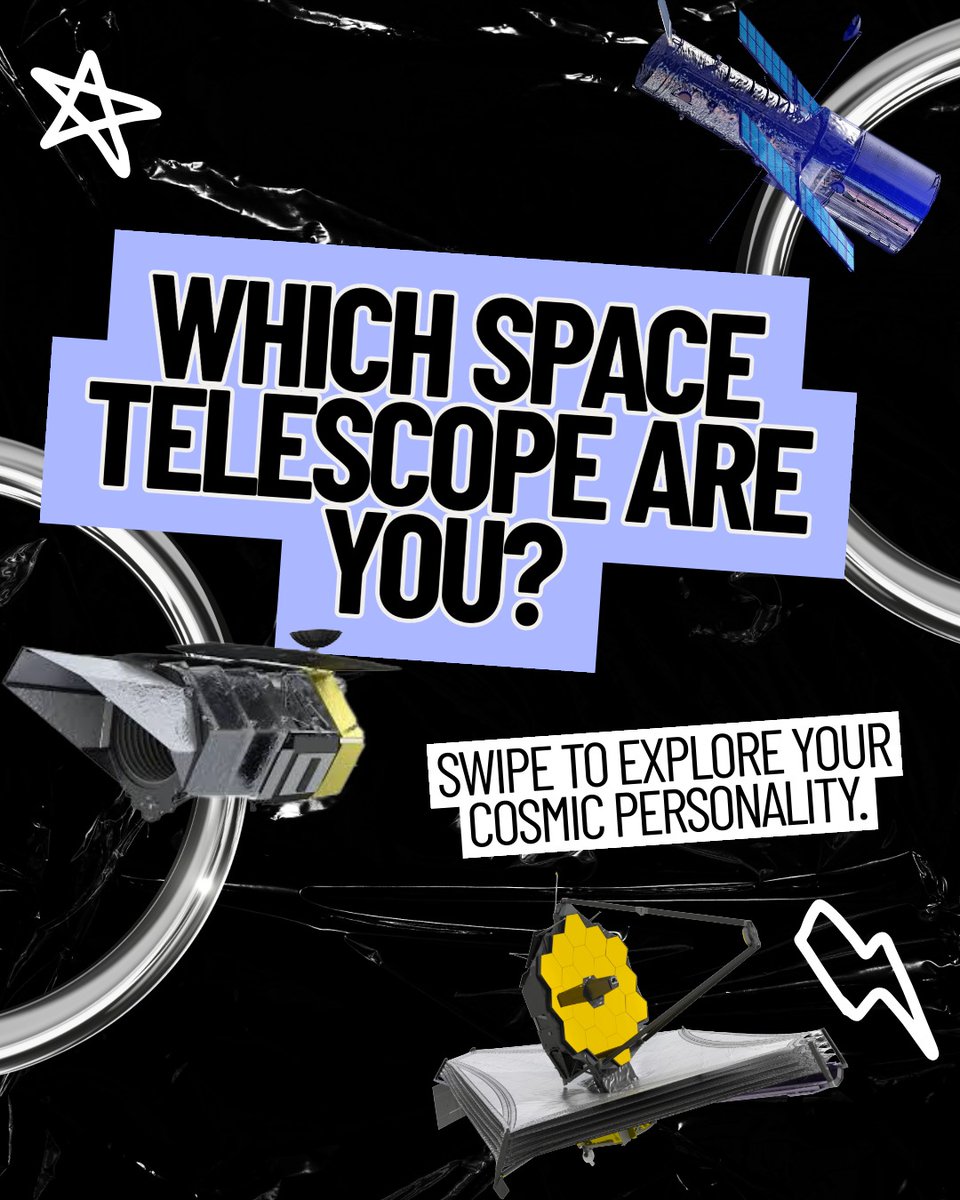
ALT Black and white graphic with purple accents and white drawn stars, lightning bolts and circles, along with animations of Roman, Hubble and Webb. Text: “Discover your space telescope personality match. Explore outward with telescopes and inward to find your match.”
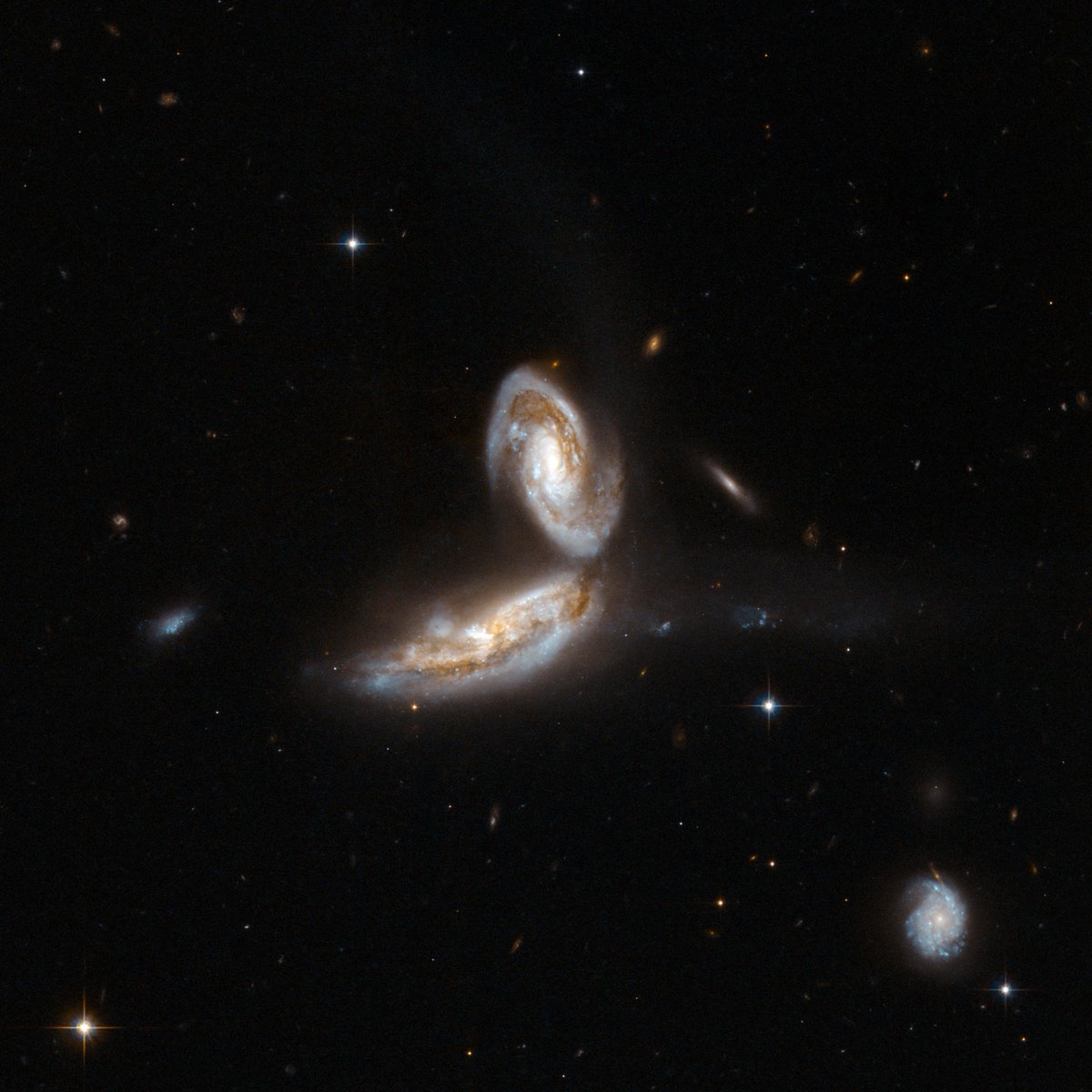
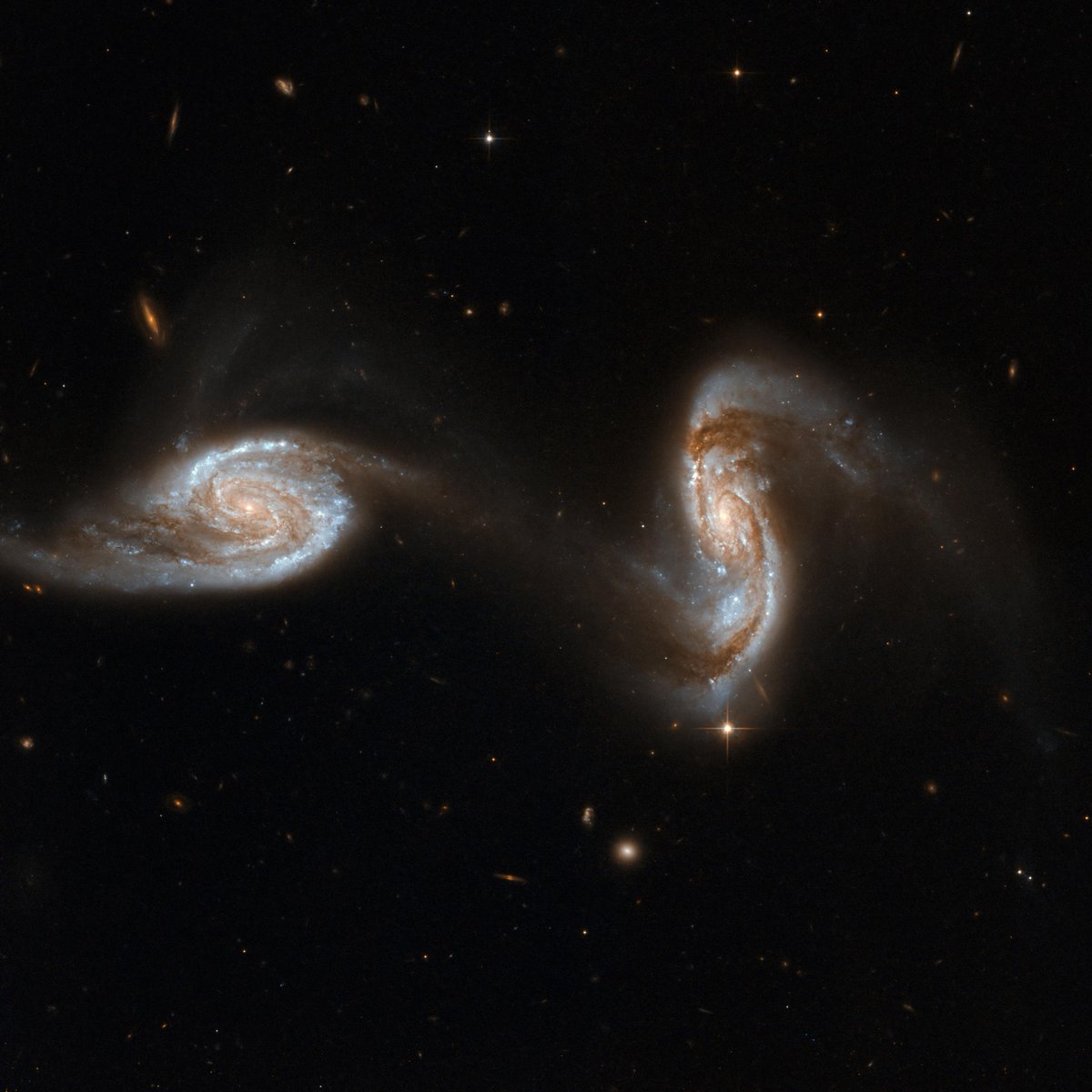
ALT Two spiral galaxies shine against black space, appearing connected to each other. A faint blue trail of stars extends to the right of the interacting galaxies. More distant galaxies dot the surrounding space.
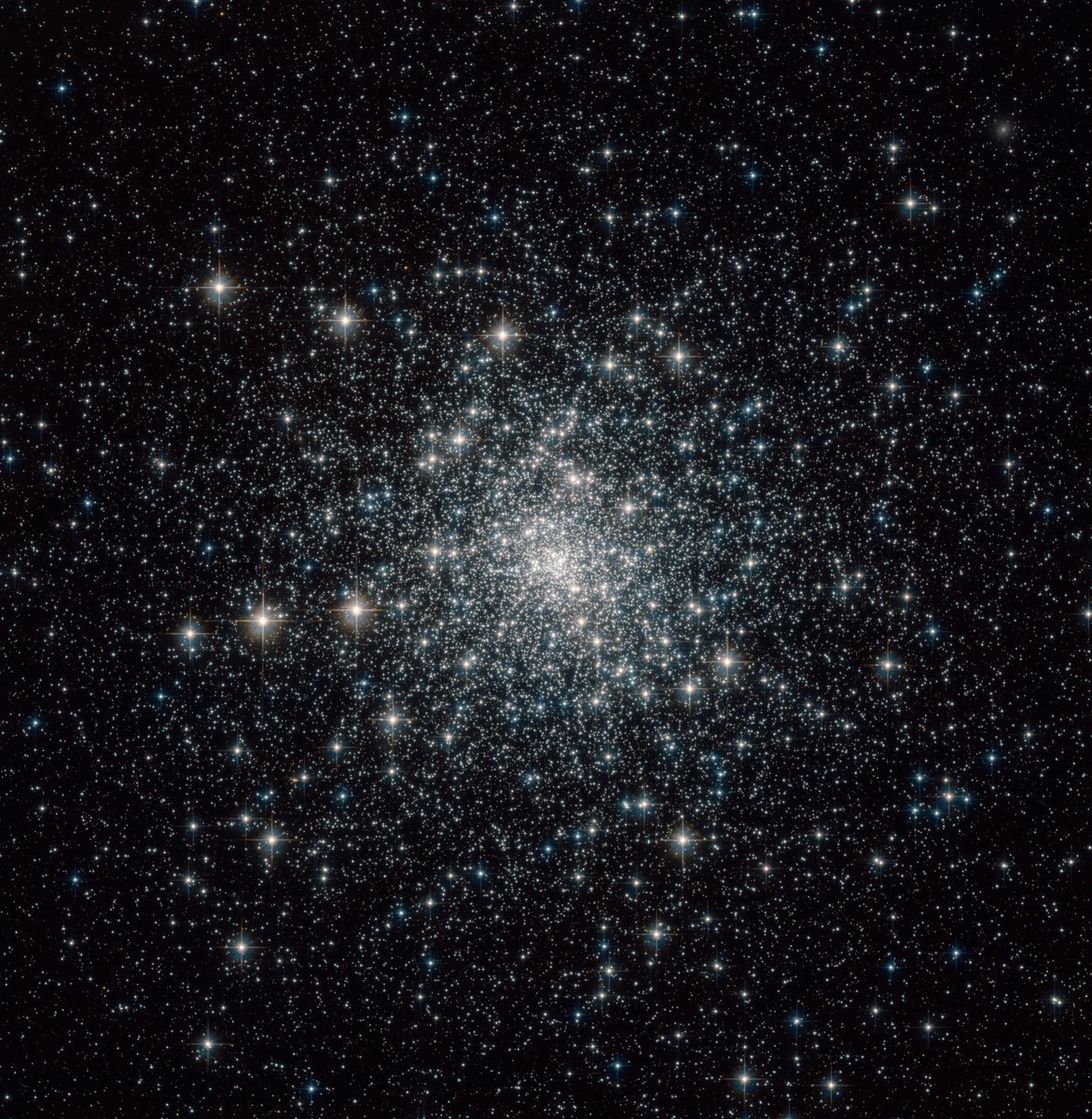
ALT M30. A spherical collection of stars shines against black space, more closely concentrated at center.
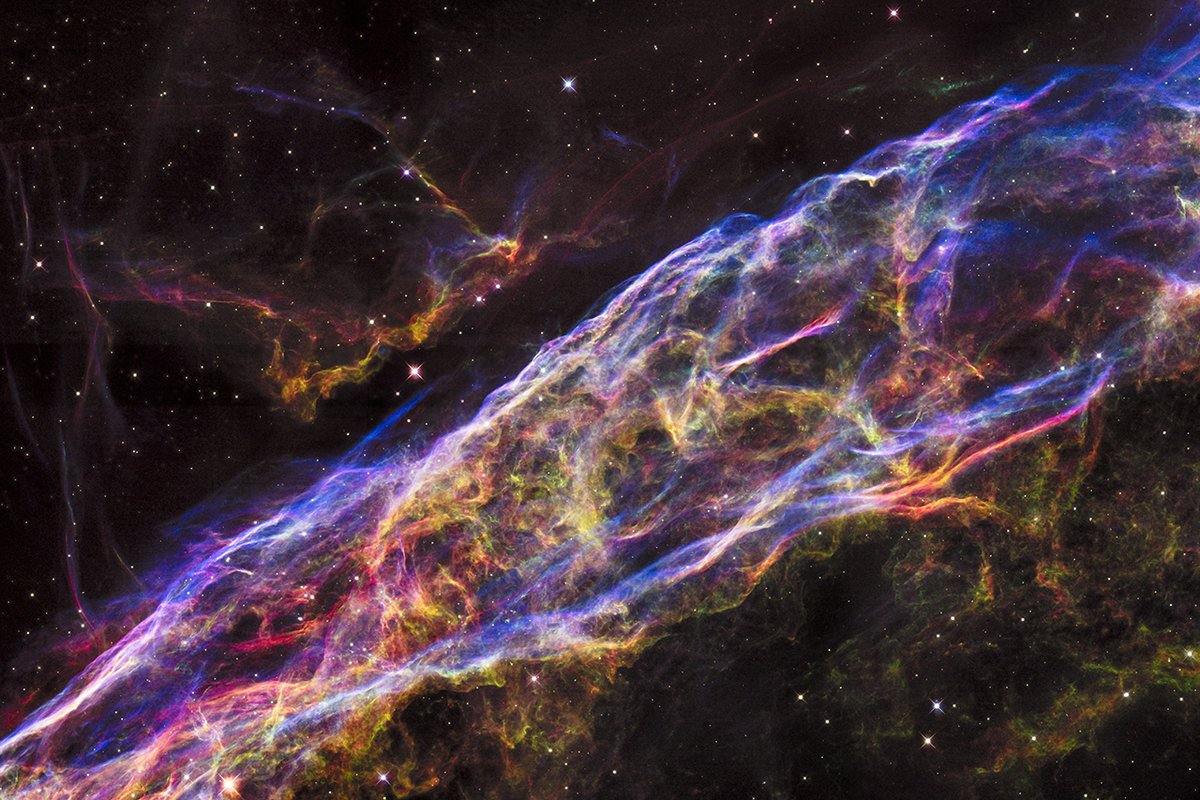
ALT Veil Nebula. A complex, glowing nebula stretches across the image in shades of purple, pink, yellow, and orange. Several stars shine throughout.
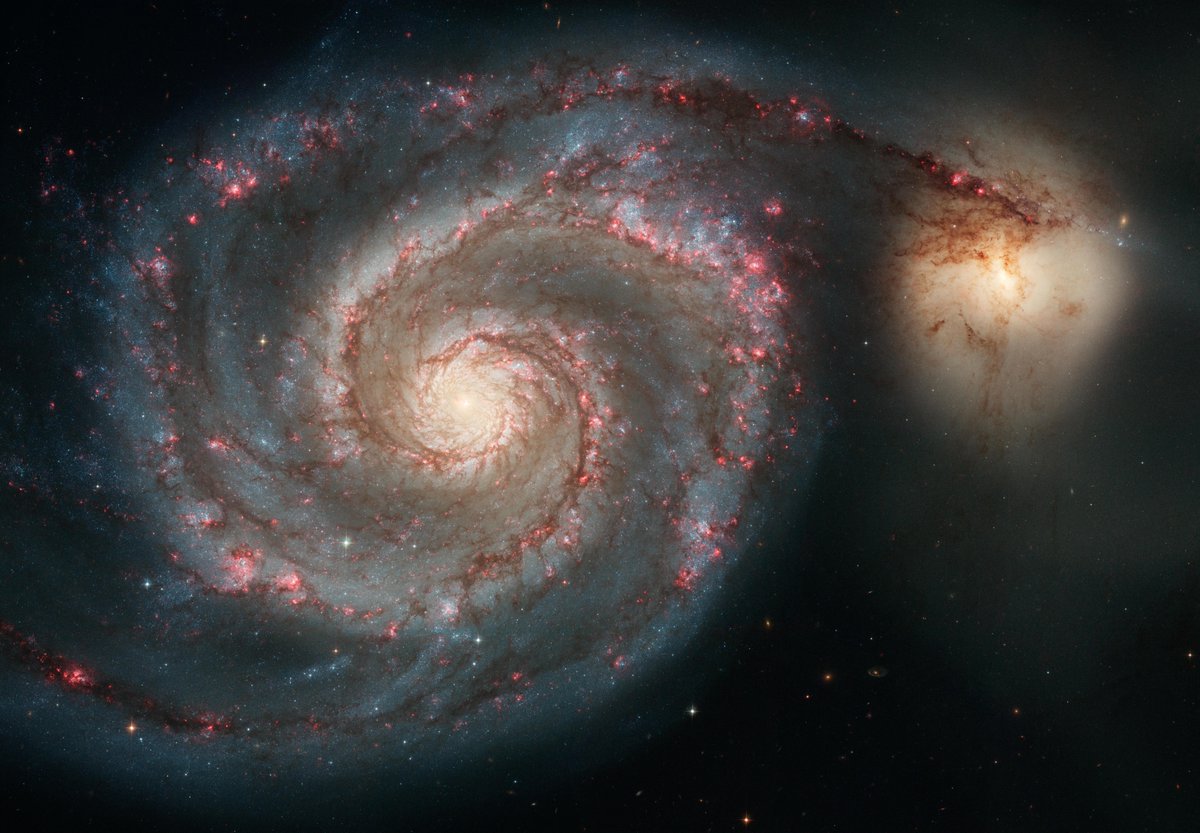
ALT Whirlpool Galaxy. A massive, face-on spiral galaxy glows with a yellow core and spiral arms full of dark brown dust and pink stars. The galaxy extends outward, with its outermost arm appearing to overlap with a small, yellowish gaalxy.
ALT Two spiral galaxies shine side-by-side against black space. Both galaxies have spiral arms full of dark brown dust and bright blue stars.
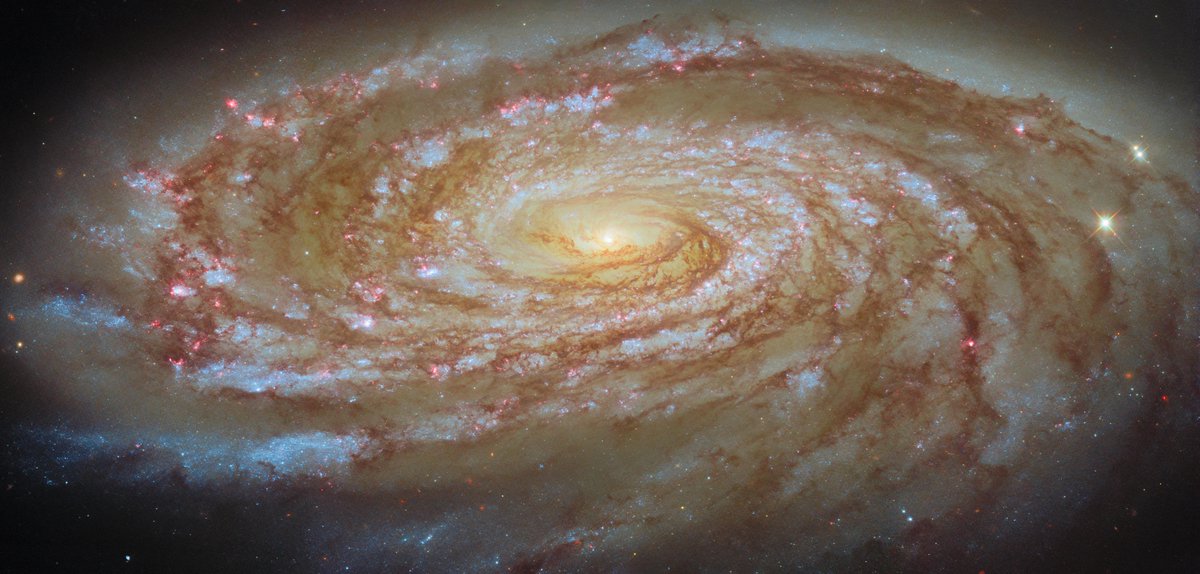
ALT A large spiral galaxy. It is seen tilted at an angle, so that it is foreshortened and appears very wide. Its tightly-wound, blue spiral arms swirl out from its glowing center, spreading apart at the tips. They are followed by strands and clumps of dark red dust and spotted with pink dots where stars are forming in clouds of gas. The galaxy is surrounded by a slight glow and lies on a dark background.
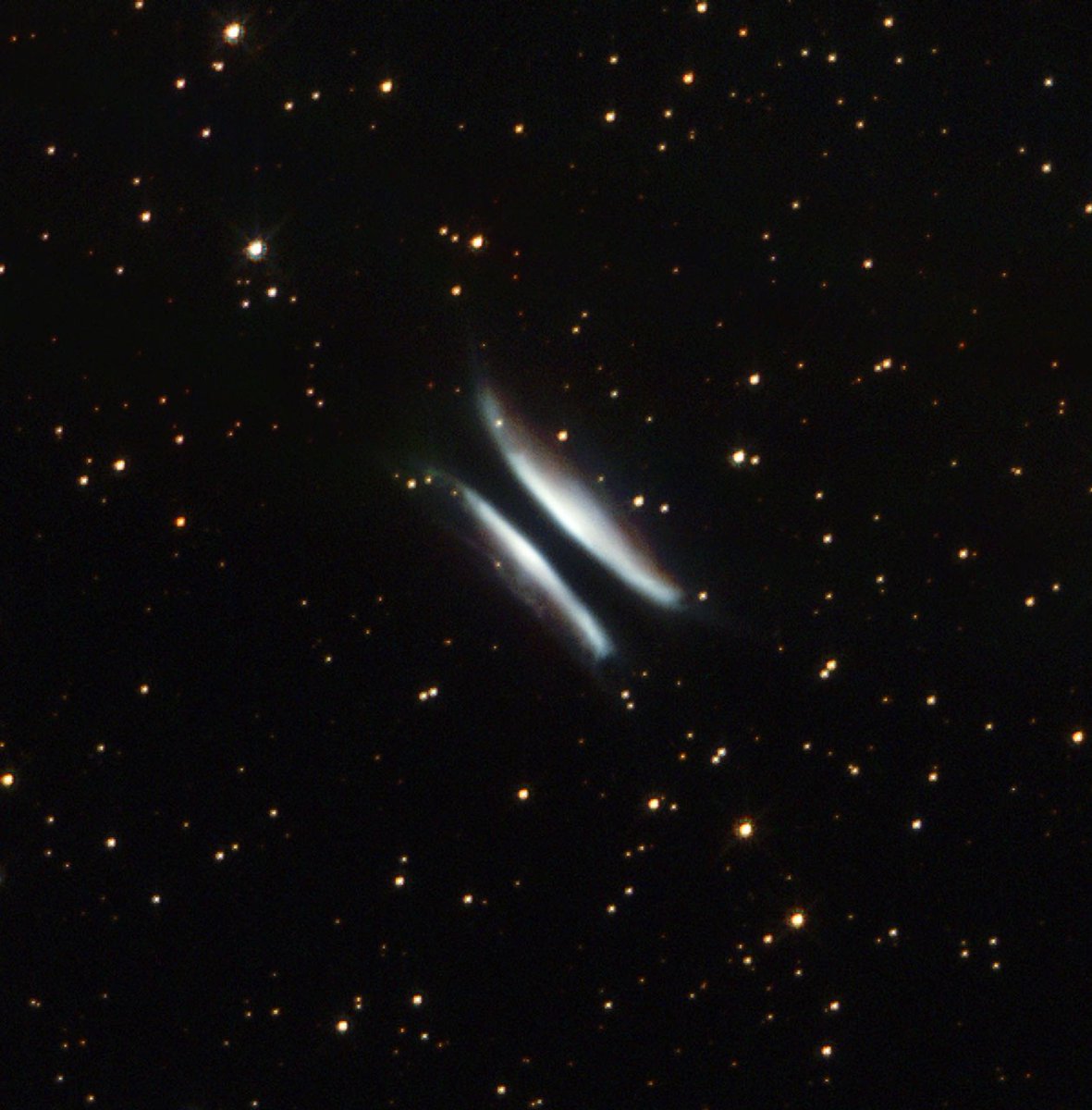
ALT Two glowing white lobes of cosmic material shine on either side of a dark black disk of dust, loosely resembling a hamburger. The black background of space is dotted with several stars.
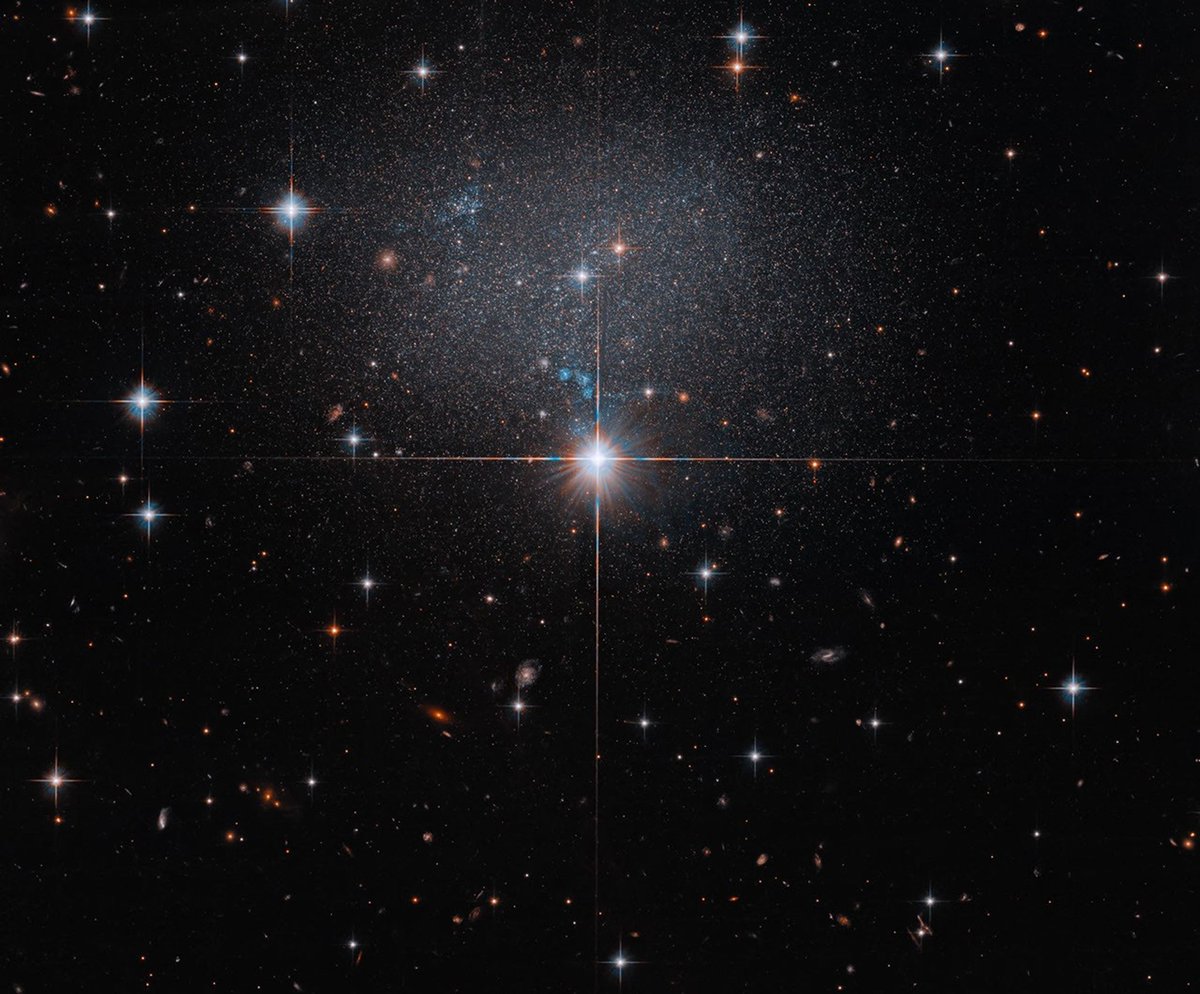
ALT A foreground star at image center shines brightly with four diffraction spikes. Above this star is a diffuse and faint dwarf irregular galaxy. The galaxy itself has bright blue and red stars.
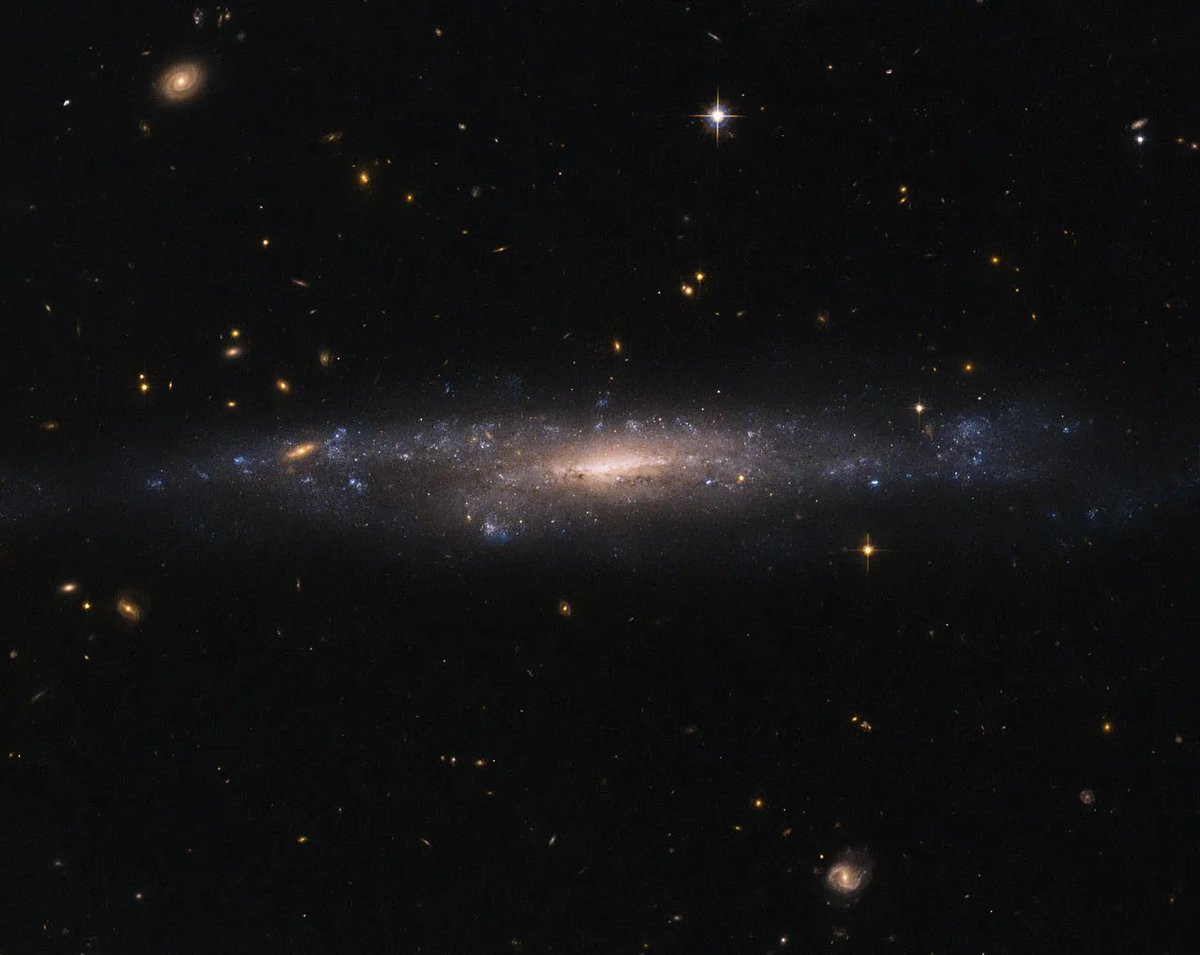
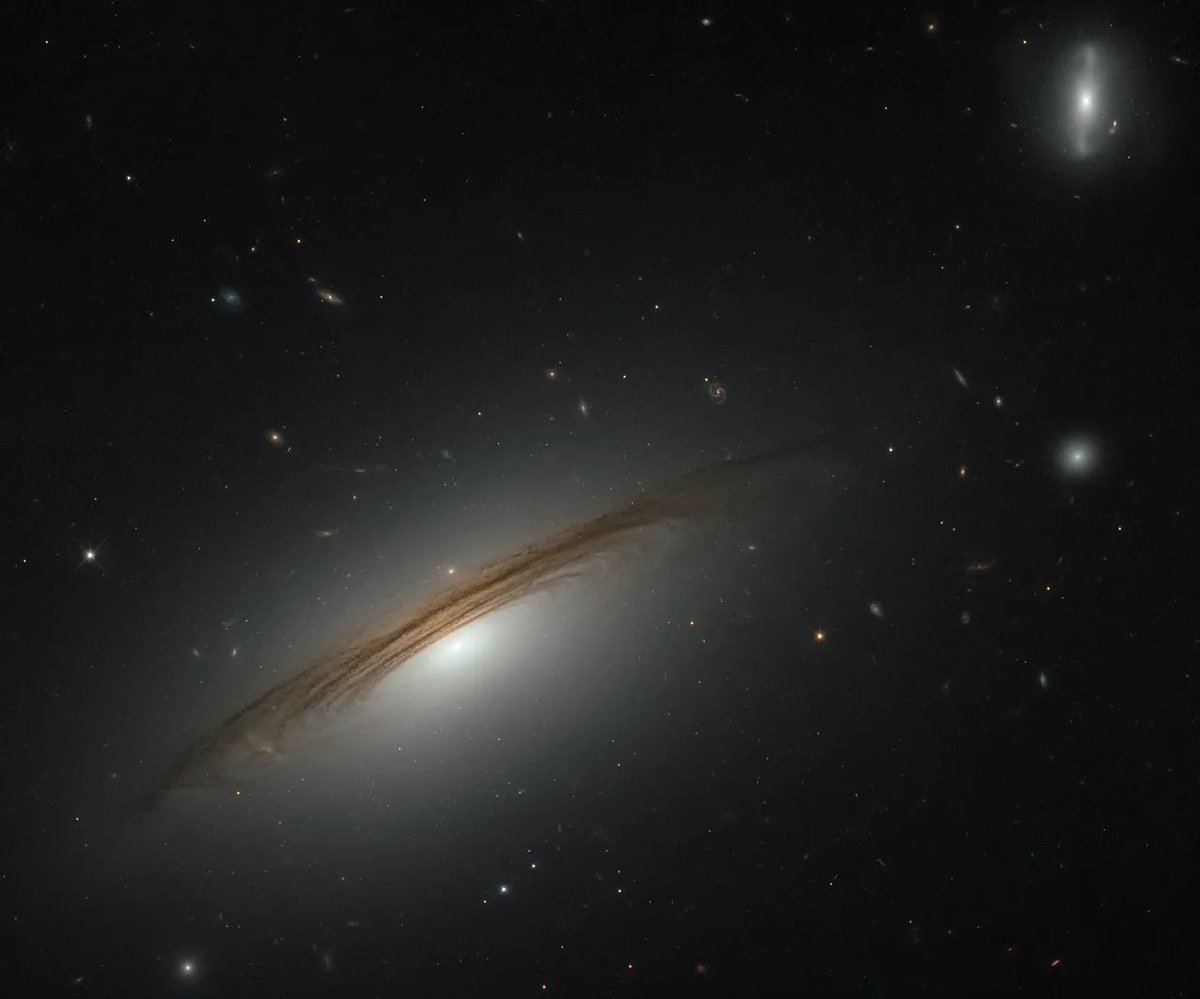
ALT A galaxy extends across the center of the image, with a yellow core and surrounded by blue stars and brown dust. Against the black background of space, foreground stars and more distant galaxies shine.

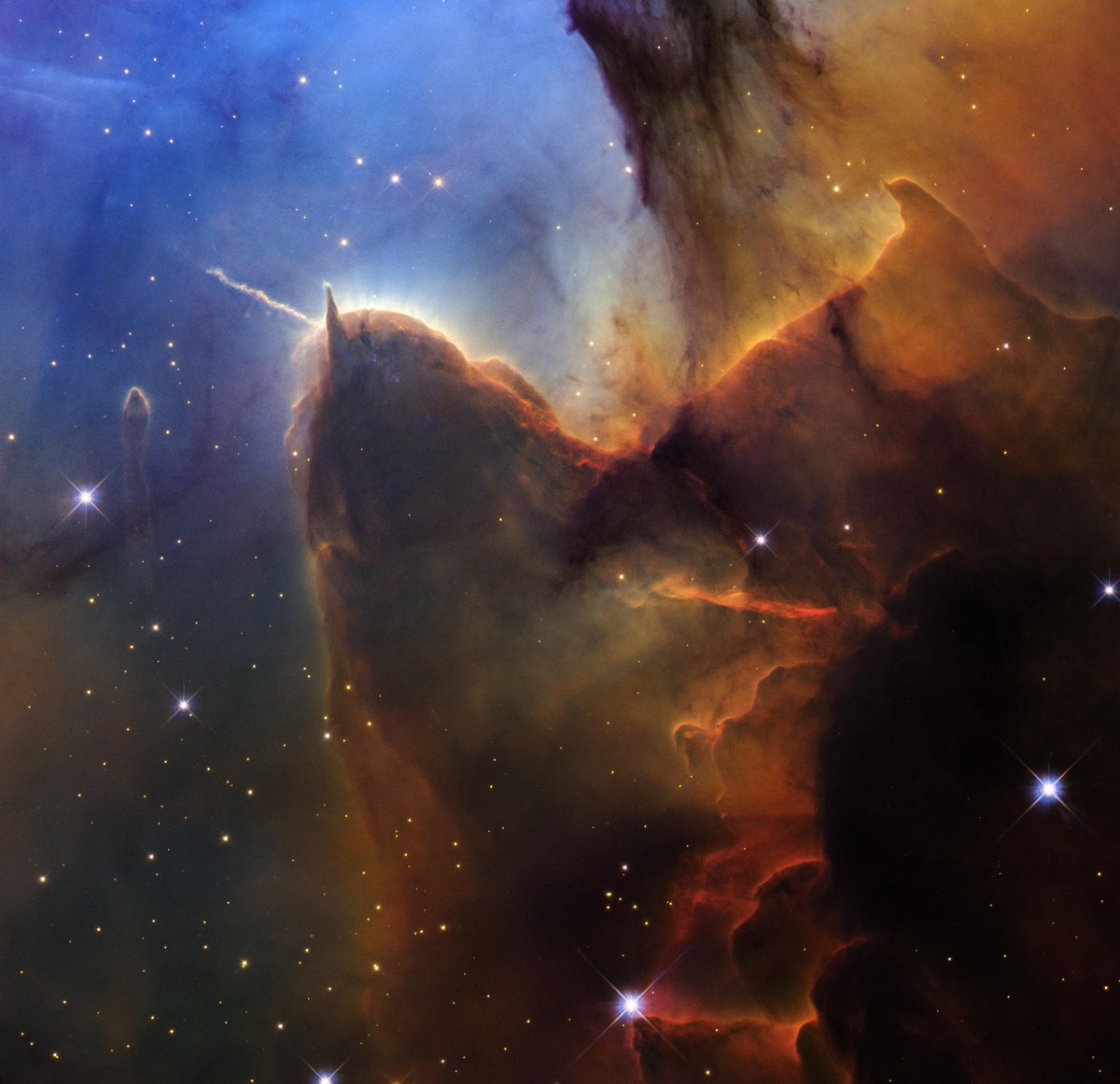
ALT Vista de Hubble con un encuadre muy cerrado de una vasta región de formación estelar conocida como la nebulosa Trífida. La parte superior izquierda es de color azul brillante. Colores en marrón y ámbar se extienden desde la parte superior derecha, atravesando el centro de la imagen en líneas irregulares y superpuestas, hasta llegar a la zona central inferior. En la parte inferior derecha, la imagen es casi negra. Pequeñas estrellas de color ámbar se ven en toda la escena. Hacia la izquierda, hay una prominente forma marrón que recuerda una cabeza con dos cuernos. El cuerno izquierdo apunta hacia la izquierda y tiene forma ondulada. El cuerno derecho es triangular y apunta hacia arriba.
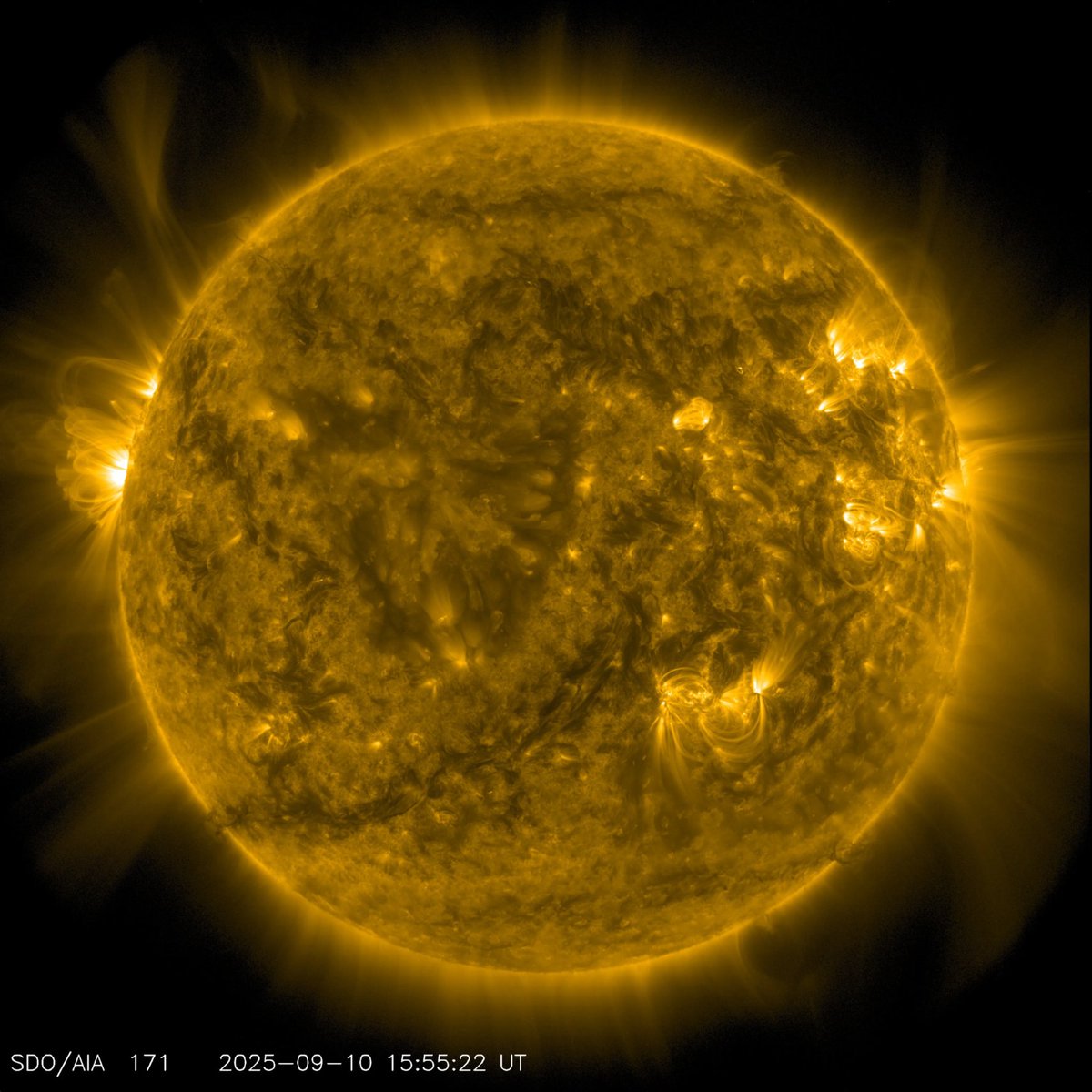
ALT The Sun seen by SDO. A bright flash of a solar flare glows on the Sun's right side, near 3 o’clock. The Sun appears golden yellow, with darker mottled patches, and brighter swirls on its surface.
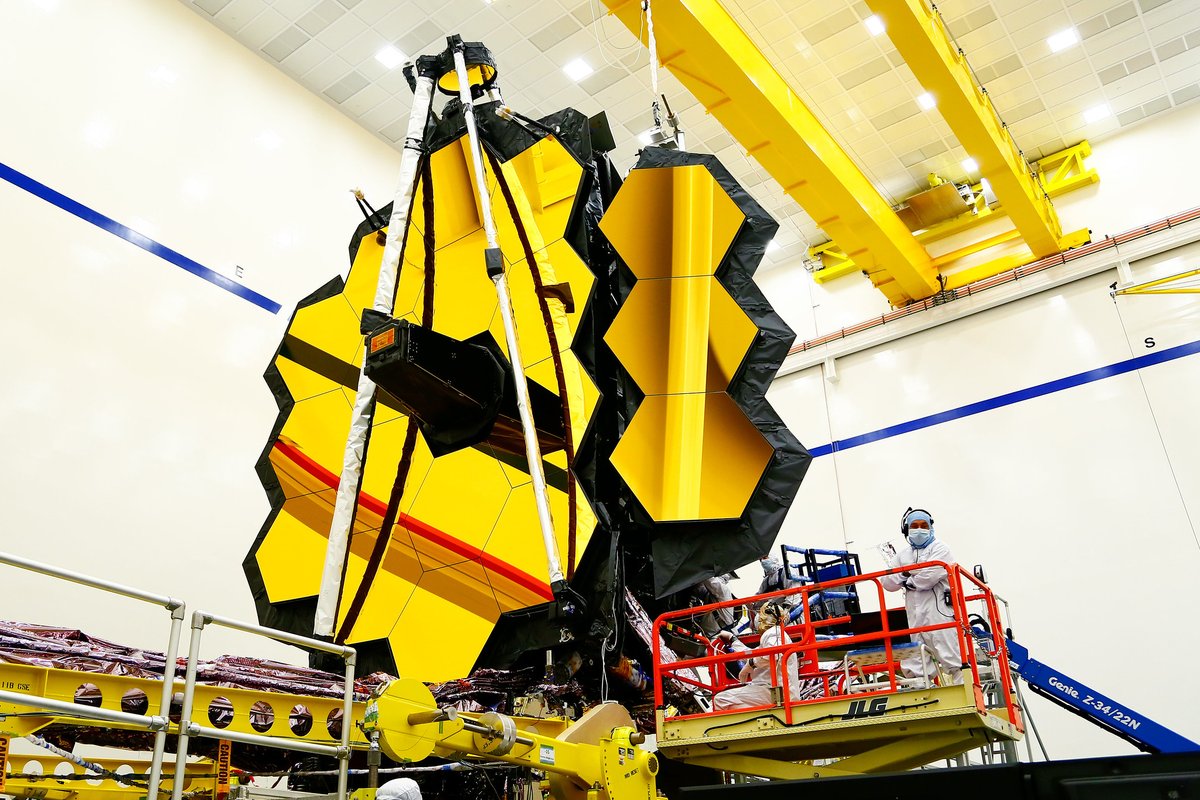
ALT The Webb telescope in a clean room. Its golden primary mirror dominate the center of the image. Fifteen of the 18 hexagon mirror segments are deployed, with the 3 on the right folding into place. Together, they make a jagged hexagon shape. The secondary mirror support is folded up in front of the primary mirror so it points to the ceiling. Workers in head to toe white clean room suits are on a red left next to the mirrors.
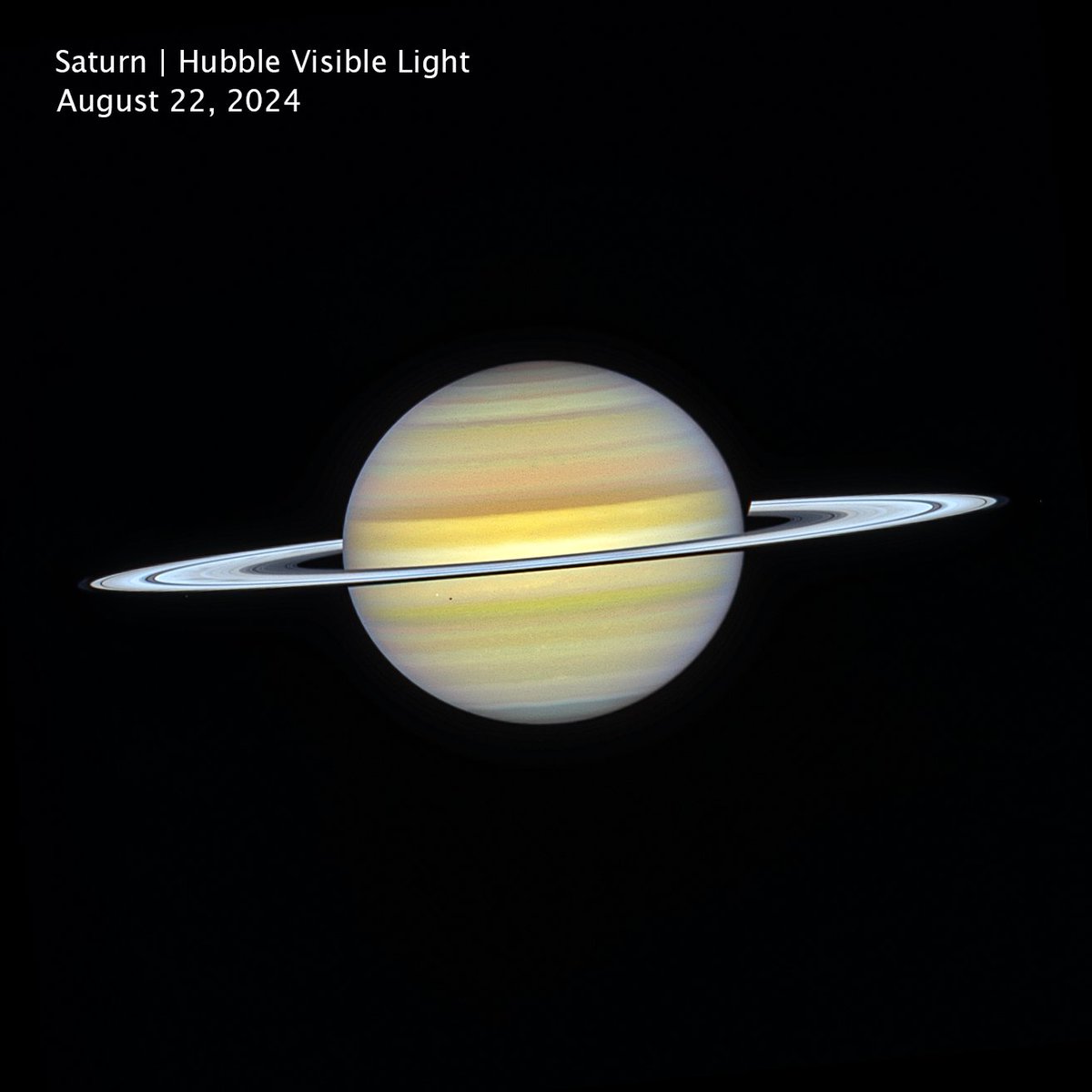
ALT Hubble image of Saturn. The planet is striped with yellow, beige, and light brown. Saturn’s rings are mostly white, with a few darker gray. The planet glows against the black of space.
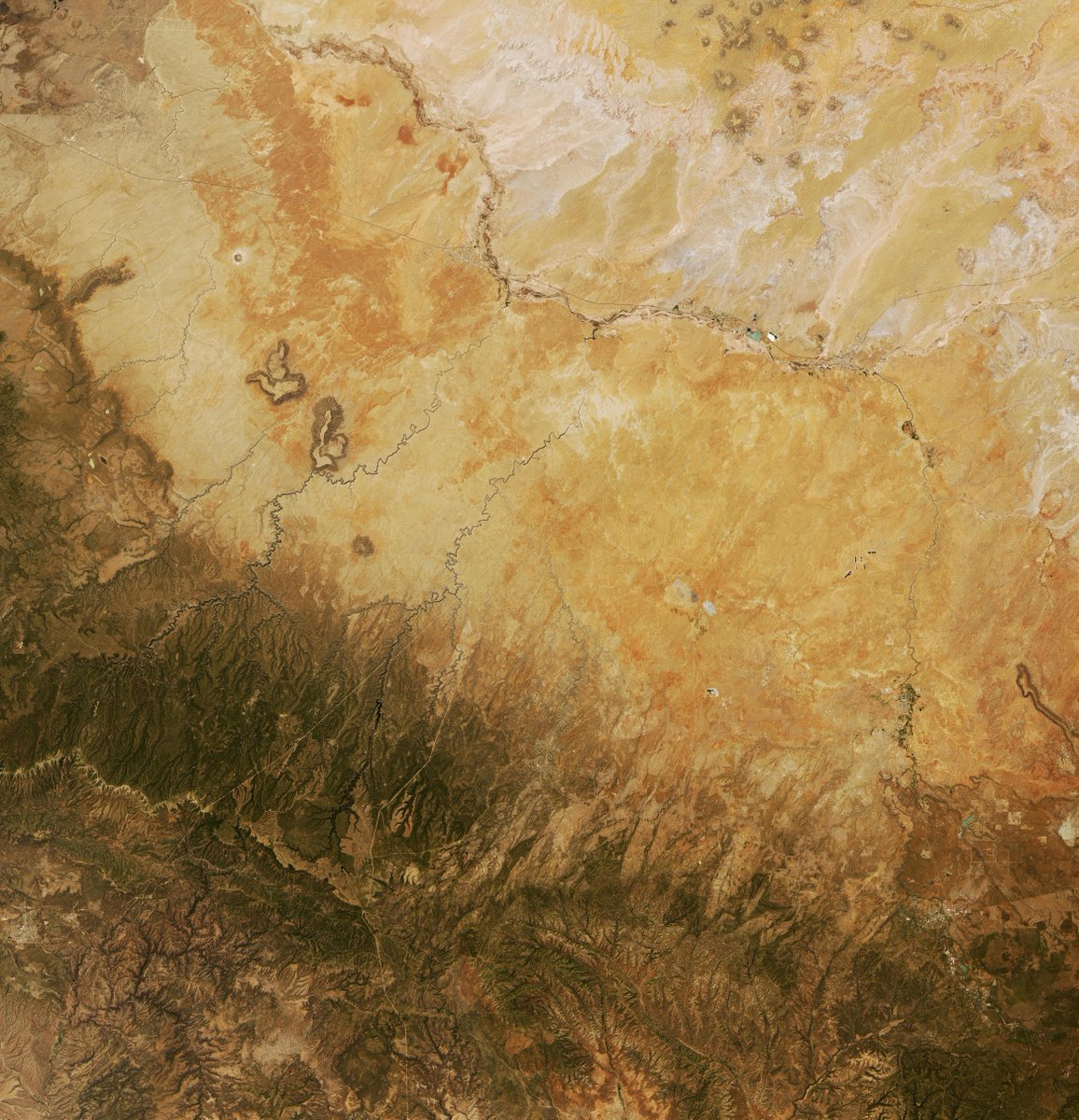
ALT Landsat 8 image of the Arizona desert. The landscape is a flat brownish yellow in the upper right two thirds. Patches of rusty orange dot the surface. The lower left third turns rocky, with darker brown and green ridges running toward the corner. Thin ribbons of river run out from the rockier hills in several places. One larger river runs from about 12 to 3 o’clock, with patches of lighter white to the northeast of it.

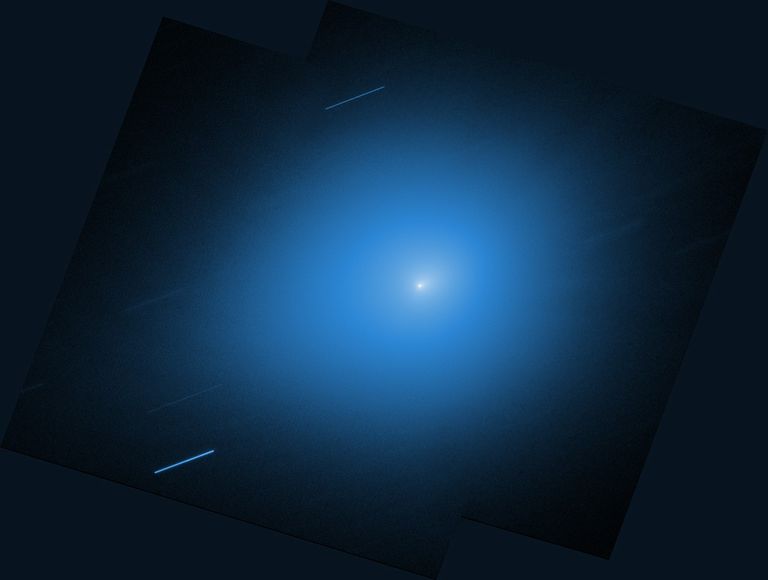
ALT Interstellar comet 3I/ATLAS on Nov. 30, 2025, as observed by the Wide Field Camera 3 instrument on NASA’s Hubble Space Telescope.
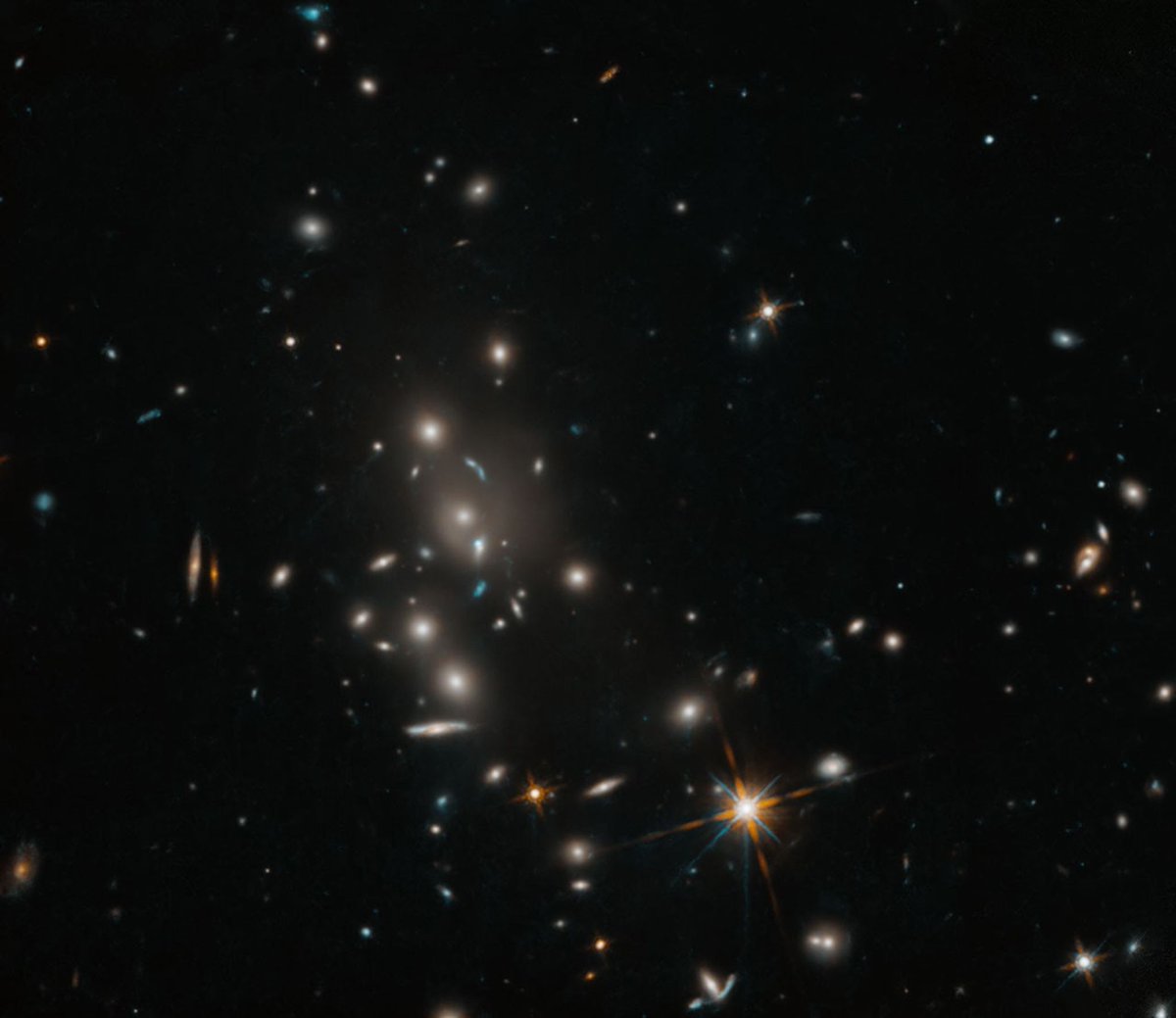
ALT A cluster of galaxies dots the field of view. The cluster holds spiral and elliptical galaxies against a black background. A foreground star with diffraction spikes shines brightly toward the bottom, center-right of the image.
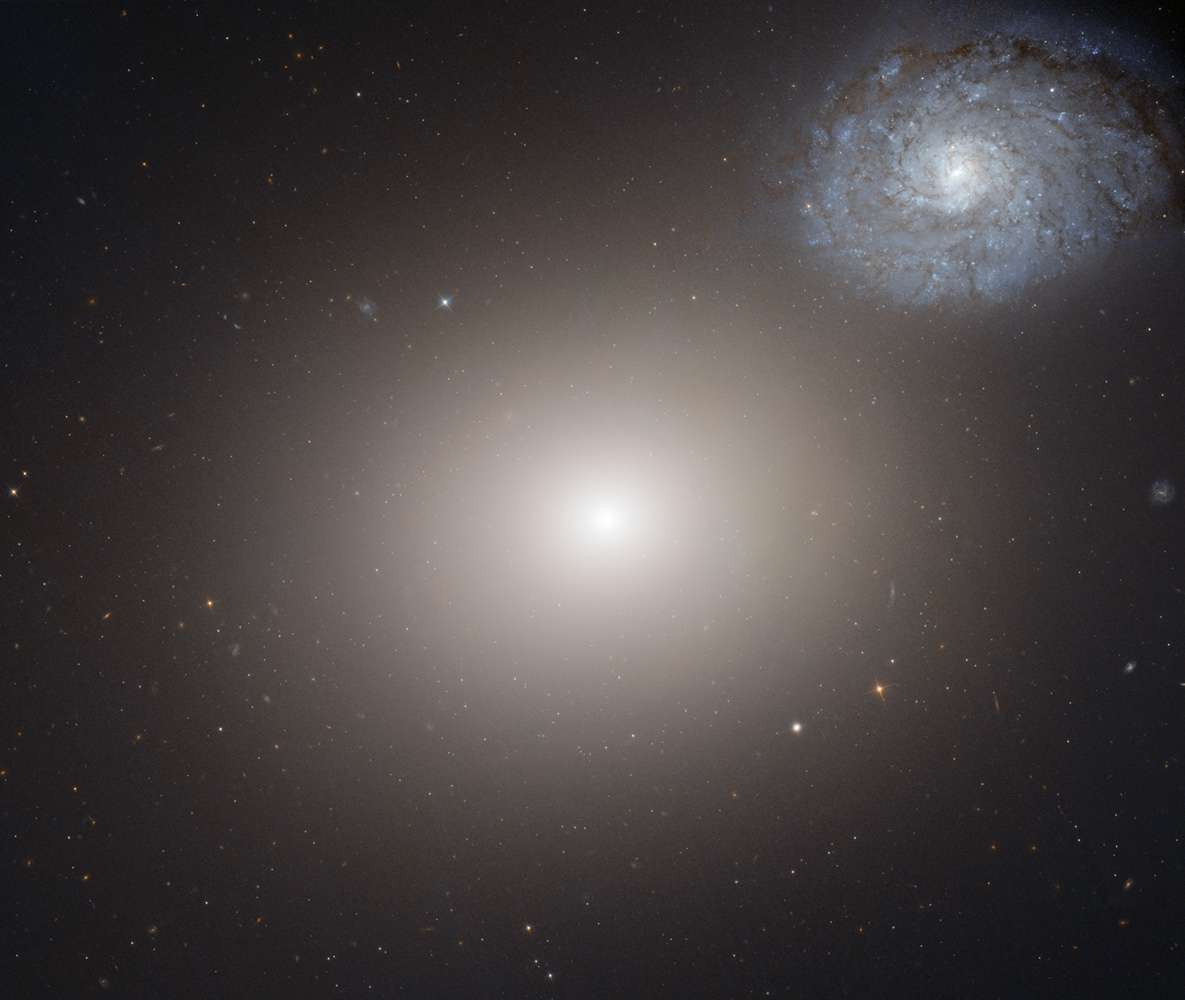
ALT A hazy elliptical galaxy shines at image center, with a blue-white spiral galaxy appearing smaller at upper right.
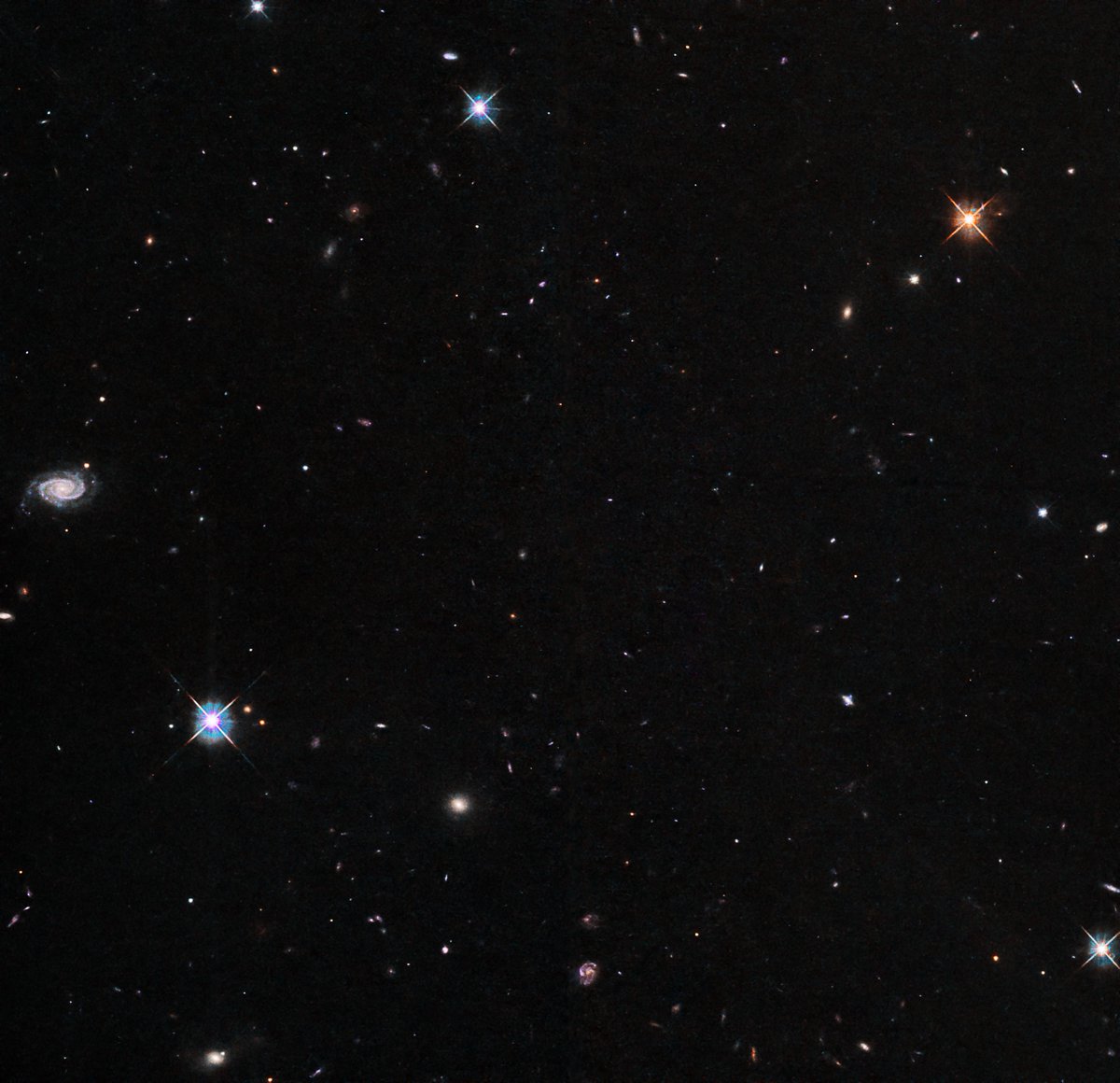
ALT Several bright stars and many background galaxies are visible against a black background.
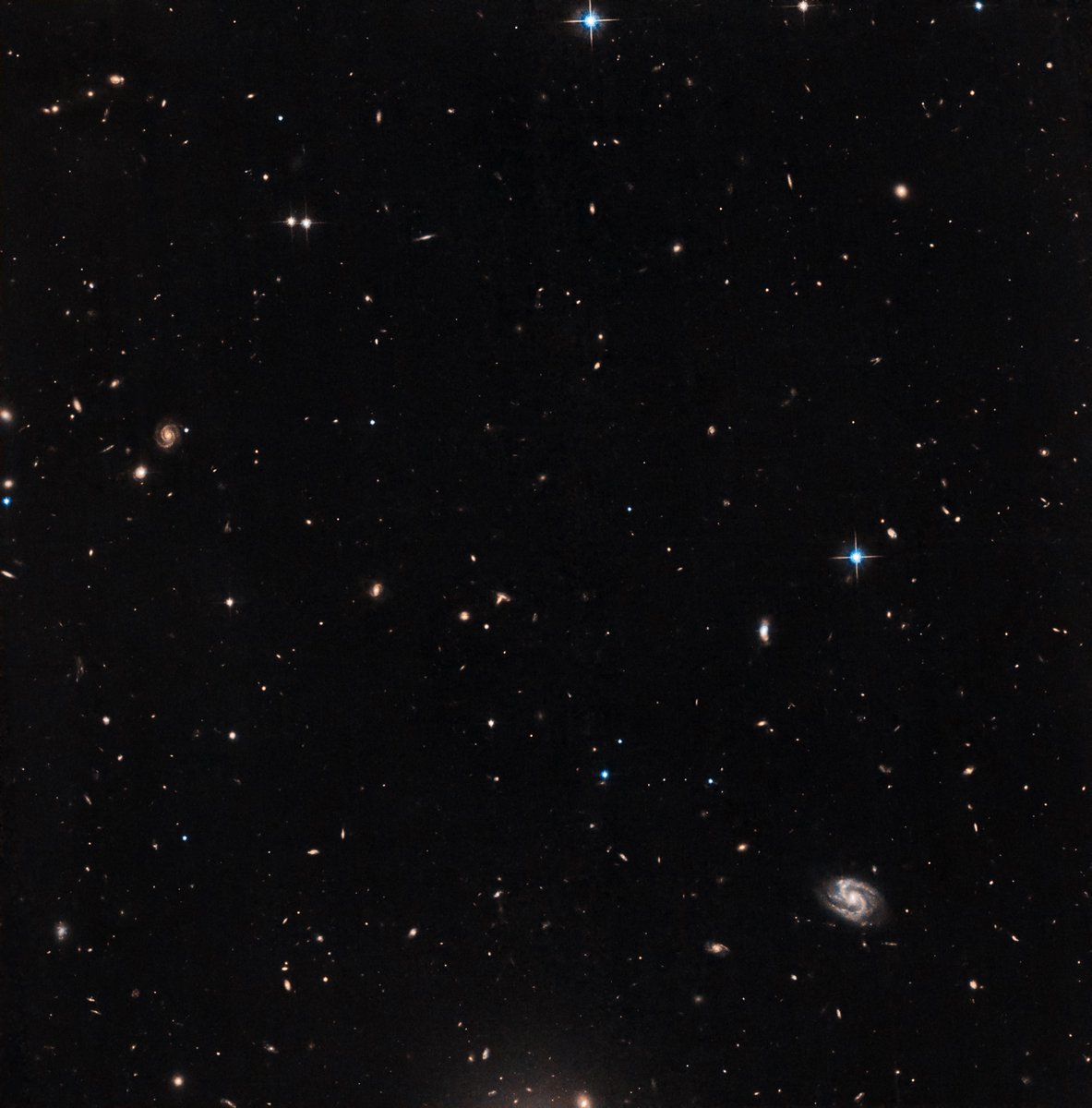
ALT Background galaxies and stars are sprinkled across a black background. Some of the distant galaxies are spirals.
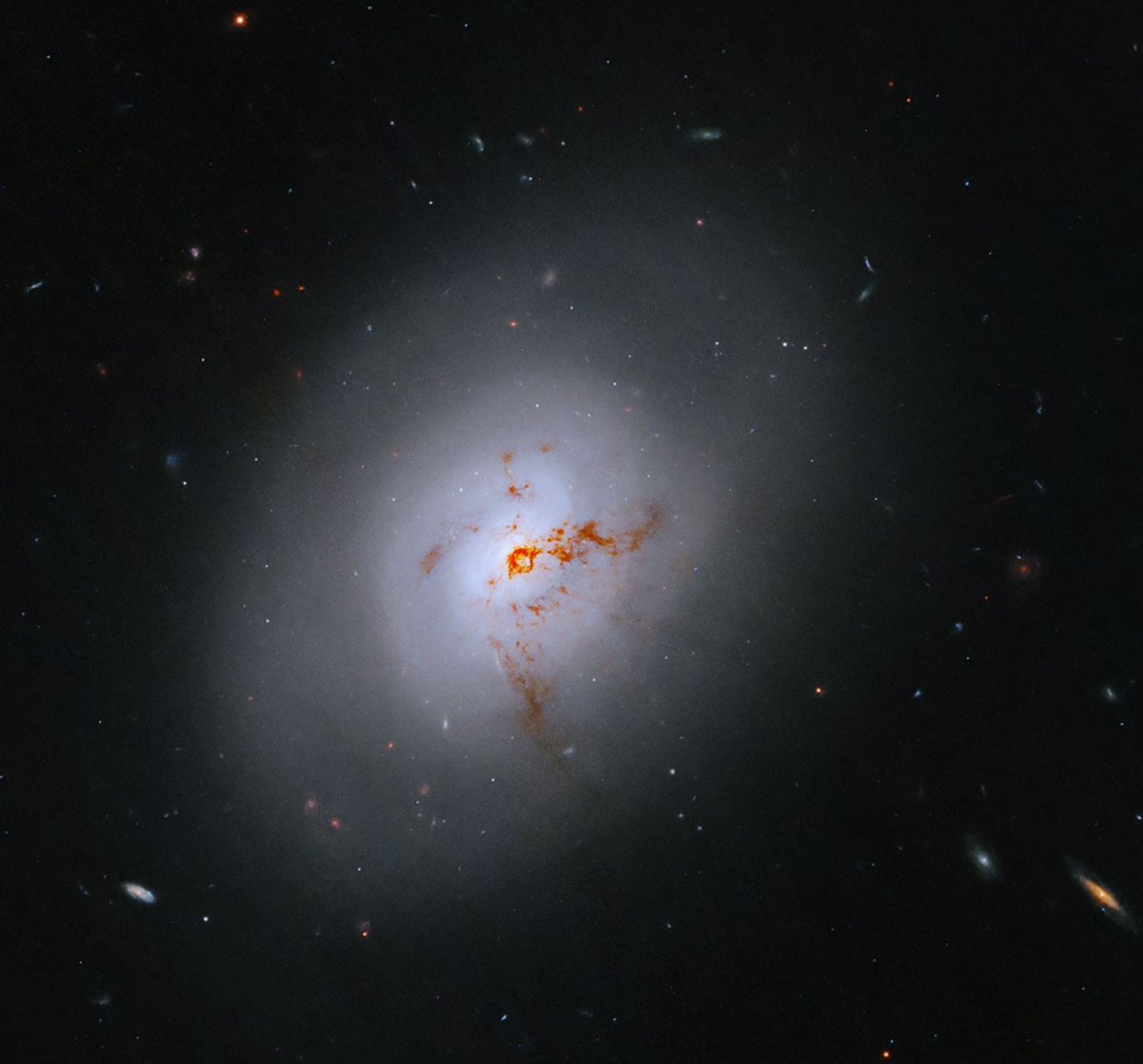
ALT This Hubble image is of a bright lenticular galaxy (NGC 1266) seen nearly face on. Broad bright and dimmer areas of light hint at spiral structure, but there are no distinct spiral arms. Rusty-reddish-brown dust bisects the galaxy. More distant galaxies dot the black background, some even shining through the less dense regions of the bright foreground lenticular galaxy.
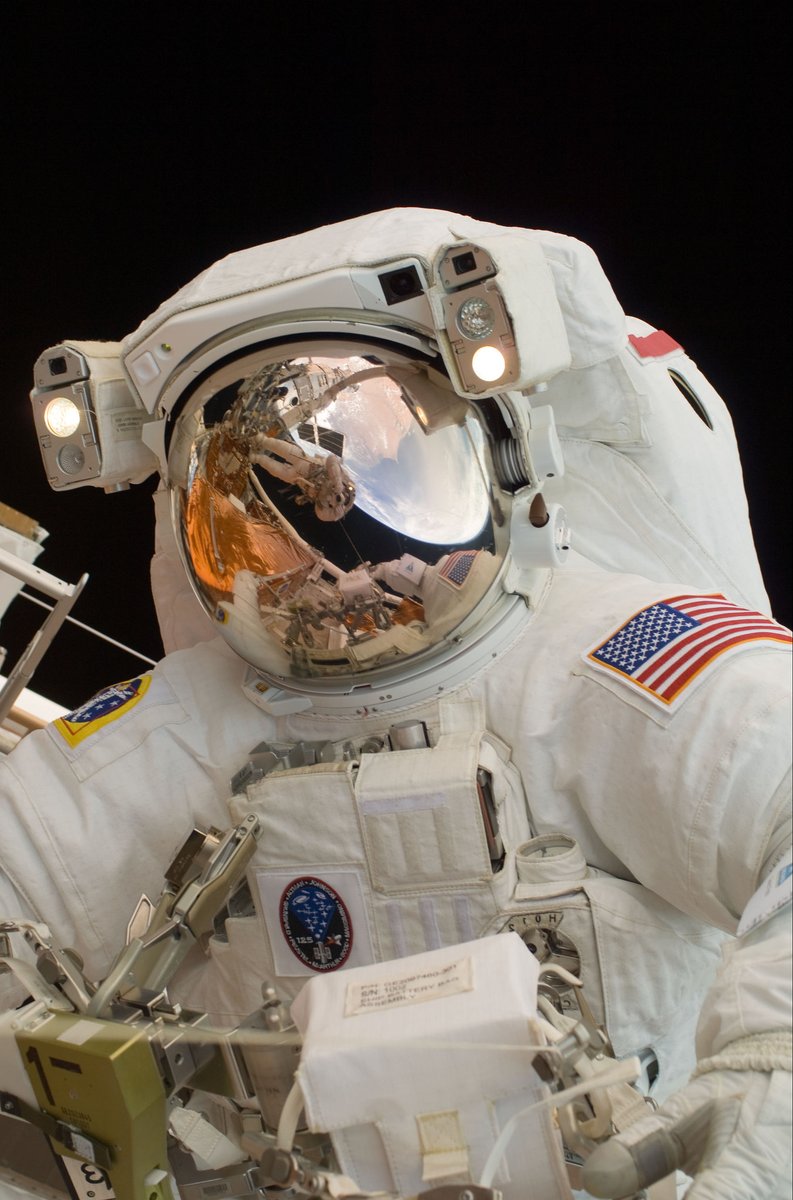
ALT Astronaut John Grunsfeld poses for a picture, with the reflection of Hubble, Earth, and astronaut Andrew Feustel in his helmet.
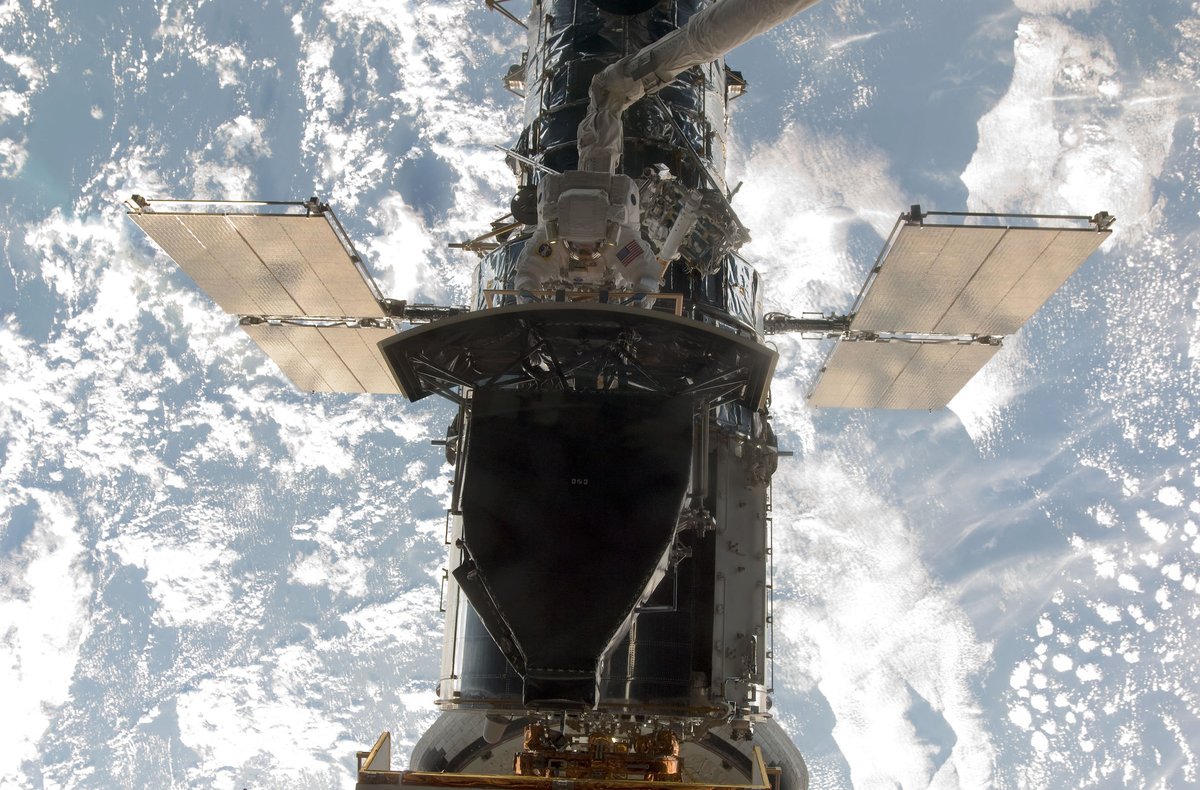
ALT With Earth in the background, Hubble is seen with astronaut Andrew Feustel completing servicing work.
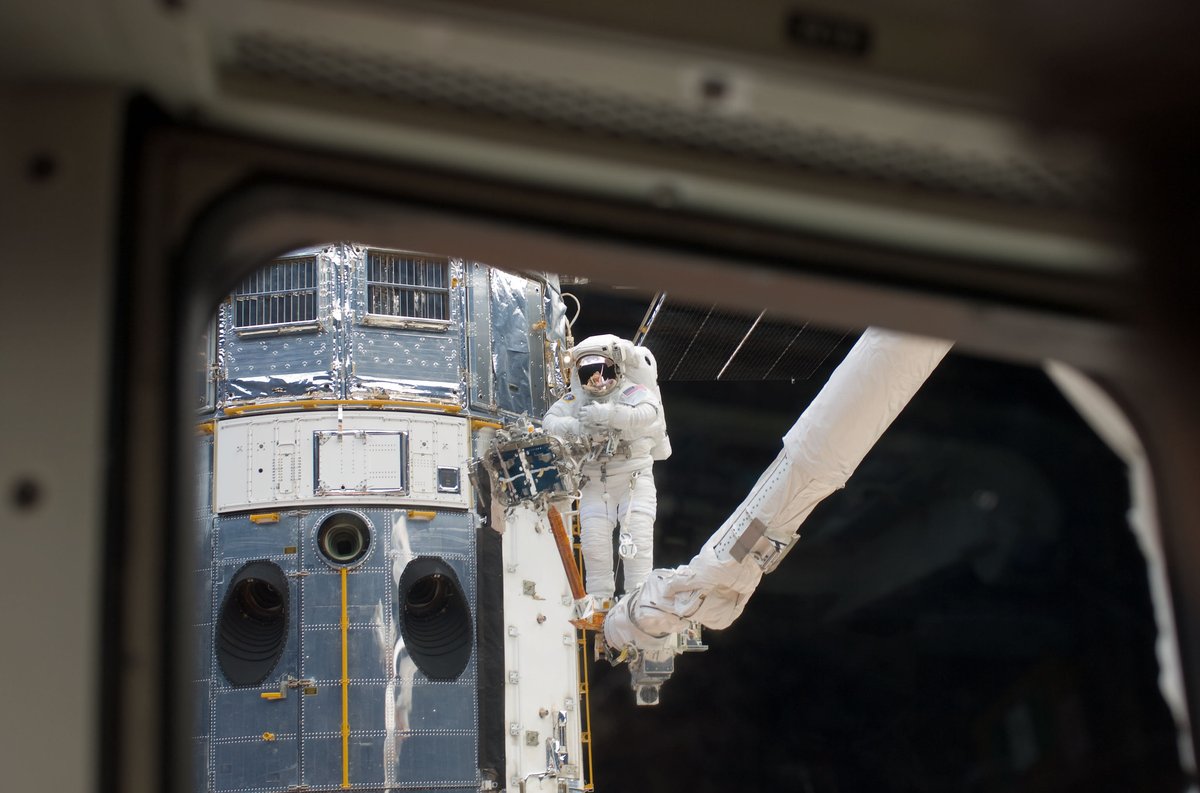
ALT Taken through a window on the space shuttle, the lower portion of Hubble is visible with astronaut Andrew Feustel on the robotic arm completing work.