
Correcting misinformation around Biblical slavery. And there is a lot of it
Joined November 2024
- Tweets 22,934
- Following 37
- Followers 260
- Likes 1,726
1,400 Photos and videos



Pinned Tweet

1 Dec 2025
Does the Bible really ABOLISH slavery? Check out the full video with @DJHammurabi1 at
youtube.com/watch?v=RpKfLlQf…
13
2
13
2,411
If you know nothing about the topic this does sound good. Unfortunately if you do know something you see how horrible it actually is. In over 90 minutes of talking, this never once mentioned the slavery in the Bible. Not once. I'll presume it's due to ignorance, not dishonesty.

13
Jun 13
No, indentured servitude in the Bible was indentured servitude (ONLY for native Israelites) and slavery in the Bible was lifelong, generational chattel slavery (for non-Israelites).
An educated atheist
Jun 13

Christian abolitionists ended slavery in the West. "Slavery" in the bible was not chattel slavery; it was indentured servitude and was voluntary to stay out of poverty.
Uneducated atheists.
1
40
Jun 10
Since Christians burned witches at the stake based on their faith, it is obvious that the Bible is all about burning people to death.
Abandoning what the Bible says and moving to what Christians have done in history is not something you probably want to do.
2
1
5
71
Jun 7
Another terrible slavery apologetic video that never once mentions the slavery condoned in the Bible. Not once. Dishonest at best, and outright wrong and deceitful at worst. Another all to common ploy to tell Christians only what they want to hear. Not the hard truths
Jun 6

Answers for a Skeptic: Slavery and the Bible youtu.be/eAMuoomZiEg?si=rVb7… via @YouTube
1
2
5
454
Jun 3
Omg, where do you start? Yikes!!!
Jun 3

When you read "slaves" in the Bible, think illegal immigrants and homeless. They were taken in and expected to work for their food and housing.
You see, back then, the faithful were the only ones doing anything about the poor.
Different world then, slavery was a lifeline to those without. 7 years, you were set free, and able to make some new arrangement with your benefactor for food and housing.
1
1
94
May 29
"The Bible is descriptive not prescriptive" when it comes to slavery. Let's put this to bed once and for all.
Prescriptive- "the act of dictating how things should be done, setting rules, or establishing exact standards for behavior"
The Bible is PRESCRIPTIVE & DESCRIPTIVE
5
5
1,308
May 27
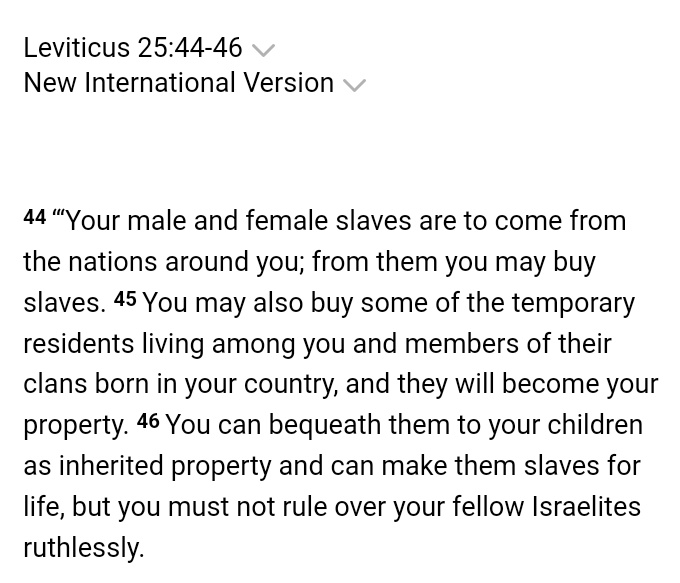
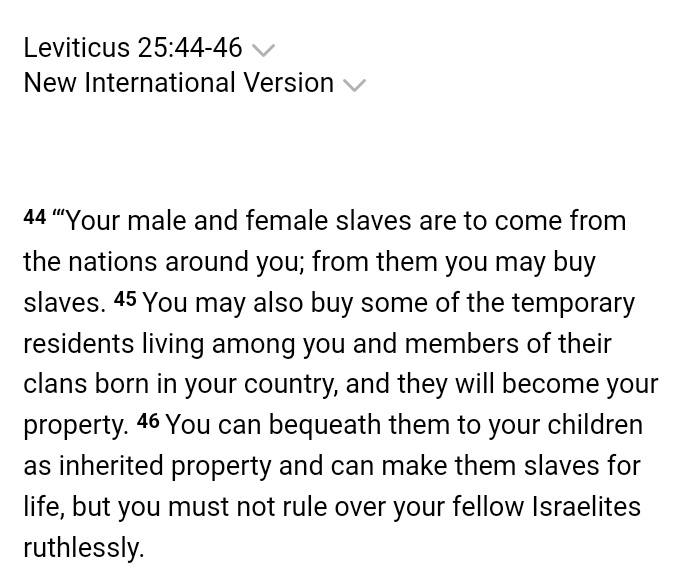
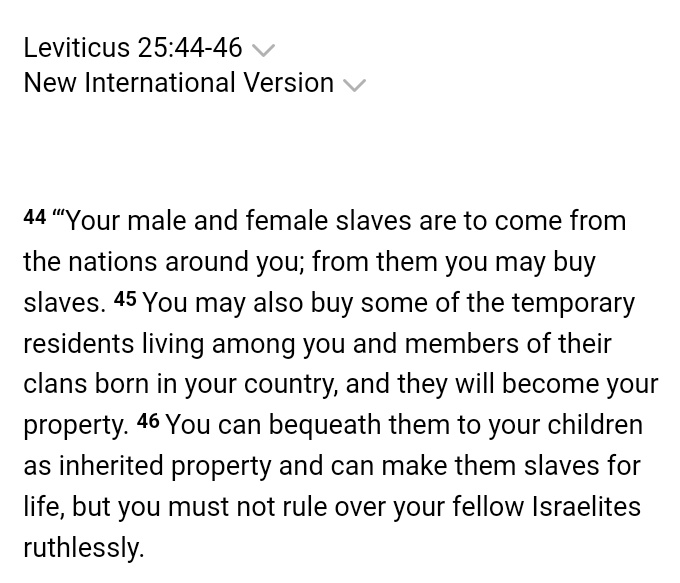
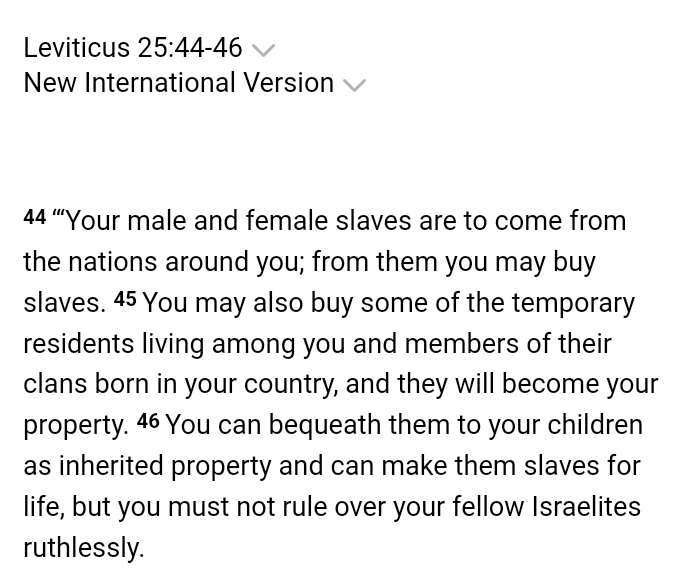
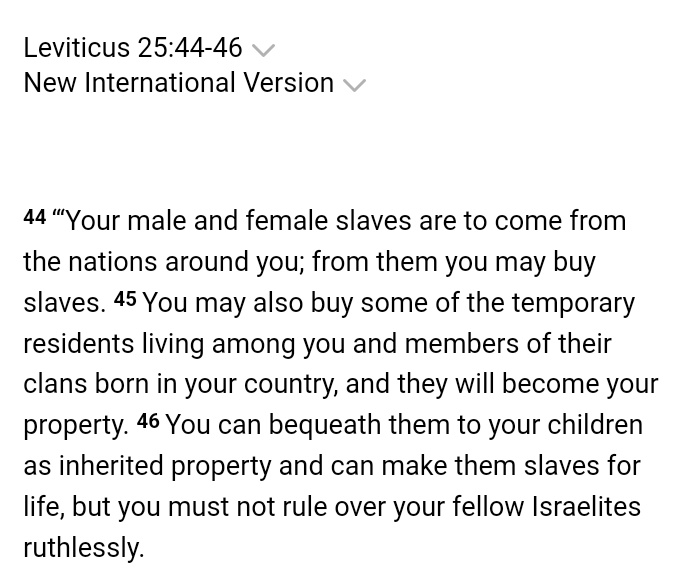
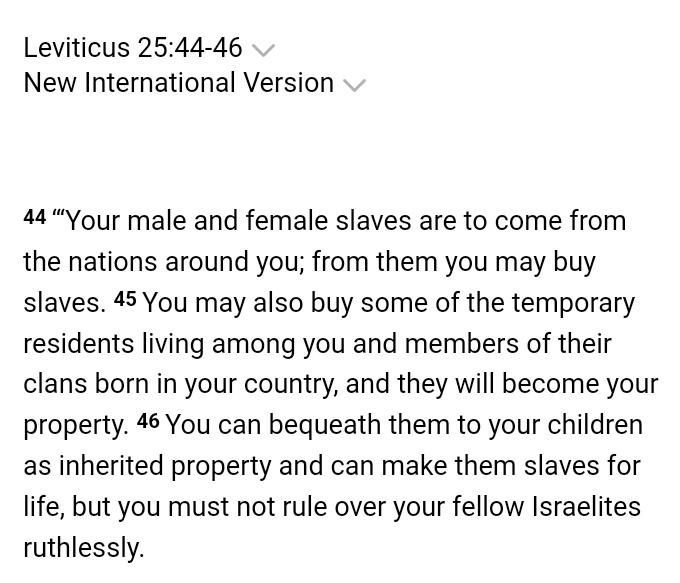
I cannot take seriously any article meant to answer the question "Does the Bible Condone Slavery" that does not even mention, let alone address, Lev. 25:44-46. This is avoiding the question, not addressing it.
May 27

The Bible was used to support the horrors of the transatlantic slave trade and the evils of slavery in the Antebellum South. But does scripture actually support slavery?
@RebeccMcLaugh joins me on today’s episode of What in the Word? (@Logos) to discuss.
logos.com/grow/witw-bible-sl…
2
5
99
May 27
All this time slavery wasn't oppressive
May 27

It condemns opression slavery, not biblical non opressive slavery. Those things arent the same.
1
2
2
90
May 19
These wishy washy word play games of "more like", "often", and "frequently" that litter this opening paragraph, are nothing more than a blatant effort to try to talk about what it wasn't, in an attempt not to have to address what it was. That dog won't hunt with me. Sorry
May 19

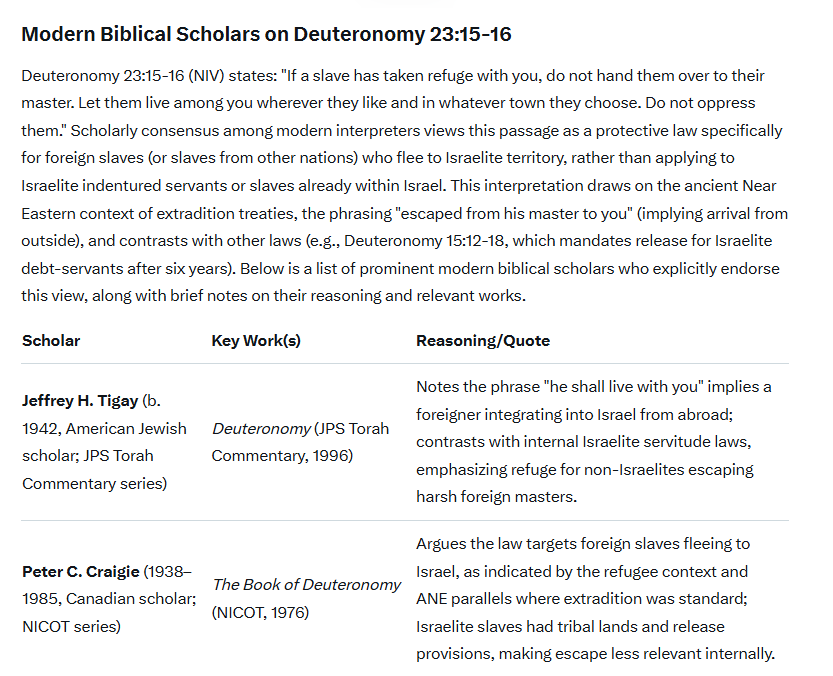
Biblical “slavery” (often better translated “servitude”) was frequently debt-based, voluntary, or POW-related — more like indentured service than race-based, hereditary chattel slavery with no rights. Foreign slaves had protections: Sabbath rest, release for severe injury (Exodus 21:26-27), no kidnapping (Exodus 21:16 — death penalty), and refuge for runaways (Deuteronomy 23:15-16).
The Mosaic Law regulates an existing, universal ancient institution (slavery/servitude was practiced everywhere in the Near East) rather than instituting or celebrating it. God meets a hard-hearted, fallen people where they are and imposes limits to reduce harm, similar to how the Bible regulates divorce (Matthew 19:8 — permitted “because of your hardness of heart”) or polygamy without calling them good.
The Bible shows a direction away from slavery: God’s foundational act is liberating Israel from Egyptian bondage (Exodus). Jubilee cycles emphasize release and restoration. Prophets champion justice for the oppressed.
The New Testament deepens this: Galatians 3:28 (“neither slave nor free... all one in Christ”), Philemon (Paul urges a master to receive a runaway slave “no longer as a bondservant but... as a beloved brother”), and the principle of loving your neighbor as yourself undermine the institution. Early Christians and later abolitionists (Wilberforce, etc.) drew on this to end slavery.
God’s ultimate ideal is freedom (Galatians 5:1; Isaiah 61:1 quoted by Jesus). The Old Testament laws are temporary and preparatory, not timeless moral absolutes for all societies.
3
143
May 17
Yeah, America just regulated slavery within the society at the time too. It never gave approval or affirmation of it. America never said it was moral or commanded it. Hows that taste going down?
May 5

Is slavery truly condoned in the Bible? Cliffe Knechtle explains that while the Hebrew Bible regulated slavery within ancient society, it never gave approval or affirmation for it. He highlights Genesis 1, where humanity is created in God’s image with equal dignity, and the Old Testament miracle of God freeing Hebrew slaves. Cliffe Knechtle emphasizes that in Christ, there is neither slave nor free, showing the early church’s commitment to slavery being unacceptable. This powerful message reminds us of God’s heart for liberation and dignity for all.
When I first read it, it’s hard to rationalize until you read more of the Bible and revisit the verse. Then you see it doesn’t abolish ownership in ancient society, but instead gives clear rules for how to treat people—whether you’re the owner or the one owned. And during the time many of them were indentured servants. Meaning they owed a debt and were working off that debt. Which was very very common at the time across all cultures Either way, you’re accountable to God, and your heart is what really matters.
#Christianity #BibleStudy #CliffeKnechtle #BiblicalTruth #Faith
4
1
106
May 17
"That's permanent servitude, not slavery".
The current state of apologetics is devolving these days...

Thast perminant sercitude, not slavery. Why? Because it was consented.
If the TOS literally tells you that you can and will become a permenant servant if you fail to pay it back that is consented. And you could still have your freedom bought back just not through work.
1
87
May 15
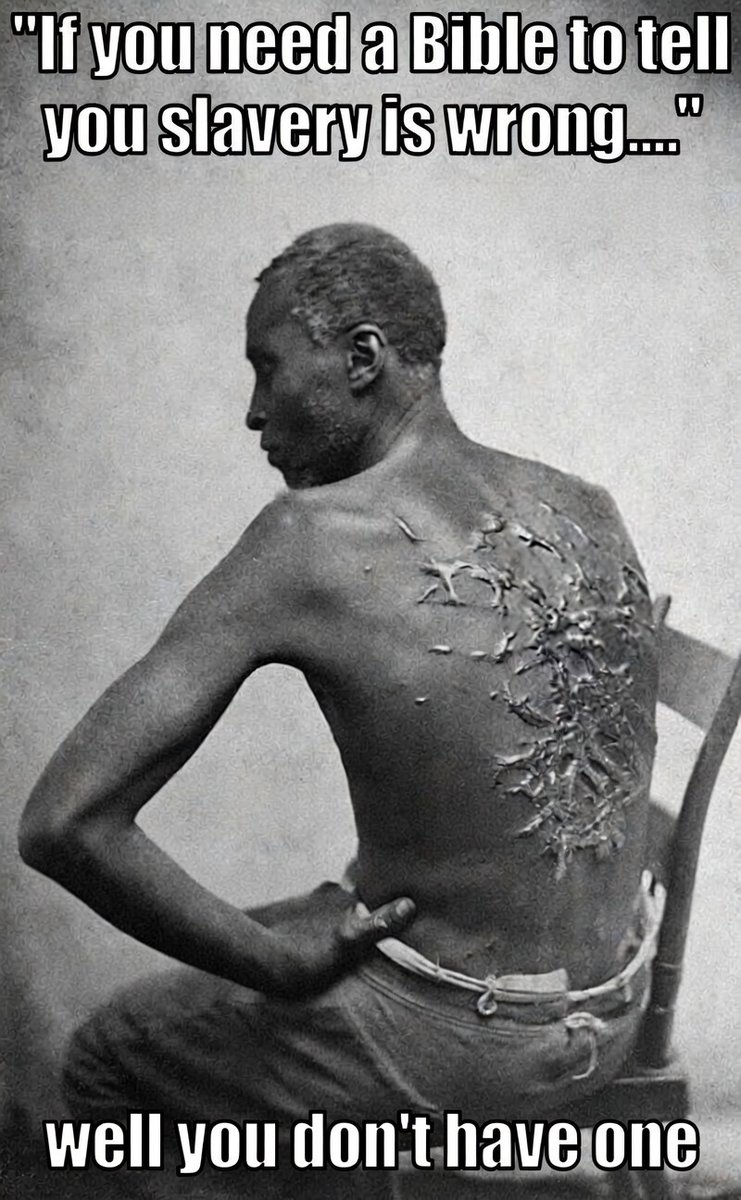
Yet another apologetic insisting that Biblical slavery was really indentured servitude and only lasted 6 years. Either ignorant, or dishonest. Neither is a good option or a good look.

2
1
5
297
May 14
There's literally a whole book in the Bible about a Christian that owned slaves.
You really should read that book of yours.
May 14

There never will be a conversation. There is no debate and no discussion to be had. Ancient Jews and the Christians that followed did not own slaves nor was it commanded by God. Period. I'm not going to tell you again. Speaking stupidity with conviction does not help your case.
1
3
82
May 14
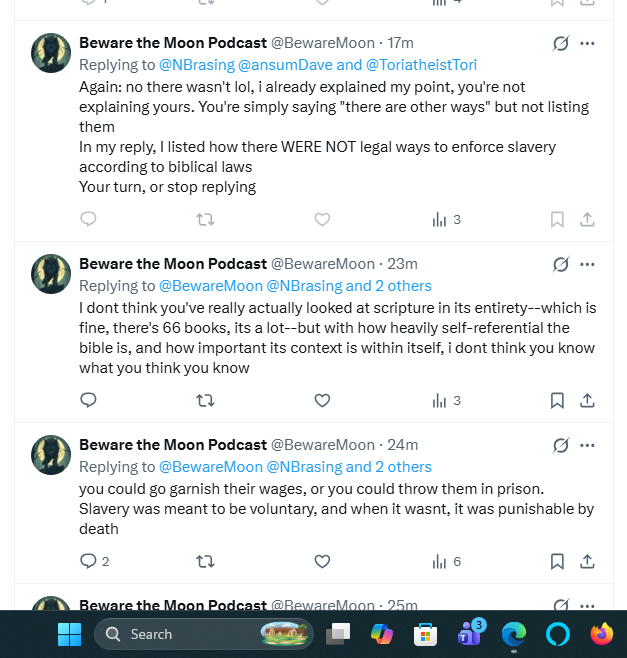
Another person to avoid having a discussion with. If you disagree with them they block you, but go on and on with comments & demand that it's "your turn". Or better yet "stop replying" when they've taken away your ability to reply. Then no doubt claim victory when I can't respond
1
75
May 13
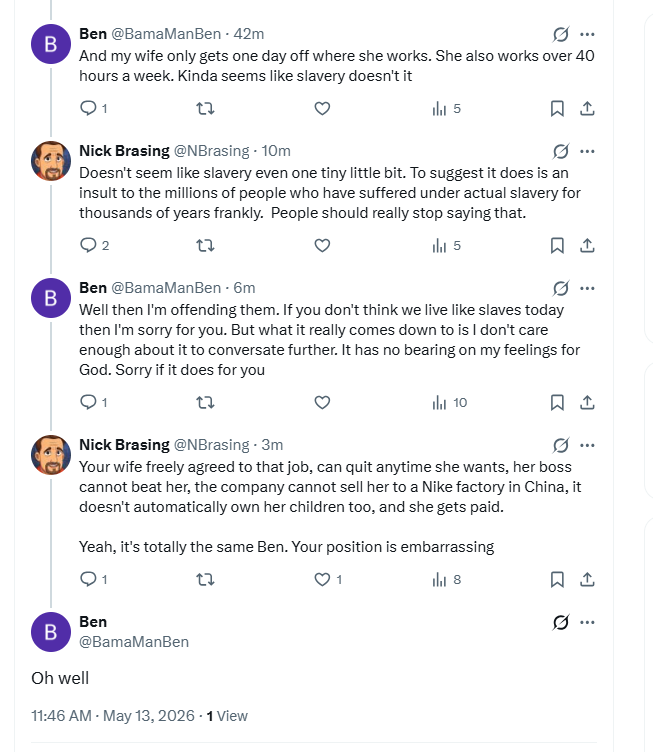
Exactly when did people literally stop caring whether or not they look like ignorant douchebags?
47
May 13
See, taking little virgin girls was done for the most altruistic of reasons. Genetic diversity. Just like they learned in school 4,000 years ago. All about genetics.

Taking the women as slaves protects their gene pool from shrinking too much. That's essentially the only protection from too much overlapping relatives in a group that only intermarries.
55
May 8
Another horrible apologetic on this topic. Assuming that the author knew more than that, it's dishonest. Comparing Biblical indentured servitude to slavery in America, while completely ignoring the slavery in the Bible. This dishonesty should bother everyone on both sides here.
6
4
279
Apr 30
Turns out some editions of the Bible use "slave" rather than "bondsmen" simply because of copyright issues. Seriously, that's his argument

We aren't talking about a word but the circumstances.
Old English explained it a bondsman. Modern languages use slavery because of copy right problems and it isn't accurate
atheist claim all "slavery" the same because they don't know history and want to accuse and gaslight.
2
2
125
Apr 27
That explains the laws on beating them

Idolatry is a sin. They knew about the one true God and still decided to sacrifice childrens to their false god.
As for the slavery in the bible. The Bible presupposes a good relationship between the Master and the slave.
1
3
159