Director of the Translations Department at Orthodox Christian Mission Center. A first-gen Jordanian American, and all things Saint Paul the Apostle.
Joined March 2022
- Tweets 1,371
- Following 348
- Followers 837
- Likes 2,020
105 Photos and videos





Pinned Tweet

29 Mar 2023
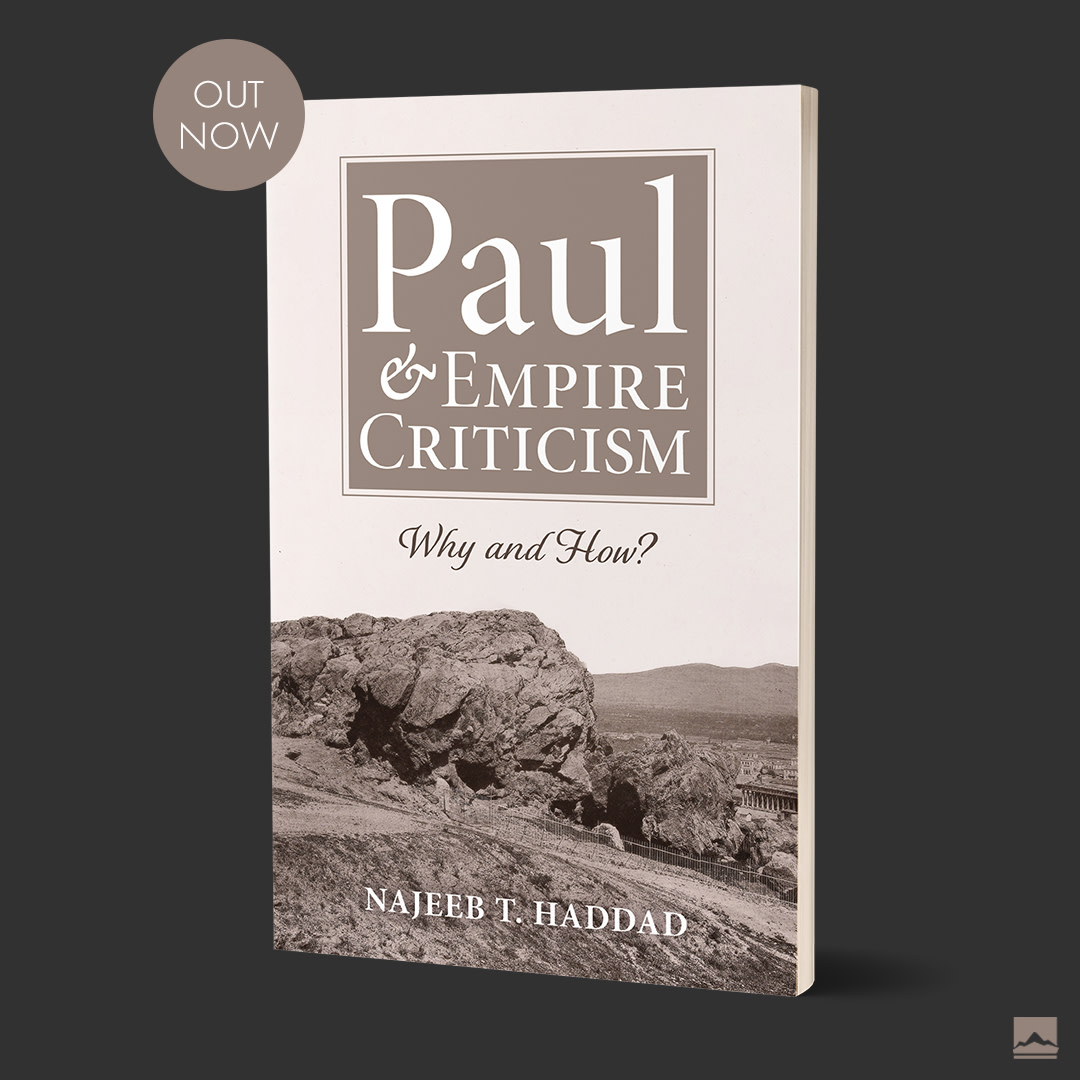
If you’re interested in methods that free Paul from the confines of the “political” do I have the book for you!
29 Mar 2023

.@NTHaddad introduces readers to the plentiful literature on Paul and empire, including contemporary methods, debates, and guidance for applying sound methods in this field of study.
Out now: bit.ly/3R0AUyP.
2
2
22
3,495
Najeeb T. Haddad (د. نجيب حداد) retweeted

Apr 27
Automobile kill-switches are coming soon to car dealerships near you.
I teamed up w/ Scott Perry & Chip Roy to defund this Orwellian mandate, but too many colleagues (Republican & Democrat) voted against us, so the federal mandate for every new car after 2026 is still in place.
Jan 22

Federal law says new cars after 2026 must monitor drivers and shut down if the car disapproves. Your dashboard should not be judge, jury, and executioner.
@RepScottPerry @RepChipRoy offered an amendment to defund the automobile kill switch mandate. Here’s our debate:
3,452
13,563
47,567
1,540,741
Najeeb T. Haddad (د. نجيب حداد) retweeted

Never Forget...The Funerals During Covid.
Son moves closer to console his Mother at her Husband’s Funeral.
Watch facility staff immediately interrupt them because of ‘Social Distancing’ rules & ‘The Science.’
Never ever forget what these people did to us.
2,307
16,147
66,249
3,031,600
Najeeb T. Haddad (د. نجيب حداد) retweeted

Mar 20
For 24 hours, the doors of the Holy Trinity Cathedral never closed. This continuous footage captures an extraordinary moment in Georgian history - a steady stream of thousands coming together to pay their final respects to Patriarch Ilia II.
22
302
1,693
105,074
Najeeb T. Haddad (د. نجيب حداد) retweeted

Mar 12
israel expanded its evacuation order. Over 1.2 million Lebanese will now be displaced. My family lives in the evacuation zone. They are taking our land, killing our people, and the world is still silent. Lebanese lives are just numbers
216
2,556
7,977
111,056
Najeeb T. Haddad (د. نجيب حداد) retweeted

Mar 11
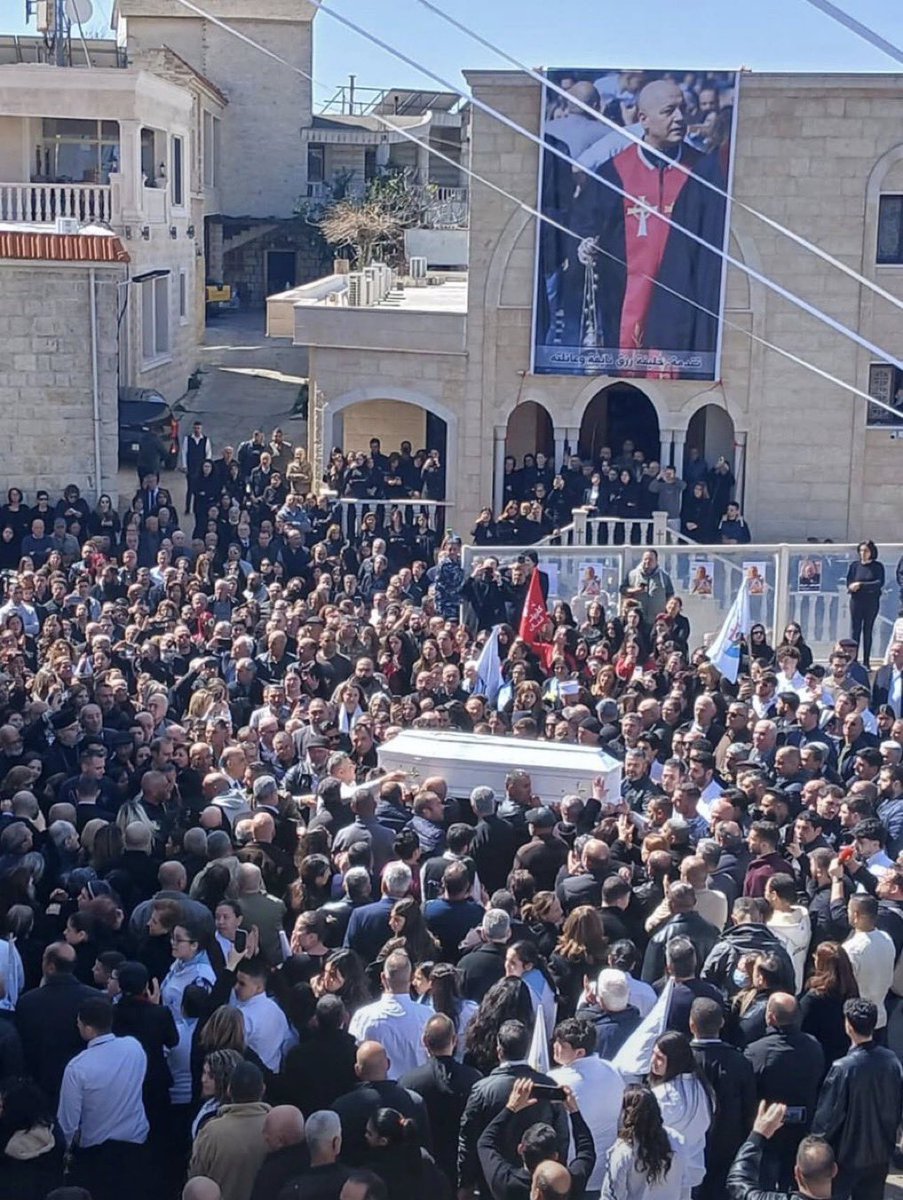
The funeral of Father Pierre El-Rahi, Maronite parish priest of a Christian village, is celebrated today in #Lebanon, as these villages once again experience the tragedy of war. I am close to all the Lebanese people in this time of grave trial. Fr. Pierre was a true shepherd. As soon as he heard that parishioners had been wounded in a bombing, he rushed to help without hesitation. May the Lord grant that the blood he shed become a seed of peace for beloved Lebanon. #PrayTogether
1,429
5,797
31,039
2,919,395
Najeeb T. Haddad (د. نجيب حداد) retweeted

Israel killed a beloved Priest in Lebanon in their vicious bombing campaign in Christian villages. Christians are gathered to mourn the death of Father Pierre El-Rahi.
America must stop funding, providing weapons, and aiding Israel’s attacks on innocent people and children.
Mar 11

The funeral of Father Pierre El-Rahi, Maronite parish priest of a Christian village, is celebrated today in #Lebanon, as these villages once again experience the tragedy of war. I am close to all the Lebanese people in this time of grave trial. Fr. Pierre was a true shepherd. As soon as he heard that parishioners had been wounded in a bombing, he rushed to help without hesitation. May the Lord grant that the blood he shed become a seed of peace for beloved Lebanon. #PrayTogether
3,016
16,485
64,147
2,379,819
Najeeb T. Haddad (د. نجيب حداد) retweeted

31 Aug 2013
Be prepared, there is a small chance that our horrendous leadership could unknowingly lead us into World War III.
15,071
192,569
202,152

Twenty years ago we invaded Iraq. The war killed many innocent Iraqis and Americans. It destroyed the oldest Christian populations in the world. It cost over $1 trillion, and turned Iraq into a satellite of Iran. It was an unforced disaster, and I pray that we learn its lessons.
3,817
18,940
49,793
6,819,645
12 Nov 2025
Check it out! A chance to win!
11 Nov 2025

📖 BOOK GIVEAWAY! 🎁
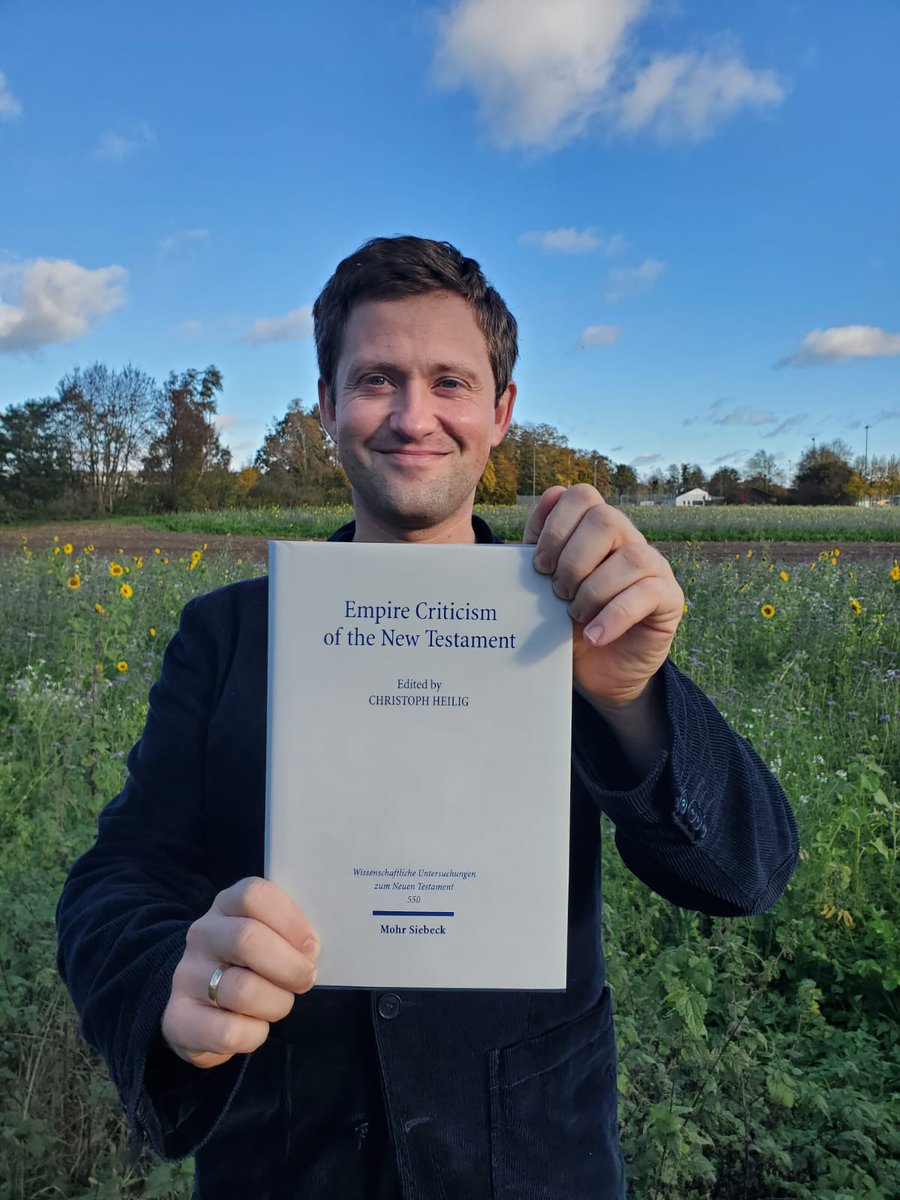
Want a FREE copy of this @mohrsiebeck book (worth more than $150)?
Just share this post - with a bit of luck, you'll soon hold it in your hands!
👉 mohrsiebeck.com/en/book/empi…
Open 1 week. Winner chosen at random.
1
3
295
21 Oct 2025
I submitted an article for publication and the general editor said it may take up to one year to review since they do not receive many articles in the Pauline letters! Our colleagues are likely inundated but a year for review and likely another year for publication is a terrible turn around time!
1
5
79
17 Oct 2025
Who knew you couldn’t subscribe to individual membership for ATLA and @EBSCO religion and theology databases? 😢
3
59
16 Oct 2025
A very exciting announcement on Empire Criticism. Thankful to have participated, sharing an essay on hidden transcripts.
16 Oct 2025
🚨 Just published! 🎉
Thrilled to announce Empire Criticism of the New Testament, a volume (with cutting-edge research, but also suitable as a textbook!) I had the pleasure of editing, is now out - and available open access via @mohrsiebeck! 🥳
With contributions by
me on Narratology
Justin Winzenburg (@winzenj) on Speech Act Theory
Laura J. Hunt on Semiotics
Erin M. Heim on Metaphor Theories
Christopher A. Porter on Social Identity Theory
Nils Neumann on Historical Psychology
Laura Robinson (@LauraRbnsn) on Hidden Transcripts
Najeeb T. Haddad (@NTHaddad) on Ancient Rhetoric
Gillian Asquith on Papyrology
D. Clint Burnett (@DClintBurnett1) on Epigraphy
Michael P. Theophilos (@mptheophilos) on Numismatics
Harry O. Maier (@Harry_O_Maier) on Iconography
mohrsiebeck.com/en/book/empi…

2
92
15 Oct 2025
I have been reflecting on the fourth petition of the Great Litany of Peace, especially the use of “house”:
“For this holy house and for those who with faith, reverence, and the fear of God enter therein, let us pray to the Lord.”
In Greek, the word used is οἶκος (oikos) — house — neither temple (ναός) nor church (ἐκκλησία). It’s a small word, yet profoundly rich. Oikos can mean both a dwelling and a household. It names not only a structure, but the living communion within it, the people of God gathered around His altar.
Rubrics sometimes suggest that if the Liturgy is celebrated outside a consecrated temple we should change “house” to “place” (τόπος) or similar. Most recently a footnote in Revs. Najim’s and O’Grady’s “Hieratikon A” says, “This petition is modified when it is not a church building …” (128; Antiochian House of Studies 2025). Yet I have found myself drawn to keep “house” in every setting, a similar position held by the late Rev. Thomas Hopko. Wherever the Holy Mysteries are celebrated, that space is no longer ordinary ground; it is transfigured into the οἶκος τοῦ θεοῦ (the house/dwelling of God) among His people. Moreover, a strong argument can be made when one considers the choice of “house” over “temple” or “church,” which likely signifies a most intentional decision made to us by sacred Tradition.
St. Germanus, Patriarch of Constantinople (715-730), reminds us, “The Church is the temple of God, a sacred space, a house of prayer, the convocation of people, the Body of Christ.... She is Heaven on earth where the transcendent God dwells as if in his own home and passes through, but she is also an impression made (antitypos) of the Crucifixion, the tomb and the Resurrection … (Patrologia Graeca 98, coll. 384B-385A).” The Church, expanding upon the teachings of St. Paul, is not a physical place but the spiritual reality of which believers now belong to. The “Church” is the “house” (οἶκος) of God (cf. 1 Tim 3:15; Eph 2:19–22). It is the Church that gathers, not we who gather “in” a Church. We gather “as” the Church. We gather as the “holy house,” and those who “enter therein” are those “who” make up “this holy house.”
Thus to say “this holy house,” I argue, is always true. Whether the gathering occurs in a great cathedral, a small mission hall, or beneath open skies. For the Divine services themselves makes the particular place a home of divine indwelling. It gathers the faithful into the household of God.
“Lord, I have loved the beauty of Thy house, and the place where Thy glory dwelleth.” (Psalm 26:8)
Wherever the Lord’s glory dwells, there is truly His house, the living oikos of the Kingdom.
1
71
Najeeb T. Haddad (د. نجيب حداد) retweeted

4 Oct 2025
JUST IN: ISRAELI DRONE FOOTAGE REVEALS THE SCALE OF DESTRUCTION IN GAZA
1,857
10,734
28,582
22,991,900
Najeeb T. Haddad (د. نجيب حداد) retweeted

3 Oct 2025
The #Flotilla didnt get through but by a small miracle, the distraction of the boats on the IOF, it gave the Palestinians enough time to fish. Yes that is correct, Palestinians are not allowed to fish in their own waters without being shot so this is a small victory
884
30,217
137,929
3,093,190
Najeeb T. Haddad (د. نجيب حداد) retweeted

12 Sep 2025
This would probably be one of the most powerful monuments to erect at a university in this age.

1,791
9,497
130,263
3,995,192
Najeeb T. Haddad (د. نجيب حداد) retweeted

13 Sep 2025
Uh yeah, she’s not talking to Tyler Robinson.
LFG 🔥🔥🔥
493
1,632
22,209
1,488,708
Najeeb T. Haddad (د. نجيب حداد) retweeted

13 Sep 2025
5,041
22,986
144,492
10,315,649