
Joined November 2021
- Tweets 283
- Following 122
- Followers 96
- Likes 2,164
123 Photos and videos














Pinned Tweet

Apr 5
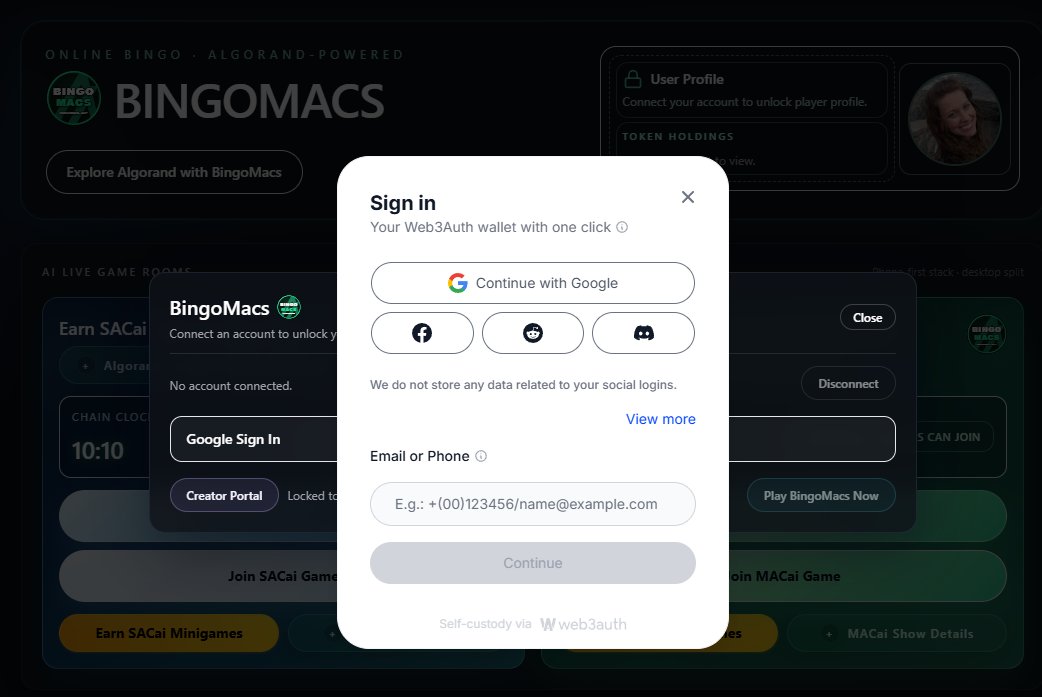
Thanks for the tools @AlgoFoundation, template @ganainmtech, and with the agent-skill and vibe-coding @gabrielkuettel. Now let me see how I can make this BingoMacs.app game educational 🥰👍
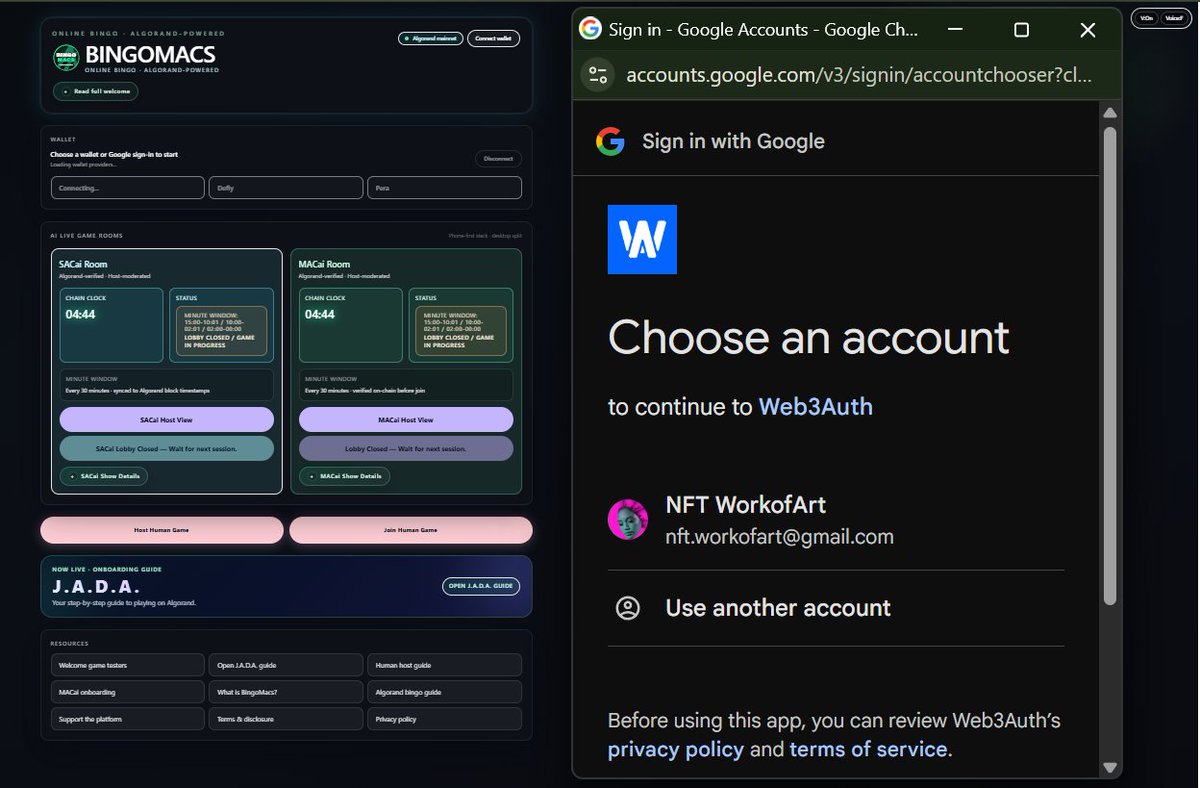
ALT Web 3 Auth a Social Log in option for decentralized applications
8
4
17
882




AlgoLearner retweeted

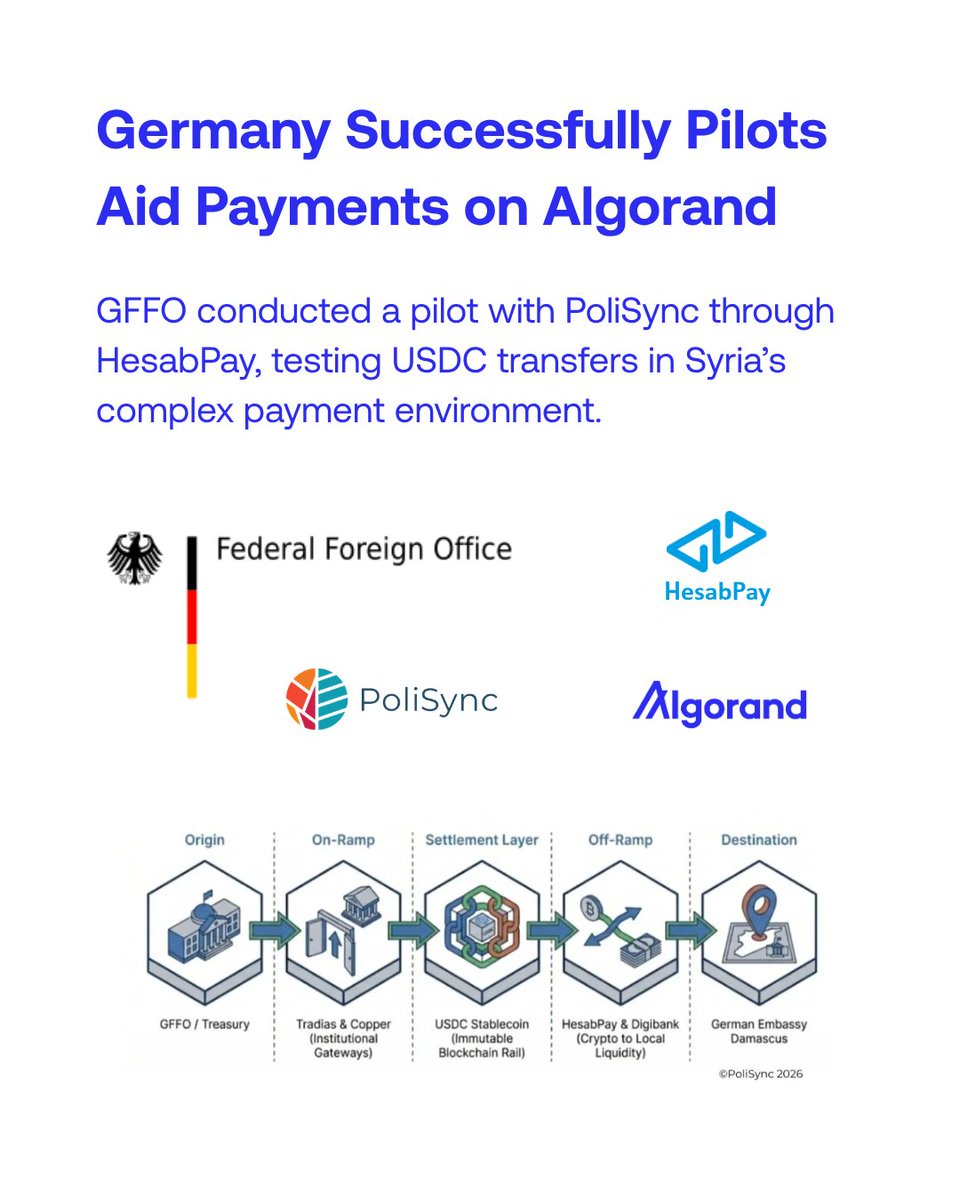
The German Federal Foreign Office / @GermanyDiplo and @PoliSync piloted blockchain-based USDC aid payments to Damascus, Syria, through @HesabPay_, using Algorand as the settlement layer.
Results from the pilot:
• Up to 73% lower transaction costs
• Payments were 42x faster
• Greater transparency across the payment flow
A strong example of blockchain infrastructure improving humanitarian aid payments in complex environments.
18
133
512
29,213

Algorand CLOO @_JennieLevin recently sat down with @GlobalLegalPost to discuss her role and responsibilities at the @AlgoFoundation, and how Algorand navigates regulatory uncertainty.
Read the full article below.

6
49
286
9,963
AlgoLearner retweeted
Algorand CEO @StaciW_DC recently spoke at the @CFR_org in New York.
She discussed several topics, ranging from blockchain technology to TradFi, global economics, and beyond.
Watch the full talk below.
8
51
271
5,411
AlgoLearner retweeted

Jun 3
There's little tech explanation on this Zcash vulnerability, very serious stuff
A soundness bug in their zero-knowledge proof circuit sloppiness in their elliptic curve point handling code essentially allowed unlimited forged shielded transactions
That's gotta spook vendors!
26
29
268
38,406

Zcash Faces Network Disruption
The Zcash network $ZEC has failed to produce a block for more than four hours, according to InfinityHedge.
The disruption comes a day after developers coordinated an emergency upgrade to patch a flaw in Orchard, Zcash’s newest shielded pool.
The team said the issue was discovered during a security review and shows no signs of exploitation so far.
41
35
125
33,213
Binance Is Pulling The Plug on NFTs
@Binance will officially terminate its centralized NFT service, effective July 3, 2026, and will direct users to withdraw all transferable digital assets within a 30-day window.
This strategic wind-down follows a 90% collapse in global NFT trading activity, with annualized volumes dropping from a $50B peak in 2022 to approximately $5.5B in the current cycle.
To facilitate the migration, the exchange is providing $USDC fee reimbursements to the first 100,000 users who move assets to the $BNB Smart Chain or Ethereum networks.
15
8
65
18,208
AlgoLearner retweeted

Jun 2
🚨Staci Warden of $ALGO said it best...
We can send a movie across the world in seconds, but can't send $10 fast across borders! That's the problem crypto and @Algorand was built to solve.
This was at an event by the Council on Foreign Relations, $ALGO is in the right rooms!
10
59
397
13,618
AlgoLearner retweeted
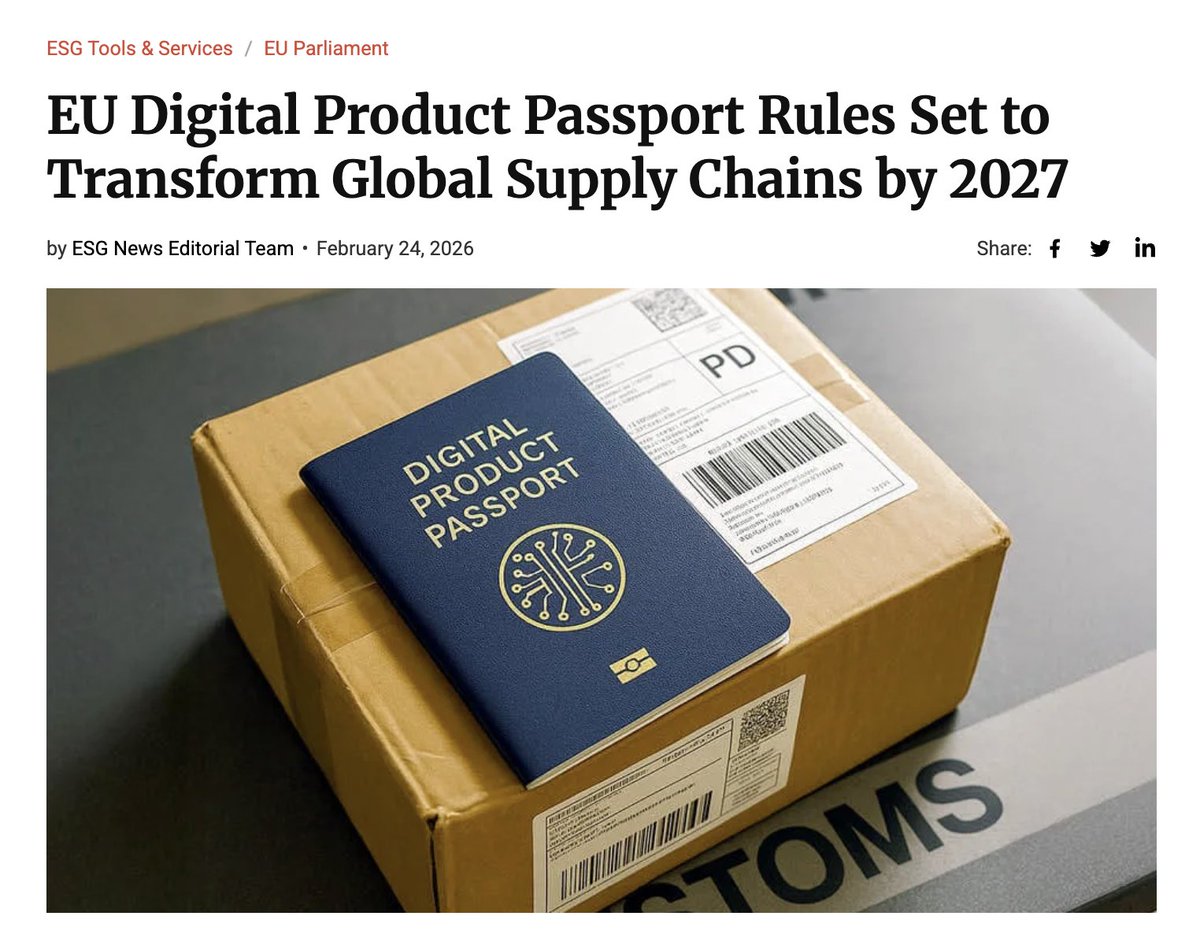
The EU recently confirmed that by 2027, every battery, textile, and electronic device sold in Europe will need a verifiable Digital Product Passport.
The infrastructure to support this at scale already exists on Algorand.
Companies like Repsol, Thai Union, Estée Lauder, and Lavazza are using it today.
A thread on who's building it 🧵
11
116
441
37,529
AlgoLearner retweeted

Jun 2
NFT Enthusiasts 📢
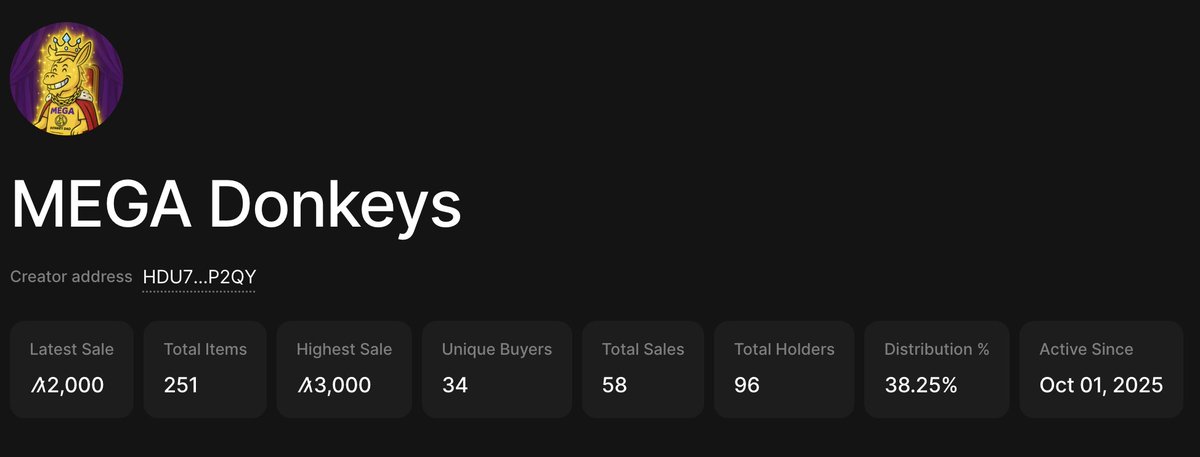
We have integrated @downbad_algo for Collection Registration 👀
Now when you register on Downbad, your collections will auto populate in Pera Explorer 🙌
Collection sizes will also auto-update when new assets are minted ➕
Enjoy 🚀
3
28
111
3,097
AlgoLearner retweeted

Why Algorand’s “It Just Works” Philosophy Matters More Than Ever
Reliability is one of the least discussed advantages in digital asset infrastructure.
Yet for institutions, payment providers and increasingly autonomous AI systems, reliability is often more important than raw throughput or speculative activity.
This is where @AlgoFoundation quietly differentiates itself.
Unlike networks such as @ethereum or @solana, @Algorand was designed around a simple principle: invalid transactions should never become on-chain failures.
When a transaction enters the network, it is evaluated by nodes before it ever reaches the ledger. Invalid transactions are rejected at the network edge and never consume block space.
Even in the rare scenario where a transaction was valid when entering the mempool but becomes invalid before block creation due to a state change, Algorand simply discards the transaction.
It is not written to the blockchain.
No failed execution.
No wasted fees.
No unnecessary network congestion.
This seemingly small design choice creates meaningful economic advantages.
On many blockchain networks, failed transactions still consume resources and often require users to pay fees despite receiving no successful outcome.
At scale, these costs become significant.
For institutions processing millions of transactions, predictability is not a convenience. It is a requirement.
The advantages extend beyond transaction execution.
Algorand’s Pure Proof-of-Stake architecture finalizes blocks immediately upon confirmation.
There are no forks.
No probabilistic settlement assumptions.
No risk that a confirmed transaction may later be reorganized out of existence.
Once finality is reached, settlement is complete.
The network also supports native atomic transaction groups, allowing multiple operations to execute as a single unit.
Either every transaction succeeds or none do.
This eliminates many of the execution risks associated with complex financial workflows.
Perhaps most importantly, Algorand’s architecture significantly reduces exposure to one of crypto’s largest hidden costs: Maximal Extractable Value (MEV).
Across many networks, sophisticated bots monitor transaction queues, exploit slippage, front-run users and extract value from ordinary market participants.
The result is an invisible tax paid by users every day.
@Algorand approaches block production differently.
Validator selection is randomized through cryptographic sortition, blocks are finalized in seconds and the network does not rely on a competitive fee market to determine transaction priority.
The opportunity for front-running and MEV extraction is therefore dramatically reduced.
For institutions, this translates into greater execution certainty.
For users, it means receiving the outcome they intended rather than competing against invisible intermediaries.
The broader lesson is simple.
As tokenized assets, digital payments, machine-to-machine commerce and AI-driven economic systems continue to emerge, blockchain infrastructure will increasingly be judged not by marketing narratives but by operational reliability.
Reliability is difficult to market.
It rarely generates headlines.
But reliability is ultimately what real-world systems are built upon.
Algorand’s philosophy can be summarized in three words:
It just works.
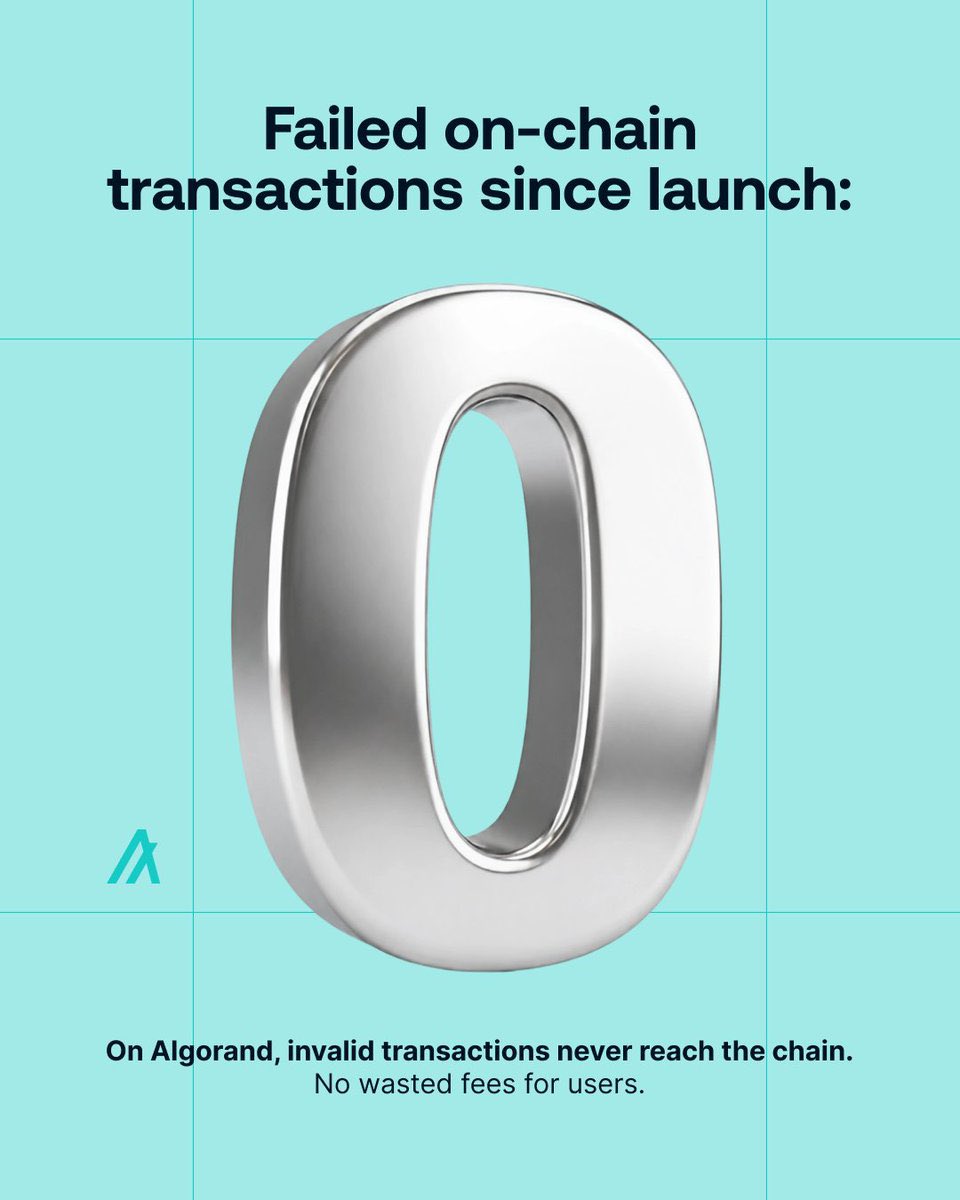

Transactions don't fail on Algorand. Instead, they just... work.
Algorand is ready for the demands of the real world.
Can your blockchain say the same?
2
25
104
3,104
AlgoLearner retweeted
🧵Reliability is one of the most underrated narratives in crypto.
Everyone talks about speed, hype and short-term price action.
But if blockchain is supposed to support real financial infrastructure, the first question is simple:
Does it work when it matters?
@Algorand’s answer so far has been clear.
0 downtime since launch.
over 3.4 billion Billions of transactions processed.
Thousands of nodes operating globally.
And dozens of major protocol upgrades delivered over time.
That last part matters.
Because uptime alone is impressive.
But upgrading a live blockchain while maintaining stability is even more important.
@AlgoFoundation has continued to improve its core architecture, including:
• P2P networking
• dynamic block times
• performance upgrades
• post-quantum cryptography
That is not hype.
That is engineering discipline.
For retail speculation, reliability may sound boring.
For institutions, governments, payment systems, tokenized assets and AI agents, it is everything.
Because real-world infrastructure cannot afford constant outages, forks or uncertainty.
It needs predictable settlement.
It needs resilience.
It needs trust at the protocol level.
And that is why Algorand’s story is not only about being fast.
It is about being dependable.
In crypto, attention moves quickly.
But infrastructure is built on reliability.
And Algorand continues to prove that point.
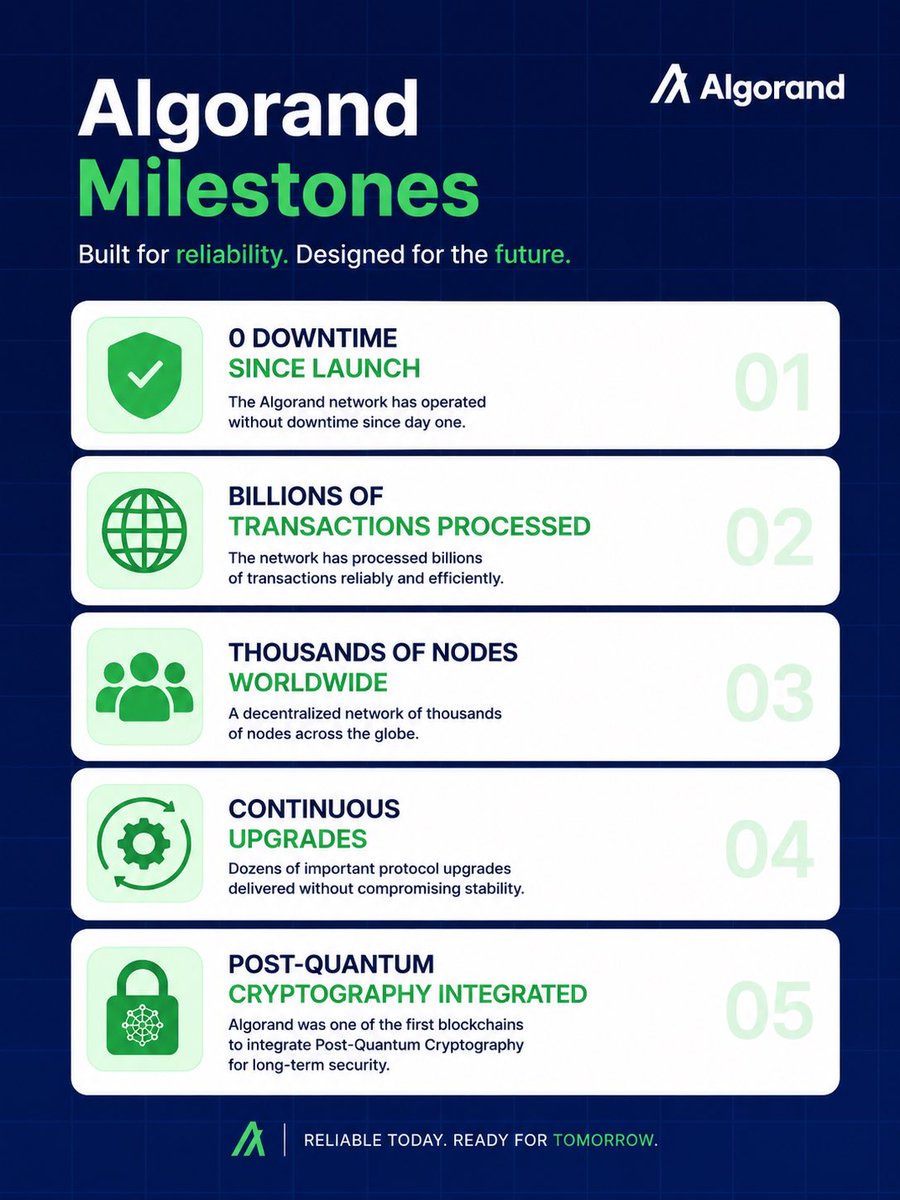

0 downtime since launch.
Billions of transactions processed.
Thousands of nodes running around the world.
Dozens of major protocol upgrades shipped, including P2P networking, dynamic block times, and post-quantum cryptography.
Reliability is everything.
2
10
39
2,123
AlgoLearner retweeted

May 29
I wouldn't wish a full-scale outage on my worst enemy, so I wish you the best in getting Sui restarted and stabilized. Let us know if you nee help.
For readers' benefit, Algorand is on consensus version 41, and here's a selection of "major" upgrades:
- 12 versions of the Algorand Virtual Machine
- Peer-to-peer & hybrid networking modes
- Consensus incentives for block proposers
- Dynamic lambda block time flexibility
- PQ state proofs with Falcon signatures
- LogicSig opcode budget pooling
- Arbitrary data storage in application boxes
5
25
126
6,738
AlgoLearner retweeted

May 30
After reading that the SUI stuff happened because of an "upgrade".
It makes it 1,000x more impressive that Algorand has done all of this and has had ZERO down time and ZERO failed transactions.
May 29

I wouldn't wish a full-scale outage on my worst enemy, so I wish you the best in getting Sui restarted and stabilized. Let us know if you nee help.
For readers' benefit, Algorand is on consensus version 41, and here's a selection of "major" upgrades:
- 12 versions of the Algorand Virtual Machine
- Peer-to-peer & hybrid networking modes
- Consensus incentives for block proposers
- Dynamic lambda block time flexibility
- PQ state proofs with Falcon signatures
- LogicSig opcode budget pooling
- Arbitrary data storage in application boxes
2
15
85
3,102
AlgoLearner retweeted
May 29
Important clarification on asset inbox safety 🔐
Accepting or rejecting NFTs and tokens from your asset inbox in Pera is completely safe. This type of exploit can't occur from within the app itself.
The risk arises after leaving Pera: if you follow a link to a third-party website, connect your wallet, and sign a transaction there, that's where malicious activity can occur.
We're committed to adding more in-app safeguards to help detect and flag these risks earlier.
In the meantime, the strongest protection is staying informed: always review any transaction carefully before signing, regardless of where it originates.
Stay safe Algofam.
7
41
191
6,377
AlgoLearner retweeted

May 29
Sui mainnet stopped accepting user transactions due to an issue during the epoch change beginning at ~1:30PT. Validators are up and creating system transactions, but user transactions are not currently being accepted. The Sui Core Team is investigating, and updates will be shared as soon as available.
329
174
1,014
232,362
AlgoLearner retweeted

May 29
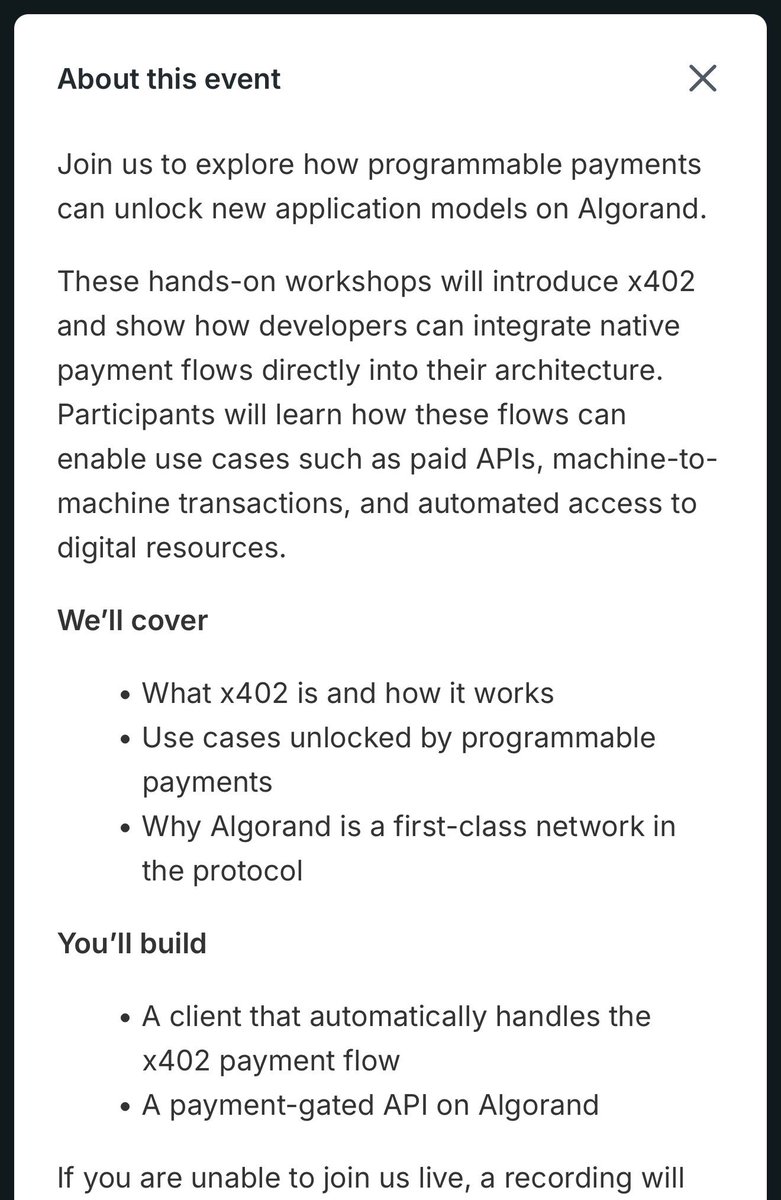
June 3rd, the @AlgoFoundation is inviting us to the x402 Workshop.
- what is x402
- use cases
- build agentic payment flows
- why Algorand
✅ Explore programmable payments! 💵
app.livestorm.co/algorand-fo…
2
18
117
2,878

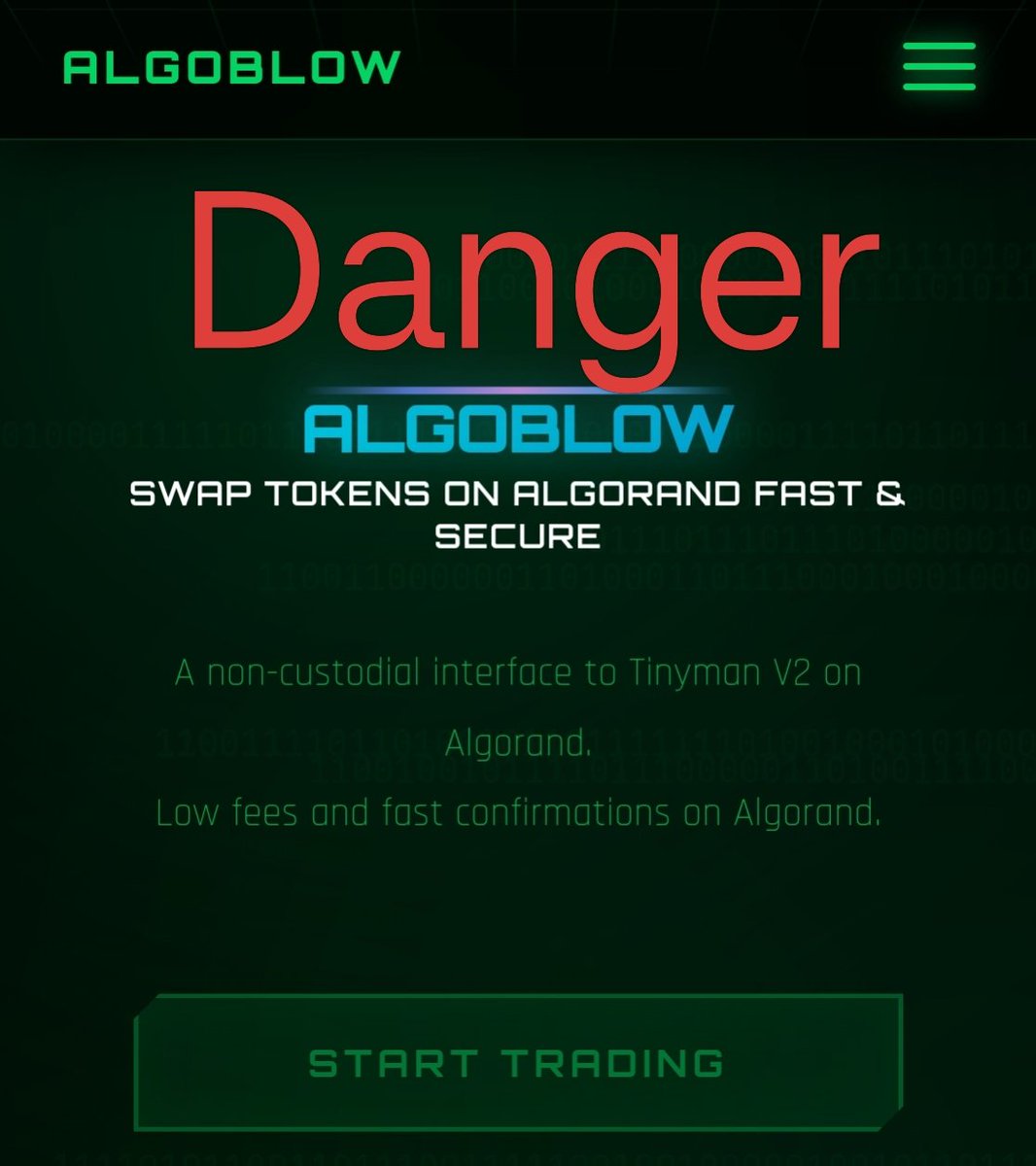
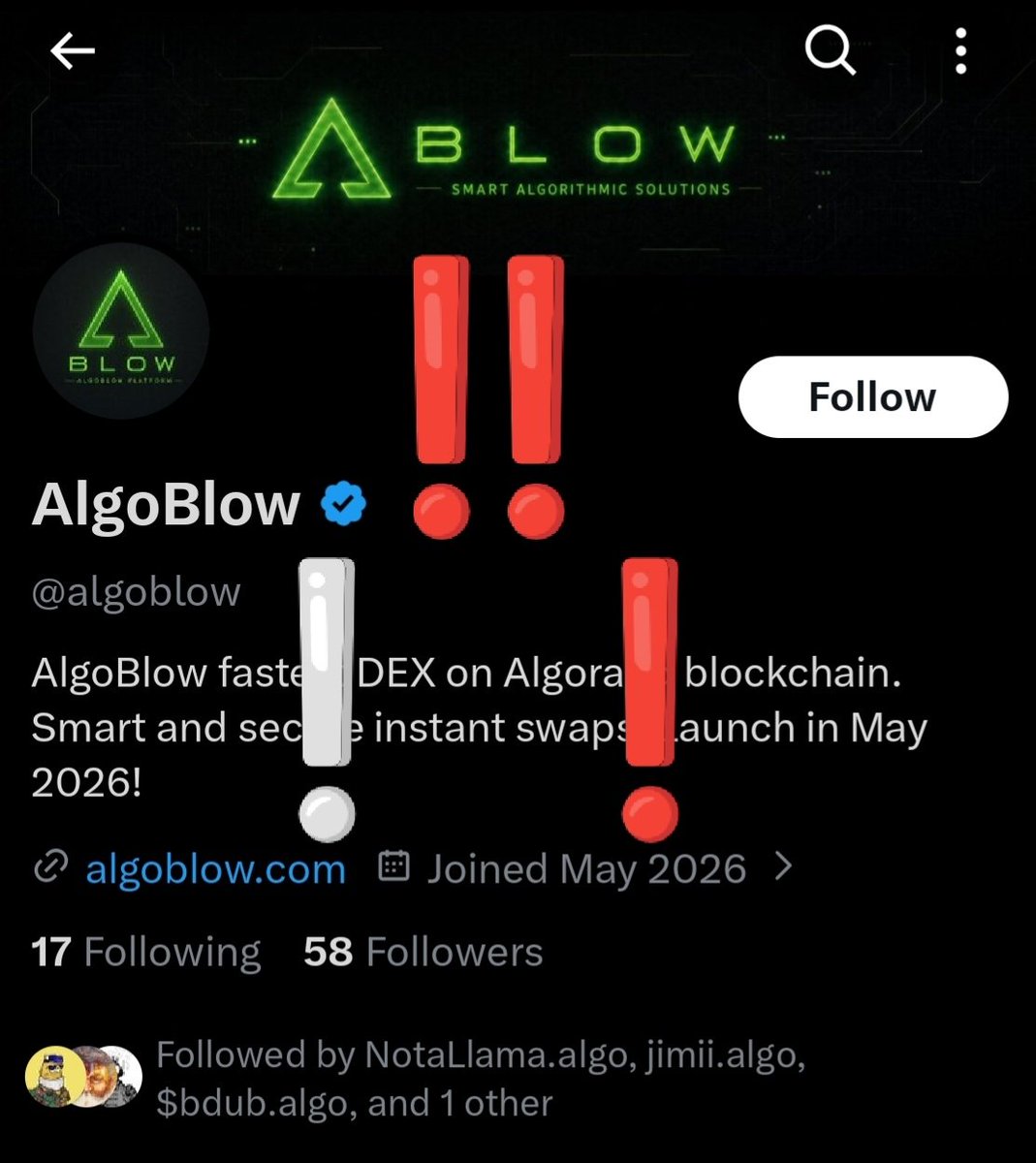
☢️ Scam warning - @algoblow
Received two credible reports that algoblow[.]com rekeyed accounts when users connected to check airdrop
The scam is a $BLOW asset optin that also rekeys the user account. Users who sign these transactions have their accounts rekeyed, thereby permanently losing access to them.
It may only trigger for high value accounts. 4 accounts have been rekeyed so far:
A43BSFDDZGPEVB2XUUX652OOHNHRA3OZVP4FNM7MF5TDOCUFZWGLS7MR6A
TJ7SMOGG52KCSEDWGP4NNCJMJFFLBFI5IKQS7GDUJN5UZJWCP7NTPPFMJ4
XTC4LUY4T5U2KBGRMJD5STGLS2UQJM6QW2N7PCYFB76BYGSH7PV3WOQ22U
YKTO4C2WAC2BSMJMYKM43YCGUYHU3XHAHAYG6UUSF3BLOF6VMGRXKYB7ZU
Exercise extreme caution $BLOW
25
122
200
20,099